cosmetics twisted handle paper bags Bulk Order Planning sounds dull until you compare it with rigid boxes, warehouse space, and the cost of reordering two weeks before a launch. A well-built paper bag can still feel premium, stay practical at checkout, and avoid the storage headache that comes with heavier packaging formats.
For beauty brands, the job is bigger than carrying a product from shelf to shopper. The bag has to look polished, survive handling, and hold a gift set or retail bundle without collapsing into something that feels cheap. That is why bulk planning matters: it lowers unit cost, speeds replenishment, keeps store presentation consistent, and reduces last-minute packaging scrambles.
Good cosmetics packaging is usually not about big ideas. It is about a spec sheet that matches the product, the print, and the way the bag will be used. Once those pieces are set, the order gets easier to price, easier to produce, and easier to reorder.
Why bulk cosmetics twisted handle paper bags bulk order planning makes sense for cosmetics
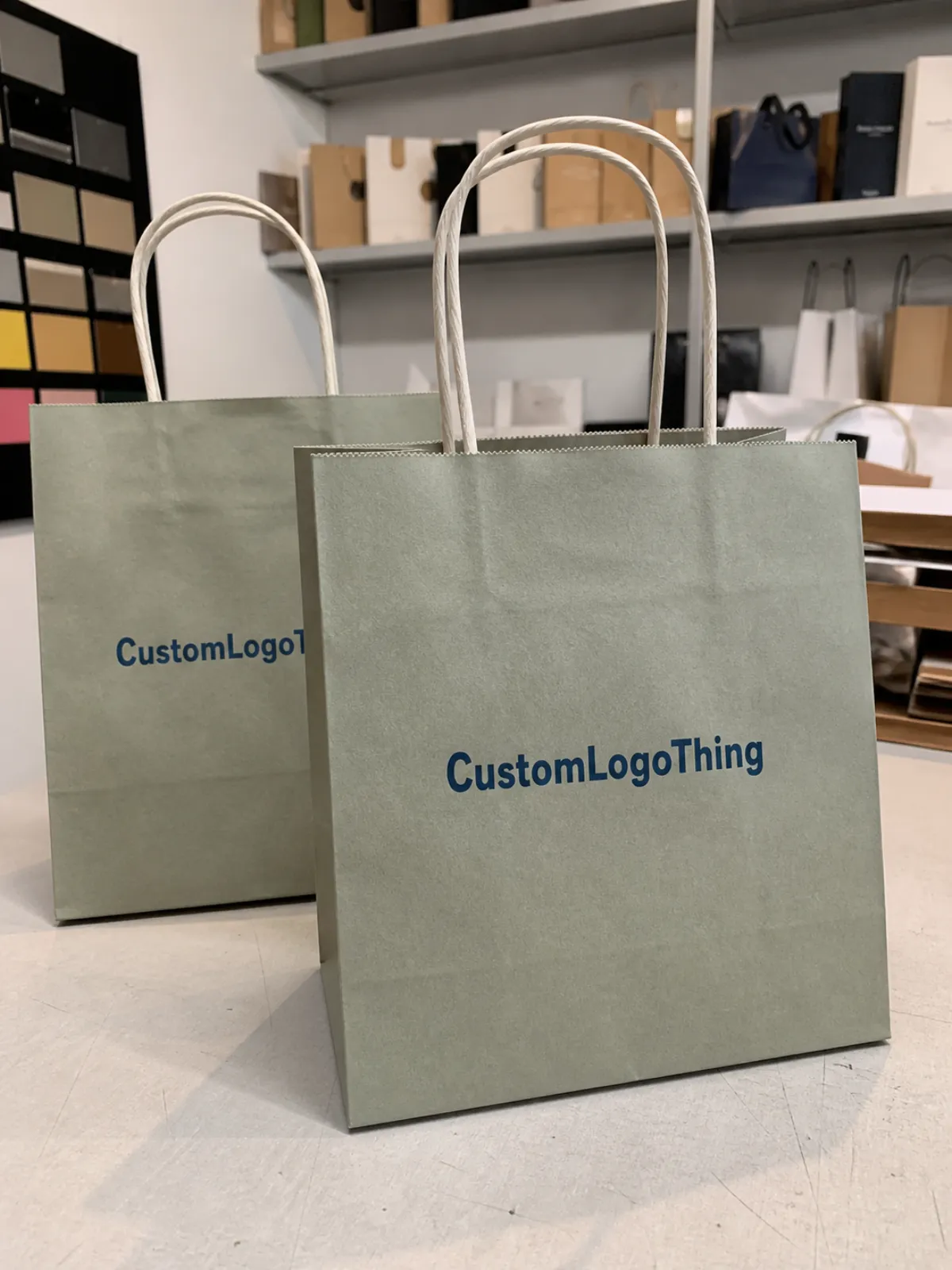
Twisted-Handle Paper Bags hit a useful middle ground for beauty brands. They look more elevated than a plain carrier, but they do not bring the cost, storage footprint, or lead-time pressure of rigid boxes. That matters for skincare gift sets, seasonal bundles, and retail launches where the packaging needs to feel intentional without dragging down margin.
From a buyer’s point of view, bulk is where the value shows up. You get a lower unit price, easier replenishment, and less warehouse clutter because paper bags stack flat. They also present better on shelf and at checkout than mixed one-off packaging runs that never quite match from reorder to reorder. For cosmetics, consistency is not a bonus; it is part of the product.
A bag that looks premium for 10 seconds and tears in transit is not premium. It is just expensive disappointment in paper form.
Most brands choose twisted-Handle Paper Bags because they are practical for day-to-day retail and polished enough for launch kits. The decision then shifts to the details that move cost and performance: bag size, paper grade, handle construction, print coverage, and finish. Get those right early and the rest of the project behaves.
If you are building a repeat program, think in replenishment cycles instead of one-off orders. That is where a supplier’s Wholesale Programs page starts to matter, because the economics of 1,000 bags and 10,000 bags are not the same.
Paper grades, handles, and finishes that hold up
Kraft, white board, and coated paper each do a different job. Kraft gives a natural, retail-friendly look and usually works well for clean typography or earthy skincare lines. White board is better when the brand needs a brighter base and more controlled color on logos, gradients, or product photography. Coated stock supports sharper graphics and a richer printed surface, especially when the artwork carries fine lines or strong color blocks.
For weight, most standard cosmetics bags sit in the 210gsm to 250gsm range for lighter retail sets, while heavier gift bags often move to 300gsm to 350gsm board. That difference is what separates a bag that stays upright from one that wrinkles, flexes, or feels flimsy once a jar, palette, and box go inside.
Twisted handles usually make sense for bulk cosmetic runs because they balance cost, strength, and appearance. Flat handles can be fine for simple retail bags, but twisted handles tend to feel cleaner and more brandable without pushing the unit price too far. The handle anchor is the real detail to watch. If the attachment is weak, the bag fails no matter how good the print looks.
Reinforcement matters more than many teams expect. A top edge insert helps the mouth keep its shape. A bottom board adds stability for heavier kits. Better handle anchoring reduces tearing during carryout and protects the bag during transit. These are the features that separate “looks nice in a mockup” from “survives the store floor.”
Finishes should be chosen with restraint. Matte lamination gives a softer, more premium feel and hides scuffs better than gloss. Gloss can sharpen color and work well for bold promo bags, but it shows handling marks faster. Foil accents, embossing, and spot UV can lift a logo, yet they should be used only where they add value. If the design already carries enough color and contrast, extra finishing can just inflate the bill.
For materials sourcing and chain-of-custody questions, FSC certification is a useful checkpoint, especially if your brand makes sustainability claims and wants paper from verified forests: FSC.
Size, print, and structural specs to lock before quoting
Size should come from the actual packed product, not the category name. A skincare jar, a boxed lipstick set, and a holiday gift bundle all need different internal clearances. If the bag is too tight, loading becomes awkward and the top edge looks crushed. If it is too large, the product rattles around and the presentation drops immediately.
Before anyone quotes the job, confirm these basics:
- Width - enough to hold the widest item with a little side clearance.
- Gusset - enough depth for boxed kits, not just single products.
- Height - enough room for the bag to close neatly after loading.
- Handle drop - long enough for carry comfort, short enough to avoid dragging.
- Paper thickness - listed in GSM or equivalent board weight.
- Reinforcement - bottom board, top insert, handle patch, or all three if needed.
As a practical range, a handle drop around 90mm to 120mm works for many retail cosmetics bags, while taller gift formats may need more. That depends on how the customer actually carries the bag, not what the mockup looks like on a screen. People do not carry pixel-perfect packaging. They carry weight.
Artwork setup matters just as much. Ask for bleed, safe zone, and print method before the design is final. A 3mm to 5mm bleed is common, while safe zones often need 8mm to 10mm to keep text away from edges, folds, and handle areas. PMS matching should be confirmed if the brand has strict color rules. If the bag is one-color, two-color, or full coverage, that needs to be clear before the quote is locked.
A dieline or sample fit test is the fastest way to catch problems. Put the actual product in the bag, close it, carry it, and check the shelf view. That simple step exposes weak handle placement, oversized gussets, and branding that disappears once the bag is filled.
If your team wants a quick reference for quote inputs and common spec questions, the FAQ is the useful place to start.
Bulk order pricing, MOQ, and unit cost drivers
Pricing is driven by a short list of variables: paper grade, bag size, handle type, print colors, finish complexity, and whether the order needs special reinforcement or custom tooling. That is the boring answer, but it is the real one.
There are two cost buckets to understand. Setup cost covers the work before production runs, such as plate making, sampling, and artwork preparation. Running cost is the actual per-unit production cost. Smaller orders get hit harder by setup because those fixed costs are spread across fewer bags. Larger orders reduce unit cost because the setup gets diluted across the run.
MOQ depends on complexity. Simple kraft bags with one-color print can sometimes start lower, while premium bags with foil, embossing, or multiple print passes often need higher minimums to stay efficient. A supplier who gives you a very low MOQ on a very complex spec is either pricing aggressively for a reason or missing a cost somewhere.
For buyers comparing quotes, ask for the same spec every time and compare landed cost, not just headline unit price. Freight, packaging, and export handling can move the final number more than the paper grade does. That is where a cheap quote turns into an expensive order.
| Bag Type | Typical MOQ | Indicative Unit Cost | Best Use | Notes |
|---|---|---|---|---|
| Simple kraft twisted-handle bag | 1,000-3,000 pcs | $0.18-$0.32 | Entry retail, sampler bags, low-color branding | Best when you want a natural look and limited print coverage. |
| Printed coated paper bag | 3,000-5,000 pcs | $0.28-$0.55 | Skincare kits, launch bags, stronger shelf presentation | Costs rise with more colors, tighter registration, and gloss or matte lamination. |
| Premium laminated bag with foil or embossing | 5,000-10,000 pcs | $0.55-$1.10 | Gift sets, prestige cosmetics, seasonal bundles | Best for high-margin programs where the packaging is part of the perceived value. |
That table is not a promise. It is a sensible range for planning. Final pricing shifts with size, finish, shipping terms, and whether the supplier is building a custom structure or adapting an existing format. If the order is recurring, the math usually improves on the second run because the tooling and proof work are already done.
Production process, proofing, and lead time checkpoints
A normal production path starts with spec review, then artwork checking, then a digital proof, sample approval, mass production, quality inspection, and packing. If a supplier skips a step or rushes the proof, you usually pay for it later in reprints or color mistakes.
For timeline planning, a common range looks like this: quote review in 1 to 2 business days, artwork and proofing in 1 to 3 business days, sample development in 5 to 7 business days, and mass production in roughly 10 to 18 business days after approval. Add inspection, packing, and shipping on top. If artwork is not final or the sample needs revision, the schedule stretches.
The key checkpoints are simple:
- Dieline sign-off before artwork is placed.
- Color confirmation before the run starts.
- Handle confirmation so the bag carries the intended weight.
- Final pack-out confirmation before mass production.
If the bags need shipping performance testing, packaging performance standards from ISTA are worth a look. That does not mean every cosmetic bag needs full transport testing. It means there is a sensible standard for checking whether the package survives compression, vibration, and handling in the real world.
Rush orders rarely save money. They usually compress proofing, which leaves less time to catch a color shift, a handle problem, or a dieline error.
The buyer mistake I see most often is asking production to move faster while the artwork is still changing. That is how reprints happen. If the calendar is tight, reduce complexity first. Do not pretend the problem is just the factory.
What to verify before choosing a packaging supplier
Supplier capability matters more than glossy sales language. Can they hold print quality across the whole run? Can they reinforce handles properly? Can they keep sizing consistent from first sample to repeat order? If the answer is vague, the order will probably be vague too.
In cosmetic packaging, good communication is part of the product. You want clear specs, written revisions, and order milestones that do not depend on memory or hope. A supplier that sends proof photos, QC checks, and packing counts before shipment is doing real work. That saves expensive mistakes, especially when multiple SKUs are involved.
There is also a category difference people underestimate. Beauty packaging is judged more harshly than generic retail bags. Color accuracy has to feel intentional. Tolerance issues stand out faster. Presentation matters at a glance, and there is no hiding behind “good enough” once the bag sits next to a premium serum or gift set.
Before placing an order, ask a supplier these questions:
- What is the exact paper grade and GSM?
- How is the handle anchored and reinforced?
- What proof format will be approved before production?
- Do you provide in-house sampling and QC photos?
- How do you handle repeat orders and color matching?
If the supplier cannot answer those plainly, keep looking. Cosmetics twisted handle paper bags Bulk Order Planning only works when the supplier can support repeatability, not just one pretty sample.
Next steps to finalize artwork, samples, and reorder plans
Start with the product itself. Confirm dimensions, weight, and how the items will be packed inside the bag. Then choose the paper grade, lock the handle style, and decide whether the finish needs to stay simple or carry extra visual weight. That sequence prevents endless revisions and keeps the quote honest.
Next, assemble the files a supplier actually needs: logo artwork, PMS references, dieline notes, and any brand rules for print placement or color limits. If the artwork is not final, send a rough mockup and say so. Clear input gets better pricing. Vague input gets caveats, and caveats are just hidden delays.
For repeat business, create a reorder trigger before you run out. That might be a shelf-count threshold, a 30-day stock buffer, or a forecast based on monthly sell-through. Whatever system you use, write it down. A cosmetic brand should not be guessing when the last carton leaves the warehouse.
That is the point of planning: get the spec right, confirm the sample, set the timeline, and keep the reorder path boring. Boring is good. Boring means the bags arrive, the launch moves, and nobody has to improvise packaging in a panic.
How do I choose the right size for cosmetics twisted handle paper bags in bulk?
Start with the actual packed product, not the SKU name. Jars, boxed palettes, and gift kits need different internal dimensions, and a small clearance change can decide whether the bag loads cleanly or looks crushed. Ask for a dieline or sample fit test before confirming the full run.
What MOQ should I expect for cosmetics twisted handle paper bags?
Simple kraft or single-color bags usually allow lower minimums than heavily printed premium bags. MOQ rises when the order needs special finishes, custom sizing, or multiple print colors. A good quote should show the MOQ clearly, not hide it in a footnote.
Which paper weight works best for heavier beauty kits?
Heavier kits usually need thicker paper stock and reinforced handles to avoid stretch or tearing. Ask for the paper grade in GSM or equivalent thickness, not just a marketing label like premium. If the bag carries glass jars or boxed sets, request a sample load test before approval.
How long does bulk production usually take after artwork approval?
Lead time depends on print complexity, finish choices, and current factory capacity. A common range is 10 to 18 business days for production after approval, plus proofing, inspection, and shipping. Rush jobs are possible sometimes, but they usually cost more and leave less room for error.
What do I need to send for an accurate quote?
Send dimensions, quantity, paper preference, handle type, print colors, finish requirements, and delivery location. Include artwork files or a rough mockup so the supplier can flag problems before pricing. The more exact the spec, the fewer surprise charges later.

