Beauty recycled poly mailers Bulk Order Planning starts with an uncomfortable fact: the lowest mailer price rarely stays the lowest once the full shipment is counted. Postage, storage, waste, damage, and repacking can turn a bargain bag into an expensive one. Beauty brands ship everything from sample sets to refill subscriptions to seasonal promo bundles, and each format changes what the mailer has to do. The right bag is not just a carrier. It is part protection, part brand surface, part cost control.
That is why recycled mailers should be planned with the same care as carton selection and freight class. Film thickness, seal quality, opacity, and print coverage affect whether the parcel survives sortation and arrives looking deliberate instead of improvised. A buyer who treats the mailer as a spec, not a commodity, usually gets fewer surprises later. The practical goal is simple: choose a structure that fits the product, then keep that structure stable enough to reorder without re-litigating every detail.
In beauty shipping, the packaging also has to support the brand moment. A compact skincare set in a clean mailer can feel organized and premium even before the customer opens the box. A flimsy bag, on the other hand, can make a carefully designed product look rushed. For teams balancing cost and presentation, the mailer becomes one of the easiest places to improve perceived value without adding much complexity.
Start With the Carton Count
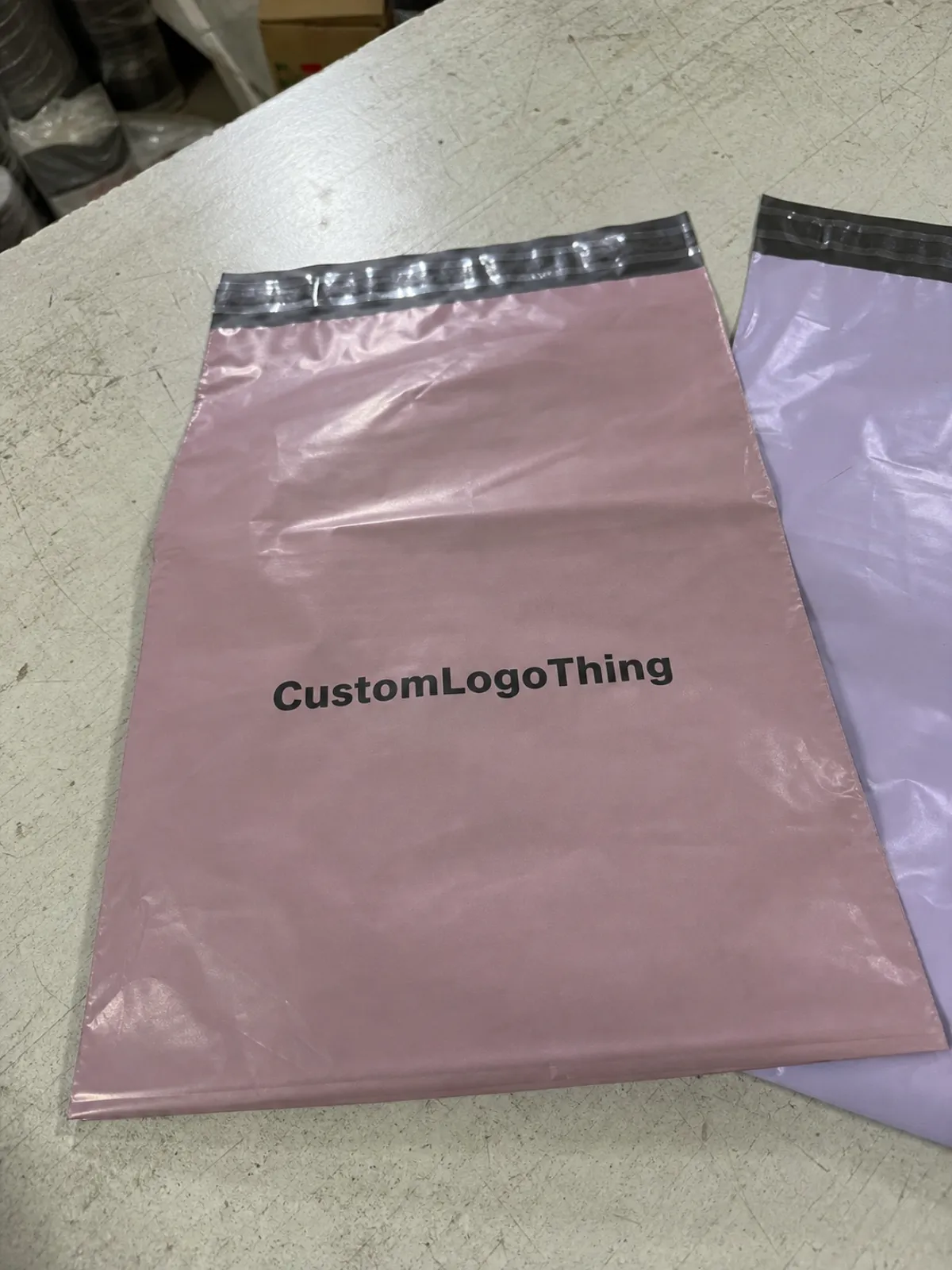
The first question is not the artwork or even the material. It is what actually ships inside the mailer. A serum in a folding carton, a mascara in a blister pack, and a flat sachet set create very different packaging problems, even if they are all "small beauty items." If the bag is too tight, the seal gets stressed and the film stretches at the mouth. If the bag is too loose, the order shifts in transit and the package can look sloppy, especially on premium beauty lines where presentation is part of the product.
That is where bulk planning goes wrong. Teams often measure the bare product, then forget the carton, insert, tissue, spacer, or sample card that gets added later. The packed item should drive the mailer size. For a subscription refill, the bag may need a wider opening and a stronger adhesive strip. For a single flat item, a slimmer profile often reduces wasted film and keeps shipping weight lower. For promo kits with inserts, the critical dimension is usually length, not width, because the top seal needs enough clean margin to close without crowding the contents.
Think in terms of the full packed stack, not the headline SKU. A customer order may start as one lipstick and one sample, then quietly become a product card, tissue wrap, and promotion insert as marketing updates the bundle. If the mailer is sized only to the product bottle or jar, the working space disappears fast. A little extra headroom can help avoid stress at the seal line, but too much space can let the contents slide and can also increase dimensional weight in some shipping setups. That tradeoff is one of the main reasons beauty recycled poly mailers Bulk Order Planning works best when the team measures real packed samples, not just component dimensions.
A mailer that seems inexpensive on paper can become costly if it adds even a small amount of waste to every order and raises damage rates at the same time.
The landed cost view matters more than the sticker price. Freight, carton count, warehouse footprint, and reject rate all belong in the calculation. A slightly more expensive mailer that fits the product correctly often beats a lower-cost option that causes repacks or customer credits. Beauty packaging buyers feel that difference quickly because their orders tend to be high volume and visually unforgiving.
It also helps to separate shipping behavior by order type. Starter kits, deluxe sets, and refill packs may all be part of the same line, but they often need different mailer sizes or film strengths. A common approach is to standardize on a small number of bag sizes that cover most shipments, then reserve a special size for the outlier kits. That usually keeps procurement simpler and reduces the chance of over-ordering a mailer that only works for one campaign.
When the mailer sits inside a wider packaging program, it helps to define the rest of the system early. Teams that are aligning custom boxes, inserts, and shipping materials often work through Custom Packaging Products, then standardize recurring volume through Wholesale Programs once the order pattern settles. That reduces variation and makes the next reorder easier to manage.
Recycled Film Construction, Finish, and Seal Performance
Recycled-content film is not automatically flimsy. A recycled poly mailer can perform well if the gauge, resin blend, and seal quality are right for the job. Buyers should ask for the actual film construction rather than stopping at the recycled claim. A consistent seal and a stable film feel matter more than a marketing line printed on the outside. In bulk programs, that is usually where the difference between a dependable supplier and a risky one becomes visible.
Most beauty teams want a mailer that balances light weight with enough body to resist scuffs, edge pressure, and minor puncture risk. Recycled films often contain a mix of post-consumer and post-industrial content, and the available blend can vary by supplier and supply conditions. That does not automatically reduce performance. It does mean the buyer should ask whether the material is intended for a plain shipping surface, a printed custom bag, or a heavier-duty SKU. Those are not always the same thing.
Surface finish affects both appearance and handling. Matte finishes often read as softer and more premium, while gloss surfaces usually push color harder and can improve contrast on bold branding. Opacity matters too. Many beauty products should not be visible through the bag, especially when the shipping carton is part of the visual reveal. If the brand relies on unboxing, a clean print face and good opacity are not decorative extras. They are part of the customer experience.
Seal performance deserves more scrutiny than it usually gets. Peel-and-seal strips are common, but humidity, dust, overfilling, and warehouse temperature can change how they behave. Some programs need tamper-evident closure. Others benefit from a second adhesive strip for return use or exchange workflows. The closure should match the customer journey. A refill subscription has different needs than a one-time palette shipment, and the seal should reflect that difference.
Recycled material can introduce minor color and surface variation from lot to lot. That does not make it unsuitable. It means buyers should set expectations early, especially if the design uses full coverage, large color fields, or fine registration. A one-color logo is easier to keep consistent across production. Full-wrap art takes more proof discipline and a more careful sign-off process. If a brand wants a highly polished look with recycled film, it usually helps to keep the art direction clean rather than crowding the surface with too many small details.
Beauty items behave differently in transit. A glass dropper bottle in a carton asks for more film strength and a cleaner seal than a flat sachet set. A compact accessory pack may be light, but sharp corners can still punch through thinner film. The mailer spec should track the actual handling risk, not just the shelf story. In practice, that often means asking how the finished parcel moves through fulfillment, sortation, and the last mile, not only how it looks on a desk.
For procurement teams documenting recycled-content claims, the EPA recycled-content purchasing guidance is a useful reference. If transit damage is a concern, ISTA testing language helps buyers think beyond appearance and into real distribution conditions. Those references do not replace samples, but they do sharpen the questions a buyer should ask before approving volume.
Sizes, Thickness, Printing, and Closure Specs to Lock In
For beauty Recycled Poly Mailers Bulk Order planning, the spec sheet should be written before the quote request. Finished width, usable length, gusset or depth requirement, film thickness, closure type, print area, and finish should all be clear from the start. If the product ships with inserts or a box, measure the packed unit, not the component alone. That one step prevents a surprisingly common mistake: a mailer that fits the SKU but not the shipment.
Thickness should follow the load. Thin is not automatically efficient, and thick is not automatically better. Lightweight shipments often sit in the 1.5 to 2.0 mil range. Heavier or sharper-edged items usually benefit from 2.25 to 3.0 mil film. There is no universal number that fits every beauty product. A rounded tube can travel safely in a lighter bag. A boxed palette with corners and edge pressure often needs more body to resist punctures. When teams compare options, it is usually smarter to test a short list of thicknesses than to assume the thickest choice is the safest one.
Printing changes more than the look. It affects proofing time, color stability, and production tolerance. A one-color logo is straightforward. Full-coverage art, gradients, and layered layouts need tighter control, especially when recycled film varies slightly in tone. The buyer does not need perfect sameness across every bag. That is unrealistic. The buyer does need a clear approval standard so the finished run matches expectations within normal production limits. If the brand uses metallic effects, reverse printing, or large ink blocks, those choices should be reviewed early because they can change how the surface reads on recycled film.
Closure details belong in the same brief. Standard peel-and-seal is fine for many direct-to-consumer orders. A second adhesive strip can support returns or reuse. For premium launches, a clean tear line and a well-placed seal help the package open neatly without pulling the film or distorting the print. Beauty customers notice that stuff, even if they do not mention it. The best mailer is usually the one that opens cleanly, holds the product securely, and does not leave adhesive residue or ragged edges behind.
If your team needs a tighter starting point, Custom Poly Mailers can be built around the exact size and print combination the shipment needs. That is usually cleaner than forcing a stock bag to do custom work it was never meant to do.
A concise buyer checklist usually speeds the process:
- Packed dimensions, including inserts, cartons, or protective wrap
- Target film thickness, based on the product shape and shipping risk
- Print method and coverage, from simple logos to full-panel art
- Closure type, including standard, double-seal, or tamper-evident needs
- Finish preference, such as matte, gloss, or a more subdued recycled look
When those items are agreed early, the quoting process tends to move faster and the final mailer is more likely to survive real-world use without revision.
Cost, Pricing, and MOQ: What Changes the Unit Price
The unit price of a recycled poly mailer usually moves with more than raw material weight. Size, thickness, print complexity, recycled-content blend, color count, and order quantity all influence pricing. In many programs, larger orders reduce the per-piece cost, but the savings are not always linear. A large jump in volume may lower the print cost per bag while increasing storage needs or raising the risk of carrying too much obsolete inventory if the design changes later.
MOQ, or minimum order quantity, depends on the production method and the supplier's setup. Custom printed mailers often need a larger commitment than stock items because the press setup, plates, or proofing work must be spread across the run. Smaller brands can still order bulk, but "bulk" may mean a few thousand pieces for one program and far more for another. A common range for custom jobs is often somewhere between 500 and 10,000 pieces, though the actual threshold depends on size, print method, and available production capacity. Buyers should treat those figures as planning ranges, not fixed rules.
One subtle cost driver is waste tolerance. A design with multiple ink colors or a tight registration target may need more production control, which can affect price. A simpler layout may cost less to make and less to approve. Likewise, a mailer that has to hit a very specific shade can require more sampling than a design that uses a broader brand color family. Recycled film can make that even more important, because substrate variation can alter the final appearance slightly from run to run.
Shipping economics matter too. A bigger mailer can raise dimensional weight if it expands the parcel too much. A stronger film can sometimes reduce claims and repacks, which lowers hidden labor costs. And a mailer that stores efficiently can save warehouse space, especially when the business carries multiple SKUs. That is why the cheapest bag on a quote sheet is not always the best number to optimize around.
Beauty teams often get the best result by comparing three things together: piece price, expected usage rate, and damage rate. If a slightly stronger bag cuts rework or product replacements, the total program cost may improve even though the invoice line is higher. That kind of analysis is especially important for beauty recycled poly mailers Bulk Order Planning because the brand impact of a damaged shipment can be larger than the packaging cost itself.
If the order is part of a recurring replenishment strategy, wholesale pricing can also help stabilize budgets. Once a format has been approved and reorder frequency becomes predictable, a supplier may be able to offer better economics on repeated runs than on a one-off test order. That is another reason to lock the spec as early as practical.
Process, Lead Time, and Production Steps From Proof to Shipment
The production path usually follows a familiar sequence: brief, quote, artwork review, proof, approval, production, inspection, and shipment. The details vary, but the rhythm is the same. If any of those steps are rushed, small packaging mistakes can become expensive. The best bulk programs leave enough time for one proof correction cycle, even if they do not end up needing it.
Lead time depends on whether the order is stock, stock with simple print, or fully custom. Many custom programs fall in the range of about 2 to 4 weeks after proof approval, but that can stretch longer during busy seasons or when the design requires extra sampling. If a brand is preparing a launch, it is usually wise to build in buffer time for art revisions, color checks, and freight. Recycled material programs can also take a little longer if the supplier has to align a specific resin blend or film thickness.
Proofing is where the most useful corrections happen. The proof should confirm layout, spelling, logo size, barcode placement if applicable, seal placement, and any legal or sustainability text. It should also show whether the background tone reads as expected on recycled film. A digital proof can help with accuracy, but a physical sample is usually better for evaluating feel, opacity, and closure behavior. If the order is high value, a pre-production sample is often worth the extra time.
During production, teams should ask how the supplier checks consistency. Common controls include visual inspection, film gauge checks, seal checks, and print registration review. Some programs also ask for a carton count and overage allowance, since a small extra quantity can help absorb minor spoilage or future reorders. The exact overage depends on the production setup, but buyers should clarify it before approval so there are no surprises at receiving.
Shipment planning should also account for how the mailers will be stored once they arrive. Poly mailers are lightweight, but large bulk cartons still take room. A project that saves money per piece can create a warehouse issue if the footprint is not planned. For brands with multiple fulfillment sites, it may be worth shipping staggered quantities rather than all at once. That can reduce storage pressure and help match supply to actual sales velocity.
In short, a calm process usually beats a fast one. Clean approvals, realistic lead times, and a clear handoff to receiving make the final mailer easier to use and easier to reorder.
What to Verify in a Bulk Supplier Before You Commit
Supplier vetting should go beyond price and a sample photo. Ask what recycled content range is available, how the film is constructed, how closures are tested, and what print process is used. It is also smart to ask how the supplier handles lot variation, color consistency, and overrun or underrun policy. Those answers reveal whether the vendor is set up for repeat business or only for one-off transactions.
A strong supplier should be able to talk through the material in plain language. They do not need to overstate environmental claims, and the buyer should be cautious if the answers sound vague or unusually polished. Typical questions include whether the film is designed for shipping use, whether the print is surface or reverse printed, and whether the adhesive is meant for standard ambient conditions or a broader warehouse environment. A vendor who can answer those questions clearly is usually easier to work with once the order is in motion.
Samples are still important, but one sample is not enough if the program is complex. A beauty brand with multiple shipments should compare the exact packed unit, not just the empty mailer. If the brand has both flat and bulky SKUs, it can be useful to test two mailer options side by side. That helps prevent the common mistake of optimizing for one package type and creating a problem for another.
Documentation matters too. A reliable supplier should be able to provide order specs, proof approval records, and basic traceability for the run. If the brand has sustainability guidelines, the vendor should be able to support claims without exaggeration. That is especially important when the packaging is part of a public-facing recycled-content story.
Finally, look at communication speed. If a supplier is slow to answer simple questions during quoting, that often becomes more noticeable once the order is in production. Fast, clear communication is one of the best signs that a bulk program will stay manageable after the first shipment.
What to Send for a Fast Quote and Clean Reorder
The easiest way to get a useful quote is to send a complete brief in one pass. The more the supplier has to infer, the more likely the quote will miss something. For beauty recycled Poly Mailers Bulk Order Planning, the best quote requests usually include the packed item dimensions, the target quantity, the expected reorder pattern, and a clear description of the print and closure requirements.
It also helps to explain the product context. A refill pouch, a deluxe trial kit, and a retail accessory set all need different handling assumptions. If the mailer will ship with a box, insert, or promotional card, say so up front. If the order needs opacity for privacy or a premium unboxing look, mention that too. Those details can influence both material selection and price.
For the smoothest reorder process, keep the approved spec in a single place. Note the finished size, thickness, artwork version, seal style, and any color references that matter. If the brand expects to reorder monthly, seasonally, or by campaign, build that into the purchase pattern. That way the next order is a repeat, not a fresh project.
A helpful quote packet often includes:
- Product description and whether the item ships with a carton or insert
- Packed dimensions and approximate packed weight
- Quantity target and likely reorder volume
- Print details such as logo placement, color count, or full coverage
- Material preference for recycled content, finish, and film thickness
- Timeline for approval, launch, or replenishment
Once that information is organized, the supplier can usually respond with a more realistic recommendation instead of a generic size list. That saves time and usually produces a better-fitting mailer on the first try.
For brands that are ready to standardize recurring runs, Wholesale Programs can be the right path once the preferred size and print format are locked. For teams still refining the packaging system, starting with Custom Packaging Products and a few sample rounds is often the safer move.
FAQ
How do I choose the right size for recycled poly mailers?
Start with the packed product dimensions, not the naked SKU. Include cartons, inserts, tissue, or any protective wrap. A good fit usually leaves enough room for sealing without leaving the contents loose.
What thickness is common for beauty shipments?
Many lightweight beauty orders work in the 1.5 to 2.0 mil range, while heavier or sharper-edged items often use 2.25 to 3.0 mil. The right choice depends on product shape, transit risk, and how much protection the item already has.
Can recycled poly mailers still look premium?
Yes. Matte finishes, clean print layouts, strong opacity, and accurate closure placement can create a polished result. Recycled film may show slight variation, so simpler art often performs better than overly detailed graphics.
What affects MOQ the most?
Quantity, print complexity, size, and production method usually have the biggest impact. Custom printed mailers often need a higher MOQ than stock items because setup costs must be spread across the run.
How long does a bulk order usually take?
Many custom orders take about 2 to 4 weeks after proof approval, but that depends on the supplier, the artwork, and seasonal demand. Recycled-content requests or special finishes can add time.
What should I ask before approving a supplier?
Ask about film construction, recycled-content range, closure performance, print method, color consistency, proof process, and reorder support. Clear answers usually signal a better bulk partnership.
What makes a quote more accurate?
Provide the packed dimensions, expected quantity, artwork details, finish preference, and timeline. The more complete the brief, the less likely the final order will need changes later.
Done well, beauty recycled poly mailers bulk order planning is less about chasing the lowest price and more about building a repeatable system. The right mailer protects the product, supports the brand, and keeps fulfillment predictable enough to scale. That is the kind of packaging decision that pays off long after the first shipment leaves the dock.