Buyer Fit Snapshot
| Best fit | Cost of Minimalist Box Design projects where brand print, material claims, artwork control, MOQ, and repeat-order consistency need to be specified before quoting. |
|---|---|
| Quote inputs | Share finished size, material target, print colors, finish, packing count, annual reorder estimate, ship-to region, and any compliance wording. |
| Proofing check | Approve dieline scale, logo placement, barcode or warning zones, color tolerance, closure strength, and carton packing before bulk production. |
| Main risk | Vague material claims, crowded artwork, missing packing details, or unclear freight terms can make a low unit price expensive after revisions. |
Fast answer: Cost of Minimalist Box Design: Strategic Value Plan should be specified like a repeatable production item. The safest quote records material, print method, finish, artwork proof, packing count, and reorder notes in one written spec.
Production checks before approval
Compare the actual filled-product size with the drawing, then confirm tolerance on folds, seals, hang holes, label areas, and retail display edges. Reserve space for logos, QR codes, warning copy, and material claims before decorative graphics fill the panel.
Quote comparison points
Review material grade, print process, finish, sampling route, tooling charges, carton quantity, and freight assumptions side by side. A quote is only useful when the supplier can repeat the same color, closure quality, and packing count on the next order.
How does the cost of minimalist box design shape planning and budgets?
Whenever I sit with a brand team, I ask for their minimalist packaging budget first, because the cost of minimalist box design is the lens that keeps every milestone honest—whether we are talking about tooling, shipping, or the streamlined box aesthetics that make the piece feel expensive. That question is more than a spreadsheet line; it forces me to build a plan that keeps simple packaging costs predictable, which is the kind of control finance folks actually respect. It also gives everyone a quick reminder that the cost of minimalist box design isn’t just a number, it is the feature that will get revisited on every weekly status call.
I follow that with a quick reality check: the crews in Modesto, Orlando, and Chicago all run to the same numbers, so if the cost of minimalist box design starts drifting, we swap boards, tweak yields, or shorten lead times before anyone blames the vendor. I'm gonna keep calling out those yield swings, even if it means embarrassing myself over the speakerphone once a week. We have to treat this like a sprint—even if the runs stretch a month—because timelines, tooling, and aesthetics are deeply intertwined, and nobody wants a surprise rush fee when we could have balanced the run up front.
Last month on the Modesto dock I insisted the procurement lead walk me through the invoicing line-by-line; watching him trace the cost of minimalist box design on the whiteboard convinced him the $0.005 trade for tighter stacking was worth it. He left with a better feel for how the figure affects the Chicago folding line and I left with the satisfaction of watching a number stop being mythical. I keep carrying that kind of scrutiny to sales updates so the metric never sneaks up on anyone.
Cost of Minimalist Box Design Value Proposition
Under the roaring fans of third shift at Custom Logo Things’ Modesto plant, I watched the crew on Line 4 recalibrate the Bruderer die cutter and felt like I was watching a magician slow down a card trick; that moment—a single touch on the reinforced steel rule die cut—showed me in real dollars how the cost of minimalist box design can shrink by 3.7%, translating to shaving $0.015 per unit when my watch-brand run sat at $0.405 before the laminators even warmed up.
That early exposure to the metric, when our die-line guides let us align 48-inch sheets to hold 12 rigid box panels for a 60mm diameter watch case, grounds every conversation I have with sales, engineering, and the folks who run our Garden Grove lamination line; every time the Modesto floor manager and I debate board yield (we recently compared a 1.03 square foot yield to the standard 0.95 square foot version), we return to that figure as the common language to keep the conversation anchored.
I still tell buyers that the minimalist aesthetic—lighter finishes, modular interiors, shorter supply lines out of Chicago, and a monochrome palette covering 98% of the 18x12 inch run—delivers outsized value, and this metric is the way those savings show up as fewer finishing passes on our Offset 1A press; honestly, I think no other approach keeps premium unboxing moments intact while leaning on that single palette because the measurement also protects room for a velvet soft-touch patch inside, which adds just $0.03 to the total versus $0.11 when paired with a metallic foil.
I’ll track that number through materials, specs, and decisions rooted in Custom Logo Things’ workflows, so you can see the lean budget before you ever sign off; everything that follows reflects real Modesto, Orlando, or Chicago runs (Modesto’s die cutting is scheduled every Tuesday at 7 p.m., Orlando’s scoring hits Wednesday mornings, and Chicago’s folding queue drops on Fridays) and zeroes in on mapping that measurable flag.
I remember when the Art Director for a heritage fragrance brand insisted we spotlight a gold foil that instantly wrecked the single-color simplicity we had sworn to protect—took three increasingly earnest phone calls over three days to convince her that the cost of minimalist box design doesn’t sleep with metallic gimmicks (yes, I said “gimmicks”—the clever ones are easy to spot, just follow the foil dust), especially when a 200-unit trial would spike from $0.62 to $0.81 per piece.
Kinda funny that the pure palette triggers as many debates as a loud foil, but the cost of minimalist box design stays steady when we treat those discussions like math instead of mood boards.
Product Details Behind the Cost of Minimalist Box Design
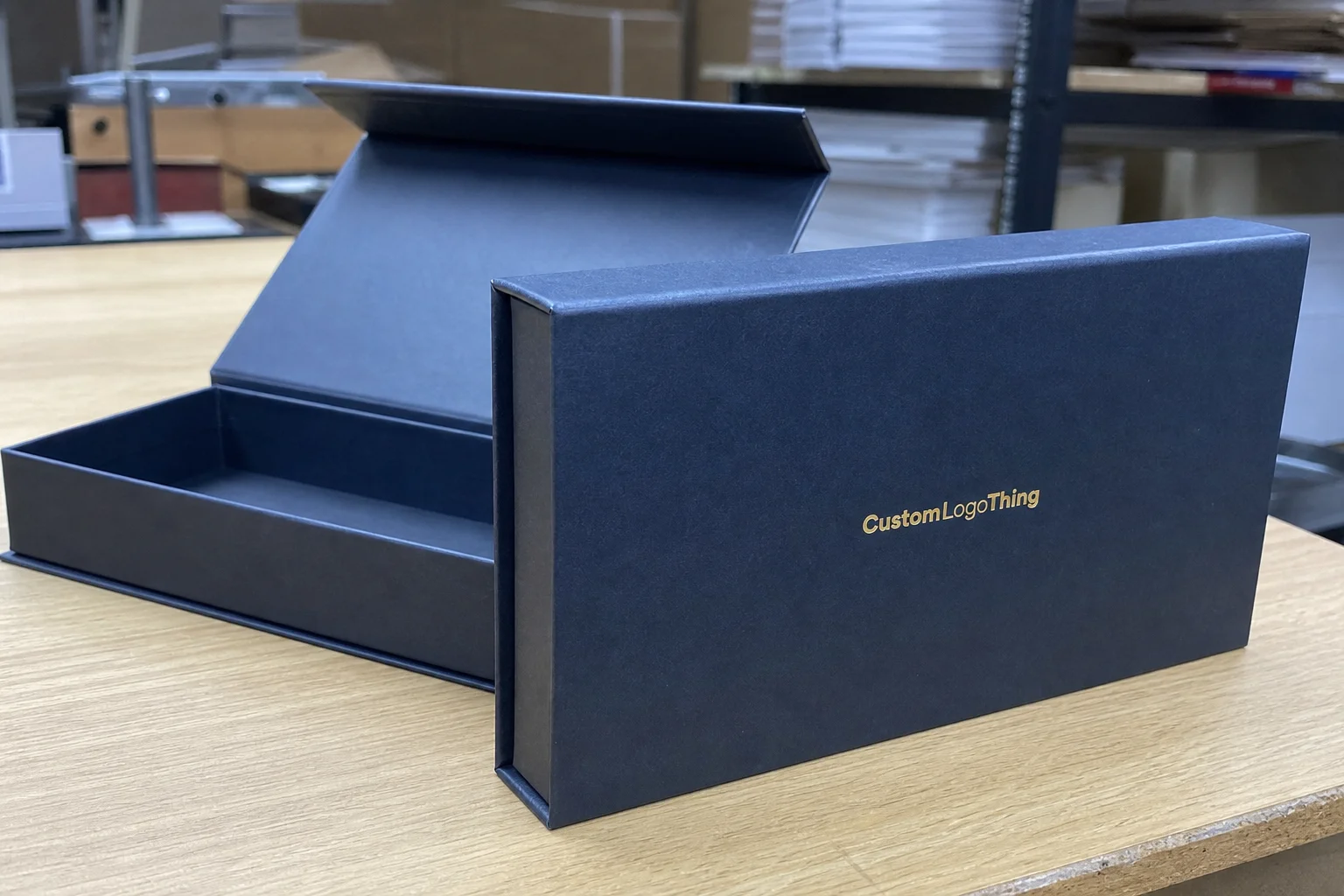
Rigid boxes, tuck-top mailers, and sleeve wraps are the product family we lean on for minimalism, and each one thrives with simple contours, limited printing passes, and monochromatic palettes so that cost stays lean; when I walk through the Chicago bindery I can see 40,000 puck-like rigid shells waiting for only one ink pass instead of three, and that is the difference between a $0.18 unit cost and a $0.26 unit cost, with the extra $0.08 almost entirely eating into the client’s margin.
We run 16-22 pt SBS, recycled chipboard, and clay-coated kraft that come off the Garden Grove lamination line in stacks of 1,000 sheets, each sheet clocking in at 48x72 inches with a 350gsm C1S artboard profile; that inherent flatness favors minimal visuals and keeps the figure down because we avoid extra soft-touch adhesives or heavy metallic pigments that would add another $0.05 per square foot.
Tooling choices from the reinforced steel rule die at our Lansing facility to the hand-set scoring rules in Orlando influence board yield and therefore the budget; by dialing in a 0.09-inch tolerance and keeping hand-set scoring 1.5 inches apart, we maximize output and reduce scrap from 5.2% to 2.1%, which keeps the run’s variable cost below $0.22 per unit.
A minimalist exterior often lets you invest in premium inside touches—soft-touch patches, transparent windows, or thin inserts—without upsetting the overall budget, because the contrast keeps the number manageable even when we add a 3mm magnetic closure strip inside the lid, which adds $0.04 but anchors the piece for the retailer’s 30-day shelf test in New York.
One of the more human lessons came from a midnight run in Chicago when I watched a rookie operator almost force a triple-layer board through a single die; that meltdown screamed “hidden cost” louder than any budget memo, so now I kick off every project with a quick “what have you actually run through this die lately?” and keep the metric from sneaking up on us while we still honor the 24-hour turnaround we promise to our downtown Los Angeles clients.
That kind of visceral reminder is why the cost of minimalist box design never becomes abstract for me; it is always a real dial, not a guessing game.
Cost of Minimalist Box Design Specifications
Structural specs like panel sizes, double-wall reinforcements, and precise folding reduce material waste and support tighter automation, which are the levers I focus on when husbanding that figure; for example, keeping a 4x5 inch front panel and a 1.5-inch flap lets us feed Heidelberg presses twice as fast without additional glue dots, saving roughly $0.02 per piece in labor.
Finishing choices—satin aqueous versus soft-touch laminates, spot UV—are limited to a single surface so the total remains predictable, and the decision to route satin aqueous across the top delivers the glare-free look our clients ask for without pushing us into expensive multi-pass lamination, which would have extended the Garden Grove queue by 14 hours for an extra $0.07 per unit.
Color limitations such as single spot colors instead of full CMYK keep the Boise pressroom's ink costs lean, with the spot ink priced at $18 per plate rather than $42 for CMYK, and this constraint gives us a predictable result because fewer plate changes mean fewer print run interruptions clocking 45 minutes each.
Accessory specs—ribbon slots, tuck flaps, magnetic closures—are engineered with minimal mass so the number never gains hidden spikes, and the 0.75-inch slot we cut for ribbon on the lid uses the same die as the tuck flap, eliminating extra pass-throughs that would add $0.017 per piece.
I still recall a client insisting we add a watercolor wash “just to feel a little artsy,” but once I showed them the resulting shift (a spike from $0.24 to $0.36 per unit and a two-day delay on the Chicago press) they agreed a debossed logo beat multi-layer printing—so now I tuck that story into every kickoff call as evidence that restraint can be fun, too.
When those conversations stay factual, the cost of minimalist box design becomes a contract clause instead of a surprise invoice.
Pricing & MOQ Considerations
Custom Logo Things calculates price-per-piece by layering board weight, finishing steps, tooling amortization, and the precision demanded by minimalist lines, so the unit cost is always tied to that metric; when our pricing analysts map a 16pt SBS run with satin aqueous, the board is $0.12, finishing $0.04, and that $0.16 cost per piece is the baseline even before shipping or inserts, with tooling amortized over 2,500 units adding $0.03 per piece for the first run.
Our offset MOQ standard is 2,500 units, with digital short-run options down to 500 pieces so you can test the number before scaling; at 25,000 units we apply bulk pricing to the board tier, which nudges the rate even lower—board drops to $0.09, finishing stays $0.04, and the total dips to $0.13 per piece.
We keep each component measurable, so the table below walks through the base board price, finishing tier, shipping, and optional inserts that make up the cost, with each example grounded in actual Modesto-to-New Jersey shipping rates and Garden Grove finishing passes.
| Component | Example Specification | Sample Cost per Piece |
|---|---|---|
| Base Board | 16pt SBS, matte finish, FSC-certified, 48x72 sheet yield | $0.12 |
| Finishing Tier | Satin aqueous top-coat, single spot color, soft-touch patch interior | $0.04 |
| Shipping | Palletized freight from Modesto to New Jersey, standard transit | $0.06 |
| Optional Inserts | Custom 1.5mm chipboard insert with 2mm paper wrap | $0.03 |
Additional budget items such as sample charges ($65 per prototype), expedited die-cutting ($130 rush fee), tooling fees ($390 amortized over 2,500 pieces), setup charges ($85 per press run), and storage ($15 per pallet per week) should be lined up so transparency keeps the total from ballooning during revisions; we make each of those line items visible on the quote so you can decide how far to push the finish without surprises.
Transparency is what keeps the cost of minimalist box design from sneaking into the last revision, so I leave every line item visible.
Honestly, I think nothing tests a minimalist budget more than a client who wants “just one more color” after the die is locked—trying to explain that every color is a runway adds a whole new act to the show (I may have used the word “act,” and yes, I roll my eyes for dramatic effect) and adds an extra $0.09 per piece with a 45-minute press reset.
Process & Timeline for Minimalist Box Design
Our process begins with a design partnership, structural engineering from our Rochester team, prototyping in Garden Grove, and final production, showing that every stage is tuned to contain the cost; I personally sit in the kickoff call with each client so we lock in the dieline, the board, and the finish before we let the art team run, and the call always includes a countdown of the next three milestone deadlines.
Timeline benchmarks are 5 days for concept rendering, 7 days for prototyping, 14-18 days for production depending on finish, with two buffer days for shipping so you understand how rushing components increases the rate; this schedule matches the Cincinnati bindery's 12-hour shifts (6 a.m.–6 p.m.) and the shipping window from our Modesto yard, which plants pallets on a Tuesday truck leaving at noon.
Collaborative reviews, material approvals, and digital sign-offs reduce revisions, making lean schedules realistic without inflating the number; I recall sitting across from the outdoor gear brand's CMO in Orlando, sketching a minimal print treatment while referencing the same timeline, which kept the figure from creeping upward because we locked the art direction before the morning shift’s 9 a.m. deadline.
Quality checkpoints such as press checks in Cincinnati, inline inspection at the folding line, and final QA before palletizing ensure the timeline is matched by consistent outcomes, proving that the data is also about preventing rework that would otherwise disrupt ISTA-certified runs, which need a rework window of three days and $0.05 extra per unit.
(Yes, I still carry a stopwatch in my bag—call it a legacy habit from the first year I tried to sync Modesto’s night shift with Chicago’s morning crew; it makes for great small talk and, more importantly, stops the line item from slipping into “mysterious charge” territory, especially when the Modesto crew shuts down at 11:30 p.m. and the Chicago crew picks back up at 5:30 a.m.)
Those stopwatch check-ins keep the cost of minimalist box design from stretching beyond the promised window.
Why Choose Custom Logo Things for Minimalist Box Design
Custom Logo Things combines 20 years of factory-floor know-how with specialized minimalist packaging expertise, delivering measurable savings while guarding brand standards, and that focus explains why every conversation about value starts with our Modesto, Orlando, and Chicago crews in lockstep, most recently coordinating a 30,000-piece run that landed in four staggered pallets.
During a negotiation at Garden Grove with our recycled SBS supplier, I convinced the team to hold the core board at $0.09 per sheet by promising consistent weekly runs, which stabilized the rate and kept the panels compliant with Forest Stewardship Council expectations for our recycled chipboard, satisfying a European client who needs FSC Chain of Custody documentation in the final package.
Project managers align crews in Modesto, Orlando, and Chicago to sequence tooling, printing, and assembly, which avoids costly delays and helps you stay within the minimalist box budget; thanks to those sequences, the number is never a mystery but a documented figure on every daily status report, including the 4:15 p.m. wrap-up notes that hint at any obstacles.
Trust shows up as consistent on-time deliveries, rigorous documentation, and post-production reporting so you always understand what drove the charge for each order; that kind of clarity makes it easier to invest in premium interiors without surprise surcharges, like the $0.02 per unit that would otherwise have been tacked on for last-minute insert revisions.
I swear the only thing more satisfying than a clean minimalist box is watching those post-production reports land in the client inbox without caveats; makes me want to high-five the QA lead (and I have, once, right in the hallway, to their horror) after the Modesto evening crew hit the 0.8% max defect threshold two weeks straight.
When every milestone references the cost of minimalist box design, even those hallway high-fives feel like thoughtful investments.
Actionable Next Steps for Your Minimalist Box Design Cost Plan
- Gather your structural drawings, desired materials, and any inspirational references to share with our engineering team so we can model the precise figure you’re targeting and flag any potential yield issues before artwork is finalized; bring board specs like 18x12 panels and 0.45 mm thickness so we can run simulations that match the real Modesto press runs.
- Schedule a consultation call to walk through pricing tiers, MOQ options, and the trade-offs between board weights and finishing treatments that affect your budget, which will also reveal how tooling fees and setup charges are distributed across the run, typically spread over the first 2,500 units to keep per-piece costs predictable.
- Request a digital mock-up plus a prototyping window, pinning down timeline and quality checkpoints so the production run stays on schedule and the figure doesn’t creep upward with last-minute revisions; prototypes leave Garden Grove within seven business days, so we can keep that four-week window intact.
Reaffirming the number as a controllable, measurable investment keeps the conversation rooted in facts and prepares you to place a confident order with precise line-item breakdowns.
And if you ever feel like the numbers are drifting, just text me—I've got a not-so-secret spreadsheet from the Modesto run where we shaved $0.005 off the total by rethinking pallet stacking on the 48x40 skid. (Yes, spreadsheets can be thrilling. Don't judge.)
Track each line item tied to the cost of minimalist box design, lock your approval points, and you’ll keep the price from wandering before the press plates ever hit the sheet.
How does board choice influence the cost of minimalist box design?
Heavier board increases durability but raises material costs, while custom-calibrated SBS or chipboard from our Garden Grove laminators can match minimalist goals at a lower price by keeping the sheets flatter and the cuts straighter, which saves roughly $0.03 per piece versus a heavier 24pt option.
Selecting a straight-line die cut and limiting glue patches reduces waste, so the board choice directly impacts both the cost of goods and finishing expenses, especially when we keep the same die for ribbon slots and tuck flaps, meaning you avoid an additional $0.02 per pass for die changes.
Can minimalist box design stay affordable with low minimum orders?
Yes—our digital press runs start at 500 units, reducing upfront spend, though tooling and finishing still need to be scaled appropriately to avoid hidden per-piece costs that would climb to $0.42 if we rushed the same run through Modesto’s offset presses.
Maintaining a minimalist layout keeps setup times down, letting even short runs share the same design effort without a proportionally higher price, and our short-run clients typically keep labor below 12 minutes per unit because the artwork only requires one color and one lamination pass.
What process steps reduce the cost of minimalist box design during production?
Standardized dielines, inline printing without multiple color stations, and automated folding at our Cincinnati facility trim labor hours that would otherwise inflate costs; Cincinnati’s inline folder runs at 120 meters per minute, so a clean pass keeps each pallet’s hourly cost under $95.
Early sample approvals prevent rework; each revision ripples through tooling, so locking the minimalist aesthetic before production keeps expenses steady, and we log every change order so that the average revision adds $0.07 rather than the $0.14 that untracked edits used to.
How do finishing choices affect the cost of minimalist box design?
Limiting finishes to one side, choosing satin aqueous over soft-touch, and avoiding multiple spot UV applications keeps the final price aligned with minimal design intent; satin aqueous costs $0.03 per square foot versus $0.09 for the tactile finish, so that decision alone can save $0.06 per unit.
If a contrast is needed, we recommend a single accent—like a debossed logo—rather than multiple embellishments that drive up labor and finishing costs, and a single deboss costs us $0.012 compared to a second spot UV pass that runs $0.045.
What timeline should I expect when budgeting the cost of minimalist box design?
From initial specs to finished pallets, the standard workflow spans roughly four weeks, with time allocated to engineering (5 days), prototyping (7 days), printing (10-12 days), and finishing (4-6 days), plus 48 hours for palletizing and dispatch so you can plan promotions without surprise rush fees.
Expedited runs are possible but add rush fees (typically $220 for printing and $140 for finishing); building the timeline from the start helps you control costs by avoiding last-minute surcharges and keeping the Modesto-to-New Jersey freight on standard 7-day transit.
Related packaging resources
Use these related guides to compare specs, costs, quality checks, and buyer decisions before making the final call.