A Custom Acrylic Beanies bulk order works best when the buyer treats it like a production job, not a mood board. Acrylic is the practical choice for teams, retail programs, and event giveaways because it keeps unit cost in range, holds shape well, and gives you a repeatable product that people actually wear in cold weather.
That last part matters. A beanie is not a flyer. It stays in rotation for months, sometimes longer, and every wear is another impression. If the goal is employee apparel, campus merch, a seasonal retail wall, or a give-away with real use, acrylic usually hits the right balance of cost, warmth, and decoration flexibility.
There is another reason buyers stick with it: the ordering process stays manageable. You are not juggling multiple garment sizes, complex fabric content requirements, or a pile of fit complaints. One-size knit headwear still has limits, but it is much easier to distribute at scale than most apparel categories.
For brands building a broader presentation, beanies often sit inside a packaging program with hang tags, belly bands, insert cards, or shelf labels. That is where retail packaging and branded packaging decisions start to matter. If the hat is part of a larger bundle, it helps to think about the full shelf story, not just the knit cap itself.
Why acrylic beanies work well in bulk programs
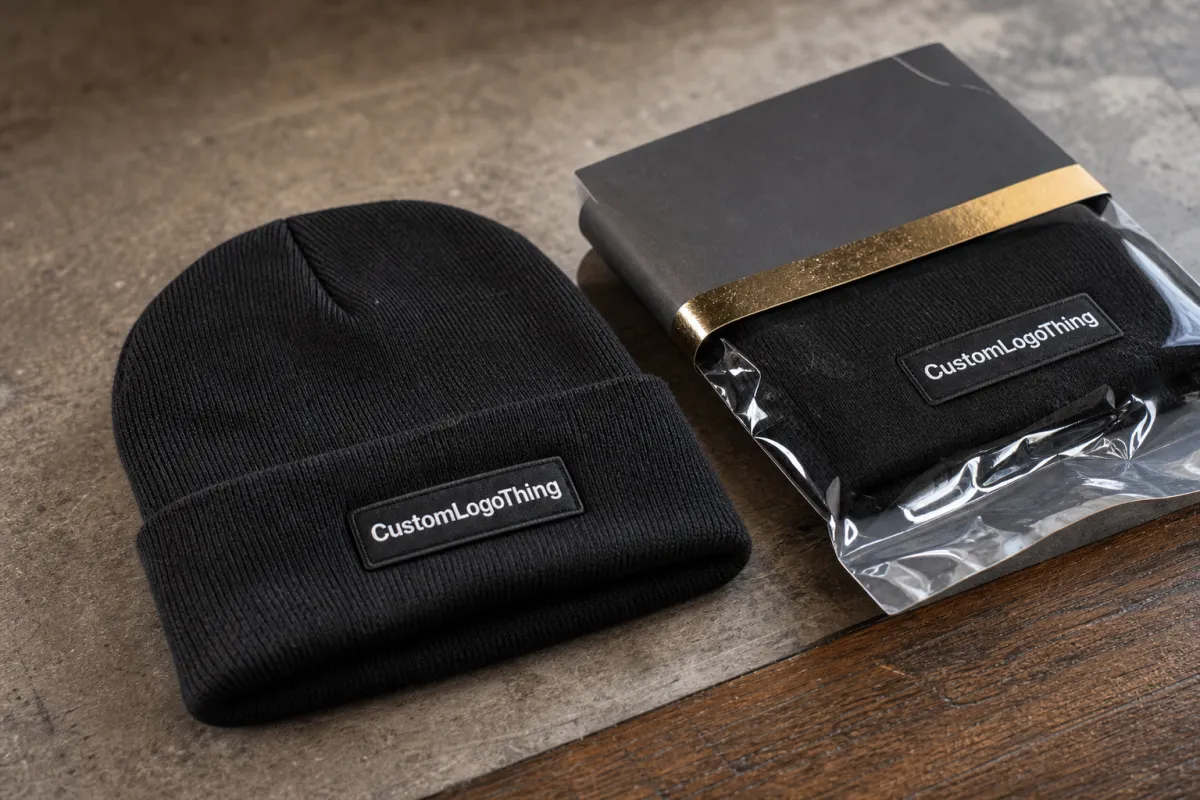
Acrylic wins for one simple reason: it scales without turning the project into a budget problem. A custom acrylic Beanies Bulk Order usually makes sense when you need repeatable sizing, a fast route from artwork to approval, and a product that can be reordered without reworking the entire spec. That is why it shows up so often in team apparel, promotional programs, and entry-level retail.
In practical terms, acrylic knit is light, warm enough for most climates, and forgiving on fit. Stretch construction covers a wide adult range, which simplifies stock planning and distribution. You do not need the same size matrix you would need for shirts, hoodies, or outerwear.
The strongest use cases are easy to spot:
- Employee uniforms for warehouses, delivery crews, maintenance teams, and outdoor staff.
- Event giveaways where the priority is visibility and controlled unit cost.
- Campus retail and bookstore programs that need a price point customers will actually touch.
- Seasonal merch drops where the product has to feel useful, not disposable.
Storage is a quiet advantage. Acrylic beanies pack flat and stack well, so holding inventory is less painful than with bulky apparel. That matters if you are staging for a launch, storing reorder stock, or splitting shipments across multiple locations.
The best programs also keep the materials honest. Ask what percentage is acrylic, whether the knit is single-layer or double-layer, and whether any recycled or blended fiber is being used. A clear spec sheet beats vague descriptions every time. If your order includes paper components, FSC-certified paper is worth asking for, and carton design should be simple enough to protect the goods without adding unnecessary material.
For shipping and transit, the safest approach is the boring one: sturdy cartons, clear labels, and pack-outs that can survive handling. A beanie can take a lot, but crushed cartons and sloppy packing still cause damage, especially when items are being redistributed after receipt.
Styles, fit, and decoration choices that drive demand
Start with the body style. It affects price, look, and how the logo reads on the finished product. Cuffed beanies are still the default for a reason: they are clean, easy to brand, and usually the most cost-efficient. Slouch fits lean more casual. Pom-top styles push the product toward retail. Double-layer construction adds warmth and structure, but it also adds material and labor.
Decoration should follow the artwork, not the other way around. A bold mark with simple shapes can work well in jacquard knit. A logo with small text or thin outlines usually looks better as an embroidered patch, woven label, or rubber badge. Those methods hold detail more reliably and avoid the fuzzy edges that knit goods can create.
That is the part many first-time buyers underestimate. Knit decoration is not a digital print file. Thin lines disappear. Tiny type gets muddy. Fine gradients can flatten out. If the design depends on those elements, the spec needs to change before production starts.
If the logo needs small text to make sense, the knit spec is already too ambitious. Simplify the art or move the detail to a patch or label.
Useful style and decoration pairings usually look like this:
| Style / Decoration | Typical MOQ | Typical use | Pricing impact |
|---|---|---|---|
| Cuffed acrylic beanie | 50-100 units | Teams, giveaways, basic retail | Lowest setup burden |
| Double-layer knit | 100-200 units | Colder markets, more structure | Moderate increase |
| Jacquard logo knit | 100-300 units | Bold branding, repeated patterns | Higher setup, better at volume |
| Embroidery patch | 50-150 units | Small logos, sharper detail | Patch cost rises fast on low qty |
| Woven label or rubber badge | 100+ units | Retail programs, cleaner finish | Middle ground between simple and premium |
That table is the part worth using. A restrained beanie often looks better on shelf than a crowded one with too many materials fighting for attention. If the cap is sitting next to other wholesale goods, a clean decoration choice can carry the brand better than a stacked-up design with every option turned on.
Color choice matters too. Solid yarns are the easiest to approve and usually the most predictable. Heather and marl yarns can look richer, but they also change contrast. That can help a logo in some cases and bury it in others. A mockup is useful, but a physical swatch is better. Knit goods have a way of turning “close enough” into “not quite right.”
Specs that affect color, sizing, and logo clarity
Specs are where most quote differences start. Final pricing and final appearance depend on yarn weight, stitch density, cuff height, body length, stretch range, and whether the beanie is single-layer or double-layer. If two vendors quote the same “custom beanie” but one does not list those details, the comparison is not clean.
The practical buyer question is simple: what is being made, exactly? A light 6-gauge cuffed hat is not the same as a denser double-knit cap with a woven label and internal seam finish. One may look nearly identical in a mockup while behaving very differently in production.
Color approval is another place where people get burned. On-screen proofs can make almost any color look acceptable. Yarn does not behave that way. It picks up light, texture, and knit density differently. If the project depends on exact brand matching, confirm Pantone targets early and ask for a physical sample or swatch reference before locking the run.
Logo clarity depends on scale and method. Tiny symbols, hairline strokes, and compact text can break down once they are knit into fabric. If the artwork can be simplified, simplify it. If it cannot, move it to a patch, woven label, or badge. That usually produces a better result and avoids a second round of revisions.
Packaging can change the spec just as much as the hat itself. Bulk cartons are the cheapest route. Individual polybags add labor and material. Belly bands, hang tags, barcode stickers, and retail-ready folding all add handling steps. If the product is going into a store or distribution center, carton labeling and barcode placement need to be resolved before production, not after the box is already packed.
For paper inserts or hang tags, FSC-certified stock is a reasonable request. It is one of the few sustainability claims that actually tells you something useful. On the shipping side, reducing unnecessary layers of material is a better target than piling on vague eco language. Less waste, fewer packing steps, fewer moving parts.
Useful spec checklist:
- Yarn blend: confirm acrylic percentage and any blended fiber content.
- Body structure: single-layer or double-layer, plus cuff height.
- Decoration file: vector artwork with clear line weights and color references.
- Packing requirement: bulk carton, individual polybag, band, or retail-ready pack.
- Carton labeling: SKU, color, quantity, and any receiving codes.
If those five items are clear, the quote usually gets cleaner too. If they are vague, the order will probably drift through revisions. That delay costs more than most buyers expect.
Pricing a custom acrylic beanies bulk order
Pricing is not random, even if some quotes make it feel that way. The main drivers are quantity, decoration method, yarn colors, packaging, and whether the buyer wants custom labeling. Every extra material change or labor step pushes the unit cost upward.
For a custom acrylic Beanies Bulk Order, the price range usually tightens as quantity rises. A simple cuffed beanie with one embroidered patch can stay very manageable at 100 units. A multi-color jacquard knit with a pom, woven label, and retail hang tag is a different product class. Same category. Different cost structure.
| Order Size | Simple Cuffed Beanie | Patch or Label Version | Jacquard / Pom Style |
|---|---|---|---|
| 50-100 units | $4.25-$6.50 each | $5.25-$8.25 each | $6.50-$10.50 each |
| 200-500 units | $3.10-$4.75 each | $4.00-$6.25 each | $5.25-$8.25 each |
| 1,000+ units | $2.20-$3.80 each | $3.10-$5.25 each | $4.50-$7.25 each |
Those numbers are directional, not promises. Yarn availability, artwork complexity, packaging requirements, and freight terms can move a quote. The pattern still holds: simple builds scale better, and extra decoration or retail finishing usually pushes landed cost up faster than buyers expect.
Two quotes can also look close on unit price and still be completely different. One may include bulk cartons only. The other may include polybags, barcode labels, custom hang tags, and domestic delivery. If the terms are not aligned, the comparison is useless.
A cleaner request should always spell out:
- Quantity per color.
- Decoration method and placement.
- Packaging format.
- Shipping term and destination.
- Any setup fees or sample charges.
That gives you a real number instead of a placeholder. It also makes it easier to compare vendors without guessing what each quote is hiding.
Proofing, production timeline, and delivery workflow
The cleanest order flow is straightforward: send artwork and quantity, confirm the spec sheet, review the mockup, approve the sample or pre-production proof, then move into production. If someone wants to skip one of those steps, the odds of a mistake rise fast. That is not bureaucracy. That is how knit goods stay predictable.
Fast is possible, but only when the art and spec are already tight. Straightforward runs move faster after approval. More complex builds take longer because multiple yarn colors, custom knit patterns, or special trims add setup time. I would rather see a buyer build a realistic schedule than try to force a rush and end up with a bad shipment.
The most common delays are also the most avoidable:
- Slow art approval.
- Missing vector files.
- Unclear packaging instructions.
- Last-minute edits after the proof stage.
- Incorrect delivery address or receiving details.
For planning, a simple project often needs 1-3 business days for proofing once the artwork is ready, then roughly 10-20 business days for production after approval. More complex knit styles, special labeling, or retail packaging can extend that window. Freight is separate. It should be treated as separate. Too many buyers still combine production and transit into one imaginary timeline and then act surprised when the truck has not arrived.
If the order supports a launch, event, or store drop, leave buffer time for sampling, rework, and shipping delay. A five-day cushion can be enough for a domestic move. Cross-country distribution, store-by-store delivery, or seasonal freight usually deserves more.
Seasonal merchandise programs stay smoother when the beanie, tag, and carton label are approved as one system instead of three unrelated items. The more disconnected the pieces are, the more room there is for mismatched artwork and late-stage corrections.
Factory checks that protect quality across the run
A good factory does not wait until the final carton to find a problem. It checks stitch density, edge finishing, logo alignment, cuff symmetry, and size consistency before shipment. That is the baseline. If the production team cannot explain how those checks happen, you are taking on risk that does not need to be there.
Oversight matters too. Direct factory communication usually catches errors earlier than a workflow that bounces through too many middle layers. Fewer handoffs mean fewer opportunities for a size note or placement instruction to get interpreted creatively. That saves time, and often money, because reworking a large run is expensive and pointless.
Good proof signals include:
- Actual sample photos, not only polished mockups.
- Previous references for similar knit weight or decoration method.
- Yarn swatches or color chips.
- Packing photos before cartons leave the facility.
I also like to see a simple quality checklist with tolerances spelled out. If the label can shift a few millimeters, say that. If the cuff height needs to stay within a defined range, say that too. Specifics protect both sides. Vague expectations only create a dispute after the goods are already moving.
The best repeat orders are the ones with a locked spec and a known approval chain. Once the stitch count, trim choice, and pack format are right, the reorder becomes much easier to manage. That is especially useful for seasonal programs that want the same look every year without rebuilding the whole brief.
Common ordering mistakes and a cleaner quote checklist
Most ordering mistakes are boring, which is why they keep showing up. The biggest one is overloading the design with too many colors, too much text, or tiny knit details the fabric cannot hold cleanly. Buyers often want more logo information than the product can support. The result is a busier, weaker beanie and a higher price.
Late approvals are the next problem. If the buyer waits too long to confirm the mockup, the deadline slips. Production cannot start on an unapproved file, and rushed edits usually create preventable errors.
Retail extras are another common blind spot. Sleeves, hang tags, carton labels, and split shipments can change the landed cost more than expected. A beanie that looks cheap in factory pricing can become expensive once the buyer adds retail finishing and distribution handling. That is normal. It just needs to be planned from the start.
Send a cleaner quote request by including these items in one message:
- Target quantity and any color split.
- Logo file in vector format.
- Preferred beanie style and decoration method.
- Exact delivery date and ship-to address.
- Packaging requirement, including retail packaging if needed.
That is usually enough for a vendor to give you a real quote instead of a placeholder. If the order sits inside a bigger wholesale merch plan, keep the inquiry tied to the same product family so the spec stays consistent across runs. Matching insert cards, carton labels, or box finishes can improve presentation without forcing the hat itself into a premium price bracket.
Honestly, the best orders are the ones with fewer surprises. Clean art, clear quantities, simple packaging, and one decision-maker on the buyer side. That is how a Custom Acrylic Beanies Bulk order stays on budget, stays on schedule, and avoids the usual mess of revision loops and freight confusion.
What is the usual MOQ for a custom acrylic beanies bulk order?
Simple cuffed beanies often start around 50 to 100 units. More complex builds, such as custom knit patterns, pom styles, or extra trims, usually need 100 to 300 units or more, depending on the factory and the decoration method.
How long does a custom acrylic beanies bulk order take?
Proofing can take 1 to 3 business days if the artwork is ready and the spec is clear. Production commonly runs about 10 to 20 business days after approval, then shipping time adds on top of that.
Which decoration method works best for acrylic beanies in bulk?
Embroidery patches and woven labels usually handle fine detail better than direct knit text. Jacquard knit works well for bold graphics, but it is not the best choice for tiny lettering.
Can I order multiple colors in the same bulk beanie run?
Yes, but each colorway can affect MOQ and pricing because it may require separate yarn allocation or setup. A tighter color palette usually gives you a cleaner quote and easier production.
How do I get the best unit price on custom acrylic beanies bulk order pricing?
Keep the design simple, limit decoration complexity, and avoid premium packaging unless it supports retail presentation or sales. Ordering more units and sending vector art with clear specs usually improves the quote and reduces revision time.

