For staff gifts, retail drops, winter events, and uniform programs, a custom logo patch Beanies Bulk Order usually gives stronger brand visibility than a blank knit hat. The patch gives the logo a defined face, so it reads faster, photographs better, and holds up when the knit starts to relax with wear.
That difference matters because patch branding stays legible on ribbed yarn, stretch cuffs, and low-profile styles. A beanie can be warm and forgettable, or warm and branded. Buyers usually want the second one because people keep wearing it.
Before placing an order, it helps to review the same basics a packaging manager would: unit cost, proof workflow, carton plan, reorder consistency, and whether the decoration choice fits the knit structure. Cheap is easy. Clean is the part that needs attention.
Why Patch Beanies Outsell Blank Winter Hats in Bulk
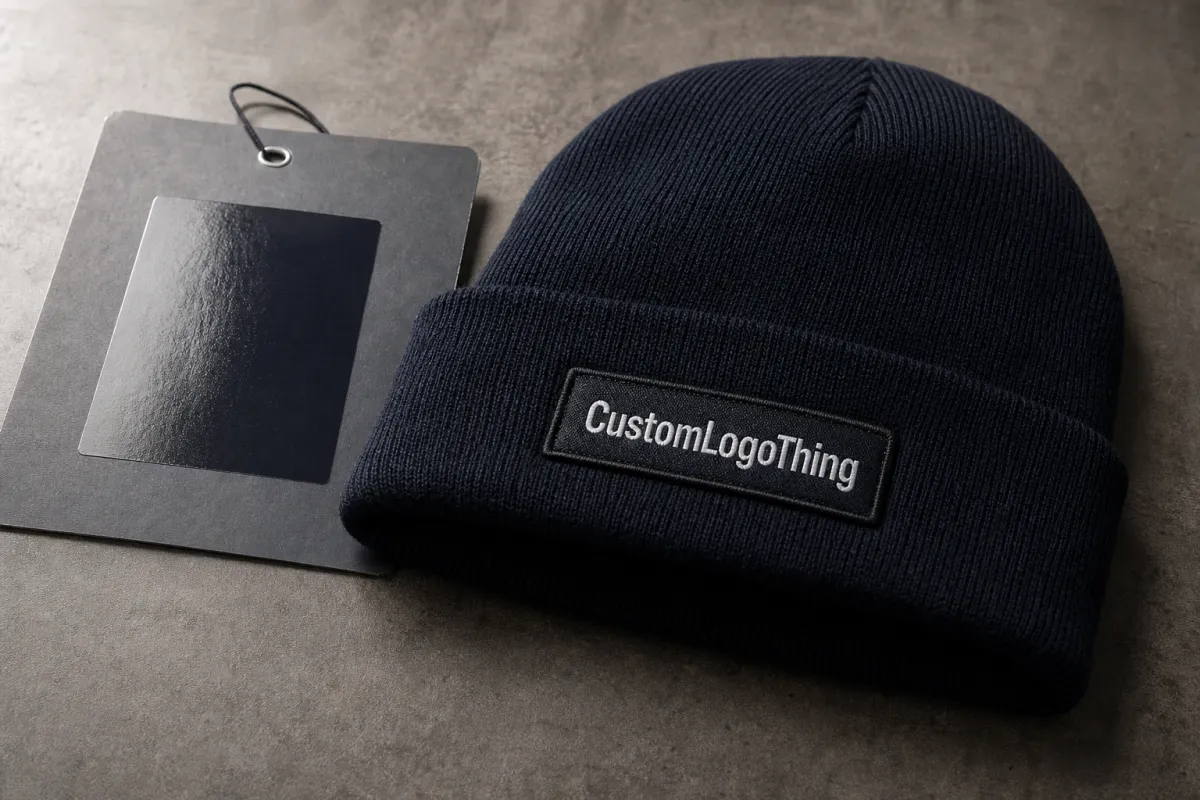
Blank winter hats are inexpensive, but inexpensive is not the same as effective. If the goal is long-term logo visibility, a patch usually beats direct embroidery on thick knit. Embroidery can sink into the yarn, warp on stretch, or lose its edge when the stitch density fights the fabric. A patch gives the artwork a stable border and keeps the logo easier to read.
The patch also changes how the item is perceived. It looks designed. That matters for welcome kits, resale, and event giveaways where the beanie needs to feel intentional rather than rushed. A blank hat says utility; a patch says the product was thought through.
There is a practical reason too: patch branding is easier to spot from a few steps away. On a crowded table, a clean patch reads faster than small needlework buried in knit texture. That matters for retail displays, trade show pickup counters, and bundled gift packs.
For internal programs, the result is usually fewer complaints and better adoption. People wear items that look good with regular clothes, not just in a catalog. For retail, the patch helps justify a stronger price point. For events, it keeps the giveaway from feeling disposable.
Patch Styles and Placement That Strengthen the Brand Mark
Patch material sets the tone. Woven patches work best for fine detail and small type because they hold line work more cleanly than most knit-decoration methods. Leather patches create a warmer, premium look. PVC and silicone patches suit bold shapes and modern branding. Embroidered patches sit in the middle with a familiar stitched texture.
Placement matters just as much. Center cuff placement is the most common because it gives the patch a flat field and strong visibility. Side cuff placement feels more fashion-forward and can help if the front panel needs to stay clean. Front-crown placement works on beanies with enough structure to keep the patch centered.
| Patch Type | Best Use | Visual Result | Typical Add-On Cost Impact |
|---|---|---|---|
| Woven | Detailed logos, small text | Flat, sharp, crisp edges | Moderate |
| Leather | Premium staff gifts, retail | Warm, restrained, upscale | Moderate to higher |
| PVC / Silicone | Bold marks, simple shapes | Tactile, modern, durable-looking | Moderate |
| Embroidered | Texture-led branding | Classic stitched appearance | Lower to moderate |
Edge treatment is one of those details people ignore until the sample arrives. A merrowed edge feels traditional. A laser-cut or heat-cut edge feels cleaner on modern branding. Neither is universally better. The right answer depends on logo style, beanie color, and how much contrast the patch needs.
Color count should stay restrained. If a logo has thin outlines, tiny words, or layered gradients, the patch may look better simplified to one or two colors. That is not a compromise. It is production discipline. A small patch on knitwear is not a billboard.
Materials, Fit, and Construction Details Buyers Should Check
Beanie fabric controls comfort, price, and how well the patch holds its shape. Acrylic is the common baseline because it is warm, economical, and easy to source in bulk. Acrylic-wool blends feel better in hand and can support a more retail-friendly position. Recycled yarns are appearing more often, especially in programs that already use FSC-certified packaging or other documented material standards.
Fit changes more than buyers expect. A cuffed beanie gives more decoration space and usually offers the safest layout for a patch. Uncuffed and slouch styles can look sharper in fashion-led programs, but the patch has to be placed carefully or it starts to drift visually. Knit gauge matters too. Tighter gauge usually looks cleaner and keeps the structure more stable.
Construction details decide whether the order still looks good after it reaches the end user. Crown shaping, seam finish, stretch recovery, and cuff depth all affect wear. If the beanie loses its shape, the patch can appear off-center even if it was installed correctly. That is why a true sample matters more than a polished mockup.
Buyers should also check comfort at the forehead and around the ears. A beanie that looks good flat on a table can still feel itchy, shallow, or too loose on a real head. If the order is for staff distribution, ask how the style performs across a mixed group of wearers. If it is for resale, check how it looks after a few minutes of wear, not just right out of the bag.
Custom Logo Patch Beanies Bulk Order: Cost, MOQ, and Quote Drivers
Pricing depends on more than the hat itself. The main drivers in a Custom Logo Patch Beanies Bulk order are beanie style, patch material, patch size, decoration position, packaging, and freight. A basic acrylic cuffed beanie with a woven patch and simple polybagging will land in one range. Add leather, custom inserts, or retail-ready presentation, and the number moves quickly.
Quantity changes the unit cost in noticeable steps. A 100-piece order carries a bigger share of setup and handling than a 500-piece order. The hat is not changing. The fixed work is just spread across fewer units. That is why a slightly larger run can sometimes be the better business decision.
Quotes only become useful when they are built on the same spec. Ask every supplier for the same items: blank sample cost if applicable, decorated sample or proof fees, setup charges, packaging, freight, and lead time. Otherwise one quote looks cheap because half the costs are sitting outside the line items.
Typical bulk pricing for standard production, assuming ordinary decoration and no rush premium, often falls in these ranges:
| Order Size | Typical Unit Range | What Usually Changes |
|---|---|---|
| 100-249 pieces | $4.25-$7.00 | Higher setup share, limited economies |
| 250-499 pieces | $3.25-$5.25 | Better spread on decoration and packing |
| 500-999 pieces | $2.85-$4.50 | Improved pricing on materials and labor |
| 1,000+ pieces | $2.10-$4.00 | More efficient production and carton handling |
Those numbers are a guardrail, not a promise. If a quote lands far below that, check the patch size, fabric weight, shipping terms, and packaging scope. Small omissions can hide inside a low headline price. On the other side, a high quote is not always overpriced. It may include carton labeling, special inserts, or a tighter production window.
MOQ is another point that gets fuzzy fast. Some suppliers quote minimums per colorway. Others allow a combined total across several colors. That difference matters if the program needs black, navy, and gray in one run. Ask early so the split does not have to be rewritten later.
Process, Proofs, and Lead Time From Art File to Shipment
The cleanest production path starts with the artwork file. A vector logo is best, along with quantity, beanie style, patch material, placement, and ship-to destinations. From there, the supplier should prepare a patch mockup and a decorated proof. Once that proof is approved, the order moves into production, final inspection, and shipment.
Lead time is controlled by proof speed more than anything else. If the file is clean and the layout is approved the same day, production can move. If the logo needs cleanup, color decisions, or patch resizing, the schedule stretches. That is normal for custom work.
For a standard custom logo patch Beanies Bulk Order, 12-15 business days after final proof approval is a reasonable target when materials are in stock and the patch is straightforward. More complex patch construction, custom labeling, or split shipping can add days. Rush orders are possible sometimes, but they leave less room for error.
QC should happen at more than one point. The proof should confirm logo size, patch placement, contrast, and packaging notes. Once production starts, useful checks are whether the patch sits flat, the edge is clean, and the color reads correctly under normal light. Buyers should also ask how carton counts are verified and whether the final packout matches the approved spec.
Distribution standards matter here too. Packaging testing frameworks such as those published by ISTA help teams think about transit stress, and that mindset is useful even for apparel and accessories. If the order includes paper inserts or carton components, FSC certification can support responsible sourcing claims without overcomplicating the project.
"The fastest order is not the one you rush first. It is the one you approve cleanly the first time."
Packaging, Labeling, and Reorder Consistency for Multi-Location Buyers
Packaging is part of the product. A beanie going into a retail shelf set needs different handling than one going into a welcome box or a trade show kit. A clean polybag with a barcode label makes warehouse intake easier. A size sticker cuts sorting time. A clearly marked master carton reduces receiving mistakes before they start.
For multi-location buyers, the label plan affects labor and freight. If the order needs individual bagging, location codes, or special carton marks, those details should appear in the quote from the start. The same logic used in Wholesale Programs for other branded goods applies here too: unclear instructions create extra work somewhere else.
Reorder consistency is where a solid vendor earns its keep. If the supplier saves the art file, patch spec, placement measurement, and packaging notes, the second run should be easier. Color still depends on yarn availability and dye lot control, so there is no magic fix for that. But solid documentation reduces variation.
Some programs also need the beanie to fit into a larger branded kit. That may mean pairing the order with Custom Packaging Products such as inserts, mailers, or presentation boxes. The goal is not to add layers for decoration's sake. It is to make the distribution process cleaner and the final presentation more coherent.
For retail, shelf speed matters. For internal gifts, presentation can matter more than barcode visibility. For event handouts, the simplest package often works best because the handoff needs to move fast. The smart buyer matches packaging to the use case instead of forcing one format across every channel.
What a Reliable Bulk Beanie Program Looks Like
A reliable program is boring in the best way. The quote matches the final invoice. The proof matches the production run. The delivery window does not drift every other day. That is the baseline buyers want, even if nobody puts it in a deck.
Good suppliers do not hide the hard parts of a Custom Logo Patch Beanies bulk order. They say what the patch costs, what the packaging includes, when the proof starts, and what can slow the schedule down. That kind of clarity is useful because it keeps seasonal orders from turning into emergency email threads.
Repeat runs are where process either holds or falls apart. If the same style is ordered later in black, navy, or heather gray, decoration placement should stay consistent across colors. If the order needs to split by warehouse or department, the supplier should be able to keep the packout organized without turning it into a side project.
"The right supplier makes the next reorder feel routine, not risky."
Next Steps to Lock In Artwork and Delivery
Before asking for pricing, gather the essentials: quantity, beanie style, logo file, patch type, placement, packaging requirements, and shipping destinations. That one list saves time on both sides and keeps quotes comparable. It also keeps the order from changing halfway through the approval cycle.
Then review the proof with a production eye. Check logo size, contrast, placement, label instructions, and carton markings. If the order is going to multiple sites, confirm whether the shipment should be split or consolidated. Freight and receiving can change a lot based on that one decision.
A clean workflow is simple: choose the style, confirm the patch, approve the mockup, then move into production. If the broader program includes other branded items, review the FAQ first so the common questions are settled before proofing starts. That keeps the actual work moving.
For buyers comparing suppliers, the real measure is not whether the beanie looks good in one photo. It is whether the final order arrives on time, matches the approved spec, and holds up once people start wearing it. That is the standard that matters for staff programs, retail programs, and winter event kits.
FAQs
What is the minimum order for custom logo patch beanies bulk orders?
Minimums vary by beanie style and patch type. In bulk programs, the MOQ usually becomes more efficient once the order moves beyond a small test quantity. Ask whether the minimum applies per colorway or across the full mix, because that changes planning fast.
Which patch material works best for custom logo patch beanies in bulk?
Woven patches handle fine detail well. Leather reads premium and restrained. PVC and silicone are better for bold, simple shapes. There is no universal winner. The right choice depends on logo complexity, budget, and how the beanie will be used.
How long do custom patch beanie bulk orders usually take?
Lead time depends on proof approval, patch complexity, stock availability, and order size. A standard run can often ship 12-15 business days after final proof approval if materials are ready. Revisions and special packaging add time.
What affects the price of a custom logo patch beanie order?
Fabric type, patch material, patch size, packaging, freight, and quantity all affect the final number. Setup charges matter more on smaller runs. Larger orders usually get better unit pricing because the fixed work is spread out.
Can I reorder the same custom logo patch beanies later?
Yes, if the original art file, patch spec, placement notes, and packaging details were saved. Reorders are usually faster when the documentation is clean. Color consistency still depends on yarn availability and dye lots, so expect small variation.

