Buyers often ask for a Custom Plastic Garment Bags production timeline as if it should be one clean number. It rarely is. The schedule depends on the bag style, the artwork status, the print method, the order quantity, and whether the supplier is making a plain protective bag or a branded retail piece with extra finishing steps.
The fastest part is usually the actual machine time. The slow parts are the ones people underestimate: artwork cleanup, proof approval, sample sign-off, carton planning, and freight booking. A bag can be simple and still get delayed by one missing dimension or a logo file that was never really print-ready. Packaging is funny that way. It punishes vague briefs.
If you are comparing formats while you plan the order, our Custom Packaging Products page is a useful place to think through where garment bags fit into the larger packaging mix.
What buyers really mean by a garment bag timeline
When someone asks about timing, they usually mean one of three things: how fast they can get a quote, how long production will take, or when the order will arrive. Those are different questions. A supplier can answer the quote in a day and still need two or three weeks to produce the bags, then another week or more for freight.
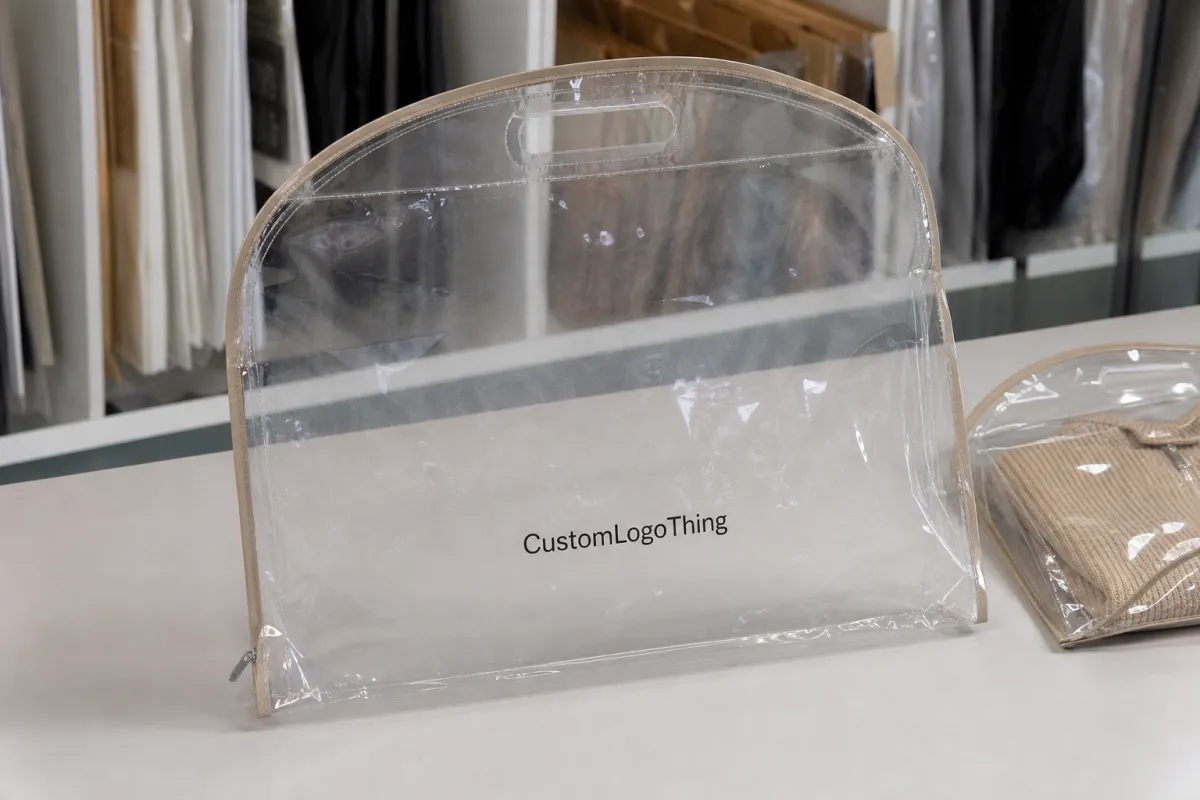
The product itself changes the calendar. A plain poly garment bag for apparel protection is straightforward. A printed retail garment bag with a hanger cutout, zipper, gusset, and custom folding takes more setup. So does a bag built to match a brand color closely or to fit unusual dimensions. Common film gauges such as 2 mil or 2.5 mil LDPE usually move faster than thicker, more customized constructions because the factory can run them with less adjustment.
The useful question is not, “How fast can you make it?” Ask for the sequence. Where does the process start, what needs your approval, and what can slip the date? That is the difference between a real schedule and a nice-sounding promise.
Rule of thumb: the production clock starts after final specs and approved proof are in hand, not when the first email goes out.
Custom plastic garment bags production timeline: the real step-by-step path
A realistic custom plastic garment Bags Production Timeline usually moves through seven stages: inquiry, spec confirmation, quote, artwork prep, proofing or sampling, production, packing, and freight booking. Some steps overlap. Others do not. You can ask for a quote while artwork is still being refined, but you cannot print a job that has not been approved.
- Inquiry and spec confirmation: 1-2 business days if the brief is complete; longer if dimensions or print details are vague.
- Quote: 1-3 business days for standard jobs; longer if tooling, samples, or special finishes are involved.
- Artwork prep and proof: 1-5 business days depending on whether the files are already print-ready.
- Sampling or digital proof approval: same day to 1 week, depending on complexity and internal review speed.
- Production: often 7-15 business days for standard custom runs, 15-25 business days for more complex jobs.
- Packing and QC: 1-3 business days.
- Freight booking and transit: separate from production; air is faster, ocean is cheaper.
Standard orders move faster because the supplier can use familiar widths, common bag sizes, and a known print process. Printed garment bags tied to retail packaging or brand presentation need more checks and more care during setup. That is normal, not a red flag. It also explains why one factory may accept a rush order for a plain bag and decline the same request for a multi-color custom printed bag.
Ask for best-case and worst-case lead time. If a supplier only gives the optimistic number, they are selling confidence, not schedule control. A real answer should tell you what happens if approval takes longer, if the art needs revision, or if the production queue shifts.
For shipment testing and packaging handling, the ISTA guidelines are a useful reference. If your order also involves paper inserts, cartons, or mixed-material secondary packaging, the FSC system is worth checking before you lock the quote.
What drives quote size, MOQ, and unit cost
Pricing on garment bags is mostly math. Dimensions, film thickness, print colors, closure style, and packing format push the cost up or down. A plain unprinted bag in a standard size is cheaper because setup is simple. A custom printed bag with a zipper, hanger hole, and retail-ready folding is a different job entirely.
MOQ means Minimum Order Quantity. Lower quantities usually raise the unit cost because the factory still has to cover setup, proofing, and labor. Buyers sometimes expect the price to fall in a straight line. It does not. For printed plastic garment bags, price breaks often start around 3,000 to 5,000 pieces, then improve again at 10,000 or more, depending on size and print coverage.
| Option | Typical MOQ | Common unit range | Lead time tendency |
|---|---|---|---|
| Plain stock-style poly bag | 1,000-3,000 pcs | $0.06-$0.14 | Fastest |
| One-color printed garment bag | 3,000-5,000 pcs | $0.12-$0.24 | Moderate |
| Multi-color custom printed bag | 5,000-10,000 pcs | $0.22-$0.45 | Slower |
| Special features or custom structure | Often 10,000+ pcs | $0.35-$0.75+ | Longest |
Watch for hidden costs. Some suppliers quote a neat unit price and then add plate charges, setup fees, extra samples, carton upgrades, or a rush fee that somehow never appeared in the first email. Freight can do the same thing. A job that looks cheap on paper can turn expensive once the real shipping mode and destination are included.
The better question is not, “What is the lowest price?” It is, “What is included, and what can change after approval?” That question saves more money than squeezing out a tiny unit discount.
Specs that change lead time the most
Some specs barely move the schedule. Others slow everything down. Unusual sizes are a common culprit because the factory may need to adjust film widths or cutting settings. Custom hanger holes, gussets, zippers, heavier gauges, and special folding requirements add steps and more room for error.
Print complexity matters too. A one-color logo on clear film is simple. Full-coverage printing, metallic ink, tight brand color matching, or artwork with fine type usually means more proof cycles. If your files are not print-ready, expect delays. Missing bleed, low-resolution images, and unclean color builds are the usual suspects.
There is also the factory queue, which buyers often ignore until it bites them. Resin supply, packaging materials, and current production load can all affect the schedule. Two identical quotes can still carry different ship dates because the shop floor is not empty and time does not care about your launch date.
For material checks, ask about film strength in plain terms. Tensile strength and dart impact are useful references when a bag needs to survive handling and shipment. You do not need a lab report for every order, but you do want confidence that the film grade matches the job instead of just sounding premium in a quote.
A practical ordering workflow from brief to shipment
The cleanest orders start with a complete brief. Send the supplier the bag dimensions, material preference, thickness, print details, quantity, target ship date, and destination. If you need a folded size, carton count, or retail-ready packing format, include that too. The less guesswork, the shorter the back-and-forth.
When the quote comes back, do not stare only at the unit price. Check the MOQ, print method, whether tooling is included, and whether the schedule assumes digital proof approval or a physical sample. If the quote says 12-15 business days but assumes your art is already final, the timeline will slip the moment the file needs cleanup.
Proofing deserves real attention. A digital proof is usually enough for simple logos, basic text, and straightforward layouts. A physical sample is worth the extra time when the job has strict brand standards, unusual closures, or a packaging presentation that needs to be checked in hand. A few extra days at this stage is cheaper than a reprint.
Use this order of operations:
- Confirm dimensions and film gauge first.
- Approve artwork only after bleed, colors, and placement are checked.
- Lock carton count and folding method before freight booking.
- Ask for milestone updates during production, not just a final “done” email.
- Request pre-shipment photos so you can verify print and packing before the goods leave.
That workflow works for Custom Plastic Garment Bags, and it works for other packaging categories too. The details change. The discipline does not.
Common mistakes that add days and dollars
Vague specs are the biggest time trap. “Need garment bags, maybe clear, maybe printed” is not a brief. It is an invitation for delays. The supplier has to ask follow-up questions, revise the quote, and wait for confirmation on details that should have been decided already.
Approving artwork too quickly causes a different kind of mess. Buyers often glance at a mockup, nod, and move on without checking bleed, final size, or whether the brand color is correct on the chosen film. Then the proof arrives, the file needs correction, and the schedule slips. The factory is not being difficult. It is working from the file you sent.
Chasing the lowest quote can backfire too. A cheap price may hide a larger MOQ, a slower schedule, or a setup process that makes changes expensive. This shows up all the time in branded packaging programs: the buyer saves a few cents, then pays for air freight, revision rounds, or a second run because the first one missed the mark.
Shipping mistakes are classic. Production finish date is not arrival date. A bag that leaves the factory on Friday does not appear in your warehouse on Monday unless physics has changed careers. Build transit into the plan, especially if the bags support a launch, seasonal rollout, or store opening.
Garment bags should be treated like any other customer-facing packaging item. Final print approval, carton specs, and freight mode belong in the schedule from the beginning. That is how package branding stays on track instead of becoming a last-minute scramble.
Expert checks before you request quotes
Before you request pricing, line up a simple checklist. Final dimensions. Target quantity. Film thickness. Print colors. Folding or packing style. Delivery deadline. Destination. If you have artwork, include the files. If you have brand standards, include those too. Better input usually means a cleaner quote.
Ask every supplier for both best-case and worst-case lead time. If they only give the optimistic number, that is not planning. That is sales with a stopwatch. A useful schedule should show what happens if proof approval takes two days, if the artwork needs revision, or if the factory queue shifts by a week.
Also confirm what the quote includes. Tooling. Proofs. Freight. Rush fees. Carton configuration. If those items are missing, the final price can drift quickly. Plenty of buyers compare only unit prices and then wonder why the “cheaper” quote ends up costing more. Mystery solved.
Short buyer checklist:
- Do I know the exact bag size and film gauge?
- Is my artwork ready for print?
- Does the quote list MOQ, setup, and shipping?
- Is the lead time realistic for my launch date?
- Do I understand production time and transit time separately?
That is the clean way to buy. It works for custom plastic garment bags, and it works for other packaging programs too. If you need to compare adjacent options while you build the order, our Custom Packaging Products page is a good starting point for thinking through material, structure, and branding consistency.
The best custom plastic garment Bags Production Timeline is not the shortest one on paper. It is the one that matches your specs, artwork, freight plan, and launch date without surprise revisions. Start with a complete brief, ask for the real sequence, and the schedule becomes far more manageable. That is about as close to luxury as procurement gets.
How long does a custom plastic garment bags production timeline usually take?
Simple stock-style orders can move quickly, but custom printed runs usually need extra time for proofing and setup. Lead time depends on size, material, print complexity, and quantity, so ask for a range instead of a guess. Shipping time is separate from production time, which is where a lot of buyers get surprised.
What specs shorten the custom garment bag production timeline the most?
Clear dimensions, standard film thickness, and print-ready artwork remove the most delays. Choosing a common bag style with fewer special features usually speeds up quoting and manufacturing. Fast approvals matter too; a delayed proof can slow the whole order more than the machine run.
How does MOQ affect pricing for custom plastic garment bags?
Higher MOQ usually lowers unit cost because setup is spread across more bags. Lower quantities often raise the per-bag price fast, especially on printed orders. If budget is tight, compare the MOQ threshold against your actual usage so you do not overbuy.
Can rush orders reduce the lead time on custom garment bags?
Sometimes, but only if the factory has capacity and the order does not need complex tooling or long approvals. Rush orders usually work best when the specs are simple and the artwork is already final. Freight speed can be upgraded, but that does not fix a slow proof or a missing spec sheet.
What should I send to get an accurate quote for custom garment bags?
Send bag dimensions, material preference, thickness, quantity, print colors, and target delivery date. Include artwork files and any packaging requirements like carton count or folded size. The more complete the brief, the cleaner the quote and the less likely you are to get surprise revisions.

