Custom Beanies for Event Staff: Order Smarter Bulk Hats Custom Beanies for Event staff are a practical uniform choice when crews need warmth, easy identification, and a cleaner look than layered outerwear. The value is not just branding. It is keeping people comfortable, reducing distraction, and making the team visible without adding bulky gear.
The best orders are the ones that are easy to repeat, easy to inspect, and easy to wear for a full shift. That depends on the blank style, decoration method, price structure, and lead time more than on the logo alone. If those pieces are clear, the order is usually straightforward.
What custom beanies for event staff actually solve
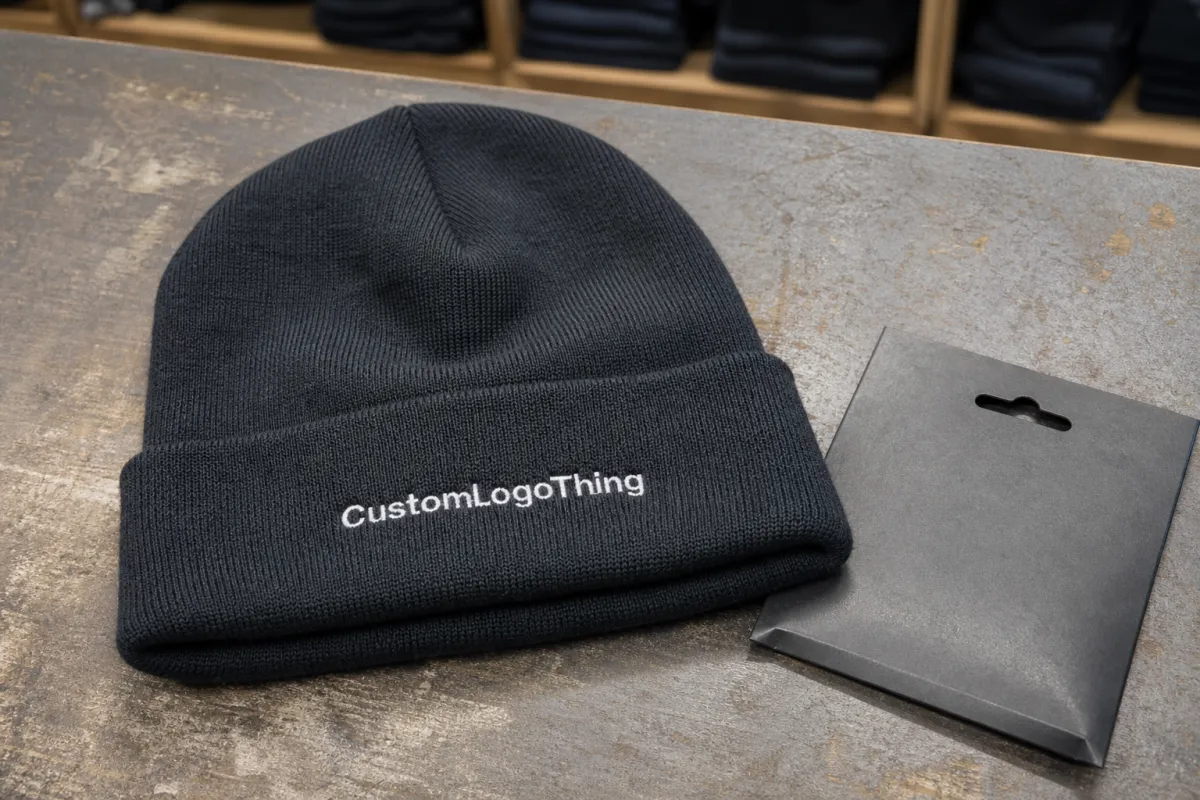
From a buyer’s perspective, a beanie has three jobs: keep the crew warm, stay comfortable during long wear, and help staff stand out from guests. That matters at winter markets, stadium entrances, outdoor festivals, night load-ins, and cold warehouse shifts.
A consistent hat color can identify staff faster than a badge alone. A cuffed knit with a readable logo is often enough to make the crew look coordinated from a distance, which is useful when the uniform has to work in motion, at night, or in bad weather.
The other benefit is repeatability. If the style can be reordered later in the season, the team does not have to rebuild the uniform program from scratch. That is one reason buyers should favor standard materials, stable colors, and a decoration method that can be reproduced without starting over.
How the beanie customization process works
The process starts with the blank, not the logo. First choose the silhouette: cuffed, uncuffed, or slouch. Then decide whether the priority is warmth, a relaxed look, or a stronger branding zone. After that, select the decoration method. Reversing that order often forces the artwork into a style it was never suited for.
Embroidery is the simplest option for clean logos with solid shapes. It is durable, easy to quote, and usually the best fit for straightforward marks. Woven patches work better for small text, thin lines, and sharper detail, but they add another material layer. Knit-in graphics create the most integrated look, yet they work best with simple artwork because the knit surface limits fine detail.
That tradeoff matters on a beanie. Tiny text, crowded seals, and delicate outlines usually disappear first because the surface is small, curved, and stretchy. If the logo needs to be read from across a venue, cuff size and placement matter as much as the artwork itself.
For an accurate quote, a supplier usually needs vector art, quantity, delivery date, color targets, and the intended use environment. If the crew will be outdoors for hours, warmth and stretch recovery matter more. If the hat has to read at a distance, logo size and cuff height become design decisions, not afterthoughts.
Proofing should show the logo on the actual beanie style, not just the logo on a blank template. Check placement, thread or patch color, and how the design sits on the folded cuff. A mark that looks balanced on a flat screen can shrink or shift visually once it is knit into a hat.
Custom beanie pricing, MOQ, and quote factors
Pricing becomes easier to compare when the components are separated. You are usually paying for the blank beanie, decoration, artwork setup or digitizing, packaging, shipping, and any rush fee. Those costs do not scale the same way, so a cheap blank can still become an expensive order if the artwork is complex or the deadline is tight.
For standard bulk runs, simple acrylic beanies with one-color embroidery often land around $3.00-$6.50 per piece at smaller quantities, then drop to roughly $1.80-$3.20 in larger runs. Woven patches usually cost more than embroidery. Knit-in graphics generally cost more again because the pattern setup and production are heavier. Quantity, color count, and logo complexity move the number quickly.
Minimum Order Quantity matters as much as unit price. Smaller runs, often 25-50 pieces, fit limited activations and one-off crews, but the per-piece price stays higher because setup is spread across fewer hats. Larger runs, often 100-500 pieces or more, usually lower the unit cost fast. If the event repeats, it can be cheaper to order extra for replacements and future shifts instead of buying the minimum.
| Decoration method | Best for | Typical setup cost | Relative unit price |
|---|---|---|---|
| Embroidery | Clean logos, strong brand contrast | $25-$60 digitizing | Lower to mid |
| Woven patch | Fine detail, sharper text, premium finish | $40-$90 plate/setup | Mid to higher |
| Knit-in graphic | Simple artwork, integrated look | $75-$150 pattern setup | Higher |
Common cost traps are predictable. Late artwork changes add fees. Extra logo locations increase setup and production time. Multiple colorways complicate the run. Rush shipping after proof approval can cost more than expected. If a quote does not separate setup, sampling or proof fees, and freight, ask for that breakdown before comparing vendors.
A low base price is only meaningful if the rest of the order is clear. Itemized quotes make it easier to compare like with like and to see whether the supplier is pricing the blank, the decoration, and the logistics in a consistent way.
Turnaround timeline and production steps to plan around
A realistic timeline is quote, artwork proof, approval, setup or digitizing, production, quality check, packing, and transit. The biggest delay is usually before production starts. Once the file is approved, the factory can move; before that, the schedule depends on how fast decisions get made.
For stock beanies with embroidery, a common turnaround is 12-18 business days after proof approval, plus shipping. Knit-in styles usually need 20-35 business days because the pattern setup and production are more involved. Add time for special packaging, split shipping, or labeling. The event date is rarely the only deadline, since warehouse receiving and internal distribution can add several days.
Most delays come from missing vector files, slow logo sign-off, color changes after proofing, or last-minute requests to make the logo “a little bolder.” Those changes seem small, but they can turn a workable schedule into a rush order.
Packaging and transit are worth checking if the hats need to arrive in clean condition. Standards such as ISTA are useful reference points for shipment stress. If the order includes cartons or inserts, FSC-certified sourcing is worth asking about. That does not change the hat itself, but it can reduce damage and help the delivery look professional on arrival.
Rush service makes sense when the blank style is in stock, the artwork is final, and the only issue is lead time. It is less useful when the buyer still wants to debate the design. Speed cannot fix an unfinished decision.
Key spec choices that make staff beanies wearable
Material choice comes first. Acrylic is the default because it is warm, affordable, easy to reorder, and forgiving on bulk runs. Acrylic blends can feel softer and recover shape a bit better. Wool is warmer, but it costs more and is not always ideal for crews that will wear, stash, and wash the hats often.
Knit density matters more than many buyers expect. A tighter knit usually holds shape better and gives embroidery a cleaner base. A looser knit can look relaxed, but it may stretch out faster or make logos look less precise. On staff uniforms, that difference shows up quickly.
Fit matters too. Cuffed beanies are usually the safest choice for visibility because they give a defined decoration zone. Slouch styles feel more relaxed and can work for festival crews or less formal event settings. Neither is universally better. The right choice depends on how the uniform should read and how much forehead panel is available for branding.
Color should be deliberate. Strong contrast helps the logo stand out, but an overly bright base can fight the rest of the uniform or clash with the venue. Most teams are better off with a controlled base color and one clear brand accent. That gives the kit a finished look without making staff look like a walking poster.
Comfort checks are not optional. Ask about pilling resistance, stretch recovery, washability, and whether the beanie keeps its shape after being stuffed into a bag and worn again. If it slides up the head, pinches the forehead, or traps heat too aggressively, staff will stop wearing it.
Buy for the shift, not the mockup. If the beanie itches, sags, or loses shape by hour three, the decoration does not matter.
Inspection should be part of the spec, not just the final step. Check logo placement against the cuff line, stitch density on embroidery, patch edge clean-up, color consistency across the run, and symmetry from left to right. If the order includes multiple colorways, inspect a sample from each one. Under venue lighting, black and charcoal can look very different.
Common mistakes that waste money on event staff beanies
The first mistake is choosing a style that looks great on screen and feels wrong in use. Mockups flatter almost everything. They do not tell you whether the knit is scratchy, whether the cuff is too shallow, or whether the hat will stay put during active work.
The second mistake is logo sizing. Small text disappears fast on a stretchy knit surface. Thin lines can break up. Detailed circular logos often lose their edges once the fabric moves. If the artwork only works at one exact size, the problem is usually the design, not the factory.
The third mistake is under-ordering. Buyers count the crew, place the order, and forget replacements for new hires, volunteers, or damaged pieces. Then the weather changes or the schedule shifts and the buffer is gone. Ordering a modest overage, usually around 10-15%, is often cheaper than starting a second small run later.
The fourth mistake is rushing proof approval. Fast approval is fine if the artwork is final. It is a problem if the brand team is still tweaking details. That is how people end up paying for changes, missing the delivery window, and still not liking the final result.
Another common issue is assuming all blanks are equal because the fabric content is similar. They are not. Two acrylic beanies can feel very different once one has a tighter knit, better cuff structure, and cleaner finishing. Ask for a sample or swatch, not just the composition label. The label tells you the fiber, not how the hat behaves.
Expert tips and next steps for a cleaner order
The cleanest orders start with a simple brief. Define the environment first: indoor, outdoor, cold storage, night shift, festival, stadium, or street team. Then decide how long the hat will actually be worn. Then pick the decoration method. Then decide whether warmth, visibility, or brand polish matters most.
Ask for a real production mockup, not just a flat logo on a hat template. Texture changes the way a logo reads. Stitch size matters. Patch placement matters. If a supplier cannot show how the design will look on a knit surface, the proof stage is doing too little work.
Build a buffer into the quantity. Extra pieces cover replacements, late staff additions, and the reality that event wear is rough on soft goods. A few spares are easier to justify upfront than a second rush order after launch.
For apples-to-apples quoting, separate the blank beanie, decoration, setup, freight, and rush charges before comparing vendors. A quote with a low base price and high add-ons is not a bargain. It is just a delayed surprise.
For buyers comparing custom Beanies for Event staff, the best result usually comes from simple specs, realistic lead times, and disciplined proofing. Good fit, readable logo, sensible color choice, and an inspection plan are usually enough.
FAQs
What material works best for custom beanies for event staff?
Acrylic is usually the safest default because it is warm, affordable, and easy to reorder. Blends are a good middle ground if you want a softer hand-feel or a little more stretch. Wool is fine for colder conditions, but it is not always the best fit for every crew or every budget.
How much do custom beanies for event staff usually cost?
Price depends on quantity, decoration method, and setup work. Small runs cost more per piece; larger bulk orders usually bring the unit price down. Shipping, digitizing, and rush fees can move the final number as much as the beanie itself, which is why itemized quotes matter.
How long do custom beanies for event staff take to produce?
Plan for proofing, decoration setup, production, and shipping. Simple embroidered stock beanies often take about 12-18 business days after proof approval, while knit-in designs can need 20-35 business days. Rush service exists, but early planning is usually cheaper.
What logo style looks best on custom beanies for event staff?
Simple logos usually work best because they stay readable on a curved, stretchy surface. Embroidery gives a clean finish, while woven patches can hold more detail. Tiny text and crowded graphics tend to lose clarity once the beanie is worn.
What should I send for an accurate quote?
Send quantity, target delivery date, logo file, preferred colors, and the decoration method you want. Add a note about the event environment so the supplier can recommend a warmer or lighter knit. The clearer the brief, the fewer surprises in the quote.

