The event merch acrylic Winter Beanies Material guide sounds straightforward until the sample lands on your desk and the result tells a different story from the proof. The logo may be centered, the color may be close, and the unit price may look attractive, yet the hat still feels scratchy after an hour outside or loses shape after one wear cycle. That gap between paper and product is where most winter merch decisions are won or lost.
Acrylic remains a practical choice for event merch because it balances warmth, consistency, and cost better than most alternatives. It is not luxurious by default, and that is fine. For giveaways, staff gear, fan merch, and sponsor kits, the real test is whether the beanie looks intentional, feels acceptable for extended wear, and survives the trip from packing table to audience member. If it does those things, the material did its job.
The mistake is assuming all acrylic beanies behave the same. They do not. Yarn quality, knit density, cuff structure, decoration method, and even packaging can change how the final hat reads. A decent spec sheet often matters more than chasing a slightly cheaper quote. That is the practical lesson behind any serious event merch Acrylic Winter Beanies material guide: start with use case, then build the beanie around it.
The cheapest hat is rarely the cheapest order once samples, rework, and dead inventory are counted.
Packaging deserves a mention early because it quietly shapes perceived quality. Hats shipped in a loose carton can arrive flattened and creased, while folded units separated with tissue or kraft paper hold their form better. For larger programs, corrugated cardboard remains the sensible outer layer. If sustainability is part of the brief, ask about FSC certified cartons and recycled materials rather than decorative green claims that do not change the pack-out. For transit guidance, ISTA provides useful testing standards. For responsible sourcing, FSC is worth checking.
How Acrylic Yarn Delivers Warmth, Stretch, and Print-Friendly Structure
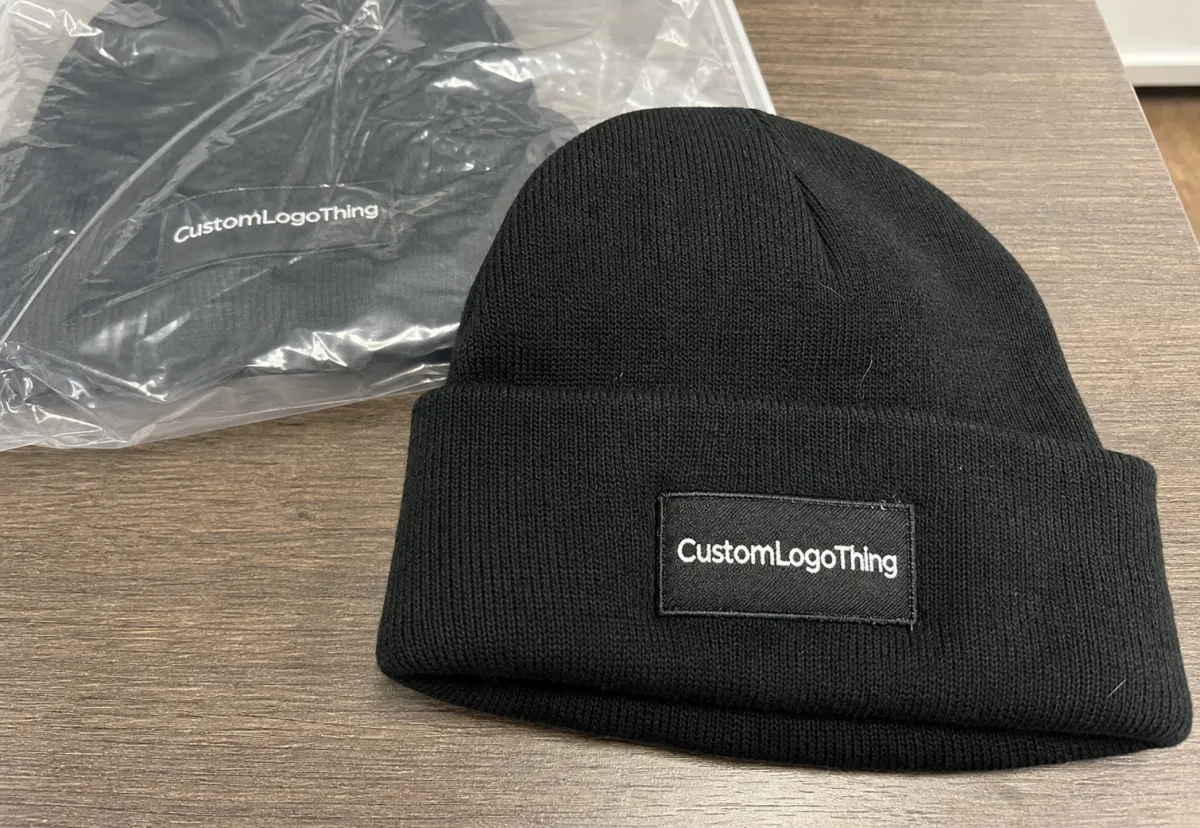
Acrylic has one advantage that never goes out of style in merch buying: predictability. A decent acrylic sample usually resembles the bulk run more closely than many natural-fiber options, especially when the order is color-sensitive. That matters if you are matching a brand red, a team navy, or a deep black that has to look uniform across hundreds of units. Shade drift is not dramatic on a spreadsheet, but it is very visible on a table full of hats.
Standard acrylic is the workhorse. It is affordable, widely available, and usually suitable for mass giveaways or support staff. Premium or anti-pilling acrylic costs more, but it tends to hold a cleaner surface and keeps fuzzing under control after repeated wear. Acrylic blends can improve softness or stretch, though the tradeoff is that the hand feel and recovery can shift enough to change how the hat wears. That is why the right fiber is not a generic answer. It depends on the audience, the climate, and the time the wearer will actually spend in the hat.
Knit construction matters just as much as fiber choice. A tighter gauge gives the beanie more structure and usually supports better logo clarity. A looser knit can feel softer at first touch, but it may relax faster and blur small decoration details. If the artwork includes thin lines or small text, a denser build is usually the safer move. If the goal is a more relaxed, casual look, some softness can be traded for drape.
Most event beanies use a ribbed cuff, a double-layer body, or both. That is not decorative habit; it is functional design. Ribbing improves stretch and helps the hat hold position, while a double layer traps more heat without requiring heavy yarn. The cuff also creates a stable zone for embroidery or a patch, which matters because texture on the crown can make decoration look uneven. On a busy event floor, the difference between a neat cuff logo and a warped crown logo is obvious from several feet away.
There is a common assumption that warmer always means better. It is not that simple. Outdoor staff in wind and cold usually need a denser knit and more coverage, but attendees moving between a venue, shuttle, and indoor sessions can overheat fast. A beanie that is too thick becomes something people remove and forget. A lighter acrylic hat that stays on for four hours is often more effective than a heavy one worn for twenty minutes.
For practical buying, I would group acrylic beanies into three categories:
- Standard acrylic for budget-sensitive giveaways, high-count runs, and simple branding.
- Premium or anti-pilling acrylic for staff kits, retail-style merch, or anything that needs a cleaner long-term finish.
- Acrylic blends for projects that need a softer hand feel or better stretch, even if the price rises slightly.
That framework keeps the decision grounded. A hat can be warm without being plush, and it can be affordable without feeling flimsy. The right balance depends on what the recipient will tolerate, not what sounds best in a product line.
Cost, Pricing, MOQ, and Quote Drivers for Winter Beanie Orders
Beanie pricing is driven by specification, not by the category name. The biggest variables are yarn quality, knit complexity, decoration method, color count, and whether the item is stock-made or built as a custom program. A plain cuffed acrylic hat with one embroidery hit is a different production problem from a custom jacquard knit with a woven label and branded packaging. Treating them as the same usually leads to confusion, not savings.
MOQ affects cost in a very direct way. Under 250 units, setup costs are spread across fewer pieces and the price rises quickly. Around 500 to 1,000 units, the per-piece rate usually becomes more reasonable. Higher quantities can improve the unit price again, but only if the order actually needs that volume. A warehouse full of leftover winter merch is not a sign of foresight. It is a storage bill waiting to happen.
| Beanie Type | Typical Use | Approx. Unit Price | Decoration Fit | Tradeoff |
|---|---|---|---|---|
| Stock acrylic cuffed beanie | Giveaways, volunteers, stadium handouts | $2.10-$3.80 at mid-volume | Embroidery, woven patch, label | Fast and affordable, limited custom shape |
| Premium acrylic double-layer beanie | Staff gear, client gifts, retail merch | $3.40-$5.90 | Embroidery, patch, woven label | Better hand feel, slightly higher cost |
| Acrylic blend custom knit | Premium merch, brand launches, fan items | $4.80-$8.50+ | Jacquard knit, label, patch | More control, longer lead time, higher MOQ pressure |
Decoration is one of the strongest quote drivers. Embroidery usually brings a setup fee, but it works well for simple logos and delivers a clean, finished look. Woven patches cost more upfront, yet they handle fine lines and small copy better than thread on textured knit. Knit-in graphics are attractive for consistency and a more integrated appearance, though they usually require a custom structure and a higher minimum quantity. Each method has a ceiling. The cheapest option is not always the one with the lowest unit cost if it forces you to simplify the logo later.
The cleanest way to control spend is to simplify the art before cutting the count. Reducing the number of colors, widening thin strokes, and dropping unnecessary copy often produces a better beanie and a lower quote. Buyers sometimes try to rescue a crowded design with a more expensive decoration method. That is usually backwards. Better artwork almost always outperforms a more complicated production process.
Realistically, a beanie can land in the $2.50 to $8.00 range without changing product category at all. The spread comes from construction, decoration, and finishing choices. That is why the event merch acrylic Winter Beanies Material guide approach is less about asking for the lowest number and more about asking what that number actually includes.
Process, Timeline, and Production Steps from Spec to Delivery
A clean order usually follows a predictable sequence. First comes the brief: quantity, target date, audience, logo file, and the type of finish you want. Then the vendor checks the artwork and recommends the knit or decoration method that fits the brief. After that comes a mockup or sample, then approval, then bulk production, finishing, packing, and shipping. The sequence is simple. The friction appears when revisions start multiplying.
Delays tend to come from a short list of causes. Artwork changes after sampling are the most common. Color matching can also slow a job, especially if brand colors are being translated into yarn rather than print. A subtle change to logo size can force a production reset if the art no longer fits the cuff height or patch dimensions. Small revisions are not always small in manufacturing terms. They can require fresh setup, fresh approval, and a new queue position.
Lead times vary by complexity. A simple stock-style acrylic beanie with one decoration method can sometimes move in roughly 10-15 business days after approval. Fully custom knit programs usually need 3-5 weeks or more, depending on the factory schedule, the number of color changes, and the finishing steps. Shipping is separate from production, and that difference matters when the event date is fixed. If the deadline is hard, the margin for mistakes is thin.
Packaging should be planned with the same discipline as decoration. Loose beanies in a thin carton can crush at the cuff and flatten the logo area. Folding hats in sets, separating them with tissue, or using well-sized cartons makes a noticeable difference in presentation. If transit conditions are rough, ask whether the pack style has any testing behind it. Basic drop and compression checks exist for a reason. Boxes fail. Their contents pay the price.
Decoration Choices That Keep Branding Clear in Cold Weather
Embroidery is still the most straightforward option for a bold, uncomplicated logo. It gives the hat a finished look and works especially well on the cuff, where the surface is flatter and easier to control. The limitation is detail. Thread compresses small elements, so thin lines, tiny type, and crowded icons can blur. If the logo depends on micro text, embroidery is the wrong tool.
Woven patches are better for detail and contrast. They allow sharper edges, cleaner typography, and more controlled artwork on textured knit. That makes them useful for event merch, where the beanie may need to read at a distance, on camera, or in mixed lighting. Patches also offer practical flexibility because they can be applied to stock hats without redesigning the knit structure. For many buyers, that is a useful compromise between customization and speed.
Knit-in logos make sense when the run is large enough to justify the setup and the artwork is simple enough to translate into yarn. Strong shapes, limited colors, and broad forms perform best. Labels and woven tags sit on the lower-cost side of branding, but they can still work if the beanie itself carries the visual impact. The decision should not be framed as premium versus cheap. It is more accurate to ask whether the audience needs subtle branding, strong visibility, or a retail-like finish.
Use the audience to narrow the choice:
- Giveaways need readable branding, stable pricing, and a decoration method that survives bulk production.
- Staff uniforms need comfort, durability, and a logo that still looks sharp after repeated wear.
- VIP gifts can justify better yarn, more careful finishing, and upgraded packaging.
The decoration choice influences the rest of the order. Once the branding method is fixed, the material guide becomes much easier to apply. A simple logo on the right beanie often looks more expensive than a complicated logo on the wrong one.
Sizing, Fit, and Comfort Checks Before You Approve the Order
One size fits most is a useful phrase for inventory. It is not a guarantee for comfort. Stretch, cuff depth, crown height, and seam placement all affect how the hat sits. A sample that looks fine on a table can feel completely different once it is worn for thirty minutes. That is why fit testing should happen on actual heads, not only on a flat surface or a mannequin form.
Comfort matters more than many buyers expect. Check the inside seams, edge firmness, and any scratch points near the crown. If the audience includes outdoor staff, commuters, students, or people wearing hoodies and helmets, test those combinations. Long hair, ponytails, and glasses can change the fit as well. A beanie that seems perfect in a meeting can behave differently in a real workday.
A proper wear test should mirror the conditions of the event. Cold wind, movement, indoor-outdoor transitions, and long shifts all expose problems that a desk review will miss. If the hat slides, pinches, or runs too warm, fix the spec before bulk production starts. Reworking a sample is much cheaper than repurposing a box of merch that nobody wants to wear twice.
Before approval, I would check five things every time:
- Cuff depth stays consistent and gives the logo enough space.
- Stretch recovery brings the beanie back after a wear test.
- Logo placement stays centered when the hat is on a head.
- Interior seams do not create pressure points or irritation.
- Packaging preserves shape without crushing the knit.
Small fit issues become large perception problems fast. If a beanie feels cheap, users assume the whole program was cheap, even when the unit cost was not. The material guide is partly about warmth and partly about credibility.
Common Mistakes That Make Winter Beanies Look Cheap
The first mistake is selecting the lowest quote without checking yarn quality. Budget acrylic can work well, but there is a point where the hand feel drops off and the hat starts feeling rough, dry, or overly synthetic. That kind of saving is visible the moment somebody puts it on. Cost control should be deliberate, not accidental.
The second mistake is trying to force complex artwork into a decoration method that cannot support it. Thin outlines, gradients, crowded text, and tiny icons may look fine in a digital file, but they often fail once translated into yarn, thread, or patch construction. Winter headwear has boundaries. A cleaner logo usually performs better than a heroic one.
The third mistake is skipping the sample. Digital proofs are useful, but they are not physical evidence. Color, scale, and placement all shift once the design becomes a knit or a stitched patch. The sample shows how the material behaves under real conditions. That is the stage where mistakes are cheap enough to fix.
The fourth mistake is ordering too little or too much without a clear re-run plan. If the beanie is well received, extra demand usually follows. If it misses the mark, the excess becomes dead stock. Either scenario can be managed, but only if the quantity decision is made with the event size and future use in mind.
Packaging can also drag the product down. A good hat packed badly arrives looking tired. A weak carton, too much empty space, or flimsy wrapping can flatten the cuff and make the brand hit look smaller than intended. For more deliberate presentation, kraft paper, modest tissue, and sturdy outer cartons are usually better than overdecorated filler. If the program needs a lower-waste story, ask about recycled materials, post-consumer waste content, and whether the outer wrap can be biodegradable packaging instead of excess plastic.
Next Steps: Build a Better Spec Sheet and Request Smarter Quotes
The easiest way to get cleaner quotes is to write the spec before shopping the market. Start with quantity, target delivery date, audience type, logo file, preferred decoration, and the warmth level the wearers actually need. A snow-team hat, a Trade Show Giveaway, and a VIP gift are all winter merch, but they are not the same product.
Then compare suppliers on identical terms. Lock the yarn type, knit style, decoration method, and packing format before reading price. If one quote is for a stock acrylic cuffed beanie and another is for a custom jacquard build, the gap is not a bargain signal. It is a spec mismatch. That kind of comparison wastes time and creates false pressure on the buying team.
Ask for one sample or a clearly labeled mockup if the design is new. Check the hat on real wearers if possible. Confirm logo visibility, comfort, and the likely unit cost at your true quantity. If the order will ship to more than one location or travel by freight, confirm carton strength and pack style too. The finished product is not only the beanie. It is the beanie, the packing, the transit, and the wearer’s first impression.
The strongest event merch acrylic Winter Beanies Material guide outcome is not the fanciest hat. It is the one that matches the event, the budget, and the wear pattern without creating avoidable friction. Get the yarn right, keep the decoration honest, test the fit, and protect the shipment. That combination usually produces merch that feels considered rather than improvised.
What yarn weight works best for event merch acrylic winter beanies?
Mid-weight acrylic is usually the safest choice because it balances warmth, stretch, and cost. Heavier knit structures feel warmer, but they can run hot indoors and raise unit price. If the event includes outdoor and indoor wear, request a sample because gauge matters as much as fiber type.
Are acrylic winter beanies warm enough for outdoor events?
Yes, for most cold-weather event use. A dense knit with a cuffed or double-layer structure usually provides enough warmth for giveaways, staff gear, and fan merch in moderate conditions. For harsher climates, focus first on construction and fit, then on the fiber label.
How does MOQ affect the price of event merch beanies?
Lower quantities usually increase the unit price because setup and production overhead are spread across fewer pieces. Larger MOQs can lower the per-piece cost, but they can also leave you with too much inventory if the event is small. If the budget is tight, simplify the decoration before reducing quality.
How long does production usually take after approval?
Simple stock-style orders can move in roughly 10-15 business days after approval, while fully custom knit programs often need 3-5 weeks or more. Artwork revisions, sample changes, and shipping all affect timing. If the date is fixed, leave a buffer.
Should I choose embroidery or a woven patch for acrylic beanies?
Embroidery works best for bold logos with simple shapes and a clean, integrated look. Woven patches are better when the artwork has finer detail or needs sharper edges. For many event orders, patches also make reorders and production consistency easier to manage.


