Custom Beanies for Event giveaways are one of the few promotional items people actually keep on their head long enough to matter. They get worn walking back to the car, on a chilly commute, and sometimes all season if the knit feels good and the logo looks clean. That repeated use is the real value. A beanie does not have to shout to work; it just has to be useful, comfortable, and easy to wear without thinking about it.
The details decide whether the piece feels premium or disposable. Knit density, cuff height, yarn choice, decoration size, and color contrast all affect how the finished hat reads in person. A design that looks sharp in a flat mockup can get muddy once it is stitched, woven, or knit into a stretched surface. That is why a solid spec and a realistic proof review matter more than most buyers expect.
Custom Beanies for Event Giveaways: Why They Work
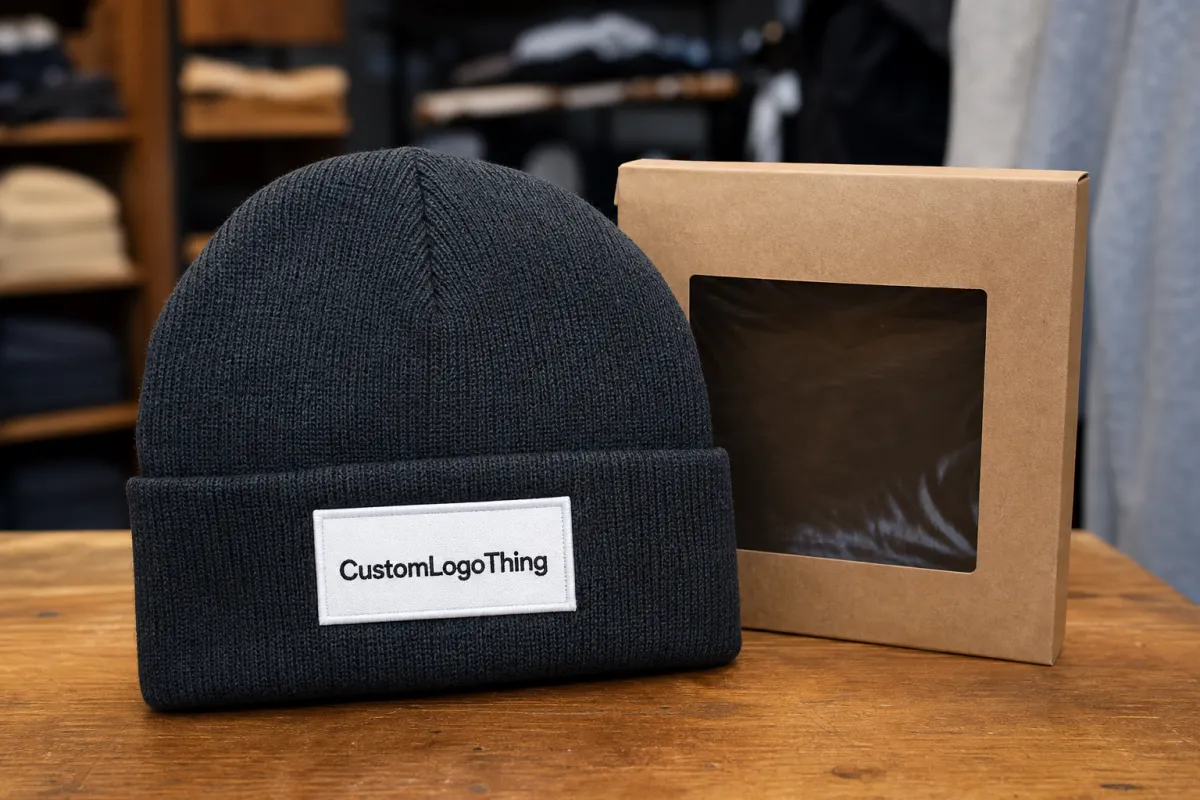
A beanie is practical. That sounds plain, but utility is the reason some promo items keep working long after the event ends. If recipients can wear it immediately, the giveaway stops being novelty and starts acting like a piece of winter gear. For outdoor activations, campus events, seasonal conferences, ski-adjacent promotions, and product launches that happen in cold weather, Custom Beanies for Event giveaways fit the brief without feeling forced.
They are also forgiving from a planning standpoint. Most adult beanies are designed as one size fits most, so there is less sizing friction than with apparel. A rib knit with enough stretch usually works across a wide range of head shapes, especially when the cuff gives the hat structure. That simplicity makes beanies easier to hand out at a booth, insert into a welcome kit, or pack into a mailing box.
There are a few common decoration routes: embroidery, woven patches, knit-in art, and woven labels applied to stock hats. Each one creates a different look. Embroidery is the most familiar and often the most durable visually. Patches can carry finer detail and tend to feel a little more retail. Knit-in branding looks integrated but needs simpler art and more lead time. Woven labels stay subtle, which is useful if the goal is understated branding rather than a loud promotional statement.
Simple branding usually performs best. One logo location, a readable font, and good contrast are easier to recognize at a glance than a crowded layout with multiple text lines. Knitwear is not a billboard. Thin strokes blur, tiny type disappears, and gradients rarely translate cleanly. When the art is stripped down to the part people actually remember, the beanie looks better and often costs less to produce.
A giveaway should survive the booth, the ride home, and a few real uses afterward. If it cannot do that, it is not adding value. It is just another logoed object.
For event kits, VIP mailers, or bundled swag, the beanie should also fit the presentation. A clean insert, folded tissue, or simple carton can change how the item feels on arrival. If you are pairing the hats with other branded packaging pieces, the whole package should read as intentional rather than assembled from leftovers. That is where coordinated Custom Packaging Products can support the item without stealing attention from it.
There is another reason beanies stay popular with event teams: they photograph well. A stack of hats on a table looks organized, and a crowd wearing the same color and logo can make an event recap feel cohesive. That visual consistency is hard to get from many lower-cost giveaways. It does not guarantee recall, but it does give the brand more chances to be seen in the right context.
Production Process and Timeline
The production path is fairly direct, though only if the artwork arrives in usable shape. The process usually starts with file review: vector logo check, color confirmation, and a look at line thickness so the design can survive on knit fabric or embroidery thread. After that comes a proof. That proof matters. It is the point where logo scale, placement, and color balance can still be corrected without wasting materials.
Once the proof is approved, production moves into sourcing and construction. For stock beanies, the blank hats may already exist and only need decoration. Fully custom knit hats require more work because the body of the beanie is built to spec, often with specific yarn colors and stitch patterns. Embroidery, patch application, folding, inspection, and packing come after that. If the order includes retail presentation, hang tags or inserts are usually added during final assembly.
Quality control should not be treated as a box-checking exercise. The useful checks are practical: Does the logo sit centered on the cuff? Is the thread color close enough to the approved PMS reference? Are the stitches dense enough that the logo does not look sparse? Does the patch edge lie flat? Is the beanie free of loose threads, oil marks, and uneven folding? Those small points are what separate a decent run from a frustrating one.
Standard production often lands in the 12-20 business day range after proof approval, though that depends on the decoration method and the order size. Knit-in styles, special yarns, or more detailed packaging can stretch the schedule. Rush service is sometimes possible, but it almost always comes with tradeoffs: higher cost, fewer revision rounds, or tighter shipping windows. If the shipment has to cross a long distance, transit time sits on top of production time. Air freight moves quickly and costs more; ocean freight is slower and only makes sense if the event date is far enough out.
Several things tend to cause delays:
- Vector art that has to be rebuilt before production can start.
- Overly detailed logos that need simplification for knit or embroidery.
- Late changes after the proof has already been reviewed.
- Peak season congestion around fall and winter promotions.
- Waiting until the event is close and expecting a normal schedule to compress itself.
If packaging matters, ask early whether the carton build, outer wrapping, or insert stock needs testing for transit durability. For paper components, FSC-certified stock can be worth specifying if sustainability language is part of the campaign. If the outer package has to survive shipping and handling, the basic test ideas at ista.org are a useful reference point. The goal is not overengineering. It is avoiding damage that could have been prevented by choosing the right materials and packing method.
One practical habit saves a lot of pain: treat the proof like a production document, not a preview image. Check spelling, capitalization, logo scale, hat color, and placement. If the beanie will be paired with other event items, make sure the color palette feels coordinated with the rest of the kit. A five-minute review can prevent a reorder that eats both time and budget.
Pricing, MOQ, and Unit Cost
Price is driven by a handful of blunt variables: quantity, blank quality, decoration method, knit complexity, and whether the design is stock-based or built from scratch. Higher volume lowers the per-unit cost because setup work gets spread across more pieces. That is the basic math behind most apparel and accessory orders. Small runs can still be worthwhile, but they rarely get the best price per hat.
MOQ exists because the work behind each order does not shrink just because the quantity is smaller. There is file setup, machine setup, color matching, labor, and inspection. A 100-piece order can be absolutely doable, but the fixed work makes the unit price rise. By the time an order reaches 250, 500, or 1,000 pieces, the price structure usually becomes more efficient.
Here is a realistic way to think about unit cost for custom Beanies for Event giveaways:
| Quantity | Typical Unit Cost | What Usually Changes |
|---|---|---|
| 100-199 | $7.50-$13.00 | Higher setup burden, fewer decoration options |
| 250-499 | $5.50-$9.50 | Better efficiency, more room for upgraded finish |
| 500-999 | $4.25-$7.50 | Lower unit cost, easier to justify custom details |
| 1,000+ | $3.25-$6.25 | Strong volume pricing, more flexibility in construction |
Those ranges move depending on material and finishing. A stock acrylic beanie with a small woven label is usually cheaper than a fully custom jacquard knit. A cuffed style with embroidery often sits in the middle and gives buyers a good balance of price and presentation. If the logo needs a patch, expect the patch itself, application, and any edge finish to add to the total.
Watch the line items. Setup fees, digitizing, PMS matching, sample charges, packaging upgrades, carton reinforcement, and freight can change the landed cost faster than buyers expect. A low factory quote can look attractive until the extras are added. Ask for the landed price, not just the base price, and make sure the quote spells out what is included. If the minimum order can be adjusted, ask whether the lower quantity changes the pricing tier or just the freight allocation.
The cleanest quote request includes quantity, decoration method, beanie style, color count, shipping zip code, deadline, and whether the order needs custom packaging or retail-style packing. That combination gives the supplier enough information to quote something useful on the first pass. Leaving out one of those points almost always produces another round of revisions, and revisions cost time even when they do not cost money.
Choosing the Right Knit, Fit, and Decoration Method
The best beanie is the one that fits the audience and the event. A cuffed acrylic beanie with embroidery is the workhorse option. It is affordable, warm, and easy to reproduce consistently. A slouchy style reads a little more fashion-forward, which can suit creative campaigns or lifestyle brands. Ribbed knits stretch well and tend to fit a broader range of heads. Cable knits feel more premium, though they also push the item closer to retail than pure promotion.
Material choice changes both the hand-feel and the budget. Acrylic is the default for a reason: it keeps color consistent, holds up well in production, and is usually the most affordable. Wool blends feel warmer and more substantial, but they cost more and may not be the best match for huge quantities or tight deadlines. Polyester blends are useful when consistency and repeatability matter, especially for larger programs that need the same color and shape across multiple runs. There is no universal winner. The event purpose decides which tradeoff makes sense.
Decoration method should match the logo, not the other way around. Embroidery works well for bold shapes and limited detail. Woven patches handle more intricate marks and can create a cleaner, retail-style finish. Woven labels are subtle and work if the brand wants to stay understated. Knit-in art looks integrated and elevated, but it needs simpler artwork, stronger lead time, and a logo that still reads clearly at small scale. Thin lines and tiny text are the first things to disappear on knitwear, so if a logo relies on those elements, a patch or embroidery usually gives a better result.
Color is more strategic than decorative. Neutral shades like black, gray, navy, and cream tend to get worn more often because they pair easily with regular clothing. Bright event colors can make sense if the hats need to stand out in a crowd or if staff visibility matters. For a giveaway that is meant to feel a little exclusive, restrained color choices usually age better and look more expensive in hand.
Fit is just as important as appearance. A beanie that is too shallow rides up. One that is too loose can look sloppy. Cuff height affects how much decoration space is available and how the logo sits on the head. Taller cuffs give more room for embroidery and make the branding easier to read. If the hat is meant for colder weather, a denser knit and a more structured cuff feel better than the thinnest promotional option.
Most logo problems are predictable. Gradients rarely reproduce well. Tiny icons get lost. Long taglines feel crowded. Poor contrast makes the branding fade into the knit texture. That is why a mockup is useful even when the design seems simple on paper. It shows how the logo behaves on a curved, stretched surface with a real knit pattern underneath it.
Step-by-Step Order Plan for Event Teams
If you are managing the order for an event, start with the facts instead of the wish list. How many attendees are confirmed? How many staff members need hats? Is there a speaker list, a press list, or a VIP group? What is the hard delivery date? Where is the order shipping? Those answers determine the quantity, decoration level, and how much room you have for revision time.
- Set the scope. Confirm the count and add a few extras for staff, speakers, replacements, and late additions.
- Pick a direction. Narrow the choices to two or three styles so the decision is based on actual samples or clear spec sheets.
- Gather files early. Send a vector logo, brand colors, decoration preference, and any notes about packaging or labels.
- Review the proof. Check logo size, placement, contrast, hat color, and whether the design still reads from a few feet away.
- Build in buffer time. Leave room for proof corrections, shipping delay, and the usual last-minute event issues.
A one-page spec sheet makes the process cleaner. Include quantity, style, decoration method, color, ship-to zip code, target date, and any packaging requirement. If the beanies will be bundled with cards, inserts, or other swag, say so before quoting starts. Product packaging and retail packaging details affect the final cost because they change labor, materials, and assembly time. The more precise the input, the less guesswork later.
Do not approve the proof casually. Check the body color against the brand palette. Check whether the logo is centered and scaled correctly on the cuff. Check stitch contrast if embroidery is part of the build. A quick visual pass can save the entire schedule from a preventable correction. That is especially true for larger orders, where one mistake can multiply across hundreds of pieces.
Think about distribution before production starts. A grab-and-go handout wants simple folding and no fuss. A VIP kit can carry a cleaner insert, more polished packaging, or a more detailed presentation. If the beanie is one element in a larger set, the other items should feel like they belong together. The item does not need to be flashy to feel considered.
Common Mistakes That Waste Budget or Miss the Mark
The biggest mistake is starting too late. Late orders are not efficient; they are compressed, expensive, and fragile. The closer the event gets, the more the options shrink. Decoration choices narrow, shipping gets more expensive, and proof corrections become harder to absorb. That is the real cost of delay.
Another common problem is trying to force too much information onto a small surface. A beanie is not a poster. Long slogans, tiny web addresses, and extra text may look fine in a mockup but disappear once the hat is worn. The strongest results usually come from one clear logo placement and a restrained design. The piece should be easy to recognize, not overloaded with details nobody can read.
Material mismatch causes trouble too. A thin knit may be fine in a mild climate, but it can feel underbuilt for a cold-weather activation. A slouchy fit may feel stylish, yet it can be less practical if the audience wants something that stays put. Buyers who want a more substantial impression usually do better with a denser knit, a stronger cuff, and a decoration method that holds its shape.
Skipping the proof or ignoring sample approval is risky. Color mismatch, weak contrast, or poor logo scale can make a full run feel off-brand. A photo proof is often enough for simple projects. For larger orders or more sensitive color work, a physical sample is worth the time. That small extra step is much cheaper than reworking inventory.
Another easy mistake is ordering to the exact headcount. People get added late, staff need extras, and a few hats may be damaged in transit or mispacked. A small overage protects the event from an awkward shortage. It is cheaper to have three extra hats than to scramble for a second order after the first shipment has already been unpacked.
Finally, do not ignore how the beanie will be perceived next to everything else at the event. If the booth materials are crisp and the hat looks flimsy, the contrast is obvious. The giveaway should feel like part of the same program. That does not mean expensive across the board. It means consistent.
Expert Tips and Next Steps Before You Order
Use one logo placement that reads fast. The cuff is usually the best spot because it gives the branding a clean frame and keeps the mark visible when the hat is worn. Two placements can work, but only if the second one adds real value. Otherwise the piece starts to feel crowded and less wearable.
Match the knit and finish to the purpose of the event. For a premium launch, a heavier knit, tighter stitching, and a clean patch or embroidery finish can support a better first impression. For a large handout, keep the construction simple and focus on clarity. There is no reward for adding features that the recipient will never notice. Spend the budget where it changes the feel in hand.
Ask for a sample or a detailed photo proof if the quantity is large or the color match is sensitive. That matters even more if the beanies are part of a broader kit with branded packaging, inserts, or other printed components. The box, tissue, and insert all influence how the hat feels when it is opened. Coordinating those parts can turn a simple giveaway into a more considered presentation. That is one reason Custom Packaging Products can be useful alongside the hats themselves.
Think about how often the item will be reused. Neutral colors and clean branding get worn again. Heavy-handed graphics tend to be left behind. If the goal is memory rather than immediate spectacle, that is the more important metric. Custom Beanies for Event giveaways remain a smart choice because they are practical enough to stay in rotation and visible enough to keep working after the event is over.
One last practical point: ask how the beanie will be folded and packed. A soft hat can lose shape if it is stuffed carelessly into a carton, and a folded cuff can look crooked if the packing spec is loose. Small handling details do not usually show up in the quote, but they do show up in the final presentation. The order should arrive looking ready to hand out, not like it has already lived through the event.
Bottom Line on Ordering
If you want custom beanies for Event Giveaways That people actually wear, keep the design focused, the materials honest, and the timeline realistic. Choose a knit and decoration method that fit the audience, not just the budget line. Add a little overage, review the proof carefully, and leave time for shipping. None of that is flashy, but it is what keeps the order from turning into a scramble.
How many custom beanies for event giveaways should I order?
Start with the confirmed headcount, then add a small overage for staff, speakers, press, replacements, and late additions. If the event has multiple sessions or different audience groups, count each group separately so one batch does not run short while another sits unused. For recurring events, a slightly larger first run can improve unit cost and reduce the chance of a rushed reorder later.
What is the usual turnaround for custom event giveaway beanies?
Most orders need time for proofing, production, and shipping, so the full cycle is longer than buyers often expect. Simple stock-based styles can move faster, while knit-in branding, patch work, or custom packaging usually adds time. Holiday demand, sample revisions, and shipping distance can stretch the schedule. Rush service is possible in some cases, but it typically costs more and leaves less room for corrections.
Which decoration method works best for custom giveaway beanies?
Embroidery is the safest option for bold logos with limited detail. Woven patches or labels are better when you need a cleaner retail look or more detail. Knit-in branding can look excellent, but it usually requires simpler artwork and a longer lead time. If the logo has thin lines or tiny text, a patch often holds up better than direct knit detail.
How do I keep custom beanies for event giveaways from feeling cheap?
Choose a knit with enough weight to feel substantial, and avoid the thinnest promotional blank if the event is outdoors. Use one strong logo placement and keep the design uncluttered. Ask for a proof or sample so color and scale can be checked before production. Most of the time, the difference between a cheap-looking order and a good one comes down to restraint and material quality.
What should I send to get an accurate quote for custom beanies?
Send quantity, deadline, shipping zip code, logo file, brand colors, and preferred decoration method. Include packaging or labeling requests, because those details affect labor and materials. If you have a target landed cost, mention it early so the quote aligns with the budget instead of forcing a second round of revisions. Clear input usually gets a much better number than a vague request.

