Buyer Fit Snapshot
| Best fit | Custom Belly Bands with Logo projects where brand print, material claims, artwork control, MOQ, and repeat-order consistency need to be specified before quoting. |
|---|---|
| Quote inputs | Share finished size, material target, print colors, finish, packing count, annual reorder estimate, ship-to region, and any compliance wording. |
| Proofing check | Approve dieline scale, logo placement, barcode or warning zones, color tolerance, closure strength, and carton packing before bulk production. |
| Main risk | Vague material claims, crowded artwork, missing packing details, or unclear freight terms can make a low unit price expensive after revisions. |
Fast answer: Custom Belly Bands with Logo: Material, Print, Proofing, and Reorder Risk should be specified like a repeatable production item. The safest quote records material, print method, finish, artwork proof, packing count, and reorder notes in one written spec.
Production checks before approval
Compare the actual filled-product size with the drawing, then confirm tolerance on folds, seals, hang holes, label areas, and retail display edges. Reserve space for logos, QR codes, warning copy, and material claims before decorative graphics fill the panel.
Quote comparison points
Review material grade, print process, finish, sampling route, tooling charges, carton quantity, and freight assumptions side by side. A quote is only useful when the supplier can repeat the same color, closure quality, and packing count on the next order.
Custom Belly Bands With Logo: Cost, Process, and Tips
Custom Belly Bands with logo look understated until they are wrapped around a package. Then the effect changes fast. A plain carton or pouch starts to read like a branded product instead of a generic vessel. That shift can happen with almost no structural change at all, which is part of the reason the format has stayed popular in packaging programs that need to move quickly.
There is a practical logic to that popularity. Teams do not always need a full custom box to create a strong shelf presence. Sometimes they need a surface for a logo, a short line of copy, a barcode, or a campaign message. Custom belly bands with logo can carry all of that without forcing a redesign of the base package. For brands comparing options, a broader Custom Packaging Products catalog can help show whether the band should be the primary format or one part of a larger system.
I have seen this most clearly in product launches that start with a standard container and a tight deadline. A band can transform the presentation in a way that feels deliberate, not improvised. That matters because consumers tend to read packaging instinctively. If the package looks finished, the product often feels more credible before anyone touches it.
A carefully planned belly band can make a standard package look like a private-label program without the cost and lead time of a fully custom structure.
What Custom Belly Bands With Logo Actually Do
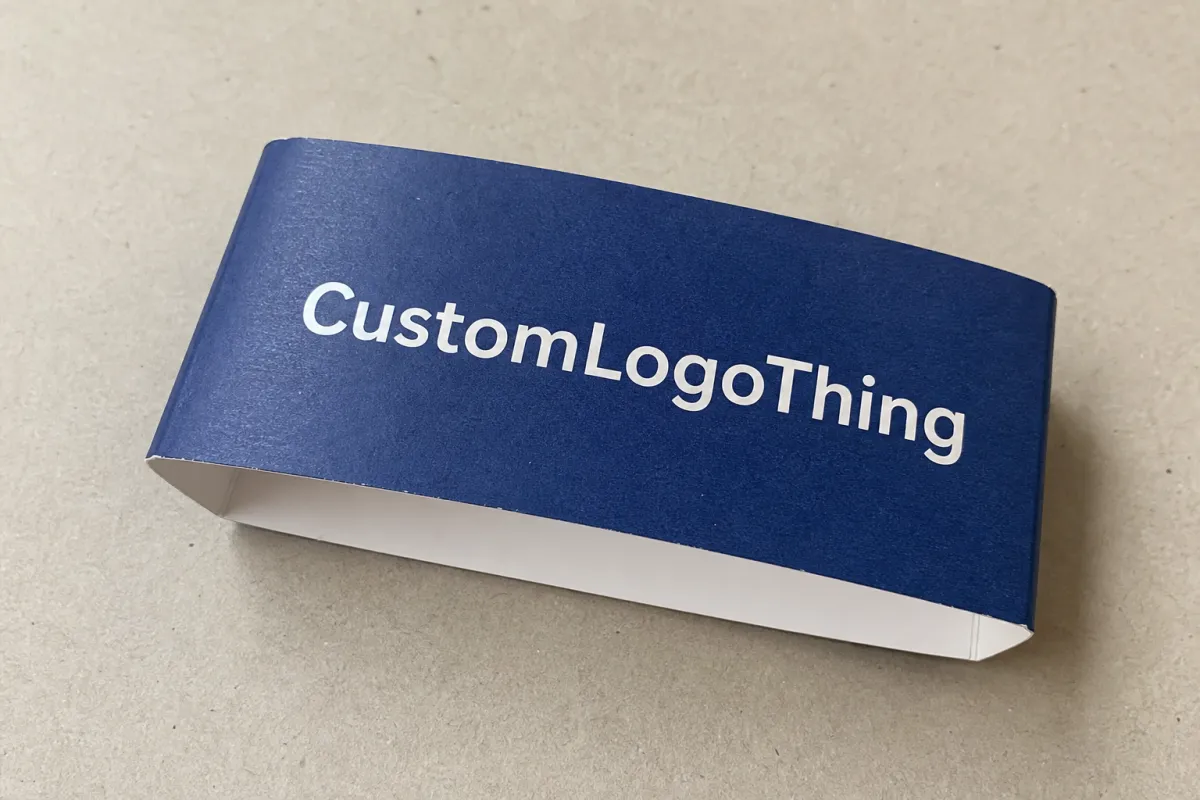
A belly band is a printed wrap that goes around the outside of a package. Custom belly bands with logo are used to brand, bundle, label, or lightly secure an item. The band is typically added after the primary package has already been filled, folded, or assembled, which gives it a small but important production advantage: the base package can stay the same while the branding changes.
That flexibility is useful across several packaging types. Folding cartons, pouches with outer cartons, candle sleeves, apparel sets, mailers, and gift kits all benefit from a band when the goal is to add identity without changing the structure. A narrow wrap creates a focal point. It also helps one SKU stand apart from another, which is particularly useful for seasonal products, bundles, and limited runs that need to be identified quickly on a shelf or in a fulfillment area.
Cost is a major reason buyers choose the format. A custom printed box may still be the right answer for premium retail or high-protection needs, but it is not always the most efficient first step. If a package already has useful structure, custom belly bands with logo can supply the brand layer at a lower entry cost. That is especially attractive for product tests, promotional bundles, and line extensions where artwork or copy may change more often than the base pack.
The band also has room for more information than people usually expect. A logo is only the beginning. Short product copy, ingredients, a QR code, barcode placement, compliance text, and a limited-edition callout can all fit if the layout is disciplined. The point is not to cram everything onto one strip. The point is to make a small surface work hard without sacrificing legibility.
That discipline can be surprisingly valuable in brand architecture. A company with multiple SKUs may want every package to feel connected without printing the same design across every size. Custom belly bands with logo make that possible. The container stays stable, and the message can shift product by product. In a packaging room, that kind of consistency is not decorative. It saves time, reduces error, and keeps inventory simpler.
There is also a testing advantage. A brand can move faster with a band than with a new structural carton, then decide later whether the product justifies a deeper packaging investment. That is a sensible way to manage uncertainty. Packaging is expensive enough without locking every launch into a long production cycle on day one.
How Custom Belly Bands With Logo Work on the Package
The mechanics are simple, but the fit is not. Custom belly bands with logo wrap around the outside of the package and close with a glue tab, tuck-in slit, adhesive dot, or friction fit. Each closure method affects the speed of assembly, the security of the band, and the final appearance. A band that looks elegant in a mockup can behave very differently once it is wrapped around 500 units by hand.
Glue tabs are common in production settings where the seam should stay fixed. Tuck-in designs are often better for gifts and short runs because they are easy to assemble without special equipment. Adhesive dots create a light hold and can speed placement during fulfillment. Friction-fit bands usually look clean, but they depend on tighter measurement control because the wrap has to stay in place without distorting the package.
Boxes are the most obvious match, yet they are not the only one. Custom belly bands with logo can also work on jars that sit in secondary cartons, tray packs, folded apparel, candle sleeves, and bundled gifts. They perform best on products with a stable outer surface. Soft, irregular, or compressible items usually need a backing board or folded configuration before the band can function properly.
Measurement is where many programs succeed or fail. The finished band should be based on the actual package, not a rough estimate from a spec sheet. Panel width controls how much room the logo and copy have after wrapping. Fold placement controls whether the seam lands in a quiet area or cuts through the brand mark. Barcode clearance matters too. A seam over a scan area can turn a polished layout into a production headache.
Flat proofs can hide problems that become obvious later. A logo that appears balanced on screen may feel crowded once the band wraps around a carton. That is why proofs should show the seam, overlap, and live panel areas. Shelf attention is brief. Often it is one or two seconds, sometimes less. Custom belly bands with logo need to communicate quickly, with enough contrast that the brand is readable from a distance and still clear up close.
The format can carry more than brand identity. Short product copy works. Ingredient callouts work. QR codes linking to instructions work. Seasonal prompts such as “limited edition” or “bundle savings” can also work if they fit the geometry of the wrap. The restraint matters. A band should read as a wrap, not try to behave like a brochure.
One question usually cuts through the noise: what should this band do better than a label, sleeve, or outer carton? If the answer is branding, short-form messaging, and light enclosure, custom belly bands with logo are often the right tool.
Custom Belly Bands With Logo Cost and Pricing Factors
Pricing for custom belly bands with logo depends on a small set of variables, and those variables interact. Stock choice, print method, dimensions, ink coverage, finishing, closure style, and any special cutting or folding all influence the final number. A small change in one area can shift the unit price enough to matter, especially on lower quantities.
Quantity drives the economics. Setup costs get spread over more pieces as volume rises, so the unit price usually falls as the order gets larger. A 1,000-piece run can look expensive on a per-unit basis while a 5,000-piece or 10,000-piece order feels easier to justify. The exact curve depends on the press, the material, and the finishing steps, but the pattern is consistent across most print programs.
Here is a practical pricing snapshot. These ranges are examples, not universal quotes, but they reflect how custom belly bands with logo are often priced in the market.
| Option | Typical use | Example unit price at 1,000 | Example unit price at 5,000 | Notes |
|---|---|---|---|---|
| Uncoated paper, one-color print | Simple branding, natural look, kraft-style programs | $0.22-$0.42 | $0.10-$0.24 | Best for clean layouts and lower ink coverage |
| Coated stock, CMYK print | Retail packaging, photos, strong color branding | $0.30-$0.58 | $0.14-$0.30 | Good balance of image quality and cost control |
| Heavier cover stock with matte varnish | Gift sets, premium product packaging, stronger handling | $0.38-$0.72 | $0.18-$0.38 | More rigid feel, better for repeated handling |
| Special finish, foil, or custom die-cut | Launches, seasonal kits, higher-impact branded packaging | $0.55-$1.10+ | $0.25-$0.70+ | Finishing adds appeal, but it also adds setup and waste |
Hidden line items can change the real number. Minimum order quantity is one example. Proofing is another. Shipping is a third. A quote that lists only the print price leaves out freight, revision charges, or a special cutting fee. A serious comparison should show landed cost, not a neat headline that changes after approval.
Stock choice deserves careful attention. Uncoated paper usually feels more natural and fits kraft-style brands, recycled packaging, and minimal visual systems. Coated stocks sharpen photos and color blocks, which makes them useful for retail packaging and stronger artwork. Heavier cover stock adds stiffness, which helps the band keep its shape during assembly and shipping. If FSC certification matters to your brand, ask early. The certification framework is available at FSC.
Print method changes the economics as well. Digital printing often makes more sense for short runs, variable artwork, or faster turnaround. Offset printing usually becomes more efficient as quantities rise and the artwork stays stable. Full-bleed layouts, high ink coverage, and specialty finishes raise the price because they add press time or extra handling. A simple one-color band on standard stock is almost always less expensive than a full-color design with foil and a die-cut. That sounds obvious. It still gets missed in quote comparisons more often than it should.
Custom belly bands with logo are not only a paper purchase. They are a process purchase. If the band slows assembly, or if the design creates extra handling on the line, the real cost rises even when the print quote looks acceptable. A lower print price can become the more expensive option once labor is counted.
For ecommerce, warehouse handling, or parcel shipping, ask whether the package should be checked against ISTA methods or a similar transit test plan. Formal testing is not required for every project, but the band should still survive the environment it will actually face. Packaging that looks clean in a studio can fail quickly in a real fulfillment flow.
Process and Timeline for Custom Belly Bands With Logo
The production path for custom belly bands with logo is simpler than a full carton program, but the details still need discipline. The work usually starts with artwork intake and measurement confirmation. Quoting follows. Then comes proofing, sampling if needed, production, and shipping. Each stage sounds short. Delays usually appear when the spec is incomplete or the package itself has not been measured carefully.
A standard timeline often looks like this: one to two business days for quote review, one to three business days for proof development, a similar window for client approval, and production that ranges from five to ten business days depending on quantity and finishing. Shipping sits on top of that. Many jobs land in the 7-15 business day range after final approval. Specialty finishes and custom cuts can add several more days.
Rush work is possible, although it narrows the choices. If the brand already has final dimensions, final artwork, and a clear application method, custom belly bands with logo can move quickly. Missing any of those pieces tends to stretch the schedule. That is not a defect in the process. It is how print manufacturing behaves.
Delays usually show up in three places. Dimensions are the first. Approximate measurements can make a proof look correct while the actual band misses the package. Artwork files are the second. Low-resolution logos or incomplete copy slow proofing and create avoidable corrections. Proof edits are the third. A chain of small revisions can consume days, especially when several stakeholders are involved in sign-off.
Logistics matter as much as print timing. If the band has to survive packing, palletizing, or parcel handling, the assembly path should be considered before the order is placed. A transit plan can reduce waste later. The ISTA test library is a useful reference for teams that want to stress the package in a way that resembles real shipping.
Buyers who want shorter lead times usually get there by finalizing technical details early. Exact dimensions, stock preference, print color count, closure style, and expected quantity should all be locked before quoting. Once those inputs are fixed, custom belly bands with logo behave like a straightforward print job instead of a moving target.
Step-by-Step: Ordering Custom Belly Bands With Logo
Treat custom belly bands with logo like a technical packaging purchase, not only a design request. The difference shows up in the quote, the proof, and the final fit. A clean sourcing process usually follows the same path.
-
Define the job. Decide whether the band is meant for branding, closure, product information, seasonal promotion, or a combination of those roles. Narrower goals usually produce a cleaner design and a clearer quote.
-
Measure the package precisely. Record the finished band length, width, overlap, and any areas that must stay open for barcodes, seals, or window visibility. Measure the actual package, not a CAD guess. A few millimeters can change the fit.
-
Request apples-to-apples quotes. Send the same specs to each supplier: stock, print method, dimensions, quantity, and closure method. That keeps pricing comparable. If one vendor is quoting coated cover stock and another is quoting uncoated digital print, the numbers will not tell the same story.
-
Review the proof like a packaging buyer. Check logo placement, bleed, copy accuracy, barcode readability, seam location, and whether the wrap still reads well after folding. The proof should reflect the wrapped package, not only the flat art board.
-
Run a sample on the real line. A pilot run is the fastest way to confirm that custom belly bands with logo assemble the way the team expects. That test often exposes issues the proof cannot show, such as curl, handling speed, or a closure that is technically correct but awkward in production.
If the band will be used across several SKUs, standardization pays off. Shared width, shared stock, and shared closure method keep complexity down. Only the artwork changes. That is one of the quieter strengths of custom Belly Bands With Logo: the packaging system can stay stable while the product story changes from line to line.
For a faster supplier conversation, bring package photos, dimensions, print files, and target quantity to the first call. If the project sits inside a larger packaging refresh, compare it against related items in our Custom Packaging Products catalog so you can see whether the band is the right tool or just one option among several.
Common Mistakes With Custom Belly Bands With Logo
The most expensive mistake is loose measuring. A band that is even slightly off can slide, buckle, or land in the wrong place on the package face. That becomes obvious when the logo is half-hidden by a fold or the seam lands where the brand mark should have been. Custom belly bands with logo rely on accuracy because the format leaves less room to hide mistakes than a full carton does.
Overcrowding is another common failure. Some brands try to fit too much copy, too many icons, and too many legal lines into a band that was never built for that amount of information. The strip ends up busy from a distance and hard to read up close. Short, selective copy usually performs better. A strong logo, one support line, and one callout often do more than a wall of small text.
Stock choice can go wrong in both directions. Paper that is too thin may tear during application or handling. Paper that is too stiff can fight the package shape and slow assembly. The right stock depends on the product surface, the band width, and how much handling the package will see before it reaches the customer. For custom belly bands with logo, the best stock is the one that fits the use case, not the one that feels most premium on a sample sheet.
Skipping the live fit test creates avoidable problems. A screen proof does not show how the band wraps around a jar, where the seam lands on a carton, or whether the fold line interferes with a QR code. A small pilot run is still worth the time, even on a tight schedule. It can prevent a much larger waste of paper and labor later.
Approving artwork before checking fold logic is another subtle but costly error. A flat layout can look perfect until it is wrapped. Text that seems centered may end up offset by the seam. A barcode that looks fine in the file may sit too close to a fold once the band is assembled. Custom belly bands with logo reward teams that think in three dimensions.
The cheapest quote is not always the cheapest result. If operators need extra seconds to place the band, or if the line needs a rework step to keep the logo aligned, the project gets more expensive than the quote suggested. Good packaging design includes the assembly process, not only the artwork. That is especially true for high-volume fulfillment, where a few seconds per unit compounds quickly.
Next Steps for Custom Belly Bands With Logo Sourcing
Before contacting suppliers, gather the basics. Package photos, exact dimensions, print-ready artwork or a clean logo file, target quantity, shipping location, and any material preference such as FSC paper or recycled stock will make the quote more useful. If the band belongs to a launch campaign, include the in-store or fulfillment date so the vendor can judge the schedule realistically.
Then ask for three quote scenarios. One should reflect the smallest likely run. One should reflect a mid-volume order that you could scale to. One should show a higher-volume case so the unit cost drop is visible. That three-point view makes the cost curve easier to read than a single number pulled from one supplier.
If multiple SKUs are involved, a pilot order is worth considering. Custom belly bands with logo work especially well in that situation because they let a brand test fit, line performance, and visual consistency without committing to a full structural redesign. A pilot can reveal whether the band needs a wider overlap, a different stock weight, or a cleaner closure before the full run starts.
From a sourcing perspective, the value is straightforward. Custom belly bands with logo can lower packaging cost, speed procurement, and improve shelf appeal at the same time, but only if the specs are handled carefully. Start with the actual package, a realistic quantity, and a supplier who understands production details, and the band becomes more than decoration. It becomes a practical part of the packaging system.
If the goal is branded packaging without the commitment of Custom Printed Boxes, custom belly bands with logo are one of the smartest places to begin. They add polish, carry essential information, and keep the program flexible. That combination is hard to beat when the brief is to move quickly and still look intentional.
For teams comparing options, the next move is simple: line up measurements, gather artwork, and request tiered pricing from a supplier who can discuss fit, stock, and assembly before the order is placed. That is how custom belly bands with logo move from concept to a working packaging tool.
Frequently Asked Questions
How much do custom belly bands with logo usually cost per unit?
Unit cost depends on size, stock, print coverage, finishing, and quantity. For custom belly bands with logo, low runs usually carry a higher per-unit price because setup costs are spread across fewer pieces. A simple one-color uncoated band may be economical at scale, while a full-color coated version with special finishing will cost more. Ask for tiered pricing, then compare the printed price with shipping, proofing, and any die-cut or closure charges so the quote reflects the real landed cost.
What is the minimum order for custom belly bands with logo?
There is no universal minimum. It changes by printer, stock, and production method. Digital printing often supports lower quantities, while offset work and specialty finishes usually raise the MOQ. If you are testing a new product, ask for a pilot run or a smaller quantity first. Custom belly bands with logo are often used for that exact reason: they let a brand test presentation and fit without tying up cash in a larger packaging commitment.
How long does custom belly band production take?
Timeline usually includes quote review, proofing, approval, production, and shipping. Simple jobs move faster when measurements and final files are ready on the first pass. In practical terms, many custom belly bands with logo orders land in the 7-15 business day window after final approval, with specialty finishes or revisions adding time. Rush orders are possible, but they can narrow material choices and raise cost.
Which material works best for custom belly bands with logo?
Paper stock is the most common choice because it prints cleanly and keeps costs manageable. Uncoated stock gives a natural, softer look. Coated stock sharpens color and image detail. Heavier cover stock improves stiffness, which helps when the band needs to move through fulfillment or handling. The best material for custom belly bands with logo is the one that matches the package surface, the required durability, and the brand look you want to present.
Do custom belly bands with logo replace labels or inserts?
They can replace some label functions, but not all regulatory or legal copy requirements. Use custom belly bands with logo for branding, messaging, or promotions, then keep required product details where they are easiest to read and verify. If space is tight, pair the band with an insert card, sticker, or QR code rather than forcing every message onto one strip. That approach keeps the package cleaner and the information easier to use.

