Buyer Fit Snapshot
| Best fit | Custom Branded Product Packaging Order projects where brand print, material claims, artwork control, MOQ, and repeat-order consistency need to be specified before quoting. |
|---|---|
| Quote inputs | Share finished size, material target, print colors, finish, packing count, annual reorder estimate, ship-to region, and any compliance wording. |
| Proofing check | Approve dieline scale, logo placement, barcode or warning zones, color tolerance, closure strength, and carton packing before bulk production. |
| Main risk | Vague material claims, crowded artwork, missing packing details, or unclear freight terms can make a low unit price expensive after revisions. |
Fast answer: Custom Branded Product Packaging Order: Material, Print, Proofing, and Reorder Risk should be specified like a repeatable production item. The safest quote records material, print method, finish, artwork proof, packing count, and reorder notes in one written spec.
Production checks before approval
Compare the actual filled-product size with the drawing, then confirm tolerance on folds, seals, hang holes, label areas, and retail display edges. Reserve space for logos, QR codes, warning copy, and material claims before decorative graphics fill the panel.
Quote comparison points
Review material grade, print process, finish, sampling route, tooling charges, carton quantity, and freight assumptions side by side. A quote is only useful when the supplier can repeat the same color, closure quality, and packing count on the next order.
A custom Branded Product Packaging order has to do three jobs at once: protect the product, make the brand look credible, and avoid turning shipping into a quiet margin leak. Most brands do not lose money on the box itself. They lose it by ordering the wrong structure, the wrong quantity, or a finish that looks great in a render and behaves like a small disaster in transit. If the product arrives crushed, oversized, or so plain it disappears on the shelf, the packaging was treated like a side quest. That gets expensive fast.
From a packaging buyer's point of view, the goal is simple. Buy Packaging That Fits the product, fits the channel, and fits the budget. That means a custom Branded Product Packaging order needs clear specs, realistic timelines, and a bit of discipline. Once the measurements are real, the quantities make sense, and the finish choices stop wandering into fantasy territory, the whole process gets easier. Not magic. Just fewer bad assumptions.
I have watched brands spend six weeks arguing about foil color before they checked whether the insert actually held the product in place. That kind of thing is common, and kinda preventable. Packaging is not decoration first. It is a production decision that shows up on a shelf, on a doorstep, and in your freight bill.
Why a custom branded product packaging order pays off fast
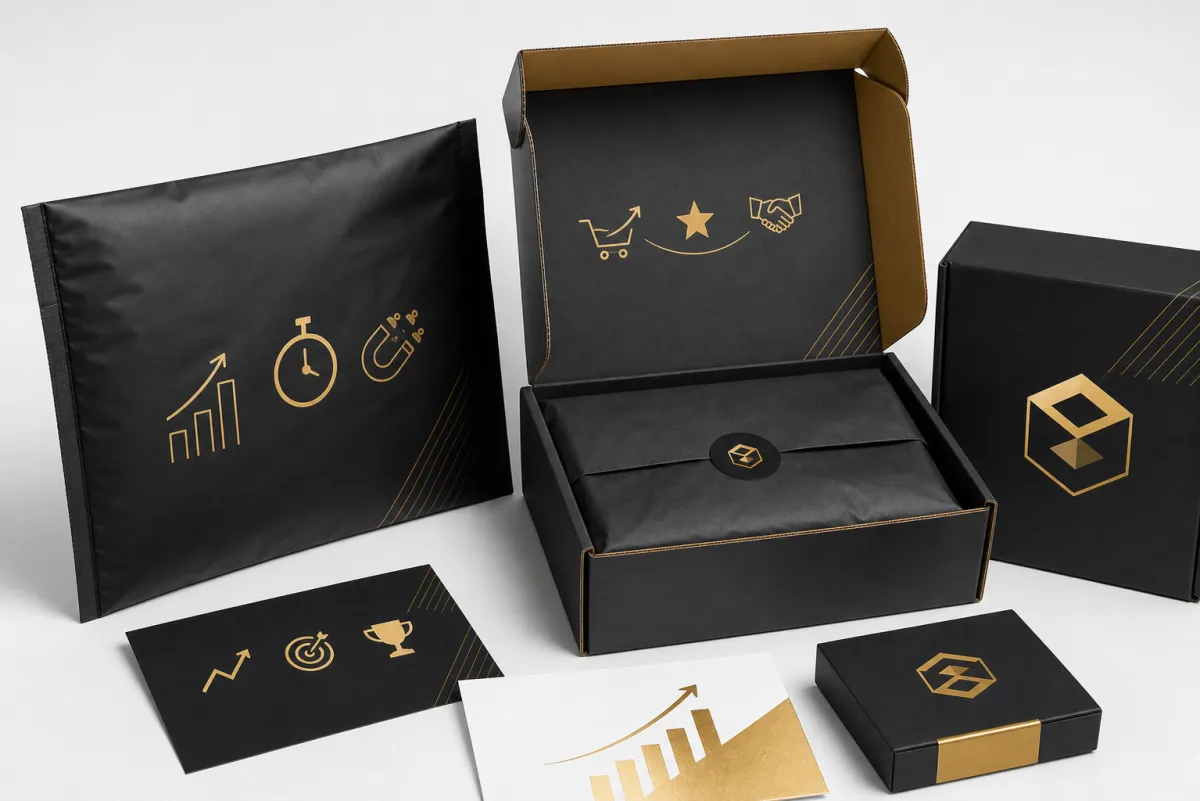
Most brands think about packaging too late. The product gets attention first, then somebody rushes to find a box that will not embarrass them. That is how a custom branded product packaging order ends up oversized, under-built, or visually flat. The box may still do the job, but it wastes space, adds freight cost, and weakens the first impression. That is not a design issue alone. It is a margin issue.
Picture a premium candle, a pair of wireless earbuds, or a skincare set. The product looks sharp online, but it ships in a generic carton that dents at the corners and rattles because the insert got skipped. Now the customer opens a package that feels cheap, even if the item inside is fine. Returns rise. Complaints rise. Conversion drops a little. Those little losses stack up faster than people expect. A better custom branded product packaging order protects the item and gives the buyer a reason to trust the brand before they even touch the product.
Cleaner packaging design helps on the logistics side too. A tighter fit cuts void fill, reduces dimensional weight charges, and lowers the odds of crushed corners during parcel handling. If the package is retail-facing, branding matters even more. Retail packaging has to be readable on a shelf, stack well, and stay consistent across batches. Branded packaging that is well planned can do all of that without turning into a circus.
"The cheapest box is rarely the cheapest program once freight, damage, and reorders show up."
That is the part buyers learn the hard way. A custom branded product packaging order is not just a carton with a logo slapped on it. It is a supply decision. Get the structure right and the rest gets easier: lower breakage, cleaner fulfillment, better shelf presence, and fewer awkward emails about why the tray does not fit the actual product.
There is also a branding effect people underrate. A polished box can make a mid-range product feel more premium, which helps margin and supports repeat purchase. A weak box does the opposite. It tells the buyer the brand cut corners where they could see them. Not a great look if you are asking for a decent price tag. Customers are not subtle about that stuff. They notice the box before they notice your spreadsheet.
One more practical reason this pays off quickly: better packaging reduces the number of small decisions your team has to make after launch. Fewer repacks. Fewer replacement shipments. Fewer "why is this one crushed?" messages. Those are real labor costs, even if they do not show up as a line item called "packaging regrets."
What to choose for your custom branded product packaging order
The right format depends on the product, the channel, and how much abuse the package will take. A custom branded product packaging order for apparel is not built the same way as one for cosmetics, tech accessories, or a subscription kit. A lot of brands overbuild or underbuild right here. They spend luxury-box money on a shipping-only job, or they use a thin mailer for something fragile and then act surprised when the returns get messy.
Here is the practical breakdown. Mailer boxes are common for e-commerce, gifts, and subscription kits because they are sturdy enough for parcel transit and still presentable on arrival. Rigid boxes suit premium products, electronics, fragrance, and gifting, especially when the unboxing moment matters. Folding cartons are the standard for retail packaging and lighter products that sit well on shelves. Corrugated shippers are the workhorse for protection, heavier items, and long transit routes. Sleeves and inserts add presentation and hold items in place when the product needs a tighter internal fit.
For cosmetics, a custom branded product packaging order often starts with a folding carton plus an insert. That gives structure without overspending. For apparel, a mailer box or folding carton works if the presentation matters, while a kraft corrugated mailer is better if the shipment needs more protection. For food or gift sets, the brand may choose a sleeve over a standard carton to make the package feel cleaner and easier to merchandise. For tech accessories, rigid or corrugated with a die-cut insert is usually safer than a decorative carton with too much empty space.
The smartest choice is usually the one that matches the channel, not the fantasy. If the package is only shipping from warehouse to customer, the structure should prioritize durability and fit. If the box will also sit on a shelf or be handed over as a gift, the visual side matters more. A custom branded product packaging order should be built around the actual use case, not the mood board.
Use these quick filters:
- Product weight: under 250g can often use lighter folding cartons; above that, strength becomes a bigger concern.
- Fragility: glass, ceramics, and electronics usually need inserts or a corrugated outer.
- Channel: retail packaging needs shelf appeal; e-commerce needs transit durability.
- Perceived value: higher-ticket items usually justify a better finish and tighter structure.
- Fulfillment speed: simpler shapes move faster and are easier for packing teams to use.
If you are comparing structure options, our Custom Packaging Products page is a useful starting point. It narrows the field before a quote turns into five rounds of guesswork. And yes, guessing with packaging is how people end up paying for cartons that fit the outer shipper but not the product. I have seen that one more than once, and it is never a cute surprise.
One more point buyers miss: package branding and structure have to work together. A great print job on the wrong format is still the wrong package. A basic logo on a well-built box often beats a flashy box that fails in transit. That is why a custom branded product packaging order should start with fit and function, then move to print and finish. Not the other way around.
The material also shapes the feel of the product in a way buyers notice immediately. Coated paperboard feels clean and crisp. Kraft feels natural and more restrained. Corrugated feels honest and sturdy, which is useful if the box is doing real shipping work. None of those are "better" in the abstract. They are better or worse for a specific job, and the job should decide the spec.
Specifications that define a custom branded product packaging order
If the specs are vague, the quote will be vague. If the specs are wrong, the order will be wrong. That sounds obvious, but it is still where a lot of custom branded product packaging order problems begin. The buyer asks for a box, the supplier quotes a box, and the product shows up with too much empty space or not enough clearance for the insert. Nobody enjoys that email chain.
Start with the basics. You need exact product dimensions, product weight, the number of pieces per shipper, whether the box is retail-facing or shipping-only, and how the closure should work. Then specify the print area, finish, and any insert or partition requirements. The better the brief, the cleaner the quote. A custom branded product packaging order should never be priced from a rough guess like "about six inches" unless you enjoy paying for revisions. Measurements need to be real, not hopeful.
Material choice matters too. SBS and other coated paperboards work well for high-quality folding cartons. Kraft board gives a natural look and is often used for eco-leaning branded packaging. Corrugate is the right call for shipping strength, and it can still look polished with the right print. Chipboard is common in rigid construction. Each material changes feel, durability, and cost. The cheap choice is not always the smart choice, especially if the product is heavy or fragile.
For print and finish, the usual options are CMYK, PMS matching, foil stamping, embossing, spot UV, matte lamination, gloss lamination, and soft-touch. A custom branded product packaging order with full coverage, foil, and a soft-touch finish will cost more than a simple one-color kraft box. That is fine if the product justifies it. It is wasteful if the package is going to sit under a shipping label sleeve and then go straight into the bin.
Structural details also change the quote and the timing. Dieline changes, window cutouts, partitions, magnetic closures, die-cut handles, and custom inserts all add work. They are worth doing when the product needs them. They are a waste when they exist only to make the mockup look busier. A good supplier should tell you which changes are structural needs and which ones are just decoration with a better haircut.
For transit-heavy jobs, it is smart to think about shipping tests early. Standards like ISTA are useful references when the box needs to survive parcel handling, vibration, and drop scenarios. That is not overengineering. That is basic damage control. If the package also needs paper sourcing documentation, FSC certification is the label buyers often ask for.
A practical spec sheet for a custom branded product packaging order should include:
- Exact product dimensions and weight
- Final pack-out quantity per box
- Box style and closure type
- Material grade and board thickness
- Print method, color count, and PMS references
- Finish type, insert needs, and any cutouts
- Shipping method and destination
Skipping those details usually costs more later. Rework, new samples, and oversized cartons are all preventable expenses. A custom branded product packaging order is much easier to manage when the basic numbers are locked before artwork starts.
There is a tolerance issue that trips people up more than they expect. A few millimeters can decide whether a product rattles, fits, or jams the closure. I usually ask clients to think in terms of the product plus the protective system, not just the product alone. That extra layer is what keeps the package from failing in real life.
Pricing for a custom branded product packaging order
Pricing is where expectations meet physics. A custom branded product packaging order is not priced by mood. It is priced by materials, labor, print setup, finishing, and quantity. That is why two boxes that look similar can have very different unit costs. One might be a simple printed mailer. The other might be a rigid box with a custom insert, foil, and soft-touch lamination. Same logo. Very different bill.
The main drivers are easy to name. Material grade, box style, print coverage, finish complexity, insert design, and order volume all move the number. Lower MOQ usually means higher unit cost, because setup gets spread across fewer pieces. Larger runs reduce the unit price fast, but only if the design is stable enough to repeat. A custom branded product packaging order should be quoted at several quantity tiers so the break-even point stays visible instead of hiding in the footnotes.
Here is a practical pricing snapshot for common formats. These are typical ranges for a decent production run, not fantasy internet numbers. Exact pricing shifts with dimensions, print coverage, and shipping destination.
| Format | Best for | Typical unit cost at 5,000 | Typical lead time after proof | Notes |
|---|---|---|---|---|
| Mailer box | E-commerce, gifts, subscription kits | $0.55-$1.20 | 10-15 business days | Good balance of branding and transit protection |
| Folding carton | Cosmetics, supplements, light retail products | $0.18-$0.48 | 8-12 business days | Lowest unit cost when structure is simple |
| Rigid box | Premium goods, fragrance, electronics, gifting | $1.80-$4.50 | 15-25 business days | Higher perceived value, slower build, better presentation |
| Corrugated shipper | Fragile products, heavy items, longer transit | $0.85-$2.10 | 10-18 business days | Prioritizes strength over shelf display |
| Box with custom insert | Multi-item kits, fragile sets, electronics | $0.95-$3.20 | 12-20 business days | Insert design can move price and schedule quickly |
There are also hidden costs that buyers forget until they show up on the invoice. Tooling, die lines, plates, sampling, freight, and any changes after proof approval can add to the total. A custom branded product packaging order with a simple structure might only need a standard die and straightforward print setup. A more custom build can add die-cut tooling, extra proofs, or insert mockups. If the box is oversized, shipping can quietly become the worst line item in the file. That part is annoying, but it is still math.
Where can you save without hurting the brand? Standard sizes help. Fewer colors help. Simpler finishes help. Tight die lines help. A custom branded product packaging order does not need every premium feature to feel polished. Sometimes a matte finish, crisp logo placement, and a well-fitted insert are enough. That is usually where the smart money goes.
Where should you not cut corners? On structure and fit. A box that looks cheap because it is too thin, too loose, or too flimsy will cost more in complaints than you save in unit price. That is especially true for retail packaging or anything with a high perceived value. The buyer notices the package before they notice the engineering report that explains why the corners collapsed.
If you want to compare structure choices before you commit, ask for tiered quotes at 500, 1,000, 3,000, and 5,000 units. That gives you a clearer picture of the break-even point. It also tells you whether the custom branded product packaging order should move forward with a simpler box or whether the premium version makes sense at your volume.
One thing I tell buyers all the time: if a quote looks too clean, read the exclusions twice. Freight, sampling, and changes after proof approval are the usual sneaky add-ons. Nothing unethical there, just the reality of production. Still, nobody likes a surprise line item showing up after approval.
Timeline for a custom branded product packaging order
The schedule is usually where optimism gets punished. A custom branded product packaging order has a real process, and each step depends on the one before it. If the artwork is not ready, the proof cannot be approved. If the proof is not approved, production does not start. If the structure changes after sampling, the clock resets. That is why launch plans should include buffer time, not wishful thinking.
The usual flow is straightforward: brief, quote, dieline confirmation, artwork setup, proofing, sampling, production, and delivery. A simple custom branded product packaging order with a standard structure moves faster than a custom rigid build with inserts and special finishes. One is mostly print and fold. The other is a small production project with more points of failure. Treating them as equal is how launch dates get bumped.
In many cases, the slowest part is not the factory step. It is the review cycle. Late approvals, missing logo files, color corrections, and size changes can add days without improving the result. A custom branded product packaging order gets delayed most often when the buyer keeps adjusting the dimensions after the dieline is already in motion. That is an expensive hobby.
Here is the practical timing view:
- Brief and quote: 1-3 business days if the specs are complete.
- Dieline and artwork setup: 1-4 business days, longer if the structure is custom.
- Proofing: 1-3 rounds depending on how many changes are needed.
- Sampling: 3-10 business days for basic samples, longer for complex builds.
- Production: often 8-25 business days depending on material and finish.
- Freight: plan separately, because transit time can outrun production if the route is long.
A smart launch schedule builds in sample time before final approval. That matters more than people admit. A custom branded product packaging order can look fine on screen and still need a sample to confirm fold lines, insert depth, color balance, and closure fit. If the product is fragile, premium-priced, or going into retail, skipping the sample is false economy.
The fastest way to keep the order moving is to lock these decisions first: dimensions, box style, material, print method, finish, and insert requirements. Once those are stable, artwork can be built against a fixed dieline. That means fewer revisions, cleaner quotes, and fewer surprises on production day. Honestly, that is where the real time savings happen.
Planning for freight separately is also smart. Production completion is not the same thing as goods in hand. A custom branded product packaging order that finishes on time can still arrive late if the buyer forgot to account for shipping. That sounds obvious. It still gets missed.
If you are comparing lead times across formats, a folding carton or standard mailer usually moves faster than a rigid box with extras. Nothing magical there. More parts, more steps, more time. The rule holds every week of the year.
One practical habit that saves headaches: ask for the proof date and the ship date in writing. Not because everyone is trying to be slippery, but because schedules drift when nobody owns the next step. Small details keep the project from turning into guesswork.
Why choose us for a custom branded product packaging order
What matters most in a supplier? For a custom branded product packaging order, the answer is boring and useful: consistency, communication, and a low error rate. Fancy language does not keep a box square. Clean proofs do. Accurate sampling does. A supplier that gives direct answers and realistic timelines saves time on the front end and money on the back end.
We focus on the parts that actually affect buying decisions. That means clear quoting, reliable structure support, print quality that stays within spec, and finish control that does not drift from sample to production. A custom branded product packaging order should not turn into a scavenger hunt for missing details. If the dimensions are off by a few millimeters, the insert may not sit right. If the glue line is weak, the box does not survive handling. Those are real problems, not theoretical ones.
Good quality control shows up in the small stuff: sizing, print alignment, glue integrity, folding accuracy, and insert fit. It is easy to promise "premium." It is harder to keep 5,000 units looking like they came from the same process. That is the point of a dependable custom branded product packaging order. The first order should be safe enough to repeat. The reorder should be easier, not more stressful.
We also try to give buyers practical recommendations instead of polished nonsense. If a rigid box is overkill, we will say so. If a custom insert is worth the cost because the product is fragile, we will say that too. Packaging design is not a contest to see who can add the most features. It is a sorting exercise: what protects the product, supports the brand, and makes fulfillment less annoying.
I have seen a 2 mm tolerance issue ruin an entire insert run, which is why we pay attention to the parts most people skip. That is not glamorous. It is just good production. The right question is not "Can we make it fancier?" The right question is "Will this hold up on the line, in transit, and in the customer's hands?"
If you want to see how structure, finish, and branding choices change the final result, our Case Studies page is worth a look. It shows the difference between a package that merely exists and one that does the job in transit and on shelf. For a wider range of formats, our Custom Packaging Products page can help narrow the starting point before you request a quote.
There is also a service advantage to working from a clean packaging brief. A custom branded product packaging order moves faster when the supplier does not have to guess your color standard, box depth, or insert tolerance. Fewer guesses means fewer delays. That is not a marketing slogan. That is just how production works.
When a brand is scaling, the smallest process improvements matter. A clean proof, a corrected dieline, and a realistic quantity tier can save enough time to keep a launch on schedule. If you want basic questions out of the way before you commit, our FAQ page covers the common order issues buyers ask about first.
Next steps after your custom branded product packaging order
Before requesting a quote, gather the pieces that matter. Exact product dimensions. Product weight. Target quantity. Artwork files. Preferred material. Finish choice. Delivery address. If a custom branded product packaging order starts with a complete brief, the quote is faster and the first proof is usually much closer to correct. If the brief is thin, everyone wastes time pretending the missing details do not matter.
Then compare at least two structure options. One should be the best-fit version. The other should be the simpler or lower-cost version. That comparison makes tradeoffs visible instead of imaginary. A custom branded product packaging order often looks more expensive until you compare it against the cost of damage, void fill, and rework. Then the smarter choice becomes obvious.
Ask for a sample or proof whenever the structure is new, the product is fragile, or the package is retail-facing. That is the place to catch problems early. Confirm the timeline, MOQ, and freight before approval. No fake surprises. No last-minute panic. No excuse for a box that arrives after the launch has already passed.
Here is the short checklist I would use:
- Confirm dimensions and product weight
- Choose the box style based on channel and protection needs
- Decide on material, print coverage, and finish
- Request tiered pricing at several quantities
- Approve the dieline before artwork finalization
- Build in sample time and freight time
That is the practical way to buy packaging Without Wasting Money. A custom branded product packaging order should make your product easier to ship, easier to sell, and easier to reorder. Do that well, and the box stops being a cost problem and starts doing its actual job. If you are moving forward, keep the brief tight, the specs honest, and the finish choices grounded in reality. That is how a custom branded product packaging order stays profitable.
The simplest version of the takeaway is this: define the product, pick the structure that fits the channel, and lock the spec before artwork starts. Everything else gets easier after that. Everything else, honestly, is just noise.
How much does a custom branded product packaging order usually cost?
Price depends on size, material, print coverage, finishes, and quantity. Lower MOQs usually cost more per unit, while larger runs bring the unit price down fast. Shipping, tooling, and sample costs should be included in the real budget, or the quote is lying by omission.
What is the minimum for a custom branded product packaging order?
MOQ varies by box style and print method, so there is no single universal number. Standard shapes and fewer finishes usually allow lower minimums than highly custom structures. If quantity is tight, ask for the closest stock size or the simplest structure that still fits the product.
How long does a custom branded product packaging order take?
Simple orders can move quickly after artwork is approved, while custom structures take longer. Sampling and proof revisions are often the biggest schedule variables. Freight time should be planned separately from production time so the delivery date is real, not optimistic.
What files do I need for a custom branded product packaging order?
Send final dimensions, logo files, artwork, and any color references like Pantone values. If the box is custom, ask for the dieline before placing graphics. Include insert specs and product weight if the packaging has to protect fragile items.
Can I order eco-friendly options for a custom branded product packaging order?
Yes, many jobs can use recyclable paper, kraft boards, or FSC-certified materials. Water-based coatings and soy inks are common choices for greener builds. Eco options may change finish, feel, or price, so compare them against the brand goal before you approve the spec.
Should I prioritize presentation or protection?
Protect the product first, then shape the presentation around that structure. If the box fails in transit, the pretty part does not matter for long. For retail-facing items, you can still get a polished result without sacrificing build strength, but the order of operations matters.

