For a wine club team, the bag is never a minor detail. It carries weight, frames the first impression, and often does more physical work than a buyer expects from a paper product. The wine club paper shopping Bags Unit Cost matters, but the smarter question is whether the bag can survive real handling without slowing down fulfillment or creating damage claims. A well-built bag can support the pack-out, keep the presentation tidy, and reduce the number of awkward repacks that eat into margin.
That is why paper bag buying for wine clubs should be treated as packaging engineering, not just sourcing. Bottle count, paper weight, handle style, bottom reinforcement, and print coverage all affect the final quote. They also affect whether the bag feels stable in the hand or starts to fold, sag, or tear once it is loaded with glass and carried across a warehouse floor or parking lot.
Why Wine Club Shipments Make Paper Bags Work Harder Than Expected
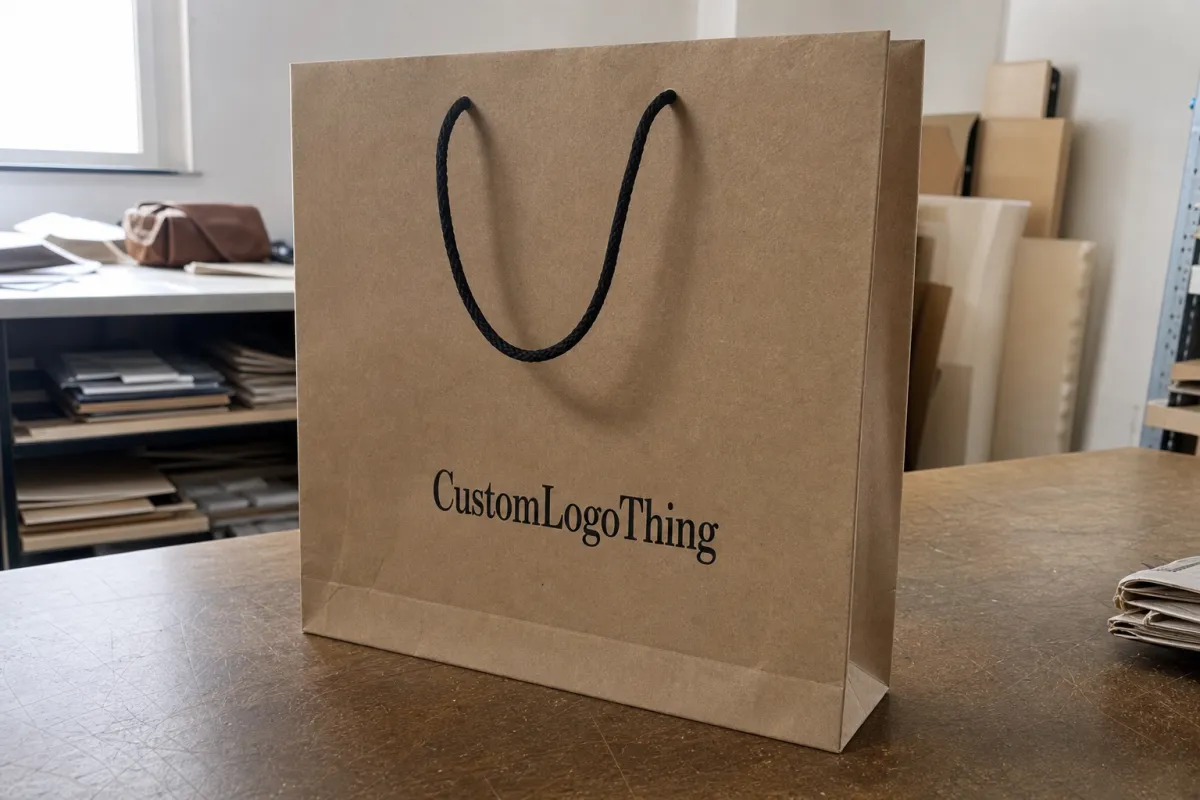
A wine club bag has to do several jobs at once. It must support a relatively dense load, resist rubbing from bottles and inserts, and hold up through repeated lifts as fulfillment staff move orders from packing bench to carton, from carton to shelf, and sometimes from shelf to customer pickup. That is a harder use case than a standard retail carry bag.
The hidden stress usually shows up in small details. A two-bottle set with tissue, tasting notes, and a membership insert can shift inside the bag if the gusset is too narrow or the bottom board is too light. One bottle profile may sit neatly, while another pushes hard against the sidewall and distorts the structure. Once that happens, the bag stops looking premium and starts looking underbuilt. That is where wine club paper shopping Bags Unit Cost becomes a structural decision rather than a simple price comparison.
The most common mistake is buying by catalog size alone. Bottles do not behave the same way. A tall Burgundy shape, a standard Bordeaux bottle, and a heavier premium bottle change the center of gravity and the way the load presses on the side seams. If the handle attachment or bottom reinforcement is too light, the bag can pull, lean, or split where the fold is stressed. Saving a few cents on paper stock can turn into more labor, more replacements, and more customer-service time.
Packaging buyer reality: a bag can look fine on a sample table and still fail once it is filled, lifted, stacked, and carried in the field.
From a materials standpoint, a bag for wine should be judged like any other load-bearing retail pack. Paper weight, seam integrity, handle reinforcement, and bottom construction matter more than surface appearance. For many club programs, a reinforced kraft structure in the 150-200 gsm range, or a similar build with a bottom board, is a better starting point than a lightweight promotional bag. The initial quote may be higher, but the reduction in failures and repacks often offsets it.
For buyers who need a reference point for transit stress or material sourcing, the ISTA test framework is useful for thinking about shipping loads, and FSC certification may matter if your club tracks paper sourcing or forest stewardship claims.
That is the practical frame for wine club Paper Shopping Bags unit cost: not, "What is the cheapest bag?" but, "What spec survives the job with the fewest hidden costs?"
Paper Bag Styles That Fit Wine Club Packaging Needs
Wine club programs usually narrow down to a few bag styles. Twist-handle kraft bags are common for price-sensitive packs and straightforward carry-outs. Rope-handle bags feel more premium and are easier on the hand when the load gets heavier. Reinforced retail-style bags, usually with a stronger bottom board and more secure handle patches, work well when the club wants a higher-end finish without sacrificing durability. Gusseted formats are the most flexible when bottle count rises or the pack-out needs more shape control.
For single-bottle club sets, a simple kraft bag may be enough if the bottle is protected by a sleeve or insert and the customer expects a modest presentation. For two-bottle and three-bottle sets, gusset width becomes more important than extra height. A broader gusset helps the bag stand during packing and keeps the load from bulging outward. That makes fulfillment faster and lowers the chance of a bag that looks overstuffed before it even leaves the warehouse.
Handle choice changes both the operating feel and the customer’s perception of quality. Twist handles are economical and quick to produce, but they do not always read as premium. Rope handles, especially paper-wrapped or cotton-look versions, distribute weight more comfortably and can make the bag feel more gift-ready. For higher-value seasonal releases, that difference matters. It changes the way the bag feels in the hand, not just the way it looks on a shelf.
There is also a real tradeoff between plain kraft and laminated or heavily printed premium bags. A natural kraft bag with a clean one-color logo often feels grounded and cost-aware. A laminated bag with fuller print coverage can suit a prestige tier, but it adds finishing steps, tooling work, and production time. That extra polish only makes sense if the membership experience justifies it. Otherwise the bag becomes a decorative expense with no functional return.
| Bag style | Typical use | Cost profile | Best fit |
|---|---|---|---|
| Twist-handle kraft | Single bottle or light club pack | Lowest unit cost; fewer setup charges | Price-sensitive programs |
| Rope-handle retail bag | Premium pickup and gifting | Mid-range cost per piece | Higher-value memberships |
| Reinforced bag with board insert | Two- or three-bottle club shipments | Higher unit cost, better durability | Heavier loads and lower damage risk |
| Laminated printed bag | Seasonal or prestige programs | Highest make-ready and finishing cost | Brand-led presentation |
For most clubs, the right answer is not the fanciest bag on the list. It is the bag that supports the bottle load, fits the packing process, and keeps Wine Club Paper Shopping Bags unit cost inside a range the business can defend month after month.
Sizing, Handles, and Print Specs That Keep Bottles Secure
Start with the bottle, not the bag. That sounds obvious, yet many packaging issues begin when a buyer chooses a size before measuring the actual pack-out. Record the widest bottle diameter, the tallest bottle height in the assortment, and whether the set includes tissue, inserts, or membership collateral. A standard Bordeaux bottle and a tall Burgundy bottle may appear similar on a line sheet, but the shoulder shape can change the way they sit in a narrow gusset.
It helps to size for the whole pack-out instead of the individual item. If one club release uses two bottles and another uses a single special-format bottle, the bag may need a family of specs rather than one universal size. Some teams keep one base structure and adjust insert height, board stiffness, or gusset width depending on the release. That approach keeps the buying process simpler while still respecting the weight and shape differences across shipments.
Handle reinforcement matters more than many buyers expect. A handle glued to thin paper can fatigue fast under the repeated lift-and-set cycle that happens in club operations. Reinforced patch handles, heavier cords, and better fold-back construction reduce stretch and tear-out. Bottom board strength matters too, because once the bag begins to sag, the bottles tilt and the load shifts into the side seams. Weak bottom geometry is one of the fastest ways to turn a decent bag into a problem bag.
Print decisions should support production instead of complicating it. Large flood coverage can hide the natural kraft texture, but it can also show scuffing more easily. Logos too close to folds or gussets may distort during forming. Safe zones are not a design luxury; they are what keep a clean proof from turning into a crooked production run. The same applies to fine lines, reverse type, and tiny legal copy. If the line is too delicate, it may disappear or blur once the bag is assembled.
Finishing should match the brand and the use case. Matte surfaces tend to feel understated and reduce glare under retail lighting. Gloss can look sharper, but it also shows handling marks faster. Spot colors are usually easier to control and more economical for smaller runs. Process print gives more artwork flexibility, though it often increases setup charges and proofing time. The right answer depends on whether the bag is meant to feel artisanal, modern, or simply durable enough for repeated club handling.
A useful buyer habit is to ask not only, "Can we print it?" but also, "Can we print it cleanly, pack it fast, and keep the bottles secure?" That framing usually leads to a better quote and fewer surprises later.
Wine Club Paper Shopping Bags Unit Cost, MOQ, and Quote Variables
This is where quote review gets serious. The wine club paper shopping bags unit cost usually moves with five main levers: bag size, paper weight, handle type, print complexity, and finishing. A small twist-handle kraft bag with a one-color logo can land in a very different price band than a reinforced rope-handle bag with decorated panels. From the outside, they may look close enough to compare casually. In production, they are not close at all.
For planning purposes, simple custom paper bags often start around $0.18-$0.28 per unit at 5,000 pieces, while heavier or more decorative wine club versions can move into the $0.35-$0.75 per unit range depending on handle type, stock, print coverage, and finishing. Smaller quantities may push the number much higher because setup charges and make-ready work are spread across fewer bags. These are planning ranges, not promises, but they are useful when a club needs to set expectations before opening the quote process.
MOQ changes the math quickly. A supplier may accept a smaller run, but the price per piece will usually rise because tooling fees, die work, plates, and setup labor do not shrink in the same way the order size does. At higher volumes, bulk pricing starts to work in the buyer’s favor because the fixed production work is spread across more finished bags. That is why a 2,000-piece order can look expensive while a 10,000-piece order suddenly fits the annual program better.
Landed cost is the number that matters to procurement. Freight, carton count, pallet configuration, and destination can change the total spend enough to alter the decision. A lower factory price with poor carton efficiency can become a worse deal than a slightly higher unit price with better pallet density and lower shipping risk. If the bags go to multiple fulfillment points, ask for carton-level details, not only price per thousand. That extra visibility helps avoid surprises when the freight bill arrives.
Here is a practical way to compare quotes without losing the thread:
- Unit cost: the bare per-bag price before shipping.
- MOQ: the minimum quantity tied to the production setup.
- Setup charges: plates, dies, and make-ready labor.
- Tooling fees: one-time or recurring charges for custom components.
- Landed cost: the total delivered cost after freight and cartons.
Ask every supplier to quote the same structure. Use the same dimensions, same handle, same print coverage, same carton count, and the same delivery term. If one quote includes assembled samples and another charges separately, make that clear before comparing the numbers. The cleanest purchasing habit is still the most effective one: standardize the request, then judge the answers by actual delivered cost rather than the boldest headline number.
For broader sustainability context, the EPA Sustainable Materials Management resources are useful when a club needs to align packaging choices with waste reduction goals and paper recovery assumptions.
Handled carefully, the quote process gives the buyer control over wine club paper shopping bags unit cost instead of leaving it to guesswork. That is the difference between a one-off purchase and a packaging program.
Proofing, Production Steps, and Lead Time for Club Rollouts
Most delays happen before production starts. The usual path is spec confirmation, dieline review, artwork proofing, approval, production, packing, and shipment. If any one of those steps is vague, the order slows down. That is why proofing should be treated as a real milestone, not a formality.
Artwork approval is often the longest variable because wine clubs tend to add detail. Seasonal messaging, compliance language, membership tier markers, and logo placement all need signoff. If the bag includes multiple print panels or a rich background color, the proof may need a second pass to confirm ink density, fold behavior, and readable type. A clear internal review path saves time and avoids last-minute changes that are expensive to unwind.
Lead time expands when specialty paper, custom rope handles, foil accents, or lamination enter the spec. Each layer adds another checkpoint. A straightforward repeat order may move in 12-15 business days from proof approval, while a more complex first run can take longer depending on stock availability and finishing. Suppliers vary, so the buyer should ask for a schedule that separates proof approval from packing and transit instead of accepting one vague ETA.
Sample review should match the actual use case. The bag should be tested with the expected bottle count, insert, and collateral stack. If the club will hand out the bag after a fulfillment cycle, check whether the handles stay comfortable after loading and whether the bottom panel stays flat. A small wobble on the sample table can become a real issue once the pack line starts moving faster than expected.
Repeat orders are usually quicker because the structure already exists. The supplier should have the approved spec, dieline, and artwork on file. If they do not, that is a sign to tighten the documentation before the next run. Good reorder discipline is one of the easiest ways to protect wine club paper shopping bags unit cost over time, because it reduces unnecessary reproofs and last-minute changes.
A simple milestone checklist keeps the project on track:
- Confirm bottle count and pack-out contents.
- Approve bag dimensions and handle type.
- Review artwork against fold and gusset zones.
- Sign off on the production sample or flat sample.
- Lock the ship date against the club calendar.
That sequence reduces the chance of a late-stage surprise that costs both time and money.
What Buyers Should Verify Before Reordering Season After Season
Reorders are where consistency becomes visible. Even when the artwork is identical, a slight change in paper stock, handle attachment, or board stiffness can change the feel of the bag. That matters in wine clubs because customers notice subtle differences from one shipment to the next. If the bag felt premium last season and flimsy this season, the brand story weakens quickly.
Before approving another run, check whether the supplier kept the approved sample, the spec sheet, and the print target. A supplier with orderly records can repeat the job with less friction, and that lowers the chance of unexpected variation. If they cannot show the prior spec, ask more questions before placing the order.
Color tolerance deserves attention too. Kraft stock can vary naturally, and coated or laminated stocks can drift if the paper source changes. A darker ink laydown may look richer but can also shift the tone slightly. If the brand depends on a precise logo color, ask for a practical tolerance discussion instead of assuming the same result will happen by default.
Board stiffness and carton counts matter as well. A bag that rides well in one carton configuration may compress in another. If the club ships monthly or quarterly, verify how many bags fit per carton, how much the carton weighs, and whether the shipper can keep stack stability in transit. Those details protect both handling time and landed cost.
Damage feedback is often more useful than a generic quality score. Ask warehouse or fulfillment staff what actually happened on the last run. Did handles stretch? Did the bottom bow? Did cartons arrive crushed? That real-world input points to the problems that matter. You are not just repeating the previous order; you are refining it.
If the current spec already works, do not overcomplicate the next cycle. Stable procurement usually beats constant redesign. That is especially true with wine club paper shopping bags unit cost, because every unnecessary revision can trigger new setup charges and push the ship date farther out than planned.
How to Request Samples, Forecast Quantities, and Lock Specs
The fastest way to get a useful quote is to give the supplier clean inputs. Start with a short checklist: bottle count, bottle dimensions, target bag size, handle style, print colors, expected monthly or seasonal volume, and delivery window. If inserts, tissue, or membership cards ride with the bag, include those too. That is the difference between a generic estimate and a quote that can actually be used.
Ask for a flat sample or a production-style sample before placing the full order. A flat sample shows whether the artwork and structure make sense on paper. A production-style sample shows whether the bag holds weight, stands correctly, and feels right in the hand. For wine club programs, the second sample is usually the more valuable one because it reflects the actual working load.
Build the quote request around the same assumptions every time, then compare vendors by unit cost, MOQ, bulk pricing, and landed cost. If one supplier includes assembled sample cost while another charges separately, write that down. If the carton packout differs, note it. The goal is to remove hidden differences so the real value becomes visible.
Forecasting helps too. If the club ships quarterly, estimate each cycle separately and then total the annual need. That can show whether one larger order or several smaller releases makes more sense. In many cases, a bigger annual commitment improves pricing, but only if the artwork, flavor schedule, and membership count are stable enough to justify it. A pricing break is useful only when the business can actually absorb the inventory.
Once the spec is locked, keep it locked. Final approval should cover dimensions, handle type, paper weight, print layout, and carton configuration. If the buyer wants to preserve wine club paper shopping bags unit cost, the cleanest path is a stable spec, a repeatable reorder cadence, and clear documentation of the approved build. That is usually what prevents a smooth packaging program from turning into a string of small, expensive corrections.
For a wine club, the best paper bag is the one that carries the bottles safely, presents the brand cleanly, and behaves predictably in the pack line. If the spec is disciplined from the start, the cost stays tied to value instead of drift, waste, or avoidable rework. That is the part buyers remember when the next release comes around.
What affects wine club paper shopping bag unit cost the most?
The biggest drivers are paper weight, bag size, handle style, print coverage, and any finishing that adds make-ready time. MOQ also matters because smaller runs spread setup costs across fewer bags, which raises the per-bag price. Shipping and carton configuration can change landed cost, so buyers should compare total delivered pricing, not only factory unit cost.
What MOQ should I expect for custom wine club paper shopping bags?
MOQ varies by structure and decoration, but custom printed paper bags usually price better once the run is large enough to absorb setup costs. If the order is small, ask whether the supplier can offer a stock structure with custom print rather than a fully bespoke build. Always confirm whether MOQ is based on finished bags, printed bags, or cartons, because suppliers define it differently.
How do I choose the right size for a wine club bag?
Start with the bottle count and bottle shape, then add room for tissue, inserts, or membership collateral if those ship together. Measure the widest point of the bottle and the pack-out height so the gusset and sidewall can support the load without bulging. Test a sample with the actual product before approving the final size.
How long does production usually take after artwork is approved?
Lead time depends on print complexity, paper availability, and any specialty finishing on the bag. Once artwork is approved, a straightforward reorder typically moves faster than a first run because the structure has already been validated. Ask for a milestone schedule that separates proof approval, production, packing, and shipping dates.
Can I reorder the same wine club bag without redoing the spec sheet?
Yes, if the supplier has kept the approved spec, artwork files, and prior sample reference on file. Before reordering, confirm that the paper stock, handle style, and print color targets are still identical to the last approved run. A quick reorder check prevents small changes from slipping into a repeat job.

