Buyer Fit Snapshot
| Best fit | Custom Corrugated Tray Boxes MOQ projects where brand print, material claims, artwork control, MOQ, and repeat-order consistency need to be specified before quoting. |
|---|---|
| Quote inputs | Share finished size, material target, print colors, finish, packing count, annual reorder estimate, ship-to region, and any compliance wording. |
| Proofing check | Approve dieline scale, logo placement, barcode or warning zones, color tolerance, closure strength, and carton packing before bulk production. |
| Main risk | Vague material claims, crowded artwork, missing packing details, or unclear freight terms can make a low unit price expensive after revisions. |
Fast answer: Custom Corrugated Tray Boxes MOQ: Specs, Pricing, Process should be specified like a repeatable production item. The safest quote records material, print method, finish, artwork proof, packing count, and reorder notes in one written spec.
Production checks before approval
Compare the actual filled-product size with the drawing, then confirm tolerance on folds, seals, hang holes, label areas, and retail display edges. Reserve space for logos, QR codes, warning copy, and material claims before decorative graphics fill the panel.
Quote comparison points
Review material grade, print process, finish, sampling route, tooling charges, carton quantity, and freight assumptions side by side. A quote is only useful when the supplier can repeat the same color, closure quality, and packing count on the next order.
Custom Corrugated Tray Boxes MOQ: Specs, Pricing, Process
For buyers sorting through packaging quotes, Custom Corrugated Tray Boxes moq is usually the number that separates a real quote from a paper one. Tray pricing shifts fast once board grade, print coverage, cutting method, and freight enter the picture. A tray that looks cheap on the first line can turn expensive once setup charges, board waste, pallet count, and shipping inefficiency land on the invoice.
That is why custom Corrugated Tray Boxes moq needs to be clear before supplier comparisons begin. The right order size can cut unit cost enough to justify a larger buy, especially if the trays support a packing line, retail shelf, or repeated replenishment cycle. Good purchasing starts with the specs, then works back to the MOQ. Not the other way around. I have seen too many teams do it backwards and then act surprised when the “low-cost” option eats the budget anyway.
Why Custom Corrugated Tray Boxes MOQ Can Change Your Unit Cost
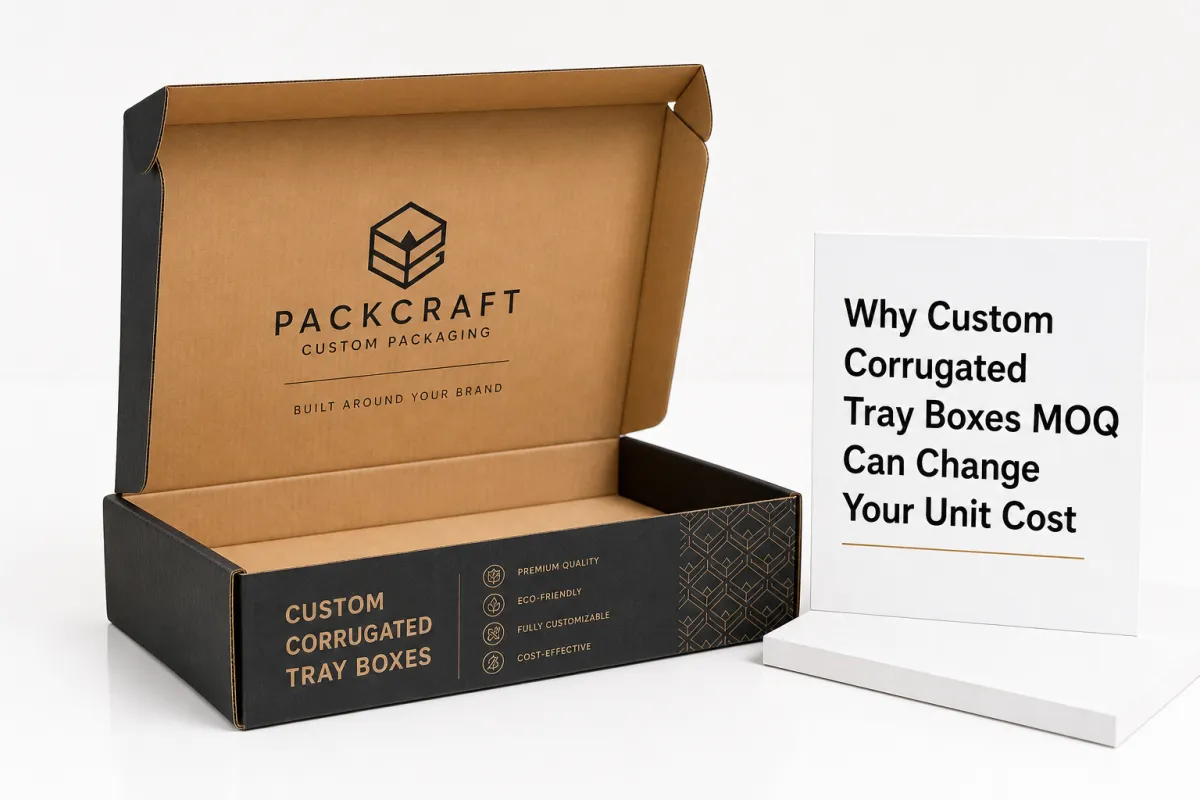
The lowest quoted price is not always the best price. A buyer may see a low board cost, then watch the total climb once cutting dies, print setup, pallet freight, and board utilization are added in. That is the first reason custom corrugated tray boxes moq matters so much: the fixed costs exist, and they have to be spread across the run somehow.
Tray structures are simple compared with many other packages, but they still cost money to produce. If the tray is custom sized, printed, or engineered for a specific packing line, the supplier has to account for tooling, sheet layout, waste, and forming labor. Small orders often carry a higher custom corrugated tray boxes moq because the factory is doing the same setup work for fewer units. Larger orders dilute that setup cost, which is why a slightly higher quantity can bring the unit price down enough to make sense.
The real question is not “What is the cheapest quote?” It is “What quantity gives me the best total value once setup, freight, storage, and reorder risk are included?” That is the practical value of understanding custom corrugated tray boxes moq before vendor comparisons start. If one supplier quotes 1,000 trays at one price and 2,500 trays at a better unit rate, the larger run may reduce the cost per shipped case once freight and repeat ordering are factored in.
A low MOQ looks attractive until setup charges, board waste, and freight get divided across too few trays; then the “cheap” option quietly becomes the costly one.
That is where a lot of packaging programs drift off course. Procurement sees a low number. Operations sees a tray that is awkward on the line. Accounting ends up carrying a unit cost that never really made sense. The cleaner move is to judge custom corrugated tray boxes moq alongside line speed, storage space, and replenishment frequency. A tray that packs faster or stacks better can save more than a few cents per unit, and a few cents often decides whether the program holds margin or bleeds it.
I once watched a food client shave a few cents off board cost by choosing a thinner spec, then spend the savings three times over because the tray flexed during packing. Cheap is easy to find. Cheap and usable is the part that takes work.
What Custom Corrugated Tray Boxes Are and Where They Work Best
Custom corrugated tray boxes are open-top corrugated structures used to hold, display, stage, or ship product without the full enclosure of a standard carton. They show up in produce, bottled goods, retail shelf-ready packs, inner shippers, warehouse organization, and kitting work where quick access matters. Because the top stays open, trays use less material than a fully enclosed box. That often helps with sustainability targets and can support leaner packaging plans. For teams comparing custom corrugated tray boxes moq across suppliers, that open structure is one reason the final spec matters so much.
A tray can be plain or highly engineered. Some are simple four-corner containers for internal movement. Others use locking corners, reinforced side walls, or die-cut hand holes for easier handling. Shelf-ready retail packaging often uses trays because staff can load them fast, inspect product visually, and place them directly on display with little rework. That speed matters on a packing line, and it matters again at the store or warehouse because fewer touchpoints usually mean fewer damaged units. If your program depends on custom corrugated tray boxes moq, choose the structure that matches the real handling path, not just the drawing.
There are also times when trays are the wrong fit. Products that need dust protection, tamper resistance, or full enclosure usually belong in a different format, such as a sealed mailer or a full shipping carton. That is why buyers should compare trays against Custom Shipping Boxes before making the call. A tray is strong for visibility, airflow, and efficient packing, but it is not a universal answer. The right choice comes from the product, the shipping method, and the end-use environment.
For sustainable packaging teams, trays also make sense because they can be sized tightly around the product footprint. Less empty space means less board, less dunnage, and better palletization. That can improve cube use and reduce shipping waste, which is why custom corrugated tray boxes moq is often part of a broader packaging discussion rather than a stand-alone purchase item. Buyers who treat the tray as part of the full supply chain usually make better decisions than buyers who only compare carton prices.
In plain terms: if the tray is going straight from packing line to shelf or pallet, the open-top format can be a smart fit. If the product needs protection from grit, rain, or rough handling, a tray may still work, but you need to prove it first. No fancy wording changes that.
Material, Flute, and Print Specifications to Lock In
Material choice is where many custom corrugated tray boxes moq conversations get technical, because the board affects strength, print quality, recycling profile, and price. Kraft liner is a common choice when you want a clean natural look and dependable stiffness. Recycled-content board is often used for sustainability targets, especially when the tray supports internal shipping or warehouse organization. For heavier loads or taller stacking, single-wall corrugated may work well, but double-wall construction can be the better option if the tray needs more crush resistance or a longer distribution life.
Flute selection matters just as much. E flute gives a smoother print surface and a thinner profile, which helps with retail packaging and tighter dimensional control. B flute is often chosen for better stacking strength and puncture resistance. C flute sits between those needs for many applications, while F flute can work when print detail and compact depth matter. The best flute is not the one with the fanciest name. It is the one that supports the product weight, stack load, and handling conditions without making the tray heavier than necessary. If custom corrugated tray boxes moq is under budget pressure, flute choice can be a major lever for cost control.
Print method is the next big cost driver. One-color flexographic print is usually the most practical option for high-volume trays, especially when the branding is simple and the artwork is clean. A logo, a short line of copy, or basic line art usually keeps setup manageable. Full coverage branding, tight registration, or multiple ink changes tend to raise cost and can push custom corrugated tray boxes moq upward because the press needs more setup time and creates more waste during adjustment. That does not mean branded packaging is off the table. It just means the decoration should fit the job instead of being treated like an afterthought.
For teams focused on sustainable packaging, FSC-certified board is worth specifying when the supply chain needs responsible forestry documentation. Water-based inks and fewer mixed-material add-ons also help keep the tray easier to recycle at end of life. The FSC standard is widely recognized, and it supports brand claims when sourcing is documented correctly. If end-of-life recovery matters to your company, this is one of the places where packaging design needs to be practical, not decorative.
The most useful spec sheet is the one that answers production questions upfront. Before asking for a quote, send:
- Inside dimensions, not just outside dimensions
- Product weight and any point loads
- Stacking requirements and top-load expectations
- Humidity or moisture exposure during transit
- Shipping method, pallet pattern, and destination
- Print count, logo placement, and ink color needs
That level of detail sharpens the quote fast, and it keeps custom corrugated tray boxes moq tied to the actual job rather than a rough guess. It also gives the supplier a better shot at recommending the right board grade instead of overbuilding the tray just to play it safe. Overbuilt packaging pushes cost up quietly, and quiet cost creep is one of the hardest problems to unwind once production starts.
One more detail that gets ignored too often: artwork files. Clean vector art, correct Pantone references, and a simple print area save headaches later. If the supplier has to redraw your logo from a blurry PDF, the project is already wobbling.
Custom Corrugated Tray Boxes MOQ: Pricing, Breakpoints, and Budgeting
Pricing for custom corrugated tray boxes moq usually comes from a few repeat cost drivers: die cutting, print setup, board consumption, sheet efficiency, forming labor, and freight. The order size affects all of them. If the tray design nests efficiently on a manufacturing sheet, board use improves. If the tray is oversized, oddly shaped, or covered in print, waste can climb. That is why two quotes for the same tray can look very different before shipping is even added.
Common pricing breakpoints show up when a run crosses into a more efficient production band. A small run of 500 trays might carry a unit cost that works for a pilot, while 2,500 trays may bring a lower per-unit rate because the fixed setup cost is divided more effectively. For many programs, custom corrugated tray boxes moq becomes easier to justify once the run reaches a level that keeps waste, setup, and freight per tray in check. The move is not guessing the perfect quantity. The move is asking for tiered pricing so the tradeoff is visible.
| Order Range | Typical Use | Illustrative Unit Cost | What Usually Drives the Price |
|---|---|---|---|
| 500-1,000 trays | Pilot programs, seasonal tests, small replenishment | $0.32-$0.58 each | Setup charges are spread over fewer units, so custom corrugated tray boxes moq has a bigger impact |
| 1,500-3,000 trays | Regular production, retail rollout, internal distribution | $0.18-$0.34 each | Better sheet usage and lower effective setup cost per tray |
| 5,000+ trays | Repeat orders, steady operations, multi-location supply | $0.12-$0.26 each | Higher efficiency, though storage and freight still need attention |
These ranges are illustrative, not promises. Tray size, board grade, print coverage, and freight distance can move the numbers in either direction. The pattern still holds: larger runs usually bring a better unit cost. That is why custom corrugated tray boxes moq should be discussed with the unit price, not kept separate from it. A slightly larger order may save more over the life of the program than a smaller order saves on day one.
There are practical ways to reduce spend without hurting performance. Standardizing dimensions across multiple tray styles can cut engineering time. Simplifying the print to one color instead of two or three can reduce setup waste. Choosing one board grade for multiple tray SKUs can improve buying power and simplify replenishment. Those changes matter because custom corrugated tray boxes moq is rarely driven by one variable alone. It usually comes from several small choices added together.
Procurement teams should ask for quotes in more than one quantity band. Request the price at the MOQ, then ask for a second or third break at a higher volume. Have freight shown separately so the packaging price is not distorted by shipping assumptions. Ask for the quote with print and without print. That comparison shows whether branding is adding value or just adding cost. For many buyers, this is the point where custom corrugated tray boxes moq becomes a planning tool instead of a number buried in the fine print.
If the trays are part of a larger packaging program, it can help to compare them with other Custom Packaging Products and see where the tray fits in the full system. Sometimes a small spec change in the tray reduces the need for inserts, edge protectors, or secondary cartons. That kind of packaging decision is where the best savings usually show up, because fewer extra components mean fewer places for cost to pile up.
One more practical note: cheap unit cost is not the same as good total cost. If the trays arrive in a pallet pattern that wastes warehouse space, storage cost can wipe out the savings. If the tray needs extra hand assembly, labor cost can be worse than the material savings. That is why the right conversation around custom corrugated tray boxes moq should include material, labor, freight, and usage, not only the number that looks best on the page.
I also like asking one ugly question before signing off on a quote: “What happens if we run this through a packed week, not a perfect one?” That usually exposes whether the tray spec is actually workable or just pretty on paper.
From Quote to Delivery: Process and Timeline
The quoting workflow for custom corrugated tray boxes moq starts with clean input. Send the inside dimensions, the product weight, the intended use, the quantity target, the print requirements, and the shipping destination. If you have a packaging drawing, a sample photo, or even a rough sketch, include it. The more complete the brief, the less time gets wasted on guesswork. Tray production is usually straightforward once the spec is fixed, but every missing detail can slow the first quote.
After the quote comes engineering. Dielines are reviewed, fit is checked, and load expectations are compared against the board grade and flute choice. In some cases, the supplier will recommend a different tray depth, a stronger board, or a modified corner design so the tray performs better in transit. That is a good sign, not a delay. A supplier asking about stackability, pallet pattern, and handling conditions is helping you avoid a mismatch before production starts. For custom corrugated tray boxes moq, that review can be the difference between a clean run and a costly reprint.
Samples are worth the time in many cases, but not every job needs the same kind of sample. A plain white sample or unprinted prototype is often enough when the goal is fit and strength verification. A printed approval sample is better when the tray is brand-facing or when logo placement has to be exact. If the order is tied to retail packaging, or if the tray will sit in front of buyers or store staff, the sample step pays for itself because it catches mistakes before they become palletized inventory. Once the sample is approved, custom corrugated tray boxes moq moves into manufacturing with less risk.
A typical timeline often looks like this:
- Quote and spec review: 1-3 business days
- Dieline or structure confirmation: 2-5 business days
- Sample or prototype approval: 3-7 business days if needed
- Production and finishing: 10-15 business days, depending on complexity
- Freight booking and transit: based on destination and shipping method
Those ranges work for many corrugated jobs, but they are not universal. Rush orders, artwork changes, and custom tooling can add time. Moisture-resistant coatings or complicated print coverage can do the same. The safest path is to lock the details early, because custom corrugated tray boxes moq is easier to manage when the spec is stable before production starts.
For buyers who want tighter control, keep the order paperwork and approval trail in one place. That is one reason our FAQ page can help during planning and reorders. It gives teams a fast reference without restarting the same conversation every time. When the same tray is ordered repeatedly, consistency matters almost as much as price.
Corrugated tray performance can also be tested against recognized methods when the application is demanding. The ISTA test standards are widely used to evaluate package strength and shipping resilience, especially for distribution conditions that include vibration, drops, and compression. If the tray is going into a harder logistics path, asking about test methods is a smart move. It brings discipline to the discussion and keeps custom corrugated tray boxes moq tied to measurable performance instead of vague claims.
In practice, good timeline control comes down to one thing: approval speed. If the structure, artwork, and quantity are moving around for days, the schedule will slip. If they are locked early, production usually behaves itself.
Why Choose Custom Logo Things for Sustainable Tray Packaging
Custom Logo Things works best for buyers who want a practical manufacturing partner, not a sales pitch with extra fluff. The right supplier should help match the tray structure to the product, explain the material tradeoffs clearly, and keep custom corrugated tray boxes moq easy to understand from the first quote. That means talking about dimensions, board selection, print method, and logistics in plain language instead of burying the buyer in jargon. Packaging is technical, but it should still be usable.
A strong supplier also protects your schedule by asking the right questions early. Is the tray going to be hand packed or machine packed? Will it be displayed on a shelf or moved only in the warehouse? Does the product have sharp corners, moisture exposure, or unusual weight distribution? Those details matter more than most people expect. When a supplier checks fit, palletization, stackability, and shipping conditions before the order is placed, the odds of a clean run improve. That is the practical value of working with a team that understands custom printed boxes and broader packaging design work.
Sustainability needs to be handled as a production choice, not a marketing phrase. Right-sized corrugated trays can reduce board usage. Recyclable construction supports end-of-life recovery. Water-based inks and FSC-certified board can align the package with responsible sourcing goals. That is what many procurement teams want from branded packaging now: a tray that does the job, looks clean, and does not waste material. Custom corrugated tray boxes moq fits neatly into that conversation because order size, waste reduction, and repeatability all affect the environmental and financial result.
The best part of a well-run tray program is repeatability. Once the structure is approved, the spec is documented, and the print file is set, reorders become easier to manage. That lowers risk and reduces the chance of surprise changes from one run to the next. In a strong supply relationship, custom corrugated tray boxes moq is not a moving target; it is a repeatable planning number that supports procurement, operations, and brand consistency at the same time.
For many buyers, the real value is not just the first order. It is the confidence that comes from knowing the next run will look and perform the same way, as long as the spec stays the same. That kind of consistency keeps product packaging stable across seasons, demand swings, and distribution changes. It also separates a one-off quote from a useful packaging program.
And yes, it sounds boring. That’s kind of the point. Good packaging usually is boring in all the right ways: predictable, repeatable, and not making anyone scramble at 6 a.m. because the trays arrived wrong.
Next Steps for Custom Corrugated Tray Boxes MOQ
If you are ready to quote custom corrugated tray boxes moq, start with the facts that affect cost most directly. Measure the product carefully. Confirm the inside dimensions, not just the outside box size you think you need. Note the weight, the loading method, the destination, and whether the trays will ship flat or assembled. Then define the print need in plain terms: logo only, one-color line art, or more detailed branding. The cleaner the input, the cleaner the answer.
Next, compare at least two or three configuration options. One version might use a lighter board with a lower MOQ. Another might use a stronger flute with a slightly higher order but better stacking performance. A third might remove print to show the price difference. That side-by-side view makes custom corrugated tray boxes moq much easier to judge because you can compare the tradeoffs instead of guessing at them.
Before you approve, ask for a sample plan, a pricing table with quantity breakpoints, and a lead-time estimate. That keeps the order from drifting into surprises later. If the supplier can explain the tooling, the unit cost, and the freight approach in a way that makes sense, you are probably looking at a good fit. If the numbers feel vague, press for detail. Packaging programs improve when the numbers are clear.
A practical sequence usually looks like this:
- Measure the product and define the tray function
- Choose the board grade and flute profile
- Request a tiered quote for custom corrugated tray boxes moq
- Review a sample or prototype
- Approve the structure, artwork, and freight plan
- Schedule production and confirm delivery timing
That process is simple, and it prevents most of the problems buyers run into later. It also keeps the discussion tied to real production decisions, which is exactly where it should stay. If your team is also building broader packaging supply options, it can help to review related Custom Packaging Products and compare the tray against other formats before locking in the spec.
Keep the end goal in mind: a tray that runs well, stacks well, ships well, and supports the brand without wasting board or labor. That is the point of custom corrugated tray boxes moq. Not a random number. A usable number.
So here is the practical takeaway: fix the dimensions, Choose the Right flute for the load, ask for tiered pricing, and make the supplier show the freight separately. If the quote still makes sense after that, you probably have a real program. If it only looks good before those questions, it was never a good deal.
FAQ
What is a typical MOQ for custom corrugated tray boxes?
MOQ depends on tray size, board grade, print method, and whether a custom cutting tool is required. Smaller runs are possible, but the unit price usually rises when setup costs are spread over fewer cartons. Ask for tiered pricing so you can compare the cost difference between a trial order and a full production run for custom corrugated tray boxes moq.
Can I lower the MOQ for custom corrugated tray boxes without losing value?
Yes, in many cases you can reduce MOQ by choosing a standard size or simplifying the print design. Using a common board spec and fewer color changes often helps keep setup costs under control. The best move is to compare the low-MOQ option against the per-unit savings of a slightly larger run, then decide which path gives better total value for custom corrugated tray boxes moq.
Which materials are best for sustainable corrugated tray boxes MOQ orders?
Kraft liner and recycled-content board are common choices when sustainability is a priority. Water-based inks and recyclable construction help keep the package aligned with end-of-life goals. If strength matters more than appearance, choose the lightest board grade that still meets stacking and shipping needs, especially for custom corrugated tray boxes moq programs that will repeat often.
How long does production take after I approve custom corrugated tray boxes?
Timeline usually depends on whether tooling is already in place, whether a sample is required, and how complex the print is. After approval, production includes cutting, forming, printing, and packing before freight is arranged. Any artwork changes or spec revisions after approval can extend the schedule, so confirm details early for custom corrugated tray boxes moq.
What should I send to get an accurate custom corrugated tray boxes MOQ quote?
Send inside dimensions, product weight, tray purpose, and whether the boxes will be shipped flat or assembled. Include print requirements, quantity target, destination, and any sustainability requirements such as recycled content or FSC board. If you have a sample photo or packaging drawing, include that too because it helps confirm the right structure faster for custom corrugated tray boxes moq.
For teams trying to balance cost, performance, and presentation, the smartest move is to treat custom corrugated tray boxes moq as part of the packaging decision itself, not a separate procurement hurdle. Once the board, print, and quantity are aligned, the tray becomes easier to source, easier to run, and easier to repeat. That is how a well-specified tray supports both the budget and the operation.

