Buyer Fit Snapshot
| Best fit | Custom Counter Display Boxes projects where brand print, material claims, artwork control, MOQ, and repeat-order consistency need to be specified before quoting. |
|---|---|
| Quote inputs | Share finished size, material target, print colors, finish, packing count, annual reorder estimate, ship-to region, and any compliance wording. |
| Proofing check | Approve dieline scale, logo placement, barcode or warning zones, color tolerance, closure strength, and carton packing before bulk production. |
| Main risk | Vague material claims, crowded artwork, missing packing details, or unclear freight terms can make a low unit price expensive after revisions. |
Fast answer: Custom Counter Display Boxes: Board, Finish, Dieline, and Unit Cost should be specified like a repeatable production item. The safest quote records material, print method, finish, artwork proof, packing count, and reorder notes in one written spec.
Production checks before approval
Compare the actual filled-product size with the drawing, then confirm tolerance on folds, seals, hang holes, label areas, and retail display edges. Reserve space for logos, QR codes, warning copy, and material claims before decorative graphics fill the panel.
Quote comparison points
Review material grade, print process, finish, sampling route, tooling charges, carton quantity, and freight assumptions side by side. A quote is only useful when the supplier can repeat the same color, closure quality, and packing count on the next order.
Custom Counter Display Boxes have a simple job, but they do it in a very specific part of retail that can make or break a purchase. They turn a few square inches of checkout space into a selling surface, and that matters because the counter is often the last pause before payment. In that tiny window, Custom Counter Display boxes can push a shopper from “not on my list” to “sure, I’ll take one.”
From a buyer's point of view, that makes the format unusually valuable. A well-built display can carry branded packaging, hold product neatly, and encourage an impulse buy without asking for floor space, pallet storage, or a big merchandising budget. Done poorly, it just adds clutter. Done well, it behaves like a tiny salesperson that never calls in sick.
That is also why the best custom Counter Display Boxes are more than little cartons with nice graphics. They blend presentation, protection, and retail strategy into one compact structure. If you are planning custom printed boxes for a checkout lane, service desk, pharmacy counter, salon station, or reception area, the details matter a lot more than most people expect.
One useful comparison: a floor stand can hold more units, but it also has more competition around it. A counter display sits closer to the customer, has fewer distractions, and reaches the eye and hand much faster. In practice, custom counter display boxes tend to win when the offer is simple, the product is small, and the brand message lands in under three seconds. Anything more complicated and the display starts to lose momentum.
If you are comparing formats, the Custom Packaging Products range is a sensible place to benchmark structures before you settle on one. The right display is usually the one that fits your product, your refill rhythm, and the amount of counter space the retailer is actually willing to spare.
What Custom Counter Display Boxes Actually Do at Retail
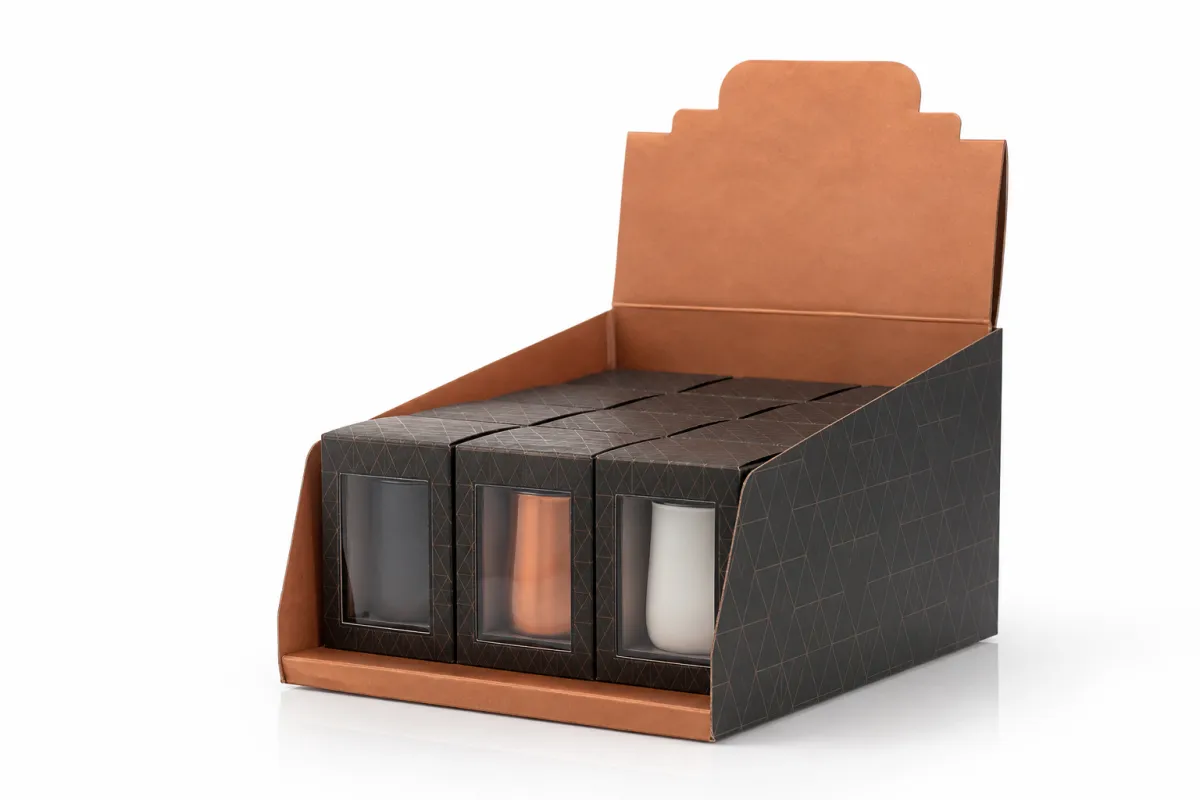
The counter is usually the last profitable stop in the customer journey. That sounds dramatic, but it is also practical. Shoppers are already standing still, often waiting, and that pause creates a narrow window where a small item can move from “not planned” to “why not.” Custom counter display boxes are built to catch that moment with a tight footprint and a clear offer.
At retail, these displays are compact, brand-forward units that sit on checkout counters, service desks, reception areas, pharmacy counters, or any impulse-buy zone where attention is fragmented. They are different from shelf trays, floor displays, and shipping cartons because they have to do several jobs at once. They show the product. They organize it. They protect it during handling. They also carry the visual language of the brand, which is where package branding starts doing real work.
Size is not a side issue here; it is the whole game. A display that fits beside a payment terminal can outperform a larger setup if it leaves room for the cashier, keeps the product visible, and does not look like it was dropped in by accident. I have seen small custom counter display boxes outperform bigger retail packaging units simply because they respected the counter as a working surface instead of treating it like a billboard. That part gets overlooked more often than it should.
The product type matters too. Lightweight cosmetics, gum, lip balms, travel accessories, batteries, sample-size supplements, and premium snack items all behave differently. A display for single-serve products may only need a front lip and a simple divider. A display for heavier items needs a firmer base, stronger board, and sometimes a reinforced insert. The structure should match the real handling pattern, not the fantasy version that looks best in a mockup.
Custom counter display boxes also fit into a broader retail packaging hierarchy. The outer carton gets the product to store safely. The display box gets it noticed at the right moment. The individual pack still has to carry the core information, but the counter unit can sharpen the story with a benefit line, a flavor callout, a price cue, or a simple call to action. That is why the best boxes do not over-explain. They edit.
There is another practical angle that buyers sometimes miss: replenishment. A display that is easy to refill usually sells better because staff do not avoid it. If the front panel opens quickly, if the divider keeps packs upright, and if the structure holds shape after repeated access, the unit stays presentable longer. That matters more than decoration. The prettiest display in the room is useless if it tips after the third refill.
From a merchandising standpoint, custom counter display boxes should make one decision feel easier. If the product is tiny, that decision may be about snackability. If it is premium, it may be about trust and perceived value. Either way, the shopper should understand the offer almost instantly. Good display packaging reduces hesitation. Bad display packaging adds friction right where the sale needed momentum.
For teams working across multiple stores, the bigger picture is consistency. A display that arrives with a stable base, readable front panel, and well-controlled color is easier to scale across retail locations. That is where custom printed boxes stop being a design exercise and start becoming a repeatable sales tool.
How Custom Counter Display Boxes Move Products From Browsing to Buying
Conversion at the counter is mostly a matter of reducing friction. The shopper is scanning quickly. The cashier is busy. The product has to communicate without a long explanation. That is why custom counter display boxes work best when they combine strong front-facing branding, a short message, and easy access to the item.
Structure helps that conversion. A base keeps the display stable. A back panel gives you vertical space for branding. A front lip can hold stock in place while still exposing the product. Dividers keep units aligned, which makes the display look full even as pieces leave. An insert can add strength or create a more precise fit for unusual product shapes. Some formats also use a header card, though that only works if the counter area has enough vertical clearance and the retailer approves it.
Shoppers do not read these displays like they read a brochure. They scan. In a busy store, that scan usually lasts only a few seconds. So the hierarchy has to be obvious: product name, main benefit, visual cue, and price or value indicator. If the message is too clever, it slows the sale. If it is too dense, it disappears. The best custom counter display boxes give the eye one clear path and one obvious action.
From a behavioral standpoint, counter displays are built for quick judgment. Customers are already making decisions about payment, timing, and convenience. That means small format retail packaging has an advantage when it feels low-risk and immediate. A travel-sized lotion, a compact accessory, or a snack pack that looks clean and easy to grab often performs better than a more complicated offer that needs explanation. The smaller the decision, the faster the sale.
The unit count also shapes the conversion mechanics. A display with 12 pieces behaves differently from one with 48. Low-count displays can feel premium and controlled. Higher-count displays can signal value and extend the refill cycle. Neither is automatically better. It depends on the product margin, the expected foot traffic, and how often staff will be restocking. That is a balancing act, not a formula.
Material choice changes the customer impression too. A crisp paperboard display can feel refined. Corrugated board can suggest strength and hold heavier stock. If the board is too thin for the weight, the display bows, and the shopper reads that as cheapness. That reaction is immediate, even if the shopper cannot explain it. Packaging design influences trust faster than most teams realize.
Custom counter display boxes also perform better when they are honest about the offer. A photo of the product, a bold benefit line, and a simple visual system usually outperform a crowded layout with too many icons. Many teams overestimate how much people want to decode. They do not. They want a fast answer. The display should hand it over without making the shopper work for it.
For brands that want a quick audit, ask three questions: Can the cashier see the product? Can the shopper understand the offer in one glance? Can the display survive a day of touch, refill, and handling? If any answer is no, the conversion rate will probably suffer. Strong custom counter display boxes are not just attractive; they are legible, reachable, and easy to maintain.
What Drives the Cost of Custom Counter Display Boxes
Pricing for custom counter display boxes is shaped by structure, board stock, quantity, print coverage, finishing, and setup work. Ink is only one part of the equation. A simple one-color display in high quantity can cost less than a heavy full-color piece with specialty coatings, but the cheapest-looking unit is not always the cheapest total solution if it underperforms at retail.
Here is the practical breakdown. Paperboard, such as SBS or CCNB, is common for lightweight displays because it prints cleanly and folds well. Corrugated board is more durable and better for heavier products or displays that need a stronger spine. Reinforced inserts add stability, but they also add material and labor. If the product is fragile or dense, those extra pennies can protect the margin by preventing damage or collapse.
Finishes have their own cost logic. A matte or aqueous coating can control scuffing and keep color readable under store lights. Gloss lamination can boost contrast but may also create glare. Foil stamping, spot UV, and specialty textures create a stronger shelf impression, yet each one adds tooling, handling, and usually more spoilage risk in production. For many custom counter display boxes, the smarter spend is not extra decoration; it is cleaner structure and better print contrast.
Size and complexity affect die-cutting and glue lines. A compact display that requires unusual folds, a locking mechanism, or multiple compartments can take more setup than a larger but simpler unit. That setup cost is why short runs often look expensive on a per-unit basis. Once you move into larger quantities, the unit cost usually falls because the die, plates, and press setup are spread across more pieces.
| Display Option | Typical Use | Relative Unit Cost | Notes |
|---|---|---|---|
| Paperboard counter tray | Light products, high print clarity | $0.18-$0.45 | Best for small, low-weight items and simple refill cycles |
| Corrugated counter display | Heavier products, more rigidity | $0.35-$0.90 | Stronger base, more durable under handling |
| Premium finished display | High-value branded packaging | $0.55-$1.25 | Spot UV, foil, lamination, or custom inserts can raise cost |
Those ranges are general, of course. Quantity, artwork coverage, and structural complexity can move them up or down. A 5,000-piece run with moderate print coverage may price very differently from a 500-piece pilot order, even if both use similar materials. That is why buyers should ask for quotes at multiple volumes. The per-unit price can fall enough at a higher quantity to justify the larger order, but not always.
There is also a hidden cost: assembly. If a display ships flat and requires manual setup in-store, the labor shifts to the retailer or field team. If it ships prefilled, the manufacturing and freight costs rise, but the launch may be easier. Neither route is automatically better. It depends on who owns the labor and how much handling the retailer will tolerate. On fast-moving programs, that decision can be as important as the board stock.
Another factor is compliance. If the display has to fit a planogram, support a barcode, or meet a retailer's dimension limit, design revisions can add time and cost. Some buyers also request recyclable materials, FSC-certified board, or moisture-resistant coatings. If that sustainability angle matters to the retailer, it can influence both procurement and price. For reference, the FSC certification framework is commonly used when buyers want traceable fiber sourcing, and ISTA testing standards are useful when a display has to survive transit and handling with fewer failures.
The best price question is not “What is the cheapest box?” It is “Which custom counter display boxes will sell through cleanly, survive the counter, and keep total program cost under control?” That usually pushes the conversation toward fit, structure, and run size rather than decoration alone. A display that reduces product damage or improves retailer acceptance can easily pay for itself even if the unit price is a little higher.
If you need a rough working range for planning, many paperboard custom counter display boxes land in the low tens of cents at larger volumes, while more durable or premium versions climb quickly with finishes and inserts. The exact number is always tied to the spec. That is not a dodge; it is how packaging quoting works.
Step-by-Step Process and Timeline for Custom Counter Display Boxes
Most projects move faster when the brief is complete before artwork starts. That sounds basic, but it is where a lot of delays begin. Before anyone opens a design file, gather product dimensions, unit count, weight, target counter location, refill method, and branding goals. If the team is still debating whether the product ships loose or pre-packed, the structure will probably need revisions later.
The next stage is the dieline and structural mockup. This is where the box shape is engineered to hold the product, fit the counter, and meet the retailer's space limits. Good dieline work is not just drawing lines on a flat layout; it is figuring out how the display behaves once it is folded, loaded, and handled. If you are building custom counter display boxes for a narrow checkout lane, every millimeter matters.
Proofing is where many teams rush and regret it later. Check barcode placement. Check copy. Check claims. Check any required legal text. If a retailer has specific rules about package branding, price signage, or shelf-edge visibility, those details need to be reviewed before print. A display that looks perfect on screen can still fail the buyer review if the wording is off by a few words.
A physical sample is the smartest next step for anything beyond a very simple run. Put the sample on an actual counter, not just on a desk. Look at how high the cashier's hands sit. Check whether the product is easy to grab. See whether the base shifts under load. Under store lighting, gloss and contrast can change more than you expect. This is where custom counter display boxes get judged for real, not for theory.
For complex projects, sample testing can also include basic transit checks. If the display will ship to multiple stores, it should survive the journey with minimal edge crush or warping. That is where standards from organizations such as ISTA become useful. They help teams think beyond the visual mockup and ask whether the box can make the trip intact.
The typical timeline depends on the level of complexity, but a straightforward project often looks something like this:
- Discovery and brief: 1-3 business days
- Dieline and structural review: 2-5 business days
- Artwork proofing: 2-4 business days, longer if copy changes are needed
- Prototype or sample: 3-7 business days
- Production after approval: often 10-15 business days
- Shipping: depends on method, destination, and whether the order ships flat or assembled
That timeline can stretch if the project includes foil, spot UV, specialty board, or a multi-round approval process. It can also speed up if the artwork is ready, the structure is simple, and the quantity is standard. The biggest bottleneck is usually not printing; it is decision-making. Teams that answer proof questions quickly usually get to press faster. Gonna be blunt about it: delays usually show up in approvals, not in the press room.
There is a practical launch detail that deserves more attention: replenishment planning. If the display sells well, what happens on the second refill? On the third? Will store staff have backstock? Is the insert removable? Are the slots wide enough for easy restock? Custom counter display boxes should be planned as part of a selling system, not as a one-time event. A beautiful display that cannot be refilled cleanly is only half a solution.
For brands working across more than one retailer, it is smart to document the structure, approved artwork, and refill instructions in one short spec sheet. That keeps future orders consistent and reduces the chance that a new run drifts from the version that actually performed well. In packaging, consistency is often the difference between a repeat order and a redesign.
Common Mistakes That Undercut Custom Counter Display Boxes
The most common mistake is oversizing the display. Counter space is not generous, and a display that hogs too much room will be treated like clutter. Even if the graphics are strong, the retailer may push it aside if it interferes with transactions. Custom counter display boxes should respect the counter as a working surface first and a marketing surface second.
Another frequent problem is unreadable messaging. Some displays try to say too much. Others try to be witty when they should be direct. On a busy counter, shoppers do not have time to decode layered copy or tiny type. If the offer is hidden under decoration, it will be skipped. The strongest retail packaging usually names the product plainly and then gives one reason to care.
Structural failure is a bigger issue than many brands expect. If the display bows, tips, or crushes at the edges, the shopper reads the whole brand as lower quality. That reaction is almost automatic. A board that is too light for the load, a base that is too narrow, or a divider that collapses under refill pressure can turn a promising program into a mess. With custom counter display boxes, stability is part of the brand story.
Retailer rules are another place where projects go off track. Some accounts care about planogram placement. Some have minimum or maximum dimensions. Some require specific barcode placement or packaging claims. If those requirements are ignored, a good design can be rejected before it ever sees the counter. That is a painful kind of failure because it is preventable.
One hidden mistake is launching without a restock plan. Fast-moving items need a refill cycle. If the display empties too quickly and there is no backstock nearby, the shelf impact dies early. That is not just a merchandising issue; it is a sales issue. A half-empty display often underperforms because it looks abandoned. Strong custom counter display boxes are designed to stay presentable even as units move out.
There is also the mistake of designing for the render instead of the room. Screens flatter everything. Store lighting does not. A matte finish that looks elegant on a monitor may turn dull under fluorescent light if the contrast is too soft. A glossy panel may flare if the lighting is harsh. That is why physical sampling matters. Packaging design has to survive real conditions, not just the polished mockup.
Another avoidable issue is making the display too hard to assemble. If the setup takes too long, staff may skip it or build it incorrectly. A good display should fold predictably, lock cleanly, and require as little interpretation as possible. The fewer steps in assembly, the fewer mistakes in the field. That is one of those unglamorous details that decides whether the program runs smoothly.
Finally, some teams forget that the display is part of product packaging, not a separate art project. If the outer carton, unit pack, and counter display speak in different tones, the brand feels disjointed. The best programs connect the whole system. The graphics, copy, and structure all point to the same promise.
Expert Tips to Make Custom Counter Display Boxes Sell Better
Start with one message. Just one. If the shopper can understand the product in a glance, you are already ahead of most programs. A counter display does not need to explain the whole brand story; it needs to trigger the next purchase. That means your custom counter display boxes should lead with the strongest benefit, not the longest copy.
Place the main visual cue where the eye naturally lands and keep the access point where the hand naturally reaches. That sounds obvious, but many designs still put the strongest image too low or hide the product opening behind decoration. A box can look balanced on paper and still feel awkward in use. In retail packaging, usability often beats symmetry, every time.
Test two versions if you can. A different window shape, a shorter headline, a more saturated color block, or a matte-versus-gloss comparison can reveal useful differences in attention and sell-through. A/B testing does not need to be complicated. Even a small pilot can tell you whether the display is pulling its weight. For custom counter display boxes, small changes sometimes matter more than new artwork.
Review samples under store lighting, not studio lighting. That one step catches more problems than most teams realize. Colors shift. Whites warm up. Dark backgrounds can swallow type. If the product category depends on premium perception, color accuracy matters. Strong package branding should hold up under the lights customers actually see.
Think about the shopper's hand path. If the product is supposed to be grabbed quickly, the front lip and opening should make that easy. If the product needs to stand upright, the divider should keep it aligned without forcing it. If a display is meant to survive repeated refill cycles, the base needs more support than a one-time promotional unit. Custom counter display boxes are selling tools, but they are also handling tools.
One thing many buyers overlook is the difference between decoration and signal. A foil accent can be useful, but only if it supports the story. A gloss finish can help the product pop, but only if it does not create glare. Extra finish should earn its place. If it does not improve visibility, trust, or perceived value, it may be money spent in the wrong place.
Honest measurement helps here. Track sell-through, damage, refill speed, and customer response after the first placement. If the product moved but the box collapsed, that matters. If the display looked premium but sold slowly, that matters too. The goal is not a pretty display. The goal is a display that earns its counter space. That is the real scorecard for custom counter display boxes.
It also helps to align the display with your broader brand packaging system. If the unit pack, shipper, and counter display all use the same typography and visual logic, the product feels more established. That consistency can increase confidence at the Point of Sale. Buyers often underestimate how much retail packaging borrows trust from repetition.
A display that looks attractive from ten feet away can still fail if a cashier cannot restock it in thirty seconds or a shopper cannot understand it in three.
Next Steps for Smarter Custom Counter Display Boxes
Before you ask for quotes, write a one-page brief. Include product dimensions, unit count, weight, target counter location, preferred board stock, finish preferences, and whether the display ships flat, prefilled, or assembled in store. That document saves time, reduces revision loops, and gives suppliers enough information to quote accurately on custom counter display boxes.
Then decide what matters most: unit cost, premium appearance, or retail durability. You can optimize for more than one, but not all three without trade-offs. A display that ships flat and uses paperboard may be cheaper. A reinforced version with a specialty finish may sell better in a premium channel. The right answer depends on the store environment and the product margin.
Ask for pricing at multiple quantities. A quote at 500 pieces can look very different from a quote at 5,000. The setup cost gets diluted at higher volume, and the per-unit drop may be enough to justify a larger order. If the project is new, request a prototype before full production. That sample is your best defense against surprise problems with fit, color, or assembly.
Use a pilot run if the channel is uncertain. A smaller test order lets you track sell-through, damage, refill speed, and customer response without committing the full budget. After that, the next version of the display can be adjusted with real evidence instead of guesswork. That is where custom counter display boxes get smarter with each iteration.
It is also wise to think about retailer feedback as early as possible. If the account prefers recyclable materials, mention FSC-certified board. If the display needs to survive shipping with minimal failure, request packaging test support aligned with ISTA. If the product is heavy or oddly shaped, ask for structural reinforcement before you approve artwork. Those choices shape both the display and the buying experience.
For brands that want a clean merchandising system, the next move is straightforward: tighten the brief, verify the sample, and build the display around how the product will actually be used. That may sound less exciting than a flashy concept, but it tends to produce better results. In packaging, practical usually wins.
Done well, custom counter display boxes create a small but useful advantage every time a shopper pauses at the counter. They make the offer easier to see, easier to trust, and easier to grab. That combination is why they keep earning space in retail programs that care about margin, speed, and repeatable presentation.
If you are refining your next run of custom counter display boxes, start with the counter itself, not the artwork. Fit the space. Support the weight. Keep the message clear. Then let the design do its job.
The most useful takeaway is simple: build the display around the real store environment, not around the render. Measure the counter, confirm the refill plan, choose the board for the product weight, and keep the front message short enough to read in one glance. If those pieces are right, the box earns its place. If they are off, no amount of decoration is gonna save it.
What products work best in custom counter display boxes?
Small, high-margin items usually perform best: cosmetics, snacks, accessories, supplements, travel-size goods, and other products that shoppers can decide on quickly. The best candidates are light enough for the counter, simple enough to explain in one glance, and easy to restock without disrupting the display. That combination is what makes custom counter display boxes so effective in impulse-buy zones.
What affects pricing for custom counter display boxes?
Size, board stock, print coverage, finish level, inserts, and quantity all shape the price. On small runs, prototype and setup work can matter as much as unit cost. On larger runs, those fixed costs spread out and the per-unit number usually drops. If you are budgeting custom counter display boxes, ask for quotes at more than one quantity so you can see where the economics improve.
How long does a custom counter display box project take?
Simple projects can move from brief to production fairly quickly, but artwork approval and structural sampling often slow things down. Revisions, specialty finishes, and shipping method add more time. A straightforward custom counter display boxes project may move in a few weeks; a more complex one can take longer if the team needs multiple proof rounds or a physical prototype.
Which materials are best for custom counter display boxes?
Paperboard works well for lighter retail items and gives a clean print surface. Corrugated board is better for heavier products or displays that need extra rigidity. If sustainability is part of the buying decision, FSC-certified options can help. The best material for custom counter display boxes depends on product weight, retail handling, and how often the display will be refilled.
Can custom counter display boxes be reused or refilled?
Yes, if the structure is reinforced and designed for easy access to replacement product. Reusable displays work best when the retailer restocks from backstock instead of replacing the whole unit. Strong base support, durable print, and removable inserts all help custom counter display boxes handle multiple refill cycles without looking tired after the first round.

