Retail teams often discover that custom cuffed Beanies Wholesale Pricing for Retail merch brands is not set by the beanie alone. The quote is shaped by cuff height, yarn blend, decoration method, packing format, carton count, and how quickly the order needs to land. The silhouette looks simple; the sourcing math is not. That gap is exactly why cuffed beanies can be such a strong winter staple for retail merch programs, provided the buyer treats them as a product with constraints rather than a blank accessory.
Why Cuffed Beanies Work for Retail Margins
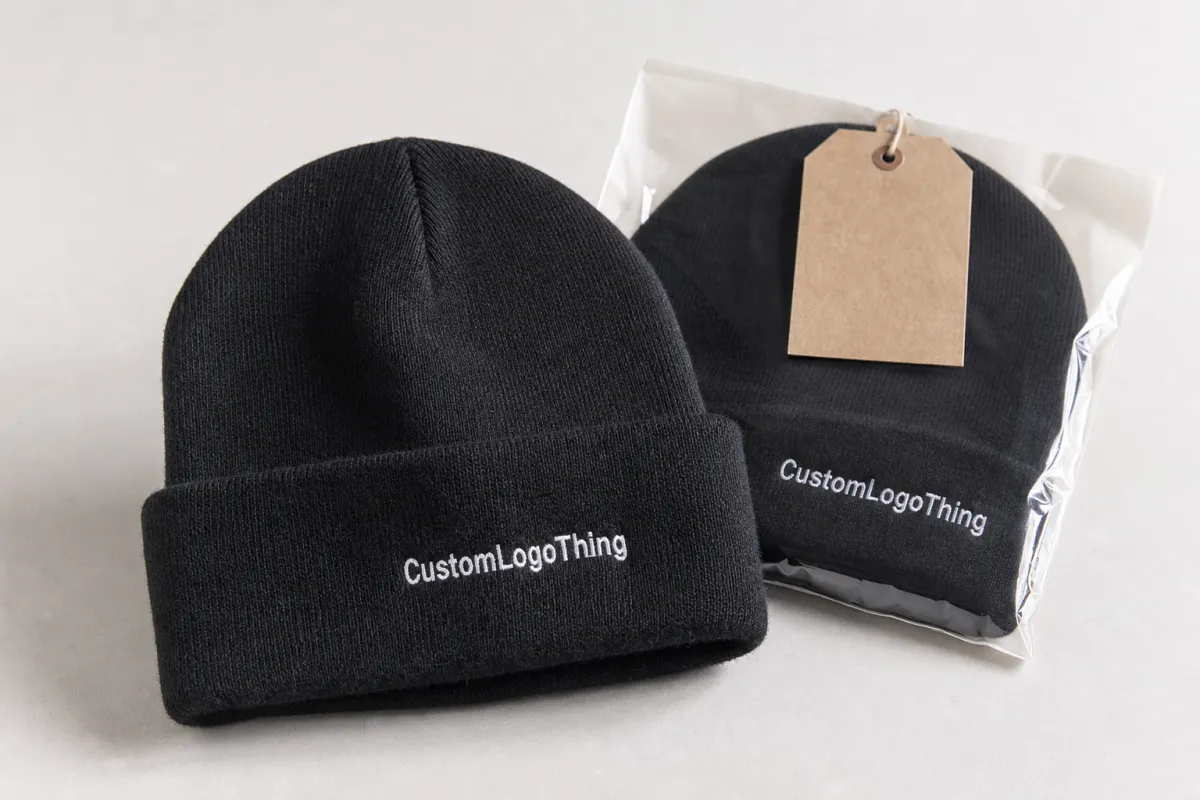
Cuffed beanies are unusually flexible on a retail floor. They are unisex, one-size-fits-most, easy to color-block, and simple to bundle with outerwear, scarves, gloves, and holiday gift sets. One body can support several price tiers without forcing a new silhouette for every channel. That matters because the product can be repeated across stores, ecommerce, pop-ups, and seasonal drops without feeling stale.
The cuff gives the merchandising team real control over visibility. It frames the logo, creates a clean front panel, and makes the item read as intentional instead of generic. A beanie without a cuff can still sell, but the cuffed version usually gives more room for logo placement, better shelf presence, and a more reliable flat-lay image. Small differences like that often decide whether a product earns full-price sell-through or gets discounted early.
There is also a practical reason buyers like this category: the item is easy to size. Fewer size complications mean fewer returns and less inventory fragmentation. That makes the style attractive for brands that need a cold-weather item with a broad audience and a manageable size curve. For the same reason, a solid cuffed beanie can sit comfortably beside jackets and heavy tees without disrupting the assortment.
The strongest programs tend to answer three questions before they place an order:
- Will landed cost still protect margin after decoration, packaging, and freight?
- Can the style be reordered without rebuilding the spec from scratch?
- Will the product look consistent across shelf, ecommerce, and bundle photography?
That last point is easy to underestimate. A beanie that photographs well in a studio can look flat on a hook if the cuff collapses, the knit is too loose, or the logo sits too low. Buyers who plan across channels usually avoid those problems by choosing a body and decoration method that hold up in more than one setting. That is where custom cuffed beanies separate themselves from ordinary winter basics: the best versions are simple, but not careless.
Seasonality adds pressure. A beanie that lands before the first cold snap can carry the category. One that arrives after peak demand often becomes a markdown story. In that sense, speed and repeatability can protect margin just as much as the unit price itself. A slightly higher quote that ships on time may outperform a cheaper option that misses the selling window.
Product Details That Change Selling Power
Not every cuffed beanie behaves the same on the rack. Four construction choices do most of the work: cuff height, knit density, crown shape, and yarn feel. A taller cuff gives more room for branding and usually makes the logo easier to read from a distance. A tighter knit tends to feel more substantial and looks cleaner in retail photography. A shallow cuff can feel modern, but it limits artwork space and may make the mark harder to read once the hat is folded and packed.
The cuff itself changes how the product sells. Deep cuffs create a stronger visual frame and make small logos feel deliberate. Short cuffs can look more fashion-forward, but they leave less margin for error if the artwork is bulky or the embroidery is too dense. Buyers selling through more than one channel should test the hat in three states: folded flat, hung on a rack, and worn. The same SKU often reads differently in each one.
Material choice also changes perceived value. Acrylic is common because it is consistent, accessible, and predictable in bulk production. Wool blends usually feel warmer and more premium, which can support a higher ticket. Recycled blends can help a brand support sustainability claims, but they still need to be checked for hand feel, stretch recovery, and color consistency. A yarn that looks good on a spec sheet can still disappoint if it pills early or relaxes too much after wear.
Decoration choice is where many buyers overcomplicate the order. Embroidery is durable and usually the safest option for clean branding. Woven labels give a sharper, flatter read for smaller logos. Sewn-on patches and faux leather patches lean more fashion-forward and can push the product closer to retail apparel than giveaway merchandise. None of those is automatically better. The right choice depends on whether the product needs to feel premium, sporty, understated, or promotional.
Here is the practical test: if the logo must remain legible from three feet away, the cuff size and decoration method need to support that. If the item will be photographed for ecommerce, the front panel should stay smooth and the mark should not crowd the fold. If the product will sit on a rack with jackets and scarves, the color should hold its own without fighting the rest of the assortment.
- Fashion retail: patch or label details, richer yarn hand, stronger color stories.
- Employee merch: embroidery, durable construction, simpler color matching.
- Sports retail: bold logo placement, high contrast colors, repeatability across sizes and teams.
- Promotional gifts: simpler artwork, faster approval, tighter unit-cost control.
Specs, Materials, and Decoration Limits
If the spec sheet is vague, the pricing will be vague too. That is true for almost every knit accessory, but it shows up quickly in cuffed beanies because small changes have outsized effects on labor and finish. The main variables are yarn type, knit gauge, cuff depth, lining, and decoration method. A buyer asking for a quote should know at least those details before expecting a reliable number.
Acrylic is still the most common entry point because it balances cost and consistency. Recycled blends make sense when the brand needs a cleaner sourcing story without moving too far upmarket. Wool blends add warmth and a richer hand feel, but they usually raise the unit cost and can slow sourcing if the yarn color is not already stocked. Lined beanies feel more substantial, but they also reduce the decoration area and can make embroidery placement less forgiving.
Gauge affects the final look more than many buyers expect. A finer gauge creates a smoother surface and usually gives the logo a cleaner edge. A heavier gauge feels chunkier and more fashion-driven, but it can make small text harder to read. Stitch type matters as well. Rib knit recovers well after stretching, which helps the beanie keep its shape on shelf and in transit. Plain knits can feel softer, but they may not hold the same visual structure.
Decoration limits should be understood early. Small lettering, tight linework, and gradients are difficult to reproduce well in knit or embroidery. A design that looks sharp on screen may need simplification before it can be made efficiently. That is not a creative failure; it is a production constraint. The cleaner the art, the easier it is to keep the order on budget. Buyers who send vector files, Pantone references, and a clear placement guide usually get faster, more accurate quotes than buyers who send a screenshot and wait for the factory to interpret it.
Quality checks should be built into the order, not added as a postscript. Useful checks include stretch recovery, colorfastness, pilling resistance, thread tension, and placement accuracy. In textile sourcing, some buyers reference ASTM methods such as ASTM D3512 for pilling or ASTM D5034 for tensile strength on related components. Those tests do not make the beanie indestructible, but they give a better picture of how the fabric will behave after repeated wear and washing.
Sample approval is where many avoidable errors are caught. A yarn that looks neutral in a sample room can read warmer or darker under store lighting. A patch that looks centered on a digital proof can sit slightly low once it is sewn and folded. The sample is the only reliable checkpoint for cuff proportion, logo size, and hand feel. Skipping that step often costs more than it saves.
If your packaging includes printed hangtags or cartons, keep that sourcing story clean too. Paper-based claims should point to credible standards such as FSC. That applies to the packaging side, not the yarn itself, but it still matters if the final retail presentation includes paper inserts or display cards.
For buyers comparing Custom Cuffed Beanies Wholesale Pricing for retail merch brands, the key is simple: the quote only becomes useful once the spec is fixed. Cuff depth, yarn blend, decoration method, and packaging all change cost. If those pieces are still moving, the quote is only a placeholder.
Wholesale Pricing, MOQ, and Unit Cost
Quantity is the first pricing lever, but it is not the only one. Material choice, number of colors, decoration type, retail packing, and delivery destination all move the final number. A run of 250 units is almost always priced differently from a run of 2,000, and the spread can be large enough to change the whole margin model. The first break is often the most important one because it can move an item from marginal to workable without forcing a risky inventory jump.
MOQ means minimum order quantity, and it is not always defined the same way. Some suppliers set it per color, some per design, and some per total order. A 100-piece MOQ per color is very different from a 100-piece total run. If the order has multiple colorways, that detail needs to be clarified early or the quote will look better than the real production plan.
Wholesale pricing should also be treated as landed pricing, not just factory pricing. Freight, duty, packaging, and packing labor can close the gap between a good quote and a disappointing one. A beanie that lands at $4.10 ex-factory can end up much closer to $5.25 after shipping, customs, and retail-ready packing are included. That difference is why landed cost matters more than the headline unit price. The lowest opening quote is not useful if the finished product fails the margin target.
There are also hidden costs that show up in custom headwear more often than buyers expect. Embroidery may require digitizing. Patch orders can carry a setup charge. Special yarn colors may trigger a longer lead time or a surcharge. Retail packs can add a small amount per unit, but across a large order they matter. Even carton markings and label changes can affect the final number if the supplier is building a store-ready shipment.
| Order Profile | Typical MOQ | Typical Wholesale Unit Price | Best Fit |
|---|---|---|---|
| Basic acrylic cuffed beanie, one-color embroidery | 100-200 units | $2.90-$4.20 | Promo drops, entry-level merch, artwork testing |
| Midweight acrylic with woven label and hangtag | 200-300 units | $3.60-$5.10 | Retail assortments, campus shops, seasonal launches |
| Thicker knit or recycled blend with embroidery or patch | 300-500 units | $4.40-$6.80 | Higher-ticket merch, fashion retail, bundled offers |
| Wool blend with custom patch and retail packaging | 500+ units | $6.20-$9.50 | Gift shops, premium retail, top-shelf winter collections |
Those ranges are wholesale figures before freight, duty, and special packaging. They are still useful because they show how quickly the product moves between price tiers. Across 1,500 units, even a $0.40 difference can change the margin story in a meaningful way. That is why apples-to-apples quoting matters so much. Compare the same yarn, the same decoration method, the same packing format, and the same delivery terms before deciding which number is actually better.
Some brands want to know where the extra dollars go beyond the hat itself. Usually, the answer is in the finish: a better patch, cleaner embroidery, a retail hangtag, a belly band, a polybag, or a custom carton can all raise the landed cost while improving shelf appeal. If the order will sit inside a wider packaging program, the beanie can be paired with boxes, inserts, or display pieces to support the broader retail presentation. The item becomes more than a hat; it becomes part of the shelf story.
A small unit-price gap can disappear fast if the logo needs simplification, the yarn changes, or retail packaging is added too late.
A simple way to audit the quote is to break it into four buckets: body cost, decoration, packaging, and freight. Suppliers may structure those lines differently, but the margin logic does not change. Your retail ticket has to cover the entire landed number, not just the factory line.
Production Process, Timeline, and Lead Time
The production path is predictable if decisions are locked early. It usually starts with spec confirmation, then artwork proofing, sample approval, bulk production, finishing, quality checks, and shipment. Every revision adds time. Every late color change adds time. Every switch from embroidery to patch work adds time. A retail launch can still succeed on a compressed schedule, but only if the buyer understands where the bottlenecks are likely to appear.
For standard cuffed beanies, a common lead time is often 12-18 business days from proof approval for straightforward programs. More complex orders, wool blends, custom patches, or peak-season congestion can push that to 20-30 business days. If the yarn is already in stock, the schedule is easier to protect. If the order depends on a specialty color or a narrow yarn source, the timeline can stretch quickly. Lead time is not just a factory issue; it is a sourcing issue.
The slowest part of the process is usually the approval cycle, not the knitting. Artwork revisions, color approvals, and quantity changes tend to consume more calendar time than the actual bulk run. That is why experienced buyers build a buffer before the floor set, the holiday ship date, or the ecommerce launch. A week lost in approvals is a week that usually comes out of delivery margin.
Quality control should happen at more than one stage. Ask where the checks sit: incoming yarn, decoration, finishing, final packing, and carton seal. Some buyers also request AQL sampling on the final pack-out so the shipped count matches the order sheet. That is especially useful when the beanies are part of a store-opening kit or bundled merch program. A missing carton can create more disruption than a small visual defect.
Transit protection matters too. Retail Packaging Only works if it arrives in retail condition. Printed sleeves, inserts, and custom cartons need enough outer protection to survive shipping. Many packaging teams use ISTA test methods as a reference point for transit durability. That becomes more relevant if the order includes paper inserts or display packaging that has to reach the shelf looking sharp.
Buyers who want a repeatable season usually document the workflow in a short sequence:
- Lock the spec sheet and decoration method.
- Approve a digital proof or pre-production sample.
- Confirm carton count, shipping ZIP, and retail pack format.
- Release bulk production only after all changes are frozen.
- Hold a small reorder window for restocks if the style performs well.
A production calendar sounds basic, but it catches slippage early. Proof date, sample date, bulk start, inspection date, and ship date belong on the same page. When those milestones are visible, it is easier to spot a delay before it turns into a missed launch.
What to Send for a Fast Quote
If the goal is a clean quote on custom cuffed beanies Wholesale Pricing for Retail merch brands, send the details that affect cost most. Vague requests create slow replies and fuzzy numbers. Clear requests usually produce cleaner pricing, fewer revisions, and less back-and-forth.
Include these items in the first message:
- Target quantity and color count.
- Yarn preference: acrylic, recycled blend, or wool blend.
- Decoration method: embroidery, woven label, patch, or a mix.
- Cuff height, fit preference, and any lining request.
- Artwork in vector format, plus Pantone or color references.
- Packaging needs, including hangtags, polybags, inserts, or retail cartons.
- Delivery city and target in-hands date.
If the artwork is not final, say so. If the quantity may change, say that too. A supplier can still quote a range, but only if the uncertainty is visible from the start. That is especially helpful for Private Label Headwear programs where several SKUs, channels, or store groups are moving at once.
Once the quote arrives, compare three things before moving ahead: landed cost, approval timeline, and reorder ability. A supplier with a slightly higher price may still be the better choice if the color stays consistent, the sample matches the proof, and the second order can be turned quickly. Predictability often protects more margin than the cheapest first run.
FAQ
What drives unit price the most?
Quantity has the strongest effect, but decoration method is close behind. A simple embroidery job on a standard acrylic body will almost always cost less than a patch on a wool blend with retail packaging.
Can small orders still work for retail?
Yes. Small runs are useful for market tests, pop-ups, and limited drops. The margin math just needs more attention because the unit price is higher and setup costs are spread across fewer pieces.
How do I keep the logo looking premium?
Use clean art, avoid tiny text, and match the decoration size to the cuff. A woven label or dense embroidery usually reads better than a crowded logo trying to do too much.
What should I confirm before approving production?
Lock the spec sheet, sample, color references, carton pack-out, and timeline. If any one of those changes later, cost and schedule can move with it.
For retail teams, the strongest cuffed beanie programs are usually the least complicated ones: a fixed spec, a clean logo, a realistic timeline, and a landed cost that still supports the planned ticket. That is what makes custom cuffed beanies wholesale pricing for retail merch brands workable instead of theoretical.

