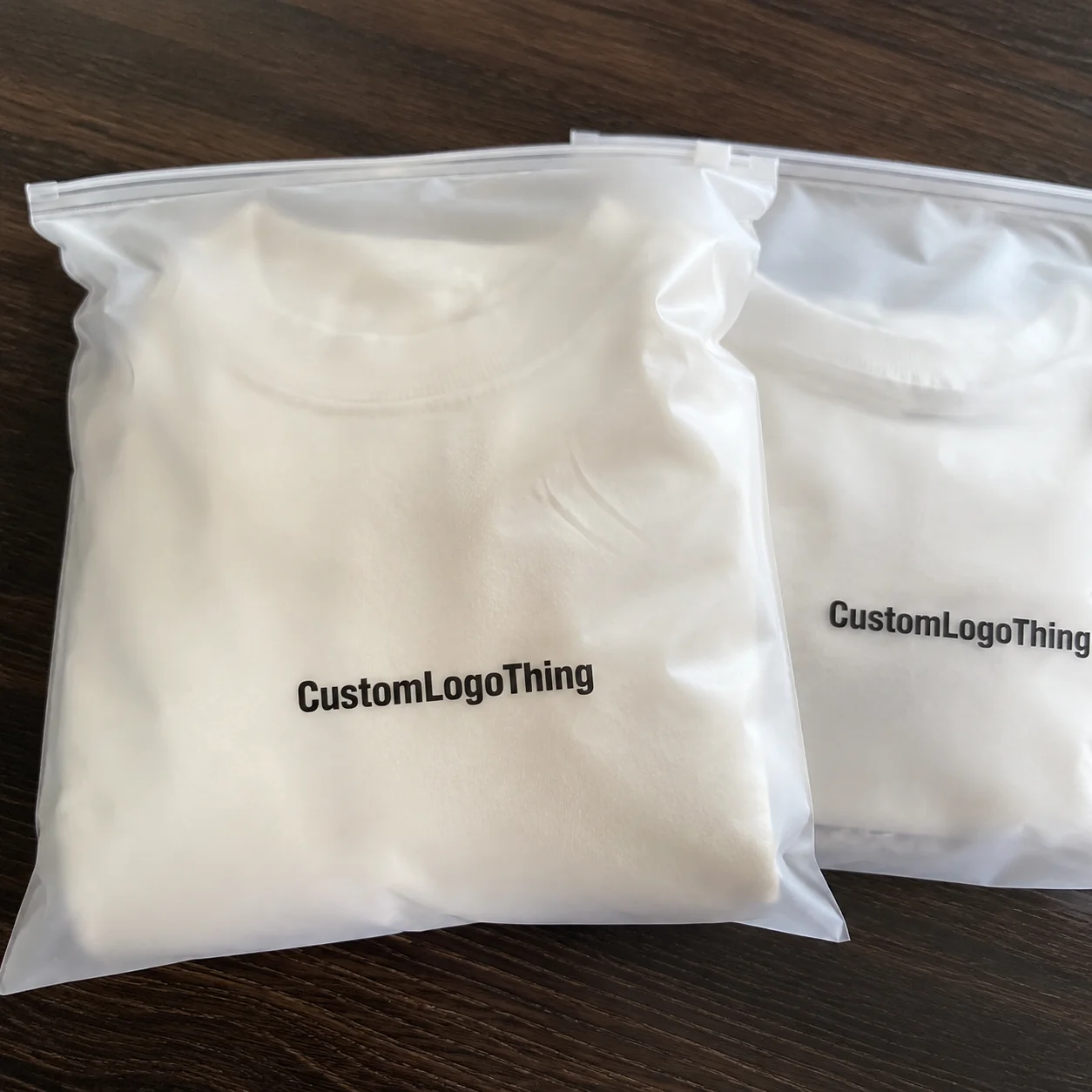
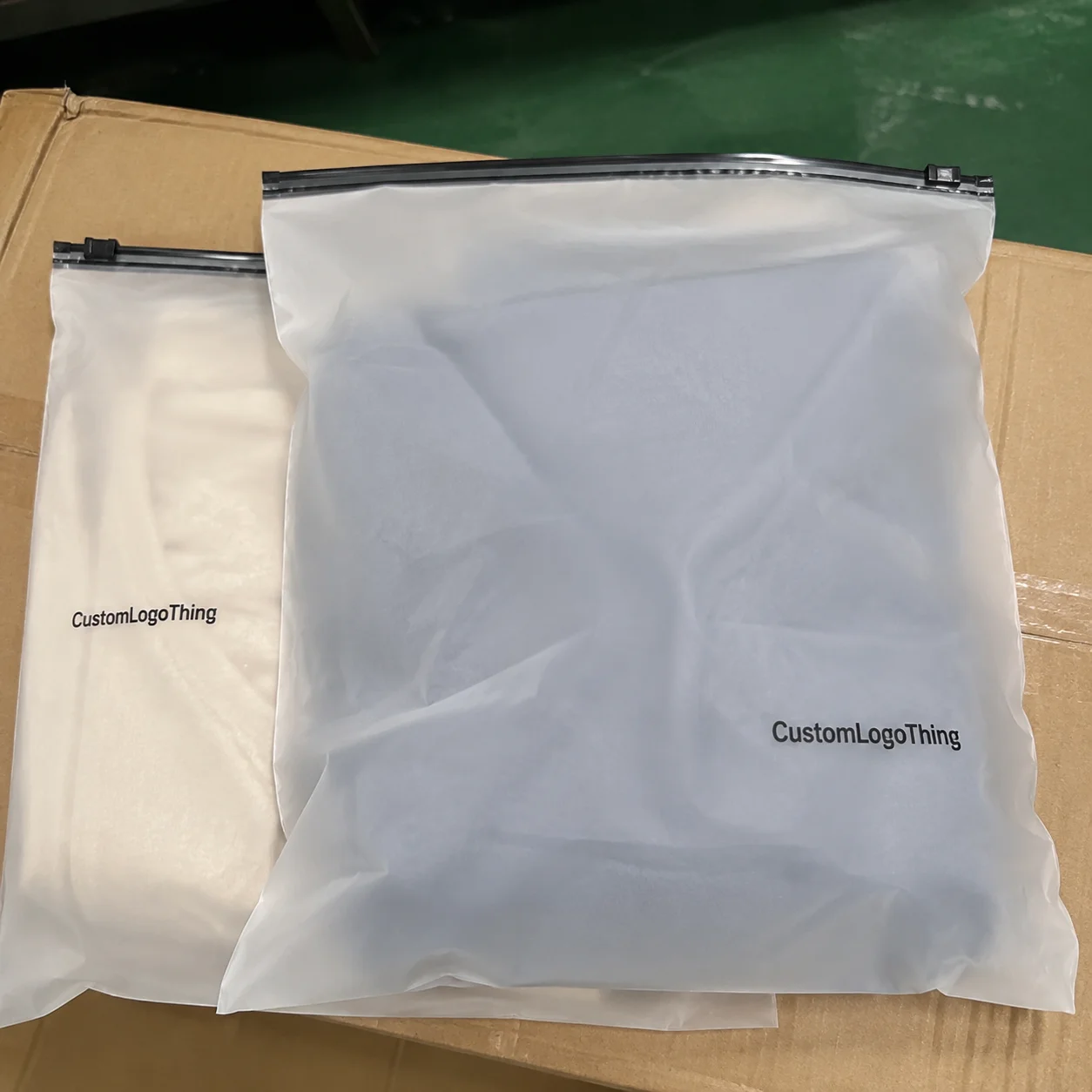
Custom Custom Plastic Garment Bags for beauty brands may sound like a narrow packaging category, but they often become the first protective layer a customer touches after the shipping carton or retail outer wrap is opened. If the film feels thin, the hanger cut stretches, the print sits crooked, or the logo looks cloudy against the garment, the brand loses polish before the product has had a fair chance to speak for itself.
For beauty brands selling robes, launch apparel, event pieces, salon uniforms, influencer gifts, or limited-edition merchandise, the garment bag has to do more than keep dust off fabric. It may need to protect the item in storage, separate SKUs in a warehouse, present cleanly on a rack, survive e-commerce handling, and still look aligned with the rest of the packaging system. That is a lot of work for a piece of plastic film, which is why the specification matters.
The useful distinction is simple: a basic cover hides or protects the garment, while a branded garment bag supports the product experience. It can carry logo visibility, size or SKU cues, finish consistency, and a cleaner unboxing rhythm alongside custom printed boxes, hang tags, inserts, labels, and outer cartons. The bag should not feel like a forgotten supply-room item added at the last minute. It should feel like part of the product.
Why beauty brands outgrow plain garment covers fast
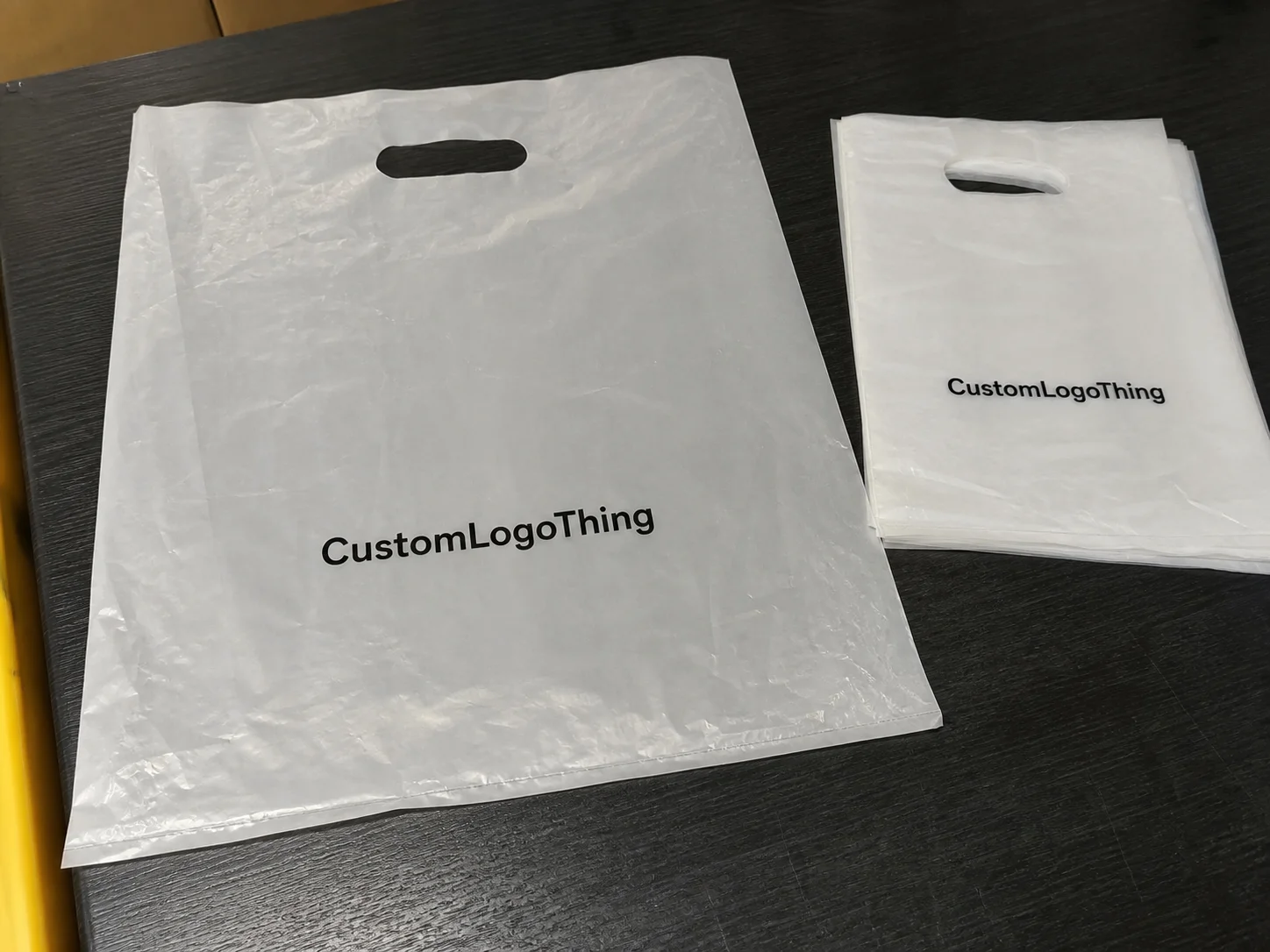
Plain garment covers work well enough at the earliest stage, especially if the only goal is to keep dust away from fabric. Once order volume grows, though, their limits become visible. A beauty brand that invests in soft fabric, careful stitching, polished photography, and well-designed outer packaging can undercut that effort with a sleeve that looks cloudy, crinkled, or undersized.
The pressure usually comes from several directions at once. Retail teams want bags that hang neatly. E-commerce teams want protection that does not add unnecessary packing labor. Warehouse staff need quick product identification without opening every item. Marketing teams want presentation that feels intentional in creator mailers, launch kits, and backstage environments. A generic clear cover rarely handles all of those needs gracefully.
That is where custom Custom Plastic Garment Bags for beauty brands become less of a decorative choice and more of an operating detail. A robe sent for a campaign shoot, a branded wrap dress shipped to a VIP customer, or a uniform packed for salon staff all benefit from a cover that fits the garment and the brand system at the same time.
A garment bag that fights the product is poor packaging design, even if the logo itself is attractive.
Before choosing film, print, or closure, define the job. Is the bag mainly for dust protection in storage? Does it need to support retail display? Will it ship directly to customers? Should the product remain visible, or should the bag create a more controlled reveal? Those answers shape the specification more reliably than a mood board alone. If you want to see how packaging decisions change across different product lines, our Case Studies offer useful reference points.
Beauty customers notice small cues. They may not know the film gauge or print method, but they can feel when the garment arrives organized, clean, and deliberate. They can also feel when the package looks like several disconnected pieces thrown together. The bag is one of those quiet details that either supports the sale or makes the product feel less considered.
How the bag construction affects protection and presentation
Construction affects both function and first impression. Film type, thickness, side seals, hanger opening, closure, venting, finish, and print placement all change how the bag performs in real use. The logo matters, but it is only one part of a much larger packaging decision.
Clear bags are practical when the garment needs to stay visible for merchandising, inventory checks, or quick size sorting. Frosted bags soften the view and create a more controlled presentation, which often suits gifting, PR kits, and premium retail programs. Opaque or tinted film can work when the brand wants stronger visual consistency, though it may slow down warehouse identification unless size labels or external SKU markers are added.
Closure style deserves real thought. An open-bottom sleeve is fast and economical, but it offers limited protection once the garment moves through packing and transit. A flap can improve dust control without adding much bulk. A zipper or resealable closure gives better storage value and a more finished hand feel, although it increases cost and may require closer quality checks. If staff have to pack hundreds of garments a day, handling speed matters as much as appearance.
Print method should follow the visual role of the bag. A single-color logo is often the cleanest and most reliable choice, especially on clear or frosted film. Two-color printing can still look refined if the artwork is simple. Full-coverage graphics, gradients, and heavy ink areas are more demanding; they can also compete with the garment underneath. Many beauty brands get a stronger result from restrained artwork, careful placement, and a finish that matches the rest of the product packaging.
- Hanger cut: should be cleanly shaped and sized so the top does not stretch, tear, or bunch around the hook.
- Side and bottom seals: should be straight, even, and strong enough for the garment weight.
- Closure style: open sleeve, flap, zipper, or resealable strip changes protection, speed, and cost.
- Print placement: should be checked at actual size, not judged only from a zoomed-in mockup.
- Finish: glossy, matte, frosted, or tinted film should fit the broader branded packaging system.
A clean hanger opening and a straight seal line often do more for perceived quality than an oversized logo. That is especially true when the bags appear in customer photos, showroom racks, or influencer shipments, where crooked cuts and stretched tops are easy to spot.
For teams trying to align garment bags with cartons, inserts, labels, and display materials, think in layers. The bag should frame the garment, not overpower it. It should make the item easier to handle, easier to identify, and more pleasant to open. Good product packaging earns its place by solving those practical problems while keeping the brand language consistent.
If the bag will travel through parcel shipping or packed retail distribution, it is worth looking at the logic behind ISTA testing standards. Garment bags are not always tested as standalone shipping containers, but the principles still help teams think about compression, vibration, handling, and failure points. A sample that looks good flat on a table may behave very differently inside a full carton.
Material choices, thickness, and finish that actually matter
Most Plastic Garment Bags use polyethylene film because it is flexible, economical, and widely available in garment-cover formats. PE can be made in clear, frosted, matte, or tinted finishes, and it converts well into sleeves, covers, and zipper bags. Some programs may use alternative plastics or recycled-content blends, but availability, clarity, strength, and minimum order quantity can shift quickly depending on the exact material request.
Thickness is one of the first specifications buyers ask about, and for good reason. A light dust sleeve may sit around 1.5 to 2.5 mil, roughly 38 to 63 micron. Heavier programs, especially those involving robes, long dresses, reusable retail handling, or shipping-heavy workflows, often move into the 3 to 5 mil range, or about 75 to 125 micron. These are practical starting ranges, not universal rules.
Film behavior depends on more than gauge. Resin blend, bag width, seal quality, closure style, and garment weight all affect whether a bag feels sturdy or flimsy. A wider bag made from the same film can feel softer because it has more unsupported area. A long bag may need more strength at the hanger opening than a short sleeve for folded apparel. A zipper bag may need thicker film around stress points so the closure does not distort.
Finish changes the read of the packaging. Glossy film can make a printed logo appear sharper under retail lighting, but it may also show fingerprints and wrinkles more readily. Frosted film softens the view of the garment and often feels more aligned with beauty packaging, especially when the rest of the line uses matte cartons, subtle foil, or muted label finishes. Opaque film gives the most controlled surface for branding, though it sacrifices product visibility unless the bag includes a window or clear identification label.
Ask for specifications tied to real handling rather than adjectives. “Premium” is not a spec. “3 mil frosted PE with zipper closure, centered one-color logo, reinforced hanger opening, and stated dimensional tolerance” is much closer to something a supplier can quote and produce consistently.
- Finished width and length based on the garment’s actual dimensions and drape.
- Hanger opening size based on the hook style and the weight of the item.
- Closure style based on dust control, reuse, and packing speed.
- Vent holes if trapped air, humidity, or carton compression could become a problem.
- Packing orientation so the bag survives folding, stacking, and warehouse handling.
Venting is easy to overlook. Without it, trapped air can make packing inefficient or cause bags to balloon inside cartons. With too much venting, the bag may lose some dust protection or look less refined. The right choice depends on how the garment is folded, how tightly cartons are packed, and whether the item will sit in storage before it reaches the customer.
Sustainability claims also need careful handling. Recyclability, recycled content, and material reduction all depend on local recycling streams, additives, ink coverage, closures, and labels. A thicker reusable bag may make sense for retail or backstage use, while a lighter sleeve may be better for one-way fulfillment if it still protects the garment. Avoid treating one material choice as automatically superior without looking at the actual use case.
If durability is part of the buying decision, compare your intended handling flow against supplier recommendations and broader packaging industry resources. The question is not whether the bag looks good for a sample photo. The question is whether it still looks acceptable after packing, storage, shipment, unpacking, and customer handling.
Cost, MOQ, and quote drivers for custom bags
Price usually moves for predictable reasons: bag size, film thickness, finish, print colors, ink coverage, order quantity, closure type, tooling, and packing requirements. Small changes can matter. Adding length increases material use. Moving from clear to frosted film may affect cost and availability. Switching from a basic sleeve to a zipper bag changes both production complexity and quality-control needs.
Custom Custom Plastic Garment Bags for beauty brands are generally priced by specification and quantity. Lower quantities carry higher unit prices because setup, proofing, print preparation, and machine time are spread across fewer units. Higher quantities tend to reduce the unit cost, but only when the specification remains stable.
| Option | Typical MOQ | Indicative unit price | Best for | Main cost driver |
|---|---|---|---|---|
| Clear PE sleeve, single-color logo, standard hanger cut | 3,000 to 5,000 | $0.16 to $0.28 | Retail replenishment and simple branded packaging | Basic print setup and standard film |
| Frosted bag, heavier gauge, one- or two-color print | 5,000 to 10,000 | $0.24 to $0.42 | PR kits, gifting, and higher-end product packaging | Thicker film and better visual finish |
| Custom size, premium closure, full-coverage print | 10,000+ | $0.38 to $0.75 | Launches, event programs, and high-touch retail packaging | Tooling, print complexity, and material usage |
Those ranges are directional. Current resin costs, freight, ink coverage, exchange rates, order timing, and supplier capacity can all change the final number. Use the table as a planning guide, not a substitute for a formal quote.
The bigger issue is quote comparability. One supplier may quote thinner film, shorter dimensions, a basic open sleeve, and one print color. Another may include a reinforced hanger opening, heavier gauge, zipper closure, and tighter print tolerance. The lower price is not automatically better if the bag cannot perform the job. It may simply be quoting a different product.
Ask suppliers to state the same details in writing: film material, gauge, finish, finished size, closure, print method, number of colors, ink coverage limits, packing count, MOQ, setup charges, sample charges, and production lead time after proof approval. If any of those fields are vague, the quote is not ready for a fair comparison.
A slightly higher unit price can still be the better buy if it reduces damage, repacking labor, customer complaints, or off-brand presentation in photos. For beauty labels, packaging often appears in social content, launch materials, retail back rooms, and customer unboxing photos. A bag that looks inconsistent can cost more than the few cents saved on production.
If you are reviewing a wider packaging program, our Custom Packaging Products page can help map how garment bags sit alongside inserts, cartons, labels, and display pieces.
Production steps, lead time, and approval checkpoints
The production path is usually straightforward: confirm the specification, review artwork, prepare a proof, make a sample if needed, approve the job, produce the bags, pack them, and ship. The process only stays straightforward when decisions are locked early.
Delays tend to come from familiar places. Artwork is supplied at the wrong size or in the wrong format. The garment measurement changes after the proof is approved. A logo color gets adjusted after sampling. A zipper or flap is added late because the merchandising team wants a different handling experience. Each small revision can be reasonable on its own, but together they stretch the schedule.
For simple single-color bags with standard dimensions, a planning range of 12 to 15 business days from proof approval is common. More complex jobs with custom sizing, heavier film, specialty closures, higher volumes, or multi-color print often run 15 to 25 business days or longer, depending on supplier load and approval speed. Sampling can add time, but it is usually cheaper than discovering a fit problem after production.
Before a purchase order moves into production, lock these checkpoints:
- Finished dimensions based on the real garment, including hem length, sleeve shape, and drape.
- Print placement shown on a measured layout at actual bag size.
- Film thickness and finish written clearly in the spec sheet or PO.
- Closure and seal style so production does not interpret the request loosely.
- Carton packing count for predictable warehouse handling and storage.
- Dimensional and print tolerance stated in writing before approval.
A few millimeters of dimensional tolerance may be normal, depending on the supplier and converting process. Slight print movement can also occur on flexible film. What matters is knowing the acceptable range before the bags are made. A brand with a tiny centered logo near a hanger opening may need tighter print control than a brand using a larger mark placed lower on the bag.
Sampling should be treated as a working test, not a formality. Put the actual garment inside the sample. Hang it on the same type of hanger used in fulfillment or retail. Fold it the way the warehouse will fold it. Place it inside the intended carton if it will ship that way. Then look for pressure points, stretching, cloudy print, trapped air, awkward closure behavior, and hem exposure.
That small amount of physical testing often catches the things a screen proof cannot show. A bag may be technically the right length but too narrow at the shoulder. A zipper may feel fine empty but stiff once the robe is inside. A logo may look centered on a flat dieline and sit visually low when the garment hangs. These are ordinary packaging problems, and they are much easier to fix before production.
Common mistakes that make the bags look cheap or fail early
Undersizing is the mistake that shows up most often. A tight bag pulls against the garment, stresses the seals, creates wrinkles, and makes the product look poorly packed. A short bag leaves hems exposed or forces the garment to buckle at the bottom. The fix is not complicated: measure the product as it will actually hang and add enough ease for handling.
Overprinting is another common trap. A transparent garment bag already has a visual layer behind it: the garment itself. Heavy artwork can fight the fabric, especially on robes or apparel with texture, embroidery, or strong color. For many beauty brands, a centered logo, a restrained repeat, or a small information panel is more effective than covering the bag in graphics.
Print contrast can also mislead buyers. White ink on frosted film may look elegant, but it can disappear against pale garments. Black ink may read crisp on a clear sample but feel too harsh against a soft beauty palette. Metallic effects, dense ink, and full-coverage graphics need careful proofing because flexible film does not behave like paperboard.
Storage conditions deserve attention. Heat can distort thin film. Compression from stacked cartons can leave creases. Sharp hanger edges can cut into weak openings. Long storage in humid conditions can make poorly vented bags feel unpleasant when opened. None of these problems require dramatic conditions; ordinary warehouse handling is enough to expose weak choices.
Screen-only approval creates its own risks. A mockup can hide scale problems, because the logo looks balanced on a monitor but oversized or low on the finished bag. Color is even trickier. Different screens, lighting, and film finishes can change the read of the same artwork. At minimum, review an actual-size proof. For higher-volume orders, a physical pre-production sample is worth the time.
Another quiet issue is ignoring the packing team. A closure that looks premium may slow fulfillment if it is fiddly. A bag that traps air may force staff to press each unit flat before carton packing. A beautiful frosted film may scuff if the bags are handled in bulk without the right packing count. Packaging has to work for the customer and the people assembling the order.
The practical rule is this: if the bag is meant to support package branding, it has to be designed around real handling. The right material, size, opening, closure, and print area matter more than a polished render. A good render sells the idea. A good sample proves the idea can survive production.
Next steps to spec, sample, and compare suppliers
Start with a short, clear spec sheet. You do not need a long document, but you do need the facts that affect quoting and production: garment type, finished bag size, film material, target thickness, finish, closure style, print colors, logo placement, packing count, and estimated order volume. Add the intended use as well. A supplier should know whether the bag is for showroom storage, customer shipping, PR gifting, retail display, or repeated backstage handling.
Then request two approvals: a functional sample and a print proof. The functional sample answers fit, closure, material feel, venting, and handling questions. The proof answers logo placement, scale, color, contrast, and legibility. Check both in natural light and under the lighting conditions closest to where the bag will be seen.
When comparing suppliers, ask the same questions every time:
- What is the MOQ at each price tier?
- What are the unit prices at different quantities?
- What setup, plate, tooling, or sample charges apply?
- How long is production after proof approval?
- What material, dimensional, and print tolerances are stated in writing?
- How are the finished bags packed for shipment and warehouse storage?
If a supplier cannot answer those clearly, the project will carry more uncertainty than it should. The best packaging partners do not only print a logo on plastic. They help match the bag to the garment, the launch plan, the packing process, and the rest of the branded system.
For beauty labels that want garment bags to sit naturally beside custom printed boxes, inserts, hang tags, and display pieces, consistency matters more than novelty. Keep the visual system tight. Keep the specification honest. Do not choose the prettiest sample if the real use case is shipping-heavy, and do not choose the cheapest quote if it leaves out the material or tolerance details that affect performance.
That is the practical path to better custom garment packaging: define the job, measure the real garment, choose film and closure based on handling, proof the artwork at actual size, sample before bulk production, and compare quotes line by line. Done well, Custom Custom Plastic Garment Bags for beauty brands protect the product while making the brand feel organized from first touch through final delivery.
What size should custom custom plastic garment bags for beauty brands be?
Size the bag to the garment, not only the hanger. Long robes, dresses, coats, and event apparel need enough width and length for the fabric to hang without pulling against the film. Test the sample on the actual garment before approving production.
What thickness works best for beauty brand garment bags?
Light dust covers often use film around 1.5 to 2.5 mil, while heavier robes, reusable bags, or shipping-heavy programs may need 3 to 5 mil film. The best gauge depends on garment weight, bag size, closure style, and handling requirements.
How much do custom garment bags usually cost at different MOQs?
Basic clear PE sleeves with a one-color logo may fall around $0.16 to $0.28 at common MOQs, while heavier frosted bags or premium closures can move higher. Treat pricing as directional until the supplier confirms size, film, finish, closure, print method, and quantity.
How long does production usually take after artwork approval?
Simple standard bags may take about 12 to 15 business days after proof approval. Custom sizes, heavier gauges, specialty closures, multi-color printing, or larger orders can extend production to 15 to 25 business days or more, especially if sampling is required.
What should I check in a sample before ordering custom plastic garment bags?
Check fit, film feel, seal strength, hanger opening, closure function, venting, and logo placement. Put the actual garment inside, hang it on the intended hanger, fold it the way fulfillment will handle it, and review the print at real size in natural light.