Buyer Fit Snapshot
| Best fit | Custom Die Cut Box Packaging projects where brand print, material claims, artwork control, MOQ, and repeat-order consistency need to be specified before quoting. |
|---|---|
| Quote inputs | Share finished size, material target, print colors, finish, packing count, annual reorder estimate, ship-to region, and any compliance wording. |
| Proofing check | Approve dieline scale, logo placement, barcode or warning zones, color tolerance, closure strength, and carton packing before bulk production. |
| Main risk | Vague material claims, crowded artwork, missing packing details, or unclear freight terms can make a low unit price expensive after revisions. |
Fast answer: Custom Die Cut Box Packaging: How It Works and Pays Off should be specified like a repeatable production item. The safest quote records material, print method, finish, artwork proof, packing count, and reorder notes in one written spec.
Production checks before approval
Compare the actual filled-product size with the drawing, then confirm tolerance on folds, seals, hang holes, label areas, and retail display edges. Reserve space for logos, QR codes, warning copy, and material claims before decorative graphics fill the panel.
Quote comparison points
Review material grade, print process, finish, sampling route, tooling charges, carton quantity, and freight assumptions side by side. A quote is only useful when the supplier can repeat the same color, closure quality, and packing count on the next order.
Custom Die Cut box packaging can look simple from the outside, but the difference between a box that protects and a box that disappoints often comes down to a few millimeters of slack, one weak fold, or a closure that gives way under stack pressure. I have watched premium products arrive scuffed, rattling, or crushed because the package geometry missed the mark by a hair. That kind of failure is frustrating because it is so preventable.
That is why Custom Die Cut box packaging is more than a branding exercise. It is a fit problem, a shipping problem, and a customer-experience problem all at once. For brands comparing packaging options, the real value sits in the overlap: tighter product fit, cleaner presentation, less filler, and fewer damage claims when parcel handling does what parcel handling does best, which is test every weak point in the system.
In practice, I think of Custom Die Cut Box packaging as the point where structure meets reality. A box has to make sense on a dieline, hold up in production, and still feel right in a customer’s hands. If any one of those pieces is off, the whole package starts to wobble.
What Custom Die Cut Box Packaging Really Solves
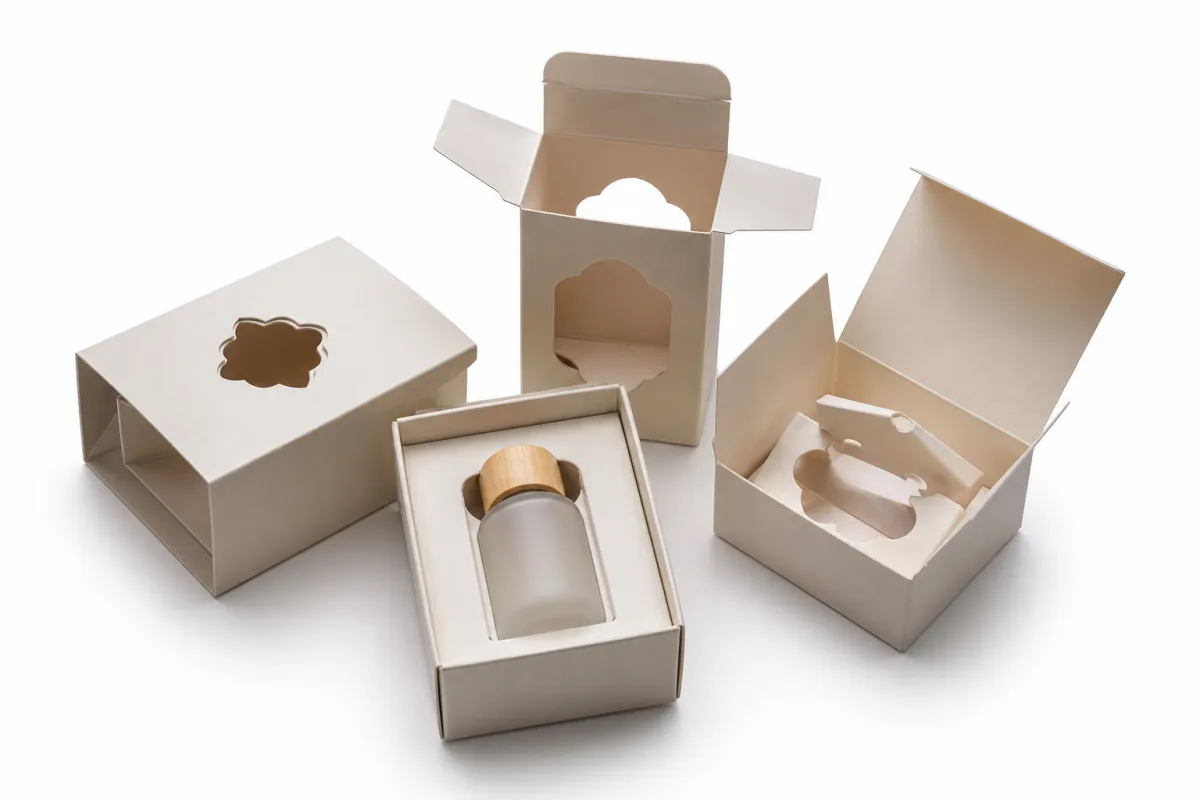
Custom Die Cut box packaging solves the issue that stock cartons create every day: products rarely match standard dimensions perfectly. A candle tin, a cosmetic set, a handheld device, or a multi-piece kit may look fine on a shelf mockup, then slide around in transit because the box was selected for convenience instead of geometry. That movement is where scratches, crushed corners, and bent inserts begin.
From a packaging buyer's point of view, custom die cut box packaging turns a vague fit into a controlled fit. The box is designed around the product, not the other way around. That usually means less void fill, a more predictable opening experience, and a cleaner first impression. It also trims hidden costs that show up later: reboxing labor, returns, replacement units, and customer service time spent handling damage complaints.
Run the math for a moment. If a brand ships 10,000 units and even 2% arrive damaged, that is 200 problem orders. If the average replacement or service cost is $12 to $25 per case, the real hit can land between $2,400 and $5,000 before anyone counts lost reviews or reshipment freight. Custom die cut box packaging does not remove risk from the supply chain, but it narrows the margin for failure in a way that stock packaging often cannot.
A package is never just a box. It is a piece of product packaging that has to carry structure, branding, and shipping performance at the same time.
That balance matters most for fragile, odd-shaped, and higher-value items. Custom die cut box packaging is especially useful for cosmetics, electronics, subscription kits, small appliances, premium food items, and retail packaging that needs to look polished in photos and still survive parcel handling. Strong designs do not simply look branded; they handle stacking, vibration, drops, and warehouse compression without losing their shape or their purpose.
Custom die cut box packaging connects three jobs that are often handled separately: protection, presentation, and production efficiency. If one of those jobs is ignored, the other two usually pay for it later. I have seen that happen on projects that looked perfect in renderings but started failing as soon as the carton hit a real shipping lane.
How Custom Die Cut Box Packaging Works
Custom die cut box packaging starts with dimensions, but not only the dimensions someone types into an order form. A good structural brief includes the widest point, the tallest point, the deepest point, and any protrusions such as caps, cords, handles, lids, or inserts. From there, the designer creates a dieline, which is the blueprint for the package: cut lines, fold lines, glue areas, lock tabs, and any special openings live there before a single board is cut.
The dieline is where custom die cut box packaging becomes tangible. It defines how the board will fold, where compression will land, and how much room the product has to breathe. A well-built dieline also accounts for material thickness. That matters because a 24pt paperboard carton does not behave like a 32 ECT corrugated mailer, and a board that is technically the right size on paper can still fail once the flaps, creases, and locking points are added.
After the structure is approved, production usually moves through a familiar sequence: tooling or template setup, cutting, creasing, stripping, folding, and finishing. Finishes may include gloss or matte lamination, soft-touch coating, aqueous coating, foil stamping, embossing, or spot UV. The important part is that custom die cut box packaging is built from the structure outward. Inserts, partitions, windows, thumb notches, and locking tabs are not afterthoughts. They are part of the architecture.
That approach differs sharply from forced-fit stock packaging. In stock formats, a brand often compensates for the wrong size with crumpled paper, bubble wrap, or awkward fillers. Custom die cut box packaging removes much of that improvisation. It can be designed to hold one item snugly, separate a three-piece set, or create a more deliberate unboxing sequence with a lid, a reveal, and a protected product cradle.
Production tolerances matter here. Even a precise system has variation, and most board converters will work within acceptable tolerances rather than promise impossible perfection. For tight-fit custom die cut box packaging, that means allowing room for board thickness, finishing buildup, and any product variation from one run to the next. If an item has a fragile coating, a loose cap, or a nested accessory, it is usually smarter to prototype early than to discover the issue after 5,000 boxes are already in motion.
Custom die cut box packaging also lets shape do brand work. A thumb notch can make opening easier. A window can preview the product. A locking flap can eliminate tape on a retail-ready carton. These details are small, but together they change how the box feels in the hand and how much confidence it gives the customer before the product is even seen.
Key Factors That Shape Fit, Strength, and Look
Custom die cut box packaging performs well only when the material matches the product. Paperboard, corrugated board, and specialty substrates each solve a different problem. Paperboard is common for lighter retail packaging, especially where print quality and shelf appearance matter. Corrugated board brings more crush resistance and works better for ecommerce, shipping cartons, and heavier products. Specialty materials can support luxury presentations, though they also raise cost and may complicate recycling.
The board grade is where many packaging decisions become sharper. A 16pt or 18pt carton might work for a lightweight cosmetic component, while 24pt or 28pt paperboard can feel sturdier for premium custom printed boxes. For mailers and shipping formats, E-flute or B-flute corrugated structures often provide a better balance of print surface and protection than a thin single-wall sheet. The right choice depends on product weight, travel conditions, and how much abuse the box needs to survive before opening.
Custom die cut box packaging also depends on the product's fragility. Glass jars, electronics, and multi-piece kits usually need internal support, not just a polished exterior. That may mean a molded insert, a paperboard partition, a glued cradle, or a locked-in tray that prevents movement. If a package is being designed for retail packaging and shipping at the same time, the structure has to handle both experiences without asking the customer to repair it with extra materials.
Branding choices matter too. The best package branding is not loud for the sake of being loud; it is coordinated. Print coverage, ink density, foil placement, and finish all shape how the carton reads under retail lighting and in an unboxing video. A soft-touch finish can feel more premium. A matte coating can reduce glare in product photography. A window can show color or texture. Each one changes both the visual language and the cost.
For teams comparing materials, FSC-certified board is worth asking about if sustainability claims matter. The certification chain is documented through FSC, and that can support buyer expectations around responsible sourcing. Just as important, the right substrate can help the box stay recyclable if mixed materials are kept under control. A pretty carton that confuses recycling streams is not a clean win.
Shipping reality deserves equal attention. Boxes are stacked, vibrated, dropped, and compressed long before they are admired. If the design only looks good in a render, custom die cut box packaging will eventually expose that weakness. Good packaging design has to survive the warehouse aisle as well as the product photo, and it has to do that without acting fragile just because the artwork is elegant.
- Light retail items: 16pt-24pt paperboard, strong print, simple insert.
- Fragile items: corrugated structure, tighter internal support, tested closure.
- Premium kits: heavier board, controlled opening sequence, refined finish.
- Shipping-focused formats: E-flute or B-flute with crush resistance and stable stacking.
That mix of material, structure, and finish is why custom die cut box packaging should be treated as a system rather than a template. If one element is overbuilt while another is underspecified, the package usually ends up more expensive and less effective than it needed to be. I have seen teams spend extra money in one area only to create a failure in another, which is a rough way to learn the lesson.
Custom Die Cut Box Packaging Cost: What Changes the Price
Custom die cut box packaging pricing is driven by a small set of variables that can swing the quote more than most buyers expect. Size is the obvious one, because more board means more material. Print coverage, coating, board grade, insert complexity, and the number of cut features can all move the number sharply. A simple carton and a carton with nested compartments are not priced from the same playbook.
Setup cost is the part that surprises first-time buyers. Custom die cut box packaging usually has structural development, die setup, proofing, and production prep built into the order. That means the first run often looks more expensive than repeat orders. Once the structure is approved and the tooling is established, the unit price tends to improve at higher volume because the fixed work is spread across more boxes.
For a concrete comparison, a 5,000-piece run of simple custom die cut box packaging might fall into the following rough bands depending on size and finish. These are not universal figures, but they are realistic enough to help with planning:
| Option | Typical setup burden | Approx. unit price at 5,000 pcs | Best fit | Main tradeoff |
|---|---|---|---|---|
| Stock mailer | Low | $0.20-$0.45 | Fast replenishment, standard sizes | Poor product-specific fit |
| Custom die cut paperboard carton | Moderate | $0.22-$0.55 | Retail packaging, cosmetics, kits | Less crush resistance than corrugated |
| Custom die cut corrugated mailer | Moderate to higher | $0.55-$1.10 | Ecommerce, fragile items, shipping protection | Higher board and print cost |
| Rigid presentation box | High | $1.20-$3.50+ | Luxury gifting, premium branded packaging | More labor, heavier freight |
Those numbers change with print method and finishing. A one-color box with minimal coverage can be significantly cheaper than full-wrap art with foil, embossing, and soft-touch lamination. The same goes for inserts. A simple die-cut paperboard insert is usually more economical than a complex multi-piece holder, and a glued-in tray can be faster to assemble than a loose component that has to be nested by hand.
Custom die cut box packaging can also save money indirectly. If the design reduces damage, it lowers replacement costs. If it eliminates void fill, it cuts material spend and pack-out labor. If it improves pallet efficiency, it may even help freight economics. That is why the cheapest box on paper is not always the cheapest box in use.
One practical rule: keep the structure as simple as the product allows. If your item does not need a reinforced insert, do not add one for visual effect alone. If the print area can be simplified without hurting package branding, simplify it. If a slightly lighter board still passes your handling requirements, that may be the smarter choice. The goal is not to strip the package down; it is to align cost with actual function.
For brands that want to compare formats before locking a spec, the easiest path is to review options through Custom Packaging Products and match the structure to the item, the shipping method, and the desired unboxing experience. The savings often come from choosing the right format early rather than trying to fix the wrong one later.
Custom Die Cut Box Packaging Timeline: From Dieline to Delivery
Custom die cut box packaging usually moves through a clear sequence, even if the calendar feels messy while it is happening. First comes the brief: product dimensions, weight, fragility, shipping method, print goals, and quantity. Then comes structural design and the dieline. After that, artwork is placed on the template, proofs are reviewed, samples are approved, and production begins. Only then does the box move toward finishing, packing, and shipment.
Timeline delays usually show up where teams are least patient: missing measurements, late artwork changes, or sample revisions that uncover a fit issue. Custom die cut box packaging is less forgiving than a generic carton because the structure is being tuned to a real object, not a rough category. If the closure is too tight or an insert is too shallow, the fix has to happen before full production, not after the cartons have been printed.
As a planning benchmark, structural development and proofing often take longer than the actual cutting and finishing. A straightforward project might move from approved dieline to production in a matter of days, but a more complex custom die cut box packaging job can need multiple review cycles before it is safe to print. For many brands, a sample can be ready in about 3 to 7 business days after the structure is locked, while full production might run 12 to 20 business days after proof approval depending on quantity and finishing.
That is why launch calendars should include cushion time. Seasonal programs, trade shows, and retail resets do not forgive packaging delays. If the product is ready and the box is not, the launch date becomes a storage problem. It helps to build in extra time for freight, sample revisions, and any last-minute artwork adjustments. A launch plan that assumes the first proof will be perfect is usually too optimistic, and honestly, that assumption gets expensive fast.
Custom die cut box packaging is also the point where validation becomes worthwhile. If the product is fragile or the route is rough, distribution testing can be a smart checkpoint. The ISTA test methods are widely used to simulate drops, vibration, and handling stress, and they can reveal whether the box, insert, and closure are holding together under realistic abuse. That kind of test does not just protect the shipment. It protects the budget from avoidable surprises.
One more planning note: rush work usually compresses review time more than it compresses production time. You can sometimes speed up approvals, but you cannot always speed up board sourcing, tooling, finishing, or freight. Custom die cut box packaging rewards teams that treat structural work as a real project, not a side task squeezed between two marketing deadlines.
Common Mistakes to Avoid With Custom Die Cut Box Packaging
The most common mistake in custom die cut box packaging is measuring only the product and forgetting everything that surrounds it. Closures, inserts, tolerance, and shipping protection all take space. A box sized to the bare product often becomes too tight once a sleeve, accessory, or dust cover is added. That is the kind of miss that turns an elegant package into a production headache.
A second mistake is designing for looks first and logistics second. A beautiful render can still fail if the product slides, if the closure bows, or if the carton crushes under pallet load. Custom die cut box packaging should not be judged only by how it prints. It should also be judged by how it opens, how it stacks, and how it behaves after a few drops or a few hours in a hot truck.
Over-specifying is another expensive habit. Brands sometimes choose heavier board, more ink coverage, and multiple premium finishes because they equate more complexity with better packaging. That is not always true. A cosmetic insert that ships safely in a simpler carton does not need the same build as a heavy electronics kit. Good package branding is precise, not bloated.
A box can be overbuilt just as easily as it can be underbuilt. Both mistakes cost money.
Skipping prototypes is a bigger risk than many teams admit. Custom die cut box packaging can look correct on screen and still miss the mark in the hand. A prototype catches real-world issues such as loose movement, weak lock points, a lid that catches on the product, or a finish that makes the surface too slippery for assembly. For new SKUs, fragile items, or sets with multiple components, a sample is usually cheaper than a mistake.
Vague briefs cause a different kind of damage: slow quotes, mismatched assumptions, and inconsistent results between runs. If the supplier does not know the item weight, shipping method, retail display requirement, or intended finish, the quote will either hedge too high or leave out an important feature. Custom die cut box packaging works best when the brief reads like a manufacturing document, not a loose wish list.
There is also a sustainability trap worth mentioning. A carton may be technically recyclable, but mixed materials, heavy lamination, or unnecessary inserts can make the end-of-life story weaker than it needs to be. If recyclability matters, ask about the board, inks, adhesives, and finishes before you approve the structure. That is the difference between an environmentally friendly intention and a package that only sounds that way.
And one smaller but very real issue: teams sometimes approve a design because it looks clean in a mockup, then forget how it will actually be assembled on a line. If a carton takes too many hand motions, pack-out slows down and labor costs creep up. That is the kind of thing that sounds minor in a meeting and then shows up on a spreadsheet later.
Expert Tips and Next Steps for Better Results
If there is one practical lesson from custom die cut box packaging, it is this: test the handling before you settle the spec. Drop a sample. Stack it. Ship it through the same carrier profile you plan to use. A package that survives on a bench but fails on a conveyor is not finished; it is only admired. That single test can reveal more than a long internal debate ever will.
Compare two or three structural options before you commit to the first idea. Small geometry changes can improve fit, reduce board usage, or make assembly faster. In custom die cut box packaging, a 3 mm shift in insert geometry or a different closure style can change both cost and durability. It is rarely a mistake to explore alternatives. It is often a mistake to assume the first dieline is the final one.
Document the brief in one place. Include product dimensions, weight, SKU count, accessories, finish preferences, shipping method, target quantity, and any special handling instructions. This kind of detail makes quoting cleaner and more accurate. It also helps internal teams avoid the classic problem of three different people describing the same box in three different ways.
Align the packaging with the business goal. If your priority is premium unboxing, the structure may justify more finishing. If your priority is warehouse speed, the design should assemble quickly and stack neatly. If your priority is lower freight damage, the box may need a stronger profile even if the shelf appearance is simpler. Custom die cut box packaging should follow the strategy, not replace it.
For brands still mapping options, the smartest sequence is straightforward: finalize measurements, request a structural sample, verify shipping performance, then approve production with a buffer before launch. That order saves more trouble than any last-minute patch ever will. If the project needs support across formats, Custom Packaging Products is the right place to compare structures before the artwork gets locked.
Custom die cut box packaging pays off when fit, protection, and presentation all serve the same job. It demands more attention up front than a stock carton, yet that attention often returns through fewer damages, cleaner pack-outs, better retail packaging, and stronger brand perception. For a product that has to arrive intact and look intentional, custom die cut box packaging is usually the smarter long-term move. Start with the product’s real dimensions, validate the structure with a sample, and choose the lightest design that still passes handling, shipping, and presentation tests.
Frequently Asked Questions
What is custom die cut box packaging used for?
Custom die cut box packaging is used for products that need a precise fit, better protection, or a stronger branded presentation than a stock box can provide. It is common for cosmetics, electronics, subscription kits, fragile items, and irregular shapes that shift around in generic packaging. It can also reduce filler, improve the unboxing experience, and lower the odds of damage during shipping.
How do you measure for custom die cut box packaging?
Measure the product at its widest, tallest, and deepest points, then account for closures, inserts, sleeves, and any accessories that ship with it. The best briefs include real samples or CAD drawings, because a catalog dimension often misses small details that affect the dieline. Custom die cut box packaging works best when the measurements reflect the actual item, not just the marketing spec.
What affects custom die cut box packaging cost the most?
The biggest cost drivers are board type, box size, print coverage, finishing, and whether the structure needs inserts or special cuts. Quantity matters as well, because setup costs are spread across more units as volume rises. Complex custom die cut box packaging can cost more to build, but it may still save money by reducing damage, filler, and rework.
How long does custom die cut box packaging take to produce?
Timeline depends on design complexity, sample approval, print method, and how many revisions happen before production starts. Structural development and proofing usually take longer than the cutting and finishing itself once the file is approved. If the launch date is fixed, custom die cut box packaging should include extra time for samples, freight, and artwork changes.
Is custom die cut box packaging recyclable?
Often yes, if the structure uses recyclable board and avoids coatings or mixed materials that complicate disposal. The safest approach is to ask about the substrate, inks, adhesives, and finishes before production. A recyclable custom die cut box packaging design can still be durable if the board grade and structure are chosen correctly.

