Buyer Fit Snapshot
| Best fit | packaging buyers who need clearer specs, stronger internal paths, and repeatable quote decisions where brand print, material, artwork control, and repeat-order consistency matter. |
|---|---|
| Quote inputs | Share finished size, material target, print colors, finish, packing count, annual reorder estimate, and delivery region. |
| Proofing check | Approve dieline scale, logo placement, barcode or warning zones, color tolerance, and any recyclable or compostable wording before bulk production. |
| Main risk | Vague material claims, crowded artwork, or missing packing details can create delays even when the unit price looks attractive. |
Fast answer: Custom Die Cut Kraft Boxes Bulk: Pricing, Specs, and More should be specified like a repeatable production item. The safest quote includes material, print method, finish, artwork proof, carton packing, and reorder notes in one written spec.
What to confirm before approving the packaging proof
Check the product dimensions against the actual filled item, not only the sales mockup. Ask for tolerance on folds, seals, hang holes, label areas, and retail display edges. If the package carries a logo, QR code, warning copy, or legal claim, reserve that space before decorative graphics fill the panel.
How to compare quotes without losing quality
Compare board or film grade, print process, finish, sampling route, tooling charges, carton quantity, and freight assumptions side by side. A lower quote is only useful if the supplier can repeat the same color, closure quality, and packing count on the next order.
Custom Die Cut kraft boxes bulk orders make sense when the box is doing real work: keeping the product snug, shipping flat, and trimming waste from the packing line. The savings only hold when the specification is disciplined. Pick the wrong size by a few millimeters and the hidden costs appear fast in damaged goods, extra inserts, and freight that suddenly looks far less friendly.
Most buyers begin with unit price. That reaction is rational. A lower quote looks clean in a meeting because it is easy to compare. The trouble starts when the cheapest number belongs to a carton that wastes space, needs more tape, or rattles around in transit. A box that protects the product, packs quickly, and prints cleanly tends to win the long race, even if it is not the cheapest line item on day one.
A solid die-cut kraft box should solve three problems at once: fit, protection, and pallet efficiency. Miss one of those, and the package starts leaking money somewhere else.
For packaging teams, branded packaging is more than a surface treatment. It is the first physical interaction a customer has with the product, and sometimes the first time a warehouse team notices whether the spec was thoughtful or rushed. The carton has to survive handling, stay neat on shelf, and look intentional when it lands in a customer's hands. That is a lot of jobs for one box, which is why custom die-cut kraft packaging deserves a proper brief instead of a guess.
Why Custom Die Cut Kraft Boxes Bulk Orders Beat Guesswork
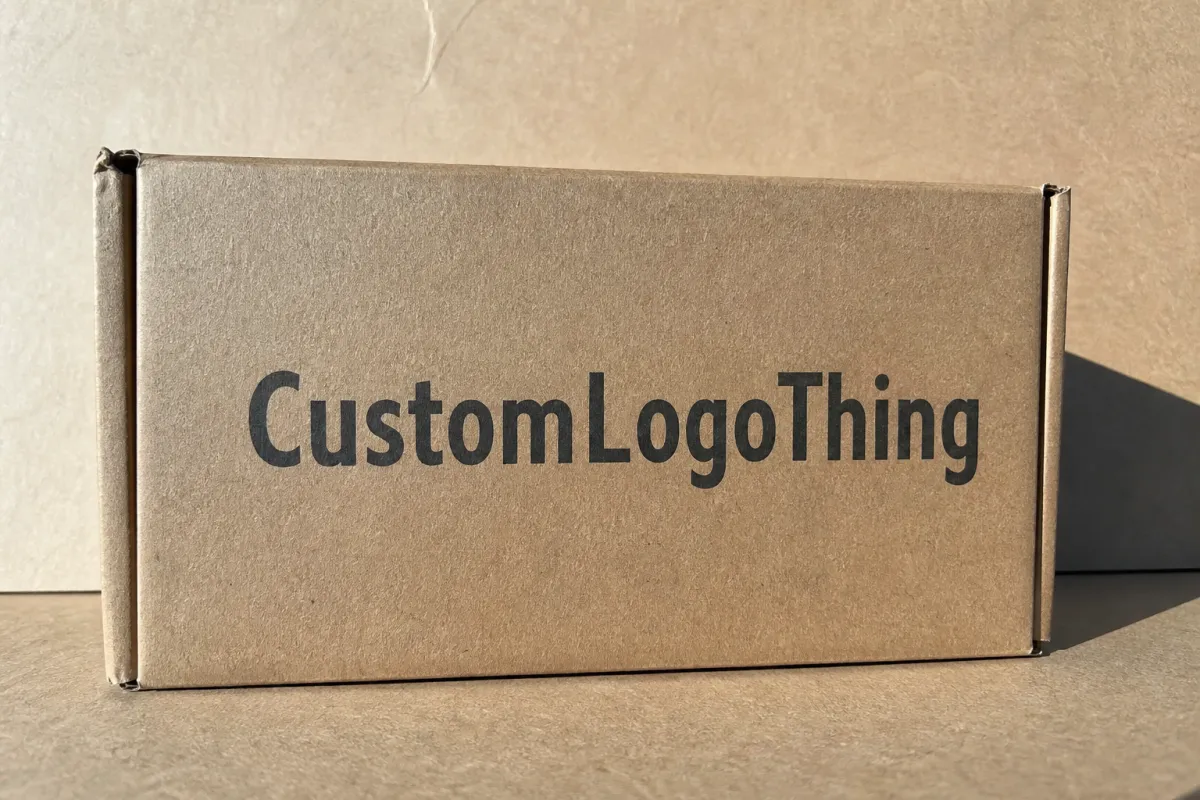
Bulk ordering works because setup, tooling, and print preparation stop acting like fixed penalties on every box. Spread those costs across more units and the math improves. The deeper advantage is control. With Custom Die Cut kraft boxes bulk, the carton size can be locked to the product, void fill can drop, and the warehouse stops fighting generic stock boxes that were never built for the job.
Die-cut packaging usually earns its place when the closure has to behave a certain way, the fold has to feel precise, or the opening sequence matters to the customer experience. Stock cartons can look cheaper in a quote comparison, then consume the savings through inserts, extra tape, and labor. A carton that looks bargain-priced but eats 20 seconds of packing time across 10,000 units becomes expensive in a hurry. That is why landed cost matters more than the sticker price.
Three areas usually reveal the real benefit:
- Less filler because the carton dimensions follow the product instead of fighting it.
- Fewer packing errors because the structure makes assembly harder to get wrong.
- Better pallet density because flat-packed cartons and consistent outside dimensions stack more cleanly.
Kraft works because it feels grounded. No glossy theater. No fake luxury. It gives a natural, honest look that suits retail packaging, subscription kits, cosmetics, candles, apparel accessories, and a long list of mid-weight goods. The material lets the print do the talking. The substrate does not need to pretend it is something else.
Heavier items need a sturdier answer. A die-cut kraft mailer or corrugated kraft structure usually beats thin paperboard when the product has weight or needs more crush resistance. A savings of a few cents per unit is meaningless if the box flexes, bows, or arrives bruised. A clean delivery is cheaper than a pretty carton with a dent in the corner.
For buyers who want a neutral reference point on corrugated basics and structural choices, Packaging.org is useful. If recycled content or certified sourcing is part of the program, FSC is where many teams start the paperwork and the procurement conversation.
Custom Die Cut Kraft Boxes Bulk: Product Details That Matter
Material choice is where many packaging quotes get muddy. "Kraft box" sounds simple. It is not. A lightweight folding carton, a corrugated mailer, and a wrapped rigid box can all wear the same brown finish, yet they behave very differently in production, on a conveyor, and in the back of a delivery truck.
For lighter retail packs, kraft paperboard is often the right fit. Common ranges fall around 14pt to 24pt depending on product weight, print feel, and how much structural support the design needs. If the product needs better crush resistance, corrugated kraft is usually the stronger choice. E-flute gives a cleaner print surface and a slimmer profile. B-flute adds more cushioning. A rigid kraft box wrapped over chipboard or greyboard brings a heavier, more premium feel while keeping the natural kraft appearance.
Structure matters just as much as board grade. The most common formats are easy to compare:
- Tuck end boxes for retail items that need a simple closure.
- Auto-lock bottom boxes for heavier fills and faster hand packing.
- Mailer-style closures for ecommerce and subscription shipments.
- Inserts and partitions for fragile items or multi-piece kits.
- Window cutouts for shelf visibility without overcomplicating the print.
Print choices should be practical, not theatrical. One-color logo printing often looks strongest on kraft because the brown stock already carries part of the visual identity. Black, white, charcoal, or a deep brand color can look sharper than flooding the box with ink and muting the texture underneath. If stronger package branding is needed, a restrained inside print, a spot color, or a small repeating pattern usually works better than covering every surface.
Finish choices deserve the same discipline. Matte and aqueous coating are common because they protect the surface without turning the carton into something that feels plasticky. Heavy lamination improves scuff resistance, yet it can complicate recyclability and add cost. That tradeoff is fine when the product needs the durability. It is not fine when the finish exists only because "premium" sounded nice in a meeting.
Sustainability claims should stay specific. Plain kraft structures are often recyclable, but coatings, foils, plastic windows, and mixed-material add-ons can change the picture. Minimal ink coverage, efficient sheet usage, flat-packed shipping, and recycled-content kraft all lower environmental impact in practical ways. If a supplier cannot explain the material stack without jargon, that usually means the stack has not been thought through.
Buyers who need custom printed boxes that still feel natural and responsible have a lot of room to work with kraft. The material is forgiving, versatile, and easier to source in bulk than many specialty substrates. The useful question is not whether kraft can do the job. The useful question is which structure matches the product without forcing unnecessary complexity into the run.
Sizes, Structure, and Print Specs for Bulk Orders
Size mistakes scale badly. A carton that is 3 mm too tight can slow a packing line and raise damage risk. A box that is 8 mm too loose can force extra filler, inflate freight volume, and make the product slide around like it has room to spare. Multiply that by thousands of units and the waste becomes visible in the budget.
Measure the product first, not the box you wish existed. Record length, width, and height, then state clearly whether the numbers are inside dimensions, outside dimensions, or finished pack size. That distinction saves time and avoids confusion later. Inside dimensions matter most for fit. Outside dimensions matter most for pallet planning and freight estimates. Skip that detail and the quote will be wrong in a way that is both annoying and expensive.
Several spec choices carry more weight than the rest:
- Board thickness affects crush resistance and the feel of the print surface.
- Flute profile changes cushioning, stack strength, and overall bulk.
- Insert design controls movement for glass, jars, electronics, and kits.
- Fold line placement affects how quickly the box assembles in the warehouse.
- Tolerance range matters because small variances become visible at scale.
Production tolerances vary by material and tooling, but many die-cut kraft programs sit around +/- 1 to 2 mm on critical dimensions. That sounds tiny until a line operator is folding hundreds of boxes an hour and the fit needs to be exact. Precision is not a decorative feature. It is the difference between a package that behaves and one that turns into a recurring problem.
Artwork should be settled before the first proof. Ask for the dieline file in AI or PDF format with clear bleed and safe zones. A 0.125-inch bleed is common, and most designs need at least a 0.125-inch safe margin so logos and copy do not end up too close to the cut line. If the design uses spot colors, name them. If it is CMYK, say that directly. Printers are good at printing; they are not mind readers.
Print coverage needs realistic expectations too. Kraft stock can mute lighter colors, and that is part of the material's character. White ink can improve visibility, but it adds cost and another layer of complexity. A restrained palette often creates a better result than crowding the surface with color just because the layout can hold it. That is true for both appearance and budget.
Structural testing is worth asking for before the run begins. Drop testing, compression testing, and transit simulation can tell you more than a polished mockup ever will. If the package is moving through ecommerce channels, an ISTA-style check is a sensible request. For buyers who want a reference on shipping standards and transit testing, ISTA is a practical place to begin.
Cost, Pricing, MOQ, and Quote Drivers
Pricing for custom die-cut kraft boxes follows a short list of variables. Size, board grade, print complexity, coatings, inserts, and freight all matter. Freight deserves special mention because it wrecks apparently cheap quotes all the time. A low unit price is not a win if the pallet count or carton size turns the landed cost into a mess.
The usual pricing pattern looks like this:
- Larger quantities reduce unit cost because setup is spread across more boxes.
- Simpler print costs less than full coverage or multi-pass decoration.
- Standard board choices usually cost less than specialty paper or heavy rigid builds.
- Inserted designs add labor and tooling, raising the minimum order value.
- Shipping distance and pallet count can affect landed cost more than expected.
MOQ is rarely arbitrary. It reflects the labor and setup required to make the run worthwhile. Simple kraft mailers and basic tuck styles can often begin around 500 to 1,000 units. More customized die-cut formats, window cutouts, rigid wraps, or multi-part inserts often move the minimum into the 1,500 to 3,000 range. Supplier capability, tooling, and print method all influence that threshold. A very low MOQ on a complicated build should raise a few eyebrows.
Unit pricing tends to fall sharply, then flatten. That is normal. It does not keep dropping forever just because the spreadsheet wants it to. Once the setup cost has been absorbed, the per-box price stabilizes. Past that point, extra volume can help a little, but it does not justify stacking up six months of inventory because the quote looked prettier at a higher number.
The table below gives a realistic way to compare common options. The figures are indicative only, since size, artwork, and freight can move them a lot, but the spread is useful when you are planning a program.
| Structure | Best Use | Typical MOQ | Indicative Unit Cost at 1,000 | Indicative Unit Cost at 5,000 |
|---|---|---|---|---|
| Kraft folding carton | Light retail products, small accessories, cosmetics | 500-1,000 | $0.45-$0.95 | $0.18-$0.42 |
| E-flute die-cut mailer | Ecommerce shipments, subscription packs, light protection | 750-1,500 | $0.75-$1.60 | $0.32-$0.78 |
| Auto-lock bottom box | Heavier retail items, faster hand-packing | 1,000-2,000 | $0.85-$1.90 | $0.40-$0.95 |
| Wrapped rigid kraft box | Premium presentation, gift sets, high perceived value | 1,500-3,000 | $2.20-$5.50 | $1.10-$2.80 |
Those figures assume normal print expectations and no unusual finish request that adds another process step. Add a window, add foil, add a custom insert, and the quote shifts quickly. Freight does the same. A box that ships flat is usually more efficient than assembled packaging, but carton size and pallet pattern still decide the final bill. Oversized outer cases can erase the gains from a lower unit price in one shipment.
Five details help a supplier price the job properly: dimensions, quantity target, product weight, print needs, and finish or sustainability requirements. A reference sample helps too. Buyers who send only "need a kraft box" usually trigger three follow-up emails and a slower quote. Buyers who provide actual numbers usually get actual pricing.
Repeat programs improve the economics further when the box stays stable across multiple SKUs. That is why many brands standardize the outer carton and vary only the insert or label. It trims tooling changes, keeps packaging design consistent, and makes replenishment less chaotic. If your team needs recurring production, a wholesale purchasing structure can reduce the friction of reorders. For teams comparing formats beyond kraft die-cuts, a broader custom packaging catalog is usually the fastest way to narrow the field.
Process, Timeline, and Production Steps
A clean production process saves more money than a glossy spec sheet. It also saves time, which is the part everyone claims not to notice until the launch date starts moving. A typical run follows a predictable path: brief, quote, dieline, proof, sample, production, quality check, and shipment.
- Brief - share product dimensions, quantity, target use, and print goals.
- Quote - receive pricing based on structure, board, and finish.
- Dieline - review the box layout so artwork fits correctly.
- Proof - confirm colors, logos, copy, and finishing details.
- Sample - test fit, closure, and print quality before the main run.
- Production - run the approved order after sign-off.
- Inspection - check critical dimensions, print, and pack count.
- Shipment - palletize or carton-pack based on destination and handling needs.
Lead times usually split into two clocks. Artwork approval and sampling can take several days, sometimes longer if the buyer is still changing copy or resizing the design. Once the proof is signed off, production often takes about 10 to 20 business days for standard bulk runs. More complex boxes, specialty coatings, or insert assemblies can extend that. Freight is separate. A quick press schedule does not shorten ocean transit or trucking time.
Several issues slow the schedule more than others:
- Late artwork or missing logo files.
- Repeated dieline changes after the proof has started.
- Special finishes that need extra setup or curing time.
- Custom inserts that require separate structural approval.
- Unclear shipping instructions that force a rework of pallet plans.
Once a proof is signed off, treat any change as new work. That is not punishment. It is how die-cut production stays orderly. A press line is not a sketch pad. Small shifts in a crease, insert, or cut line can affect the die, the tooling, and the whole run. Approve carefully, then move forward.
Sampling deserves more respect than it usually gets. A sample tells you whether the board creases cleanly, whether the product rattles, whether the logo sits too close to the cut line, and whether the closure feels secure in the hand. It is a cheap way to catch a bad assumption before it turns into a pallet of mistakes.
If the package has to survive rough shipping, ask for transit-testing criteria in writing. If the box only needs to look sharp on shelf, focus on print consistency, closure strength, and display quality. Matching the spec to the actual use case prevents overbuilding and keeps the carton from becoming more expensive than the product needs.
Why Choose Us for Sustainable Packaging
For buyers who want sustainable packaging without the marketing fog, consistency is the real value. A bulk program only works when the boxes arrive on spec, the print stays steady, and the material behaves the same way from order to order. That matters more than polished language on a sales page.
We focus on production choices that hold up outside of a pitch deck: accurate die-cutting, stable board selection, repeatable print placement, and packaging that ships flat where possible. That reduces waste, simplifies storage, and lowers the odds of a packing room full of damaged cartons. It also keeps retail packaging and branded packaging aligned with the brand without pushing the design into unnecessary complexity.
Good sustainable packaging does not need to be loud. It needs to be sensible. That usually means:
- Responsibly sourced kraft where the supply chain supports it.
- Minimal-ink layouts that preserve the natural paper look.
- Reduced scrap through efficient dieline planning and sheet usage.
- Flat-packed shipping to reduce transport volume.
- Material honesty about coatings, windows, and mixed components.
That last point matters more than most brochures admit. Buyers do not need broad sustainability claims. They need to know whether the box is recyclable, whether the coating changes that, and whether the inner tray or window adds disposal complexity. The EPA's recycling guidance at EPA recycling basics is a useful starting point for understanding how paper recovery works in the real world.
We also help buyers Choose the Right structure instead of steering them toward a more expensive box for no reason. Packaging design gets overcomplicated when more material is mistaken for better packaging. That is not always true. Sometimes the right answer is a simpler die-cut mailer with a better insert. Sometimes it is a standard folding carton with smarter print placement. Sometimes the best option is a cleaner box and a stronger shipping master carton. The product decides, not ego.
Clear communication matters too. Buyers need direct answers, clean proofs, and packaging that matches the approved spec. That sounds basic because it is basic. Still, basic is where many packaging programs fail. A good supplier should be able to explain board choices, print tradeoffs, and tolerance ranges without turning the conversation into a lecture. If they cannot, the order is already at risk.
For brands that want a sharp result without the usual packaging fluff, kraft is a strong foundation. It supports custom printed boxes, works for subscription kits and ecommerce, and gives the brand a natural backdrop that does not have to shout to be noticed. That usually makes it the better long-term buy.
Next Steps Before You Order Custom Die Cut Kraft Boxes Bulk
Start with the product. Measure it. Weigh it. Decide what the box has to accomplish. Shelf display puts the emphasis on print and the opening experience. Shipping puts the emphasis on structure and insert design. A box asked to do both needs to balance those goals carefully instead of failing the first time it gets bumped in transit.
Set a quantity target that matches actual usage. An oversized run looks efficient in a unit-cost table, then sits in storage while cash flow tightens. A better approach is to estimate monthly demand, add a safety margin, and compare that number against MOQ and tiered pricing. That produces a real buying decision instead of a spreadsheet fantasy.
Before requesting a quote, gather the essentials:
- Box dimensions and whether they are inside or outside measurements.
- Product weight and any fragile components.
- Print colors, logo files, and artwork status.
- Finish preference, including matte, aqueous, or no coating.
- Sample needs and any sustainability requirements.
If you already have a reference box, send it. A physical sample usually speeds up the conversation faster than a long explanation ever will. It helps confirm fit, board feel, and closure style before the quote is locked in. That saves back-and-forth and cuts the risk of a costly revision after approval.
Ask for a dieline review before production starts, then approve the sample once the fit and print are right. That sequence matters. Once production begins, changes become expensive. Die-cut tooling does not bend to last-minute improvisation.
If you want a stronger result from Custom Die Cut kraft boxes bulk, keep the structure simple, the artwork clean, and the specs honest. That is how you get packaging that ships well, looks sharp, and does not become a budget leak six weeks later.
Frequently Asked Questions
What MOQ should I expect for custom die cut kraft boxes bulk orders?
MOQ depends on structure, print complexity, and whether tooling already exists for a similar size. Simple kraft mailers or basic tuck boxes can often start around 500 to 1,000 units, while rigid builds, inserts, or window cutouts usually push the minimum higher. Ask for tiered pricing so you can see where the unit cost drops enough to justify the larger run.
Are custom die cut kraft boxes bulk orders recyclable?
Most plain kraft boxes are recyclable, but coatings, laminations, foils, and mixed-material windows can change that. If sustainability matters, keep the finish simple and ask which inks and coatings are recycling-friendly. Local rules matter too, because recycling programs do not all treat coated paper the same way.
How long does production usually take after artwork approval?
Typical production runs often take about 10 to 20 business days after final approval, depending on quantity and complexity. Sampling, dieline edits, and specialty finishes can add time before production starts. Freight is separate, so a quick press schedule does not automatically mean fast delivery.
Can I get a quote before I finalize the artwork?
Yes. A solid quote usually starts with dimensions, quantity, structure, and print expectations. Final pricing tightens once the dieline and artwork are confirmed, especially if inserts or special finishes are involved. If you have a reference box, send it along; that usually speeds up quoting more than a long email does.
What lowers the unit cost on custom die cut kraft boxes bulk runs?
Higher quantities spread setup and tooling costs across more boxes, which lowers the per-unit price. Standard sizes, fewer print colors, and simpler finishes usually cost less than highly customized builds. Efficient carton sizes also reduce freight waste, which matters more than people like to admit.
If you want a practical starting point, send the dimensions, quantity target, and print needs first. That gives the fastest path to a real quote for custom die cut kraft boxes bulk, not a vague estimate that falls apart the moment the spec gets specific.

