Buyer Fit Snapshot
| Best fit | Custom Die Cutting for Folding Cartons projects where brand print, material claims, artwork control, MOQ, and repeat-order consistency need to be specified before quoting. |
|---|---|
| Quote inputs | Share finished size, material target, print colors, finish, packing count, annual reorder estimate, ship-to region, and any compliance wording. |
| Proofing check | Approve dieline scale, logo placement, barcode or warning zones, color tolerance, closure strength, and carton packing before bulk production. |
| Main risk | Vague material claims, crowded artwork, missing packing details, or unclear freight terms can make a low unit price expensive after revisions. |
Fast answer: Custom Die Cutting for Folding Cartons: Board, Finish, Dieline, and Unit Cost should be specified like a repeatable production item. The safest quote records material, print method, finish, artwork proof, packing count, and reorder notes in one written spec.
Production checks before approval
Compare the actual filled-product size with the drawing, then confirm tolerance on folds, seals, hang holes, label areas, and retail display edges. Reserve space for logos, QR codes, warning copy, and material claims before decorative graphics fill the panel.
Quote comparison points
Review material grade, print process, finish, sampling route, tooling charges, carton quantity, and freight assumptions side by side. A quote is only useful when the supplier can repeat the same color, closure quality, and packing count on the next order.
One millimeter can change the whole story. Shift the cut line on a carton by that much, and a box that looked perfect on screen may start fighting the folder, cracking at the score, or opening too early in transit. That is the practical side of Custom Die Cutting for folding cartons: the tool is not only shaping paperboard, it is deciding how the package behaves in the hand, on the shelf, and on the packing line.
For brands investing in branded packaging, that detail carries more weight than many teams expect. A folding carton is not only a container; it is part of product packaging, part of the customer experience, and often part of the automation strategy. The right structure can reduce void fill, sharpen shelf presence, and speed assembly. The wrong one can create jams, scuffed print, split scores, and costly rework. That is why Custom Die Cutting for folding cartons deserves attention before artwork is finalized or a launch date is locked.
Most buyers compare print quality first. Reasonable instinct, but incomplete. In day-to-day production, the cut path, score depth, grain direction, and fold sequence often decide whether a carton performs like a well-made tool or a frustrating compromise. The pages below unpack how Custom Die Cutting for folding cartons works, what pushes pricing up or down, how timelines really move, and what to ask before approving a quote from a supplier like Custom Logo Things. If you are comparing Custom Packaging Products or reviewing broader Manufacturing Capabilities, the structure details are the part worth pressing on first.
Custom die cutting for folding cartons: why tiny cuts change everything
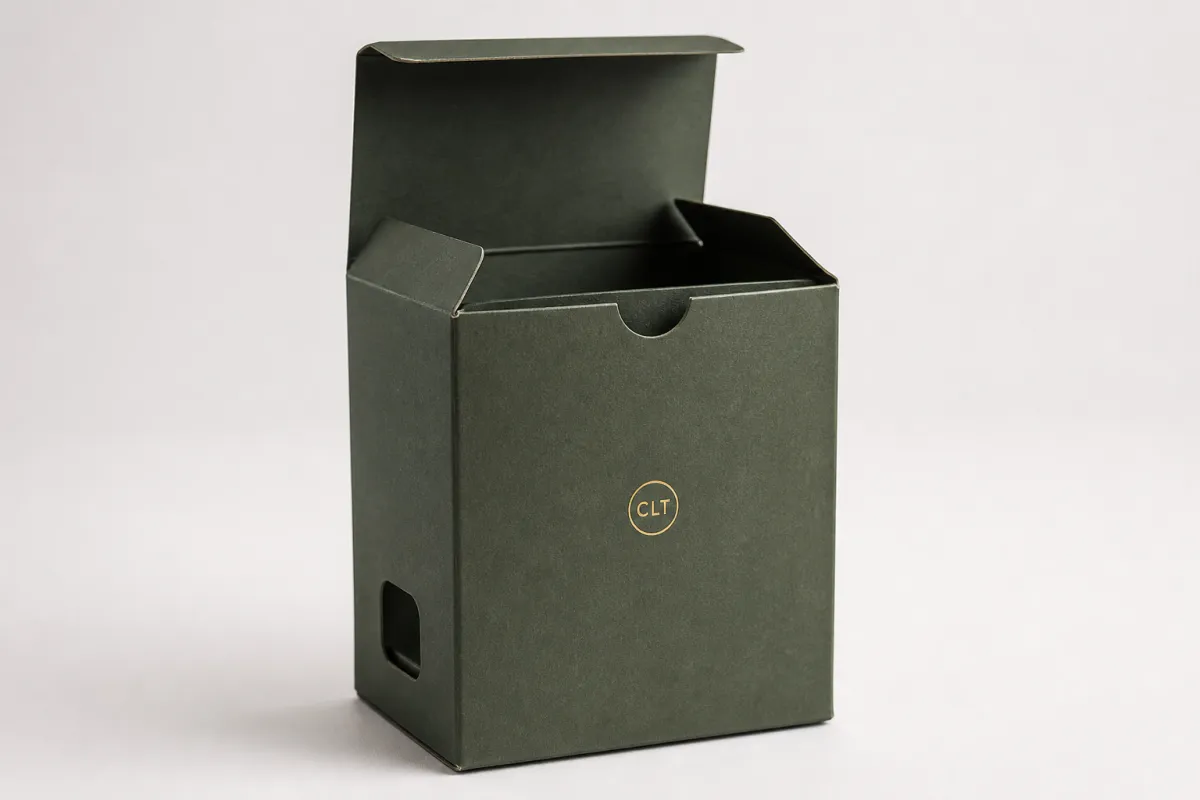
A folding carton can look simple from ten feet away. Up close, the geometry gets unforgiving. A tab that is 0.5 mm too short may not lock cleanly. A score that is too deep can crack a coated board. A window that sits too close to the edge can tear during conversion. That is the quiet power of Custom Die Cutting for folding cartons: tiny changes in the die shape affect folding behavior, display quality, and shipping durability all at once.
Here is the plain-language version. Custom die cutting for folding cartons uses a precision-made tool to cut flat paperboard into a carton blank with exact cut lines, score lines, perforations, and sometimes window openings. Once the blank is printed and die cut, it can be folded into a finished carton with predictable geometry. The cut may be clean, but the scores and perforations are what let the package open, lock, tear, or collapse in the right way.
That is why custom work differs so sharply from stock shapes. Generic carton sizes can be fine for commodity items, yet they often waste board or leave too much empty space around the product. Custom dimensions can tighten the fit, reduce dunnage, and improve product presentation. For retail packaging, that can mean better shelf use and a more deliberate look. For Custom Printed Boxes, it can mean the graphics land on the front panel instead of getting interrupted by an awkward fold position. In premium package branding, those details are structural, not decorative.
There is another angle people miss. A carton is often one of the first things a packout line touches. If the blank does not fold the way the equipment expects, the whole process slows down. A beautiful structure that needs hand correction is not a win. Custom die cutting for folding cartons only pays off when the structure and the production method fit each other.
“A good carton is usually invisible in the best way. It opens cleanly, locks cleanly, survives shipping, and never asks the operator for extra attention.”
I have watched a launch stall because a locking tab was just a hair too aggressive for the board caliper. The proof looked fine. The sample looked fine. The trouble showed up on the folder-gluer, which is where cartons stop being drawings and start being mechanical objects. That is the part people kinda forget until the line is already running.
Because of that, the core promise stays simple: understand the process, cost drivers, and timing of custom die cutting for folding cartons before revisions get expensive. Small structural changes are far cheaper before the die is made than after production starts. The savings are even larger when the carton includes a window patch, embossing, or a nonstandard fold sequence.
How custom die cutting for folding cartons works
The workflow starts with a dieline, the structural map of the carton. From there, the structure moves through prepress review, die fabrication, test cuts, and production. In a typical custom die cutting for folding cartons job, the die maker builds a steel rule die using sharp cutting rules, blunt creasing rules, and sometimes perforation rules. Those different rules create the various effects that make the blank useful.
The steel rule die is a simple idea with a lot of precision behind it. The cutting rule slices the board. The creasing rule compresses the fibers so the board folds instead of splitting. The perforation rule creates a controlled tear path for features like tear strips or easy-open panels. If any one of those is off, the carton can still look fine flat, but the fold may fail later. That is one reason custom die cutting for folding cartons depends on real-world testing, not only CAD drawings.
Cut lines, score lines, and perforations are often confused by nontechnical buyers. The cut line separates the blank. The score line weakens the board in a controlled way so it folds. The perforation creates a series of tiny bridges and gaps so the user can tear a section cleanly. Mix them up, and the carton will not behave as expected. In practical terms, this is why custom die cutting for folding cartons is as much engineering as finishing.
Grain direction matters too. Paperboard bends more predictably along the grain than against it. If the grain is set poorly, the carton can spring back after folding or crack at the score. That is a classic source of complaints in product packaging, especially on coated or printed board where cracking shows up right on the shelf face. For high-volume programs, a production line may also need a specific orientation so folder-gluers can run without small but constant adjustments.
Registration is another quiet variable. A carton can be dimensionally correct and still disappoint if the printed image misses the window, the barcode lands too close to a fold, or the glue flap overlaps live graphics. That is where custom die cutting for folding cartons connects with prepress discipline. It is not only about cutting paperboard; it is about coordinating art, structure, and machine behavior.
Most converters will run a sample, and that sample is worth attention. The first sample is rarely the last sample. It shows whether the score is too tight, whether the locking tab needs adjustment, or whether the carton feeds well on the folder-gluer. If the product is going into automation, the testing should include the actual packout method, not a bench fold alone. For line-sensitive projects, standards and test methods from groups like ISTA can serve as useful reference points for transit and handling expectations.
That is also why custom die cutting for folding cartons does not stop at the blank. Downstream equipment matters. A carton that folds neatly by hand can still misfeed, mis-square, or crush in automated equipment. One supplier may sell a great-looking blank, but if the flap geometry is too aggressive for the machine, the cost shows up later in downtime and rework.
Custom die cutting for folding cartons cost and pricing factors
Price in custom die cutting for folding cartons is shaped by tooling, materials, complexity, and volume. The simplest way to read it is this: tooling cost is the upfront engineering and fabrication expense, while unit cost is what each finished carton contributes once the run starts. A quote can look expensive because the die is intricate, yet still be the smarter buy if the structure cuts waste or speeds assembly.
Die complexity is usually the first lever. A plain tuck-end carton with a standard footprint costs less than a structure with multiple windows, tear strips, thumb notches, or internal locking features. More cuts and more scores mean more time in die making and more setup scrutiny on press. A carton with embossing, foil, or a patch window can also add handling steps, which is why custom die cutting for folding cartons often ends up tied to finishing choices even when the core shape stays simple.
Board thickness matters too. A 14 pt SBS board behaves differently from an 18 pt C1S or a heavier folding carton board around 24 pt. Thicker board can improve stiffness, but it may require deeper creasing or more careful scoring. If the score is not tuned to the board, folding quality drops fast. That is one reason the lowest quote on paper is not always the lowest total cost in practice.
Run length changes the economics in a straightforward way. Short runs carry more setup burden per carton, so the unit price is higher. Longer runs spread tooling and setup across more pieces. That is not unique to custom die cutting for folding cartons; it is true across most converting work. Still, the impact can be dramatic. A 2,500-piece run might cost materially more per unit than a 10,000-piece run even if the raw materials are identical.
MOQ logic deserves attention as well. Some vendors structure pricing around a minimum order because they need enough volume to justify the die, press setup, and quality checks. Others are more flexible but charge a premium for shorter runs. From a buyer’s point of view, the question is not only “What is the cheapest unit price?” It is “What combination of tooling, spoilage, and labor gets me the cleanest total cost?”
Here is a practical comparison for custom die cutting for folding cartons projects:
| Project Type | Typical Tooling Cost | Typical Unit Cost at 5,000 Pieces | Common Lead Time | Best Fit |
|---|---|---|---|---|
| Simple tuck-end carton | $250-$450 | $0.18-$0.28 | 10-12 business days after approval | Standard retail packaging with limited structural features |
| Mid-complexity carton with perforation or window | $400-$800 | $0.24-$0.42 | 12-15 business days after approval | Branded packaging that needs more shelf impact or controlled opening |
| High-complexity custom shape with embossing or patch window | $700-$1,500+ | $0.38-$0.75 | 15-20 business days after approval | Premium product packaging with special presentation or unusual dimensions |
The numbers above are ranges, not promises. They move with board choice, print coverage, finishing, and quality expectations. A project that seems cheap at first can become expensive if it causes spoilage or machine stoppages. I have seen teams save a few cents per unit on the quote and lose far more in line efficiency. That is the hidden cost of custom die cutting for folding cartons done without a full production view.
Some buyers focus on specialty effects like foil stamping, soft-touch coating, or embossing and forget that the structural tool still has to do its job. If the die is fragile or the fold is too tight, those premium finishes can make the problems easier to see. The carton looks better and performs worse. That is not a good trade.
For teams evaluating suppliers, ask for a quote that separates tooling, unit price, window patching, and rush charges. If the quote bundles everything together, comparison becomes difficult. Better yet, compare the quote against the production behavior you expect, not only against another line item. In custom die cutting for folding cartons, the cheapest structure often becomes the most expensive one after launch.
Custom die cutting for folding cartons process and timeline
The production timeline usually follows a familiar chain: brief, structural design, dieline approval, die build, sample approval, production, finishing, and delivery. On paper, that looks linear. In real life, the timeline bends around revisions and approvals. With custom die cutting for folding cartons, the engineering review and die fabrication often take longer than the actual cutting run.
Structural design is where the first meaningful decisions happen. What are the product dimensions? How much protection does the item need? Will the carton be hand-packed or fed into an automated line? Does the product need visibility through a window? Those answers shape the dieline. If the design brief is vague, the structure will drift, and every later step becomes slower. That is especially true in custom die cutting for folding cartons projects that support regulated products or premium retail packaging.
Once the dieline is approved, the die maker fabricates the steel rule die. Depending on complexity, that can take a few days for a simple shape or longer for a carton with intricate locking tabs, perforation patterns, or multiple windows. If the project uses a new board grade, the sample stage can also reveal crease behavior that the digital proof did not show. A thick recycled board may behave differently from virgin SBS, which is why custom die cutting for folding cartons benefits from material-specific testing.
Revision cycles are the real schedule killer. Change the artwork after the die has been built, and you may need a new proof. Change the structure after sample approval, and the die may need modification. Change the substrate, and the score behavior may change again. Every one of those shifts can add days. For that reason, custom die cutting for folding cartons should be scheduled with buffer, especially if the carton launch is tied to a product release, trade show, or contract packout date.
Timelines also move based on finishing. If the carton needs UV coating, foil, window patching, or embossing, there are more production steps and more chances for inspection. Add chain-of-custody requirements for FSC-certified board and the supply chain becomes more deliberate, because documentation has to match the material flow. Buyers who need that level of compliance can review standards at FSC and plan accordingly.
The safest scheduling advice is boring but effective: finalize the product size, approve the structure, then release the artwork. That order sounds obvious, yet many teams reverse it because they want to see graphics first. The risk is that the art locks in before the carton mechanics are settled. With custom die cutting for folding cartons, the structure should drive the visuals, not the other way around.
If transit performance matters, include testing in the schedule. A folding carton may not need full heavy-duty lab validation, but a product that ships through multiple hands can benefit from simulated handling and compression checks. ASTM and ISTA-based methods often guide those decisions, especially for programs where retail packaging must still survive distribution. A little testing time now can prevent a much longer launch delay later.
Step-by-step guide to planning a carton die-cut project
Start with the product, not the graphic. Measure the item in its final retail configuration, including closures, inserts, and any overhang. Weigh it. Note any corners that need clearance. Then decide whether the carton is meant to protect, display, or both. That is the first filter in custom die cutting for folding cartons, because structure should match the real object inside the box.
After that, choose the carton style based on function first and appearance second. Straight tuck, reverse tuck, auto-bottom, sleeve, and lock-bottom structures each behave differently. A style that looks elegant on a mockup can be a headache on the line if the closure is awkward. From a packaging design point of view, the easiest carton to assemble is often the one that runs best. That is one reason experienced teams keep a shortlist of proven structures instead of reinventing every package.
Next, prepare a clean spec sheet. At minimum, include dimensions, board type, print coverage, finish, quantity, target lead time, window needs, and whether the carton must run on automatic equipment. If the project involves custom die cutting for folding cartons, also include notes on score preference, perforation needs, and whether the product requires a tamper-evident feature. Clear inputs reduce back-and-forth and shorten quote time.
Then request a prototype or sample run. This step is often treated like a formality, but it is where real problems show up. Does the carton fold by hand without cracking? Does the tuck flap stay closed? Does the finished blank sit flat in a shipper? Does the product fit without rubbing the print? A sample is not only a proof of appearance; it is a proof of behavior. That is especially true in custom die cutting for folding cartons, where small geometry changes can alter the whole user experience.
Finally, lock the launch checklist. It should cover artwork approval, dieline approval, quality sign-off, shipping windows, and internal ownership for each decision. If the carton is part of a broader packaging rollout, add cross-checks for labels, inserts, and any secondary packaging. The more the launch touches, the more it can drift. Good documentation keeps custom die cutting for folding cartons from becoming a guessing game.
- Product sample: confirm size, weight, and any fragile features before artwork is finalized.
- Board decision: choose a stock that supports the fold and the shelf appearance.
- Equipment check: verify the carton will run on the actual folder-gluer or packout line.
- Approval path: name who signs off on structure, art, and sample changes.
- Launch buffer: leave time for one revision cycle if the project is new.
That list looks basic, but it catches most avoidable failures. I would rather see a team spend an extra hour on the spec sheet than spend three days fixing a structure that should never have been approved. In custom die cutting for folding cartons, disciplined planning is cheaper than fast corrections.
Common mistakes in custom die cutting for folding cartons
The first mistake is designing for appearance alone. A carton can be visually striking and still fold badly. If the score is too aggressive, the board may crack. If the fold line is too close to a window cutout, the panel may tear during assembly. In custom die cutting for folding cartons, the structure has to serve both the artwork and the machine, not just the mood board.
The second mistake is trying to hold tolerances too tight without understanding the board. Paperboard is not machined metal. It has natural variation in caliper, moisture response, and fiber direction. If the design assumes perfect consistency, real production will disappoint. That is why a carton that is off by a fraction of a millimeter can still be acceptable, while a carton that is technically precise can still misbehave if the score and fold geometry are wrong. Custom die cutting for folding cartons rewards practical tolerances more than theoretical perfection.
Ignoring grain direction is another repeat offender. A score running against the grain can produce weak folds, folding memory, or visible cracking on the outside panel. The issue is not always obvious on the proof. It becomes obvious on the line, or worse, after shipment. The best packaging teams check grain early and treat it as part of the carton design, not an afterthought. That habit saves a lot of pain in branded packaging programs.
Skipping machine testing is equally risky. A carton that looks perfect flat may feed poorly, snag on guides, or pop open in transit. If the project uses automation, test it on the actual line or a comparable setup. For many buyers, that is the difference between a carton that merely exists and one that supports real throughput. Custom die cutting for folding cartons should be validated in motion, not just on a worktable.
File-prep errors round out the list. Unclear dielines, unseparated layers, stray marks, and unlabeled revisions are more than administrative annoyances. They slow approval, confuse production, and increase the chance of a wrong-cut run. A clean file may feel tedious to prepare, but it speeds up everything downstream. In a packaging operation, that kind of discipline is part of quality control, not paperwork.
One more mistake deserves mention: treating the carton as isolated from the rest of the package. A folding carton may be perfect on its own, but if it has to fit inside a display tray, a shipper, or a shelf-ready system, the surrounding packaging matters. That is where product packaging becomes a system instead of a single component. Good custom die cutting for folding cartons fits that system cleanly.
Expert tips and next steps for a smoother launch
Design for manufacturability first. That means simplifying the cut path where possible, avoiding unnecessary structural flourishes, and keeping the carton aligned with the product’s real constraints. A cleaner die usually runs better. It also tends to hold up better across a long production run. In custom die cutting for folding cartons, elegance often looks like restraint.
Reuse proven dimensions when the product family allows it. If a brand ships several SKU variants, standardizing board choice and related panel sizes can reduce risk, shorten sample cycles, and make reorder planning easier. That is especially useful for custom printed boxes and other retail packaging lines where consistency matters as much as style. A little standardization can improve package branding by making the range feel more coherent.
Ask sharper questions before you approve a quote. Who owns the tooling? How many sample rounds are included? What is the expected turnaround after proof approval? Will the carton run on your filling equipment without modification? Can the supplier handle embossing, window patching, or a specialty coating if the design changes? Those questions do not slow the process; they prevent surprises. For custom die cutting for folding cartons, surprises are where cost usually hides.
Compare quotes with a wider lens. A lower tooling number can be offset by higher spoilage. A lower unit price can be offset by slower assembly. A quick lead time can be offset by quality risk. Here is the simplest rule I use: compare tooling, unit cost, waste, MOQ, and turnaround together, not separately. That is the only fair way to judge custom die cutting for folding cartons.
“The best carton quote is rarely the cheapest one. It is the one that lets the line run cleanly, keeps the print intact, and arrives before the launch team starts improvising.”
If you are building a new packaging program, gather product samples, confirm the dimensions, request a prototype, compare vendor specs, and define what success looks like before production begins. Those steps sound procedural because they are. They also work. And in a category where one weak crease can undercut an entire run, procedural is a compliment.
For brands that want a partner with broader production support, it helps to review Manufacturing Capabilities and the available Custom Packaging Products early, not after artwork is finished. The earlier the structural conversation starts, the better custom die cutting for folding cartons tends to perform in the real world.
Packaging teams also underestimate the role of material sourcing. If sustainability claims matter, ask about FSC-certified board and how that certification is documented through production. If transit performance matters, ask how the structure aligns with ISTA testing or internal distribution standards. Those details do not just satisfy a checklist. They shape the way custom die cutting for folding cartons supports the final product.
In that sense, the strongest programs are rarely the flashiest. They are the ones where structure, print, board, and equipment all agree with one another. That is the practical truth behind custom die cutting for folding cartons, and it is the reason good carton engineering keeps paying back long after the first shipment leaves the dock.
The most useful takeaway is simple: define the product, pick the board, validate the structure on real equipment, and only then lock the artwork. That sequence keeps custom die cutting for folding cartons tied to how the package will actually run, not how it only looks in a proof.
FAQ
What is custom die cutting for folding cartons?
It is the process of using a custom-made die to cut, score, and shape carton blanks to precise specifications. In practice, custom die cutting for folding cartons creates repeatable folds, better fit, and more reliable performance than a generic off-the-shelf shape. It is especially useful when the product size, protection needs, or shelf presentation are unusual.
How does custom die cutting for folding cartons affect pricing?
Pricing usually rises with die complexity, specialty board, and added features like windows, perforations, or embossing. Short runs often cost more per unit because setup and tooling are spread across fewer cartons. The lowest quote may not be the lowest total cost if it creates waste, rework, or line downtime, which is why custom die cutting for folding cartons should be judged as a system, not a line item.
What files do I need for custom die cutting for folding cartons?
A clean vector dieline with clearly labeled cut, score, and perf layers is the core requirement. Artwork should respect safe zones, bleed, and fold areas so graphics do not shift onto critical seams. The supplier may also ask for substrate details, dimensions, and notes on finishing or machine use before they build the tooling for custom die cutting for folding cartons.
How long does custom die cutting for folding cartons usually take?
Timeline depends on design approval, die fabrication, sample review, and production scheduling. Simple jobs move faster; structural changes, specialty materials, or rush requests can extend lead time. A sample stage is worth the extra time because it can prevent much bigger delays later, especially on custom die cutting for folding cartons programs tied to a product launch.
What should I ask before ordering custom die cutting for folding cartons?
Ask about MOQ, tooling ownership, sample approval steps, and the expected turnaround time. Confirm whether the carton will run on your packout equipment without adjustments. Request a quote that separates tooling, unit cost, and any finishing or rush charges so you can compare custom die cutting for folding cartons offers on equal terms.
If your team is deciding between standard structures and a custom format, the best next move is to gather sample products, confirm the real dimensions, and ask for a prototype. That is the fastest way to see how custom die cutting for folding cartons will affect fit, speed, cost, and shelf performance before the launch clock gets tight.

