Buyer Fit Snapshot
| Best fit | Custom Electronics Carton Inserts projects where brand print, material claims, artwork control, MOQ, and repeat-order consistency need to be specified before quoting. |
|---|---|
| Quote inputs | Share finished size, material target, print colors, finish, packing count, annual reorder estimate, ship-to region, and any compliance wording. |
| Proofing check | Approve dieline scale, logo placement, barcode or warning zones, color tolerance, closure strength, and carton packing before bulk production. |
| Main risk | Vague material claims, crowded artwork, missing packing details, or unclear freight terms can make a low unit price expensive after revisions. |
Fast answer: Custom Electronics Carton Inserts: Design, Cost, Fit should be specified like a repeatable production item. The safest quote records material, print method, finish, artwork proof, packing count, and reorder notes in one written spec.
Production checks before approval
Compare the actual filled-product size with the drawing, then confirm tolerance on folds, seals, hang holes, label areas, and retail display edges. Reserve space for logos, QR codes, warning copy, and material claims before decorative graphics fill the panel.
Quote comparison points
Review material grade, print process, finish, sampling route, tooling charges, carton quantity, and freight assumptions side by side. A quote is only useful when the supplier can repeat the same color, closure quality, and packing count on the next order.
Custom electronics carton inserts are one of those packaging choices that can look simple right up until a shipment lands with a crushed corner, a shifted charger, or a dead-on-arrival device sitting inside an outer box that never shows a mark. That mismatch usually tells the real story: the damage happened inside the package, not on the outside. For brands shipping routers, speakers, smart home devices, power supplies, or test equipment, custom electronics carton inserts can be the difference between a clean delivery and a return that chews through margin.
From a packaging buyer's perspective, the job is bigger than adding cushioning and calling it done. Good custom electronics carton inserts hold the product in place, absorb shock, protect delicate surfaces, and keep accessories from turning into loose hazards. They also shape the unboxing experience, which many teams underestimate until the first customer opens the box. A messy inner pack makes the product feel handled carelessly. A tight, orderly, branded pack-out gives the whole packaging system more credibility.
That is why custom electronics carton inserts deserve more attention than they usually get. The right design can cut returns, shorten pack time, lower breakage claims, and make branded packaging feel intentional instead of improvised. The wrong design can do the opposite, even when the carton itself looks perfectly fine. I have seen teams focus on the outer shipper while the real failure was happening in the voids inside, which is kinda painful because it is often fixable.
What custom electronics carton inserts solve in transit
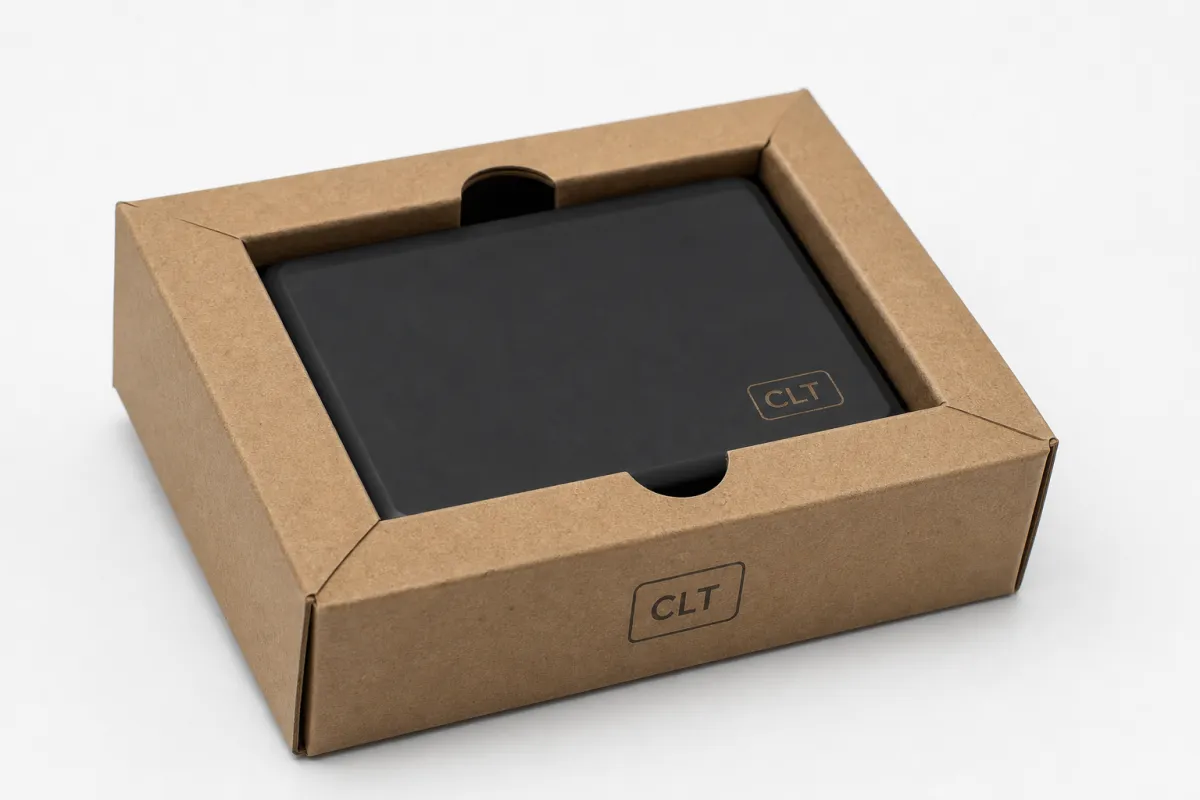
A carton can arrive without a tear and still carry a damaged device inside. Vibration during transit can loosen connectors, battery packs can drift, edge pressure can strain a display, and a small amount of repeated movement can do more harm than one obvious impact. That is the main reason custom electronics carton inserts exist. They are not decoration, and they are not simply filler. They are the internal structure that keeps the product where it belongs.
In practice, custom electronics carton inserts solve three problems at once. First, they lock the product in position so it does not wander inside the shipper. Second, they create cushioning zones that slow the force of a drop. Third, they separate accessories so cords, adapters, and manuals do not rub against the main unit. For electronics, that separation matters. A loose USB cable can scratch a screen. A charger brick can dent a housing. A small accessory can become a projectile if the carton has too much open space.
The difference between generic filler and engineered custom electronics carton inserts comes down to control. Loose paper, air pillows, or extra void fill can work for durable goods, but electronics usually need a repeatable pack-out with defined contact points. A speaker may tolerate perimeter support but not compression on a grille. A smart home hub may need a cradle that avoids ports and antennas. Test equipment may need foam or paper-based supports that prevent calibration-sensitive components from shifting. The insert should match the failure mode, not the other way around.
Fit is the whole story. Too much movement raises damage risk. Too much compression creates a different kind of failure: pressed buttons, crushed corners, distorted housings, or hairline damage that only shows up after installation. That is why custom electronics carton inserts are usually designed around a measured pack-out instead of a rough guess at device size. The goal is a controlled fit, not a tight squeeze.
A good insert does not merely hold the product. It sends the force somewhere harmless.
Custom electronics carton inserts also do more than protect. They make assembly more predictable, reduce packer judgment calls, and cut down on the improvisation that slows a line. If a warehouse team has to guess whether a foam shim or extra fold is needed, the process is already bleeding time. A properly engineered insert removes that guesswork.
For buyers evaluating packaging design, the practical payoff is easy to understand: fewer returns, cleaner unboxing, and fewer unpleasant surprises downstream. In retail packaging and e-commerce shipping alike, the internal fit often determines whether the customer sees a premium product or a problem hidden inside a box.
How custom electronics carton inserts work inside the shipping system
Think of the package as a stack of layers rather than a single box. The product sits inside the insert, the insert sits inside the inner carton, and the inner carton rides inside the outer shipper if a second wall is needed. Void fill, tamper seals, and corner protection belong only where the system calls for them. Custom electronics carton inserts connect the product to that larger load path. They keep the product from floating, and they move force into areas that can handle it.
The mechanics are simple, but the details are not. A good insert absorbs shock by deforming in a controlled way. It limits lateral movement so the product does not slide into the carton wall. It spreads pressure so one hard edge does not take the full load. And it keeps accessory pieces from becoming secondary impact points. That is true whether the insert is corrugated, molded pulp, foam, or a paper-based engineered structure.
Corrugated die-cuts are often a strong fit for lighter electronics and box-ready accessories because they are recyclable, economical, and easy to build into custom printed boxes or branded packaging programs. Molded pulp can be a solid choice when a brand wants structure with lower material waste and a more natural presentation. Foam still has a place for delicate items, premium systems, or products with brittle surfaces, though the sustainability conversation around foam is more complicated. Paper-based engineered inserts are getting more attention because they can combine stiffness with a cleaner end-of-life story.
There is no universal winner. A router, a compact speaker, and a handheld testing device do not fail the same way. A router often needs cord management and corner control. A speaker may need grille clearance and bottom support. Test equipment might need anti-slip contact points and protection around switches, calibration knobs, or screens. Custom electronics carton inserts work best when the material matches the risk, not when the buyer picks a familiar option and hopes it carries the load.
Transit also throws several stress types at the package at once. Drop events create sudden acceleration. Vibration can loosen the smallest component over a long lane. Compression from stacking can flatten a weak carton wall. Temperature shifts can change material behavior, especially if the insert is poorly matched to humidity or cold-chain handling. That is why testing matters. Many teams rely on ISTA test profiles for distribution simulation, and that is a practical habit. You can learn more at ISTA.
There is a productivity angle too. Well-designed custom electronics carton inserts can speed up fulfillment because packers are not wrestling with loose fill, tape, or ad hoc spacers. A repeatable pack-out usually means less training, fewer mistakes, and a more stable labor process. That may sound minor, but it adds up quickly when volume rises.
From a packaging operations standpoint, the best designs are boring in the right way. They fit consistently. They protect consistently. They use the same steps every time. That consistency is what makes product packaging reliable enough for scale.
Custom electronics carton inserts cost: what drives pricing
People often ask for a price before they have a fit plan. That is backward, but understandable. Custom electronics carton inserts pricing is shaped by a handful of variables that interact quickly: material, geometry, tooling, print requirements, quantity, and how much design support the supplier has to provide. The lowest quote can be misleading if it assumes a simpler pack-out than the one you actually need.
Material choice is usually the first cost lever. Corrugated is often the lowest-cost structural option. Molded pulp can move higher depending on tooling and volume. Foam may cost more per unit, especially for low to mid volumes, because the part needs its own process and sometimes special dies or custom fabrication. Paper-based engineered inserts can land somewhere in between, depending on how the structure is built. If the design uses multiple components, glued assemblies, or specialty cutouts, the unit price rises with complexity.
Quantity matters just as much. Low-volume custom electronics carton inserts can look expensive because setup costs are spread across fewer pieces. A prototype run of a few hundred units will never resemble a 20,000-piece production order. That does not mean the low-volume option is wrong. In many cases, paying more per unit upfront is still cheaper than absorbing breakage, replacement shipments, and customer service labor later. A damaged $180 device can erase the savings from a very cheap insert quickly.
Tooling and design work also deserve attention. Some suppliers include structural development in the quote. Others charge separately for prototypes, sample revisions, or cutting dies. Print can add another layer if the insert is branded, color-matched, or designed to support package branding inside the box. If your team needs custom printed boxes plus internal inserts, the total project budget should include both exterior and interior packaging design work.
| Insert option | Typical strengths | Common tradeoffs | Indicative unit cost at 5,000 pcs |
|---|---|---|---|
| Corrugated die-cut insert | Strong structure, recyclable, good for many lightweight devices | Less cushioning than foam for very fragile items | $0.18-$0.35 |
| Molded pulp insert | Good structure, natural look, lower waste profile | Tooling can raise setup cost; finish may be less refined | $0.28-$0.55 |
| Foam insert | High cushioning for delicate products and premium electronics | Higher cost, sustainability concerns, different recycling path | $0.35-$0.90 |
| Paper-based engineered insert | Balanced structure, clean presentation, often strong for retail packaging | Performance depends heavily on design complexity | $0.22-$0.60 |
Those numbers are directional, not universal. They can shift with print coverage, dimensions, material grade, and order volume. Still, they give buyers a useful reality check. If one quote comes in far below the others, ask what was assumed. Same product size? Same drop expectations? Same accessory count? Same outer carton? If not, you are not comparing the same solution.
This is one place where custom electronics carton inserts can actually save money. A slightly higher unit cost can lower the total landed cost if it reduces chargebacks, claims, and customer returns. That is especially true for fragile electronics, because the cost of failure is usually much higher than the cost of the insert itself. From a finance perspective, the question is not “What is the cheapest insert?” It is “What is the lowest total cost per successful shipment?”
For teams building out a broader Custom Packaging Products program, this is the right moment to compare internal fit, pack-out labor, and damage performance together. When those three numbers move in the same direction, packaging design starts paying for itself.
Custom electronics carton inserts process and lead time
Most projects follow a clear path, even when the details shift. The first stage is discovery: product dimensions, accessory list, shipping method, carton size, and the failure mode you are trying to solve. The second stage is concept development, where the supplier proposes a structure that can hold the device without unnecessary material. Then comes prototyping, revision, testing, and approval. Only after that should full production begin. That is the sensible route for custom electronics carton inserts, especially if the product is valuable or fragile.
Lead time is shaped by several forces. Material availability can shorten or lengthen the schedule. Tooling complexity matters too; a simple die-cut insert is faster than a multi-part structure with glued components. Print adds time. Special finishing adds time. Approval speed may matter most of all. A great design can still stall if internal teams take a week to review a sample that only needs one small dimension change.
For planning purposes, fast prototype work may take only a few business days once the spec is complete, while full production can run longer depending on quantity and tooling. A practical range for many custom electronics carton inserts projects is 10-15 business days after proof or sample approval for standard structures, with longer schedules for complex builds or large orders. That is not a promise. It is a planning range. Complex electronics programs often need extra time for revisions, especially if the first sample reveals an interference point around a cable, button, or port.
Delays often come from incomplete product data. A team measures the device but forgets the charger. Or the manual is added later. Or the retail bundle changes after the sample is underway. Suddenly the insert no longer fits the final pack-out. This is one of the most common reasons custom electronics carton inserts miss the mark. The insert was designed for the product alone, not the product plus everything that ships with it.
Good suppliers reduce that risk by asking for a complete spec sheet up front. The best ones want exact dimensions, photos, target pack-out orientation, shipping configuration, and any test requirements tied to your distribution lane. If you want a packaging standard to anchor the process, ASTM and ISTA methods are useful reference points, especially for drop and vibration testing. The broader packaging community also publishes helpful guidance through the Institute of Packaging Professionals.
Packaging teams sometimes underestimate how much lead time disappears into internal ambiguity. If purchasing, engineering, and operations are all working from different assumptions, the sample loop stretches out. A clear pack-out sheet shortens that loop. So does a single owner for sign-off. That sounds administrative, but in practice it can save a week or more.
One more operational point: custom electronics carton inserts are easier to scale when the supplier understands packing labor. A prototype that looks elegant on a desk may be too fussy for a warehouse. If the insert requires too many folds, too much orientation, or too many verification steps, production speed will suffer. A good design respects both protection and assembly.
Step-by-step guide to specifying the right insert
Start with the product map. Measure the device itself, then measure every accessory that ships with it. Include chargers, cables, manuals, adapters, mounts, batteries, and any retail add-ons. Note the zones that cannot tolerate pressure: screens, lenses, vents, buttons, antennae, ports, or fragile seams. For custom electronics carton inserts, those measurements are the foundation. If the map is wrong, everything that follows will drift.
Next, choose the protection strategy based on the product, not preference. A glass-fronted smart display needs different support from a metal-bodied power supply. A wireless speaker may be more sensitive to grille crush than to corner impact. A handheld diagnostic device may need both structural hold and delicate clearance around switches. The insert should be engineered around the product's weak points. That is the difference between average packaging design and packaging design that earns its place.
Then build a prototype and test it in a real pack-out environment. This is often the moment when custom electronics carton inserts get more honest. A CAD drawing can hide a lot. A sample reveals whether the packer has to press too hard, whether accessories fall out, whether the carton closes with the right tension, and whether the finished unit still looks orderly after handling. If the line team dislikes the sample, do not ignore that signal. Labor friction is a cost too.
Testing should be practical, not theatrical. Drop testing, vibration simulation, compression review, and unboxing inspection each answer a different question. Will the device survive a corner drop? Will the accessory bag stay put? Does the carton resist stacking pressure? Does the opening sequence feel clean or cluttered? These checks do not need to be overcomplicated, but they do need to be real. For higher-risk shipments, it is reasonable to align with ISTA procedures or similar distribution tests so the result is not based on guesswork.
- Measure the fully packed product, not the device alone.
- Protect the most fragile component first, then work outward.
- Prototype with the actual packing team whenever possible.
- Test for drop, vibration, and compression in the same pack-out orientation.
- Document the final layout with photos and a pack-out sheet.
Finally, lock the approved design into a repeatable specification. That document should include dimensions, material spec, assembly steps, approved photo references, and any substitution rules. If the insert is part of a branded packaging system, add notes about print placement, finish, and component orientation so the presentation stays consistent across reorders. This is especially useful when volume changes and different shifts handle the line.
There is a strong business case for treating custom electronics carton inserts as a controlled specification rather than a one-off purchase. Once the design is documented, future reorders become easier, quality becomes more stable, and mistakes become easier to catch. That predictability matters in retail packaging, e-commerce fulfillment, and B2B shipments alike.
Common mistakes with custom electronics carton inserts
The most common mistake is designing for the device and forgetting the bundle. Electronics rarely ship alone. Cables, chargers, remotes, manuals, dongles, mounting parts, and extra packaging cards often appear later in the project, and then the insert no longer fits the real pack-out. Custom electronics carton inserts should be planned around the full shipment, not the object on the spec sheet.
Overpacking is another hidden failure mode. People assume more pressure means more protection, but not always. Too much compression can deform housings, scratch finishes, or stress buttons and ports. I have seen packaging programs try to solve movement by tightening every pocket, only to create scuffing and cosmetic damage. That is not protection. That is a different problem.
Under-testing causes its own trouble. A sample may pass a short internal move and still fail after carrier vibration or pallet stacking. This is especially true with custom electronics carton inserts that look strong but have weak interaction points around corners or accessory cutouts. If the package has not been checked under realistic conditions, the team is still guessing.
Communication gaps also create avoidable mistakes. Purchasing may approve one spec, engineering may revise it, and operations may pack to an older version. By the time the shipment launches, nobody is using the same document. A final photo of the correct pack-out, stored with the specification, can prevent that mess. So can a single owner who signs off on changes.
Material selection can go wrong in a quieter way. Teams often choose what is familiar, what is cheapest, or what is in stock. That is understandable, but not always wise. Corrugated, molded pulp, foam, and paper-based structures each behave differently. Custom electronics carton inserts work best when the material is selected for the failure profile, the shipping lane, and the cost target together. If one of those factors is ignored, the system becomes fragile in a different way.
For brands building stronger product packaging or expanding package branding across a line, the lesson is simple. The insert is not a separate item. It is part of the promise the box makes to the customer. If the promise is “arrives intact,” the internal design has to support that claim.
The box is not the whole story. The real performance happens inside.
Expert tips and next steps for custom electronics carton inserts
Design around the most failure-prone component first. If the screen is the weak point, protect the screen first. If the battery pack is bulky and shifts, control that movement first. If the lens or connector cluster is exposed, make sure the insert never presses there. That sequence sounds obvious, yet it is easy to miss when a project starts with a generic insert concept rather than a failure analysis. Custom electronics carton inserts are stronger when they are built from the risk backward.
Ask for a sample kit before committing to a full production order, especially for higher-value devices. A sample kit lets you check fit, appearance, assembly time, and presentation in one sitting. It also gives multiple teams something concrete to react to. Sales sees the unboxing. Operations sees the labor. Quality sees the clearance. Finance sees the cost. That shared view is often more useful than a spreadsheet alone.
Track the numbers before and after launch. Damage rates. Return reasons. Pack-out time. Customer complaints about crushed corners or loose accessories. If custom electronics carton inserts are doing their job, those metrics should improve. If they do not, the data will point to the real issue. Maybe the insert is too complex. Maybe the carton wall is too thin. Maybe the accessory cavity is too shallow. Either way, you need evidence, not assumptions.
Write a packaging spec sheet that includes the measurements, approved materials, assembly sequence, photographs, and substitution rules. This is one of the cheapest forms of insurance in packaging. It prevents drift when staffing changes, when a supplier changes a detail, or when a second facility starts packing the same SKU. It also protects branded packaging consistency across channels.
One more practical tip: do not evaluate custom electronics carton inserts only on unit cost. Evaluate them on damage avoidance, labor minutes, fulfillment consistency, and customer experience. A slightly more expensive insert can be the cheaper option if it prevents a return, a replacement shipment, or a damaged review. That is a simple equation, but teams still miss it.
If you are deciding where to start, audit one SKU. Choose a product with enough volume to matter and enough fragility to reveal the issue. Gather the dimensions, accessory list, carton size, shipping method, and any problem photos. Ask for a prototype. Compare the pack-out time and protection performance against your current setup. Then scale only after you can see the result clearly. That is the safest way to roll custom electronics carton inserts across a broader line.
For buyers and operations teams, the bigger lesson is that custom electronics carton inserts are not merely a packaging purchase. They are a reliability tool, a labor tool, and a brand tool rolled into one. Done well, they support product packaging, retail packaging, and package branding at the same time. Done badly, they become hidden damage that shows up on the returns report. In a market where margins are tight and customer expectations are unforgiving, that difference matters.
Custom electronics carton inserts are worth the effort because they address the real shipping risk: movement, not just impact. If you measure accurately, test honestly, and specify clearly, custom electronics carton inserts can protect fragile devices, reduce returns, and make every shipment feel more intentional from the inside out.
FAQ
How do custom electronics carton inserts reduce shipping damage?
They reduce damage by stopping movement, which is often the real cause of failure in transit. Custom electronics carton inserts also spread impact force across a larger area so one edge, corner, or connector does not absorb the full hit. On top of that, they keep accessories from scraping the main device.
What materials are best for custom electronics carton inserts?
Corrugated inserts are often a strong choice for lighter electronics because they are recyclable and structurally efficient. Foam can offer higher cushioning for delicate products, but it may raise cost and create sustainability concerns. Molded pulp and paper-based engineered inserts can work well when the design needs structure with a cleaner material profile.
How much do custom electronics carton inserts cost per unit?
Cost depends on material, complexity, tooling, quantity, and whether the design includes print or special finishing. Small runs usually cost more per unit because setup is spread across fewer pieces. In many programs, a slightly higher insert price is still cheaper than breakage, chargebacks, and replacement shipments.
What is the usual lead time for custom electronics carton inserts?
Lead time depends on how quickly measurements, approvals, and prototypes are finalized. Simple designs can move faster than multi-part structures with print or custom tooling. A complete spec sheet and fast feedback loop usually shorten the timeline more than anything else.
What information should I send before requesting a quote for custom electronics carton inserts?
Send exact product dimensions, an accessory list, shipping method, quantity, and any testing requirements. Photos of the product, current packaging, and problem areas are helpful too. If possible, include target pack-out measurements and the carton size so the supplier can quote custom electronics carton inserts accurately.
Related packaging resources
Use these related guides to compare specs, costs, quality checks, and buyer decisions before making the final call.

