Buyer Fit Snapshot
| Best fit | Custom Foil Stamped Boxes projects where brand print, material claims, artwork control, MOQ, and repeat-order consistency need to be specified before quoting. |
|---|---|
| Quote inputs | Share finished size, material target, print colors, finish, packing count, annual reorder estimate, ship-to region, and any compliance wording. |
| Proofing check | Approve dieline scale, logo placement, barcode or warning zones, color tolerance, closure strength, and carton packing before bulk production. |
| Main risk | Vague material claims, crowded artwork, missing packing details, or unclear freight terms can make a low unit price expensive after revisions. |
Fast answer: Custom Foil Stamped Boxes: Design, Costs, and Process should be specified like a repeatable production item. The safest quote records material, print method, finish, artwork proof, packing count, and reorder notes in one written spec.
Production checks before approval
Compare the actual filled-product size with the drawing, then confirm tolerance on folds, seals, hang holes, label areas, and retail display edges. Reserve space for logos, QR codes, warning copy, and material claims before decorative graphics fill the panel.
Quote comparison points
Review material grade, print process, finish, sampling route, tooling charges, carton quantity, and freight assumptions side by side. A quote is only useful when the supplier can repeat the same color, closure quality, and packing count on the next order.
Custom Foil Stamped boxes can make a product look expensive fast, but that shine only works if the structure underneath can carry it. I have watched foil turn a plain package into a strong retail presence, and I have also watched it expose weak board, fuzzy artwork, and rushed approvals in one unkind glance. Foil is not subtle. It rewards discipline and punishes shortcuts with the same speed. If you are comparing branded packaging, product packaging, or a retail packaging refresh, start with a box that can support the finish instead of fighting it. You can browse our Custom Packaging Products while you sort out the box style, the material, and how much metallic emphasis the product really needs.
That distinction gets missed more often than people admit. Foil is a finishing choice, not a correction tool. On clean Custom Printed Boxes with a sensible dieline and solid board, it adds clarity and perceived value. On cluttered artwork or flimsy stock, it does the opposite. The package may still look good from across a room, but up close the problems show through. In packaging, the hand test matters as much as the shelf test.
Custom Foil Stamped Boxes: What They Are and Why They Pop
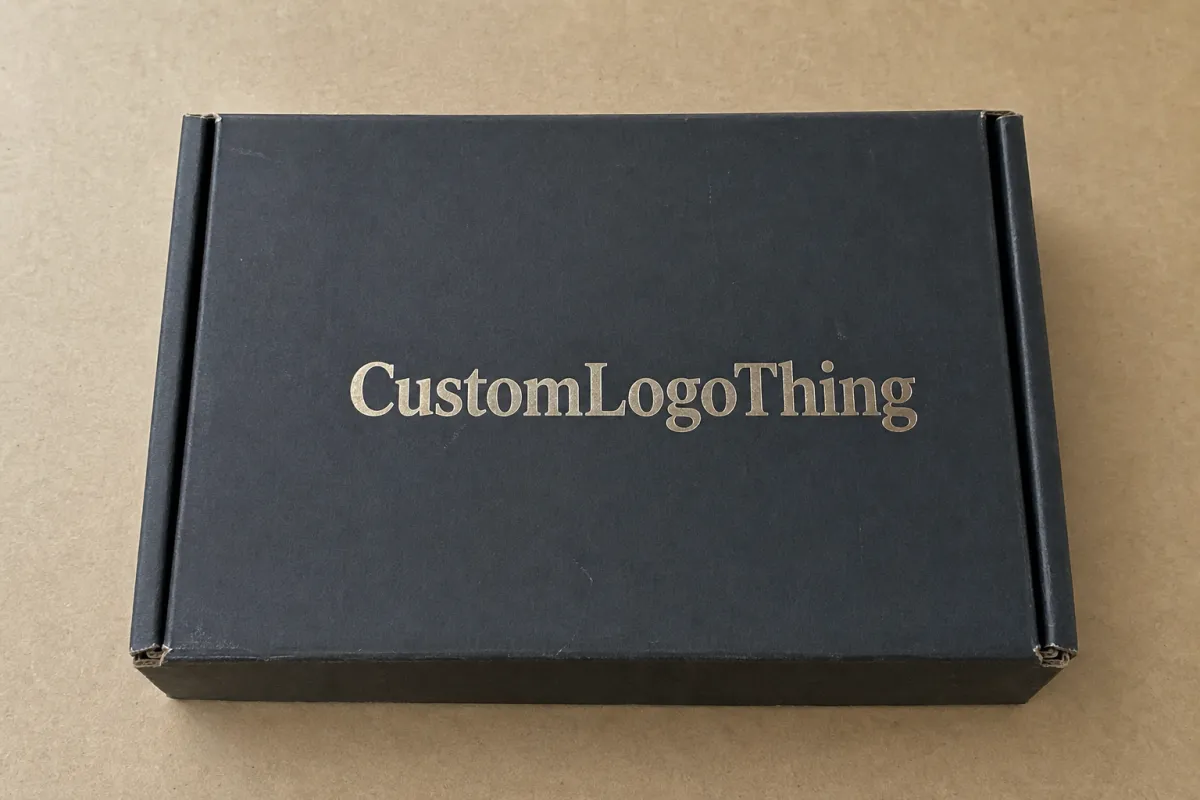
Custom Foil Stamped boxes are printed or wrapped boxes finished with metallic foil that is transferred onto the surface using heat, pressure, or a related transfer process. The foil lands only where the artwork has been prepared, which is why the effect feels controlled rather than noisy. Gold on black, silver on white, rose gold on blush, and holographic accents on a limited release all read differently, but they share the same basic value: they make a package easier to notice and easier to remember.
The visual effect is not just shine. It is contrast. That contrast helps the eye separate the mark from the background, which is why foil often reads well from a distance and still feels intentional in hand. For a brand, that matters. A metallic logo can signal luxury, but it can also communicate precision, giftability, or a special edition without changing the whole box architecture.
Brands use custom foil stamped boxes where presentation matters as much as protection. Cosmetics, candles, apparel, gift sets, electronics, subscription kits, and seasonal launches often benefit from the finish because the box becomes part of the product story. Not every item needs foil, though. If the product already has strong shelf presence, the finish may only need to support the brand rather than lead it. If the product is new, unfamiliar, or priced above the category average, custom foil stamped boxes can help narrow the gap between what the customer sees and what you need them to believe.
The practical value usually shows up in a few places:
- Stronger first impression: the metallic hit gets noticed before the shopper finishes reading the copy.
- Better unboxing: the finish adds a visual cue without complicating the structure.
- Clearer package branding: a repeatable foil mark can become a signature across the line.
- Higher perceived value: custom foil stamped boxes often support premium pricing, especially for giftable products.
Foil stamping is not a rescue plan. It cannot fix a flimsy board, a bad dieline, or a logo squeezed so tightly that the front panel starts to feel panicked. It also does not forgive weak print contrast. If the artwork already feels unresolved, custom foil stamped boxes will not hide that weakness. They will underline it in metallic type.
Good foil rewards good structure. Bad foil design just turns bad packaging into expensive bad packaging.
From a buyer's point of view, the smartest move is simple: place the finish where the eye naturally lands first. Most of the time that means the logo, the product name, or one key graphic device. The rest can stay quiet. Quiet is not empty. Quiet gives the foil room to carry the moment instead of competing with every other element on the panel.
How Custom Foil Stamped Boxes Are Made
Custom foil stamped boxes are made by transferring foil from a carrier film onto the box surface with a heated die or a pressure-based system. The die presses the foil only where the artwork has been set up, which is why registration and artwork prep matter so much. If the alignment drifts even a little, the result looks careless. A premium box with a crooked mark is still a crooked mark. The price does not cancel the mistake.
The process usually begins with artwork separation. The print artwork and the foil artwork need to be split cleanly so the supplier can build the tooling correctly. After that comes dieline review. Box style, panel size, fold direction, glue flap, and safety margins all affect where the foil can land. Then the substrate is chosen. Coated paper, wrapped greyboard, and smooth artboard all behave differently, and the wrong surface can mute the shine or soften the edges.
Hot Foil vs. Cold Foil
Hot foil uses heat and pressure to create a crisp metallic finish. It is the classic choice for custom foil stamped boxes because the edges look sharp and the shine feels deliberate. Cold foil follows a different print workflow and can be useful in some high-coverage or integrated production setups. It can also fit certain press lines better when the artwork is more graphic-heavy or when multiple finishes need to live in the same run.
If the goal is a luxury look with clean definition, hot foil is usually the safer choice. If the design calls for broader coverage or the supplier recommends another process for cost or workflow reasons, cold foil may be the better move. The right answer depends on the box, the press setup, and the visual target. Picking the fanciest term is not the same thing as picking the right process.
Why Design Simplifies the Job
Custom foil stamped boxes work best with bold, clean elements. Thin lines can break. Tiny type can fill in. Dense patterns can turn muddy when the light hits at odd angles. A simple logo with good spacing almost always performs better than a crowded layout trying to prove how much value it packed onto the front panel. In packaging design, restraint is not laziness. It is often the part that survives production intact.
Pressure, temperature, and dwell time matter as much as the artwork. Too much heat can distort the substrate. Too little pressure can leave weak coverage. Too long a dwell can flatten delicate details. The technician has to balance all three so the foil bonds cleanly without crushing the texture below it. That is why samples matter. A computer screen can flatter a weak setup. A real sample tells the truth.
On press checks, I have seen a small change in board finish make more difference than the foil color itself. That is one reason experienced buyers ask for a physical swatch or a short proof run before they approve a production order. If the supplier offers a sample pack or a finish board, use it. The difference between polished and merely acceptable usually comes down to surface behavior, not the color of the foil alone.
For related structure and assembly choices, it helps to compare your box concept with other custom printed boxes so the finish supports the construction instead of fighting it.
Custom Foil Stamped Boxes Cost, Pricing, and MOQ
Custom foil stamped boxes cost more than plain printed packaging because the process adds setup, tooling, and press time. That is the tradeoff. A quote is not just cardboard and ink; it also covers the die, press calibration, proofing, and usually a longer production window. If you ask for a premium finish, the supplier will charge for the premium finish. The math is straightforward even when the estimate is not.
The biggest price drivers are box size, board grade, foil coverage, the number of foil colors, and whether embossing or debossing is added. A small logo hit on a folding carton is a very different job from a full-coverage rigid box with foil, embossing, and a magnetic closure. One is a print-finishing order. The other is closer to a small manufacturing project with decorative goals.
The ranges below are practical estimates, not promises:
| Box Type | Typical Use | Approx. MOQ | Ballpark Unit Cost | Notes |
|---|---|---|---|---|
| Folding carton with single foil logo | Cosmetics, candles, accessories | 1,000-3,000 | $0.45-$1.10 | Best value when the artwork is clean and the foil coverage stays limited. |
| Rigid box with foil accent | Gift sets, electronics, premium retail packaging | 500-2,000 | $2.10-$4.50 | Higher setup cost, stronger unboxing, and a more noticeable shelf presence. |
| Rigid box with foil, emboss, and insert | Luxury launches, presentation kits | 500-1,500 | $3.50-$7.50 | Strong presentation, but every added finish pushes the number upward. |
Small runs cost more per unit because tooling and setup do not shrink just because the order is small. A foil die still has to be made. The machine still needs calibration. The press still needs test hits before production starts. If you only need a few hundred custom foil stamped boxes, the tooling line item can feel irritating. It is irritating. It is also the reason the per-unit cost rises.
Expect quote structures to include some mix of tooling, setup fees, sampling, freight, proof corrections, and any extra finishing steps. Ask for those items separately. A low unit price can hide a heavy setup charge, and a quote that looks clean at first glance can change once shipping and revision costs are added. Compare line by line, not by the biggest number on the page.
For standard jobs, a single foil accent often gives the best return. If the brand is moving into retail or needs a more giftable package, then a thicker board, better coating, or slightly more refined structure can be worth the spend. The mistake is buying the luxury finish and then cutting corners on the box itself. Customers feel that mismatch immediately, even if they cannot explain it in technical terms.
If you want a reference point for sustainable sourcing and material choices, FSC is a useful benchmark for certified paper sourcing, and EPA paper and paper products guidance is worth reviewing if end-of-life recovery matters to your brand. For shipping durability standards, ISTA test methods are the place to look, especially if the packaging needs to survive ecommerce handling.
Custom Foil Stamped Boxes Process and Timeline
Custom foil stamped boxes usually move through a predictable production path: concept, dieline review, artwork prep, proofing, tooling, sampling, production, finishing, and packing. The order sounds tidy. The schedule is less tidy in real life, because timing depends on how clean the brief is, how many revisions appear, and whether the supplier already has the right stock and tooling capability in place.
Fast projects tend to be the ones with fewer moving parts. A single-color box with one foil logo and no insert can move quickly if the artwork is ready. A more complex build with multiple finishes, interior printing, special coating, and a custom insert takes longer because each step adds setup and inspection time. That pattern holds for custom foil stamped boxes, custom printed boxes, and most other premium packaging runs. Every extra choice adds one more place where someone can send you another round of comments.
Typical lead times often look like this:
- Artwork review and proofing: 1-3 business days if the files are clean.
- Tooling and sample creation: 3-7 business days for simple jobs, longer for embossed combinations.
- Production after approval: about 10-15 business days for straightforward folding cartons; 15-25 business days for rigid formats.
- Revision delays: each proof round can add 2-5 days, and a messy redesign can add a full week.
Those are practical ranges, not guarantees. A supplier that already has the board in stock and the die ready can move faster. A supplier waiting on specialty foil stock, a new mold, or a complicated wrapped rigid structure will take longer. Custom foil stamped boxes also slow down when the artwork keeps changing. That is usually not the factory's fault. It is the predictable result of too many people making small changes after the design should have been frozen.
Planning rule: the tighter the deadline, the simpler the finish stack should be. If the launch date is close, keep the design focused on one strong face and avoid adding embossing, spot UV, and interior foil unless they truly matter to the story. Good packaging design is usually about priorities, not decoration for its own sake.
From a production control standpoint, a clean supplier brief makes a real difference. Include dimensions, material preference, foil color, quantity, target ship date, and a short note on the brand mood you want the box to create. If you need other structure options while you are planning the run, compare them against our custom packaging products before you lock in the final dieline.
What Affects the Final Look of Custom Foil Stamped Boxes
Custom foil stamped boxes can look crisp and expensive, or they can look busy and oddly cheap. The final result depends on the surface, the foil choice, the artwork, the box shape, and how many other finishes are trying to share the same space. If everything shines, nothing feels special.
Substrate Matters More Than People Think
Rigid board, folding carton stock, coated paper, and textured paper all react differently to foil. Smooth coated stock tends to give the sharpest edge and the cleanest shine. Textured stocks can create a richer tactile feel, but the foil may not sit as uniformly. A lot of custom foil stamped boxes use wrapped greyboard for rigid presentation because it supports a premium feel without requiring heavy print coverage. For lighter retail packaging, a coated artboard around 300-400gsm can work well if the design stays disciplined.
Foil Color Sends a Signal
Gold is the classic for a reason. It feels familiar and premium. Silver is cooler and more modern. Rose gold is softer and more cosmetic-friendly. Holographic foil can work for limited editions or youth-driven packaging, but it needs restraint or it becomes too eager to impress. Matte metallic foils can feel more refined than bright mirror foil, especially on dark backgrounds. The right foil does more than decorate custom foil stamped boxes. It sets the tone for package branding.
Some brands also experiment with custom shades or layered metallic effects. That can work if the product line is narrow and the visual system is tight. If the range is broad, too many foil variants start to blur the brand. One strong signature usually beats a stack of shiny options with no clear hierarchy.
Artwork Rules Are Strict, But Useful
Bold logos, generous spacing, and clean typography usually beat intricate graphics. Tiny type is risky. Thin lines are risky. Overly detailed patterns are risky. The foil needs room to breathe, and the box needs enough margin so the finish does not land too close to folds, edges, or glue areas. For custom foil stamped boxes, a simple focal point often looks far more expensive than a crowded artwork file that tries to prove its value by adding more elements.
Combination finishes can help if they are used with discipline. Embossing adds depth. Debossing adds a quiet impression. Soft-touch lamination gives the box a velvety hand feel. Spot UV can highlight a secondary element. Magnetic closures improve the reveal on rigid packaging. Still, every added layer creates another chance for visual clutter. Beautiful custom foil stamped boxes get damaged quickly when someone decides the front panel needs just one more finish to feel complete. It usually does not.
Box shape matters too. Narrow panels make alignment harder. Deep lids can hide the foil depending on the viewing angle. Curved surfaces and wrap-around corners complicate registration. If the box is unusual, ask for a sample or a digital mockup before ordering. That is far cheaper than discovering the problem after 2,000 units are already in motion.
Common Mistakes When Ordering Custom Foil Stamped Boxes
Custom foil stamped boxes fail in predictable ways. Most of the time, the issue is not the foil itself. It is the decision-making around it. Buyers get into trouble by overdesigning, rushing proofs, ignoring materials, or buying a luxury finish for a weak structure. None of that is mysterious. It is just expensive.
The first mistake is cramming too much foil into the design. Multiple foil zones, tiny text, decorative borders, and dense patterns sound impressive in a mockup. In production, they often look muddy or uneven. If the foil is supposed to be the premium feature, give it room. One well-placed logo can outclass an entire panel covered in glittery ambition.
The second mistake is approving proofs too fast. A good proof check should look at registration, foil coverage, fold lines, coating behavior, and the finish under real light. A screen proof can hide errors that become obvious on the production floor. If you are ordering custom foil stamped Boxes for Retail packaging or a launch event, ask for a physical sample whenever possible. That extra step is cheaper than discovering a misaligned mark after the run is done.
The third mistake is ignoring board thickness and coating choice. Thin material can make the box feel flat, and rough or porous surfaces can dull the foil. If the product is supposed to feel premium, the structure has to support that feeling. A nice finish on a flimsy box is not a premium package. It is a costume that gives itself away in the first five seconds.
The fourth mistake is mixing expensive finishing with a low-grade build. A foil logo on a weak carton does not create the same impression as custom foil stamped boxes built on a properly engineered rigid structure. The customer may not know the technical reason, but they will feel the difference. The box flexes, the closure feels cheap, or the edges crush earlier than they should. That kind of mismatch turns a brand investment into a complaint.
The fifth mistake is skipping the logistics questions. Confirm MOQ, turnaround, revision limits, freight terms, and whether the supplier expects files in vector format. If a supplier says yes to everything but never explains the production constraints, that is not flexibility. That is a bill waiting to surface after the approval email.
A cleaner way to think about the order looks like this:
- Keep the foil area focused: one focal point is usually enough.
- Choose the structure first: the box has to support the finish.
- Confirm the proofing path: digital, sample, or prepress approval.
- Plan the schedule honestly: revision cycles add days.
- Check the total landed cost: unit price, setup, freight, and finishing.
Expert Tips and Next Steps for Custom Foil Stamped Boxes
Custom foil stamped boxes work best when the design team treats the finish like something valuable, not something free. Start with one strong focal area. Usually that means the logo, a product name, or a single graphic device that repeats across the line. If you foil every visible surface, the package stops feeling premium and starts feeling overworked. Nobody needs their box to look like it is trying to win an argument with itself.
The fastest win is to simplify the brief. Decide on the box style, target quantity, foil color, board thickness, and the exact customer experience you want. Is this box meant to feel elegant on a vanity shelf? Is it meant to open like a gift? Is it supposed to survive ecommerce handling and still arrive looking polished? Those are different briefs, and custom foil stamped boxes should reflect that difference. A brand selling luxury skincare does not need the same finish stack as a startup shipping earbuds.
Ask suppliers for a physical sample or finish swatch before approving the full run, especially if the box has to look expensive in hand. A sample will show you whether the foil is too bright, whether the stock is too rough, and whether the artwork reads clearly from a normal viewing distance. If the sample looks off, adjust before production. Do not hope the full run will fix what the proof already showed you.
Compare quotes line by line. Tooling, shipping, and extra finishing steps add up faster than most buyers expect. Two quotes can look similar on the surface and still land very differently once the hidden fees are counted. If one supplier is quoting a lower unit price but charging more for setup, you are not necessarily saving money. You are moving the number around and hoping no one notices.
A useful supplier brief for custom foil stamped boxes should include:
- Target quantity and a second quantity if you want a comparison quote.
- Box style such as folding carton, rigid box, sleeve, or magnetic closure.
- Dimensions with tolerance notes if the product is fragile.
- Foil color and whether the finish should read bright, muted, or matte metallic.
- Substrate preference such as SBS, coated artboard, or wrapped greyboard.
- Timeline with the launch date, not just the order date.
- Brand goal so the supplier understands the feel you want to create.
If you are deciding whether custom foil stamped boxes are worth the spend, compare one premium version against one cost-controlled version. Keep the structure similar, change only the finish stack, and look at the real difference in price and perception. That is usually the easiest way to find the sweet spot without overbuying shine. For brands that want to move from plain custom printed boxes into something more memorable, that comparison is where the better decisions happen.
The practical takeaway is straightforward: lock the structure first, keep the foil to one main focal point, request a physical sample, and compare landed costs before you approve the run. Done well, custom foil stamped boxes support the product and the brand. Done badly, they become expensive cardboard with a shiny problem. The difference shows up on the shelf, in the hand, and in the reorder conversation.
How much do custom foil stamped boxes usually cost?
Price depends on box size, board thickness, foil coverage, and whether embossing or special coating is added. Small runs usually cost more per unit because setup and tooling are spread across fewer boxes. A clean design with one foil area is usually the lowest-cost premium option for custom foil stamped boxes.
What is the difference between hot and cold foil on custom foil stamped boxes?
Hot foil uses heat and pressure for a classic metallic finish with crisp edges. Cold foil is transferred differently and can work better in some print workflows and larger coverage areas. Hot foil is often the better choice when the goal is a sharp luxury look on custom foil stamped boxes.
What files do I need for custom foil stamped boxes?
Provide vector artwork whenever possible so the die lines and foil areas stay clean. Separate foil elements clearly from print artwork so the supplier can build the tooling correctly. Include dielines, dimensions, and notes about embossing, coating, or other finishes for custom foil stamped boxes.
What is a typical MOQ for custom foil stamped boxes?
MOQ varies by supplier and box type, but foil finishing usually increases the minimum compared with plain printed boxes. Rigid boxes often have higher minimums than folding cartons because of the more manual production process. If you need a smaller run, expect a higher unit cost and fewer finish options for custom foil stamped boxes.
How long do custom foil stamped boxes take to produce?
Simple jobs can move quickly if the artwork is ready and the die setup is straightforward. Complex builds with multiple finishes, inserts, or revisions take longer because each extra step adds production time. The fastest way to avoid delays is to approve artwork early and keep the design changes tight on custom foil stamped boxes.

