Custom Frosted Ziplock bags have become a practical middle ground in packaging: more polished than plain Clear Zipper Bags, less committed than fully opaque pouches, and usually easier to spec than rigid packaging. The frosted surface changes the feel immediately. It softens glare, blurs fingerprints, and gives the package a quieter, more deliberate appearance without hiding the product completely.
That balance is why they show up so often in retail packaging, subscription kits, accessories, samples, and small-batch product launches. The bag itself becomes part of the presentation, which is useful when the product needs to look organized and premium but still remain visible enough for buyers to recognize it. The catch is that frosted film is less forgiving than many first-time buyers assume. Artwork, thickness, zipper choice, and bag structure can all change how the final package performs.
What Makes Frosted Zip Bags Look and Feel Premium
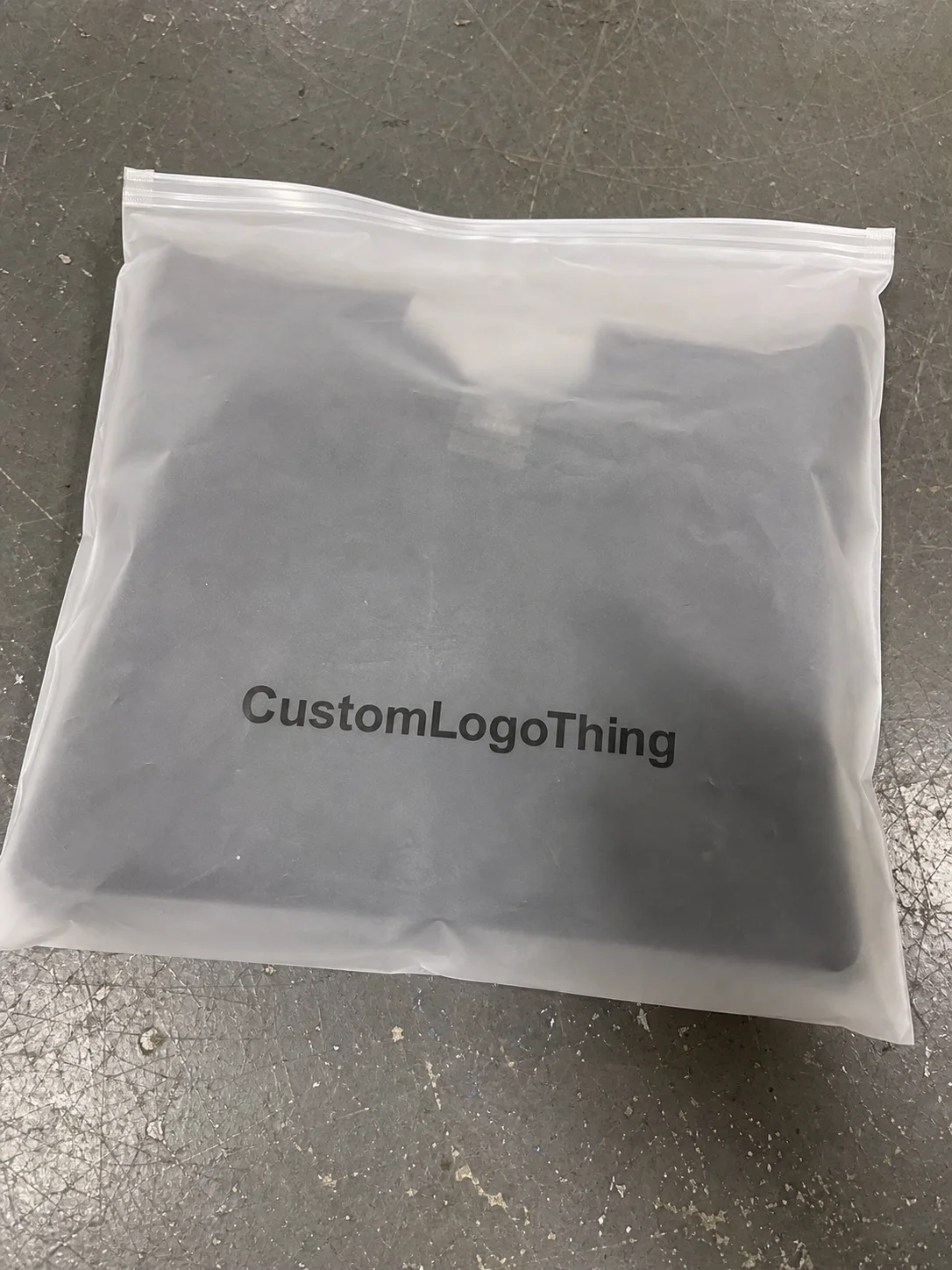
The premium effect comes from restraint. A frosted surface does not shout for attention the way high-gloss film can. It diffuses light, reduces hard reflections, and makes the bag feel calmer on shelf and in hand. For brands trying to communicate care or a slightly higher price point, that visual softness matters more than most mockups suggest.
It also holds up better during handling than glossy clear film. Clear polyethylene shows scuffs, smudges, and compression marks quickly. Frosted film tends to hide those marks, which is useful in fulfillment, retail display, and customer use. A bag that looks clean after passing through packing, shipping, and shelf placement usually feels more expensive than one that reveals every fingerprint.
Technically, a frosted zipper bag is still a resealable plastic bag, typically made from polyethylene or a PE blend. The frosted effect comes from the material formulation or surface treatment, and the result can vary by line, resin blend, and converting setup. Two bags described the same way may still feel different in stiffness, opacity, and print response. That is one reason samples are worth the time.
Buyers usually choose this style for items that benefit from partial visibility. Jewelry, apparel accessories, craft supplies, sample packs, kit components, and light consumables are all common examples. The bag does not need to obscure the contents to add value; in many cases, it works better because the shape and color still show through, just less harshly.
Three terms get mixed up often:
- Frosted means translucent and light-diffusing.
- Matte usually refers to low sheen, which may or may not be highly diffused.
- Opaque means the contents are not visible through the bag.
That distinction matters. A frosted bag softens the view of the product; it does not necessarily conceal it. For many brands, that is the advantage. The item still reads through the packaging, but the presentation feels cleaner and less utilitarian than a standard clear zipper bag.
Customization can go beyond size and print. Depending on the production method, buyers may be able to specify film thickness, zipper style, side or bottom gussets, hang holes, tear notches, and print coverage. Those details affect both the bag’s behavior and its shelf presence. They should be treated as part of the package design, not as optional extras added at the end.
How the Ziplock Closure and Frosted Film Work Together
A good zipper bag works because the closure and the film support each other. The frosted surface creates the look, but the ziplock closure is what makes the format useful for repeated access. In sample packaging, accessory storage, refill packs, and small component kits, that opening-and-closing function matters just as much as the appearance.
The manufacturing sequence is usually straightforward: film extrusion, surface treatment or material formulation for the frosted effect, bag converting, zipper application, sealing, and trimming. Each step can change the final result. If the film is inconsistent, the zipper is misaligned, or the sealing temperature is off, the bag can still look decent from a distance but feel cheap in use.
Film gauge, or thickness, is one of the clearest performance levers. Thicker film usually feels stiffer, resists punctures better, and gives the package more presence. Thinner film can work for lightweight items, but it creases more easily and often feels less substantial. For products with sharp corners or items that get handled repeatedly, a heavier gauge is usually worth the added cost.
The frosted appearance also changes print behavior. Bold logos, dark ink, and clean typography tend to read better on frosted film than pale colors or very fine details. A design that looks crisp on white backing or clear film may soften once it meets a translucent surface. That is not a defect; it is a material effect. The artwork just needs to be designed around it.
Common structural features include:
- Side gussets for added width and better packing efficiency.
- Bottom gussets for more volume and occasional stand-up support.
- Tear notches to help with first opening before the zipper is used.
- Hang holes for retail peg display.
These details are easy to over-specify. A hang hole makes sense if the bag goes on a peg wall. A gusset makes sense if the product needs extra volume or better shape retention. If a feature does not support the actual packing or selling environment, it adds complexity without much return.
A frosted zipper bag usually succeeds not by hiding the product, but by making the package feel more controlled and intentional than standard clear film.
Key Specs That Affect Performance, Branding, and Shelf Appeal
Size should be based on the actual finished product, not a rough estimate. Buyers often underestimate how much room is lost to the zipper track, seal margins, and any gusset structure. A product that “fits” in a spreadsheet can still feel cramped once it is loaded with inserts, cards, or labels. Measure the item in its final packed form whenever possible.
Thickness is the next spec that tends to influence the outcome more than people expect. A lighter gauge can be fine for soft, low-risk items. Heavier products, sharp edges, or repeated handling usually justify a thicker film because the bag holds shape better and reduces puncture risk. The difference shows up in packing speed too: a stiffer bag is often easier to load cleanly.
Printing deserves a careful review on frosted film. One-color logos generally print cleanly and keep setup manageable. Multi-color graphics can work well, but only if the contrast is strong and the file is prepared correctly. Small type, thin lines, and pale tones are the first things to disappear against a frosted base. If the artwork depends on subtle detail, ask for a proof that shows it against the actual film type.
Closure style affects the user experience as much as the graphics do. Standard press-to-close zippers cover most use cases and keep cost down. Slider zippers are easier for repeated opening and closing, and they can feel more premium, but they also raise cost and may change the profile of the bag. If the bag is likely to be opened once and resealed many times, the upgrade can make sense. If not, the simpler closure is often the better trade.
There are also use-case questions that should be answered early. Food contact requirements, cosmetic sampling, moisture sensitivity, odor transfer, and dust protection all affect what kind of structure is appropriate. Not every resealable bag is suitable for every product category. A supplier should be able to tell you where the limits are instead of promising that one construction will fit everything.
| Spec Choice | Typical Effect | Best Fit | Cost Impact |
|---|---|---|---|
| Thinner film | Lighter hand feel, lower puncture resistance | Light accessories, samples | Lower |
| Thicker film | Stiffer feel, better durability, stronger shelf presence | Heavier items, sharp edges, premium retail packaging | Moderate to higher |
| One-color print | Cleaner setup, simpler artwork, strong contrast | Minimal branding, label-style graphics | Lower |
| Multi-color print | More visual impact, more setup complexity | Retail launches, stronger brand presentation | Higher |
| Slider zipper | Easier opening and closing | Repeated use, premium experience | Higher |
If the project also includes labels, inserts, or outer packaging, it helps to coordinate the whole package system rather than treating each piece separately. A frosted bag that looks right on its own can still feel off if the label, card stock, or product color conflicts with the film tone.
Custom Frosted Ziplock Bags Pricing: What Changes the Unit Cost
Pricing for custom Frosted Ziplock Bags usually comes down to a handful of variables: bag size, film thickness, print complexity, zipper style, and order quantity. Those are the first things that affect cost, and they often move together. A larger bag with heavier film and a multi-color print will cost more for obvious reasons, but the quote can change sharply even when only one spec changes.
Quantity matters because fixed setup costs get spread over the run. A production line that needs the same prep for 1,000 bags and 10,000 bags will almost always produce a lower unit price at the larger quantity. That is why minimum order quantity is not just a sales condition; it is built into how converting and printing work. Short runs are possible, but they rarely look cheap on a per-piece basis.
As a general working range, a simple Custom Frosted Zipper bag might land around $0.12-$0.28 per unit at mid-to-higher quantities. More customized builds with thicker film, additional print colors, slider zippers, or special features can move higher. Samples and low-volume orders usually cost more per piece because the setup effort does not shrink much just because the run is smaller. Exact pricing will depend on dimensions, material availability, print area, and final construction.
Here is where cost usually moves:
- Larger dimensions use more material and may slow line efficiency.
- Thicker film adds resin cost and changes the feel of the bag.
- More print colors increase setup and registration complexity.
- Special features such as gussets, hang holes, or slider zippers raise complexity.
- Low quantities push the unit price up because fixed costs are spread across fewer bags.
Unit price is only part of the picture. A slightly better bag can improve shelf appeal, reduce packing errors, and make the product feel more finished. That does not mean the most expensive option is the right one. It does mean the cheapest quote may not be the least expensive choice once labor, presentation, and defect risk are included.
To compare options intelligently, ask for pricing at two or three quantities and, if possible, two spec levels. That makes the tradeoffs clearer. A quote for a thin two-color bag versus a thicker one-color bag will often tell you more than a single line item ever will.
For broader material and waste references, industry groups such as the Packaging School and PMMI network resources and the EPA can be useful starting points when you are evaluating pack efficiency and material use.
Process and Timeline: From Artwork Approval to Production Steps
The production path is usually simple on paper and less simple in practice. It starts with an inquiry, then size and material review, artwork setup, proofing, approval, production, and shipping. Delays usually come from missing measurements, unclear print expectations, or design files that still need work. If the bag dimensions or artwork are still in flux, the schedule will be too.
Artwork issues are the most common source of back-and-forth. Buyers may expect the logo to print larger than the usable panel allows, or they may forget that a zipper or seal zone limits placement. Others approve color without checking how it will read on a frosted base. These are fixable problems, but only before the job enters production.
Sampling or a pre-production proof helps a great deal with this type of bag. It lets you check opacity, zipper feel, size, and print placement before committing to a full run. That matters even more if the bag needs to coordinate with retail labels, display packaging, or other printed materials. A proof catches the small things that look fine in a file but awkward in hand.
Lead time depends on the bag construction and the current workload. Unprinted bags generally move faster than printed or more customized runs. For many custom jobs, 12-15 business days from proof approval is a practical estimate, although material availability and line capacity can extend or shorten that window. Rush timing may be possible, but it depends on how quickly proofs are approved and whether the specification is straightforward.
If the launch date is fixed, say so early. That helps avoid late compromises on quantity, print coverage, or closure style. More than once, the problem has not been the bag spec itself; it has been the decision-making lag around it.
If the measurements are incomplete, the artwork is not final, and the quantity is still changing, the production clock has already started slipping.
Common Mistakes Buyers Make When Ordering Frosted Resealable Bags
The first mistake is guessing at size. A product may look like it fits in a rough sketch, but real packaging needs space for the zipper, seal margins, and any inserts. Measure the finished item, then leave enough room for easy loading. Too tight feels amateur; too loose can make the package look underfilled.
Another common error is assuming the frosted base will behave like clear film in print. It will not. Fine lines, pale tones, and tiny text can fade into the background, especially under retail lighting. If the design depends on delicate detail, ask to see it against a frosted proof rather than a clear one.
Thickness gets underestimated as well. A sample may feel elegant, but if the bag is going through repeated handling or holding items with sharp edges, that same film may prove too light. A slightly thicker gauge often improves durability and gives the packaging a better hand feel. The price difference may be smaller than the cost of having bags fail in use.
Skipping samples is another expensive habit. The zipper may feel different than expected, the opening may be narrower than planned, or the bag may crease more than it should. None of those issues show up clearly in a quote. They show up when the bags are being packed, displayed, or opened by customers.
Finally, buyers sometimes leave out practical requirements that matter in the real world. Carton pack counts, peg display, tamper evidence, and fulfillment workflow can all change what the right bag looks like. If the bag is going into retail shelves or a warehouse line, those details deserve the same attention as the logo.
Expert Tips for Better Results on Custom Frosted Packaging
Keep the artwork bold and clear. Strong logo shapes, clean spacing, and sufficient contrast usually print better on frosted film than dense layouts with thin strokes. The surface already gives the package a visual texture; the design does not need to compete with it.
Ask for a sample or at least a proof that reflects the real material. That one step can save a lot of disappointment, especially if the bag needs to match other branded items. A design that looks acceptable on screen can still disappear once it is printed on translucent film.
Match the bag construction to the product honestly. Lightweight items do not need heavy film simply because heavier film feels better. Sharp edges, awkward shapes, and frequently handled products usually do need more structure. Paying for extra material that does not improve performance is wasteful; under-specifying the film is worse.
If shelf appeal matters, let the frosted finish do part of the work. Clean layouts and restrained branding usually look more refined than crowded graphics. That matters in retail packaging, where the customer often makes a quick decision and the package has only a moment to communicate quality.
Inventory planning matters too. Leave room in the schedule for proof review, sample checks, and small corrections. Rushed orders are where shortcuts become expensive. A little buffer gives you time to confirm that the size, zipper, and print all align before production is locked.
If the packaging program includes other items, coordinate them together. Bags, labels, and inserts should feel like one system. Mixing a polished frosted pouch with mismatched printed components is a quick way to lose the premium effect the bag was supposed to create.
For transit durability and handling expectations, ASTM and ISTA references can help shape a packaging spec that needs to survive more than one touchpoint. The ISTA site is useful if you are thinking about pack performance during shipping. For paper-based components in a broader packaging program, FSC remains a common benchmark.
Next Steps to Order the Right Bag for Your Product
Start with the product itself. Measure the finished item, not the shipping box, and decide whether you need a snug retail fit or extra room for inserts, care cards, or accessories. That one step prevents more sizing mistakes than any other.
Then identify the specifications that actually matter: size, thickness, print count, zipper style, and any extras such as hang holes or gussets. Once those are set, it becomes much easier to request accurate pricing and compare options without guessing.
When you ask for a quote, send artwork files, target quantity, timeline, and any fit notes together. That reduces back-and-forth and helps narrow the production path quickly. If the schedule matters, say so at the start rather than after the quote is already in motion.
Review proofs carefully. Check logo placement, size, print visibility, and how the artwork reads against the frosted background. If the design looks faint or crowded on proof, it will not improve in production. Questions are cheaper before approval than after the bags are made.
Build enough time for sampling and sign-off so the finished bags arrive ready for packing and presentation. That is the easiest way to avoid rework and keep the package aligned with the rest of the brand.
For buyers comparing custom frosted ziplock bags with other packaging options, the right decision usually comes down to use case rather than appearance alone. A good bag should support the product, reinforce the brand, and hold up through real handling. If those three things line up, the packaging usually performs well in the wild, not just in a mockup.
FAQ
Are custom frosted ziplock bags better than clear zipper bags for retail packaging?
They often look more premium because the matte surface reduces glare and hides handling marks. They are a strong fit when you want partial product visibility without the stark look of a clear bag. Clear bags still make sense when full visibility is the main priority.
What should I know about printing on frosted resealable bags?
The frosted background changes how color and detail read, so contrast matters more than it does on clear film. Bold logos and simple artwork usually print more cleanly than tiny text or thin lines. A proof or sample is the best way to confirm visibility before full production.
How thick should custom frosted ziplock bags be for my product?
Lightweight items usually need less thickness than sharp, heavy, or frequently handled products. Thickness affects feel, puncture resistance, and cost, so it should match the item and the way it will be used. If the product has corners or edges, a thicker gauge is often the safer choice.
Why does the MOQ matter when pricing frosted zip bags?
Setup and converting costs are spread across the order, so larger quantities usually lower the unit price. Low quantities cost more per bag because the production setup is almost the same even on short runs. MOQ can also affect available print methods and customization options.
What is the best way to speed up the turnaround for custom frosted ziplock bags?
Have final dimensions, artwork, quantity, and closure style ready before requesting a quote. Approve proofs quickly and avoid late design changes once production is scheduled. If timing is tight, ask early about current lead time, sample availability, and shipping options.


