Jewelry packing teams rarely need packaging that simply looks nice. They need something that protects the product, speeds up line work, and still feels deliberate when a customer opens the order. That is the practical appeal of custom Frosted Zipper Bags for jewelry packing teams: one pouch can carry presentation, containment, and handling efficiency without adding a second or third layer of packaging work.
Frosted Zipper Bags are semi-transparent plastic pouches with a matte finish and a resealable zipper closure. The matte surface softens fingerprints, scuffs, and dust marks that show up fast on glossy bags under warehouse lighting. For rings, earrings, chains, charms, and small accessory sets, that means the pack looks cleaner with less wiping, less repacking, and fewer visual distractions during quality checks.
The category has grown because it solves a real operations problem. Teams need packaging that can move quickly through sorting, filling, inspection, and sealing while still supporting brand control. A frosted zipper pouch does that better than many people expect, especially when the product is small but the SKU count is high.
Overview: why frosted zipper bags punch above their weight in jewelry packing
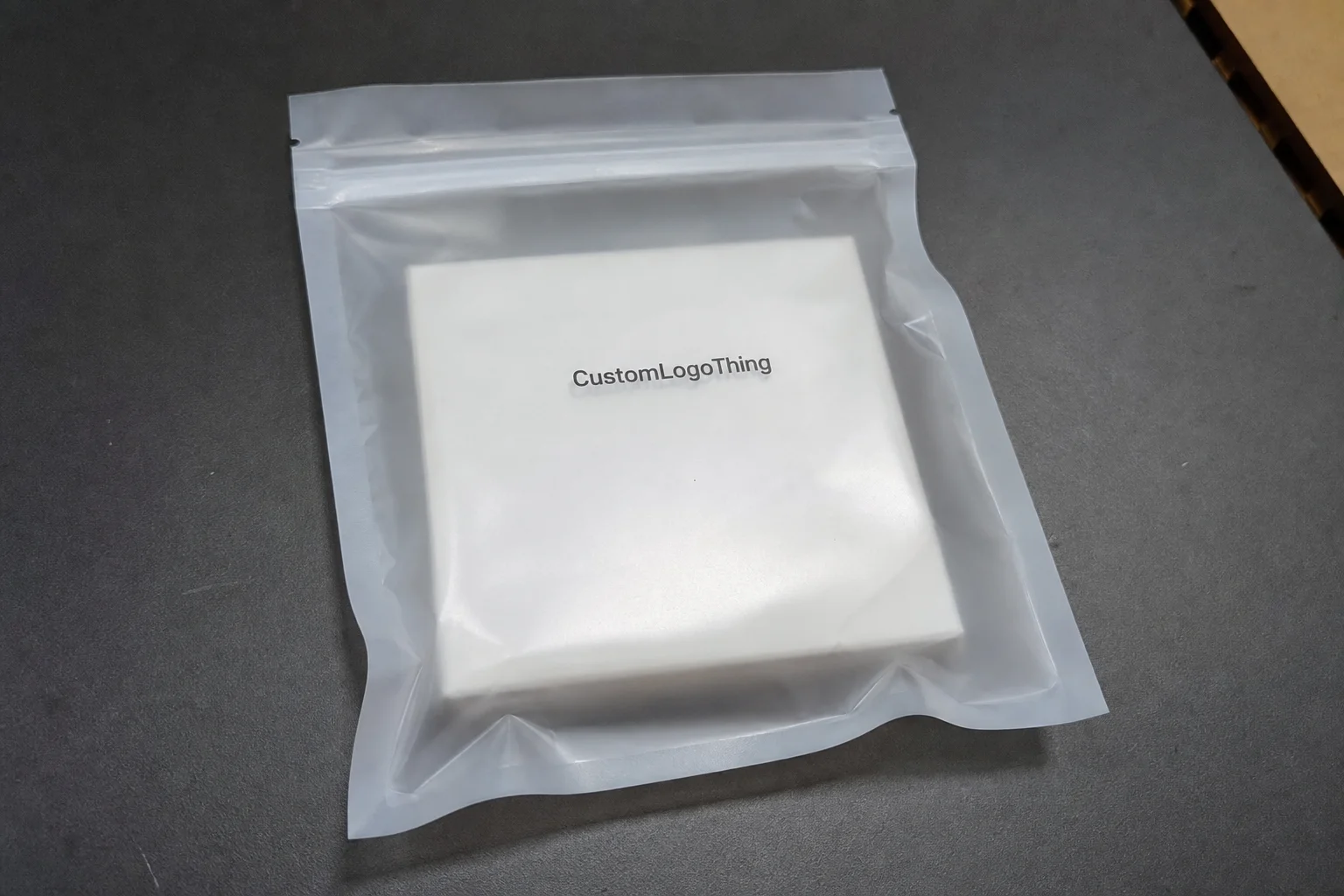
In a jewelry workflow, packaging has to do more than contain an item. It has to protect delicate surfaces from dust and abrasion, keep components together, and avoid adding friction at the packing station. That is why frosted zipper pouches show up so often in practical packaging programs: they are simple, but they cover the basics well.
Most bags are made from a polyethylene-based film or a similar flexible plastic body, paired with a zipper seal across the top. Some versions include a hang hole, euro slot, or tear notch. None of that is flashy. All of it matters when the bag has to be handled repeatedly during assembly, sorting, returns, or seasonal repacks.
Compared with a glossy clear pouch, frosted film has one clear advantage: it hides minor handling marks. That matters more than many buyers expect. Jewelry packaging is often judged in poor lighting, on crowded tables, or at the end of a long packing shift. A film that keeps its appearance after contact is usually worth more than a film that only looks perfect in a mockup.
For gift sets, sample kits, serialized collections, and pieces that need a neat handoff, custom Frosted Zipper Bags for jewelry packing teams also create a more consistent customer experience. The bag becomes part of the package rather than a disposable afterthought. That distinction is small on paper and obvious in the line.
“A bag that looks good in a proof is not always a bag that works on a packing line. The useful one closes cleanly, holds its shape, and still looks decent after a dozen hands touch it.”
There is another operational advantage that tends to get overlooked: visibility. Because the pouch is semi-transparent, staff can confirm contents without fully opening the bag. That reduces handling time, helps with item verification, and lowers the chance of mixing components during high-volume runs. On a line processing hundreds or thousands of units, seconds matter.
How the bag design supports protection, visibility, and brand control
The best packaging often disappears into the workflow while still carrying a brand message. Frosted Zipper Bags do that well. They are visible enough for stock checks and audit work, but not so transparent that the packaging exposes every mark, label, or surface flaw. For jewelry, that balance is useful because first impressions are built fast.
Four design elements tend to determine whether the bag performs or annoys the team using it: film thickness, zipper quality, size accuracy, and print area. If one of those is off, the pouch stops feeling like a packaging tool and starts feeling like a compromise.
- Film body: Usually frosted PE or a similar soft plastic for flexibility and a matte appearance.
- Zipper closure: Should close with one clean pass, without repeated pressure or false seals.
- Optional features: Hang holes, tear notches, or hang tabs when retail display is part of the plan.
- Branding area: Logo print, product name, care icon, or a minimal mark placed where it will still be visible after filling.
Compared with open-top pouches, resealable zipper bags reduce spill risk and help keep components together during QA holds or repacking. That is especially helpful for chain-and-pendant sets, earrings with backs, charm packs, and multi-piece kits. If one item is missing, the package can be reopened and corrected without destroying the pack.
Print design deserves restraint. The frosted surface already adds texture, so a one-color logo often looks sharper than dense artwork. Tiny text and crowded graphics can get lost once the bag is filled. High-contrast branding usually reads better than elaborate decoration, especially when the package is handled quickly or viewed from a short distance.
That is one reason custom frosted zipper bags for jewelry packing teams are frequently chosen for collections that need to look polished without slowing production. A strong logo, good spacing, and a sensible size can do more for perceived quality than a packed layout of icons and slogans.
One more point: the bag should support the rest of the packaging system, not replace it. For jewelry shipped in mailers or boxes, the frosted pouch works best as an inner organizing layer. It keeps small parts together, reduces tangling, and helps the outer packaging stay cleaner during transit and returns processing.
Key factors to compare before you request a quote
Before asking for pricing, define the bag clearly. Quote comparisons become useless if one supplier is pricing a 0.10 mm pouch, another is pricing 0.14 mm, and a third is including print setup while the others are not. That is not a comparison. It is three different products.
Start with size, thickness, and zipper style. Thickness affects hand feel and durability. Zipper quality affects how quickly operators can close the bag and whether the seal survives repeated opening. Dimensions affect everything else, including insert fit, barcode placement, and whether the finished pack looks tidy or overstuffed.
Then define print requirements. A simple one-color logo usually keeps setup cleaner and production more manageable. More complex branding raises costs because it can require extra prep, tighter registration, and more proofing. The frosted surface is forgiving, but not magic. Large, high-contrast artwork tends to read better than tiny copy once the bag is filled.
MOQ, or minimum order quantity, needs attention early. A lower MOQ can make sense for launches, seasonal tests, or a new SKU family, but the unit cost will usually be higher. That may still be the right choice if you are testing demand. What hurts margins is buying too much of the wrong size, then discovering the pouch is awkward on the packing line.
For teams comparing suppliers, ask for material specs, print method, setup charges, freight, and lead time in one quote. Reputable packaging suppliers should be able to separate those items clearly. If the numbers are bundled together, it becomes much harder to understand what is actually driving the price.
Packaging standards from groups such as ISTA can help teams think through handling and transit stress, while EPA packaging guidance offers a useful framework for material efficiency and waste reduction. Jewelry pouches are not shipping appliances, but the same basic logic applies: use the right amount of material, then test the result under real handling conditions.
| Spec choice | Typical impact on performance | Typical cost impact |
|---|---|---|
| 0.08-0.10 mm film | Lightweight, suitable for small earrings or flat charms | Lower |
| 0.12-0.14 mm film | Better hand feel and reduced flex for heavier sets | Moderate |
| One-color logo print | Clean branding with fast readability | Lower to moderate |
| Multi-color or larger print area | More visual impact, more setup complexity | Higher |
| Stock size | Faster sampling and less tooling friction | Usually lower |
| Fully custom size | Better fit for specific SKUs and inserts | Usually higher |
If you are sourcing custom frosted zipper bags for jewelry packing teams, ask for a side-by-side landed-cost quote. That should include bag cost, print setup, freight, customs if applicable, and any revision charges. Unit price alone can be misleading. A cheaper bag that causes repacking labor or returns friction is not cheaper in practice.
Process and timeline: from dieline approval to packed inventory
The production path is predictable, but delays tend to show up in the same places. It starts with a spec brief: dimensions, film thickness, zipper style, print area, and estimated annual volume. Then the artwork is set up and checked. After that comes a digital proof, followed by a sample or prototype if the project is custom enough to justify it. Only then should mass production begin.
Lead time depends on how much is changing. Stock-size bags with simple printing can move faster than a fully custom size with multi-color branding. In many runs, 12-15 business days after proof approval is a workable planning estimate for manufacturing, but freight, approval cycles, and production queue depth can extend that quickly. If the supplier is already booked, timing changes immediately.
Artwork revisions are a common bottleneck. A last-minute size adjustment is another. Those two changes can cost more time than the rest of the project combined. Packaging teams often underestimate how much the final bag size is affected by inserts, tissue, anti-tarnish strips, barcode labels, and care cards. In jewelry packing, a few extra millimeters can be the difference between a clean close and a zipper that fights the operator.
Most teams move through the process in the same order:
- Confirm product dimensions and the full stack height with inserts.
- Send logo files, print instructions, and barcode requirements.
- Review the digital proof for size, placement, and color callout.
- Approve a sample or prototype with real product inside.
- Begin mass production and basic quality checks.
- Receive shipment, inspect random cartons, and launch into packing.
Teams that confirm logo files, packing-line dimensions, and barcode placement early usually save the most time. That matters even more for launch inventory, holiday assortments, or seasonal drops where a missed date has a direct sales impact. Custom frosted zipper bags for jewelry packing teams work best when the brief is clean and the sample is tested against the actual pack, not just against a spec sheet.
Cost, pricing, and MOQ: what actually moves the number
Pricing is easier to understand when it is broken into parts. Material cost, printing, setup, tooling, shipping, and optional extras all contribute. Buyers often focus on the bag itself, but the setup work can matter just as much, especially at lower volumes.
For small trial orders, a custom frosted zipper bag may cost more per unit because the setup is spread across fewer pieces. As volume increases, the unit cost usually falls. That is basic economics, but it still gets missed by teams comparing several SKU families at once. If you need five bag sizes instead of one, the pricing structure changes quickly.
Here is the practical pricing lens most packaging buyers use:
- Material: Thicker film and better zipper performance usually cost more.
- Printing: More colors, larger coverage, and tighter registration increase cost.
- Tooling or custom sizing: A fully custom spec can raise setup charges.
- Shipping: Carton weight, destination, and timing affect landed cost.
- Extras: Matte upgrades, special closures, and inserts can add cost.
MOQ matters more than many teams expect. A lower MOQ can be useful for product launches or seasonal testing, but it can also push unit cost high enough that the packaging no longer fits the margin model. For high-volume collections, a larger order often gives a better price spread across the run.
One useful benchmark: a simple stock-size frosted zipper bag with modest branding will usually be far cheaper per unit than a fully custom size with heavy print coverage. But the cheaper option can become expensive if it creates repacking labor or slows the packing line. Labor rarely appears in the quote. It shows up in throughput.
If you are comparing suppliers, ask for a quote that separates unit price, setup, freight, and lead time. That is the only way to compare materials and service fairly. A low headline price with vague assumptions is not very useful once production starts.
It also helps to think about how the bag is used inside the workflow. If a pouch reduces mistakes, lowers returns, or speeds order assembly, that operational value should be part of the cost calculation. Packaging decisions are not only about unit price. They are about total handling cost.
Common mistakes jewelry teams make with zipper bag specs
The first mistake is choosing a bag that is too large. That sounds harmless until the item shifts around inside the pouch, the presentation looks loose, and the pack no longer feels premium. Oversized bags also waste carton space, which can affect storage and shipping efficiency.
The second mistake is approving a zipper that feels fine in a small sample run but slows real operators. A closure that needs extra pressure or multiple passes becomes annoying after the first hundred pieces. Packing staff notice immediately, and so does QA. If the zipper closes slowly, it is not the right zipper for the line.
Third: overprinting. The frosted surface is part of the appeal. If the artwork dominates the pouch, the bag stops looking refined and starts looking crowded. Clean logo placement, sensible spacing, and strong contrast usually perform better than busy branding. In packaging terms, restraint often reads as more premium.
Fourth: forgetting about inserts, anti-tarnish strips, and cards. A bag that fits a bare necklace may fail the moment a care card and foam insert are added. That is especially true for retail packaging used in sets or gift bundles. The total stack height matters more than buyers often assume.
Fifth: testing only one product variation. A single earring card or one lightweight chain does not prove much. Real validation means testing the thickest version of the product, the bulkiest insert, and the actual packing motion your team will use every day. That is the only way to know whether the spec will hold up in production.
A sixth issue shows up later: not checking print placement after sealing. A logo that looks centered on an empty bag may be hidden once the zipper is closed or once the product sits inside. The proof should reflect the finished, filled pouch, not just the blank bag.
Expert tips for faster packing, cleaner branding, and fewer returns
Standardize whenever possible. If most of your jewelry fits into two or three bag sizes, use those sizes consistently instead of creating a new pouch for every SKU. Standardization simplifies training, reduces picking errors, and makes reorder planning much easier. It also helps when you are sourcing other packaging components like branded boxes, inserts, or tissue.
Run a real packaging test before launch. That means real product, real inserts, real sealing motion, and real bin handling. A sample that looks polished on a desk can still fail on a packing line. The best test is repetitive and slightly boring: do the same operation many times and watch where friction appears.
Print placement deserves more attention than it usually gets. A logo placed too high can be hidden by the zipper area after sealing. A logo placed too low can disappear behind the product itself. Ask for a proof that reflects how the bag will actually be packed, not how it looks empty on a white background.
If the product needs both protection and storytelling, pair the pouch with a small insert card or care note. That gives you room for material, care, or brand language without crowding the bag print. In many cases, that combination feels more polished than trying to cram everything into the pouch itself.
Finally, set a reorder trigger before inventory gets dangerously low. Packaging should not become the bottleneck in fulfillment. If bag stock drops too close to zero, a delayed reorder can interrupt shipping on your best-selling pieces. That is a common problem, and one that is usually preventable with basic inventory discipline.
Next steps: how to spec, sample, and place the right order
Start by auditing your jewelry catalog. Group products by size, fragility, and presentation needs. A ring set has different packaging needs than a layered necklace. A charm pack behaves differently again. Once those SKUs are grouped, it becomes much easier to see where one pouch family can cover most of the line.
Next, build a one-page spec sheet. Include finished dimensions, target film thickness, print method, zipper preference, insert stack height, and estimated annual volume. If the product carries a barcode, note where it needs to live on the pouch. The cleaner the brief, the cleaner the quote. That saves time for everyone involved.
Request a sample or prototype for top-selling items and test it on the actual packing line. Compare at least two quotes using the same spec sheet rather than different assumptions. Then approve artwork, confirm production timing, and schedule the reorder before the next launch window. That is the practical way to keep custom frosted zipper bags for jewelry packing teams in stock without turning packaging into a last-minute problem.
If the current setup feels like a patchwork of sizes, inconsistent branding, and repeated repacking, the fix is usually not more complexity. It is better spec discipline. In jewelry fulfillment, disciplined packaging usually pays back faster than flashy packaging ever does.
FAQs
What size custom frosted zipper bags work best for jewelry packing teams?
Choose size based on the finished product plus any insert card, tissue, or anti-tarnish strip. Most teams do better with a small set of standardized sizes rather than one-off bags for every SKU. Test closure performance with the thickest version of the product, not the thinnest.
Are custom frosted zipper bags good for shipping jewelry safely?
They help organize and protect items inside a mailer or box, but they are usually not the only layer of shipping protection. Use them with cushioning, inserts, or outer Packaging for Fragile pieces. They reduce tangling, scuffing, and mixing during fulfillment and returns.
How do MOQ and unit cost change for custom frosted zipper bags for jewelry packing teams?
Higher quantities usually lower unit cost because setup and tooling are spread across more bags. MOQ depends on print complexity, size, and whether the bag is stock or fully custom. Request a quote that separates unit price, setup, and freight so the comparison is clear.
How long does production usually take after artwork approval?
Lead time depends on sample approval speed, print method, bag size, and supplier workload. Artwork delays are common, so confirm files early and approve proofs quickly. Build buffer time for freight, especially if the bags are tied to a product launch or seasonal drop.
What printing options look best on frosted zipper bags for jewelry?
Simple logos often look strongest because the frosted surface already adds visual texture. Small, high-contrast branding tends to read better than dense artwork or tiny text. Ask for a sample print so you can judge legibility after the bag is filled and sealed.


