Custom Frosted Zipper Bags for coffee brands solve a very specific packaging problem: how do you make premium beans look premium without turning the pouch into a loud billboard or a technical project that nobody enjoys managing? A lot of coffee packaging still falls into one of two extremes. It is either visually flat and forgettable, or it is overloaded with copy, icons, and claims that fight for space. Frosted film sits in the middle. It gives the package a soft translucent finish that feels current and deliberate, while still leaving room for the product, the roast, and the brand story to come through.
That balance matters because coffee is sold on trust as much as taste. Buyers want fresh beans, but they also want packaging that feels credible on the shelf and practical at home. The right pouch can support both if the structure is chosen carefully. A zipper helps with resealing after opening, a one-way valve lets fresh-roasted beans vent carbon dioxide, and a barrier layer slows oxygen and aroma loss. Custom Frosted Zipper Bags for coffee brands have become popular because they can improve shelf presence without sacrificing the everyday function that coffee packaging has to deliver.
The best versions do more than look polished in a mockup. They survive filling, shipping, display, repeated handling, and the occasional countertop spill or pantry squeeze. That is where the details start to matter.
What makes frosted zipper coffee bags stand out on shelf?
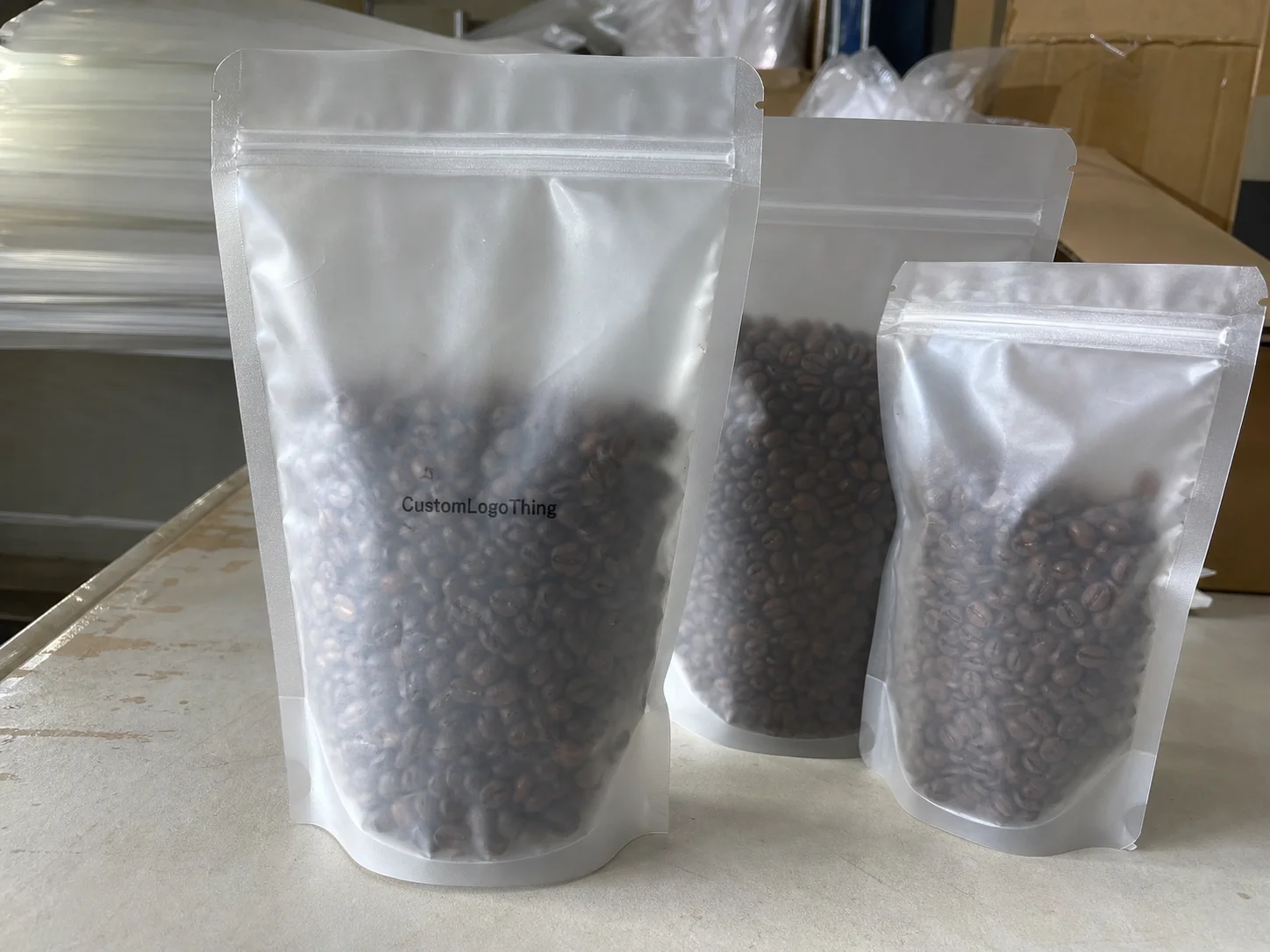
From a packaging buyer’s point of view, coffee has two problems that never really go away: the shelf has to catch the eye, and the bag has to protect freshness. Frosted film helps with the first one immediately. It softens contrast, reduces glare under retail lighting, and gives logos and typography a quieter, more premium feel. In a crowded retail environment, that visual restraint can be more effective than bright color or aggressive graphics.
The look also changes how customers read the brand. A frosted finish can suggest small-batch roasting, care in sourcing, or a more refined product line, even before the bag is opened. That is not magic; it is simply how material and print interact. A glossy pouch reflects light and can look louder. A frosted one absorbs some of that glare and creates a calmer surface, which often makes the packaging feel more intentional.
But visual appeal alone is not enough. A pretty bag that lets oxygen creep in is only decoration. Coffee needs packaging that helps preserve aroma, protect the roast profile, and keep the product presentable all the way to the last pour. That is why the zipper, the seal, the barrier film, and the valve need to be specified as a system rather than treated as separate features. The package should open easily, reseal reliably, and stand up to the real handling patterns a customer will put it through.
Retail buyers often focus on the first impression, but the second and third impressions matter just as much. If the bag feels awkward after opening, or if the zipper is stiff and unreliable, the brand loses value in the customer’s hands. A stable bottom gusset, good seal strength, and a closure that actually closes on the first try can do more for brand perception than another round of artwork tweaks.
How the bag structure, finish, and seal work together
A coffee pouch looks simple from the outside, yet there is a lot going on inside the material stack. Most custom Frosted Zipper Bags for coffee brands use a frosted outer layer for appearance, a barrier layer for protection, a zipper track for resealability, heat-sealed seams for product security, a tear notch for opening convenience, and often a one-way degassing valve. Each part supports the others. If one element is weak, the package feels less reliable even if the front panel looks excellent.
The frosted outer layer has two jobs. First, it creates the finish that gives the bag its character. Second, it affects print behavior. Color can appear softer, darker, or slightly muted compared with a glossy surface, and small type may need more contrast than a designer would normally use. That is not a defect in the material; it is a design condition that has to be accounted for early. Artwork built for the substrate usually looks more polished than artwork that is simply dropped onto a dieline without testing.
Material structure is where freshness performance starts. Common coffee pouch constructions include PET/PE laminations, matte laminated films, and higher-barrier structures for longer shelf life or higher-value roast programs. The exact stack depends on the brand’s priorities: freshness window, look and feel, print method, and whether the packaging needs to support retail display, direct-to-consumer shipping, or both. Some brands ask about recyclable formats, which is reasonable, but the answer always depends on the full construction and local recycling rules. A claim should be verified against the exact film structure, not guessed from the appearance of the bag.
The seal is easy to overlook, which is usually a mistake. The zipper is convenient, but the heat seal below it is what protects the coffee before the first opening. Buyers should ask about seal strength, puncture resistance, and whether the zipper is designed for repeated use or mainly for tamper protection during transit. For heavier fill weights, mail-order programs, or coffee that will be stacked in shipping cartons, those details have a direct effect on whether the pouch arrives intact.
Before approving a structure, it helps to review the package from the inside out:
- Outer finish: frosted, matte, or soft-touch appearance
- Barrier layer: standard, medium, or high-barrier film
- Closure: zipper style, closure strength, and reseal consistency
- Vent: one-way valve position and airflow performance
- Seams: side seals, bottom seals, and tear-notch integrity
Key specs that affect performance, branding, and unit cost
Most buyers want the same answer first: what actually changes the price? The short version is that size, film structure, print coverage, zipper style, valve inclusion, material thickness, and order quantity all move the quote. If three or four of those variables change at once, the pricing can shift faster than expected, and not always in a way that is obvious from the first estimate.
Bag size is one of the biggest drivers. A 12 oz pouch is not just a smaller version of a 1 lb pouch. It may need different gusset depth, a different headspace allowance, and a different fill profile depending on bean density and roast level. A darker roast can sit differently in the bag than a lighter roast, and that changes how the pouch looks when it is lined up on a retail shelf. If the bag is underfilled, it can appear thin and underpowered. If it is overfilled, the structure can bulge awkwardly or stress the seals.
Print method also shapes the economics. Digital printing works well for short runs, artwork testing, seasonal SKUs, and fast revisions. Flexographic printing is often better for growing programs with steady reorders, while gravure becomes more attractive when volume is high enough to justify the setup. The trade-off is straightforward: more setup cost up front usually brings a lower unit cost later, but only if the order size and reorder plan are stable.
Buyers can use a simple comparison when discussing print options:
| Option | Typical strengths | Trade-offs | Best fit |
|---|---|---|---|
| Digital print | Lower setup, flexible artwork changes | Higher unit cost at scale | Small runs, seasonal SKUs, testing |
| Flexographic print | Good for repeat artwork and moderate volumes | Plate/setup costs, color limits vary | Growing brands with steady reorder demand |
| Gravure print | Strong color consistency, efficient at volume | Higher setup, less flexible for quick changes | Large programs and long production runs |
Compliance deserves space in the design from the beginning. Coffee pouches need to be suitable for food contact, and any claim tied to recyclability or compostability has to match the actual film structure and the relevant local guidance. If the bag needs to carry roast date fields, origin information, weight, barcode placement, or regulatory copy, the front and back panels should be planned around that content early. Tucking compliance details into the layout at the last minute usually forces awkward compromises.
For brands building a broader packaging system, coordinating pouch graphics with Custom Packaging Products such as cartons or mailer boxes can strengthen the overall shelf story. A coffee line that also uses printed boxes for gift sets, sampler kits, or subscriptions tends to feel more cohesive when the pouch and secondary packaging speak the same visual language.
Custom frosted zipper bags for coffee brands: cost and MOQ factors
Custom Frosted Zipper Bags for coffee brands are priced by specifications, not by broad category. Material grade, dimensions, print coverage, zipper type, valve inclusion, and quantity all feed into the final unit cost. A quote that seems unusually low usually means one of three things: a thinner film structure, a simpler print program, or a minimum order that only works at a much larger scale than the buyer actually needs.
MOQ is often misunderstood. It is not just a supplier preference or an arbitrary hurdle. It reflects setup work, color preparation, film conversion, and bag-making complexity. A frosted pouch with layered barrier film, a valve, and custom artwork requires more preparation than a plain stock pouch, and that preparation has to be spread across the run. That is why lower-volume programs generally pay more per unit.
For directional planning, a small-batch coffee brand might see pricing somewhere around $0.18 to $0.35 per unit at higher quantities, while lower MOQ runs can land above that depending on structure and print coverage. Those numbers are only a range, not a promise. Add a valve, heavier barrier requirements, metallic accents, or more involved artwork, and the price moves. The useful question is not “what is the cheapest bag?” but “what is the cost for the exact structure I need, once all the components are included?”
To compare quotes fairly, ask every vendor for the same details:
- Exact bag dimensions and target fill weight
- Film thickness and barrier specification
- Print method and number of colors
- Zipper style and valve inclusion
- Artwork count and revision policy
- Shipping terms and estimated freight
Freight is where many buyers get surprised. A lower unit price can still produce a higher landed cost once shipping, duties, and rush fees are added. The cheapest number on the quote sheet is not always the cheapest order in the warehouse.
Process and timeline: from dieline to delivery
The order process usually follows a familiar sequence, although the pace depends on how complete the brief is. It starts with the target fill weight, roast type, desired finish, and any compliance copy that has to appear on the pack. Next comes size selection and the dieline, then artwork setup, proof approval, plate or file preparation, printing, lamination if required, bag making, quality checks, and shipment.
Most delays happen in a few predictable places. Artwork revisions take longer than expected. Bleed is missing. A barcode is placed too close to a seam. The zipper, valve, or structure changes after proofs are already in motion. Those problems are common, but they are avoidable when one person owns the timeline and final approvals. If three people are making separate decisions without a clear sequence, packaging schedules tend to slip.
Timing varies by method and complexity. A sample pouch may take several business days, depending on the construction and print method. A first production run often takes around 12 to 20 business days after proof approval, although more complex orders can take longer. Reorders are usually faster because the specs, files, and build sequence already exist. The biggest variable is whether the brand changes artwork or modifies the bag structure after the first round.
Brands that stay on schedule usually do a few things consistently:
- Finalize copy before design starts.
- Confirm barcode placement early.
- Approve proofs quickly with one decision-maker.
- Lock zipper and valve specs before production.
- Test the bag with the actual roast, not a dummy fill.
If transit performance matters, it is worth thinking in terms of packaging tests rather than just appearance. Industry references such as ISTA are useful when a bag will ship direct to consumer, move through a third-party warehouse, or spend time in cartons before it reaches the shelf. Formal testing is not required for every coffee pouch, but the same thinking helps prevent scuffed film, split seams, and zipper failures from showing up after launch.
Common mistakes coffee brands make when ordering pouch packaging
The most common mistake is choosing the wrong bag size for the fill weight. A pouch can look perfect in a rendering and still fail in production if the roast volume does not match the geometry. Dark roasts, lighter roasts, and blends do not all settle the same way. One SKU may need more headspace. Another may need a wider gusset. A sample test with the actual beans usually reveals issues that a flat proof cannot.
Another problem is typography that is too delicate for the material. Frosted film softens contrast, which means thin fonts, tiny copy, and pale colors can disappear more quickly than expected. A design that looks elegant on a screen may read weakly on the shelf once it is printed. Strong packaging usually needs a clear hierarchy, a readable brand name, and enough contrast to survive real lighting conditions.
Quality shortcuts cause their own problems. Some brands approve a pouch without checking zipper feel, seal integrity, puncture resistance, or shipping durability. That is risky because the issue may not show up in a single sample. It often appears after dozens of packs have been filled, handled, and stacked in the real world. If the bag scuffs easily or the closure does not hold after repeated use, the value of the design drops fast.
Underplanning can be expensive as well. If the structure changes after artwork is approved, the brand may need a new dieline, new setup, and a new inventory plan. That can leave old stock stranded while the packaging changes. It also creates avoidable confusion between versions of the same SKU. In packaging, those kinds of “small” changes usually show up as cost.
“The bag wasn’t the problem. The spec was.” That is the quiet truth behind a lot of pouch packaging failures.
Expert tips for stronger coffee branding and smarter purchasing
If you want the bag to support the sale, connect the finish to the story. A softer frosted window can signal craft, small-batch roasting, or a more restrained brand voice. A heavier barrier structure can support freshness messaging and premium positioning. The material choice should reinforce the roast and the promise on the label instead of competing with it.
Think in product families rather than one-off SKUs. A growing coffee brand usually needs more than one size, and the visual system should scale cleanly from sample packs to 12 oz pouches to 1 lb bags. That is where package branding becomes visible in a practical sense. A customer should recognize the brand immediately, even when the format changes.
Sample packs and print proofs are worth the time, especially when the order is tied to a launch or a seasonal refresh. Review them under real conditions. Fill the bag with the actual beans. Open and close the zipper several times. Check whether the finish fingerprints easily. Look at the pouch under the same lighting where it will be photographed or displayed. A detail that seems minor on screen can feel very different once the pouch is held in hand.
It also helps to compare landed cost instead of unit cost alone. Freight, import duties, warehousing, and reorder frequency can change the economics quickly. A slightly higher quote with more consistent print, fewer defects, and better fit may be the smarter purchase, especially if the brand is scaling or trying to keep launch schedules predictable. The lowest-cost bag is not always the cheapest option once waste and rework are included.
For brands expanding beyond coffee, reviewing Case Studies can help identify how other packaging programs handle premium presentation across multiple formats. That kind of cross-category thinking is useful when the same brand also sells subscriptions, gift sets, sampler bundles, or retail assortments.
Next steps to spec your coffee bag order with confidence
Start with three decisions: target fill weight, desired finish, and artwork files with compliance text already confirmed. If those are unclear, the rest of the conversation becomes guesswork, and guesswork gets expensive quickly in custom packaging.
Then build a simple comparison sheet for vendors. Track MOQ, barrier level, zipper style, valve option, sample availability, quoted lead time, and shipping terms. That gives you a practical way to compare custom frosted zipper bags for coffee brands without getting distracted by one polished feature or one low unit price that does not hold up after freight is added.
Before final approval, test the bag with real beans. Check fill behavior. Check reseal ease. Check how it looks on shelf under actual lighting. Check how it survives handling and shipping. If possible, review a written spec sheet and a production timeline so everyone is working from the same document. That single habit prevents a surprising amount of confusion later.
For brands that want a cleaner, more premium shelf story, custom frosted zipper bags for coffee brands can be a smart move. The package has to earn its place, though. Good presentation matters, but so do barrier performance, print quality, seal integrity, and a structure that stands up in the real world. The strongest coffee pouch is the one that looks right, fills correctly, and protects the product all the way through the customer’s routine.
Are custom frosted zipper bags for coffee brands good for whole bean freshness?
Yes, if the bag includes a strong barrier layer, a secure zipper, and preferably a one-way degassing valve for freshly roasted beans. Freshness depends more on the internal structure and seal quality than on the frosted look alone.
What size frosted zipper bag should a coffee brand choose?
Match the bag to the actual fill weight, bean density, and whether the product includes a valve, gusset, or extra headspace. A sample test with your exact roast is the best way to confirm fit before ordering.
How much do custom frosted zipper bags for coffee brands usually cost?
Pricing varies by bag size, film structure, print coverage, zipper type, valve inclusion, and order quantity. Lower MOQs usually cost more per bag, while larger runs reduce unit cost.
What is the usual turnaround for custom coffee pouches?
Turnaround depends on proof approval speed, printing method, and whether tooling or plate setup is required. First orders take longer than reorders, especially when artwork or structure changes are involved.
Can custom frosted zipper bags be recycled?
Sometimes, but only if the film structure is designed for recyclability and local recycling rules accept that material. Brands should verify the exact construction and avoid making sustainability claims without confirmation.


