Why frosted zipper bags work for ecommerce packaging
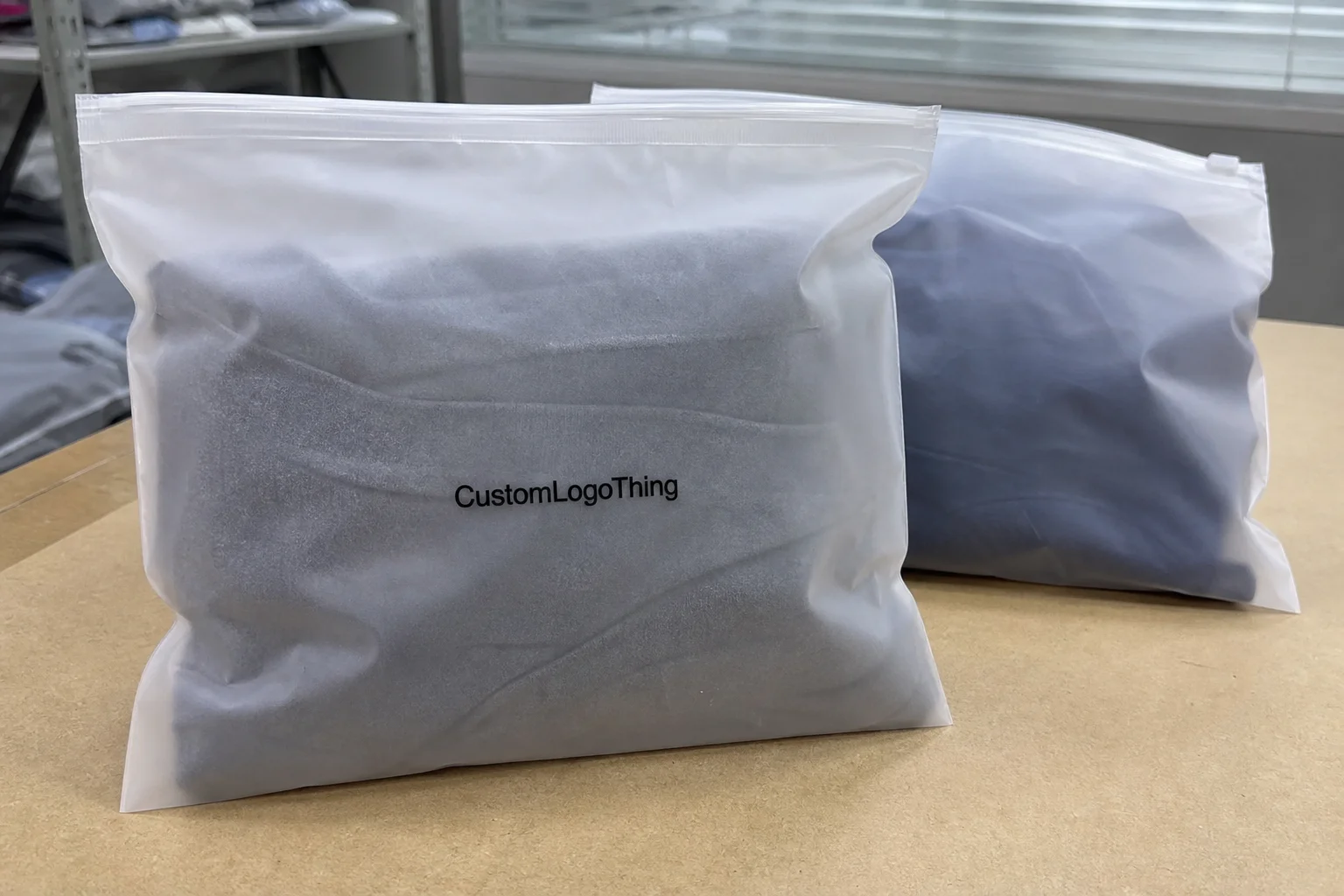
If you are pricing a printed Frosted Zipper Bags quote for ecommerce, the packaging already has a job beyond basic protection. A frosted zipper bag organizes the order, presents the product cleanly, and adds a soft premium look without asking the brand to pay for a rigid box. That combination matters for ecommerce because the packaging is often the first physical touchpoint after checkout, and first impressions tend to happen fast.
The frosted finish changes the way the package reads visually. It softens reflections, hides minor clutter inside the bag, and still lets the shape of the product show through. That is useful for apparel, accessories, beauty items, gift sets, and subscription kits, where the buyer often wants a sense of what is inside before opening it. A plain poly mailer can ship the item, but it rarely contributes to presentation in any meaningful way.
There is also a practical advantage that gets overlooked. Frosted Zipper Bags help products stay grouped, folded, and easier to count during packing. In a warehouse setting, that can reduce handling mistakes, especially when multiple sizes or SKUs are moving through the same line. The bag is not there to impress the carrier; it is there to make the order feel finished when it reaches the customer.
That said, frosted packaging is not always the right answer. If the item is very heavy, sharp-edged, or unusually bulky, a thin frosted bag can look good and still fail under pressure. The goal is not to make packaging prettier at any cost. The goal is to match the material and closure to the product so the finished order looks intentional and survives transit.
“Good ecommerce packaging does more than hold the product. It creates structure, supports the brand, and should not become the weak point in the shipment.”
For brands trying to balance presentation with cost control, Frosted Zipper Bags often land in a useful middle zone. They look more refined than a plain mailer, they are easier to store than rigid packaging, and they can be printed without turning every order into a custom manufacturing project.
Print options and bag specs that shape the quote
The price of a custom bag changes quickly once the print layout and construction details are fixed. A simple one-color logo on the front is a very different order from a two-sided design with multiple art elements, barcode placement, and a branded zipper closure. If you want a usable Printed Frosted Zipper Bags Quote for ecommerce, the supplier needs to know the print scope early, before proofs and revisions start adding cost.
Most ecommerce orders fall into a few common print setups. One-color logo printing is usually the most efficient. Two-color branding adds setup complexity, while full-front artwork or larger coverage areas raise both production effort and the chance of adjustment during proofing. On short runs, even a small change in print count can affect unit cost more than buyers expect.
Material choice matters just as much. Frosted PE and frosted CPP-style films are both common, but they do not feel exactly the same in hand. Thickness is usually specified in microns, often somewhere in the 60 to 100 micron range depending on the application. Thinner film keeps cost down and works for lightweight items, while thicker film improves puncture resistance and gives the bag a more substantial feel. That extra body is often worth paying for if the product has corners, hard edges, or a little weight.
| Option | Typical use | Cost impact | Buyer tradeoff |
|---|---|---|---|
| Front-only one-color print | Basic branding, SKU organization | Lowest | Clean, simple, usually best for price |
| Front and back print | Brand story, care info, barcode area | Medium | More room for information, more setup |
| Multi-color artwork | Bold visual branding | Higher | Stronger visual impact, higher quote |
| Added features: hang hole, gusset, tear notch | Retail display, usability, handling | Varies | Helpful only if the operation actually needs them |
Functionality features also affect the quote. A zipper that must open and close repeatedly, a tear notch for easy opening, a hang hole for retail display, or a gusset for extra volume all increase value, but they also add material use and production steps. It is easy to specify every possible feature and then wonder why the quote climbed. The better approach is to separate must-haves from nice-to-haves before requesting pricing.
Print placement deserves attention too. Front-only branding keeps the quote cleaner and often gives the most efficient production path. Front-and-back printing can be useful if the back has a real job, such as care instructions, a barcode, or a small brand message. If the reverse side is just empty real estate, it is worth asking whether the added cost is actually doing anything for the customer experience.
Specifications ecommerce buyers should confirm before ordering
The fastest way to get an accurate quote is to replace vague language with measurements. “Medium size” is not enough to build on. A proper custom packaging brief should include bag width, height, any gusset requirement, film thickness, zipper style, print area, and whether the surface finish needs to be fully frosted or only lightly frosted. If any of those pieces are missing, the supplier has to estimate, and estimates are useful only as a starting point.
Measure the packed product, not just the product itself. That mistake causes tight fits, distorted presentation, and occasional damage when the customer tries to reseal the bag around a folded garment or kit. If the item is apparel, include the folded dimensions. If it is a set of products, include the stacked height and the widest point. A packaging size that looks right on paper can still fail once the product is actually packed.
Closure performance matters too. Some ecommerce products are opened once and discarded, while others are meant to be reused by the customer. If the bag needs to stay reliable through multiple openings, the zipper quality should be treated as part of the product spec, not as an afterthought. Poor closure consistency creates returns, complaint emails, and wasted stock that should have been usable.
Color behavior on frosted film can also surprise first-time buyers. The frosted surface softens the visual intensity of print, especially for pale colors and thin line work. Dark, high-contrast logos usually hold up best. Small type, light gray text, and fine details can lose clarity if the proof is not reviewed carefully before production. A logo that looks crisp on a screen may need adjustment to stay readable on a translucent surface.
Buyer checklist before requesting pricing
- Exact bag size in mm or inches
- Material thickness target
- Zipper type and whether the bag must be reused
- Print colors and print side count
- Artwork file in vector format if possible
- Barcode or SKU needs
- Number of SKUs if multiple sizes are needed
- Packing method and whether the bags ship flat or pre-packed
Good files save time. A clean PDF or vector artwork file is easy to review, while a low-resolution screenshot usually creates extra questions about alignment, line thickness, and color accuracy. If barcode readability matters, it should be tested during proofing rather than discovered after the run is complete.
Printed frosted zipper bags quote for ecommerce: what changes cost and MOQ
The biggest cost drivers are usually straightforward: bag size, film thickness, print colors, total quantity, and any custom features. Larger bags use more material. Thicker film costs more and often feels better in hand. Additional print colors increase setup and review work. Special features such as a gusset, hang hole, or upgraded zipper style add value but also add manufacturing complexity. None of that is mysterious; it is the normal structure of custom packaging pricing.
Minimum order quantity, or MOQ, tends to move with the amount of setup involved. A standard bag with a simple logo can sometimes be made in lower quantities, but the unit price will be higher because the fixed costs are spread across fewer pieces. As the quantity rises, the per-unit cost usually improves quickly. For many standard frosted zipper bag orders, the more attractive pricing often appears somewhere in the 3,000 to 10,000 piece range, though that varies by size, film choice, and print method.
For rough planning, simple one-color printed bags often sit in a more accessible price band, while larger bags, extra colors, and custom features push the quote upward. On moderate quantities, buyers may see pricing around $0.18 to $0.35 per unit for straightforward orders, with more complex builds moving higher. Short runs can carry plate, setup, or proofing charges, and those are normal in print production. They are not a penalty; they are how custom work gets prepared accurately.
Budget surprises usually come from the items that were never written into the first request. Sample charges, freight, customs clearance, carton configuration, and special packing instructions all affect landed cost. A low ex-factory unit price can look attractive until shipping, revisions, and extra handling are added. That is why a quote should be read as a full project cost, not as a single number to compare in isolation.
A simple pricing hierarchy helps buyers read the options:
- Standard size + one-color front print = lowest quote tier
- Front and back print = mid-tier
- Multi-color artwork + custom features = higher quote tier
- Short run MOQ = higher per-unit cost
- Larger repeat order = lower per-unit cost and more stable consistency
If the goal is to get a meaningful printed frosted zipper bags Quote for Ecommerce, the request has to be specific enough that the supplier is pricing the same item you intend to buy. The closer the brief is to the final production spec, the less back-and-forth the process usually needs.
Production steps, lead time, and approval milestones
Packaging production generally follows a predictable sequence: inquiry, artwork review, spec confirmation, proofing, production, inspection, and shipping. If the process is rushed or one of those steps is skipped, the project often slows down later. A few hours spent checking dimensions and artwork early usually prevents a few days of correction later.
Lead time depends on order size, print complexity, and whether the artwork is ready for production. A simple order with one-color branding and confirmed specs will usually move faster than a multi-color job with a custom size and several revision rounds. In practice, many printed frosted zipper bag projects fall in the 12 to 20 business day production range after proof approval, but that range is only a planning guide. Material availability, the number of revisions, and the production schedule all affect timing.
Two approval points matter most. The first is the digital proof, which checks layout, orientation, logo placement, text legibility, and general proportions. The second is the sample, if one is required, which verifies feel, zipper performance, fit, and the way the frosted surface affects the print. A proof can look correct and still hide a problem with color density or closure quality. A sample catches those issues before the full run is released.
Shipping time should be treated separately from production time. That sounds obvious, but it is easy to forget when planning a product launch or restock. Air freight can reduce transit time but raises cost. Sea freight lowers transportation expense on larger orders, yet it adds a longer wait and more planning risk. The right option depends on the inventory window, not on whichever quote looks cheapest on the first line.
For ecommerce brands with fixed launch dates or seasonal drops, build in buffer time. Packaging arrives late more often than teams like to admit, and even a small delay can disrupt fulfillment if the inventory is already scheduled into the warehouse flow. A clear timeline is part of the purchase decision, not an extra detail.
What separates a reliable packaging supplier from a cheap quote
The lowest price is not always the best value, especially for custom packaging that needs to match a brand standard across repeated orders. A reliable supplier tends to quote from real specifications, explain tolerances clearly, and flag risks before production begins. A cheap quote often looks attractive because important details were not included yet. Missing details are rarely a bargain; they are just deferred problems.
Consistency matters for reorders. The second run should match the first in size, print placement, zipper performance, and overall look. If those basics drift from order to order, the packaging program starts to feel inconsistent even when the logo is the same. Ecommerce buyers who reorder every few months usually care more about repeatability than about saving a fraction of a cent on the first run.
Clear communication is one of the strongest signs that a supplier understands packaging production. Fast answers to basic questions about dimensions, proofing, and print placement usually mean fewer surprises later. Slow or vague responses often turn into delays once the order is underway. If the initial quote is hard to understand, the production stage is unlikely to be easier.
For broader sustainability and packaging compliance context, it can help to verify claims rather than accept them at face value. FSC is relevant to paper components and broader chain-of-custody questions, while the EPA sustainable materials resources are useful for checking general packaging and waste-reduction guidance. For transit testing and packaging performance, the ISTA standards are a sensible reference point when packaging needs to survive more than a desk-side unboxing.
A practical comparison looks like this:
- Cheap quote: low opening number, sparse detail, more back-and-forth, higher risk
- Reliable quote: clearer specs, realistic timing, cleaner proofing, fewer surprises
A low number can still become expensive if the order needs repeated corrections, replacement stock, or a second run to fix the first. That is why experienced buyers tend to read the quote, the proof process, and the communication style together.
How to request an accurate quote and lock specs
If you want a dependable printed frosted zipper bags quote for ecommerce, send a complete brief the first time. Include bag dimensions, quantity, artwork file, print colors, zipper style, desired finish, and target ship date. If you have more than one SKU, list each one clearly. If you need the bag to match an existing sample or a previous run, say so and include a reference image if available.
It also helps to ask for a price break by quantity rather than a single number. A quote at 3,000 pieces, 5,000 pieces, and 10,000 pieces gives you a realistic view of how the unit price behaves as the order scales. That matters for ecommerce buyers who may reorder in waves or adjust inventory based on seasonality.
A sensible order flow usually looks like this:
- Confirm specs and packaging use case
- Review quote line by line
- Approve digital proof
- Approve sample if one is required
- Place the order
- Schedule delivery around the fulfillment window
Before signing off, verify size, thickness, print placement, zipper style, and quantity one more time. Those are the details that matter when the order is sitting in a warehouse and has to perform under real packing conditions. If the specs are stable, the quote is easier to compare, the proof is easier to approve, and the final bags are more likely to arrive ready for use.
How do I get a printed frosted zipper bags quote for ecommerce with accurate pricing?
Send exact bag dimensions, quantity, print colors, zipper style, and a production-ready artwork file. Include whether you need front-only or front-and-back printing. Ask for a line-item quote so setup, samples, and freight are separated.
What minimum order quantity is typical for frosted printed zipper bags?
MOQ usually depends on size, print method, and custom features. Lower MOQs are available, but the unit cost is higher. Standard sizes and simpler printing usually allow better quantity breaks.
How long does production usually take after I approve the proof?
Lead time depends on quantity, artwork complexity, and material availability. Simple printed runs move faster than multi-color or highly customized orders. Shipping time is separate from production time and should be confirmed upfront.
Can I print barcodes or SKU codes on frosted zipper bags?
Yes, if the print area and artwork layout support it. Keep codes high-contrast and test readability before mass production. Provide barcode artwork in the correct format to avoid scanning issues.
What should I check before approving my final order?
Verify size, thickness, print placement, zipper style, and quantity. Review the proof for color accuracy and text legibility. Confirm shipping address, timeline, and reordering details before release.


