For boutique brands, packaging is rarely just packaging. It shapes first impressions, influences perceived value, and can quietly decide whether a product feels polished or forgettable. That is why Frosted Zipper Bags moq for boutique brands comes up so often in sourcing conversations. Buyers are trying to find the right balance between presentation, protection, and order quantity without ending up with too much inventory tied up in the wrong format.
Frosted Zipper Bags sit in a useful middle ground. They look cleaner than a basic poly mailer, feel more considered than a thin clear sleeve, and offer enough structure for apparel, beauty items, accessories, and small gift sets. The zipper closure adds resealability, which gives the customer a second use case after purchase. That matters more than many teams expect. A package that is reused tends to stay visible longer, and visibility is part of brand memory.
That said, not every frosted bag is automatically a good buy. Material thickness, zipper consistency, print quality, and MOQ all affect whether the packaging supports the product or quietly drags it down. The right order is the one that fits the item, the sales volume, and the storage reality of the brand.
Why frosted zipper bags often outperform plain poly mailers for boutique products
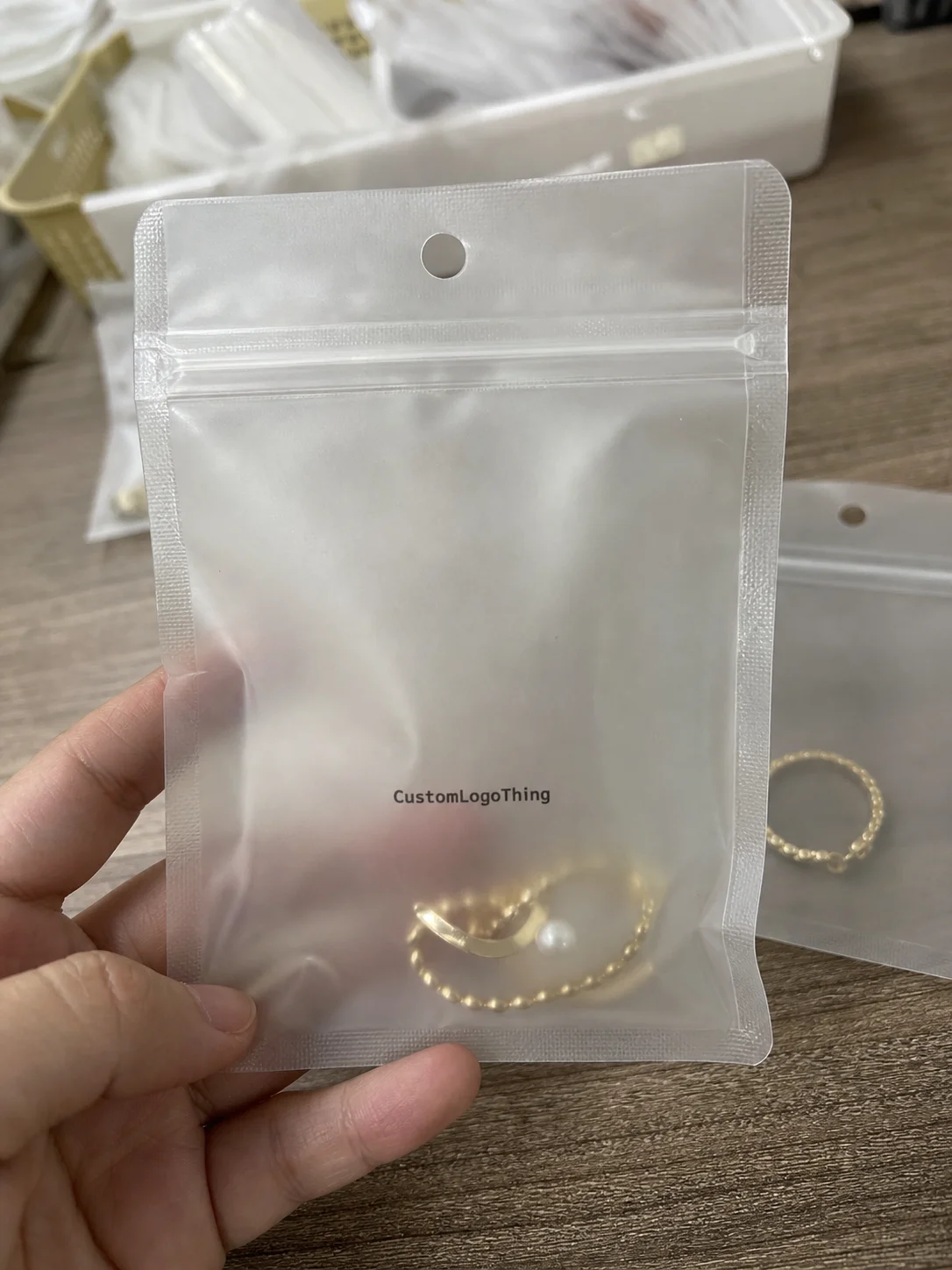
A plain mailer is functional, but it rarely adds anything to the customer experience beyond transit. A frosted zipper bag can do a bit more. The matte, semi-translucent finish softens what is inside without hiding it completely, which is useful when a brand wants the item to remain visible but not visually loud. That softer look often reads as more premium, especially for small-format products where presentation is part of the offer.
The zipper closure also changes how customers interact with the package. Instead of a one-way shipping envelope, they get a resealable bag that can store the item again after unboxing. For boutique apparel, jewelry, cosmetics, and travel-size sets, that reusability supports practical value. If the bag feels sturdy enough to keep, customers often do keep it.
Low-cost packaging can still work, but the trade-off is visible. Thin film wrinkles easily, weak closures can split or separate, and overly clear packaging may expose minor folding marks or internal clutter that makes the whole product feel less finished. In ecommerce, those small weaknesses can show up as lower review quality, more complaints about presentation, or a subtle dip in repeat orders. The problem is not always the product itself. Sometimes the packaging makes the product look cheaper than it is.
A lot of boutique owners say the packaging has to sell before the product is even touched. That is not an exaggeration. In retail and ecommerce alike, the first layer does some of the heavy lifting.
For Frosted Zipper Bags moq for boutique brands, the real question is not whether the bag looks good in isolation. It is whether it holds up to handling, fits the SKU, and makes sense at the quantity you actually need.
| Packaging option | Typical buyer perception | Best use case | Risk |
|---|---|---|---|
| Plain poly mailer | Functional, low-cost | Basic shipping | Lower perceived value |
| Clear zipper bag | Clean, product-forward | Display-heavy retail | Shows clutter and imperfections |
| Frosted zipper bag | Premium, polished | Boutique apparel, cosmetics, accessories | Higher unit cost than basic film packaging |
Product details to lock down before requesting pricing
Good pricing starts with a clear spec, not a vague idea. A frosted zipper bag is usually made from polyethylene film or a similar flexible plastic, finished to create a soft matte look that reduces glare and diffuses visibility. The zipper is typically a press-to-close or similar resealable closure. Those basics sound simple, but buyers often underestimate how much the details affect performance and price.
Opacity is one of the first choices to define. A lightly frosted bag allows some of the product color or shape to show through, which works well for apparel, accessories, and bright-colored items. A more opaque frost hides internal layers better and gives the package a calmer, cleaner visual field. Neither is inherently better. The right level depends on whether the brand wants the product to be seen clearly or partially concealed for a more refined effect.
Thickness matters too. Film is usually measured in mils or microns, and the difference between light and heavy film is easy to feel in the hand. Thicker material generally improves durability and gives the bag a more substantial impression, but it also increases material usage and therefore cost. For a presentation sleeve, ultra-heavy film may not be necessary. For a bag that will be opened, closed, and handled repeatedly, the extra strength can be justified.
Bag size should be based on the item as it is actually packed, not just on the garment or product alone. A tee folded one way may fit beautifully, while the same tee folded differently may create too much bulk for the same bag. Include any tags, inserts, tissue, protective sleeves, or inner boxes in the measurement. A quote built on the wrong dimensions usually leads to revision later, and revision costs time.
What these bags work best for
- Boutique apparel such as tees, socks, sleepwear, and lightweight knitwear.
- Beauty and skincare kits that need a polished presentation and light protection.
- Accessories like scarves, headbands, jewelry sets, and small leather goods.
- Gift sets where the packaging needs to feel deliberate without a full rigid box.
They are not the right fit for every product. Heavy items, sharp-edged goods, or anything requiring cushioning usually need a different structure. If the item is fragile, moisture-sensitive, or shipping long distance in a way that increases transit stress, a frosted zipper bag may need to be paired with an outer mailer or another protective layer. That is a practical constraint, not a sales objection.
For buyers managing several SKUs, the bag should be treated as part of the product system. If the dimensions, finish, and logo placement are consistent across sizes, the line feels organized. If each item uses a different packaging approach without a clear logic, the collection starts to look pieced together.
Specifications boutique buyers should confirm before ordering
Before talking decoration, confirm the functional specs. The main drivers of cost and performance are material, thickness, dimensions, zipper type, and print method. If those are unclear, the quote will be hard to compare and easy to misread.
Ask for the actual usable opening, not just the outer dimensions. A bag can measure one size on paper and still behave very differently once a product is inserted. Seam allowance, zipper placement, and any gusset structure all affect usable space. For boutique products that need a neat retail look, a bag that is technically the right size but visually strained will not satisfy the brand standard.
Customization options often include logo printing, hang holes for display, gussets for volume, and different frost levels. Many boutique brands do better with restrained decoration than with busy artwork. A single logo in a clean location is often more effective than a crowded layout that fights with the product inside. On frosted film, strong contrast and simple typography usually reproduce better than fine lines, tiny text, or delicate gradients.
Printing quality deserves a careful look because frosted surfaces can mute detail. A logo that looks crisp on coated paper may appear softer on film. That does not mean the result will be poor, only that artwork needs to be chosen with the material in mind. If the design depends on thin strokes or subtle shading, a sample or pre-production proof is worth insisting on before the full run is approved.
Checklist before you request a quote
- Product dimensions, including any inserts or inner packaging.
- Target bag size with enough room for easy filling and closure.
- Expected product weight and any sharp edges or bulk points.
- Print area, logo placement, and number of ink colors.
- Need for hang holes, gussets, or reseal performance.
- Whether the bag is for retail display, ecommerce, or gift packaging.
Quality control should cover more than appearance. Buyers should ask about zipper function, seal alignment, dimensional tolerance, and consistency across the run. If a supplier cannot explain how they check those items, that is a caution flag. A package that looks good in a photo but opens unevenly or varies in size from unit to unit creates friction for the packing team and a weaker customer experience.
Compliance concerns vary by product category. General apparel and accessory packaging usually centers on material quality, odor, and handling behavior. Beauty, gifting, and any product that could sit close to skin or sensitive contents may require more careful review of material specifications and transit behavior. For packaging and transit testing considerations, references from groups like the International Safe Transit Association can help frame performance expectations, while broad material and waste guidance from organizations such as the U.S. Environmental Protection Agency can inform sustainability-related decisions where they matter to the brand.
Pricing and MOQ: how boutique brands can buy without overcommitting
This is where Frosted Zipper Bags moq for boutique brands becomes a planning question instead of just a sourcing hurdle. MOQ exists because setup work, material preparation, print setup, and production changeover all carry fixed costs. Whether the run is 500 pieces or 5,000, a portion of the labor and machine time has to be paid for before the first bag is finished.
That is why smaller orders almost always carry a higher unit cost. It is not always a markup problem. It is usually a volume problem. Tooling fees, print plates, proofing, color matching, and freight can all sit on top of the raw material cost, and each of those items has more impact when the order quantity is low. If the design uses multiple ink colors, special sizing, or a more complex zipper style, the price climbs again.
For boutique brands, the more useful question is not “What is the lowest MOQ?” but “What MOQ matches the sales pattern?” A seasonal brand with one major launch may want to stay light on inventory, even if the per-piece cost is higher. A label that reorders the same bag across several collections can often justify a higher initial quantity because the packaging will be used again. In that case, the larger order can lower the average cost over time and reduce the number of repeat production cycles.
| Order type | Typical MOQ behavior | Price driver | Risk profile |
|---|---|---|---|
| Stock bag, no print | Lower MOQ | Material and size | Lower brand differentiation |
| Stock bag with logo | Moderate MOQ | Print setup plus film | Balanced risk and branding |
| Fully custom bag | Higher MOQ | Tooling fees, print colors, special specs | Highest commitment, strongest identity |
A clean quote should separate sample cost, setup charges, unit price tiers, and freight. If those line items are bundled too tightly, it becomes hard to compare suppliers or understand where the money is going. Transparent pricing is especially useful for smaller brands because a few dollars in setup or shipping can change the economics of the entire order.
Storage should be part of the MOQ calculation too. A larger order can lower the unit price, but if the bags occupy shelf space for months, the savings can disappear quickly. Packaging inventory that sits too long becomes clutter, and clutter is a real cost for a small operation. If a brand does not have room for the order, the “better price” may actually be the more expensive choice.
For sourcing planning, compare at least three scenarios: launch quantity, likely 90-day reorder volume, and the quantity required to reach a better pricing tier. That comparison usually makes the right decision more obvious. It also keeps buyers from choosing the lowest entry point when a slightly larger order would fit the sales pattern more naturally.
Process, timeline, and production steps from sample to shipment
A clear process saves time at every stage. The fastest projects usually begin with a complete inquiry: dimensions, quantity, artwork files, print colors, and the delivery window. If the first brief is incomplete, the quote will be incomplete too, and every round of clarification adds friction.
The normal flow is straightforward. It starts with inquiry and specification review, moves into artwork confirmation, then sample or proof approval, production, quality inspection, and shipment. The actual machine time is rarely the bottleneck. Delays more often come from unclear dielines, revised artwork, late responses, or changes after the proof has already been approved.
What speeds up quoting
- Exact bag dimensions instead of rough estimates.
- Target quantity and acceptable MOQ range.
- Print colors, logo placement, and artwork format.
- Delivery deadline for launch or replenishment.
- Any special finishing needs, such as hang holes or gussets.
Lead time depends on whether the bags are stock or custom. Stock inventory can move faster because the base material is already available. Custom runs take longer because material, print preparation, and approval steps need to line up first. For many boutique orders, a planning window of roughly 12 to 20 business days after proof approval is a realistic starting point, although complex orders, peak production periods, or longer shipping routes can extend that. Tight launch schedules leave little room for correction, so packaging should be ordered before the finished goods are waiting on it.
Sample approval is usually the most revealing stage. It is where the buyer learns whether the logo is sized well, whether the frost level feels right, whether the zipper closes cleanly, and whether the overall hand feel matches the brand. That is useful feedback. It is far cheaper to fix a logo position on one sample than to discover the mistake after thousands of units are already packed.
The most common delays come from unclear artwork, late approvals, and spec changes after proofing. Avoid those three and the schedule becomes much easier to manage.
What to expect from a good frosted zipper bag program
Boutique brands do not need packaging theater. They need packaging that matches the product, holds up in use, and can be ordered without creating unnecessary inventory pressure. A good frosted zipper bag program should make those things easier, not more complicated.
Practical support matters. The best packaging partner will help narrow the size, explain where print risks sit, and make setup charges or tooling fees visible before the order is placed. That kind of clarity is more useful than broad claims about being the cheapest option. In packaging, a quote that is easy to understand is often a better quote than one that looks low at first glance but hides costs in the fine print.
Order flexibility matters too. Boutique brands often test new designs, rotate seasonal colors, and reorder winning SKUs in waves instead of in one massive cycle. Packaging that can support those patterns without forcing a brand into excessive stock levels is usually the better long-term choice. It keeps inventory moving with the business instead of against it.
Frosted zipper bags also help create a consistent visual system across product lines. When the packaging language stays stable, the brand feels more established, even if the order quantities are modest. That kind of consistency often matters as much as decoration. A clean, repeatable package supports the product without competing with it.
For buyers comparing suppliers, the differences usually show up in spec clarity, response speed, and how carefully the production details are handled. Those signals matter more than generic promises about “premium quality.”
Ordering with confidence
If you are moving from research to sourcing, start with three basics: target size, expected quantity, and logo artwork. Those three items remove a surprising amount of guesswork and make the first quote much more useful. From there, compare at least two or three MOQ scenarios so you can see how launch volume, reorder volume, and bulk pricing affect the final decision.
Ask for a sample or pre-production proof before approving the full run. That single step often catches the problems that create the most expensive fixes later, including color shifts, print placement issues, zipper stiffness, or a frosted finish that is either too light or too heavy for the brand image. If the packaging is part of the premium experience, that check is not an extra. It is part of the purchase decision.
- Confirm product fit and bag dimensions.
- Review pricing tiers and MOQ options.
- Check the timeline and delivery method.
- Approve the sample or proof.
- Lock the order before production starts.
For boutique brands, the smartest packaging buy is rarely the cheapest quote on paper. It is the one that fits the product, protects margin, and arrives when the inventory plan needs it. If you are evaluating frosted Zipper Bags MOQ for boutique brands, ask for the spec sheet, compare the pricing tiers, and choose the quantity that matches your actual sales pattern rather than your best-case guess.
What is the typical frosted zipper bags MOQ for boutique brands?
MOQ varies by size, print complexity, and whether the bags are stock or fully custom. Smaller boutique runs are possible, but unit pricing usually improves as quantity increases. Ask for tiered quotes so you can compare launch quantity against reorder pricing.
Can frosted zipper bags be customized with a boutique logo?
Yes, most orders can include logo printing, custom sizing, and select finish options. Artwork quality affects the final result, so clean vector files are preferred. Simple logos often print more crisply than fine-detail illustrations on frosted surfaces.
How do frosted zipper bags compare to clear zipper bags for retail use?
Frosted bags generally feel more premium and can hide minor product clutter better than fully clear bags. Clear bags show the product more directly, which can help with color accuracy or display-heavy packaging. The best choice depends on whether the brand wants visibility, privacy, or a more upscale presentation.
What affects the unit cost of custom frosted zipper bags?
Size, material thickness, print colors, zipper style, and order quantity are the biggest cost drivers. Setup fees and freight can also change the effective unit cost for smaller runs. Simpler designs and fewer customization steps usually lower total cost.
How long does production usually take after approval?
Lead time depends on the order type, current production schedule, and whether samples are required. Stock orders move faster than full custom production. Approving artwork quickly and keeping specs stable helps avoid delays.


