Subscription packaging gets judged again and again, not only at the first unboxing but every time the customer opens, closes, stores, and sees the package on a shelf or countertop. That is why a printed Frosted Zipper Bags quote for subscription cannot be treated as a simple artwork price check. The quote has to reflect the bag structure, closure performance, print durability, and the way the package will behave across repeated shipments.
For subscription brands, the bag is doing several jobs at once. It needs to present the product cleanly, protect what is inside, support efficient fulfillment, and still look like the same brand every month. A frosted zipper format is popular because it sits in a useful middle ground: more polished than a plain utility pouch, but lighter and often more flexible than a rigid outer carton.
That balance matters most when the product is shipped on a schedule. A buyer may only approve one bag design, yet that design can appear in six, twelve, or twenty-four consecutive orders. The real test is not whether the sample looks good on a desk. It is whether the bag holds up through storage, shipping, and customer handling without making the program feel inconsistent.
Why subscription brands choose frosted zipper bags for repeat shipments
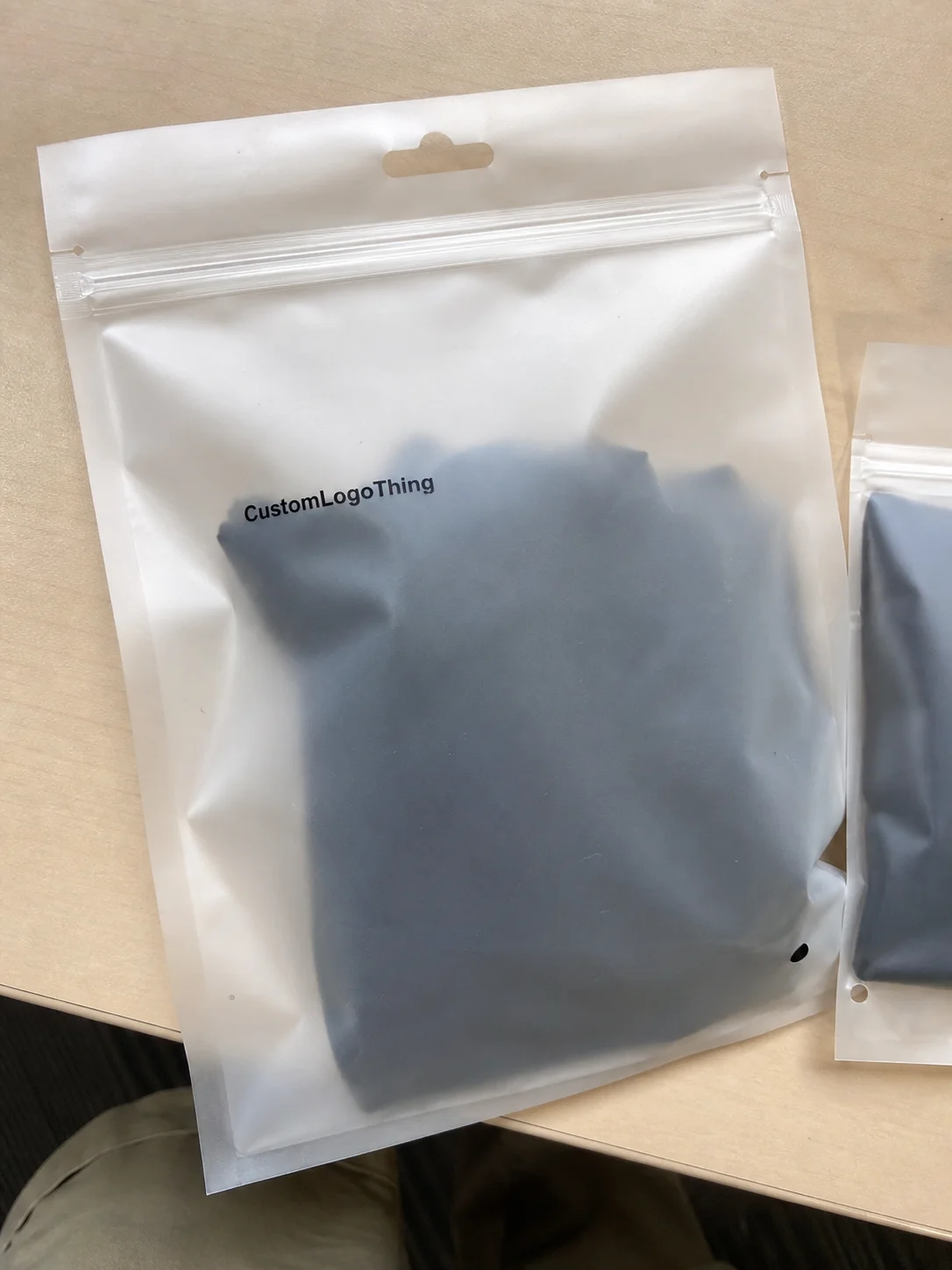
Subscription customers notice packaging fatigue quickly. If a bag starts looking scuffed after a few openings, or if the seal feels weak by the second use, that impression gets repeated every cycle. A frosted zipper bag helps reduce that problem by softening the visual field while still giving the pack a clean, intentional look. The frosted finish also hides minor product variation better than a fully clear pouch, which can be helpful for assortments and refill kits.
The zipper is not just a convenience feature. It is part of the product experience. Reclosability matters for sample bundles, accessory packs, refill goods, apparel add-ons, and mixed subscription sets because customers often open part of the contents, set the package aside, and come back to it later. A standard heat-sealed pouch does not offer that same repeat-use value.
From a production standpoint, many brands also appreciate that Frosted Zipper Bags can replace extra inserts, standalone labels, or secondary packaging layers when the design is planned correctly. That can simplify fulfillment without making the box feel stripped down. In practice, the best package is the one that looks considered but does not slow the packing line.
There is a branding benefit too. A recurring bag format creates visual continuity from shipment to shipment, which helps customers recognize the product and the brand at a glance. For a subscription program, that recognition can be more valuable than decorative complexity. Consistency usually supports stronger shelf presence and fewer production headaches than a heavily layered presentation that is difficult to repeat.
“The strongest subscription pack is the one that still looks intentional after it has been opened, resealed, stored, and shipped again.”
One caution: not every product should be placed into a frosted zipper bag simply because the format looks premium. If the contents are very heavy, highly abrasion-prone, or extremely sensitive to oxygen and moisture, the bag structure may need additional reinforcement or a different construction altogether. Good packaging decisions start with the product, then move to appearance.
Printed frosted zipper bag construction and branding options
Most frosted zipper bags are made from PE film or a laminated structure, depending on the required feel and protection level. PE is common when flexibility, cost control, and straightforward converting matter most. Laminated builds are usually chosen when the bag needs more stiffness, a stronger barrier profile, or a more premium hand feel. The right choice depends on what is being packed, not on what looks best in an image file.
The frosted effect itself comes from the film finish or treatment, and it reduces transparency without making the bag fully opaque. That controlled visibility can be useful in several ways. A buyer may want the customer to see color, shape, or product density while still keeping the package from feeling overly exposed. It can also help unify the look of mixed contents when the items inside are not perfectly identical from unit to unit.
Zipper style affects both function and unit cost. Standard press-to-close zippers are common for subscription use, but some products benefit from a stronger closure profile or a zipper that opens and closes with a more defined snap. If the bag will be handled frequently, the zipper should be tested for repeat performance, because weak closure consistency tends to show up after the first few uses rather than on day one.
Print method depends on run size, artwork complexity, and the visual standard required by the brand. Larger custom orders often use flexographic or gravure-style printing, which can handle repeat artwork and solid color areas efficiently. Spot colors are usually easier to control than crowded full-coverage designs, especially when the brand needs consistent logo color across reorders. Fine type, QR codes, and narrow line work require careful prepress setup so the design does not distort once the bag is formed and sealed.
Common custom options include:
- Hang holes for retail display or warehouse organization
- Tear notches for a cleaner first opening
- Gussets for added fill volume
- Matte or soft-touch accents for a more refined hand feel
- Clear panels when selective product visibility is useful
Artwork should always be prepared with the actual print area in mind. Safe margins, bleed, and panel orientation matter more on a shaped pouch than they do on a flat mockup, because the design changes slightly once the bag is formed, sealed, and filled. A logo that appears centered in a digital proof can end up looking awkward if the print window was not set up correctly from the start.
For subscription buyers, that kind of prepress discipline is not a technical detail hidden in the background. It directly affects whether the package feels polished or slightly off from one shipment to the next.
Specification details that affect fit, finish, and shelf performance
The quote becomes much more precise once the specification sheet is complete. Width, height, gusset depth, film thickness, closure type, print coverage, and surface finish all influence the final price and the final performance. A bag that looks acceptable in a sample photo may feel completely different once it is filled, stored, and handled in a fulfillment workflow.
Thickness is one of the first numbers buyers should confirm. A 3 mil film and a 5 mil film can both work visually, but they do not behave the same way. Thinner film can reduce cost and improve flexibility, while heavier film usually offers better puncture resistance, more structure, and a sturdier feel in the hand. If the contents are sharp-edged, abrasive, or repeatedly handled, a heavier gauge is often worth the added cost.
Size selection should be based on the packed product, not only the dimensions of the item itself. The bag needs room for the contents, the zipper area, and enough slack for filling without forcing the seal zone. If the bag is too tight, packing slows down and the closure can be stressed. If the bag is too large, it starts to look underfilled, which is easy for subscription customers to notice because they see the package repeatedly.
Barrier requirements also need to be discussed early. Some products need moisture resistance, some need odor control, and some need light protection. A frosted finish does not automatically mean a stronger barrier. It may look premium while still being unsuitable for products that demand a more serious protective structure. Buyers should spell out the actual use case before the first quote is issued.
If the bags will move through a fulfillment operation, barcode placement and label compatibility should be planned at the same time as artwork. Some programs use direct print for branding and reserve a specific panel for barcodes or lot codes. Others rely on a blank area for adhesive labels. Waiting until after the proof stage usually creates avoidable rework.
| Spec choice | Typical effect | Best for |
|---|---|---|
| Thin PE film | Lower cost, lighter hand feel | Light goods, simple packs, lower abrasion risk |
| Heavier PE or laminated structure | Better stiffness and perceived quality | Premium subscription kits, repeated handling, added protection |
| Single-side print | Simpler setup and often lower pricing | Minimal branding, internal fulfillment use, budget-sensitive runs |
| Double-side print | More branding space, higher setup and print cost | Retail-facing packs, stronger shelf presence, marketing-heavy programs |
Dimensional tolerances should also be checked before approval. A manual packing line can usually absorb a little variation, but semi-automated filling equipment is less forgiving. If the bag size drifts too far from the approved spec, line speed suffers and seal quality can become inconsistent. For recurring subscription programs, those small differences turn into real operational problems.
One practical point often missed in early quoting: the contents must be measured in the state they will actually ship in. Soft goods compress, product bundles shift, and accessory kits can spread out differently than expected. A sample that fits loosely on a desk may behave differently once it is loaded into a carton and stacked with other orders.
Printed frosted zipper bags quote: cost, pricing, and MOQ factors
A fair Printed Frosted Zipper Bags Quote for subscription is usually driven by size, film structure, print colors, zipper style, finish, and quantity. If one of those variables changes, unit pricing can move more than buyers expect. Special surface treatments, large ink coverage, or complex artwork often add more cost than the design file suggests at first glance.
Volume is the biggest pricing lever. Larger runs spread setup costs, prepress work, and plate charges across more pieces, which lowers the unit rate. Smaller runs are absolutely possible, but they sit on a different cost curve. A buyer comparing 3,000 bags against 20,000 bags should expect the per-piece price to change significantly even if the visual design is the same.
MOQ is often tied to print complexity and tooling. Simple one- or two-color artwork may allow a lower entry quantity than a full-bleed design with multiple spot colors or additional finishing steps. Brands testing a new subscription program sometimes start with a cleaner design so they can keep the first order manageable and reduce inventory risk.
Freight and packing configuration can change the final landed cost just as much as the base unit price. Carton count, palletization, inner wrapping, and shipping route all matter. A quote that looks attractive at the factory gate can become less competitive once transportation, import handling, and packaging configuration are included. Experienced buyers look at landed cost, not just the headline number.
To make a quote more accurate on the first pass, include:
- Exact bag dimensions
- Approximate product weight and fill volume
- Artwork file count and color count
- Finish preference, such as matte or soft-touch accents
- Barrier needs like moisture or odor resistance
- Target annual usage, not only the first order quantity
Price should never be judged in isolation. A lower bid can turn into a more expensive choice if the zipper fails, the print drifts, or the bag arrives with poor consistency across the run. For packaging that repeats every month, repeatability is part of the value, not an extra feature.
For buyers who want broader packaging context, the Institute of Packaging Professionals is a useful source for terminology and general industry guidance when evaluating substrate options or comparing packaging formats.
Process, lead time, and production steps from artwork to shipment
The cleanest order process starts with a clear brief. Once the supplier has the bag size, quantity, artwork, and end-use, they can confirm the material structure and move into proofing. After that comes production scheduling, manufacturing, inspection, and shipment. Each stage depends on the one before it, so a vague brief almost always creates delay later.
Proofing is where many subscription packaging projects either move smoothly or slow down. The proof should confirm logo placement, color targets, zipper orientation, barcode position, and any legal copy that must appear on the bag. If the bag will be a visible customer touchpoint, the proof should be treated like a final presentation sample, not a rough internal draft.
Lead time depends on artwork readiness, material availability, print complexity, and where the order sits in the production queue. A simple bag with approved files can move faster than a highly decorated build with special finishes. In many cases, custom runs land around 12-15 business days from proof approval, although larger quantities or more complex structures can take longer.
Samples are worth separating into two categories. A plain sample is useful for checking size, fit, and zipper function. A printed sample is better when color, layout, or retail presentation matters more. For higher-value or higher-risk programs, asking for both is often the safest route if the timeline allows it.
Quality control should be specific, not generic. The basic checks include film thickness verification, seal integrity, zipper performance, and print consistency across the run. For subscription packaging, it also helps to confirm how the bags stack, how they load into cartons, and whether they stay flat during storage. Those details matter because the bag is usually made in one place, packed in another, and opened by a customer somewhere else entirely.
The environmental conversation should be handled carefully. If sustainability claims are part of the brief, the material structure has to match the claim. Not every flexible package is recyclable in the same way, and not every frosted film can be described with the same language. Buyers should verify what the structure actually is and compare it against current guidance from resources such as the EPA recycling resources. Claims that do not match the construction create risk for the brand.
For subscription programs, reorder planning matters almost as much as the first production cycle. Packaging demand is easier to manage when the next purchase is already mapped out, because rush freight and late approvals usually cost more than a little forward planning. A repeatable spec sheet, approved artwork archive, and realistic reorder window reduce both cost and stress.
What to check before approving a custom subscription bag supplier
The lowest quote is not always the best quote. For subscription packaging, the supplier has to repeat the same result across multiple runs, often months apart, and that requires consistency more than one-time savings. A good supplier should be able to hold the spec, hold the color, and hold the zipper performance over time.
Clear communication is usually the first sign of whether a supplier is the right fit. Tolerances, color expectations, and the final use case should all be documented before approval. A bag that works well for a lightweight accessory may not be right for a moisture-sensitive refill pack or a heavier kit that goes through daily fulfillment handling. If the supplier does not ask those questions early, the quote may be incomplete even if the price looks attractive.
Production oversight also matters. Whether the work is handled in-house or through tightly controlled production partners, the real question is whether the supplier can maintain print alignment, zipper performance, and dimensional stability from one order to the next. That discipline is especially important for subscription programs because customers compare every shipment against the last one, even if they never say so out loud.
It helps when the supplier can discuss material tradeoffs plainly. Some products are fine in a simpler PE build. Others need a laminated structure or a heavier gauge to protect the contents and preserve the look of the bag after shipping. A supplier who explains those options clearly is usually easier to work with over time than one who only pushes the cheapest setup.
Reorder planning should be part of the approval process. Ask whether the same plate or artwork setup can be reused, whether approved files are archived, and whether the final spec sheet will be stored for the next order. Those details are easy to miss in the first round, but they keep later runs efficient and prevent small changes from creeping in.
Useful documentation includes:
- Final approved artwork files
- Saved spec sheet with dimensions and material notes
- Printed sample reference, if available
- Color notes or approved Pantone targets
- Reorder history with quantity and timing
If a supplier cannot keep those records organized, the next run becomes more expensive to manage. Subscription packaging works best when the process is repeatable, not improvised every time.
Next steps to request a subscription packaging quote and move forward
Before requesting a quote, gather the essentials: bag dimensions, quantity target, artwork files, zipper preference, finish preference, and the delivery window you are working toward. If you know the product weight, fill method, or storage conditions, include that too. The clearer the brief, the more useful the first quote will be.
It also helps to describe the subscription use case directly. A refill pack, a sampler bundle, an apparel accessory set, and a light personal care item do not need the same packaging behavior. The more specific the brief, the less likely the first Printed Frosted Zipper Bags Quote for subscription will need revision.
If the bag size or material is still uncertain, sample first. A plain sample can confirm fit, while a printed sample can confirm the branding look before full production begins. That extra step is usually worthwhile when the packaging has to work with manual filling or semi-automated equipment, because small fit issues often become expensive once a full run is underway.
When comparing the first-order quote, ask what the reorder pricing will look like as well. A subscription packaging plan should support the next six, twelve, or more shipments without sudden cost jumps. A clean spec sheet, archived artwork, and a repeatable production setup help keep that cost profile steady.
If you are ready to move, Contact Us with your dimensions, artwork, and target quantity, and request a formal printed frosted zipper bags quote for subscription. Review the proof, sample, and timeline before approval, and make sure the bag performs well in use, not only on paper.
FAQ
What information do I need for a printed frosted zipper bags quote for subscription packaging?
Provide bag dimensions, quantity, artwork files, zipper style, finish preference, and the product being packed. If the bag needs moisture resistance, odor control, barcode placement, or support for recurring reorders, include that in the first message so the quote matches the real use case.
How does MOQ affect pricing for custom frosted zipper bags?
Higher volumes usually lower the unit cost because setup and printing preparation are spread across more bags. MOQ can rise with more complex print layouts, special finishes, or custom construction details, so simpler artwork often gives buyers a lower entry point.
Can frosted zipper bags be printed on both sides?
Yes, many custom runs can be printed on one side or both sides depending on artwork and budget. Double-sided printing can increase unit cost, lead time, and minimum quantity, so it should be planned only when the extra branding surface is actually needed.
What affects turnaround time for subscription bag orders?
Artwork readiness, proof approval speed, material availability, print complexity, and order size all influence turnaround. A clear spec sheet and approved files usually shorten the production timeline, while late design changes almost always add time.
Are printed frosted zipper bags suitable for repeat monthly shipments?
Yes, they are a strong choice for subscription programs because the zipper supports repeated opening and resealing. The frosted look also helps keep branding consistent while presenting the contents neatly in every shipment.


