Jewelry can be well made and still land with a weak first impression if the packaging looks generic or oversized. Custom Frosted Zipper Bags for jewelry brands solve that problem with a format that is simple to store, easy to pack, and more polished than a standard clear poly bag.
The appeal is practical. Frosted film gives visibility without exposing every fingerprint or reflection, and the zipper closure keeps small items tidy during shipping, display, and reuse. For brands that want a cleaner presentation without jumping straight to rigid boxes, these bags sit in a useful middle ground on cost, function, and branding.
Why frosted zipper bags make jewelry look more premium without overdoing it
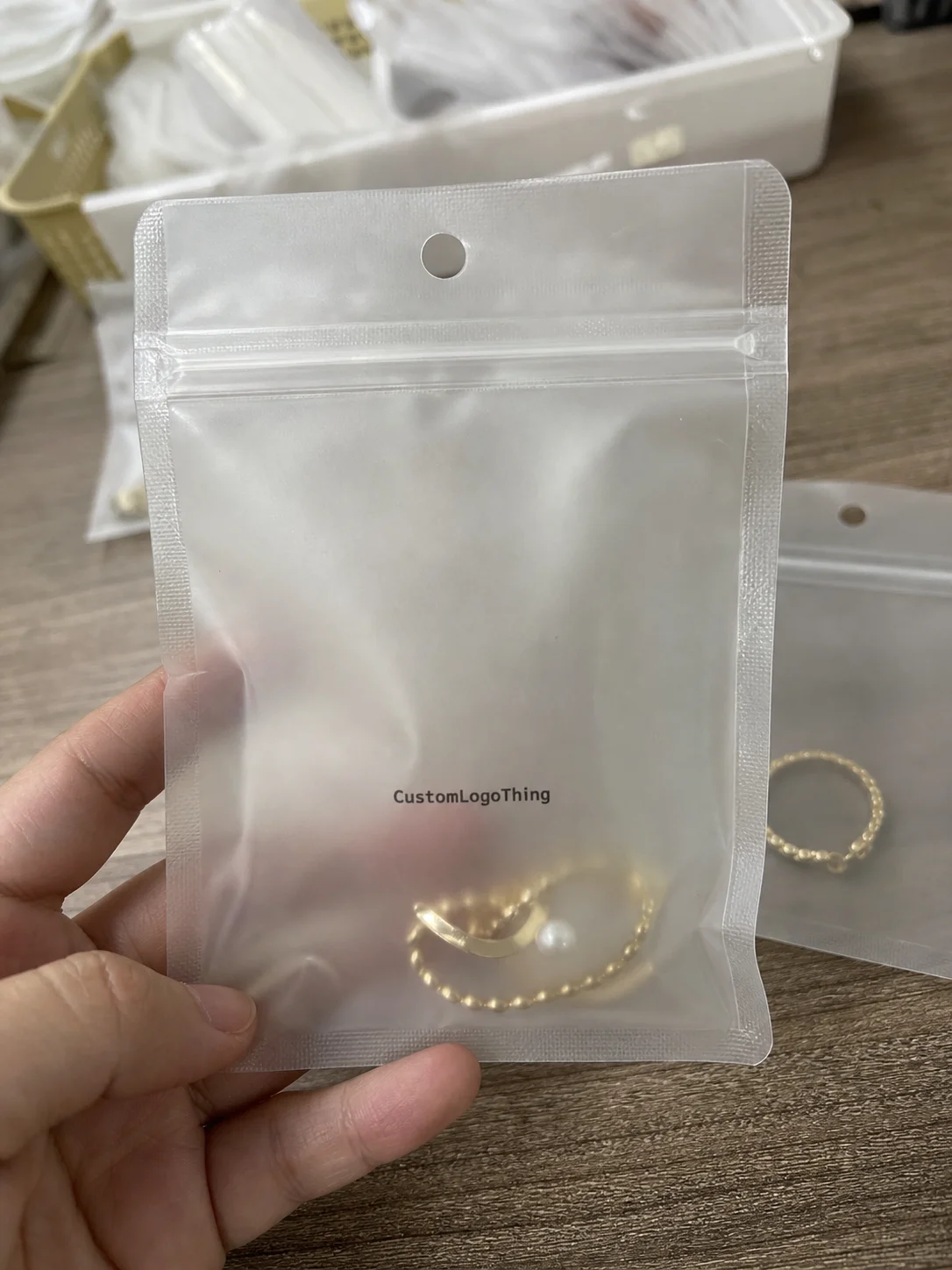
Jewelry often carries more perceived value than physical bulk, so the packaging has to do a lot of visual work. A frosted bag softens glare, reduces visual clutter, and lets the product show through in a way that feels more controlled than a fully clear pouch.
That matters across rings, earrings, chains, bracelets, and small gift sets. Clear bags can be functional, but they also show every scuff and fingerprint. Frosted material hides those small flaws better, which helps the packaging look cleaner in photos, on shelves, and in customer hands.
For a packaging buyer, the main advantage is consistency. Frosted Zipper Bags protect the piece, keep dust off, and give you a predictable surface for branding. They are not trying to replace a premium box system; they are meant to make the product look organized and considered without adding unnecessary complexity.
How custom frosted zipper bags work for jewelry packaging
Most Frosted Zipper Bags use PE film or a similar flexible plastic structure with a matte finish. The zipper closure makes them reusable and easier to handle during packing, retail display, and customer storage. Depending on the job, you can also specify a flat pouch, a gusseted format, a hang hole, or a tear notch.
Printing options usually depend on quantity and artwork. Screen printing is common for simple one-color logos. Gravure printing becomes more efficient on larger runs because setup costs are spread across more units. Digital printing can work for shorter runs, but the economics change quickly as volume rises. The right method depends on the design, the print coverage, and how many pieces you need.
Artwork needs to be treated carefully on frosted film. Fine lines, tiny type, and low-contrast details can disappear into the matte surface. Bold logos, cleaner spacing, and stronger shapes usually reproduce better than delicate illustrations. If your artwork relies on small text or thin strokes, it often needs to be simplified before production.
Fit is another important detail. A bag that is too large makes the jewelry look loose and unplanned. A bag that is too tight slows packing and can crease the piece or backing card. The best spec is usually the smallest size that still leaves room for the jewelry, insert, or protective wrap.
If your packaging system includes boxes, inserts, or labels, the frosted bag should match the rest of the presentation instead of competing with it. Minimal brands usually do best with restrained logo placement. Brighter or more fashion-driven brands may benefit from a stronger mark or repeat graphic. Packaging works better when each component has a clear role.
Cost, pricing, and MOQ factors that change your quote
Packaging pricing is mostly driven by size, film thickness, zipper style, print color count, print coverage, and extras like hang holes or gussets. Larger bags use more material. Thicker film usually feels better in hand. More print colors or heavier coverage require more setup and inspection.
Minimum order quantity has a major effect on unit price. Smaller orders carry a higher per-piece cost because setup fees are spread across fewer bags. As quantity increases, the unit price usually drops. A simple branded pouch may price very differently at 500 pieces than it does at 5,000, even if the material is the same.
| Option | Typical unit cost range | Best for | Main tradeoff |
|---|---|---|---|
| Stock-style frosted bag with one-color logo | $0.08-$0.18 | Simple branding, lower-to-mid quantities | Limited print area and fewer finish choices |
| Fully custom print with larger coverage | $0.14-$0.28 | Launches, retail presentation, stronger package branding | Higher setup and more artwork scrutiny |
| Special size, thicker film, or upgraded zipper | $0.18-$0.35+ | Heavier items, premium feel, repeat retail use | Higher cost and sometimes longer lead time |
Those are working ranges, not guarantees. Quotes can move once samples are reviewed, especially if the artwork needs cleanup or the requested finish is more complex than it looks on screen. Buyers should also account for sample costs, plate charges, freight, and any setup fees so they are comparing landed cost rather than just the headline number.
The cheapest option is not always the best value. A low unit price can hide weak zipper function, inconsistent film thickness, or print that looks soft once the bag is folded and packed. If the bag wrinkes badly or makes the jewelry look less polished, the savings are usually false economy.
For teams comparing pouch options with other packaging types, the broader Custom Packaging Products page can help show where bags fit alongside boxes, inserts, and labels. If you want to see how larger packaging programs are usually structured, the Case Studies page is a useful reference before you confirm a spec.
Process and timeline: from artwork to delivery
The normal workflow is straightforward: inquiry, quote, artwork proof, sample approval, production, inspection, packing, and shipping. If a supplier cannot explain those steps clearly, that is a reason to slow down.
Artwork proofing is where most avoidable mistakes are caught. This is where logo placement, print contrast, spelling, zipper orientation, and size fit get checked. A PDF can look fine while the physical bag turns out too thin, too large, or not aligned with the brand’s expectations.
Samples matter because they show what the proof cannot. They reveal how the frosted surface affects print readability, how the zipper feels, and whether the bag actually works with the product and any insert. A sample that is approved properly usually saves time later.
Lead time depends on the order complexity and printing method. A repeat order with the same artwork can move faster than a first-time run that needs new tooling or more involved print setup. For straightforward jobs, production often lands around 12-15 business days after artwork approval. More customized jobs commonly take 18-25 business days, especially if they include special features or thicker material.
Shipping adds another layer to the schedule. Air freight is faster but more expensive. Sea freight is slower and better for larger planned restocks. If the bags are needed for a launch, holiday season, or wholesale drop, plan backward from the in-hand date rather than the order date.
How to choose the right size, thickness, and print for jewelry
Jewelry packaging should fit the product closely enough to feel intentional, but not so tightly that packing becomes slow or the item gets distorted. Small items such as studs, charms, and single rings usually fit best in smaller pouches. Bracelets and folded chains often need a medium format. Gift sets or products with backing cards may need more room than the raw jewelry size suggests.
Thickness affects both appearance and durability. Thinner film may be fine for lightweight accessories. Thicker film usually feels more substantial and holds shape better during handling. For jewelry that will be touched repeatedly in retail or packed in volume, a mid-range gauge often gives the best balance between cost and presentation.
Zipper quality is worth checking early. A bag may look clean at first glance but still feel cheap if the zipper is uneven, sticky, or hard to close. That is one of the first issues buyers notice in samples, which is why the closure should be tested before the full run is approved.
Print style should match the brand position. Minimal logo placement works well for luxury or understated brands. Repeat patterns suit more fashion-forward lines. A centered logo is easy to read on shelves and in photos. If the logo has intricate detail, it may need simplification so it prints clearly on frosted film.
Useful extras can improve function without turning the order into a custom packaging project:
- Hang holes for peg displays and retail racks
- Tear notches for easier opening
- Gussets for more room or a better upright profile
- Barcode or label space for retail workflows
For brands that care about sourcing and transit performance, ask about material and testing early. Paper-based certifications such as FSC are relevant when paper components are involved, but they do not automatically apply to plastic film. If the packaging has to survive repeated shipping or rough handling, ISTA standards are a useful reference point for transit expectations.
Common mistakes jewelry brands make when ordering frosted zipper bags
The most common mistake is using artwork that is too detailed for the material. Tiny text, thin strokes, and delicate icons can blur on frosted film because the matte surface diffuses contrast. Designs that look elegant in a brand deck may look weak once printed.
The second mistake is choosing the wrong size. Oversized pouches make jewelry look uncurated. Undersized pouches make it look pinched or bent. Either one hurts the presentation, and presentation is part of the product in this category.
Another problem is focusing too much on unit price. Saving a small amount per piece is not worth it if the zipper is unreliable, the film wrinkles badly, or the print reads poorly. Packaging is touched before the jewelry is evaluated, so quality issues show up immediately.
Skipping a physical sample is also expensive. On-screen proofs do not show how frosted film will diffuse print, how the zipper will feel, or whether the size works with the actual piece. Samples catch those issues before a full production run is committed.
Retail and fulfillment details are often missed as well. If you need barcode space, warning text, a certain hang-hole position, or machine-packing compatibility, that needs to be specified before production starts. Packaging that looks good but slows operations is not a good buy.
One last mistake is copying another brand’s bag size or layout because it looked good in a photo. Product dimensions, inserts, sales channel, and packing workflow all affect the correct spec. The right pouch should be built around your item and process, not borrowed from someone else’s display.
Actionable next steps before you request a quote
Before you ask for pricing on custom Frosted Zipper Bags for jewelry brands, organize the basics: the jewelry type, target size, monthly quantity, and required features. If the bag needs a hang hole, tear notch, gusset, or special zipper style, include that up front. Clear specs reduce back-and-forth and usually shorten proofing time.
Prepare your logo in vector format if possible. AI, EPS, or a clean PDF will usually print more reliably than a flattened image. Then decide whether the artwork should be one-color, two-color, or heavier coverage. Cleaner input means fewer revisions and fewer delays.
- Measure the actual jewelry with any card, insert, or wrap included.
- Choose the smallest bag that still allows comfortable packing and display.
- Request a sample or pre-production proof before full production.
- Compare quotes using the same material, zipper, print, and size specs.
- Save approved specs for reorders so future runs stay consistent.
That last step matters because a proven bag should stay locked to the dimensions, film gauge, and artwork that already work. Reorders become easier, quality stays steadier, and the packaging program does not drift with every restock.
For brands building a wider packaging system, compare the frosted pouch with the rest of the branded components rather than treating it as a standalone decision. Sometimes the bag should carry the logo and set the tone. Sometimes it should stay understated while the box or insert does the heavier branding work. The right system places each element where it helps most.
Done well, these pouches give jewelry a cleaner, more considered presentation without adding unnecessary complexity to sourcing or packing. That is the main value of custom frosted zipper bags for jewelry brands: they keep the product organized, protect it during handling, and support a consistent brand image without turning packaging into the most expensive part of the order.
FAQ
What size custom frosted zipper bags work best for jewelry brands?
Small pouches work well for rings, studs, and charms; medium sizes fit bracelets and folded chains; larger sizes are better for sets or gift bundles. The best choice is usually the smallest size that still allows the item and any insert to fit without bending or crowding.
Are custom frosted zipper bags better than clear jewelry bags?
Frosted bags usually look more premium and hide fingerprints, scuffs, and visual clutter better than fully clear bags. Clear bags show the product more directly, but frosted material often creates a softer, more boutique presentation.
What affects the price of custom frosted zipper bags for jewelry brands?
Main factors include bag size, thickness, print color count, zipper type, quantity, and whether you need features like hang holes or gussets. Setup fees, sample costs, and shipping also affect the final spend.
How long does production usually take for custom frosted zipper bags?
Simple repeat orders usually move faster than first-time custom jobs with new artwork or special sizes. In many cases, production runs about 12-15 business days after artwork approval, while more complex jobs can take 18-25 business days.
Can jewelry brands print logos clearly on frosted zipper bags?
Yes, but bold logos and clean linework usually print better than tiny text or highly detailed artwork. A sample proof is the best way to confirm contrast and readability before full production.


