If you are requesting a printed Frosted Zipper Bags quote for cosmetics, the first question is rarely about price alone. Packaging buyers are usually balancing appearance, fit, durability, and lead time at the same time, and the bag has to perform on all four fronts. A frosted zipper bag can make a small product line look polished and deliberate, but only if the material, print, and closure are matched to the contents.
That is why these quotes work best when the buyer gives more than a logo and a rough size. The more clearly the use case is defined, the easier it is to avoid common problems such as weak zipper performance, artwork that disappears on frosted film, or a bag that looks good on screen but feels too thin in hand.
What Makes Frosted Zipper Bags a Strong Cosmetics Presentation Choice
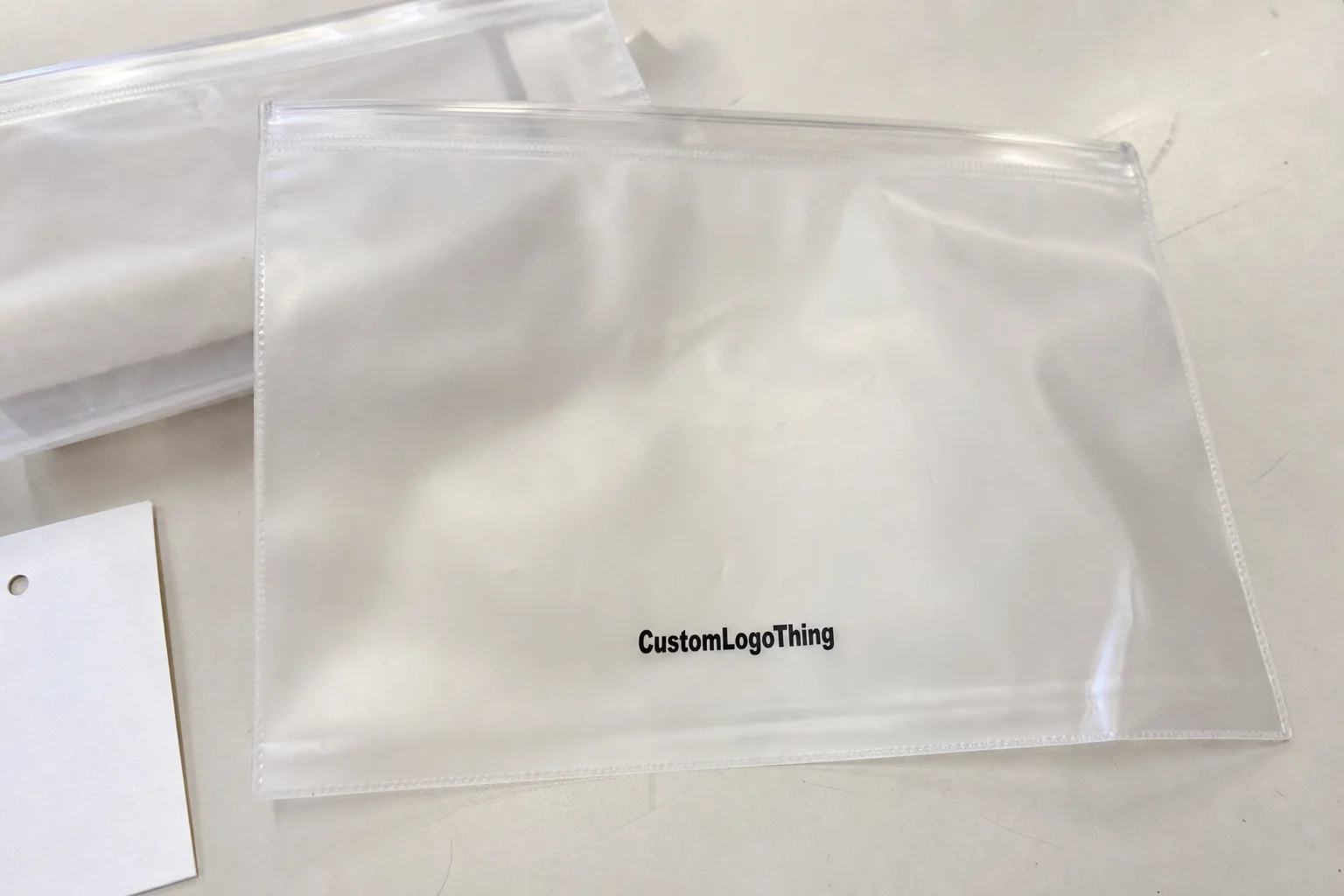
Frosted Zipper Bags sit in a useful middle ground. They are lighter and less expensive than rigid cartons, yet they still give beauty packaging a more finished look than a plain poly bag or a loose sleeve. For cosmetics brands, that mix is valuable because the packaging often needs to ship efficiently, store neatly, and still look intentional in photos, on shelves, or inside a subscription kit.
The frosted finish softens reflection, which matters more than many buyers expect. Clear glossy bags can catch every overhead light and show fingerprints, minor scuffs, and internal clutter. Frosted film diffuses that glare and gives the surface a quieter, more controlled appearance. It also lets the contents show through just enough to create interest without exposing everything at once.
From a practical perspective, this format works well for sample sets, travel-size skincare, cosmetic brushes, small tools, accessory packs, and bundled promotions. The bag keeps items together, adds light moisture resistance, and reduces the chance of pieces moving around during transit. Because the bag is flexible, freight costs stay lower than they would with a rigid secondary package.
- Lightweight protection for bottles, compacts, sachets, brushes, and accessory kits.
- Resealable closure that supports reuse and keeps small items organized.
- Moisture resistance for transit and short-term storage.
- Cleaner presentation than plain clear bags that scuff, fingerprint, or glare easily.
- Lower shipping weight than rigid gift boxes or thick cartons.
A frosted pouch also gives the printer a surface that reads differently from a standard clear film or white substrate. The finish can make color look calmer and more premium, but it can also reduce contrast if the artwork is too light or too fine. That is why the first printed Frosted Zipper Bags quote for cosmetics should be based on real specifications, not just on how the mockup looks on a screen.
“The best frosted bag is the one that supports the product without asking the packaging to do all the work. If the artwork, material, and closure are balanced, the bag feels designed rather than improvised.”
Printed Frosted Zipper Bag Product Details for Cosmetics Brands
Most printed Frosted Zipper Bags for Cosmetics are made from LDPE or a similar soft polyethylene film with a frosted finish. That finish is usually created to give the bag a matte, softly diffused look rather than a glossy transparent one. The construction is straightforward: heat-sealed seams, a bottom seal, and a press-to-close or zipper-style closure at the top. Depending on the format, the bag may also include a tear notch, hang hole, euro slot, or rounded corners.
For cosmetics use, the film is usually chosen for appearance and handling first, then for compatibility with the product being packed. A sample pouch for lip gloss does not need the same strength as a retail kit holding heavier bottles, but it still needs enough body to hold its shape and enough seal strength to survive filling and transport. If the film is too thin, the bag can stretch, wrinkle, or distort the print; if it is too heavy, the pouch may lose the soft look that makes frosted packaging appealing in the first place.
Printing on frosted film requires a little more discipline than printing on a white opaque bag. Flexographic printing is common for higher-volume runs because it gives consistent output once the setup is finalized. The tradeoff is that setup takes time, and color readability must be planned carefully. Light ink colors may need a white underlay to stay visible against the semi-translucent surface. Darker tones often reproduce more cleanly, especially for logos, small type, or regulatory text.
For brands, the benefit is visual restraint. The bag does not compete with the product inside. It softens the presentation, hides minor internal clutter, and helps the set look organized. That makes it useful for launch kits, influencer mailers, travel sets, and retail promotions where the package should feel considered but not heavy.
Common customization choices
- Size: from small sample pouches to larger retail or bundle bags.
- Film texture: matte, semi-matte, or a lighter frost level.
- Print coverage: logo only, partial coverage, or full panel printing.
- Color options: standard inks, PMS matching where supported, or tinted film.
- Brand messaging: reuse instructions, care notes, product handling reminders, or promotional copy.
Buyers sometimes focus too much on the outside dimensions and not enough on internal capacity. That is risky. A bag can technically measure large enough on paper and still be too tight for the actual product, especially if the contents include rigid bottles, boxed items, or mixed components. Tight fit can stress the zipper, complicate loading, and make the final package look crowded instead of premium. A little extra headroom often makes the bag more usable and more forgiving during packing.
If you are comparing suppliers, ask them to explain the film grade, zipper profile, and print method in practical terms. You do not need a lecture, but you do need to know whether the bag is suited to repeated opening, whether the print will stay readable, and whether the material feels appropriate for cosmetics rather than generic retail storage.
Key Specifications to Confirm Before You Request a Quote
A quick quote is useful only if the numbers behind it are accurate. For a printed frosted zipper bags quote for cosmetics, incomplete information usually leads to revisions, proof delays, or a price that changes once the supplier sees the artwork properly. Clear specs save time on both sides.
1. Dimensions and usable space
Provide the width, height, and gusset if there is one. Just as important, describe what is going inside. A pouch for a single serum bottle is not the same as one for a mixed cosmetic set with cards, inserts, and smaller accessories. The more clearly the actual contents are described, the easier it is to avoid sizing errors.
2. Film thickness or gauge
Thickness affects hand feel, stiffness, and resistance to stretching. Thin film can reduce cost, but if the bag is used for heavier products or repeated handling, the savings may disappear when the package wrinkles, deforms, or feels too flimsy. Many buyers request pricing at more than one gauge so they can compare appearance against durability instead of guessing.
3. Print coverage and ink needs
State whether the design is front-only, back-only, or printed on both sides. If the artwork includes small text, pale colors, or thin line work, ask whether a white underlay is needed. Frosted film can mute contrast, so this detail matters more than it would on a bright white pouch.
4. Closure and finishing options
Confirm the zipper style, whether the closure must be reusable, and whether a tear notch, hang hole, or retail slot is needed. Some bags are meant for internal kit organization and repeated access; others are more like shipping or display packaging. That changes the seal requirements. A closure that feels fine for a sample bag may be too light for a pouch containing several heavier items.
5. Compliance and usage context
If the bag will be used alongside other regulated packaging elements, or if there are special handling claims, say so early. Even when the pouch itself is simple, buyers may need confirmation on material formulation, print safety, or documentation for broader packaging records. For general packaging and environmental references, the Packaging School and packaging industry resources can be useful, and the EPA provides broad environmental guidance. If your packaging program includes transport testing, the ISTA site is a useful reference for distribution testing standards.
| Specification | Why It Matters | Typical Buyer Mistake |
|---|---|---|
| Bag size | Controls fit, presentation, and zipper stress | Quoting only outer size instead of usable space |
| Film thickness | Impacts durability and hand feel | Choosing thin film to save pennies, then dealing with deformation |
| Print coverage | Changes setup time and unit cost | Assuming full coverage costs the same as a logo print |
| Artwork format | Affects proofing speed and print sharpness | Sending a low-resolution JPG and expecting clean results |
| Closure style | Influences reuse and product security | Not checking zipper strength for heavier kits |
Those details may seem basic, but they are usually what separates a clean production run from a round of costly corrections.
Cost, Pricing, MOQ, and What Changes the Unit Cost
Pricing for printed frosted zipper bags is shaped by several variables, and quantity is only one of them. Size, film thickness, print coverage, number of colors, zipper style, and any finishing requirements all affect the final quote. Smaller runs almost always cost more per unit because setup time, tooling, and press preparation are spread across fewer bags.
In simple terms, a one-color logo on a standard bag is usually easier to price than a two-sided design with multiple colors, white underlay, or a more specialized finish. That gap can be large enough to change the entire packaging budget. Buyers often get the best cost control by deciding early whether the bag is meant to be a basic protective pouch or a more visible brand statement.
MOQ is usually tied to production efficiency. A supplier has to account for plate setup, color alignment, machine time, and inspection. That is why a run of 5,000 pieces may have a much better unit price than a run of 1,000, even if the material itself is similar. If you are planning a launch or seasonal program, ask for multiple quantity breaks so you can compare unit cost against storage space and sell-through risk.
A practical quote should show the main cost drivers clearly instead of hiding them inside one number. Ask whether the quote includes tooling, setup, freight assumptions, and the quantity used for pricing. A low price without context is not especially useful if the bag later needs revisions or if shipping changes the landed cost more than expected.
- Artwork complexity: fine text, gradients, and multiple colors usually increase cost and proofing time.
- PMS matching: spot color control can add setup effort, especially if brand color accuracy is strict.
- Special finishes: tinted film, matte texture changes, or custom effects can raise pricing.
- Zipper style: stronger or more specialized closure profiles may cost more than basic seals.
- Inserts or labeling: hang tags, barcode labels, or inner cards change the total package cost.
- Freight: shipping method and destination can move the landed cost significantly.
| Run Type | Typical Cost Trend | Best Fit |
|---|---|---|
| Small quantity, simple logo | Higher unit price, lower commitment | Testing a new SKU or limited promotion |
| Mid-volume with standard print | Balanced cost and flexibility | Core product lines and repeat campaigns |
| Higher volume, multi-color print | Lower unit cost after setup is spread out | Retail programs, subscription kits, and ongoing replenishment |
For buyers, the most useful comparison is not just the lowest number. It is the relationship between price, spec, and risk. A slightly higher unit price can be the better deal if it means fewer defects, better print clarity, and less chance of repacking later.
Production Steps, Lead Time, and Approval Process
The production sequence is usually straightforward, but each step affects the final result. It starts with the inquiry and specification review, then moves to artwork checking, proofing, production, inspection, and shipment. A clear file and an accurate spec sheet reduce delays more than almost anything else.
Artwork should be supplied in vector format whenever possible. That preserves logo edges, small type, and line accuracy, which is especially useful on frosted film where contrast is already softer than on white packaging. A low-resolution file can still be quoted, but it often creates extra work during proofing and can slow the schedule if the design needs cleanup.
Lead time depends on setup, color matching, machine availability, drying or curing requirements, and the supplier’s current workload. Two orders with the same artwork can still move on different timelines if one uses more colors or requires tighter proof control. A typical production window may be several business days after approval, but buyers should always ask for a specific schedule rather than assuming a standard turnaround.
Digital proofs are valuable, and physical samples are even better when the project is high visibility. They help confirm logo size, placement, text legibility, and color balance before the main run begins. That matters especially for cosmetics launches, where packaging is often seen in bright light, photographed, and handled frequently. A minor issue on a proof can become obvious once hundreds or thousands of bags are filled.
“Most packaging delays start with a missing detail, not with the press itself. If the spec is clear and the proof is reviewed carefully, production tends to move in a much more predictable way.”
It also helps to plan backward from the date the bags are actually needed. Launch schedules, trade shows, and seasonal campaigns leave little room for revision. Build in time for artwork corrections, production, freight, and any delays at handoff. A reliable supplier should be able to give a written timeline from approval through delivery, not just a factory completion date.
How to Compare Suppliers and Reduce Risk on Beauty Packaging Orders
Low price alone is a weak way to compare packaging suppliers. A quote that looks attractive can hide thin film, weak zipper seals, vague tolerances, or assumptions about freight that later change the landed cost. For beauty packaging, those problems tend to show up after the order is already in motion, which is where the real expense begins.
Look for suppliers who can explain their material and print process plainly. If they can describe how they handle a one-color logo run versus a more demanding multi-color job, that usually signals practical experience. The goal is not marketing language; the goal is to know whether the supplier understands what will actually happen on press.
Quality control questions are worth asking early. A serious quote conversation should cover inspection points, acceptable defect levels, and how print alignment and color consistency are checked. If the supplier says everything is checked, that is too vague. Ask how the bags are sampled, what defects are rejected, and how repeat orders are matched to earlier production.
- What inspection steps are used before shipment?
- How are print alignment and color consistency checked?
- What happens if the defect rate rises above the agreed tolerance?
- Can the supplier support repeat orders with matched specs?
Repeat consistency matters a great deal for beauty brands that reorder the same pouch across seasons or subscription cycles. A slight shift in frost level, zipper feel, or ink tone can make a kit look mismatched. That may not affect function, but it does affect how professional the final package feels. Keeping an approved proof on file and maintaining a written spec sheet reduces that risk.
Communication speed matters too. A supplier who answers spec questions quickly and clearly during the quote stage often handles production with the same discipline. Delays, vague responses, or unexplained assumptions at the beginning are usually a warning sign, not a minor inconvenience.
If you need help building the quote, you can start with Contact Us and share the product dimensions, artwork, and target quantity. The more complete the information, the more useful the response will be.
Next Steps to Request an Accurate Cosmetics Bag Quote
If you want a useful quote, send complete information the first time. That is the shortest route to a price you can actually use for planning. For a printed frosted zipper bags quote for cosmetics, include the bag dimensions, quantity, film thickness, print colors, artwork file, shipping destination, and the date you need the bags in hand.
Also describe the product inside the pouch. A bag for lip gloss samples is not the same as one for skincare bottles or a mixed retail set. The supplier needs to know the contents to recommend a workable size and a closure that will hold up under filling and use.
A strong request usually includes these items:
- Bag dimensions and any gusset or special shape details.
- Quantity breaks so you can compare multiple price levels.
- Film thickness or a preferred feel if you have a reference sample.
- Print details, including front-only or two-sided decoration.
- Artwork file in vector format if available.
- Delivery location and deadline.
- Any special requirements such as reuse messaging, barcode placement, or retail hang features.
If the spec is still flexible, ask for two versions: one economical and one upgraded. That gives procurement a realistic comparison and shows how much the unit cost changes when film weight, decoration, or closure requirements move up. It also makes internal approval easier because the tradeoff is visible instead of implied.
Before you approve the order, request a digital proof and a written production timeline. Those two items do a lot of work. They show what will be printed, how it will be laid out, and when the order is expected to move through production and shipping. In packaging, that kind of clarity is often more valuable than a small price difference.
A well-built quote is not just a number. It is a summary of the decisions that shape the final package: size, material, print, closure, quantity, and timing. When those details are clear, a printed frosted zipper bags quote for cosmetics becomes a practical planning tool rather than a guessing exercise.
FAQ
What details do I need for a printed frosted zipper bags quote for cosmetics?
Provide the bag size, quantity, film thickness, print colors, artwork files, and shipping location. It also helps to include the cosmetic item type so the supplier can size the bag correctly for the contents.
What affects the price most on printed frosted zipper bags for cosmetics?
Size, thickness, print coverage, number of colors, and order quantity have the biggest impact. Setup costs and freight can also change the final landed price.
What is a typical MOQ for custom frosted zipper bags?
MOQ depends on the print setup and bag specifications, so it can vary by supplier and design complexity. Ask for multiple quantity breaks to compare unit cost and inventory needs.
How long does production usually take after artwork approval?
Lead time depends on artwork approval, print setup, color matching, and production scheduling. A supplier should give you a written timeline that includes proofing and shipping time.
Can frosted zipper bags be printed on both sides for cosmetics branding?
Yes, many runs can be printed front-only or on both sides depending on the material and artwork. Two-sided printing may increase cost and should be confirmed during quoting.


