If you are comparing Frosted Zipper Bags unit cost for jewelry, the bag is doing more than holding a product. It needs to protect small items from dust, keep sets together during packing, and present rings, earrings, and chains cleanly at retail without adding much weight or bulk. That mix of presentation and function is the main reason frosted zipper bags stay useful for jewelry brands that ship often.
The cost is not just the price printed on a quote. A bag can look inexpensive until you factor in size, thickness, custom printing, or a closure that needs tighter quality control. Once those pieces are separated, the quote is much easier to compare and defend internally.
Why Jewelry Brands Choose Frosted Zipper Bags for Retail Presentation
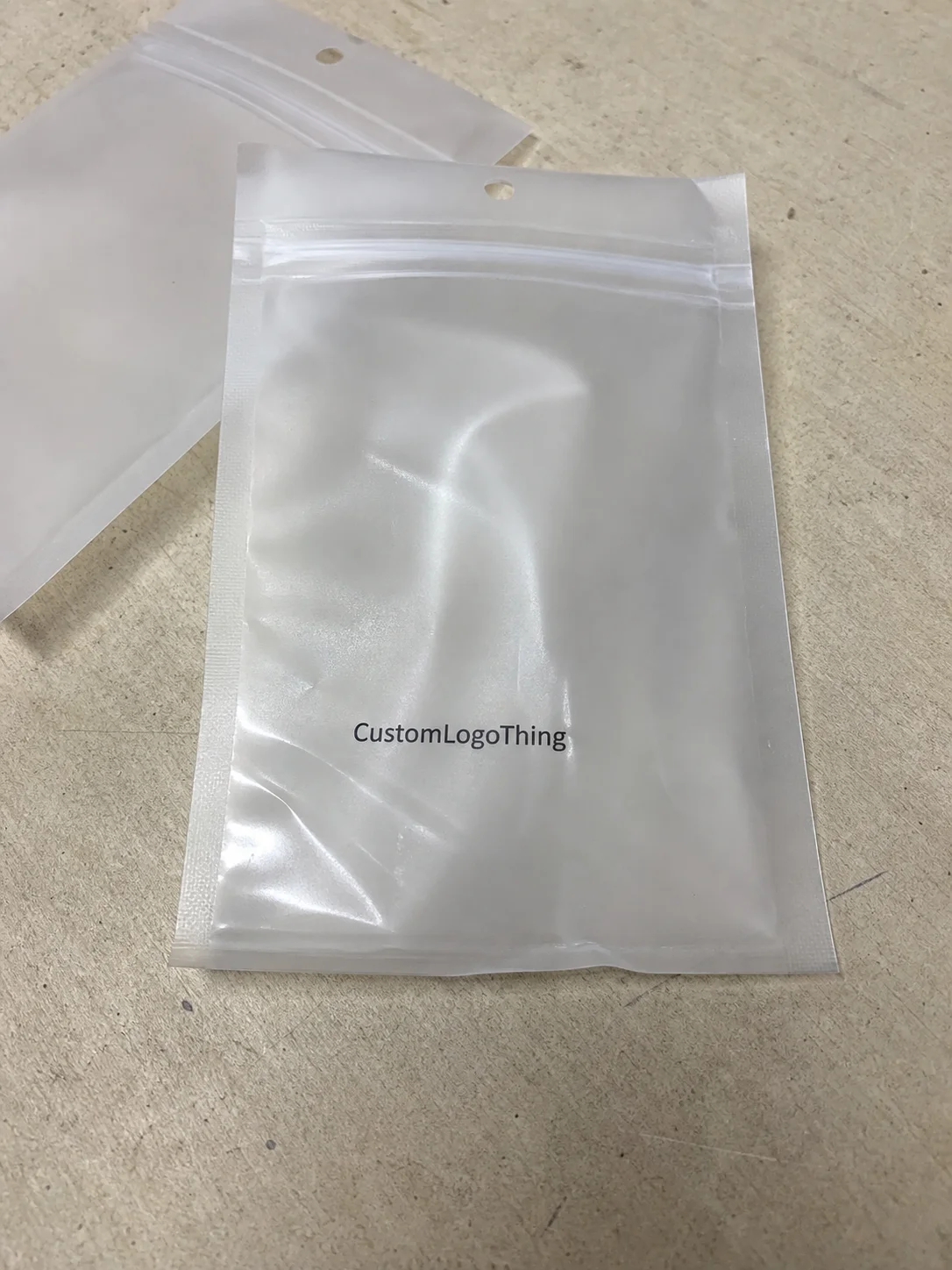
Jewelry packaging sits between display and protection. A frosted zipper bag gives a semi-transparent look that lets customers see the product without exposing it fully, which helps on boutique counters, in stockrooms, and when sorting items by collection. The frosted surface also reduces glare under bright lighting, so it often looks cleaner than crystal-clear poly when fingerprints, scuffs, or shelf reflections would otherwise show immediately.
That visual difference matters. A pair of studs, a slim chain, or a ring set can look deliberate in a frosted pouch, while loose packaging often makes even a good product feel unfinished. The zipper adds utility by reducing dust intrusion and making the pouch reusable for storage, returns, or gift presentation.
Lightweight packaging is also a cost issue. When a jewelry brand ships large volumes of small orders, even a few grams per unit can affect freight, carton counts, and fulfillment labor over time. A frosted film bag usually stays light enough to keep those costs controlled while still looking more polished than a basic plain pouch.
For jewelry packaging, the best bag is usually not the cheapest bag on paper. It is the one that fits the piece properly, presents well, and keeps its shape through sorting, packing, and customer handling.
Product Details That Affect Appearance and Performance
Most Frosted Zipper Bags for Jewelry are made from PE, EVA, or a mixed-film structure. PE is widely used because it is economical, easy to convert, and suitable for straightforward pouches. EVA usually feels softer and a bit more premium in hand, although it is not automatically the right choice for every line. Mixed films are used when a buyer wants a balance of stiffness, softness, closure feel, and visual finish.
The frosted look itself can come from the material formulation or from film treatment, depending on the structure. A good finish should be even across the surface, with a soft diffused appearance rather than a cloudy or patchy one. In handling-heavy settings, frosted film can also hide minor scratches better than a clear pouch, which is one reason many jewelry brands prefer it for retail and repacking.
Bag style changes the result as much as the material does. A slim pouch suits chains and pendants, while a small square format often works better for rings, stud cards, or compact sets. Wider pouches make sense for bracelets, bundled items, or pieces that include inserts and care cards. If the bag is too tight, the zipper area can be stressed; if it is too large, the presentation loses precision and the jewelry starts to shift around inside the pouch.
Branding options are usually simple, and that can be an advantage. A one-color logo, a small SKU print, or a label panel is often enough for a jewelry program that needs organization more than heavy decoration. For brands with multiple collections, a visible identifier on the bag can save time in packing and inventory sorting.
- Common construction: PE, EVA, or mixed film
- Common closures: zipper lock, press-to-close style, or a slim slide zipper depending on structure
- Display options: flat pouch, euro-slot, or hang hole
- Branding options: one-color logo, SKU print, or label area
These details affect more than appearance. Buyers should ask how soft the film feels, how clearly the jewelry shows through, and how well the zipper aligns after packing. Those checks are practical, not cosmetic, and they make a difference in day-to-day use.
Specifications Buyers Should Confirm Before Ordering
Before requesting a quote, lock down the basic specs. Width, height, thickness, zipper type, edge finish, and any hole-punch or gusset requirement all influence fit and pricing. A few millimeters can be enough to change whether a ring card sits neatly or the product has to be forced into the pouch.
Thickness matters more than many buyers realize. Thicker film usually gives the bag more body and a more premium hand feel, especially for heavier earrings, multi-piece sets, or gift packs. Thinner film may still work for lightweight items, but it tends to wrinkle more easily and can feel less stable in handling. That can affect both durability and perceived value.
For jewelry storage, ask whether the bag must be suitable for direct contact with plated metals, whether anti-tarnish performance is needed, or whether the packaging has to stay odor-neutral. Not every jewelry line needs anti-tarnish protection, but the question matters for silver pieces, high-value finished goods, and products that may sit in inventory for longer periods.
Samples are worth requesting before bulk production, especially when the pouch must fit a card, insert, or branded backing exactly. A sample lets you test zipper feel, film stiffness, seal quality, and how the bag behaves once the product is inside. That check often catches issues that a flat specification sheet will miss.
- Width and height: confirm the usable inside size, not only the outside dimensions
- Thickness: specify mil or microns
- Zipper style: standard closure, reinforced closure, or custom color if needed
- Extras: hang hole, euro-slot, gusset, or special edge finish
- Performance needs: anti-tarnish, direct contact, or retail display requirements
If you are comparing suppliers, ask each one to quote the exact same specification set. A quote for a 0.08 mm bag is not comparable to one for a 0.12 mm bag, even if both are described as Frosted Zipper Bags. The same applies to print coverage, shape, and zipper style.
Frosted Zipper Bags Unit Cost for Jewelry: Pricing Factors and MOQ
The Frosted Zipper Bags Unit Cost for jewelry usually comes down to five things: size, thickness, print complexity, order quantity, and whether the order uses a stock shape or a custom dimension. If the bag is a standard size with no print, the cost is driven mostly by material, conversion, and packing labor. Add custom dimensions, logo printing, or special closure details, and the price moves because the production process becomes more involved.
MOQ, or minimum order quantity, has a direct effect on unit cost. Smaller runs usually carry a higher cost per piece because setup work, film conversion, zipper alignment checks, printing preparation, and packing labor are spread across fewer units. As volume rises, the unit cost usually drops, especially for a simple one-size order with light branding.
For buyers, the first price tier is often the hardest to justify, but it may still be right for a launch, a test collection, or a seasonal run. Larger tiers usually offer better bulk pricing, but only when the packaging format is stable and demand is predictable enough to support the order.
| Order Type | Typical Unit Cost Range | Best For | Notes |
|---|---|---|---|
| Stock-size, unprinted | $0.03–$0.08 | Testing, small launches, simple storage | Lowest setup charges; limited customization |
| Custom size, no print | $0.06–$0.14 | Fitted jewelry lines | May include tooling fees depending on shape and closure |
| Printed logo, standard size | $0.09–$0.22 | Retail branding | Pricing depends on print coverage and color count |
| Premium structure or specialty finish | $0.15–$0.35+ | Gift sets, higher-end collections | More labor, tighter tolerance, and higher material cost |
These ranges are reference points, not promises. The real quote depends on exact size, film thickness, zipper style, and whether the supplier is offering stock inventory or fresh production. Tooling fees and setup charges may also affect the first order, even when the later unit price looks attractive.
Hidden cost drivers are where buyers get surprised. A custom zipper color can add cost. Tight dimensional tolerance can raise scrap risk and inspection time. Retail-ready bundles, such as packed sets or labeled inner packs, also add labor. If the bags need to be packed a particular way for your warehouse or fulfillment partner, that has to be included in the quote from the start.
If you want a more honest comparison, ask for landed cost rather than only factory price. Freight, packaging configuration, duties where applicable, and sample charges can change the total. For shipment and reuse context, some packaging teams also reference ISTA testing guidance and EPA guidance when they are thinking about recyclability and repeated-use packaging choices.
Process and Timeline from Quote to Delivery
The quoting and production flow is usually straightforward, but only if the buyer sends complete information. It normally starts with inquiry and spec confirmation, then artwork review if printing is involved, followed by sample approval, mass production, quality inspection, and shipment. Each step depends on the one before it, so delays often stack up when dimensions are vague or artwork changes late.
Stock-style orders are usually faster because the bag body and closure are already defined. Custom sizes and printed orders need additional setup, and that extends lead time. For simpler runs, the schedule after approval is often around 12 to 15 business days, but that can stretch if the order is complex or if production capacity is tight.
Artwork delays are common. A missing logo file, an unclear color reference, or a last-minute text change can hold the order while everything is rechecked. The same applies to sample approval. If the pouch has to fit a card, insert, or box insert precisely, skipping the sample stage is a poor tradeoff. A short delay at the beginning is easier to absorb than a full rework after production starts.
- Send dimensions, quantity, and bag type.
- Confirm material thickness, zipper style, and print needs.
- Review the quote and any tooling or setup charges.
- Approve artwork or sample.
- Move into production and final inspection.
- Ship once packing and quality checks are complete.
If the bags are part of a collection launch, build extra time into the schedule. Even a simple pouch deserves proofing if the logo placement has to be exact or if the fit around the jewelry needs to be controlled closely.
How to Keep Jewelry Orders Consistent, Clear, and Cost-Controlled
Consistency is where a packaging supplier earns trust. For frosted zipper bags, that means stable thickness control, clean zipper alignment, an even frosted finish, and repeatable size accuracy from one run to the next. When those basics are managed well, the bag looks better, packs better, and creates fewer issues on the receiving side.
Quality checks should not be treated as a formality. A solid production run includes zipper function checks, seal inspection, print clarity review, and random dimensional sampling. If the zipper binds or the bag edge is uneven, the problem will show up quickly in packing operations, and the waste can erase the savings from a lower quote.
Practical cost control usually comes from specification discipline, not from squeezing the lowest number out of a supplier. Sometimes a slightly thinner film is enough. Sometimes a printed logo can be simplified. Sometimes a stock size is a better fit than a custom dimension because it saves money without hurting presentation. That kind of adjustment is what keeps the packaging budget under control while still preserving the feel and function the brand needs.
Clear communication matters more than polished wording. Straight pricing tiers, honest comments on feasibility, and a realistic schedule are usually more valuable than a low quote that changes later. If a supplier cannot explain why the unit price shifts with quantity or print coverage, that is a warning sign worth paying attention to.
Next Steps to Request the Right Quote and Avoid Rework
If you want an accurate quote, send the basics in one message: jewelry dimensions, target bag size, preferred thickness, quantity, print needs, and any display or packaging requirement. If the bag has to fit a specific card, insert, or box, include those measurements too. The better the input, the tighter the quote.
Reference photos help a lot. If you already have a bag you want to match or improve, send a sample image and note what you want changed, such as a clearer frosted finish, stronger zipper feel, or a different size ratio. That cuts down on back-and-forth and reduces the chance of a misread specification.
Ask for tiered pricing. A proper quote should show how the unit cost changes at different volume levels, not only one number. That lets you compare launch quantities, replenishment quantities, and longer-term demand in a way that is actually useful for planning.
The best buying decision is rarely the cheapest one. It is the one that balances fit, finish, repeatable quality, and a price that still supports your margin. If the specs are right, the sample is approved, and the unit cost is clear across quantity tiers, the packaging is far more likely to support the product instead of creating avoidable waste.
FAQs
What affects frosted zipper bags unit cost for jewelry most?
Size, thickness, print complexity, and order quantity usually have the biggest impact on unit cost. Custom dimensions and specialty finishes raise setup work, while larger quantities reduce the per-bag price.
Can I order frosted zipper bags for jewelry in a small MOQ?
Yes, smaller MOQs are often possible, but the unit cost is usually higher because setup and production labor are spread across fewer pieces. Stock-size options are often the lowest-cost entry point if you need a smaller order.
Which bag size is best for rings, earrings, or necklaces?
Small square or narrow pouches usually work well for rings and earrings. Longer formats are better for chains and necklaces, especially if you want to keep them from tangling.
How long does production usually take after artwork approval?
Timing depends on whether the bags are stock or custom, plus whether printing is involved. Once artwork and samples are approved, simpler runs are often faster, while custom orders need more time for setup and inspection.
What should I send to get an accurate quote?
Send the bag dimensions, quantity, thickness preference, zipper color or style, and any logo artwork. If the bags must fit a jewelry card or insert, include those measurements too so the quote reflects the actual use case.


