Hotel Frosted Zipper Bags Unit Cost Review
Hotel Frosted Zipper Bags Unit Cost review sounds straightforward until the quote arrives and the line-item total is nowhere near the lowest number in the email. A thicker film, a better zipper, tighter seal control, or a more realistic carton format can move the price more than the logo ever will. The cheapest quote is often the one with the most assumptions hidden inside it.
For a hotel buying slippers, toiletries, laundry inserts, or amenity kits, the bag itself is rarely the hard part. The problem is vague specs. A 2,000-piece run can look clean on paper, then unravel once setup charges, artwork review, pack counts, and freight get added. That is how buyers end up comparing numbers that were never built on the same basis.
This is a buying tool, not packaging filler. The point is to separate true cost drivers from optional upgrades so you can request cleaner quotes, compare suppliers fairly, and avoid rework after the sample stage.
"If the supplier cannot quote the size, thickness, zipper style, print area, and pack count in one pass, the quote is not ready for purchase."
Why unit cost changes faster than buyers expect
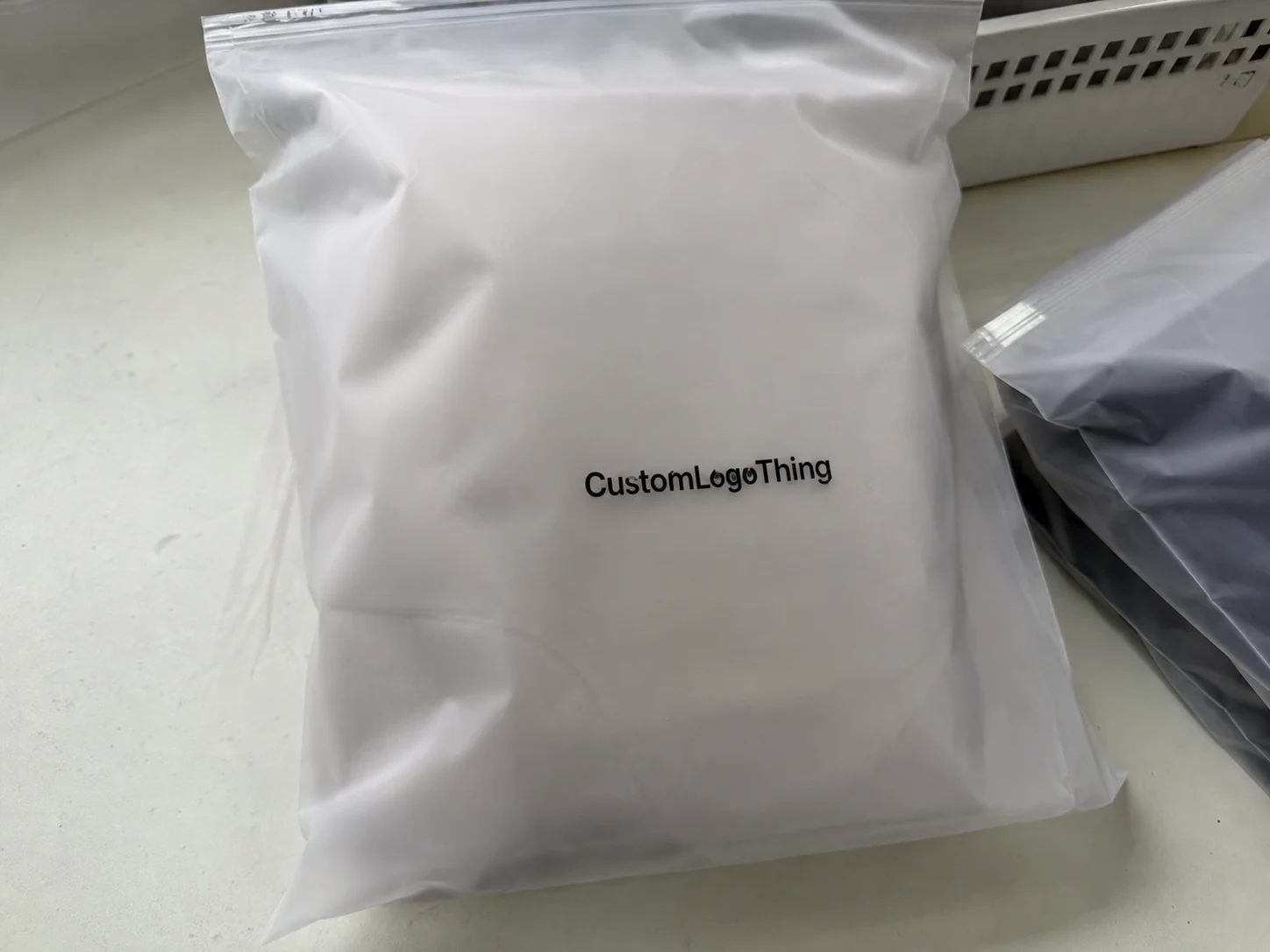
In a hotel Frosted Zipper Bags Unit Cost review, the most common mistake is assuming the logo drives price. It usually does not. Branding matters, but the real cost pressure sits in the film spec, zipper quality, seal consistency, and how much manual handling the order needs. Change those, and the unit cost changes with them.
One supplier may quote a 0.08 mm film with a basic zipper. Another may quote 0.10 mm film, a smoother pull, and tighter side-seal tolerance. Those are not minor variations. They are different products, even if they look similar in a browser tab.
Hotels also create hidden cost traps because the purchasing brief is often broader than the actual packaging spec. The buyer wants a bag for guest amenities, but does not define whether it should be stock size or custom size. The artwork arrives in the wrong format. The supplier assumes bulk packing, while the hotel wants inner packs for housekeeping distribution. Each decision changes labor, material use, or setup time, and that gets priced into the quote one way or another.
That is why the lowest headline price is not the best first filter. A clean quote lists assumptions. A weak quote leaves them buried. If you want to compare suppliers without guesswork, ask what is included, what is excluded, and what changes the price after proof approval.
Hotel frosted zipper bags unit cost review: the specs that matter
A proper hotel Frosted Zipper Bags unit cost review starts with the spec sheet, not the artwork. These bags sit between presentation and utility, so the supplier needs enough detail to build the right pouch without padding the quote for missing information. In packaging, vague briefs are expensive because the factory has to protect itself from uncertainty.
The core specs should appear on every request:
- Width and height, in millimeters or inches.
- Gusset depth, if the bag needs extra volume.
- Film thickness, usually in microns or mils.
- Zipper type, basic press seal, upgraded zipper, or reinforced closure.
- Print coverage, blank, one-color logo, or full-area branding.
- Carton pack count and any inner-pack requirement.
Leave one of those out and a supplier will either ask follow-up questions or pad the quote to cover the unknown. Both outcomes slow the buying process. The better approach is simple: define the bag completely before asking for price.
Use case matters too. A guest amenity bag does not need the same construction as a retail pouch that will be opened repeatedly, displayed, and handled by multiple people. Even so, the hotel version still needs a clean frost finish, reliable closure performance, and a size that fits the contents without wasting film. Oversizing sounds harmless until the extra material starts lifting the unit cost across every order cycle.
For larger or export-oriented orders, ask how the supplier handles packaging tests and documentation. Transit durability is not a marketing point, it is a cost control issue. Standards from ISTA are useful when shipment damage is part of the risk profile. If the packaging program includes paper inserts or branded collateral, sourcing references from FSC may matter to procurement teams that need documented claims. Those references do not lower the bag price on their own, but they do shape what a serious quote looks like.
Material, finish, and printing choices that move the price
Film grade is usually the first real cost lever. A standard frosted PE film is cheaper than a tighter-spec blend with better clarity control and a more uniform feel. Thickness matters more than many buyers expect. Moving from a lighter film to a heavier one can change the unit cost even when the bag size stays the same. On a screen, the difference is easy to miss. On a production line, it is not.
Surface finish is another quiet price driver. Some frosted bags have a soft matte look that reads as clean and understated. Others show a more controlled frost effect, which can improve the hand feel and visual consistency. If the finish is uneven, the bag looks cheap in guest-facing use. If it is too refined, the factory may be running a higher-grade film or a slower line speed, and that shows up in the quote.
Printing is where buyers often overestimate the cost impact of branding. In many runs, a single-color logo barely moves the budget compared with the material changes. Multi-color printing, exact Pantone matching, and large print coverage can raise the price, but usually not as much as teams fear. In practice, the cleanest option is often a one-color mark placed well rather than a large graphic trying to do too much.
Here is the rough order of price impact, from least disruptive to most disruptive:
- No print, stock size, standard zipper.
- Single-color logo, stock size, standard zipper.
- Single-color or two-color print, custom size, standard zipper.
- Large print area, custom size, upgraded zipper, tighter tolerance.
That said, do not save pennies on the closure if the bags will be opened and reclosed by guests. A smoother zipper or stronger side seal changes perceived quality quickly. Housekeeping handles the bag, guest services handles it, and then the guest handles it again. Any weak point will be noticed somewhere in that chain.
| Option | Typical cost per piece | Setup charges | Best fit |
|---|---|---|---|
| Blank stock bag | $0.12-$0.20 | Low or none | Fast replenishment, basic amenity use |
| Single-color printed bag | $0.16-$0.28 | $35-$120 tooling or screen fees | Standard hotel branding, moderate volume |
| Custom size with print | $0.22-$0.40 | $80-$250 depending on print method | Tailored amenity packs, tighter visual standards |
| Heavy film, upgraded zipper, custom carton print | $0.30-$0.55 | Higher setup charges and more sampling | Premium hotel presentation, stronger handling needs |
Those numbers are illustrative, not a promise. They do show the direction of travel, though. Film, size, and closure details move the cost more reliably than artwork does. That distinction matters because many buyers negotiate the logo and ignore the substrate, which is where the budget actually lives.
Cost, pricing, and MOQ thresholds that change your quote
Unit cost drops with volume for a simple reason: fixed setup gets spread across more pieces. The first pricing tier often looks expensive, then the next tier falls once the run crosses the supplier's production threshold. Buyers who only look at one tier can end up ordering the wrong quantity or overpaying for a small run that should have been restructured.
A useful hotel Frosted Zipper Bags unit cost review should ask for three price breaks, not one. Request a low-MOQ price, a mid-volume tier, and a target annual volume tier. That gives a clearer view of bulk pricing instead of a single number that only works if the supplier is trying to win the order quickly.
Watch the hidden costs. They are the ones that distort the quote after the headline number looks attractive.
- Tooling fees for custom shapes, print screens, or plates.
- Setup charges for printing and production line changeovers.
- Sampling or proof charges.
- Color matching or special ink adjustments.
- Custom carton printing.
- Freight, duties, and last-mile delivery.
MOQ changes the buying strategy. A low minimum order quantity can still carry a higher unit price because the supplier is protecting setup expense. A high MOQ can lower the per-bag number while creating dead inventory that ties up budget and storage. Neither is smart on its own. The right answer depends on your consumption rate, replenishment cycle, and storage space, not on a generic "cheap versus premium" split.
One example is enough to show the pattern. A 1,000-piece order at $0.28 each can look more affordable than a 5,000-piece order at $0.19 each. Then freight, carton work, and setup charges appear, and the spread shrinks. Sometimes it disappears. Sometimes the larger order wins by a wide margin. You do not know until each quote uses the same assumptions.
Lead time and MOQ usually move together as well. A low MOQ often means the supplier is using a ready spec and can turn it faster. A custom spec at a higher MOQ may take longer, but it can also produce a better value over the life of the program. The correct choice depends on replenishment pattern, not on a generic preference for the cheapest line item.
Process and timeline: from spec sheet to shipment
The order flow is simple on paper: inquiry, spec confirmation, artwork check, sample or proof approval, production, quality inspection, packing, shipment. The sequence is not the problem. The delays hiding inside each step are the problem.
Simple stock-style orders move faster. Custom sizes, heavier film, and multi-color print stretch the timeline. Tight dimensional tolerance adds more review time because the factory has to control the line more carefully. If speed matters, the best thing a buyer can send is a complete spec sheet. A vague request for "frosted zipper bags" invites clarification loops, and clarification loops kill schedules.
Realistic timing usually looks like this:
- Stock-style, blank: often 5-10 business days before dispatch.
- Printed custom run: often 12-18 business days after proof approval.
- Custom size plus print: often 15-25 business days depending on tooling and line load.
Transit time is separate. Buyers mix up production time and shipping time constantly, then act surprised when an order is "late" because the factory's clock and the freight clock were never the same clock. The factory does not control ocean transit, customs clearance, or the final delivery chain.
There are a few boring ways to save time, and they work better than most urgent emails. Send artwork in the correct file format. Name one approver. State the pack count per carton. Confirm the destination before asking for freight. None of that is exciting. All of it prevents avoidable delay.
Why buyers switch suppliers after the first order
Repeat orders disappear for a reason, and usually for several reasons at once. The first is inconsistency. The film clarity changes. The zipper feels different. The carton count is off. The second is quote drift, where the supplier comes back on the next order and quietly rewrites the numbers. That is not a pricing strategy. It is a warning sign.
Reliability matters more than many purchasing teams admit at the start. A supplier worth keeping should be able to reproduce the same bag spec on the second run without treating the original quote like a rumor. If the factory cannot hold the spec, the hotel loses time checking incoming goods, and the packaging program becomes a distraction rather than a support item.
There are a few red flags that should make buyers pause:
- Vague unit pricing with no clear assumptions.
- No dimensional tolerance listed anywhere.
- No sample or proof approval step.
- No answer on carton format or pack count.
- Quote changes after the first sample without explanation.
Those are not small annoyances. They are early signs of weak process control. Clean quoting is usually a sign of clean production discipline. Sloppy quoting often means the factory is improvising, and packaging buyers do not need improvisation. They need repeatability.
If you want a supplier relationship that lasts, ask for the same bag spec to be quoted three ways: blank, printed, and with the exact pack format you need. Then compare not only the unit cost but also the setup charges, sample policy, and lead time. A supplier that answers clearly is worth more than one that hides behind a low headline number.
Next steps to lock a clean quote and avoid rework
The cleanest quote request is also the least dramatic. Send the dimensions, target thickness, zipper style, print area, quantity, pack count, and destination. If the bag is part of a larger amenity kit, say so. If the hotel wants a specific frost level or a particular hand feel, say that too. The better the brief, the less the supplier has to guess.
If you are comparing suppliers, ask for three price breaks and insist that each quote uses the same assumptions. A real hotel frosted zipper Bags Unit Cost review depends on apples-to-apples data. Not one supplier quoting a blank stock pouch while another quotes a custom printed pouch with setup charges buried in the small print.
Use this checklist before approving the order:
- Dimensions confirmed.
- Film thickness confirmed.
- Zipper style confirmed.
- Print method and print coverage confirmed.
- MOQ and price tiers confirmed.
- Sample or proof approved.
- Freight and carton count confirmed.
That list is not decorative. It prevents the usual mess. Once the order is built on the same assumptions, unit cost becomes a useful number instead of a misleading one. You can compare price per piece, review bulk pricing tiers, and judge whether the upgrade in feel is worth the extra spend.
For hotels, the best packaging choice is usually the one that balances presentation, repeatability, and budget discipline. A bag does not need to be overbuilt to look good. It does need to be consistent, honest on specs, and simple to reorder without drama. If you want a useful hotel frosted zipper bags unit cost review, stop asking for generic pricing and start asking for a complete spec-based quote. That is the difference between buying packaging and buying problems.
What affects hotel frosted zipper bags unit cost the most?
Size, thickness, and zipper style usually move price more than the logo itself. Order volume matters because setup cost gets spread across more bags. Print coverage and packaging requirements can add separate charges.
How does MOQ change the price on frosted zipper bags for hotels?
Lower MOQ usually means a higher unit price because setup costs are spread over fewer pieces. A supplier may offer better tiers once the order crosses a production threshold. Compare landed cost, not just the per-bag quote, before you decide.
Can I get a sample before placing a bulk order?
Yes, and you should. A sample shows zipper feel, frost finish, seal quality, and actual size. Ask for a blank sample and a printed sample if branding matters. Approve the sample before mass production to avoid rework.
What is a realistic lead time for hotel zipper bag orders?
Simple stock-style orders move faster than custom sizes or printed runs. Artwork approval and sample approval often control the schedule more than the factory itself. Freight time is separate from production time, so confirm both before you issue a PO.
What should I include in a quote request for frosted hotel bags?
Include dimensions, thickness, zipper type, print colors, and quantity. Add pack count per carton, shipping destination, and whether you need samples. Ask the supplier to separate unit cost, setup charges, and freight so the quote is comparable.


