For a brand selling candles, refills, wax melts, or sampler sets, the home fragrance Frosted Zipper Bags Unit Cost review is rarely just about the lowest quote. The real question is whether the bag makes a $6 refill look like a considered product or a loose insert tossed into plastic. That difference affects conversion, gift appeal, and whether the bag gets reused after purchase.
From a packaging buyer’s point of view, Frosted Zipper Bags sit in a useful middle ground. They cost more than plain poly sleeves, but far less than folding cartons or rigid boxes. They also conceal clutter better than clear bags while still showing shape, color, and printed branding. That matters when the item inside is small, aromatic, and often sold in sets.
Why frosted zipper bags change the perceived value of home fragrance packaging
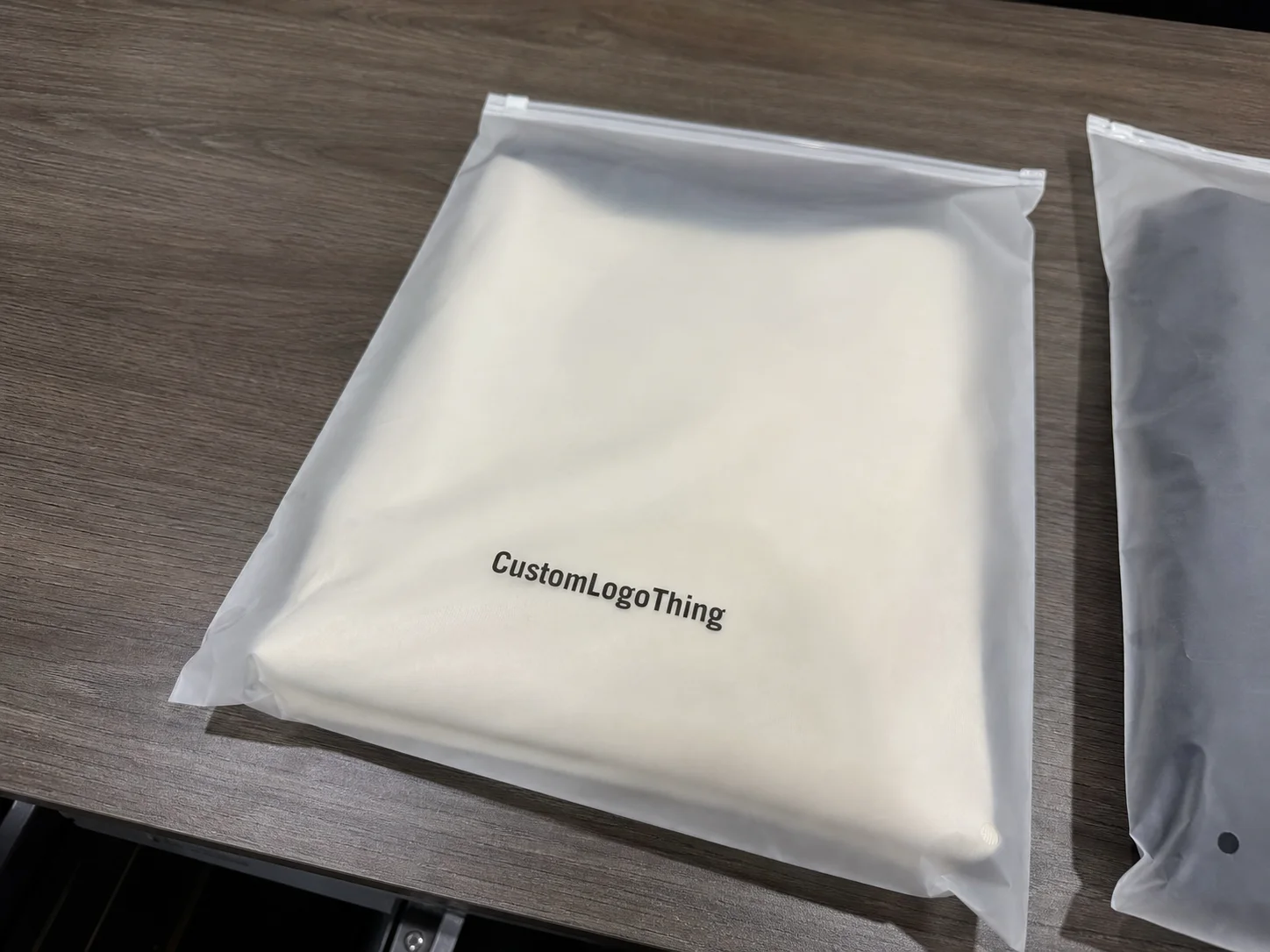
A frosted finish does a very specific job. It softens what the customer sees. Instead of exposing every edge, seam, and insert, the bag creates a cleaner silhouette. A candle refill, incense bundle, or sachet pack can look more premium simply because the presentation feels calmer. That visual restraint is not decorative fluff. It changes how buyers judge value before they touch the product.
The same item in a plain clear pouch often reads as utilitarian. Put it in a frosted zipper bag, and it reads as intentional. Retail packaging is full of these small shifts. Brands spend heavily on labels, scent cards, and insert design because shoppers make quick judgments. Packaging follows the same rule.
There is also a practical upside. A resealable zipper supports repeat use. Customers can store fragrance inserts between seasonal uses, keep sample sets organized, or close up a refill after opening. That matters for aroma protection and for returns management, especially in categories where the product may be opened and inspected before being used. A bag that seals cleanly can reduce complaints about scent fade caused by poor storage.
Key buyer takeaway: frosted zipper bags are often chosen not because they are the cheapest package, but because they improve shelf value without the cost and weight of a rigid format. For many home fragrance lines, that trade-off is hard to beat.
In practice, this format fits common retail goals:
- Cleaner shelf presentation for refills and sample sets
- Better unboxing for giftable fragrance items
- Improved reuse for customers who store sachets or inserts
- Lower packaging weight than a box-based format
- Simple reordering when the design stays stable
If you are comparing packaging systems, the frosted bag often lands between plain functional packaging and fully printed box structures. It is not the answer for every SKU. It is a sensible answer for many that need polish without excess material.
Home fragrance frosted zipper bags unit cost review: what you are actually paying for
The phrase home fragrance Frosted Zipper Bags Unit Cost review sounds narrow, but the pricing structure is broader than it first appears. Unit price is driven by several variables at once: film gauge, bag size, zipper style, print coverage, and whether the dimensions come from an existing mold or require new tooling. Two bags that look similar on paper can carry very different conversion costs.
The bag itself is only one piece of the bill. Setup charges, tooling fees, artwork preparation, freight, and inspection all affect landed cost. On a small run, those fixed charges matter a lot. Spread over 1,000 bags, a $120 setup fee is painful. Spread over 10,000 bags, it becomes minor. That is why bulk pricing can look dramatically better even when the base bag price only drops a few cents.
Frosted film usually costs more than clear stock because the opacity and matte-like appearance require a different material choice. Add a printed logo, and cost per piece rises again. A one-color logo on a standard size may remain economical, while full-coverage artwork on a custom dimension will move into a different bracket entirely. Size matters too. A small sachet pouch and a larger refill bag do not consume the same amount of film, and the zipper length changes as well.
For a practical benchmark, buyers often see price ranges like these on custom runs, depending on volume and decoration method:
| Spec level | Typical use | Indicative cost per piece | Notes |
|---|---|---|---|
| Plain frosted stock bag | Samples, inserts, small accessories | $0.08-$0.18 | Lower setup charges, faster quoting |
| Custom size with one-color print | Refills, gift sets, wax melts | $0.12-$0.28 | Common sweet spot for branded packaging |
| Printed custom bag with special features | Retail bundles, premium collections | $0.22-$0.45+ | Hang hole, gusset, tear notch, or heavy print coverage |
These figures are not universal, and they should not be treated as a promise. Still, they are useful for quote screening. If a supplier offers a price far below the range, check the spec carefully. Thin material, weak zipper integrity, or limited print durability can be hiding behind the headline number.
Quote comparison should always be normalized. That means comparing unit cost, freight, decoration method, sample charges, and carton fees together. A cheaper bag with expensive shipping can lose to a slightly higher-priced bag with lower freight and fewer add-ons. In other words, the real question is landed cost, not sticker cost.
For home fragrance buyers, the most useful cost lens is not “How cheap can I make this?” It is “How much shelf value do I get for each dollar spent?” That framing usually leads to better packaging decisions.
Product details that matter for fragrance samples, refills, and gift sets
Frosted zipper bags are versatile, but they do not suit every fragrance item equally. Wax melt sleeves, incense packs, reed diffuser refills, room spray accessories, and sampler assortments all bring different packaging demands. Some need visibility. Some need aroma containment. Some need hang display. The bag format can support all of these, but only if the detail level matches the product.
Zipper integrity is one of the first things to inspect. A weak closure can reduce customer confidence even if the bag looks good from a distance. Fragrance products are sensitive to storage conditions, and customers notice when the seal feels flimsy. A clean-rolling zipper that closes with even pressure is worth paying for, especially if the bag is reused after purchase.
Visual merchandising is another reason this format performs well. Frosted film diffuses the contents just enough to make the display look organized. Print contrast tends to stand out better on a matte-like surface than on glossy clear film, provided the artwork is designed for it. Dense colors can look richer. Fine text can get muddy if the ink choice is poor. That is why sample approval matters.
For gift sets, the bag can do more than hold product. It can act as a visual frame. A sampler assortment with a frosted bag, a crisp logo, and a well-placed label can feel finished without requiring a rigid box. That lowers material cost, reduces shipping weight, and simplifies assembly. It also gives brands a fast path to seasonal SKUs, limited editions, and retail bundles.
Practical buying notes are straightforward:
- Choose pack size based on retail assortment, not just warehouse convenience
- Confirm label space for SKU, scent name, barcode, or compliance text
- Decide whether the bag needs a hang hole for peg display
- Check whether flat shelf display or vertical hanging is the primary use
- Ask if the zipper can survive repeated open-close cycles without splitting
From a packaging professional’s view, the strongest use cases are the ones where the bag serves both storage and presentation. That dual role helps justify the cost.
Specifications buyers should confirm before requesting a quote
Most price surprises come from incomplete specifications. If you ask for “frosted zipper bags” without dimensions, thickness, or print details, you will get a vague answer back. That is not necessarily a sign of poor service. It is a sign that the buyer has not yet defined the job.
Before requesting pricing, confirm the following:
- Dimensions: width, height, and any gusset depth
- Film thickness: often listed in microns or mils
- Zipper type: standard press-to-close, dual-track, or enhanced seal
- Seal strength: especially important for repeated use
- Print method: flexographic, gravure, digital, or screen, depending on supplier capability
- Color limits: one-color logo versus full artwork coverage
- Finish details: frosted, soft matte, or partial transparency
For fragrance products, compatibility questions matter too. Some inserts are highly aromatic or lightly oil-based. If the bag will hold scented cards, wax-based items, or items with residue risk, ask whether the film and closure are suitable for that application. A supplier experienced in packaging can usually advise on storage behavior and likely failure points. If they cannot, that is a warning sign.
Accuracy also depends on artwork placement. Frosted surfaces can affect color appearance and small text legibility. Fine lines may need a thicker stroke. A white underprint may be needed if the logo must stay crisp. Tolerance matters as well. If the bag is only slightly off-size, your insert may shift during packing, and the final presentation will look less polished than the proof suggested.
Reliable suppliers should be willing to provide either a physical sample or a clear spec sheet, and ideally both. The sample tells you how the zipper feels, how the film behaves, and whether the finish matches the brand. The spec sheet gives you measurable data for repeat orders and internal approvals. That combination reduces risk more effectively than any sales pitch.
For buyers who want a recognized framework for packaging testing, the ISTA standards are a useful reference point for shipment and handling expectations. They do not dictate bag design, but they help frame how the package should perform in transit.
Pricing, MOQ, and how to read a supplier quote
MOQ is where many packaging projects become real. A supplier may quote a competitive price, but only if the order meets the minimum order quantity. For Custom Frosted Zipper Bags, MOQ can vary widely based on size, print method, and whether the supplier already has stock materials on hand. Smaller orders are possible, but the cost per piece is usually higher because setup charges are spread over fewer units.
A smart quote should include more than one number. Ask for the bag price, the sample charge, tooling fees if applicable, freight, packaging fees, and carton charges. If the supplier only offers one headline price, you are not seeing the full picture. The lowest base quote can become the most expensive landed order once shipping and setup are added.
It also helps to ask for tiered pricing. The jump from 1,000 to 3,000 units can be more efficient than buyers expect. In some cases, the unit cost drops enough to offset the extra inventory holding cost. In other cases, it does not. But you cannot make that decision without a side-by-side quote.
Here is a simple way to read two competing offers:
- Compare the same size, thickness, zipper type, and print method.
- Add freight and any packing charges.
- Divide the total landed cost by the number of usable bags.
- Check whether the supplier included samples, revisions, or plate costs.
- Confirm whether price holds across the quoted quantity band or changes after proof approval.
That last step matters. Some suppliers quote an attractive tier, then discover the artwork requires extra setup or the dimensions need adjustment. The result is a revised cost. That is not automatically bad practice; it just means the initial quote was provisional. Buyers should expect that if the spec is still developing.
One more practical point: bulk pricing is not just about order size. It is also about design stability. A repeat order with the same dimensions, same artwork, and same closure can usually be priced more efficiently than a brand-new format. Consistency saves time, and time is money in packaging procurement.
For environmental and compliance context, the EPA offers guidance relevant to packaging waste and materials management through its site at epa.gov. It is not a pricing tool, but it is useful when brands are weighing packaging volume, disposal, and sustainability claims.
Buying packaging well is mostly discipline. Ask the right questions. Strip the quote to its actual components. Then compare apples to apples.
Production steps, lead time, and approval milestones
The production sequence for custom frosted zipper bags is usually straightforward, but delays tend to cluster in the same places. The workflow usually starts with a brief, then moves to artwork checking, dieline confirmation, proof approval, production, inspection, and shipment. If any one of those steps stalls, the schedule stretches.
In practice, the biggest delay is often not the factory floor. It is the approval loop. Art revisions, missing dimensions, unclear logo files, and late proof sign-off can add days quickly. A supplier can only print what is approved. If the dieline is wrong or the typography is too small for the frosted finish, the job should stop until it is corrected. That is a quality control measure, not a problem.
A realistic lead-time framework looks like this:
- Standard stock-spec run: often 10-15 business days after proof approval
- Custom size with one-color print: often 12-18 business days
- More complex print or special features: often 18-25 business days
- Sample development: add several days before production if a physical sample is required
Those ranges vary by supplier load, seasonality, and shipping method. They are not guarantees. Still, they give buyers a useful planning window. If your launch date is fixed, the approval milestone becomes more important than the factory promise. Approve the proof promptly, and the order usually moves. Delay the proof, and no amount of production urgency will recover that time.
A good supplier will map out milestones clearly: brief received, artwork checked, proof sent, proof approved, production begun, inspection completed, and shipped. That is not just project management theater. It helps procurement, marketing, and operations stay aligned on the same schedule.
For brands that need packaging to survive distribution, testing against handling expectations is worth discussing early. Packaging suppliers who understand transit performance can reduce surprises. If a bag is going into a multipack or fulfillment flow, ask how the closure and film behave under stacking, compression, and repeated handling.
Speed matters. Clean approvals matter more.
How to choose a supplier that keeps costs predictable and quality consistent
Supplier selection is where the economics of frosted zipper bags either hold up or unravel. The best partner is not always the cheapest. It is the one that quotes clearly, samples accurately, and repeats the same quality on the second order as on the first.
Start with capability. Does the supplier handle in-house printing, QA checks, and packaging-specific specifications? Can they explain how frosted film will affect print contrast? Do they ask for the right data before quoting? These questions reveal more than a polished website ever will. A supplier who understands the fragrance category will usually ask about aroma retention, storage, and retail display before talking about price.
Warning signs are easy to spot if you know what to look for:
- Vague dimensions or no tolerance range
- Quotes that exclude freight, tooling fees, or sample costs
- Sample quality that does not match the promised spec
- Slow answers to basic clarification questions
- Inconsistent information across sales, artwork, and production contacts
Reliable communication reduces cost in a very direct way. Fewer mistakes mean fewer reprints, fewer delays, and fewer emergency freight charges. That is why reliability is a financial advantage, not just a service perk. A supplier that catches a bad zipper spec before production is protecting margin.
Packaging professionals also look for repeatability. Can the supplier hit the same frosted finish and zipper feel on future batches? Can they hold the same print placement? Can they keep the unit cost stable when a re-order comes in? Consistency is often what separates a one-off purchase from a dependable packaging program.
If sustainability matters to your brand, ask whether the supplier can support recycled content, lighter-weight film options, or documented material sourcing. For fiber-based components, fsc.org is a useful resource for chain-of-custody standards. Even though zipper bags are typically plastic-based, the broader packaging system may include paper inserts, hang tags, or cartons that carry certification claims.
The smartest buyers treat supplier selection as risk control, not as a shopping contest. The best price is the one that stays the best price after sampling, approval, freight, and reorders.
Next steps to request a quote and lock in the right spec
If you are ready to request pricing, gather the basic facts first: bag dimensions, target quantity, print artwork, finish preference, zipper type, and delivery window. A clear brief gets a better quote. A vague brief gets a placeholder.
Ask for three things in the same conversation: a sample, a tiered quote, and a freight estimate. That gives you the fastest route to a real decision. If possible, compare two configurations side by side: a cost-efficient stock spec and a more premium option. That comparison often reveals where the margin opportunity actually sits.
Use the review to pressure-test the proposal rather than to chase the lowest number. Does the frosted finish fit the brand? Is the zipper strong enough for repeated use? Is the artwork readable? Does the landed cost still make sense after freight and setup charges?
“The right packaging quote is the one that survives scrutiny. If the bag looks good, seals well, and stays within budget after freight, that is the number that matters.”
Then move in this order: confirm requirements, review the sample, approve the proof, and place the production order. That sequence keeps the project controlled and reduces the chance of last-minute surprises.
If you are comparing suppliers now, the home fragrance frosted zipper Bags Unit Cost review should leave you with a simple answer: the best package is the one that balances shelf appeal, dependable sealing, and a landed cost your margin can absorb. That is where smart buying starts.
FAQ
What affects home fragrance frosted zipper bag unit cost the most?
Bag size, material thickness, and zipper style usually move unit cost first. Print coverage, color count, and special features like hang holes or gussets add cost. Lower MOQs increase the per-unit price because setup charges are spread across fewer bags.
What MOQ should I expect for custom frosted zipper bags for fragrance products?
MOQ depends on size, print method, and whether the bag is stock or fully custom. Smaller orders are often available, but the unit cost is typically higher. Ask whether the supplier offers tiered pricing so you can compare 1,000 versus 3,000 units properly.
How long does production usually take after artwork approval?
Production time depends on order complexity, print method, and current factory load. Standard runs are usually faster than fully custom specs or multi-color printing. Proof approval and sample confirmation can shorten delays more than rushing the factory stage.
Are frosted zipper bags suitable for scented home fragrance items?
Yes, they work well for refills, samples, wax melts, incense, and gift sets. The zipper helps protect contents during storage and shipping. Ask for material recommendations if your product is highly aromatic or oil-based.
What should I send to get an accurate quote fast?
Provide dimensions, quantity, artwork files, print colors, and desired zipper or finish options. Include your target delivery date and shipping destination. If possible, ask for a sample review so the quote matches the exact spec you need.


