Custom Frosted Zipper Bags for pet treat brands work because they make a snack look more deliberate without turning the pack into a billboard. The matte, semi-transparent finish reads cleaner than a glossy pouch overloaded with claims, and that matters on shelf, in subscription boxes, and in the customer’s hand.
The pouch still has to perform. If it leaks aroma, scuffs in transit, or fits the fill badly, the premium look stops mattering. For pet treats, presentation and structure are tied together, so the buyer needs both.
Why frosted zipper bags stand out on a crowded pet shelf
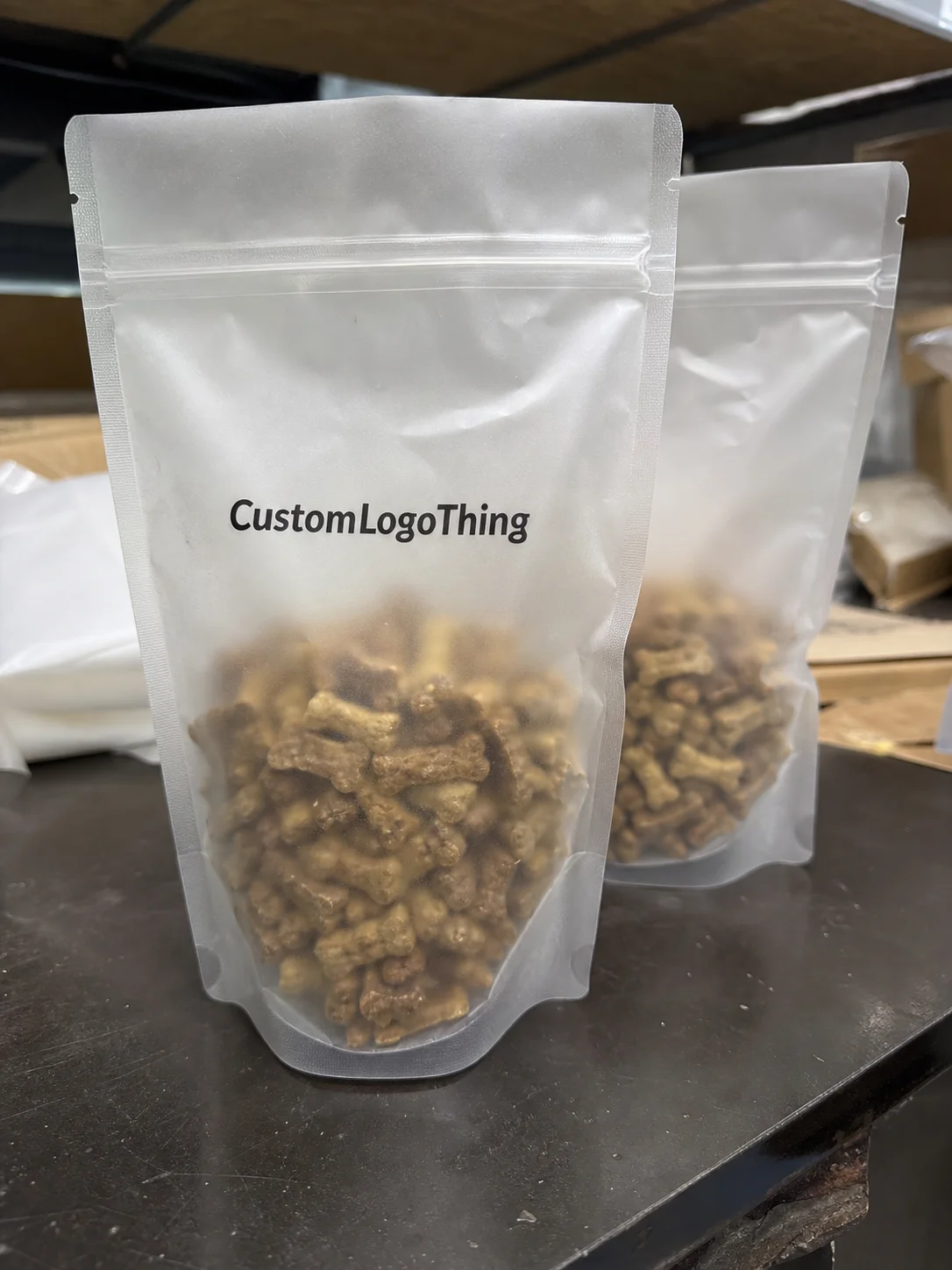
A frosted finish changes the first impression immediately. On a crowded pet aisle, a matte, semi-transparent bag gives the product more breathing room than a high-gloss pouch covered in bursts, claims, and bright color blocks. The surface feels quieter, which can make even a simple dehydrated chicken strip or training bite look more curated.
The advantage is practical. Semi-transparent film lets shoppers see shape, color, and fill level without exposing every crumb or oil mark. Clear bags can build trust, but they also show everything. Any uneven fill, powder residue, or slight discoloration becomes visible. Frosted film hides just enough to improve presentation while still proving there is product inside.
That middle ground is useful in boutique pet stores, farmers markets, subscription programs, and direct-to-consumer launches. It feels less commodity-like and more intentional. If your line also uses Custom Packaging Products or Case Studies, the frosted pouch can support the same premium positioning without forcing every format to look identical.
How the bag structure actually protects treats
A good-looking pouch is not enough. The structure has to protect the product from moisture, oxygen, light, compression, and handling. Most custom Frosted Zipper Bags for pet treat brands rely on three functions: an outer layer for appearance and print, a barrier layer for shelf-life support, and a zipper so the customer can reseal the pack after opening.
Zipper quality deserves attention because freshness is part of the promise. If the closure stops sealing after a few openings, treats dry out, lose aroma, or pick up moisture. Customers usually do not diagnose the failure technically. They just decide the bag feels unreliable.
The treat formula should drive the barrier spec. Soft chews and oily bites typically need stronger grease resistance and better odor control than dry biscuits. Freeze-dried pieces are light and vulnerable to moisture pickup, so they benefit from a pouch that resists humidity and holds shape well. Crunchy biscuits are more forgiving, but they still need a stable seal and enough stiffness that the bag stands properly on shelf.
For the technical backdrop, the Flexible Packaging Association keeps a useful overview of materials and formats at packaging.org. It is a solid reference if you want to separate actual packaging structure from sales language.
Product visibility is a tradeoff, not a checkbox. More opacity usually creates a more premium look, but too much frost can hide the treat so well that shoppers cannot tell what they are buying. The right balance is enough frosting to clean up the presentation, but enough clarity to reassure the buyer.
A premium-looking pouch that fails in transit is just expensive disappointment. Good art does not offset weak film, poor seals, or a zipper that barely holds.
Key specs that change performance and price
Spec decisions affect both performance and cost. Start with material thickness. Thicker film usually improves stiffness, puncture resistance, and shelf presence, but it also adds cost and can make the pouch feel too rigid if pushed too far. For many pet treat lines, the workable range sits around 100-140 microns total thickness, though the right spec depends on whether the bag is holding a light snack pouch, an oily formula, or a heavier 1 lb format.
Size matters just as much. A 2 oz pouch can look elegant for training treats. A 4 oz or 8 oz bag gives more room for claims and a stronger retail block. A 1 lb bag needs better gusset design, stronger seals, and enough material to keep its shape after repeated open-close cycles. Oversizing is a common mistake. A bag that looks underfilled always feels cheaper than it should.
Frosted coverage changes the final appearance and the quote. Full frosted film gives the most consistent look. Partial windows can show more product and sometimes reduce cost if the artwork is simple. Frosted back panels are another option when the front needs stronger visibility. Each choice changes how the brand reads on shelf, so this is a branding decision with a pricing consequence.
Print complexity is another obvious lever. One-color art keeps costs down and often looks cleaner than a crowded layout. Add multiple colors, white ink, metallic effects, or special finishes, and the unit price rises. That does not mean those options are off the table. It means the art direction should fit the product margin.
Practical structural details matter too. A decent tear notch, a consistent seal width, and clean zipper alignment all affect how the package feels in hand. Buyers notice those things even when they cannot name them. A pouch that opens badly or seals crookedly sends the wrong signal immediately. Before artwork starts, confirm food-contact suitability, odor resistance, and seal integrity with a material spec sheet or sample, not just a render.
| Option | Best for | Typical unit cost at 5,000 pcs | Tradeoff |
|---|---|---|---|
| Stock frosted pouch with label | Early launches, test runs, seasonal SKUs | $0.18-$0.28 | Lowest setup cost, but less polished and weaker shelf consistency |
| Custom printed frosted zipper bag | Core retail lines, DTC launches, subscription inserts | $0.28-$0.45 | Better branding and control, moderate setup effort |
| High-barrier custom pouch with special finish | Premium treats, oily or aromatic formulas, larger retail packs | $0.45-$0.70 | Stronger protection and a nicer shelf presence, higher MOQ pressure |
The lowest quote is often missing something. Thin film, weak zippers, poor registration, or a spec that only works on paper can all create hidden costs. In procurement terms, a cheap bag is expensive if it damages product, reduces repeat sales, or forces a reprint.
For shipping and distribution context, the International Safe Transit Association at ista.org is useful because it reminds buyers that packaging survives transit, not just photos.
Cost, pricing, MOQ, and unit cost tradeoffs
Lower MOQs almost always mean a higher unit cost because setup and print prep are spread across fewer bags. A 1,000-piece run and a 10,000-piece run are not priced by the same logic. That is simple math, not supplier drama.
The biggest cost drivers are predictable: bag size, film structure, number of print colors, zipper style, frosted coverage, and whether the pouch is stock-based or fully custom. Freight, duties, and waste should be part of the comparison too. Landed cost is the only number that matters once the boxes leave production.
For brands building a line from scratch, a two-step ordering strategy usually works better than trying to solve everything on the first run. Start with one size that matches the real fill volume. Test it in the market. If sell-through is healthy, scale the order and tighten the structure around the stronger SKU.
There is a branding trap here. The owner wants a distinctive pouch, but the hero is still the treat inside. If the packaging cost eats too much of the margin, the bag stops supporting the product and starts competing with it. Custom Frosted Zipper Bags for pet treat brands are worth the effort only when the spec matches the economics.
Budget for the whole line item, not the bag alone. Sample charges, freight, freight insurance, import fees, rework risk, and spoilage all belong in the decision. A quote can look attractive in isolation and still be the wrong choice once the landed numbers are counted.
Production process, timeline, and lead time
The process is straightforward. First comes the brief: size, fill weight, zipper style, frosted coverage, and print direction. Then the dieline gets confirmed. After that, artwork is set up, proofed, sampled, approved, produced, inspected, and shipped. Delays usually come from vague handoffs or late decisions.
Artwork is the common bottleneck. Missing bleed, low-resolution logos, unclear zipper placement, or an overloaded front panel can slow the job down. If the bag includes ingredient copy, barcodes, or legally required language, those items need to be locked early. Otherwise the proof round turns into cleanup, and that always burns time.
For simple stock-based runs, production moves faster than for fully custom structures with special finishes or more complex print effects. A realistic planning window is often 12-18 business days from proof approval to finished production, plus transit time. Air freight can move in about 5-10 days once shipped. Ocean freight is slower, and peak seasons make it slower still.
If the launch date is fixed, build in buffer time for at least one physical sample review. A digital mockup does not tell you how a zipper feels, how the film reflects light, or whether the bag stands the way you expected. Those are the checks that protect a launch from avoidable mistakes. Inspection should also confirm seal width, registration, zipper alignment, and scuffing before the run is released.
Common mistakes that make a premium bag feel cheap
The fastest way to ruin frosted packaging is to crowd it. The surface already has texture and visual interest, so too much ink kills the premium effect quickly. When every panel is packed with claims, badges, and icons, the bag stops feeling curated and starts feeling noisy.
Size mistakes are next. A bag that is too large looks sloppy and can make a small fill look underwhelming. A bag that is too small creates stress on the seal, makes filling harder, and can deform during shipping. The right size is based on real product volume, not the marketing idea of what the pouch ought to be.
Weak structural choices are another problem. Thin film, poor zipper alignment, and inconsistent seals are the fastest route to a generic-looking pouch. Consumers may not know the terminology, but they feel the difference. If the zipper catches, the bag wrinkles badly, or the seal looks crooked, the brand reads as lower quality than it intended.
Label clutter hurts as well. Too many claims, too many icons, too many “free from” badges, and the pack becomes hard to trust. A clean layout usually does more for package branding than a wall of copy. The shopper should understand the product in a glance, not have to decode it.
Finally, test the actual product behavior. Oil migration, powder residue, and sharp edges can expose spec problems before launch. A beautiful pouch is not a substitute for a fit test with real treats. That is the point where the bag either holds up or reveals what needs to change.
Practical next steps before you request a quote
Start with the fill, not the artwork. Measure the actual product weight and volume first, because airy treats need more room than dense ones. A 4 oz pouch may work for one formula and fail for another. That single decision shapes the die line, the zipper placement, and the overall presentation.
Next, decide how much product visibility you want. Should the treat be partly visible, mostly visible, or softened behind a frosted screen? That choice should drive the frosted coverage and window placement. Once that is clear, the rest of the packaging design gets easier to manage.
Prepare brand assets early. Logo files, Pantone or CMYK references, copy blocks, claims, barcode files, and any compliance text should be ready before the first proof. If the product carries regulatory language, get it reviewed before print. Packaging is a poor place to improvise after the layout is already locked.
Ask for samples or at least a material swatch before committing. That matters even more if the treats are oily, aromatic, or fragile. A real sample will show whether the finish looks right, whether the zipper feels consistent, and whether the pouch matches the product presentation you actually want. Then compare quotes using landed cost, sample quality, and lead time together, not just the bag price.
Bring custom Frosted Zipper Bags for pet treat brands into the brief with clear size, fill, and channel targets, and the supplier conversation becomes much more useful. If you need to compare formats, the Custom Packaging Products page is a practical place to review options, and the Case Studies page helps show how different product packaging choices behave in real channel conditions.
Are custom frosted zipper bags better than clear bags for pet treats?
Usually, yes, if the goal is a more premium shelf impression. Frosted bags soften the view of the product without hiding it completely, so they feel cleaner than full-clear pouches. Clear bags can help with trust, but they also expose defects, crumbs, and uneven fill more visibly.
What affects the cost of custom frosted zipper bags for pet treat brands most?
Size, film structure, print colors, zipper type, and order quantity are the main drivers. Low-volume orders cost more per bag because setup is spread across fewer units. Freight, duties, and waste should be included too, otherwise the low bid is only a partial number.
What size should I choose for pet treat zipper pouches?
Choose based on both fill weight and product volume. Dense treats and airy freeze-dried bites behave very differently in a pouch. Common retail sizes are often around 2 oz, 4 oz, 8 oz, and 1 lb, but the right fit depends on how the product stacks and how much shelf presence you want.
How long does production usually take for custom frosted zipper bags?
Simple stock-based runs move faster than fully custom jobs with special structure or print details. A practical range is often 12-18 business days after proof approval, plus shipping time. If the launch date is fixed, add buffer for sample review and artwork corrections.
Can custom frosted zipper bags be food-safe and resealable?
Yes, if the film and zipper are specified for food contact and the seal system is built correctly. Resealability depends on zipper quality and seal consistency, so sample testing matters. If the treats are oily, fragrant, or fragile, barrier performance should be checked before production.
Good pet treat packaging has three jobs at once: protect freshness, carry the brand, and survive the real world without looking beaten up. Get the structure right, keep the art disciplined, and the pouch starts doing actual work instead of just taking up shelf space.


