Custom Frosted Zipper Bags for Retail Launches That Sell
Custom Frosted Zipper Bags for retail launches solve a narrow but common problem: the product needs to stay visible, yet the presentation has to look intentional from the first shelf visit. Clear bags can look messy under store lighting. Opaque bags can hide too much. Frosted film sits between those extremes, which is why it shows up so often in launch Packaging for Small, shippable goods.
The appeal is practical, not decorative. A frosted surface softens glare, reduces the visual noise of seams and inserts, and gives the product a calmer frame. That can make a modest item look more finished without pushing the design into heavy branding or overbuilt packaging. For brands launching into retail, that middle ground is often where the budget and the shelf read line up best.
There is also a distribution advantage. A bag that opens and closes cleanly is easier to handle during sampling, replenishment, and re-merchandising. That matters because retail launches rarely stay static. Displays get touched, stock gets moved, and packaging gets judged in less-than-ideal conditions. A frosted zipper bag that looks good in a photo but fails in a real store is not useful. The spec has to survive both the shelf and the back room.
Why frosted film changes the shelf read at launch
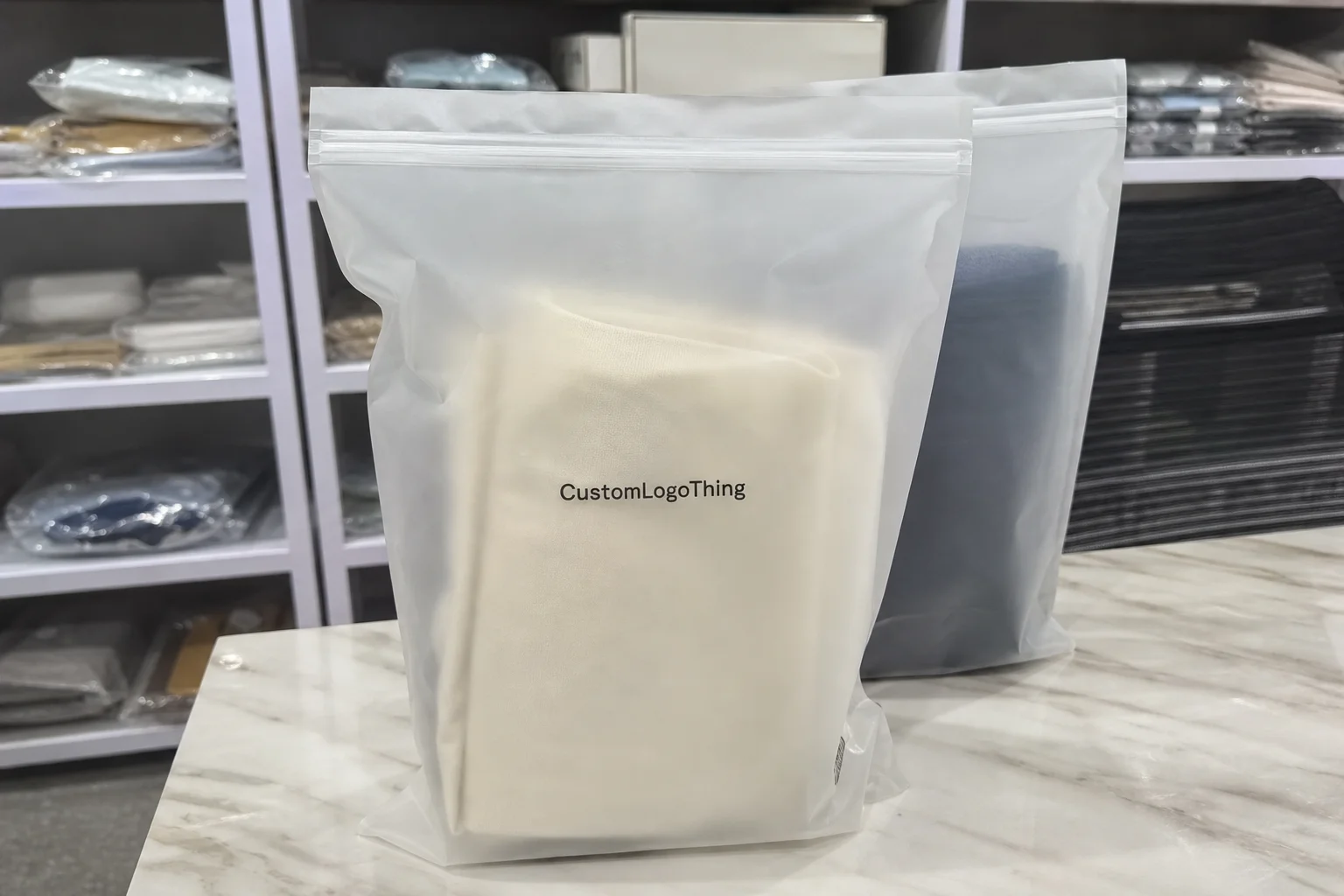
On a crowded shelf, packaging has a few seconds to signal what the product is and whether it belongs in the shopper’s hand. That first read is not about beauty in the abstract. It is about sorting. The package needs to say premium, practical, giftable, or affordable fast enough to stop a glance from turning into a pass.
Custom Frosted Zipper Bags for retail launches help because they reduce brightness without removing visibility. Under direct retail lighting, clear bags can pick up reflections, show every internal fold, and amplify any inconsistency in the fill. Frosted film cuts that glare and makes the contents look more composed. That does not hide the product. It frames it.
The difference is easy to underestimate until you compare formats side by side. A clear bag often reads like inventory. A frosted bag reads like a designed object. That distinction matters more for launches than for established products, because the packaging has to do some of the trust-building before the customer knows anything about the brand. Visual discipline counts.
There is a second effect that buyers see in practice: frosted film tends to calm down busy artwork. A small logo, a restrained accent color, and a short benefit line often look cleaner on frosted material than on glossy clear plastic. The package can still show the product, but the design is less likely to fight with the contents. For a launch, that balance is valuable. It keeps the item legible while preserving enough restraint to make the presentation feel deliberate.
This is one reason the format works well for accessories, cosmetics, travel items, stationery, sample sets, and flat or semi-rigid electronics. If the item has clean edges and does not need a box structure to hold its shape, a zipper bag can be more efficient than a carton. It uses less material, packs faster, and usually ships more efficiently. For broader packaging comparisons, the Custom Packaging Products catalog is a practical reference point.
How frosted zipper bags work as a retail packaging system
The bag is a system, not a single feature. Film grade, finish, zipper construction, print area, and optional retail details all affect how the final pack performs. If one of those pieces is out of step with the others, the result usually looks off long before the product itself is questioned.
Film choice drives the first impression. A lighter gauge can feel flexible and economical, which works for sample packs and lightweight goods. Heavier film adds structure, better puncture resistance, and a more deliberate hand feel. That extra stiffness can help a launch feel premium, but too much of it can make the bag bulky or awkward in a display tray. The right choice depends on product weight, handling frequency, and whether the item must stand up on its own.
The zipper matters just as much as the film. A retail pouch with a sticky or misaligned closure creates friction immediately. Store staff notice that during stocking. Customers notice it when opening the package for the first time. A zipper that catches, skips, or requires too much pressure weakens confidence in the product inside. A clean closure is a small detail with outsized influence.
Optional features should be selected for the channel, not added because they sound useful in isolation. A hang hole helps if the bag will be pegged in-store. A tear notch helps only if the first-open experience still protects the contents after opening. A barcode panel matters if scanning is part of the retail flow. If the bag needs a label area, that space should be reserved early, not improvised after artwork is already approved.
When the launch will move through several handling points, basic distribution checks are worth the time. ISTA test methods are a common reference for transit and handling expectations, and film or closure checks can be adapted to the product’s risk level. Not every order needs full lab treatment, but it does need a realistic test for stacking, box compression, and zipper durability. The ISTA framework is a sensible starting point when the packaging will travel before it sells.
Specification choices that shape performance and appearance
Most pricing and quality issues can be traced back to four decisions: size, thickness, zipper style, and print coverage. If those are defined early, the project stays manageable. If they are vague, every later conversation gets slower and more expensive.
Size is where many launch teams lose efficiency. Too much empty space and the product looks undersized. Too little room and the fill process becomes awkward, corners bend, or the zipper gets stressed. The best fit is not the smallest possible bag. It is the one that holds the product without sliding, compressing, or forcing the packer to fight the material.
Thickness affects both feel and durability. Lighter film can be appropriate for low-weight products, but it tends to look and behave more like a temporary solution. Heavier gauges improve puncture resistance and shelf presence, though the bag may feel stiffer than the brand wants. There is no universal best thickness. There is only the thickness that matches the product weight, the retail context, and the launch budget.
Zipper style also changes the user experience. Some closures open easily but do not feel as secure. Others hold better but take more force than a customer expects. For a retail launch, the closure should feel predictable, not finicky. If the bag will be reopened multiple times, that becomes even more important. A closure that degrades after a few uses is a packaging flaw, not a minor inconvenience.
Print coverage should support the frosted surface, not compete with it. Heavy artwork can flatten the finish and make the package feel crowded. A simpler mark, a short line of copy, or a single accent color often performs better than dense graphics. Matte print usually pairs well with frosted film because it limits reflections. Gloss can still work, but only when the design needs higher contrast and the layout is kept disciplined.
| Option | Typical use | Visual effect | Common unit cost range |
|---|---|---|---|
| Clear zipper bag | Launches that rely on full product exposure | Maximum visibility, but more glare and visual clutter | $0.14-$0.22 |
| Frosted zipper bag | Retail launches needing a cleaner premium read | Balanced visibility with softer reflections | $0.18-$0.32 |
| Opaque zipper bag | Concealment, contrast branding, or privacy | Strongest concealment, least product visibility | $0.20-$0.36 |
Those ranges are directional. A 5,000-piece order with straightforward artwork and a standard size often prices lower than a short run with custom dimensions and multiple print colors. The quote only becomes useful when it is tied to actual specs. A clean brief beats a vague request every time.
One detail buyers often miss is that packaging economics change fast once custom dimensions enter the picture. Standard widths, common zipper configurations, and limited print areas usually price better. A very specific size can still be worth it if the product really needs the fit, but it should be a deliberate decision, not an assumption.
Production steps, lead time, and approval checkpoints
The best launch schedules follow a predictable sequence: brief, dimensions, artwork, proof, approval, production, inspection, and shipment. The sequence is simple. The delays are not. Most slowdowns come from missing information, not from manufacturing itself.
Proofing is where many teams lose time because they treat it as a formality. That is a mistake. The proof should show the front, back, zipper area, seam placement, and any hang hole or label zone. If the bag will carry a barcode or regulatory text, that needs to be checked in context, not assumed to fit. The printed layout may look correct in a design file and still fail once wrapped around a physical bag.
The most expensive packaging error is approving art before the filled dimensions are confirmed. A pouch that looks balanced on screen can distort once the product is inside it.
Lead time depends on queue, print setup, revision count, and freight method. For a straightforward order, a typical production window is about 12-18 business days after proof approval. Sampling, revision time, and shipping sit outside that window. Rush schedules are possible, but they usually narrow the room for correction. If a launch has a fixed street date, the safer approach is to build in time for at least one revision cycle.
Quality control should be visible in the process, not assumed at the end. Ask whether the supplier checks zipper alignment, seal integrity, print registration, and carton count. If the order is going to chain retail, a packout review before full production is worth the delay. It is easier to reject a bad run in review than to pull compromised bags out of stores later.
Physical testing still matters, even when the artwork is approved. A real pack test reveals whether the zipper is too stiff, whether the bag bows under weight, and whether the product shifts in transit. Screens hide those problems. Real packaging does not.
Cost, MOQ, and quote drivers buyers can control
Unit price is usually the first number buyers ask for, but it hides the real economics. Material grade, film thickness, zipper type, print complexity, quantity, setup charges, sampling, and freight all influence the final landed cost. A low unit quote can become expensive once the other pieces are added. That is especially true for launch orders, where timing pressure often forces faster shipping or more revisions than planned.
MOQ follows the same logic. Lower quantities spread setup costs across fewer pieces, so the per-unit price rises. Standard sizes and simpler artwork help reduce that pressure. Custom dimensions, specialty finishes, and multi-color printing push the minimum up because they require more preparation and more waste during calibration. That is not a supplier tactic. It is how short-run production works.
There are still ways to keep the budget under control. Reducing the number of print colors can Cut Costs Without making the bag feel cheap. Using a standard zipper configuration often helps. Consolidating related SKUs into one shared base size can also improve efficiency, as long as the fit still works for each product. For a launch with several variants, one smart base spec is often better than three nearly identical custom ones.
Buyers should also compare pricing by quantity tier rather than by a single quoted number. A great price at 10,000 units may not help if the real need is 3,000. The more useful comparison is total landed cost at the quantity you actually expect to buy. If the launch will use inserts, sleeves, or display cartons, those materials should be budgeted alongside the bag so the packaging plan stays coherent.
FSC certification can matter for paper components in the launch, especially inserts, sleeves, and secondary cartons made from responsible fiber sources. It does not apply to the plastic zipper bag itself in most cases, but it can still support the broader packaging story. The distinction is worth keeping clear, since vague sustainability claims are easy to overstate and hard to defend.
Common mistakes that make launch packaging underperform
The most common mistake is over-specifying the bag. A little structure helps. Too much structure makes the bag feel rigid, expensive, or off-brand. The same is true of opacity. If the material hides too much of the product, the package stops doing the job that justified using a frosted format in the first place.
Fit errors are more damaging than they first appear. A bag that is too large makes the product look small and underbuilt. A bag that is too tight can bend corners, stress seals, and make filling slower on the line. Both problems show up fast on shelf because launch packaging does not have brand familiarity to hide behind. The first impression has to carry more weight than it does later in the product life cycle.
Graphic mistakes are just as common. Dense typography, low contrast, and tiny legal text can disappear against frosted film. The result is a package that feels more complicated than premium. A good retail bag should be readable at distance and still make sense up close. That usually means a restrained layout, clear hierarchy, and a design that respects the softness of the material instead of trying to overpower it.
Another failure point is skipping a physical packout test. A computer mockup cannot tell you whether the zipper binds, whether the film scuffs during filling, or whether the product slides inside the bag after handling. A short test with actual product is enough to catch most of those problems. It is far cheaper than discovering them after production starts.
Launch packaging also suffers when teams design for a single channel and ignore the rest of the journey. A bag that looks fine in a photo may not hold up in a tray, on a peg, or inside a shipping carton. Retail launches usually involve more than one display condition, so the package should be checked in more than one context.
Expert tips and next steps for a cleaner retail rollout
Start with a small sample matrix instead of one speculative version. Two sizes, two thicknesses, and one or two finish levels usually reveal enough to make a confident decision. Put the samples under the same lighting the product will see in-store. Bright LEDs can exaggerate glare and flatten graphics, while softer light can make an underdesigned bag seem better than it really is.
Ask for a launch checklist before approving the order. It should cover artwork specs, proof timing, sample approval, packout details, and the ship date. If the launch is tied to a reset, trade show, or seasonal window, work backward from that deadline. Tight timelines punish ambiguity. Clear specifications buy time.
Check the bag in context. Place it next to competing products. Photograph it from shopper distance. Put the filled bag beside the carton, insert, or display material it will travel with. If the frosted finish makes the item feel more premium, keep it. If the content becomes too muted, adjust the film weight or simplify the graphics before changing the whole format. Small changes often solve the problem better than a full redesign.
Think about the second order while the first one is still on the table. If the launch performs, can the same size and zipper type be reordered without retooling? Can the file be repeated cleanly without revisiting every detail? Operational consistency matters because the first order is only the beginning. A good launch should create a repeatable package, not a one-off headache.
Final takeaway: custom Frosted Zipper Bags for retail launches work best when the spec is disciplined, the fit is correct, and the proof stage is treated as a real checkpoint. That combination gives the product a cleaner shelf read, avoids common packing problems, and keeps the budget from drifting. The format is most effective when it is used for what it does well: balanced visibility, controlled glare, and reliable day-to-day handling.
What products work best in custom frosted zipper bags for retail launches?
Small, tidy products usually fit best: accessories, cosmetics, travel items, stationery, sample kits, and lightweight electronics. The format works especially well when the item needs to stay visible without the hard glare of a clear bag or the full concealment of an opaque pouch.
How do frosted zipper bags compare with clear bags for retail packaging?
Clear bags show the product most directly, but they also reveal folds, internal labels, and clutter more easily under bright retail lighting. Frosted bags soften that visual noise and usually create a cleaner, more curated presentation, which is useful during a launch.
What MOQ should I expect for frosted zipper bag orders?
MOQ depends on size, print coverage, zipper style, and whether the bag is a standard or fully custom construction. Many custom runs start in the low thousands, although some suppliers can support smaller quantities on standard formats at a higher unit price.
How long does production usually take for a retail launch order?
For a straightforward order, production often takes about 12-18 business days after proof approval, with sampling and freight added on top. The biggest scheduling risks are delayed artwork, repeated revisions, and late sign-off.
What do I need before requesting a quote for custom frosted zipper bags?
Have target dimensions, estimated quantity, print requirements, zipper preference, and any retail features such as a hang hole, barcode area, or tear notch. Ask whether the price includes sampling, freight, setup, and revision limits so you can compare total landed cost instead of only the headline unit price.


