Hotels buy packaging for practical reasons first. It has to look clean on the shelf, stay presentable after housekeeping handles it, protect the contents from dust and moisture, and still hold up through transit and storage. That is why a Printed Frosted Zipper Bags Quote for hotel programs draws so much attention from procurement teams, brand managers, and guest experience buyers. The bag is small, but it carries real weight in how a property is perceived.
From a buyer’s perspective, Frosted Zipper Bags sit in a useful middle ground. They look more refined than a plain clear poly bag, but they still allow staff and guests to see what is inside without opening the package. That matters for amenity kits, retail accessories, welcome gifts, spa items, and housekeeping supply packs. Add a printed logo or property name, and the packaging becomes part of the presentation instead of something the guest immediately throws away.
What makes this format even more practical is how flexible it is. One basic bag structure can serve multiple departments if the dimensions, thickness, and print layout are chosen with care. The difference between a bag that feels generic and one that feels intentional usually comes down to a handful of decisions: material grade, zipper quality, print area, and the amount of visual restraint in the artwork.
“In hospitality packaging, consistency matters as much as appearance. If the bag looks right and performs the same way in every batch, the whole amenity program feels more controlled.”
Why frosted zipper bags work so well for hotel packaging
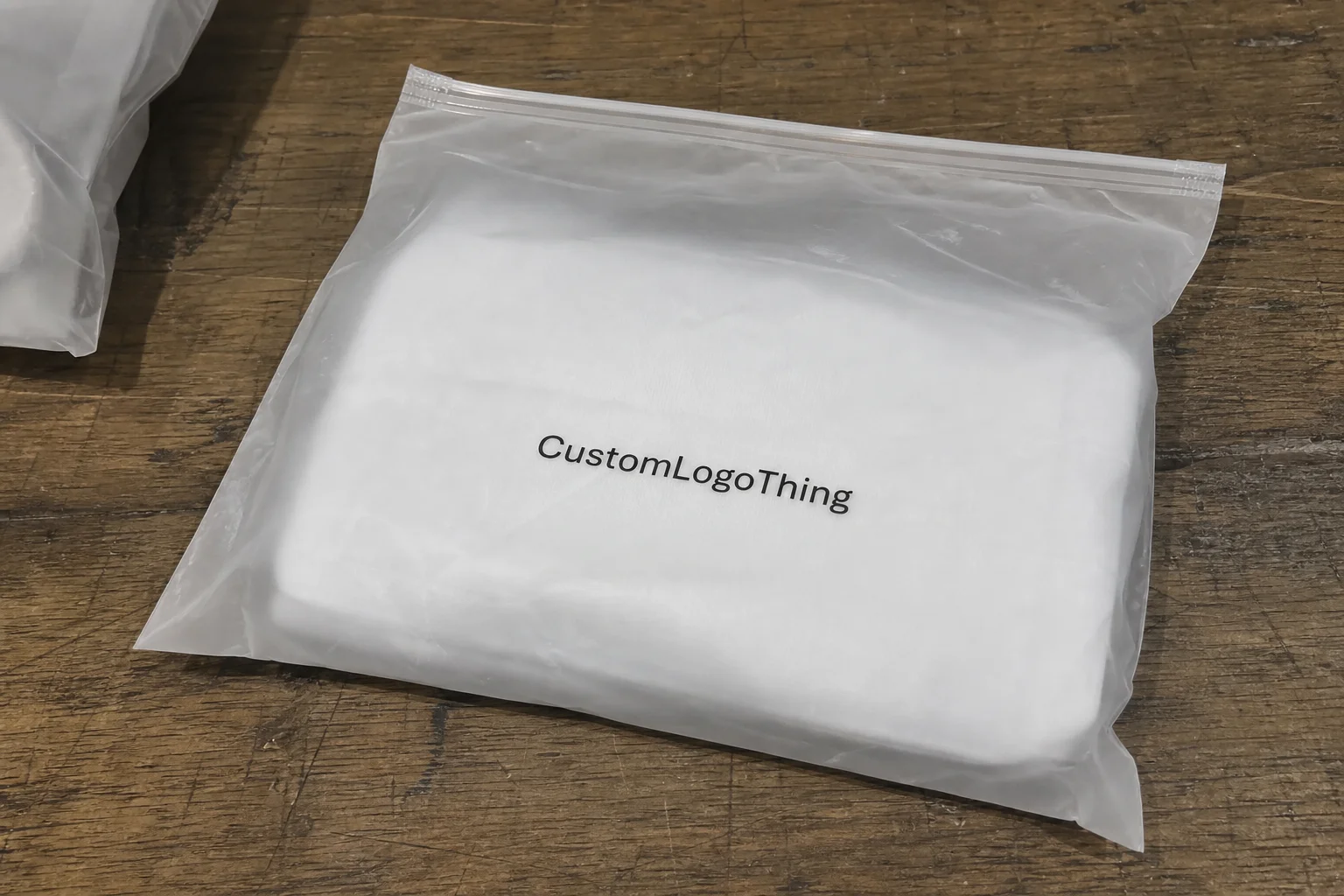
Frosted PE or PP zipper bags work well in hospitality because they balance appearance, protection, and handling efficiency. The frosted finish softens the look of the plastic, which makes it feel less industrial than a fully clear bag, but it still provides enough visibility for quick identification. That is useful for toiletries, slippers, travel accessories, stationery, or small retail items that need to be recognized at a glance.
Guest-facing packaging has a narrow job to do. It should not distract from the property branding, and it should not look so bare that it undercuts the value of the contents. A semi-translucent frosted finish avoids both extremes. It presents well on a vanity tray, in a gift basket, or on a retail shelf, while still keeping the contents organized and protected.
The operational side matters too. These bags store flat, take up very little back-of-house space, and are quick to fill during room setup or event prep. That helps with routine hotel operations where speed and consistency are as important as presentation. If a property runs different room categories, the same bag family can often be used across standard rooms, suites, spa programs, and shop displays with only minor changes in size or print.
Printing the bag changes the perception immediately. A small logo, a clean wordmark, or a subtle repeated mark can make the package feel planned rather than incidental. The strongest hotel programs usually avoid oversized graphics. They use enough branding to be recognizable, but they leave the bag visually calm so the packaging supports the contents instead of fighting them.
There is also a practical reason buyers like frosted bags: they are easier to standardize. Compared with rigid boxes or highly customized pouches, a frosted zipper bag can be adjusted in width, height, thickness, zipper type, and print coverage without turning the whole order into a complex production project. That helps when a hotel wants a reliable packaging format that can be re-ordered without major redesign work every season.
Printed zipper bag options, materials, and hotel-ready specs
Not every frosted zipper bag is built the same way, and the differences matter once the bag has to be quoted, packed, and used in a hotel setting. The most common materials are frosted PE and LDPE, with some programs using PP depending on the feel, clarity, and stiffness they want. PE and LDPE are popular because they are flexible, cost-effective, and familiar to production teams.
Thickness is one of the first variables that affects both appearance and cost. For lightweight amenity packaging, buyers often look in the range of 0.06 mm to 0.10 mm. A more durable or reusable pouch may use a heavier gauge, especially if it holds slippers, folded garments, or a premium gift set. A bag for a shampoo vial and a bag for a robe are not interchangeable, even if they share the same logo.
The zipper should not be treated as a minor detail. A standard zipper is fine for many amenity applications, but if the bag will be opened and closed repeatedly, the track needs to feel smooth and aligned. A stiff or uneven zipper can make even a good-looking bag feel cheap. For reusable guest items, the closure quality becomes a visible part of the product experience.
Common spec choices usually fall into a few practical buckets:
| Option | Best for | Typical effect on cost | Practical note |
|---|---|---|---|
| Standard frosted PE zipper bag | Amenities, welcome kits, housekeeping supply packs | Lower | Balanced look, cost, and speed of production |
| Heavier reusable frosted pouch | Retail items, premium suites, gift sets | Moderate to higher | Better handfeel and more reusable after checkout |
| Bag with hang hole | Retail displays, spa counters, merch | Slightly higher | Useful for peg displays and counter merchandising |
| Gusseted bag | Bulkier contents like slippers or boxed sets | Moderate | Improves capacity and helps the bag stand more cleanly |
Print method should match the artwork, not just the budget. Screen printing is a common choice for hotel packaging because it handles simple logos well and can stay crisp through routine handling. One-color artwork is usually the cleanest and most economical. If the design is more detailed, a supplier may suggest a different process depending on the film finish, ink coverage, and the size of the print area. A large solid print can make the bag look heavier and can also raise the cost, so restraint often works better than trying to cover too much of the surface.
Size planning should always start with the contents. A small pouch for guest toiletries is one thing. A medium bag for a welcome kit is another. A larger format for folded garments, a bottle set, or a retail bundle needs different allowances for width and gusset depth. If the contents are unusually shaped, send a sample photo or measurements early. That saves time and reduces the risk of ordering a bag that looks right on paper but feels awkward in practice.
If the hotel group has sustainability requirements, those should be stated before quoting begins. Some buyers want a reusable pouch that extends the useful life of the packaging. Others are focused on material reduction, lighter gauge film, or clearer disposal guidance. If the packaging has to fit into a broader waste reduction plan, it is better to define that at the start than to retrofit it after production is already underway. For general recycling context, the EPA recycling resources are a useful reference.
How to request a printed frosted zipper bags quote for hotel use
If the goal is an accurate printed Frosted Zipper Bags quote for hotel ordering, send complete specifications in one message. That usually gets a cleaner response than a vague request followed by several rounds of clarification. Most delays come from missing details, not from the product itself.
Start with the bag dimensions, material thickness, quantity, print colors, and zipper style. Then add the intended use. A pouch for toiletries does not need the same structure as one used for retail merchandise or a VIP welcome gift. The supplier needs that context to judge whether the size, finish, and closure are appropriate.
Artwork should ideally be in vector format such as AI, EPS, or a PDF with outlines. If brand color matching matters, include PMS references or a clear color target. If the only file available is a low-resolution image, a quote can still be prepared, but the proof process will usually take longer. A photo of the intended contents is also useful because it helps confirm the fit, fill volume, and bag proportion before a sample is made.
Here is the information that usually speeds up quoting:
- Bag dimensions in width, height, and gusset if applicable.
- Material and thickness, such as frosted PE at a stated gauge.
- Artwork file and print color count.
- Intended use, such as toiletries, retail merchandise, or welcome gifts.
- Packing style, including bulk packing or individual bundling.
- Target quantity range if the final volume is still under review.
For buyers comparing options, it helps to request pricing at two or three quantity breaks. A quote at 2,000 pieces can show the entry cost, while 5,000 and 10,000 pieces usually reveal where the unit price starts to improve. A request that says “need bags for hotel use” will usually trigger follow-up questions. A request that says “120 mm x 180 mm, frosted PE, one-color logo, zipper closure, 5,000 / 10,000 piece pricing, for toiletries” tends to move faster and leaves less room for misunderstanding.
Pricing, MOQ, and unit cost factors for hotel buyers
Pricing for Custom Frosted Zipper Bags comes down to a small number of variables. Quantity is the biggest one. Size, thickness, print coverage, and number of colors follow close behind. Add-ons such as hang holes, gussets, special packing, or a custom zipper pull can also increase the price.
MOQ usually reflects production efficiency. Screen setup, material handling, and inspection all need to be absorbed by the order, so smaller runs have a higher unit cost. That does not mean low-volume orders are impossible. It just means the buyer should expect the first run to cost more per piece than a repeat order placed at a larger volume.
For hotel programs, a simple one-color logo is usually the most economical direction. Once the artwork gets large or moves into multiple colors, more production control is required. Heavier material also raises cost, especially if the bag is meant to feel reusable rather than disposable. If the bag needs to look premium, that should be budgeted from the start instead of treated as a free upgrade.
As a practical range, many Custom Packaging Buyers see simple frosted zipper bags in recurring volume land somewhere around $0.05 to $0.20 per piece, depending on size, thickness, and print coverage. Smaller runs, heavier gauges, and more complex artwork can sit above that. Premium reusable pouches can cost more still. Those are broad working ranges, not a fixed quote, but they are useful for early budgeting.
| Order level | Typical cost tendency | Buyer takeaway |
|---|---|---|
| Small trial run | Highest unit cost | Useful for testing fit, print, and guest response |
| Medium program order | Better balance of cost and flexibility | Common for single-property hotel use |
| Large repeat order | Lowest unit cost | Best for groups, chains, or regular replenishment |
In practice, the cheapest bag is not always the best buy. A bag that saves a fraction of a cent but wrinkles badly, tears at the zipper, or prints unevenly ends up costing more in complaints and reorders. The better decision is usually the one that meets the presentation standard, fits the contents properly, and leaves enough room in the budget for replenishment.
Production steps, proofing, and lead time expectations
Most custom hotel packaging follows the same sequence: inquiry, specification review, artwork check, quote approval, proof confirmation, production, inspection, and final packing. A supplier that handles these steps in order is less likely to introduce avoidable mistakes later.
The proof stage deserves close attention. Before approving it, verify the logo placement, print size, spelling, bag dimensions, zipper orientation, and the way the frosted finish sits against the brand colors. A proof may be technically correct and still feel off if the artwork is too low, too large, or too close to the zipper line. Those are the kinds of details that are much easier to fix before production starts.
Lead time depends on the quantity, artwork readiness, and material availability. Repeat orders usually move faster because the size and print setup are already established. New hotel openings and seasonal launches should always include a buffer. Packaging has a habit of becoming urgent at the exact moment room setup or event prep gets tight.
Typical production time for custom printed bags often falls around 12 to 15 business days after proof approval. Larger orders, special finishes, or more complex artwork can extend that schedule. If a specific gauge or frosted finish has to be sourced, the timeline can shift again. A good supplier should say that clearly instead of hiding the risk behind vague language.
For properties working toward an opening date or a seasonal reset, it helps to count backward from the day the bags need to be in use, not just the day the purchase order is issued. That difference sounds small, but it often decides whether the project feels controlled or rushed.
Shipping and carton packing also deserve attention. A bag that looks fine when it leaves production can still arrive marked, bent, or compressed if the packing method is weak. If the hotel needs the bags to remain flat and clean in storage, ask how cartons are packed, how many pieces go into each case, and whether the material should be protected from strong compression during freight. For transit-related packaging testing, the ISTA test standards are a useful benchmark reference.
What makes a hotel packaging supplier dependable
Dependability in hotel packaging comes down to consistency. The same print placement, the same zipper function, the same film appearance, and the same pack count from one batch to the next matter more than polished sales language. A hotel team needs packaging that arrives as specified and behaves the same way during filling, stacking, and guest use.
Clear communication on tolerances and approvals is another sign of a strong supplier. If a group needs the same spec across several properties, the supplier should be able to keep that specification stable and explain any variation before it becomes a problem. That matters when procurement, housekeeping, and brand teams all touch the same order.
Good manufacturing control shows up in the small details. Print registration should stay aligned. Film thickness should be controlled. The seal lines should be clean. The zipper should open and close without snagging. Those details may sound minor, but guests notice them immediately if the package feels flimsy or inconsistent. A zipper that catches, a logo that drifts off-center, or a bag that looks distorted when filled can weaken an otherwise well-planned amenity program.
A supplier with real packaging experience will also question the spec when something looks inefficient. If the logo is too large, if the bag is oversized for the contents, or if the chosen finish does not suit the intended display, that feedback should come before production, not after. That kind of candid review saves money and reduces rework.
For buyers who need to align packaging with broader sourcing standards, supplier transparency matters too. If sustainability is part of the program, ask how the material choice fits into the larger packaging plan, whether the bags are intended for reuse, and what the end-use expectation is. For chain-of-custody thinking in packaging supply chains, organizations like FSC can be useful references even when the final bag itself is plastic-based and the broader concern is program governance rather than paper sourcing alone.
Next steps to place your hotel bag order
If the order is moving toward approval, gather the core details first: target size, quantity range, artwork file, material preference, and intended use. Those are the pieces that shape the quote and determine whether the bag is suitable for the property’s actual operation.
If the bags are destined for premium suites, retail shelves, or welcome kits, a sample or pre-production proof is worth requesting. That gives the team a chance to confirm the frosted surface, zipper feel, print placement, and overall presentation before the full run starts. For recurring stocking programs, ask for pricing at multiple volumes so the replenishment plan is based on real unit cost differences rather than guesswork.
It is also smart to confirm lead time at the same time as the quote. Procurement and operations work better when cost and schedule arrive together. Room openings, conference bookings, and seasonal occupancy changes rarely wait for packaging to catch up.
For a printed frosted zipper bags quote for hotel programs, the cleanest path is straightforward: send the dimensions, artwork, quantity goals, and intended use together, then review the proof, timeline, and tiered pricing before approving production. That keeps the order grounded in the facts that matter most: fit, finish, cost, and delivery schedule.
FAQ
What information do I need for a printed frosted zipper bags quote for hotel ordering?
Provide the bag size, material thickness, zipper style, print colors, quantity, and intended use. If you have artwork files and brand color references, include those as well because they reduce revisions and help the supplier quote more accurately. It also helps to say whether the bags are for amenities, retail, or guest gifts so the structure can be matched properly.
What is the typical MOQ for custom frosted zipper bags used by hotels?
MOQ depends on bag size, print method, and the setup required for production. Simpler styles may allow lower starting quantities, while custom sizes or more complex prints usually require higher minimums. If the order volume is still under review, ask for tiered pricing so the hotel can see where the best break point sits.
How does print color affect the price of hotel frosted zipper bags?
More print colors usually increase setup time and production complexity, which raises cost. Large solid artwork coverage can also cost more than a simple logo because it requires more ink control and more attention during production. For many hospitality programs, one-color branding is the most cost-efficient route.
How long does production usually take after approval?
Lead time depends on order size, artwork readiness, and material availability. Proof approval speed matters too, because any delay in confirming artwork pushes the schedule back. Repeat hotel orders are often faster because the size and print settings are already established.
Can frosted zipper bags be reused by hotel guests after checkout?
Yes, many frosted zipper bags are durable enough for reuse when they are made with the right thickness and zipper quality. Reusability improves when the film is sturdy and the branding is simple and clean. If reuse is a priority, say so during quoting so the structure can be specified for that purpose from the start.


