Guests register packaging faster than most hotel teams expect. A towel set, a spa amenity, or a simple welcome snack can feel more considered when it arrives in custom Frosted Zipper Bags for hotel brands instead of a plain pouch or a heavy carton with too much print. The bag is doing quiet work: protecting the contents, shaping the first impression, and signaling attention to detail before anyone reads the brand name.
That quietness is part of the appeal. Frosted Zipper Bags sit in a useful middle ground between fully clear and fully opaque packaging. They show enough to hint at what is inside, but not so much that fingerprints, scuffs, or uneven product edges become the focus. For hotel buyers, that balance is often more valuable than a louder look.
There is also a practical side that matters in operations. A good frosted pouch stacks flat, packs quickly, and travels well through housekeeping and storage. It does not ask the team to change its workflow just to make the package look presentable. That is usually the difference between packaging that gets used consistently and packaging that looks good only on a sample table.
Why Frosted Zipper Bags Feel More Premium Than Standard Amenity Packaging
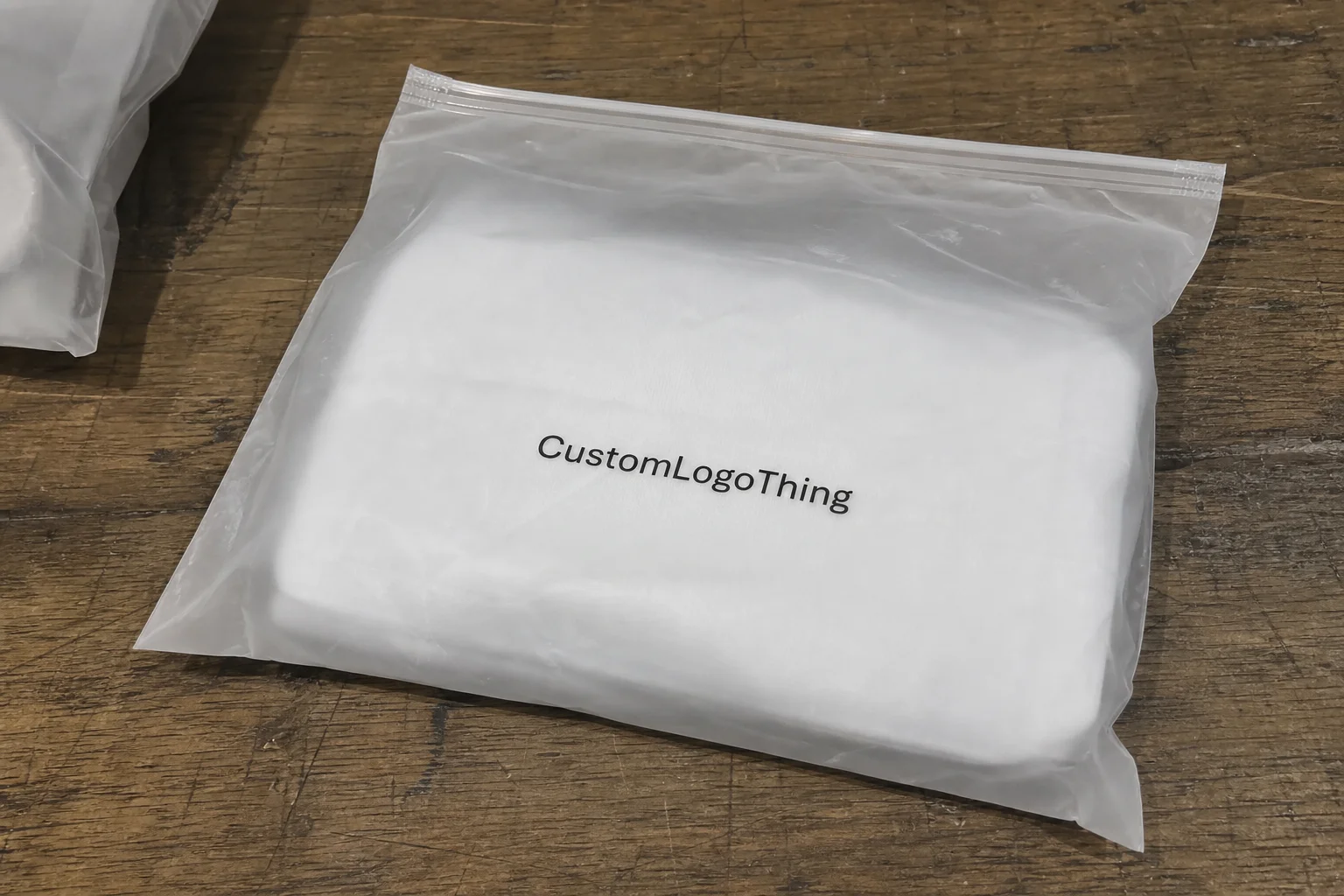
At the bedside table or vanity tray, presentation arrives before the guest ever touches the product. A small amenity set in Custom Frosted Zipper Bags for hotel brands can make the contents feel more intentional, even if the items inside are everyday toiletries or a modest spa sample. Packaging cannot rescue a weak product, but it can prevent a good product from looking ordinary.
Frosted zipper bags are usually made from semi-transparent polyethylene film with a resealable zipper closure. They are used for toiletries, spa kits, welcome gifts, dry snacks, in-room retail items, and small promotional bundles. Hotels like them because they are light, stackable, and easy to standardize across room categories without building a separate packing process for every amenity tier.
The surface finish does a lot of the heavy lifting. Clear bags show fingerprints, dust, and whatever happens inside the pouch. Frosted film softens all of that. It still communicates order, but it is less demanding to maintain, which matters when packaging passes through multiple hands before it reaches the guest.
From a branding perspective, the effect is subtle but strong. A frosted pouch can read as spa-like, boutique, or quietly upscale depending on how much print coverage you use. That makes it a useful form of branded packaging for properties that want a consistent guest experience without moving into rigid boxes for every small item.
“The best hotel packaging rarely shouts. It just makes the whole amenity set look intentional.”
There is a second reason hotels keep returning to Frosted Zipper Bags: they photograph well without looking staged. If the property uses packaging in marketing images, retail shelves, or social content, the frosted finish tends to hide the minor flaws that show up in real handling. That reduces the risk of a pouch looking pristine in a spec sheet and tired in the guest room.
How custom frosted zipper bags for hotel brands work in daily operations
For operations teams, the bag has to do more than look nice. It needs to survive storage, cart movement, guest handling, and the occasional overpacked set of contents. A typical build uses frosted PE film, a zip closure, and sometimes a bottom gusset if the contents need extra room. The surface works well for simple logos, size labels, patterns, or restrained marks that reinforce package branding without crowding the design.
The guest-facing function is straightforward: protect contents from dust and minor moisture while keeping the presentation tidy. No one expects a zipper pouch to be hermetic or fully tamper-proof, but a well-made closure does create a clean, sealed impression at first glance. That matters in spa environments and in-room retail, where presentation often influences perceived value more than the unit cost would suggest.
Branding options can be restrained or more promotional. A one-color logo on frosted film often feels elegant. Full-panel printing gives stronger shelf presence. Some hotels prefer frosted-on-frosted artwork, which is understated but can disappear if the contrast is too light. Others use a label approach so the pouch stays flexible across multiple amenities. The right choice depends on whether the property wants to read as luxury, lifestyle, business-focused, or wellness-led.
In daily use, these bags support inventory control as much as presentation. Housekeeping can count, sort, and replenish them quickly. Back-of-house storage stays cleaner because pouches stack flat and do not crush as easily as many folded paper packs. That practical consistency is one reason they remain a dependable form of product packaging in hospitality.
They also help with standardization across property types. A business hotel, a resort, and a boutique property may use the same base format while changing the print, size, or contents. That keeps the packaging system coherent without forcing every location into the same guest experience.
Key Specs That Shape Performance, Appearance, and Unit Cost
If you are comparing suppliers, start with the specs. That is where most of the real differences live. Thickness, clarity level, zipper style, bag size, and seal strength drive both performance and price. A 3 mil bag and a 5 mil bag may look similar in a photo, but they behave very differently on a housekeeping cart and in the guest room.
Size is especially important. Oversizing a pouch wastes material and can make a small amenity set look even smaller. Under-sizing is worse. The bag starts bulging, the zipper strains, and the whole presentation feels improvised. For most hotel use cases, the best results come from matching the bag to the actual product set, then allowing just enough room for a clean fit.
Print complexity also changes the economics. Single-color logos are typically less expensive than multi-color art or edge-to-edge coverage. Minimalist designs are not only cheaper to produce; they often look better on frosted film because the texture already adds visual interest. If the goal is a luxury feel, restraint usually works better than filling every square inch with ink.
Additional features can be useful, but they should earn their place. Hang holes help with retail displays. Tear notches can improve first-open convenience. Hang tags or inserts can support instructions, ingredient details, or property messaging. The catch is that each add-on may affect tooling, packing time, or unit price.
| Specification | Typical Effect on Appearance | Typical Effect on Cost | Best Use Case |
|---|---|---|---|
| 3-4 mil frosted PE | Light, flexible, clean look | Lower | Light amenity sets, sample kits |
| 5-6 mil frosted PE | More structured, more durable | Moderate | Spa kits, welcome gifts, retail packaging |
| Single-color logo | Quiet, refined, easy to read | Lower | Luxury and business hotels |
| Multi-color or full-panel print | High visibility, stronger shelf impact | Higher | Boutique brands, retail-focused properties |
| Gusset + hang hole | Better structure and display function | Moderate to higher | Retail-style amenity presentation |
If sustainability is part of the brief, ask for material details, recyclability guidance, and documentation before you approve the build. Standards and claims matter, especially when the packaging is part of a larger environmental story. For general references, the EPA’s recycling resources are a useful starting point, and FSC can matter if your packaging program includes paper inserts or cartons: EPA recycling resources and FSC.
Also ask how the frosted effect is created. Some films are naturally milky in appearance, while others rely on surface treatment. That detail can affect how the print holds, how the film feels in hand, and whether the bag maintains a consistent look across production runs.
Cost, MOQ, and What Actually Drives the Quote
Pricing for custom frosted zipper bags for hotel brands usually depends on six things: size, thickness, zipper style, print method, quantity, and packaging extras. That sounds obvious, but buyers often compare quotes without realizing they are not comparing the same construction. One supplier may be pricing a thinner film with one-color print, while another is quoting a heavier gauge bag with a better zipper and a more durable print process.
As a rough working range, a simple custom frosted zipper bag may land around $0.12-$0.20 per unit at higher volumes, while more finished versions with heavier material, more print coverage, or added features can move to roughly $0.20-$0.40 per unit or more. Small runs can be materially higher because setup costs are spread across fewer pieces. That does not mean the quote is inflated; it means the economics shift at lower volume.
Minimum order quantity matters because it affects both unit price and inventory risk. Larger MOQs usually lower the per-unit number, but only if the hotel can actually use the stock before design changes, menu changes, or seasonal refreshes make it obsolete. From a buyer’s point of view, the cheapest bag is not the one with the lowest quote. It is the one that fits the operation without sitting in storage for a year.
Freight, sampling, and rush charges can quietly change the final landed cost. Distribution to multiple properties can also matter if stock needs to be split and shipped in smaller lots. That is why experienced buyers ask for a fully loaded quote, not just a bag price.
Here is a practical comparison:
| Order Type | Typical Unit Cost Pressure | MOQ Pressure | Best For |
|---|---|---|---|
| Small test run | Higher | Low | New concepts, pilot properties |
| Mid-volume replenishment | Balanced | Moderate | Single-property steady use |
| Large rollout | Lower | Higher | Multi-property brand standardization |
If you are also sourcing custom printed boxes or other retail packaging at the same time, it can help to align the visual system across formats. A pouch, a box, and a card should look like they belong to the same property, even if each one serves a different function.
One more pricing factor gets overlooked: storage time. A lower-cost bag can become expensive if the property has to order too far ahead and tie up space, cash, and reordering flexibility. For hospitality teams, the real cost is often the cost of carrying inventory, not the quoted price alone.
Production Steps, Timeline, and Lead Time Expectations
The production path is usually predictable: brief, artwork, sample, approval, production, inspection, packing, and shipment. The trouble starts when one step is vague. Missing dimensions. Unclear Pantone references. A logo file that was never prepared for print. Small problems become schedule problems fast.
For a standard custom packaging order, sampling often takes less time than full production, but it still matters. A physical sample lets you check the zipper action, the material feel, print clarity, and whether the bag fits the actual amenity set. If the bag will be used in guest-facing spaces, a sample is basic risk control, not a luxury.
Typical lead times vary by supplier and complexity, but a realistic planning window is often 12-15 business days from proof approval for simpler runs, longer if there are special finishes, heavy customization, or multi-step printing. Large rollout orders can take more time because inspection and packing take time too. If you are ordering for a property launch, holiday program, or seasonal spa refresh, build in cushion time.
Hotels with several properties should order earlier than single-location buyers, because approvals tend to move through more people. Procurement, operations, brand, and sometimes ownership all want a look. That is normal; it just means the calendar should respect the approval chain.
For teams that are coordinating inserts, sleeves, and Custom Packaging Products more broadly, the same timing rules apply. Even modest changes in print or material can shift the schedule more than buyers expect. Packaging is rarely just packaging; it is a production schedule with a guest-facing deadline attached.
There is also a practical quality-control sequence worth asking about. Reputable production runs usually include print alignment checks, zipper function checks, and a visual review for film scratches, ink smudges, or seal inconsistency. Those checks do not guarantee perfection, but they reduce the odds of receiving bags that look fine in a carton and disappointing on a tray.
Common Mistakes Hotels Make When Ordering Custom Zipper Bags
The most common mistake is ordering from a mockup instead of the real contents. A render can look perfect and still fail the actual fit test. The amenity set may sit too loose, or the zipper may not close cleanly once the card insert, tissue, or sample bottle goes in. Always test with the physical contents.
Another issue is mismatching the finish to the purpose. Clear bags are great when full visibility matters. Frosted bags are better when you want a softer, more premium presentation and a little privacy. If the hotel wants retail-style display, too much opacity can work against the sale. If the bag is for toiletries or spa kits, too much clarity can make the contents look busy.
Some buyers obsess over print and ignore the zipper. That is a mistake. Guests feel the closure first. If it catches, splits, or looks flimsy, the bag reads as cheap no matter how polished the logo is. In practice, zipper quality is one of the clearest signs that a supplier understands hospitality use.
Lighting matters too. A bag that looks elegant in a studio photo may read differently under warm guest-room lighting or bright spa retail lighting. That is especially true for frosted finishes, which shift depending on contrast and background color. Test the bag where it will actually live.
Finally, some hotels under-brand or over-brand the pouch. Too little identity and it looks generic. Too much decoration and it clashes with the property tier. That balance is part art, part discipline. Good packaging design should support the guest experience, not compete with it.
There is a quieter mistake as well: not checking how the bag is packed inside the carton. If the zipper lines up inconsistently or the print shifts from bag to bag, the hotel may have to re-sort stock before use. That adds labor and can erase the efficiency the packaging was supposed to create.
Expert Tips for Ordering the Right Bag for Your Property Mix
Start with one use case before rolling out a full system. Welcome amenities are a good test because they are visible, controlled, and easy to evaluate. Spa kits are another good candidate because the guest expectation is already elevated, which makes packaging performance easier to judge.
Request a physical sample with the exact product inside. That is the fastest way to verify fit, texture, and closure strength. Ask for the bag with the intended print method too, not just a blank version. A blank pouch and a printed pouch can behave differently, especially if the ink coverage changes flexibility.
Standardize sizes where you can. Housekeeping teams appreciate it, and purchasing does too. If the bag can serve multiple amenity sets with only small content changes, you reduce SKU sprawl and simplify reordering. That is one of the quiet wins of well-planned retail packaging inside hospitality.
Brand style should guide your print choices. Upscale properties usually do better with restrained branding, soft contrast, and limited color. Boutique or lifestyle hotels can be bolder without looking out of place. The question is not whether you can print more; it is what the guest expects from the brand.
When comparing suppliers, ask for the same four things from everyone:
- Exact material specs, including thickness and film type
- Print method and number of colors
- Sample photos or a physical sample
- Reorder terms and lead time for repeat runs
That makes the comparison much cleaner. It is also where the better suppliers separate themselves from the merely cheap ones.
One more practical tip: ask whether the bags can be packed in the orientation your housekeeping team prefers. If the opening, logo placement, and contents all face the same direction, restocking is faster and the guest presentation looks more deliberate. Small packaging choices often pay back in labor savings.
If you want to see how packaging decisions play out across different use cases, Case Studies can help you spot patterns in what actually works. Not every hotel needs the same visual treatment, but almost every hotel benefits from clearer spec discipline.
Next Steps Before You Request a Hotel Packaging Quote
Before you Request a Quote for custom frosted zipper bags for hotel brands, write a one-page spec sheet. Include dimensions, target contents, quantity, number of print colors, whether you need a gusset or hang hole, and any insert requirements. That one page can save days of back-and-forth.
Then gather one photo of the finished amenity set. Not a mood board. The actual set. Suppliers can estimate bag size more accurately when they can see the real proportions. If you also have a brand guideline or Pantone reference, include that too.
Decide what matters most: premium presentation, privacy, durability, or lowest unit cost. You may want all four, but one should lead the brief. That ranking will make the supplier recommendation stronger because the bag choice will be grounded in a real business goal instead of a generic preference for “nice packaging.”
Order a sample or prototype before committing to full production. That step protects you from the most expensive kind of mistake: approving a design that looks fine on screen and disappoints in guest use. If the bags will be used across multiple properties, check storage space before the inventory arrives. The next purchase should happen before stock runs low, not after.
If the property changes packaging seasonally, keep the artwork system simple enough to revise without rebuilding the whole design. A restrained base layout with one variable element, such as color, line copy, or amenity label, often gives the hotel more flexibility than a fully locked graphic system.
Custom frosted zipper bags are not the flashiest packaging format in hospitality, but they solve a real problem well. They make small items look organized, help teams work faster, and keep the brand visible without forcing the packaging to dominate the room. That combination is why they keep showing up in hotels that care about presentation and consistency at the same time.
FAQ
What are custom frosted zipper bags for hotel brands used for?
They are commonly used for toiletries, spa kits, welcome gifts, dry snacks, and in-room retail items. Hotels use them to protect contents, improve presentation, and create a more polished guest experience.
How do I choose the right size for hotel amenity bags?
Measure the actual product set first, including any inserts or cards. Leave just enough room for a clean fit so the bag looks tailored instead of oversized.
What affects the price of custom frosted zipper bags the most?
Size, thickness, zipper style, print complexity, and order quantity are the biggest pricing drivers. Freight, sampling, and rush production can also affect the final cost.
How long does production usually take for hotel packaging orders?
Timeline depends on artwork approval, sampling needs, quantity, and print method. Build extra time for revisions, seasonal demand, and multi-property rollouts.
Can I order a sample before placing a full run?
Yes, and it is strongly recommended for hotel packaging. A sample lets you check fit, zipper quality, print appearance, and how the bag looks with the actual amenity set inside.


