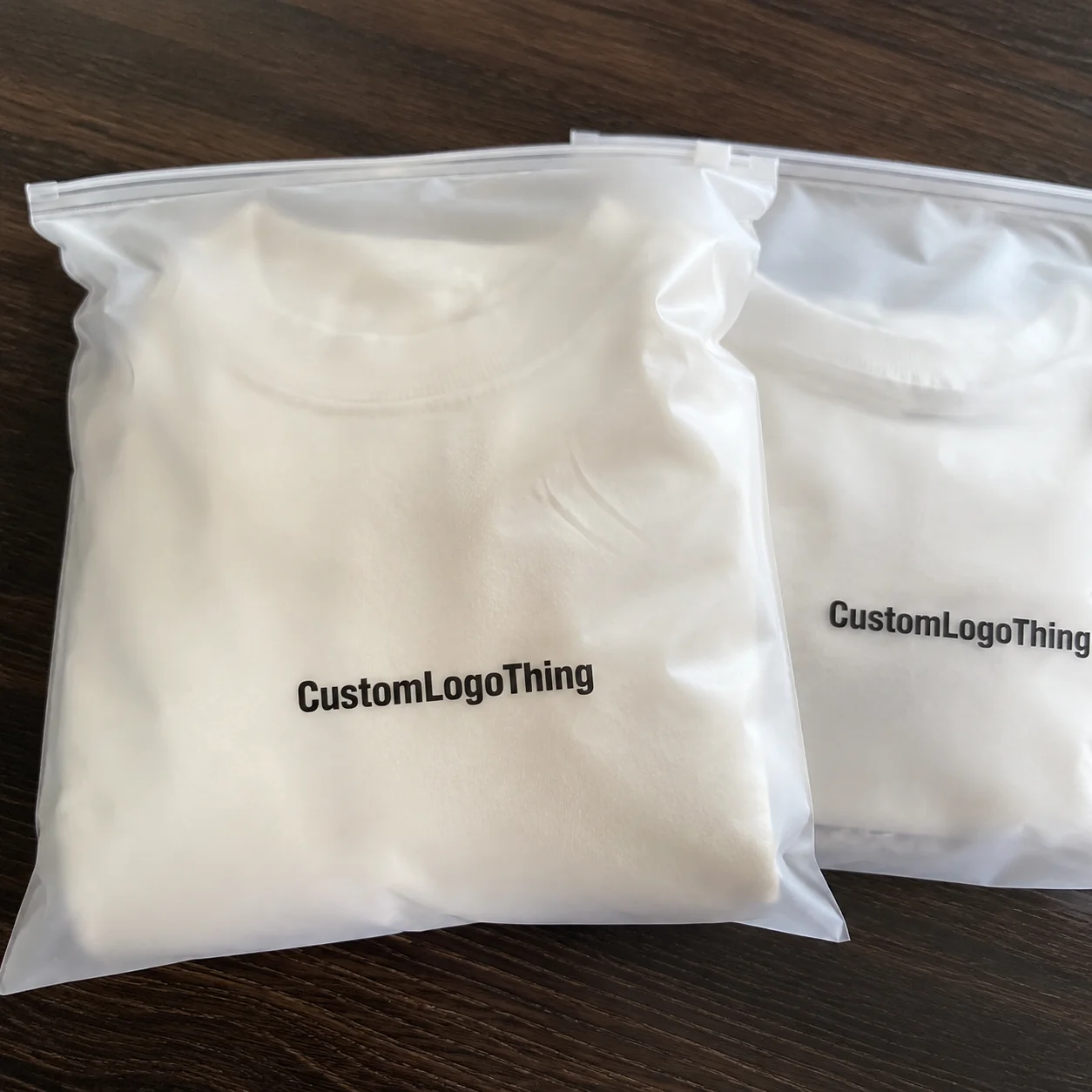
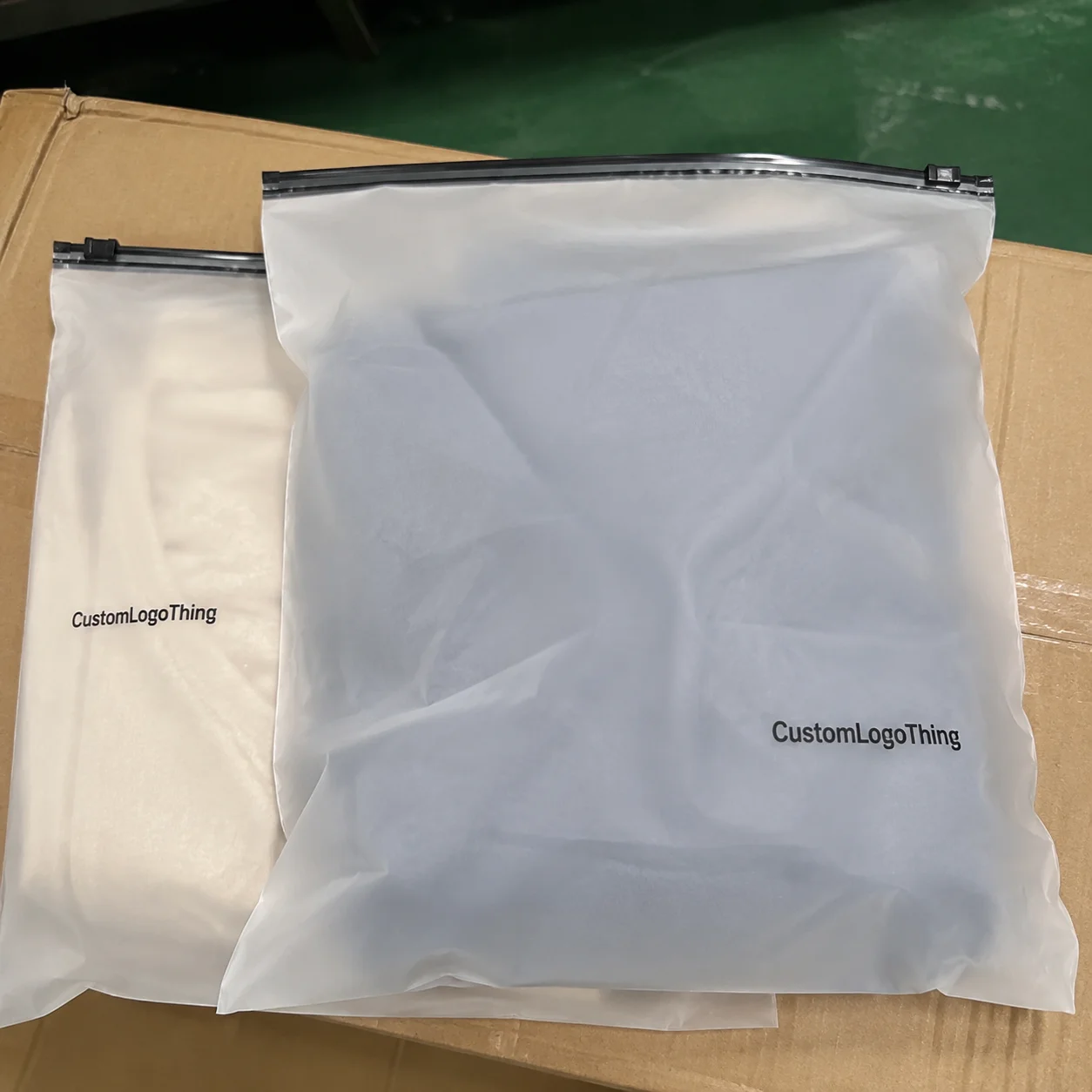
A $0.12 garment bag can protect a $90 hoodie. The wrong plastic, weak seal, cloudy film, or sloppy logo can also make that same hoodie feel like clearance-bin inventory. Packaging is annoying like that.
If you are working through Custom Garment Bags Plastic b2b sourcing, you are not just buying a bag. You are deciding how apparel moves through packing, storage, wholesale cartons, retail presentation, and customer delivery.
Custom plastic garment bags are poly bags made for apparel handling. They protect folded shirts, hanging dresses, uniforms, outerwear, sample lines, subscription apparel, and wholesale garments from dust, moisture, scuffs, and warehouse grime. In B2B buying, they are usually ordered by the thousand, not grabbed from a shelf five minutes before a shipment leaves. Cute idea. Terrible operating model.
“Custom” can mean a printed logo on a stock-size apparel bag. It can also mean a custom width, length, gusset, hanger opening, vent hole pattern, barcode window, adhesive flap, resealable zipper, frosted finish, recycled-content blend, or suffocation warning printed in a specific location. Sometimes the custom part is not the bag itself but the packing rule: 100 per inner pack, 1,000 per carton, roll format, pallet labeling, or carton weight limits that keep a warehouse team from mutiny.
Custom Garment Bags Plastic B2B Sourcing: What Buyers Actually Need to Know
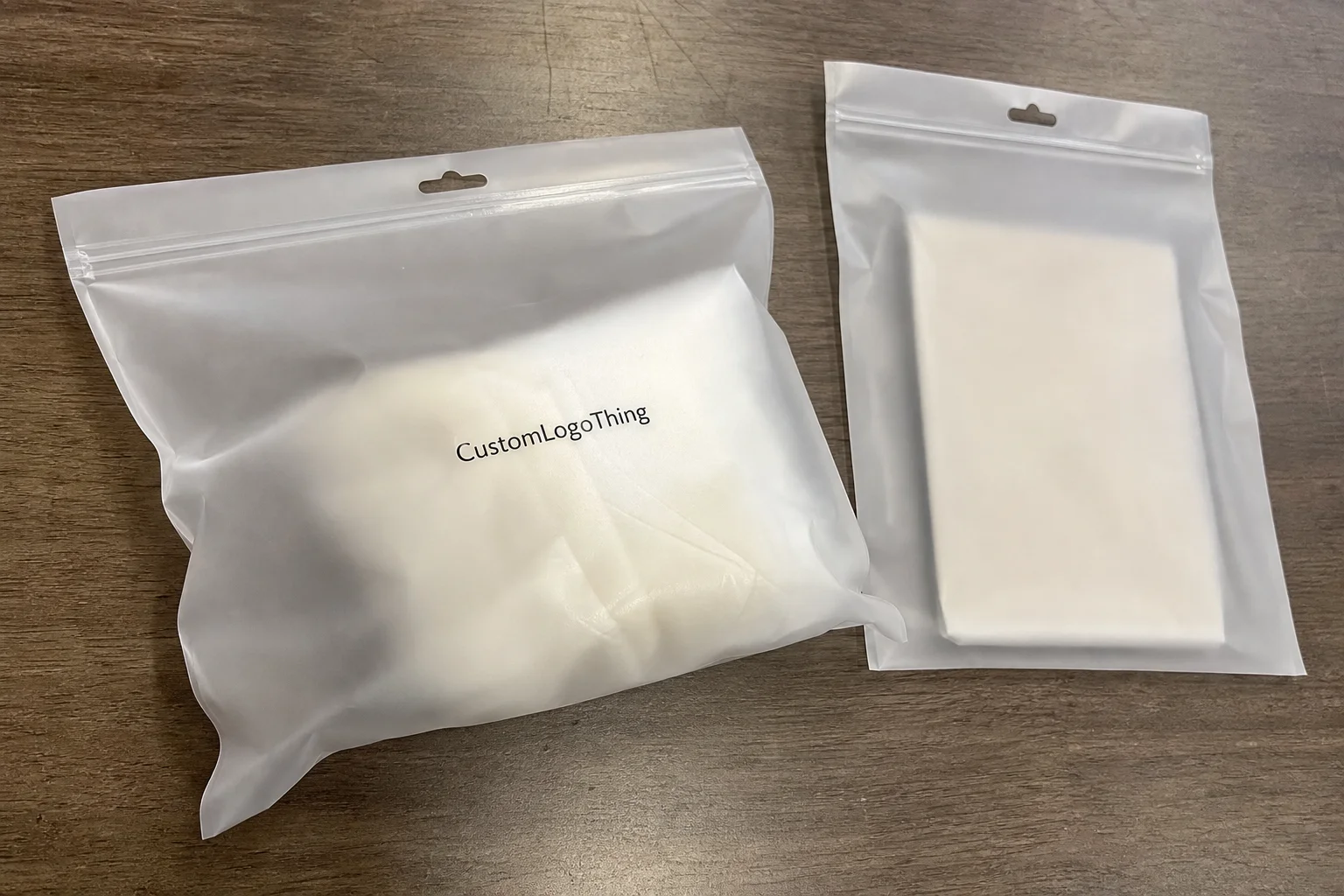
Start by naming the bag correctly. A garment bag is not one single product. A dry-cleaning bag is usually a thin, open-bottom sleeve for temporary hanging protection. A folded apparel poly bag often has an adhesive flap. A suffocation warning bag includes safety copy required by certain channels and jurisdictions. A zipper garment bag is built for reuse and a more premium hand feel. A heavier mailer-style bag may work as both inner protection and outer shipping packaging, depending on film, closure, and transit conditions.
The expensive mistake is assuming all of these bags do the same job. They do not.
A 1 mil clear self-seal bag may be perfectly fine for folded tees. It can look flimsy on a structured blazer. A frosted 2.5 mil zipper bag may be beautiful for retail handoff but overbuilt for warehouse replenishment packs. A long hanging cover with no vents can trap moisture if garments are packed too soon after steaming, finishing, or spot cleaning. Small differences become expensive once the order quantity has five digits.
Good sourcing starts with boring details: dimensions, material behavior, print method, compliance text, carton packing, and replenishment rhythm. If you order 25,000 bags and discover the flap lands across the size sticker, nobody in fulfillment will send a thank-you card. They will just hate the bag quietly while productivity drops.
Buyer reality: a garment bag is part brand presentation and part warehouse tool. If it only looks good in a flat mockup, it is not fully specified yet.
Think of the bag as one piece of the broader product packaging system. It may sit inside Custom Packaging Products such as printed boxes, ship inside wholesale cartons, or hang on racks in a showroom. The bag has to support the full path, not just the supplier proof that makes everyone feel productive for 11 minutes.
How Plastic Garment Bags Work Across Retail, Wholesale, and Fulfillment
Plastic garment bags do six practical jobs: dust protection, light moisture resistance, product separation, size identification, cleaner handling, and brand presentation. None of that sounds glamorous. It matters anyway.
A warehouse handling hundreds of units per hour needs bags that open easily, close reliably, stack cleanly, and show enough product detail for staff to confirm the SKU fast. If the bag fights the packer, the bag is wrong. If the barcode hides under the flap, the bag is wrong. If the bag makes a premium garment look like it came from the discount bin, also wrong. Packaging gets many chances to be annoying.
Common use cases include folded apparel in self-seal bags, hanging garments in long poly sleeves, boutique Packaging for Retail pickup, subscription apparel packing, uniforms grouped by employee or department, sample line protection, and B2B wholesale cartons where each garment needs to arrive clean and separated. For brands selling through retail accounts, branded packaging also signals that the product was handled like merchandise, not spare parts.
Material choice changes feel, clarity, strength, and cost. LDPE is soft, flexible, and common for Apparel Poly Bags. It has a slightly cushioned hand feel and handles everyday fulfillment well. HDPE is stiffer, lighter, and often noisier. It can be cost-efficient, but it may feel less premium. PP, or polypropylene, gives higher clarity and a crisp retail look, though it can crack, split, or show stress marks if the application is wrong or the film is too thin.
Recycled-content and biodegradable blends need extra caution. Ask for the exact composition, percentage of recycled content, certification documents if claims are being made, and any performance tradeoffs. A sustainability claim printed across the front of a bag without documentation is not strategy. It is risk with nicer typography.
Closures matter more than buyers expect. Adhesive flaps are common for folded shirts, hoodies, kidswear, basics, and marketplace prep. Zippers cost more but work for reuse, retail display, travel storage, uniforms, or formalwear. Open-top hanging bags are fast for dry-cleaning style handling. Heat-sealed bags fit automation. Perforated tear-off rolls help high-volume operations that need speed and repeatability.
Print placement should be practical. Keep transparent areas open where warehouse teams need to see color, size stickers, hangtags, barcode labels, or folded product details. A giant logo across the middle may look bold in a mockup and deeply irritating during picking. For package branding, a one-color logo near the lower third or top flap often gives enough identity without blocking visibility.
Custom bags make sense when volume, consistency, or process efficiency justifies setup and MOQ. If you ship 300 units per month, stock bags with labels may be smarter. If you ship 10,000 units per quarter, custom sizing and print can reduce handling time, improve retail packaging consistency, and make reorders less chaotic.
Key Specs to Lock Before You Ask Suppliers for a Quote
Suppliers quote faster when you hand them complete specs. Vague requests create vague pricing, and vague pricing is how purchasing teams end up comparing three different bags while pretending it is apples to apples. It is not. It is fruit salad with freight terms.
Prepare these specs before requesting pricing:
- Bag dimensions: width, length, flap size, gusset depth, and hanger opening if needed.
- Material: LDPE, HDPE, PP, recycled-content film, or specialty blend.
- Thickness: usually stated in mils in the U.S. market, or microns for many overseas suppliers.
- Finish: clear, frosted, opaque, tinted, matte, or glossy.
- Closure: adhesive flap, resealable zipper, open top, heat seal, or perforated roll format.
- Print: number of colors, ink coverage, logo placement, warning copy, barcode windows, and print side.
- Packing: pieces per inner pack, pieces per carton, carton weight target, and pallet requirements.
Sizing needs discipline. Measure the folded or hanging garment at its widest and longest packed point. Add enough room for easy insertion, usually 0.5-1.5 inches in width for folded apparel and more for bulky fleece or outerwear. Do not oversize so much that the item slides around like it is renting a studio apartment. Extra film adds cost, wastes carton space, and makes stacks look sloppy.
Typical thickness ranges are useful starting points. Lightweight apparel bags often sit around 1-1.5 mil. Sturdier reusable or premium bags may run 2-3 mil. Hanging garment covers vary heavily by length and use, but thin temporary covers should not be treated like long-term storage bags. Formalwear, coats, and uniforms usually need more structure than a thin tee bag.
Film thickness is not the only strength factor. Seal quality, resin blend, direction of stress, bag shape, venting, and closure design all affect performance. A thicker bag with a bad side seal can still fail. A thinner bag with good film and clean sealing may perform better than expected. This is why physical samples matter.
Clarity is not just a visual decision. Clear film helps fulfillment teams see color, print, trim, and labels. Frosted film gives a softer retail look and hides minor wrinkles. Opaque film adds privacy and can feel more premium, though it slows visual inspection. Tinted film can support packaging design, but color matching on plastic film is not identical to printing on paperboard. Ask for a drawdown or printed sample if color matters.
Compliance belongs in the spec sheet, not in an afterthought email. Suffocation warnings, recycling marks, child safety language, marketplace requirements, and ventilation rules can vary by location, bag opening size, and distribution channel. If bags ship internationally, confirm country-specific rules before production. For broader packaging and waste guidance, buyers can review resources from the U.S. Environmental Protection Agency. For transit testing on finished shipments, ISTA standards are useful when cartons, bags, and apparel need to survive a defined distribution path.
Artwork should be production-ready. Send vector files, usually AI, EPS, or print-ready PDF. Include Pantone or CMYK references, approved warning copy, minimum line weights, barcode placement, and print area limits. Barcodes should be tested after printing because glossy film, distortion, and low contrast can turn a scan into a small warehouse tragedy.
Cost, MOQ, and Unit Pricing: What Changes the Number Fast
Price moves with bag size, film thickness, material, print colors, ink coverage, closure style, order quantity, tooling, packing method, and freight. That is why a supplier cannot responsibly quote “a custom garment bag” without more detail. If they do, the quote is probably padded, incomplete, or based on assumptions you have not approved.
For simple printed apparel poly bags, a rough range might be $0.08-$0.18 per unit at higher quantities for smaller, lightweight bags with one-color print. At 5,000 pieces, the same general bag could land closer to $0.14-$0.32 per unit, depending on size, film, setup, and freight. Premium Zipper Garment Bags, thicker frosted film, large hanging covers, or heavy print coverage can push much higher, often $0.35-$1.20+ per unit.
Those are buying ranges, not magic numbers. Resin markets move. Freight moves. Supplier capacity moves. A quote from six months ago may be directionally useful and still wrong.
| Bag Type | Typical Use | Common Thickness | Rough Unit Range | Tradeoff |
|---|---|---|---|---|
| Clear self-seal poly bag | Folded tees, basics, fulfillment prep | 1-1.5 mil | $0.08-$0.28 | Efficient and visible, but not premium |
| Frosted printed apparel bag | Boutique retail packaging, nicer apparel lines | 1.5-2.5 mil | $0.18-$0.55 | Better presentation, higher film and print cost |
| Resealable zipper garment bag | Uniforms, formalwear, reusable customer packaging | 2-3 mil | $0.35-$1.20+ | Reusable and sturdy, slower and more expensive |
| Long hanging garment cover | Dresses, coats, showroom samples | Varies by length | $0.20-$0.90+ | Protects hanging garments, requires accurate length specs |
MOQ depends on whether the supplier can use stock film, stock bag dimensions, existing tooling, or standard closure formats. Stock-size custom print can sometimes start around 1,000-5,000 pieces. Fully custom sizes often start around 5,000-10,000 pieces, and specialty recycled films, custom zipper formats, or large hanging covers may require 10,000-50,000 pieces. Not always. Often enough that buyers should plan for it.
Plate fees, cylinder fees, sample fees, and artwork setup can change the real cost. A low unit price may still be a bad deal if the freight quote is ugly, the defect allowance is loose, or the lead time misses your launch. Landed cost matters more than unit cost alone.
Ask for quantity breaks at 5k, 10k, 25k, and 50k. The real price drop may happen at 25k, not 10k. Or freight may eat the savings if cartons are bulky. For brands already buying other branded packaging, combining demand through Wholesale Programs can sometimes simplify ordering and give purchasing a cleaner view of quarterly usage.
Process and Timeline From Specs to Delivered Garment Bags
The standard process is simple on paper: confirm specs, submit artwork, receive quote, review proof or dieline, approve a sample if needed, start production, inspect, pack, ship, and receive inventory. First-time orders take longer because every small decision needs approval. Repeat orders move faster if the bag, print, material, and carton packing stay unchanged.
Typical timing can look like this: 1-3 business days for a quote after complete specs, 2-5 business days for artwork proofing, 5-10 business days for a physical sample depending on method, and 10-25 business days for production after approval on many custom printed bags. Shipping can add a few days by domestic ground, about a week by air freight, or several weeks by ocean freight for large overseas orders. Treat those as planning ranges, not promises carved into stone.
Buyer-side delays cause more problems than people admit. Missing vector files, unclear measurements, compliance copy changes, slow proof approvals, and late carton packing requests can wreck the schedule. If the launch date is fixed, freeze the bag spec early. Creative teams love “one more tiny change.” Production teams do not.
Sampling options vary. A digital proof confirms layout, placement, and text. A material swatch confirms hand feel, thickness, clarity, and color. A pre-production sample confirms construction before the full run. A printed sample gives the best view of ink, contrast, and brand appearance, but it can add time and cost. A production sample pulled from the first run is useful for quality records and future reorders.
Shipping strategy depends on urgency and volume. Air freight makes sense for launch quantities or urgent replenishment, but it can destroy the savings on a bulky low-cost bag. Ocean freight usually fits large replenishment orders. Domestic warehousing helps if available. Split shipments can work when 2,000 pieces are urgent and 48,000 pieces can travel slower.
Quality checkpoints should be written down before production. Check film thickness tolerance, seal strength, print registration, ink rub resistance, closure performance, carton count, barcode readability, and carton labeling. For Custom Garment Bags Plastic B2B sourcing, keep an approved sample on file. Compare every reorder against it. Memory is a terrible quality control system.
Common Sourcing Mistakes That Make Apparel Bags Look Cheap
The worst RFQ is “standard garment bag with logo.” Standard to whom? A supplier may guess a size, pick a film, place the logo wherever production is easiest, and quote the cheapest version that technically matches your sentence. Supplier guesses are not a sourcing strategy.
Choosing only by lowest unit cost is another classic mistake. You may get thin film, weak adhesive, cloudy plastic, uneven print coverage, or cartons packed in a way that slows the warehouse team. Saving $0.03 per bag sounds brilliant until staff spend an extra 12 seconds fighting every closure. Multiply that by 20,000 units. Suddenly the cheap bag is doing expensive little tricks.
Ignore the packing workflow and the bag can fail even if the sample looks good. A bag may be too tight for folded fleece, too slippery for stacking, too stiff for quick insertion, or too slow for teams handling hundreds of units per hour. Ask the people packing the garments to test the sample. They will notice problems a desk review misses.
Overprinting causes trouble too. Large logos, heavy ink coverage, and low-contrast artwork can block product visibility. Poorly cured ink can transfer, especially if bags are stacked tightly before ink has stabilized. If the bag is clear for SKU identification, do not turn it into a poster. Retail packaging still has to function.
Compliance mistakes are less fun because they can create real liability. Missing suffocation warnings, wrong font size, unsupported sustainability claims, and missing ventilation holes can all create problems. If you claim recycled content, compostability, or biodegradability, make sure documentation supports it. “Eco-friendly” without proof is not a spec. It is a wish wearing a marketing hat.
Replenishment mistakes are quiet but costly. Changing specs midstream can create mismatched packaging across batches. Ordering too close to a launch forces bad freight decisions. Failing to keep approved samples means every reorder becomes a fresh negotiation over what the bag used to be. Keep the spec sheet, proof, sample, and carton label details together.
Build a Cleaner RFQ and Compare Suppliers Without Guessing
Start with three representative garments: your smallest, your bulkiest, and your highest-value item. Measure each one in packed form. Choose the closure. Pick a film thickness range. Mark the logo placement. Confirm suffocation warning copy and recycling marks. Estimate monthly or quarterly usage. That gives suppliers enough structure to quote seriously.
A one-page RFQ should include product photos, bag dimensions, garment type, material preference, thickness, finish, closure, print colors, ink coverage, quantity breaks, destination ZIP or port, target delivery date, and packing requirements. If you have an existing bag, include photos and measurements. If you hate the existing bag, say why. “Too flimsy,” “flap fails,” “barcode scans poorly,” and “cartons too heavy” are useful comments.
Compare suppliers beyond the price column. Look at response quality, spec questions, proof process, defect policy, production capacity, freight options, and how clearly they explain tradeoffs. A supplier that asks smart questions early may save you from a bad order. A supplier that refuses to explain details may be hiding weak process control, or maybe they just enjoy making buying harder. Neither is ideal.
- Request quote breaks at 5k, 10k, 25k, and 50k.
- Ask whether pricing includes setup, plates, proofs, cartons, and freight.
- Confirm production timing starts after proof approval, not after your first email.
- Request a material swatch or physical sample before a large first order.
- Keep one signed-off sample for future reorder comparison.
Physical samples matter most for premium apparel, formalwear, uniforms, showroom lines, and any product where the bag is part of the customer experience. A digital proof cannot tell you if 1.2 mil feels too thin or if the zipper catches at the corner. For brands investing in custom printed boxes, retail inserts, or broader packaging design, the garment bag should feel like part of the same package branding system, not a random afterthought.
The practical goal is fewer