If you need Custom Garment Polybags low moq custom order pricing without tying up cash in cartons of packaging you may never use, the logic is straightforward. Brands launching a new style, testing a seasonal release, or packaging small-batch production do not need warehouse-sized quantities just to get a clean, branded finish. That kind of overbuying creates storage costs, ties up working capital, and leaves you stuck with obsolete artwork when the next collection arrives.
From a buyer’s point of view, low MOQ packaging is not a compromise on professionalism. It is a practical way to keep packaging aligned with real sales volume. You order closer to demand, reduce dead stock, and still keep the presentation consistent across your line.
Why low MOQ garment polybags make sense for brands that test fast
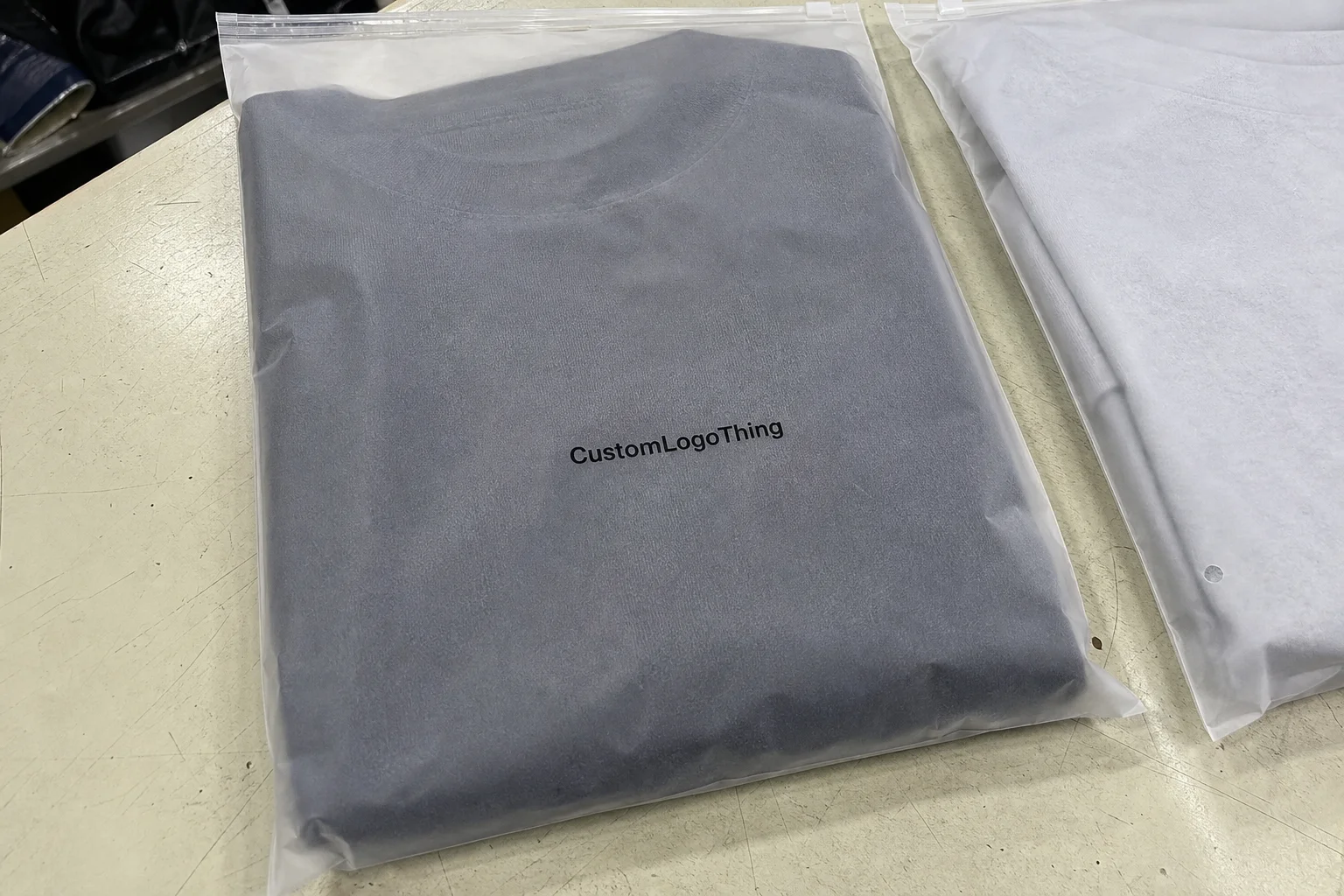
Small clothing labels, boutique retailers, and e-commerce brands often move in tighter cycles than larger wholesale programs. One month may call for 800 polybags for tees; the next may shift to hoodies, socks, or sample packs. That is exactly where low MOQ garment packaging earns its place. It lets you buy for the run you actually have, not the one you hope appears later.
The cost of overbuying shows up quickly. Packaging with the wrong logo, wrong size, or wrong warning text sits in storage while your team keeps using whatever is left over from the previous order. Underbuying creates the opposite problem: mixed packaging across SKUs, rushed reorders, and a presentation that looks inconsistent from one shipment to the next. Low MOQ helps smooth that middle ground.
There is still a tradeoff. Lower quantities usually mean a higher unit cost because film, printing setup, and labor are spread across fewer pieces. But for small and mid-sized brands, that is often the smarter cost structure. You are paying a little more per bag to avoid expensive mistakes, excess storage, and the risk of throwing away packaging that no longer matches the brand.
Buyers often use low MOQ runs to test several packaging decisions at once:
- Bag size for folded garment dimensions
- Film thickness for retail display or shipping protection
- Print format from one-color branding to full-panel artwork
- Closure style such as self-seal, zipper, or adhesive flap
- Bag style for tees, underwear, kidswear, or outerwear
That is the part that often gets overlooked. Low MOQ does not mean plain or temporary. It means your packaging spec can match the current product and current order volume instead of pretending the next six months are already known. For brands still refining size charts, logo placement, or retail packaging standards, that flexibility matters.
“A test run should be packaged like a test run: enough quality to represent the brand, not so much volume that the packaging becomes its own inventory problem.”
Low MOQ also works well when a brand is refreshing its visual identity. A smaller run makes it easier to evaluate a new logo layout, updated warning text, or different finish before committing to larger quantities. In packaging, changing one detail can affect everything else: print clarity, seal position, even how the garment sits inside the bag. Smaller orders make those adjustments easier to manage.
Custom garment polybag formats, materials, and print options
A few garment bag formats show up repeatedly in apparel packaging, and for good reason. The right format depends on how the garment is folded, whether the bag is going to retail or shipment, and how much protection and presentation the brand expects.
Common styles include clear polybags, resealable zipper bags, self-seal flap bags, gusseted bags, and mailer-style garment packaging. Clear bags work well when the product should be visible on a shelf or in a packing station. Zipper and flap styles are useful when the customer or warehouse needs to open and reseal the bag. Gusseted formats are a better fit for bulkier folds, such as hoodies or thicker knitwear, because they allow more room without distorting the garment.
Material choice matters more than many first-time buyers expect. LDPE is soft, flexible, and widely used for basic garment packaging. CPP has a firmer, clearer look that suits presentation-focused retail packs. Co-extruded films are useful when the bag needs more strength or puncture resistance, especially in carton packing or shipping conditions. If the packaging will be handled repeatedly before it reaches the end customer, the film choice matters just as much as the print.
Thickness should be selected for the actual job, not for the lowest possible cost. Lightweight retail bags commonly fall in the 40-60 micron range. Heavier-duty garment polybags for shipping or storage may run 60-100 micron or more, depending on material structure and whether a gusset or reinforced seal is included. Thin film can look fine on a sample and still fail during folding, packing, or transit. That is one of the more common reasons packaging gets replaced after the first production run.
Printing options are flexible even at moderate quantities. Many buyers ask for:
- One-color logo print for clean branding
- Two-color print for stronger shelf visibility
- Full-panel branding for a larger visual surface
- Size labels and barcode areas
- Warning text for compliance and safety
Optional features should be chosen for function, not because they look good in a mockup:
- Euro hole or hang hole for display
- Suffocation warning where required by market rules or buyer policy
- Vent holes for thicker folded garments
- Tear notch for easier opening
- Adhesive flap for faster packing lines
For tees, underwear, and folded basics, a clear self-seal bag is often enough. For kidswear, warning text becomes more relevant. For hoodies, outerwear, and knits, thicker film and a gusseted structure usually make the bag more reliable and easier to pack. If you also use Custom Poly Mailers for shipping, make sure the garment bag spec and mailer spec support the same packing system instead of creating extra handling steps.
Environmental claims and compliance language should be checked before artwork approval. If a brand wants to highlight recycled content, certified sourcing, or material reductions, those claims need to match the actual film specification. Independent guidance from organizations like the FSC and materials management information from the EPA can help buyers ask better questions before printing begins. That is especially useful when a packaging program spans multiple product types and different markets.
Size, thickness, and finish specifications to lock in before quoting
Many quotes go sideways for a simple reason: the buyer gives the garment size, not the folded bag size. Those are not the same thing. A tee, hoodie, or sweater has to be folded first, then measured in its packed form. Once that is done, the quotation can be built around width, length, gusset depth if needed, seal style, print area, and any closure detail.
For example, a folded adult tee might fit in a bag around 10 x 14 inches, while a hoodie may need something closer to 12 x 16 inches or larger depending on the folding method and the thickness of the fabric. Kidswear, socks, and underwear usually need smaller formats. If the fold is tight and flat, material can often be saved. If the garment is bulky, the bag needs more room to avoid stretching, wrinkling, or uneven seals.
Finish changes how the package looks on shelf and how it photographs. Ultra-clear film works best when the garment itself should stay visible. Frosted film softens the appearance and hides scuffs or handling marks better. Matte finishes reduce glare, which helps with strong store lighting and product photography. The finish should support the brand image without getting in the way of function.
Protection needs also vary by use case. A retail display bag is mainly about dust control, neat presentation, and easy opening. A shipping bag has to stand up to more movement, more pressure, and a greater chance of puncture or seal stress. Some buyers ask for static reduction because synthetic fabrics can cling to film, especially in dry conditions. That kind of detail usually only comes up after a few sample runs, which is why early testing matters.
Useful spec benchmarks by use case:
- Lightweight retail polybag: thinner film, clear finish, simple seal
- Presentation bag: high-clarity film, logo print, neat opening feature
- Shipping polybag: thicker film, stronger seal, puncture resistance
- Premium garment packaging: clearer film, tighter dimensional control, cleaner print registration
The most common mistake is choosing the thinnest film available because the quote looks lower by a few cents. That can lead to torn bags, poor shelf appearance, and garments that arrive looking less polished than intended. In practice, the few cents saved per unit can disappear quickly once defects, rework, and replacement orders are added back in.
If your packaging program includes multiple materials, keep the spec language consistent across items. For example, Custom Packaging Products can help maintain a more unified package system across inserts, boxes, and mailers. That does not mean every component has to be identical. It does mean the sizing, print tone, and handling expectations should feel like they belong to the same brand.
Custom garment polybags low MOQ custom order: cost, MOQ, and unit price
Costs are shaped by a few predictable factors: bag size, film type, print count, and whether the order is built from a stock-style base or a fully custom structure. Larger bags use more resin. More print colors take more setup. Added features, such as special closures or thicker film, raise the price as well. None of that is unusual; it is just how packaging production works.
For small runs, a realistic pricing structure may look something like this:
| Order Type | Typical MOQ | Approx. Unit Price Range | Best For |
|---|---|---|---|
| Simple clear bag with one-color print | 1,000-3,000 pcs | $0.12-$0.28 | Test drops, boutique retail |
| Thicker film, custom size, one- or two-color print | 3,000-5,000 pcs | $0.18-$0.42 | Mid-volume apparel packaging |
| More complex format or premium print coverage | 5,000+ pcs | $0.28-$0.65+ | Brand refresh, seasonal runs |
Those are planning ranges, not a promise. They are still useful because they help set expectations before a formal quote arrives. The final number usually depends on material thickness, sealing method, print coverage, artwork complexity, and whether the order needs inner cartons, labels, or inserts. Freight can also change the landed cost more than buyers expect, especially on smaller orders where shipping is spread over fewer units.
Before approving the quote, ask about every extra charge that might appear later:
- Plate or setup charges
- Sample or pre-production proof fees
- Rush production costs
- Freight and customs handling
- Special labels or inserts
Total landed cost matters more than the unit price alone. A bag with a slightly higher unit cost may still be the better buy if it prints cleaner, ships with fewer defects, and avoids reordering sooner than planned. That is especially true for low MOQ programs, where fixed costs have less volume to absorb them.
Low MOQ is a strong fit for pilot launches, seasonal testing, and brand refreshes. It also makes sense when a brand is moving away from plain bags and toward branded packaging but does not want to commit to a huge order before confirming the design works in real production. For many apparel buyers, that is simply the more disciplined way to spend packaging budget.
Production steps, lead time, and approval checkpoints
The production path is usually simple enough: inquiry, spec confirmation, artwork review, proof approval, production, quality check, shipment. The problems usually start earlier, with incomplete artwork or size guesses that do not match the folded garment. When the basics are wrong, everything downstream slows down.
Here is the typical flow for a custom run:
- Request quote with garment type, size, quantity, and print details
- Review spec sheet and confirm material, thickness, and closure style
- Approve artwork or request a mockup
- Confirm sample or digital proof
- Begin production after approval
- Inspect finished bags for print, seal, and dimensional accuracy
- Ship to the destination address
Lead time depends on complexity. Straightforward custom work on a stock-style base can often move in about 10-15 business days after proof approval. Multi-color print, special dimensions, and thicker film typically take longer, often 15-25 business days. If artwork arrives late, changes keep coming, or the spec is unclear, the schedule shifts. That is less a manufacturing issue than an approval issue.
Pre-production checks usually include film selection, print setup, color matching, and seal testing. The supplier should also confirm that the bag folds cleanly, opens as expected, and fits the garment without too much extra space. If the order needs warning text or compliance copy, that has to be confirmed before printing starts. Those requirements can differ by market and by retailer, so they should be settled early rather than corrected after production.
Packaging testers often look at the same basic questions: does the seal hold, does the print stay centered, does the bag size match the folded product, and does the packout process run without friction? That kind of discipline matters more than an attractive render. A nice mockup can still fail if the film tears too easily or the dimensions do not work on the packing table.
Low MOQ can shorten the approval process because there is less volume at stake, but it does not automatically shorten manufacturing time if the artwork or construction is complicated. Smaller orders give you flexibility, not magic. The better the spec sheet, the smoother the process.
Why custom polybags fit small-batch garment programs better
Small-batch apparel programs need packaging support that is clear, practical, and not padded with unnecessary options. That is the real advantage of custom garment polyBags Low MOQ Custom Order sourcing. You get enough flexibility to match the run, but not so much complexity that the packaging becomes a project of its own.
The best packaging partners focus on the details Buyers Actually Use to make decisions: size guidance based on the folded garment, direct pricing that identifies setup costs, and artwork handling that does not create avoidable delays. If the order is for tees, hoodie specs should not be suggested as a default. If the order is for outerwear, a thin film that only looks good on a sample is not enough. Practical recommendations save time and reduce rework.
Quality control is also easy to underestimate. A proper check should look at seal strength, print clarity, thickness consistency, and bag-to-bag uniformity. One good sample means little if the full run drifts in dimension or print position. That kind of inconsistency tends to show up where it hurts most: during packing, on shelf, or when the customer opens the product.
It helps when cost drivers are explained clearly before the order is approved. Low MOQ orders leave less room to absorb inefficiency, so Buyers Need to Know whether the price is being driven by film choice, setup, freight, or artwork complexity. That clarity is more useful than broad sales language, especially if the brand is still testing demand or adjusting its packaging standard.
For brands coordinating across multiple packaging items, consistency matters. If garment polybags, mailers, and secondary packaging all feel like separate purchases, the presentation gets scattered. If they are treated as one system, the result looks more deliberate and easier to manage.
Retail presentation is part of the job too. A garment in a well-fitted clear bag should open cleanly, sit flat, and look ready for store display or shipping insertion without extra handling. That is the baseline expectation for apparel packaging, not an extra feature.
Next steps to place a low MOQ custom order without delays
If you want a quick quote for Custom Garment Polybags low moq custom order production, send the relevant details in one message. That keeps the process moving and reduces back-and-forth. A complete request also helps prevent the common pricing errors that come from missing measurements or unclear artwork instructions.
Include these details:
- Garment type such as tee, hoodie, underwear, kidswear, or knitwear
- Folded size of the packed garment
- Target quantity
- Preferred bag style
- Material or thickness preference
- Print colors and artwork file
- Closure style if needed
- Destination country for freight planning
If the logo placement is unusual or the artwork has small text, ask for a mockup or proof before production begins. That small step can prevent a wrong logo scale, a poor print position, or a bag size that looks reasonable on screen and awkward in hand. Also specify whether the bag is intended for retail presentation, shipping protection, or both. The specification changes depending on the job.
If the budget is tight, keep a second material or thickness option in reserve. That gives you a fallback if the first choice pushes the order above your target. It is much easier to approve an alternate spec before production than to renegotiate after the quote is already in motion.
Quick checklist before you send the request:
- Size
- Thickness
- Closure
- Print colors
- Quantity
- Destination
With those details in place, a quote can be much tighter and the production path much clearer. That is usually the difference between a smooth low MOQ order and one that keeps stalling over missing information.
What is the MOQ for custom garment polybags with custom printing?
MOQ depends on bag size, material, and print complexity. Simple stock-style options usually allow lower minimums than fully custom builds. Sharing exact size and artwork helps generate a realistic MOQ instead of a vague estimate.
Can I order custom garment polybags low MOQ custom order for a small clothing brand?
Yes. Low MOQ is a strong fit for small brands and test runs because it reduces inventory risk and keeps packaging closer to current sales volume. The unit price is usually higher than large runs, but the risk of overbuying is much lower.
What information do you need to quote custom garment polybags?
Need garment type, folded dimensions, quantity, material preference, thickness, print colors, and closure style. An artwork file or logo concept is also needed for print accuracy. The destination address matters because freight can change the total cost.
How long does production usually take after artwork approval?
Lead time depends on order size, print setup, and material availability. Simple orders move faster than multi-color or highly customized bags. Fast and accurate artwork approval usually helps more than anything else.
Which polybag type is best for retail clothing versus shipping?
Retail clothing often uses clear, branded bags for presentation. Shipping usually needs stronger film, secure sealing, and better puncture resistance. If you need both, ask for a spec that balances display and protection.