Folded apparel can reach shelf or shipment looking clean and controlled, but if the bag is cloudy, too thin, or undersized, the customer often reads that as a quality issue before they ever touch the garment. That is why a custom garment polyBags Wholesale Supplier guide is useful: it keeps appearance, protection, and cost in the same conversation instead of treating packaging as an afterthought.
From a buyer’s perspective, the bag has two jobs. It protects against dust, scuffing, and handling damage, and it also acts as retail packaging or shipping presentation that shapes the first impression of the brand. For apparel teams comparing branded packaging options, the polybag is part of the product presentation, not just the shipping carton.
Why garment polybags matter when presentation and protection both count
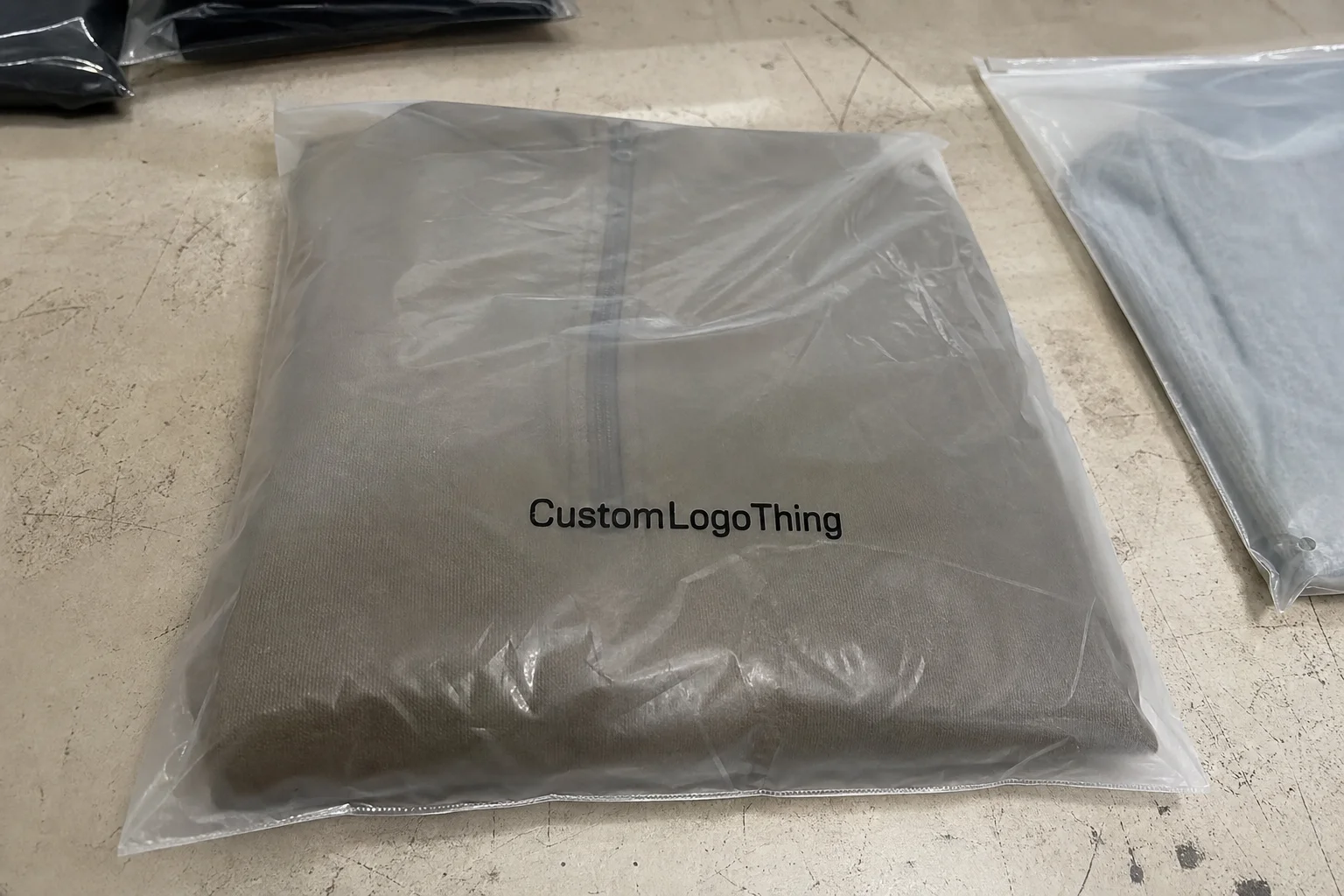
A garment bag is more than a sleeve of plastic. It sets the visual tone for tees, knitwear, sleepwear, children’s apparel, undergarments, and folded sets that move through warehousing, distribution, and store fixtures. If the bag is clear enough to show the color, clean enough to avoid haze complaints, and sized correctly so the garment does not buckle inside, it quietly supports the entire packaging system.
Wholesale sourcing makes the economics work better once a brand standardizes a few repeat sizes across the line. Many apparel programs use the same format for multiple SKUs: one size for basic tees, another for sweats, and a heavier film for thicker knits. That consistency lowers unit cost, simplifies packing, and makes package branding easier to keep consistent across replenishment runs.
Custom branding is most useful where the product itself looks similar across SKUs. A clear bag with a printed size mark, logo, or care and warning copy helps warehouse picking, and it gives ecommerce fulfillment a more organized feel. If products differ mainly by color or size, the bag can prevent confusion while giving the line a more finished appearance.
A good supplier should help balance film clarity, seal strength, print requirements, and carton efficiency without padding the quote with features that do not serve the use case. That is the practical side of the custom garment polyBags Wholesale Supplier guide approach: match the spec to the actual packing flow, then refine it only where the product needs more protection or better presentation.
“If the bag looks cheap, the garment gets judged as cheap. Buyers may not say it out loud, but the packaging does a lot of silent selling.”
Product details that affect fit, appearance, and handling
Most apparel polybags start with LDPE, or an LDPE/LLDPE blend when extra tear resistance is needed. LDPE tends to feel softer and drape more cleanly, while LLDPE usually adds toughness and puncture resistance. Clear film remains the most common choice for garment visibility, but frosted or semi-opaque finishes can be useful when a brand wants a softer premium look or needs to reduce glare under bright store lighting.
Closure style matters just as much as film type. Open-top bags are simple and economical for in-house folding and packing. Adhesive strip bags reduce labor when a warehouse is sealing each garment after inspection. Resealable flap bags are useful for returns handling, reusable storage, or products that may be reopened before the final handoff. For some apparel fulfillment programs, suffocation warning styles are required, and the warning copy needs to stay legible after folding and stacking.
Customization is usually straightforward, but the details still matter. Most garment polybags are flexographically printed with one or two colors, although multi-color print is possible depending on budget and artwork complexity. Buyers can specify logo placement, size marks, barcode windows, vent holes, or a euro slot if the bag will hang in a retail environment. The more precise the layout, the easier it is to get a clean result.
Fit is one of the easiest places to lose money. If the bag is too tight, the garment wrinkles, the film stresses around corners, and packing speed drops. If it is too loose, the product shifts inside and looks sloppy on shelf. A simple folded measurement, plus room for tissue, inserts, or hang tags, usually gives the supplier enough information to recommend the right width and length.
Before approving a run, buyers should ask about film gauge, seal type, haze level, slip feel, and whether the bag needs anti-static performance or extra puncture resistance. Those are not decorative extras; they affect whether the bag behaves well on the line and whether the finished product still looks clean after shipping and handling.
- LDPE: softer hand, good clarity, common for standard apparel use
- LDPE/LLDPE blend: better toughness and puncture resistance
- Clear film: best for product visibility and shelf presentation
- Frosted film: cleaner premium feel, less glare
- Adhesive closure: useful where packing labor and reseal value matter
Spec sheet basics buyers should confirm before quoting
Good quoting starts with a complete spec sheet. At minimum, the supplier needs finished width, finished length, whether a bottom gusset is needed, film thickness, print coverage, and how many pieces are packed per carton. If those items are unclear, the quote will be loose and production risk rises quickly.
Garment category changes the bag requirement more than many buyers expect. Folded socks and undergarments usually need smaller formats and lighter gauge film. T-shirts sit in the middle. Sweaters, hoodies, and outerwear often need more width, more length, and a slightly heavier gauge so the bag does not stretch or split during packing. The same principle applies to other packaging lines as well: different products need different protection, even when the branding stays similar.
Labeling also matters. If the bag needs warning text, barcode space, retail labeling, or a market-specific notice, confirm the layout before the artwork is finalized. Some regions and retailers have packaging language requirements, and those copy blocks must stay visible after folding and stacking. If you also use product packaging across other SKUs, keep the bag system consistent so the line does not need to relearn the process every season.
Tolerances should be discussed early. In normal production, some variation in dimensions, print registration, and material thickness is expected. A supplier worth trusting will tell you the usual tolerance range rather than hide it. For a custom run, that kind of honesty is more useful than a polished promise.
When branding or fit is critical, request a sample or pre-production proof. A flat proof can catch copy mistakes, but a physical sample is better for checking how the folded garment sits inside the bag, how the adhesive closes, and whether the logo remains readable after handling.
| Spec item | Why it matters | Buyer tip |
|---|---|---|
| Finished width and length | Controls fit and wrinkle risk | Measure the folded garment, not the flat garment |
| Film thickness | Affects strength and feel | Heavier knits often need a thicker gauge |
| Print coverage | Changes both cost and presentation | One-side print may be enough for warehouse use |
| Closure style | Impacts labor and reuse | Adhesive closure works well for fulfillment lines |
| Carton count | Affects handling and freight efficiency | Ask how many cartons fit per pallet |
Cost, pricing, and MOQ factors that change the unit cost
Pricing is driven mostly by material gauge, bag size, print colors, number of printed sides, adhesive features, and order quantity. A simple clear open-top bag in a standard size costs far less than a custom-sized bag with two-color print, adhesive strip, and warning text. That sounds obvious, but buyers often compare quotes without lining up the specs first.
MOQ works in practical steps. Small runs are often possible for simple unprinted or lightly printed bags, but the per-unit cost is usually higher because setup and waste have less volume to spread across. For a repeat program, larger orders usually lower the unit price because plate costs, setup time, and material purchasing are amortized across more units. In real terms, a simple standard-size run might land around $0.07 to $0.12 per unit at volume, while a fully custom printed, heavier-gauge bag may sit closer to $0.12 to $0.28 per unit depending on size, film, and print coverage.
There are hidden costs buyers miss. Carton pack size can affect warehouse labor, because a box that is too heavy or awkward slows down receiving. Pallet configuration changes freight efficiency. Air freight versus ocean freight can swing the landed cost more than the bag price itself. If two quotes look close, ask about pallet count, carton dimensions, and freight assumptions before deciding which one is truly cheaper.
The safest way to compare vendors is to use the same spec sheet for every quote. One supplier may look lower on price because they quoted thinner film, less print coverage, or a looser tolerance. That is not a fair comparison. A disciplined Custom Garment Polybags wholesale supplier guide process keeps the conversation grounded in actual requirements, not headline numbers.
For buyers building a broader packaging program, it can help to compare polybags alongside other items in a wholesale platform such as Wholesale Programs or Custom Packaging Products, especially if apparel bags, mailers, and presentation packaging all need to work together.
For standards and compliance reference, packaging teams often review guidance from ISTA for transit testing and EPA for broader materials and waste considerations. Those sources do not replace product specs, but they help buyers ask better questions.
Process, timeline, and lead time from artwork to shipment
The normal order path is straightforward: spec confirmation, artwork review, proof approval, production scheduling, manufacturing, quality check, and final packing. Each step can be quick or slow depending on how complete the buyer’s information is. The cleaner the artwork and spec, the fewer revisions, and the better the timeline.
Turnaround depends on the order type. A stock-size bag with print may move faster than a fully custom size. Add special features like venting, thicker film, or warning text, and the schedule usually stretches a little. In practice, many wholesale garment polybag orders run around 12 to 15 business days from proof approval to finished production, but that depends on quantity, print complexity, and factory load. Freight time is separate.
Artwork readiness matters more than most brands expect. Files with correct dielines, outlined fonts, and accurate copy move through proofing faster and with fewer mistakes. If the logo has a fine line or a small wordmark, ask for a pre-press proof so the print can be checked before the run starts. On larger runs, buyers should also ask about first article checks or inline inspection, because catching a problem early saves a painful reprint.
Shipping needs its own plan. Ocean freight is usually better for larger replenishment orders, while air freight can protect a launch date or emergency restock. The important thing is to build lead time around real replenishment needs, not just factory production. Seasonal apparel peaks do not wait for packaging delays.
How to compare suppliers on quality, communication, and repeatability
A strong supplier does more than quote a number. They help align film choice, sizing, print setup, and packing method to the actual garment line. That matters because the right bag for a folded tee is not always the right bag for a sweater, and the right bag for store presentation may not be the best bag for ecommerce packing.
Look for signs of reliability. Clear tolerance language is one. Sample support is another. Straight answers about MOQ and lead time are a good sign too. If a supplier avoids details on print registration, seal strength, or production variation, that is usually a warning sign rather than confidence.
Quality control should be judged in practical terms. Seals should hold without peeling or weak spots. Film should arrive clean, flat, and without excessive static cling. Printed logos should remain legible after folding and storage. If the bag will sit in inventory, the ink should not smear or rub off during normal handling. For brands that also use Custom Poly Mailers, matching the same level of production discipline across all packaging formats helps keep the brand experience consistent.
Communication matters just as much in wholesale accounts. Fast responses, clear revision handling, and accurate production updates prevent costly delays. A buyer should not have to chase basic order status. If a supplier communicates well during quotation, they usually handle production issues better too. That is one of the simplest ways to separate a polished sales pitch from a dependable packaging partner.
Custom Logo Things is built around practical specification matching, repeatable wholesale production, and clear order management. That is the real value behind a Custom Garment Polybags wholesale supplier guide: fewer assumptions, fewer surprises, and a cleaner path from quote to delivery.
Next steps to request a quote and lock in the right spec
Before requesting pricing, gather the essentials: bag dimensions, garment type, estimated quantity, print colors, closure style, and any warning or retail text. If possible, include artwork and a simple product photo or folded garment measurement. That extra detail makes it much easier for the supplier to confirm fit and avoid a round of corrections later.
If cost is a concern, ask for two or three spec options. A standard clear film versus a slightly heavier film is a good comparison. So is open-top versus adhesive closure. Small changes like those can affect both price and handling speed, and the best choice depends on whether the bag is serving retail packaging, warehouse packing, or ecommerce fulfillment.
Ask for sample photos, printed proofs, and a timeline that includes artwork approval and shipping, not just factory production. Buyers often miss the freight side, then wonder why the product is late even though the bags were finished on time. A good supplier will spell out the whole schedule, including the actual handoff window.
If you are organizing a broader packaging design update, keep the garment polybag aligned with the rest of the line so the brand feels intentional across touchpoints. Whether you are coordinating with display materials, mailers, or custom printed boxes, consistency pays off in presentation and efficiency.
Use the Custom Garment Polybags wholesale supplier guide method the same way experienced buyers do: confirm specs, compare landed cost, approve a proof, and place the order with a realistic replenishment window. That is the cleanest way to get packaging that protects the product, supports the brand, and avoids unnecessary waste.
FAQ
What should I ask a custom garment polybags wholesale supplier about fit?
Ask for finished width, length, gusset if needed, and the recommended film gauge for your folded garment size. Share a folded sample measurement or product photo so the supplier can check clearance for tissue, inserts, or hang tags.
How do wholesale garment polybag pricing and MOQ usually work?
Pricing is driven by size, thickness, print colors, closure style, and order quantity. MOQ is often lower for simple stock-size bags and higher for fully custom sizes or multi-color printing.
What print options are common for custom apparel polybags?
Most buyers choose flexographic printing for logos, size marks, warnings, or simple branding. Print coverage can be one side, two sides, or full surface depending on the visual and budget goal.
How long does custom garment polybag production usually take?
Timeline depends on artwork approval, whether the size is standard or fully custom, and the print complexity. Shipping method also matters, so buyers should factor in freight time when planning replenishment.
Can I order samples before placing a wholesale purchase?
Yes, and it is smart to request a sample or proof when fit, clarity, print quality, or warning copy matters. A sample helps confirm the bag size, seal feel, and how the finished garment presents in retail or ecommerce use.