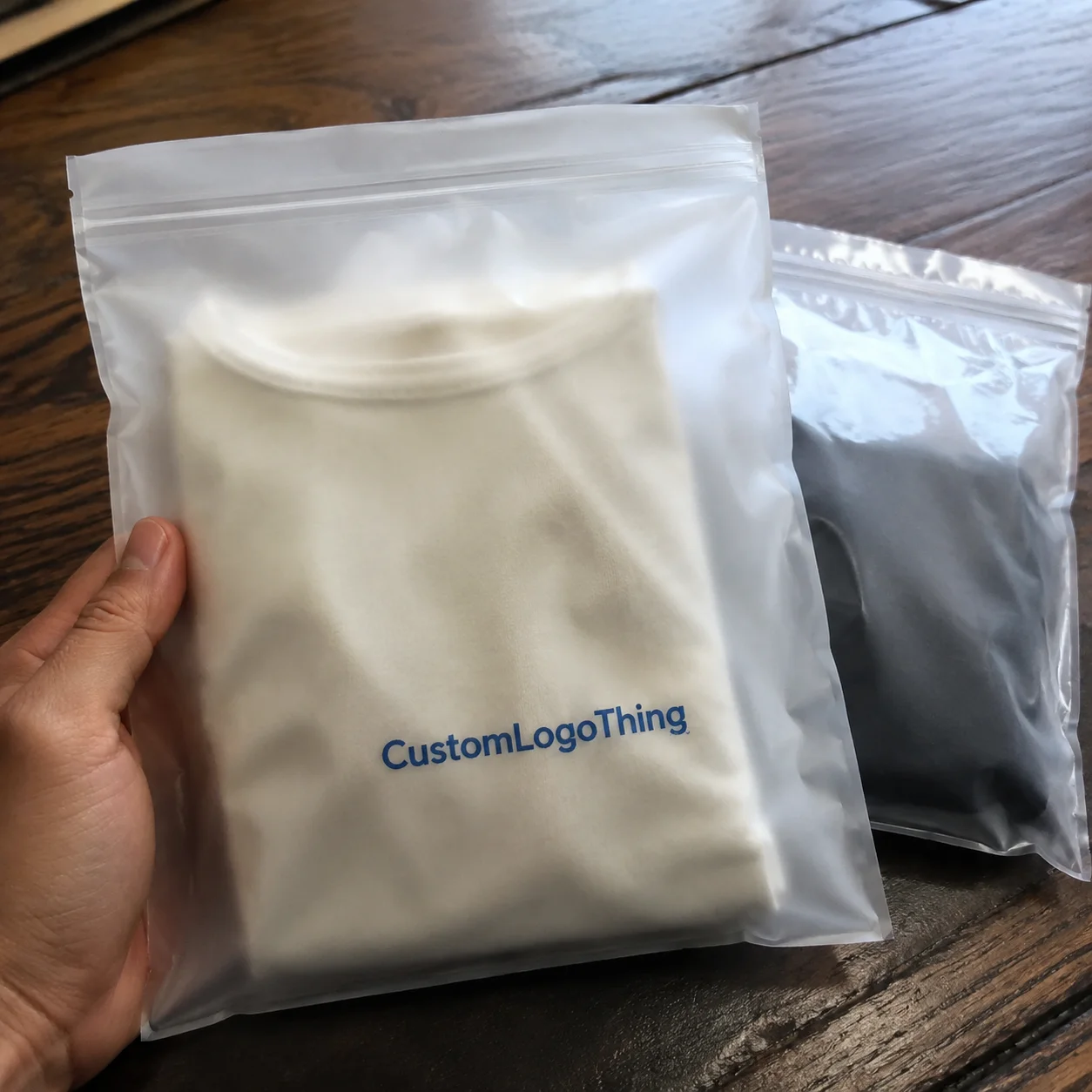
Two shirts can look almost identical on a hanger, yet once they are folded, bagged, carton-packed, and moved through retail or ecommerce channels, the film around them starts doing real work. It affects product visibility, how cleanly the garment travels, how much labor the pack-out demands, and whether the finished piece feels deliberate or improvised. That is why a Custom Garment Polybags material options comparison is not just a spec exercise; it is one of the fastest ways to avoid paying for the wrong kind of protection.
The best bag is rarely the flashiest bag. It is the one that fits the garment size, matches the packing method, and survives the actual environment without creating rework. A well-chosen bag can improve product packaging presentation, protect folded apparel during transit, and make branded packaging look considered rather than generic. That matters whether the bag is part of a custom packaging program, paired with Custom Poly Mailers, or nested inside a larger system that also uses boxes, inserts, and labels.
For buyers comparing apparel packaging at the specification stage, the practical question is not which film sounds best on paper. It is which one keeps the line moving, protects the garment, and passes receiving or retail checks without surprises.
Why garment polybag material choices change the whole pack-out
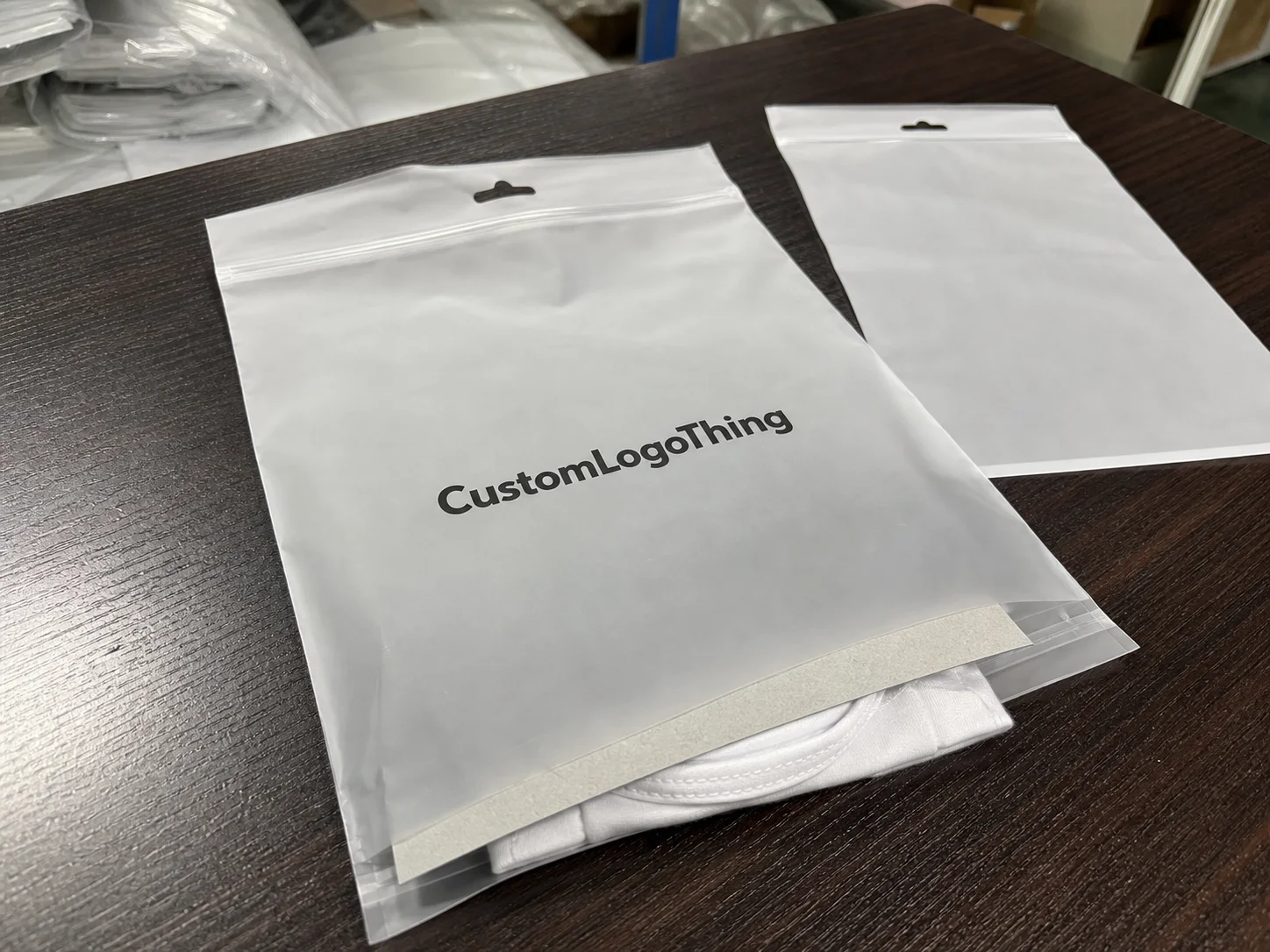
A polybag does more than hold a folded shirt in place. It affects how the garment feeds through the packing process, how the print reads through the film, how reliably the closure holds, and how the unit feels when it is removed from the carton. Small differences in film behavior can create very different results once the product is actually being handled by packing staff, merchandising teams, or warehouse receivers.
That is why a Custom Garment Polybags material options comparison should begin with the pack-out, not with the cheapest resin quote. A bag that seals cleanly but scuffs easily, or a crystal-clear film that crackles and tears at a folded edge, can cost more overall than a slightly pricier material that runs better and rejects fewer units.
Buyers usually compare six broad material families: LDPE, LLDPE, HDPE, CPP, BOPP, and recycled-content blends. Each has a different balance of flexibility, stiffness, clarity, print response, and cost. Some are better for presentation, some for containment, and some for high-volume utility packaging where appearance matters less than efficiency.
The most common mistake is assuming the clearest film is automatically the best choice. Clarity is useful, but not if the bag splits at the corner, sticks awkwardly in the pack line, or forces extra handling. In apparel packaging, the right material is the one that fits the product and the process together.
How common polybag materials perform for apparel packaging
LDPE and LLDPE are the workhorses of garment packaging. LDPE tends to feel soft, flexible, and forgiving, with good sealability and an easy hand feel. It is often selected for folded apparel because it balances clarity, cost, and handling. LLDPE is usually tougher at the same gauge, with better stretch and puncture resistance, which helps when garments have sharper folds, thicker seams, hang tags, or small accessories inside the pack.
HDPE sits at the lower-cost, lighter-feel end of the range. It is crisp, stiff, and often noisier in the hand, with less optical clarity than low-density films. For simple containment, warehouse storage, or high-volume inner packaging, that may be enough. For retail display, it can feel plain unless the program is intentionally designed around a more utilitarian look.
CPP and BOPP are generally chosen when appearance becomes part of the value. BOPP offers high clarity and a sharp print surface, which helps logos and fine details look clean. CPP is often used where a smoother, more presentation-oriented finish is desired and where the buyer wants a balance of clarity, seal behavior, and a slightly more premium feel.
Recycled-content blends deserve careful testing rather than assumptions. They may support sustainability goals, but clarity, haze, gauge consistency, and seal performance can vary more than with virgin resin. A bag that looks acceptable in a sample sheet can still become a problem if it wrinkles, seals unevenly, or shows inconsistency from run to run.
| Material | Typical feel | Strength profile | Visual appearance | Best fit |
|---|---|---|---|---|
| LDPE | Soft, flexible | Good sealability, decent puncture resistance | Clear to lightly hazy | Folded apparel, general retail packaging |
| LLDPE | Flexible with more stretch | Excellent toughness and tear resistance | Clear to moderately clear | Rougher handling, shipping protection |
| HDPE | Crisp, stiff, crinkly | Good basic containment | Less clear, more cloudy | Cost-sensitive, basic packaging |
| CPP | Smooth, presentation-oriented | Moderate toughness, good visual balance | High clarity, glossy | Retail display, premium packaging |
| BOPP | Stiff, glossy | Good dimensional stability | Very clear, sharp print surface | Premium branding, retail-facing apparel |
| Recycled-content blends | Varies by blend | Depends on resin mix and gauge | Can range from clear to hazier | Sustainability-focused programs |
If the priority is clarity, BOPP and CPP usually deserve the first look. If the garment needs more flexibility and a forgiving seal window, LDPE and LLDPE are more practical. If the program is highly cost-driven and the bag is mainly doing basic containment, HDPE may be enough. That simple sorting step can remove a lot of unnecessary back-and-forth during quoting.
Film feel also matters more than many buyers expect. Some brands want a quiet, smooth presentation; others do not mind a crisper, noisier bag if it helps throughput or cost. That is not just a preference issue. It affects how the bag behaves during insertion, cartoning, and opening at the retail end.
Key factors that drive material selection and unit cost
Thickness, or gauge, is one of the biggest cost levers in garment packaging. A small increase in mil or micron changes resin usage enough to move the price, especially on large runs. A 1.5 mil bag and a 2.0 mil bag may sound close, but across thousands of units the difference is real, both in material spend and in how the finished bag handles.
Bag dimensions are just as important. Wider bags consume more film, and longer flaps, adhesive strips, or header sections add both material and conversion time. Bottom seals, side seals, vent holes, hang holes, suffocation warning print, and easy-peel adhesive features all affect the final unit cost. None of these details are exotic; they are simply the variables that shape a quote.
Printing is another major driver. A plain clear bag costs less than a fully branded version, but the number of colors, ink density, and print coverage can change pricing quickly. For package branding, a clean one- or two-color logo is often enough. For coordinated branded packaging programs, the bag may need to align visually with cartons, inserts, or other printed components, and that usually requires tighter artwork control.
Minimum order quantity changes the math as well. Custom runs are usually more efficient at higher quantities because setup, plates, and conversion costs are spread over more pieces. That does not mean every buyer should overbuy. It means the order size should match real demand, storage space, and replenishment cycles rather than a guess about future volume.
There is also an operational cost that rarely shows up on the quote sheet: line friction. If a bag tears during loading, clouds the garment, or sticks in a way that slows packing, labor costs rise. A better film choice can lower total cost even if the unit price is higher. On apparel programs, that trade-off is often overlooked until the first production run exposes it.
Custom garment polybags material options comparison for compliance and appearance
A serious Custom Garment Polybags material options comparison should cover compliance and appearance together. Retail, warehouse storage, and ecommerce fulfillment do not always need the same material behavior, and a film that works well in one channel may be the wrong choice in another.
For safety, many garment bags need suffocation warnings, especially when the bag is large enough to create a hazard. Thickness expectations can also vary by retailer or region, and some programs require anti-static additives to reduce cling. Recycled-content declarations may also be requested, and buyers should verify whether documentation is needed to support sustainability claims. If a program sits alongside broader packaging requirements, it helps to check those details early rather than treating them as a late-stage correction. For background on recycling and recovery issues, the EPA’s materials guidance is a useful reference: EPA recycling resources.
Appearance is where the differences become easy to see. Glossy films such as BOPP can make colors look brighter and give the garment a sharp, polished presentation. Matte or frosted films create a quieter, more restrained look that some brands prefer for a premium feel. Ultra-clear films keep the garment color true and are often chosen for basics, uniforms, or styles where visibility is part of the selling point. If the artwork needs a crisp finish, the film surface matters just as much as the design file.
“The best-looking bag is not always the shiniest one. It is the one that frames the garment cleanly, seals reliably, and still looks intentional after handling, packing, and shipping.”
Print adhesion changes from film to film, and that catches a lot of first-time buyers off guard. The same logo can appear sharper on one material and slightly softer on another because of surface energy, gloss, and ink interaction. That is why samples matter. A bag that suits premium basics may not be right for workwear, seasonal apparel, or high-volume ecommerce packaging.
If the garment bag is part of a wider packaging system, everything should be considered together. Labels, inserts, cartons, and secondary materials such as kraft paper or corrugated cardboard should visually and physically match the role of the bag. A good packaging program feels like one system, not a stack of unrelated components.
For teams comparing manual packing against automated or semi-automated lines, industry references from organizations like the Packaging Machinery Manufacturers Institute can help frame conversations around material behavior, conversion constraints, and equipment compatibility.
Process, timeline, and production steps from spec to shipment
The production workflow is straightforward, but small specification errors can slow it down. It usually starts with garment dimensions, then bag size, film type, thickness, closure style, and print artwork. After that comes proofing, and only then does conversion begin. If a buyer can provide folded garment measurements and target carton counts early, the job tends to move more cleanly.
For repeat orders, the biggest time savings usually come from having the file and dieline already approved. A new order with new artwork, special windows, venting, or adhesive headers takes longer. A repeat run with the same spec can move faster because the setup is already defined and fewer approval loops are needed.
Typical timing depends on the bag style and order size, but many custom polybag jobs fall in the range of 12 to 15 business days after proof approval when material is available and the spec is straightforward. More complex runs can take longer, especially if the material has to be sourced specially or if the bag includes perforations, resealable tape, multiple print colors, or unusual dimensions. Seasonal demand can also stretch timelines, so buyers planning for launches or retail resets should leave room for sampling and proof corrections.
Good buyers make the quoting and production stages easier by sending accurate information:
- Garment dimensions after folding, not just flat size
- Bag size target with room for closure and insertion
- Film preference and thickness target
- Artwork in vector format
- Carton pack plan and count per case
- Approval contact to prevent delays
Quality control should be built into the process, not added after the fact. The practical checkpoints are seal integrity, gauge consistency, print registration, carton counts, and visual inspection for haze, wrinkles, or scuffing. For shipping performance, some buyers also reference ISTA test methods to evaluate transit stress, especially if the apparel moves through rougher distribution channels: ISTA packaging test standards.
A useful pre-production test is the actual pack-out trial, not just a flat film sample. A material can look fine in a sheet but behave differently once a folded knit, a zipper, or a tagged garment is inside it. That is where sizing, seal placement, and opening behavior show up clearly.
Common material-selection mistakes that create waste
One common mistake is choosing the clearest film available without checking puncture risk. A soft shirt may be fine, but a garment with zippers, snaps, hook-and-loop, or sharp collar points can stress a thin bag quickly. Clarity is useful; product protection matters more.
Another mistake is over-specifying thickness. Buyers sometimes assume thicker is automatically better, so they move up gauge without considering how that changes cost, packability, and appearance. A bag that feels too rigid can be harder to insert, less attractive on a retail hook, and more expensive than the product actually needs.
Under-specifying thickness causes a different kind of waste. Split seams, split corners, scuffed product, and returns caused by bag failure cost far more than the film savings. The thinnest film that still protects the garment and seals well is usually the smart target, especially on high-volume programs where small failure rates add up fast.
Skipping test packs is another expensive shortcut. A bag can look fine on a spec sheet and still behave badly once it is folded around real product dimensions or run on actual packing equipment. That is especially true with bulky fleece, compressed knits, and garments that sit unevenly once folded and taped.
Finally, some buyers forget retail and regulatory requirements. Suffocation warnings, barcodes, retailer-specific pack instructions, and shelf-readability rules can all affect the final spec. If those details are ignored early, the order may still “work,” but it may not pass receiving, merchandising, or compliance checks cleanly.
Expert tips for choosing the right film before you request a quote
Start with end use. A display bag, a storage bag, and a shipping bag are not the same thing, even if they all hold a folded shirt. The right film depends on whether the priority is presentation, toughness, static control, or cost. That one decision narrows the field quickly.
Ask for two or three comparable samples in different gauges or finishes. Side-by-side samples make it easier to compare clarity, stiffness, seal feel, and print quality. A sample comparison usually tells you more than a long material description because you can see how the film behaves with an actual garment inside it.
Request a quote that separates material, printing, tooling, and freight. Otherwise, true unit cost is hard to compare across suppliers. Headline pricing can hide setup charges or conversion differences, and those matter a lot on smaller runs.
Also ask whether the material includes recycled content, anti-static additives, or any relevant limitations. That matters even more if the same packaging program also uses promotional wraps, storage films, or mixed packaging formats. The garment bag may be a small component, but it still has to fit the full workflow.
Standardizing one or two specs across product lines can reduce spend and simplify inventory. That does not mean every garment gets the same bag. It means unnecessary variation is removed where the product does not justify it. Buyers who keep the number of SKUs under control usually see fewer packing mistakes, fewer reorders with the wrong material, and less confusion in the warehouse.
Best next steps for comparing materials and placing an order
Start with a basic spec sheet: garment type, folded dimensions, closure style, print needs, and whether the bag is for retail or shipping. Once those details are clear, the material shortlist usually becomes much easier to narrow.
Then build a comparison sheet for LDPE, LLDPE, HDPE, CPP, BOPP, and recycled-content options using the same criteria: clarity, strength, sealability, appearance, and cost. That keeps the decision grounded in performance rather than in the look of a single sample. It also helps avoid choosing a film that photographs well but does not fit the operation.
For delicate, premium, or highly compressed garments, ask for samples or a small pilot run before full production. If the bag sits beside other branded packaging elements, such as custom printed boxes or inserts, review the sample as part of the full package rather than in isolation. Small alignment issues become obvious quickly once the whole pack is assembled.
Confirm timeline, MOQ, and compliance details in writing before approval. Recheck the final spec against the order plan one more time. The most useful Custom Garment Polybags material options comparison is the one that turns into a repeatable standard your team can reOrder with Confidence, not a one-time guess that needs revision after the first shipment.
FAQs
What is the best material in a custom garment polybags material options comparison?
There is no single best material. The right choice depends on whether you need clarity, softness, stiffness, cost savings, or premium presentation. LDPE and LLDPE are strong all-around choices for flexibility and sealing, while BOPP and CPP are often preferred when appearance and clarity matter most.
Which polybag material is usually the cheapest for garment packaging?
HDPE is often among the lower-cost options because it uses less resin for a given size and has a lighter, stiffer feel. The lowest price is not always the best value if the bag tears easily, looks cloudy, or slows packing operations.
How do I choose between LDPE and LLDPE for apparel bags?
Choose LDPE if you want a familiar balance of softness, sealability, and flexibility for folded garments. Choose LLDPE when you want better stretch and puncture resistance, especially for bags that need to handle rougher packing conditions.
Does thicker film always mean a better garment bag?
No. Thicker film can improve durability, but it can also raise cost and make the bag feel too rigid or bulky. The ideal gauge is the thinnest film that still protects the garment, seals well, and meets handling requirements.
What details should I send for an accurate quote on custom garment polybags?
Send garment dimensions, bag size, film preference, thickness target, print details, closure style, order quantity, and whether you need retail or shipping packaging. Including your timeline, compliance needs, and sample references helps the supplier recommend the right material and avoid revisions.