For a package that looks simple on a shelf, a garment polybag can cause surprisingly expensive trouble if one detail is off. Film gauge, seal strength, print placement, closure type, or even the way the bag folds in the carton can affect how the product is packed and how it arrives.
The Custom Garment Polybags sample approval process is the stage where those details get checked before they become production problems. A buyer may start with artwork, but the sample is what proves the bag actually works for the garment, the packing method, and the shipping environment. That is true for folded tees, sweaters, socks, and other apparel that needs clean presentation without slowing down the line.
Digital proofs are useful, but they only show layout. A physical sample shows material feel, clarity, seal performance, and the way the bag behaves in real handling. It also reveals small issues that are easy to miss on screen, such as a warning line sitting too close to the fold, a logo that shifts after sealing, or a bag that clings too much during packing.
“A pretty proof is not the same thing as a usable bag. If the sample does not match the way the garment will be packed, the approval is incomplete.”
Why the sample matters before a single polybag is made
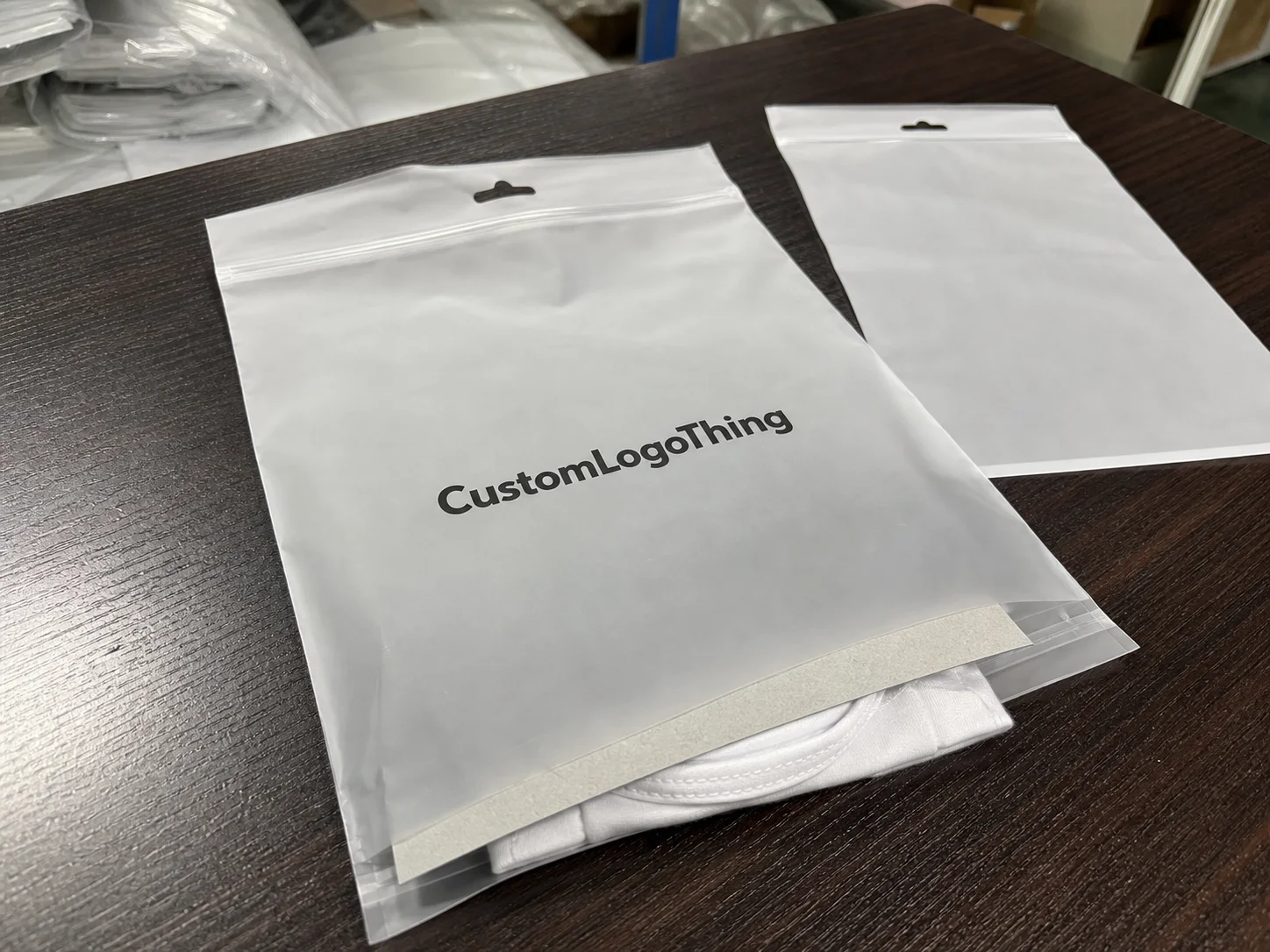
A good sample does more than confirm artwork. It tells the buyer whether the bag fits the garment with the right amount of clearance, whether the closure closes cleanly, and whether the film behaves the way the warehouse team expects. The person approving the bag is often balancing branding, packing speed, shelf appearance, and distribution constraints at the same time.
That is why one small miss can ripple through the whole order. A bag that is 10 mm too short may force the garment into an awkward fold. A weak seal can split in transit. A barcode printed too low may get hidden by a crease. A warning statement that is technically present but visually buried can create compliance headaches during receiving or retail inspection.
The sample also gives merchandising, QA, and operations a shared reference. Instead of arguing from screenshots, they can inspect a real item and decide whether the bag is acceptable as built. That shared reference is especially useful when a program involves multiple stakeholders or when reorders will need to match a previously approved standard.
There is also a practical difference between proof types. A digital proof checks layout and copy. A pre-production sample checks structure, material, and real-world handling. For Custom Garment Polybags, those are not interchangeable. The best approval decisions come from comparing both, then confirming the final sample against the actual garment and the actual packing method.
For buyers comparing broader packaging formats through Custom Packaging Products or looking at related structures such as Custom Poly Mailers, the same rule holds: the sample is the checkpoint that keeps packaging design from turning into production guesswork.
How the sample approval process works from artwork to shipment
The process usually starts with a spec review. A supplier should ask for garment dimensions, fold style, target pack count, and whether the bag will be used for manual packing, automated bagging, storage, or retail presentation. If those details are missing, the sample can still be made, but it may not reflect the final use accurately.
Once the basic specs are clear, the artwork proof is prepared. That proof should show the finished size, logo placement, warning text, barcode area, and any closure or ventilation features. This is the first place to catch layout problems, especially when copy sits close to the seal line or when a graphic risks disappearing into a fold.
After the buyer reviews the proof, a physical sample is produced. A simple clear LDPE bag with a one-color print often moves faster than a sample with resealable adhesive, tamper evidence, or custom tear notches. If the first sample exposes friction during pack-out, weak adhesion, or a venting issue, a second round may be needed. That is normal for more demanding programs.
When the sample arrives, the review should be practical rather than abstract. Does the garment fit without excess slack? Does the seal close cleanly? Is print registration centered? Can the barcode be scanned? Does the film snag on labels or catch while packing? A consolidated revision list is far more useful than separate comments scattered across email threads, texts, and calls.
That last point matters because version confusion is one of the fastest ways to slow production. If one person asks for a logo move and another wants warning copy revised, the supplier needs a single final instruction set. The best approvals are documented in writing, with the approved sample or a clearly labeled photo record tied to the purchase order.
This process is not unique to garment polybags. Buyers reviewing custom printed boxes or other retail packaging follow the same logic: the physical reference is what production should match, not the screen image alone.
Key specs that affect sample approval and final quality
Film material is usually the first technical choice. LDPE is common because it offers flexibility and clarity. HDPE feels crisper and can be more economical. CPP provides a smoother, higher-clarity look in some applications. Blends are often selected when the buyer wants a little more stiffness or improved tear resistance. The right choice depends on garment weight, packing method, and the look the brand wants to present.
Thickness matters just as much. Polybag film is often specified in mil or microns, and the difference is easy to feel in hand. A bag that is too light can wrinkle around the garment or tear at the fold. A bag that is too stiff can slow manual packing and look bulky on shelf. For many apparel programs, buyers compare films in the 1.5 to 3 mil range, but the right number still depends on product weight and how much handling the bag will see in transit.
Print variables can change the approval result too. One-color branding is usually straightforward, but multi-color printing can expose registration drift, uneven ink density, or poor opacity on clear film. A dark logo on transparent plastic may look slightly different than it does on a flat proof because the material itself changes contrast. When artwork sits near a seal or fold, that shift can become more noticeable.
Functional details deserve the same attention:
- Flap length for adhesive closures or reseal strips
- Seal strength for heat-sealed or pressure-sensitive closures
- Venting to reduce trapped air in packed garments
- Fold direction so the bag opens the way the packing team expects
- Warning text placement for suffocation and recycling messaging
- Carton pack configuration for storage and line-side access
Compliance is part of the approval path, not an afterthought. If the bag is intended for retail packaging or warehouse distribution in a market with specific warning-copy expectations, the sample should show that text at the right size and in the right position. If the buyer needs recycle marks or paper-linked components within a larger packaging system, those details should be checked before production is released. For general shipping-test thinking and recycling references, ISTA and EPA recycling guidance are useful starting points.
Custom garment polybags sample approval process: step-by-step timeline
The cleanest approval path is straightforward, but only if the buyer sends complete information early.
- Collect the specs first. Confirm garment size, fold style, packing method, storage conditions, and whether the bag needs closure features, venting, or warning copy.
- Review the digital proof. Check dimensions, artwork, text accuracy, and placement. Consolidate changes into one clear round of feedback.
- Approve the physical sample. Test fit, seal integrity, print clarity, and handling. If the bag is for retail presentation, review it under normal light, not only under office lighting.
- Request revisions only when needed. Small changes are manageable, but repeated edits usually stretch the schedule and add cost.
- Issue written approval. Confirm the approved sample, ask for the production reference, and verify lead time for the full run and freight.
In many programs, the first proof can be reviewed within a day or two, and the sample may take several business days depending on tooling, print method, and shipping speed. A plain clear bag often moves faster than a printed bag with special features. Once approval is issued, production commonly begins within 12 to 15 business days for standard runs, although order size, seasonality, and factory load can push that timeline out.
One practical rule helps more than people expect: the person who approves the sample should also be the person who confirms the final sign-off whenever possible. If three departments each have a different opinion about the same bag, the schedule usually suffers and the supplier is left guessing which comment is final.
| Approval path | Typical use | Strength | Common risk |
|---|---|---|---|
| Digital proof only | Simple layout review | Fastest for checking text and artwork placement | Cannot confirm film feel, seal quality, or fit |
| Digital proof plus one physical sample | Most standard garment polybag programs | Good balance of speed and control | Needs disciplined feedback and clear sign-off |
| Multiple sample rounds | Special closures, warnings, or premium presentation programs | Best for complex structures and tighter QA expectations | Longer timeline and higher revision cost |
That table is not just paperwork. It helps set expectations before production starts. If a bag includes a resealable strip and custom tear notches, two rounds may be a realistic planning assumption rather than a problem.
Cost, pricing, and MOQ factors that change the approval path
Sample pricing is rarely flat. A small clear bag with no print may require only a modest setup fee, while a printed sample with specialty closures or multiple test versions can cost more because the supplier has to stage film, printing, and finishing work for a single item or a tiny batch. Buyers may see sample charges from a few dollars to several dozen dollars depending on size and complexity, plus freight.
MOQ changes the economics quickly. If the minimum order quantity is higher, the unit price can drop because setup cost is spread across more bags. If the buyer only needs a pilot quantity, the per-bag price usually climbs. That is normal, and it is why the quotation should separate sample charges, production price, and shipping so the approval decision is based on clear numbers.
Late changes after approval are where cost tends to rise. A revision that changes film width may force a new cutting pattern. A new logo location may require updated plates or print setup. A change in warning text may mean reproofing and a new sample. The further the order has advanced, the more expensive the correction usually becomes.
Freight also affects timing and total cost. Air shipping gets a sample into the buyer’s hands quickly, but the freight may rival the sample cost itself. Standard international transit is cheaper, though it can add several days. For buyers coordinating branded packaging and retail packaging across multiple product lines, that timing can influence launch dates and warehouse receiving windows.
Common mistakes that slow down approval or create rework
One of the biggest mistakes is approving artwork before checking the actual garment dimensions. That is how a bag looks fine on screen but fits poorly in real use. The final bag may be too loose, too tight, or difficult to close, and the order then needs revision.
Scattered feedback creates another problem. If one person comments on logo placement, another comments on warning copy, and a third mentions the seal in a separate call, the supplier has to reconstruct the final instruction set. That slows the process and increases the risk of a wrong revision.
Color can also be misleading. Buyers sometimes approve from a monitor and expect the printed film to match exactly. Flexible film does not behave like coated paper, so tone and saturation can shift a bit. If color accuracy matters, request a printed sample rather than relying on the screen alone. The same principle applies to package branding on film as it does to specialty finishes on paper-based packaging.
Here are details that often get missed:
- Barcode placement too close to a fold
- Warning copy too small to read clearly
- Adhesive strip that sticks too aggressively or not enough
- Seal line inconsistency across the sample edge
- Vent holes positioned where they snag product labels
Once materials have been staged for production, late changes become more expensive. Sometimes they can still be made, but not always without affecting the full schedule. That is why the Custom Garment Polybags sample approval process should be treated as a genuine production decision, not a formality.
Expert tips for smoother approval, faster turnaround, and fewer surprises
Create one approval checklist and use it every time. A solid list should include dimensions, film material, thickness, print content, print position, compliance copy, closure style, carton count, and the intended packing method. Once that list exists, it becomes much easier to compare samples across suppliers or across seasons of the same product line.
Test the sample in real packing conditions, not only on a clean desk. Put the actual folded garment inside, use the closure several times, and watch how the bag behaves when someone packs 100 units in a row. That is where the difference shows up between a sample that looks good and a sample that actually supports production speed.
Keep the same internal approver from sample to final sign-off whenever possible. If one person approves the sample and another later says the bag is too tight, the process often circles back to the beginning. A single point of approval reduces mixed signals and keeps the revision history clear.
It also helps to place the sample in context with the wider packaging program. A bag that works for a folded tee may not suit a heavier apparel item, just as a structure used in custom printed boxes would not be the right answer for a soft, compressible garment. Different product packaging calls for different handling logic.
“The best approval process catches the ugly surprises before the production line ever starts.”
If a buyer wants a cleaner approval cycle, ask the supplier to keep the revision record visible and send the approved sample photo with measurements. That documentation shortens reorders, helps QA, and gives the production team a clear reference if questions come up later.
Next steps before you approve the final run
Before sign-off, confirm the dimensions, verify the artwork, check the compliance text, and approve the physical reference sample. Then ask for a written production summary that repeats the approved specs, including film gauge, bag size, closure type, and carton configuration. That document keeps everyone aligned before mass production begins.
Set a feedback deadline. If the buyer waits several extra days to comment, the schedule can drift, especially if materials are already queued. Keep the approved sample, photos, and proof files together in one folder so future reorders can be checked against the same standard.
If the order supports a broader packaging program, tie the bag approval back to the rest of the branded packaging system. The goal is not just to make a bag that looks good once; it is to make a bag that performs consistently in production, shipping, and retail presentation.
In practical terms, a clear Custom Garment Polybags sample approval process protects quality, pricing, and launch timing far better than trying to correct problems after production starts. That difference is what keeps a packaging program controlled instead of reactive.
What is included in the custom garment polybags sample approval process?
It usually includes artwork proof review, physical sample evaluation, size and fit confirmation, compliance text check, and written final sign-off. Buyers should compare the sample against the actual garment and packing method so the bag performs the way production needs it to.
How long does the polybag sample approval timeline usually take?
Timeline depends on artwork readiness, sample complexity, and shipping speed, but a simple sample is often faster than a printed or special-feature version. Delays usually happen when feedback is scattered or revisions are requested after the first sample instead of before.
Does approving a sample lock in the final pricing?
Pricing is generally based on the approved specs, MOQ, and freight assumptions, so major changes after approval can alter cost. Ask for a quote that clearly separates sample charges from production unit cost to avoid surprises.
What should I check first when reviewing a garment polybag sample?
Start with dimensions, film thickness, print accuracy, seal quality, and whether the garment fits correctly without excess slack or compression. Then confirm warning text, barcode placement, and any closure or vent features that affect packing and retail presentation.
Can I skip the physical sample if the digital proof looks right?
A digital proof helps confirm layout, but it cannot fully show film clarity, feel, seal performance, or how the bag behaves in packing. For most Custom Garment Polybags sample approval process decisions, a physical sample is the safer way to avoid rework.


