Buyer Fit Snapshot
| Best fit | Custom Gift Boxes for Shipping projects where brand print, material claims, artwork control, MOQ, and repeat-order consistency need to be specified before quoting. |
|---|---|
| Quote inputs | Share finished size, material target, print colors, finish, packing count, annual reorder estimate, ship-to region, and any compliance wording. |
| Proofing check | Approve dieline scale, logo placement, barcode or warning zones, color tolerance, closure strength, and carton packing before bulk production. |
| Main risk | Vague material claims, crowded artwork, missing packing details, or unclear freight terms can make a low unit price expensive after revisions. |
Fast answer: Custom Gift Boxes for Shipping: Design, Costs, Timing should be specified like a repeatable production item. The safest quote records material, print method, finish, artwork proof, packing count, and reorder notes in one written spec.
Production checks before approval
Compare the actual filled-product size with the drawing, then confirm tolerance on folds, seals, hang holes, label areas, and retail display edges. Reserve space for logos, QR codes, warning copy, and material claims before decorative graphics fill the panel.
Quote comparison points
Review material grade, print process, finish, sampling route, tooling charges, carton quantity, and freight assumptions side by side. A quote is only useful when the supplier can repeat the same color, closure quality, and packing count on the next order.
Custom Gift Boxes for Shipping: Design, Costs, Timing
Custom Gift Boxes for shipping look like a branding decision until a shipment lands dented, rattling, or expensive to replace. Then the box suddenly matters. A lot. Fit is usually the difference between a parcel that arrives clean and one that arrives looking like it lost a fight with a conveyor belt. Empty space causes most of the trouble. Not logos. Not ribbon. Air is the problem, and custom gift boxes for shipping are built to control it.
For ecommerce brands, gifting companies, and subscription programs, custom gift boxes for shipping do three jobs at once: they protect the product, carry the brand, and make fulfillment less chaotic. That last part gets ignored until the warehouse starts moving faster than the packaging can keep up. If the box is too loose, the product shifts and gets damaged. If it is too oversized, freight costs creep up and the unboxing feels sloppy. If the structure is weak, pretty print does nothing but decorate a failure.
I have seen plenty of brands learn this the hard way. They approve a beautiful mockup, then discover the real product rattles inside like a coin in a tin can. That is not a design problem. That is a packaging problem. And it is usually fixable, which is the good news.
Think of custom gift boxes for shipping as a system, not a container. Structure, insert, print finish, closure style, and shipping method all have to work together. A brand can absolutely use branded packaging to raise perceived value, but only if the build survives carrier handling. People skip that part and then act surprised when the returns tab starts looking ugly.
Custom gift boxes for shipping: why the right fit changes everything
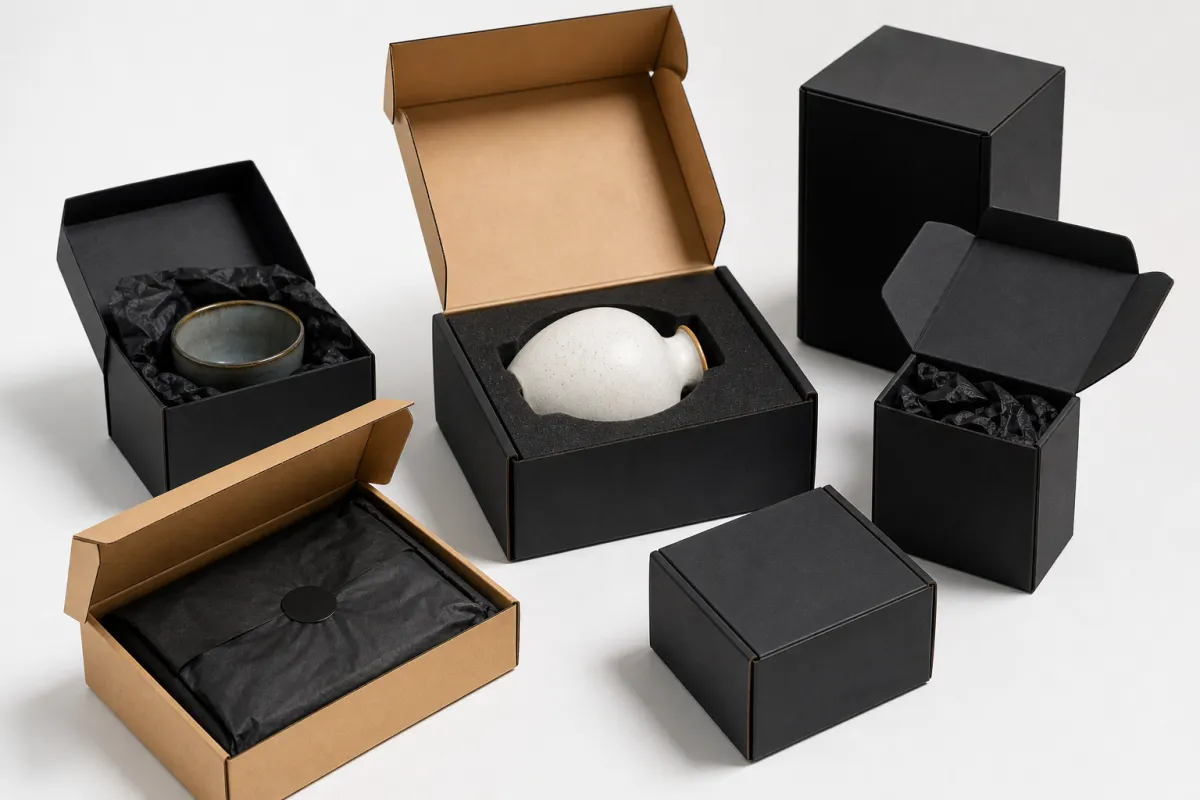
Simple rule: custom gift boxes for shipping can be safer and cheaper than a generic box if the fit is right. That sounds backwards until you run the numbers. A tight, well-structured box reduces void fill, lowers movement, and usually cuts the amount of protective material you need. In ecommerce shipping, every extra inch adds board usage, carton cube, warehouse space, and parcel cost.
What are custom gift boxes for shipping, exactly? They are branded outer packages engineered for transit and presentation at the same time. They are not just retail packaging. They are not just shipping cartons either. Good custom printed boxes make the product feel deliberate on arrival, but they also keep the item centered, restrained, and intact through sorting belts, truck vibration, and porch drops.
Most brands get into trouble by treating product packaging like an afterthought. They pick a pretty box, then stuff it with crumpled paper and hope the carrier is feeling generous. That might pass for light, non-fragile items. It falls apart fast with glass, candles, cosmetics, electronics, curated sets, and anything with multiple pieces. Custom gift boxes for shipping fix that by matching the structure to the product instead of forcing the product to adapt to a random box size.
From a buyer's point of view, the payoff is easy to see:
- Less product movement during transit.
- Fewer crushed corners and scuffed surfaces.
- Cleaner unboxing and stronger package branding.
- Lower return and reship costs.
- Better consistency for fulfillment teams packing at speed.
That last point gets brushed aside too easily. If the box takes three extra minutes to pack, the labor cost can erase the savings from a slightly cheaper material. Custom gift boxes for shipping should make packing easier, not just prettier. A box that looks premium but fights the line worker is a bad buy. Full stop.
Size and fit often matter more than fancy finishes. Soft-touch wrap is nice. Foil can help. But if the product rattles inside, the finish is just decoration on top of a bad decision. Good packaging starts with restraint. Use the least amount of space that still lets the item survive the trip.
For a brand building custom gift boxes for shipping, the goal is not to overbuild everything. It is to build the right thing. Sometimes that means a corrugated mailer with a neat insert. Sometimes it means a rigid box inside a shipper. Sometimes the outer package does both jobs. The right answer depends on weight, fragility, and how rough the parcel network will be on it.
The most expensive box is the one that fails in transit and forces you to ship it twice.
How custom gift boxes for shipping work from dieline to doorstep
Custom gift boxes for shipping start as a dieline. That is the flat template showing cuts, folds, scores, glue areas, and panel dimensions. Once the dieline is approved, the manufacturer can build the final box with the right closure style and internal fit. If the dieline is off, everything downstream gets more expensive. You can usually tell in a sample whether the design is disciplined or wishful. Wishful packaging is usually expensive packaging.
The box structure matters more than most people think. A corrugated mailer uses fluted board for crush resistance. A rigid set-up box uses thicker chipboard or greyboard wrapped in printed stock for a more premium look. Folding cartons are lighter and work well for retail packaging, but they often need a shipper or insert to survive ecommerce shipping. Custom gift boxes for shipping often combine two or more of those ideas so the product gets both presentation and protection.
Inside the box, the insert does the real work. Paper pulp, molded trays, cardboard dividers, folded paper locks, foam, and die-Cut Corrugated Inserts all keep items from rattling during drops, vibration, and stacking. The right insert depends on the product shape. A candle in a straight-sided jar needs a different restraint than a bottle set or a multi-piece gift kit. The insert should cradle the product without making pack-out slow.
Shipping is rougher than a tabletop demo makes it look. Parcels get compressed in stacked trailers. They get bumped on conveyors. They sit in hot vehicles and cold facilities. They drop from conveyor heights that are not polite. Custom gift boxes for shipping have to survive that path before the customer ever touches the outer sleeve. That is why transit testing matters. A box can look gorgeous and still fail if the board grade or insert design is too light.
There is always a tradeoff between presentation and durability. Go too decorative and the box crushes or scuffs easily. Go too heavy and you waste money on board, freight, and storage. The sweet spot is usually a structure that handles shipping loads first, then adds the branding layer on top. That is where custom gift boxes for shipping earn their keep. They are not costume pieces.
For brands that need a stronger baseline, Custom Shipping Boxes are often the right starting point. If the product is lighter and you need lower parcel weight, Custom Poly Mailers may make more sense for some SKUs. And if you are standardizing multiple pack formats, Custom Packaging Products gives you a way to compare formats without guessing.
Key factors that affect custom gift boxes for shipping costs
Custom gift boxes for shipping are priced by more than size. Material grade, print coverage, finish complexity, insert design, and structural reinforcement all move the number. That is why one quote can look low at first and then climb after artwork, insert changes, or reinforcement requirements. The box itself is only part of the bill.
Size is the silent budget killer. Every extra inch can increase board usage, carton cube, and freight cost. It can also add storage pain. A larger box means fewer units per pallet and fewer cartons per shelf. In practical terms, custom gift boxes for shipping should be designed around the product plus the minimum safe clearance. Not the "that seems fine" clearance. The actual clearance you need for the ship method and insert.
Here is a useful range, assuming moderate volumes and standard production conditions:
| Box style | Typical unit cost range | Best for | Main tradeoff |
|---|---|---|---|
| Printed corrugated mailer | $0.55-$1.40 | Light to medium products, efficient ecommerce shipping | Less premium feel than rigid boxes |
| Folding carton with shipper | $0.70-$1.80 | Retail packaging that also needs shipping protection | Needs a second layer for rough transit |
| Rigid gift box | $1.80-$4.50 | Premium unboxing and branded packaging | Higher material and freight cost |
| Rigid box with custom insert | $2.40-$6.50+ | Fragile sets, curated kits, high-value product packaging | Insert engineering can push price up fast |
That table is a practical range, not a promise. Volume, board grade, print coverage, closure style, and tooling all matter. A simple one-color design on kraft board will behave very differently from a full-coverage CMYK rigid box with foil and a die-cut insert. Custom gift boxes for shipping also get more expensive when the pack has lots of internal components, because assembly time goes up.
Setup costs matter too. Dielines, plates, tooling, sample production, and freight are often ignored in early budgeting. Then the landed cost shows up and everyone acts surprised. Not a great look. If you are ordering a small run, MOQ pressure can raise the per-unit number even if the manufacturing cost is decent. That is why brands should compare total landed cost, not just the box quote.
There is also a hidden cost: damage. A cheap box that causes rework is not cheap. If 2% of shipments fail and each replacement costs labor, freight, and customer goodwill, the apparently lower quote gets ugly fast. For custom gift boxes for shipping, the real math should include pack-out time, filler costs, breakage rate, and return rate. Ignore those, and finance will do the math for you later.
One more practical note: if your paperboard needs to come from responsibly managed sources, ask about FSC certification. The Forest Stewardship Council explains the chain-of-custody system clearly at fsc.org. For transit performance and test planning, the ISTA site is a useful starting point. If you want a broader packaging overview, packaging.org is worth a look.
Most buyers do better once they stop asking, "What is the cheapest box?" and start asking, "What is the cheapest box that survives, fits, and still looks like our brand?" That question produces better custom gift boxes for shipping every time.
Process and timeline for custom gift boxes for shipping
The workflow for custom gift boxes for shipping usually follows a predictable path: brief, dimensions, structure recommendation, dieline, artwork, proofing, sample, revisions, production, and final delivery. If the team has the product measurements ready and the packaging goal is clear, the process moves smoothly. If not, time disappears into back-and-forth that could have been avoided with one decent sample.
Where do delays usually happen? Three places. First, unclear measurements. Second, artwork changes after structural approval. Third, insert redesigns after the sample is already in motion. Custom gift boxes for shipping often need more adjustment than a plain mailer because the inside fit matters so much. A tiny shift in insert geometry can change how the whole box closes.
Timing depends on complexity, but realistic planning helps. A simple structural proof may move quickly. A printed sample with special finishes or custom inserts usually takes longer. Full production can be straightforward once the structure is locked, but shipping time adds its own delay. In practical terms, a buyer should expect extra days for sampling, approval, and freight, especially if the order is coming from a busy production cycle.
Here is the part people always underestimate: custom gift boxes for shipping should be planned backward from the sell date, not forward from the order date. If you have a launch window, holiday ship date, or subscription drop, the packaging should land early enough for receiving, inspection, and kitting. Waiting until fulfillment is already booked is how timelines get ugly. I have watched a three-day design shortcut turn into a three-week scramble. Nobody wants that mess.
A workable planning model looks like this:
- Measure the product in its packed form.
- Choose the box style and insert approach.
- Approve the dieline and structural sample.
- Review print proof and color expectations.
- Test a sample with the actual product.
- Lock production and confirm freight timing.
- Receive goods before order fulfillment starts.
That sequence keeps surprises low. It also prevents the classic mistake of approving artwork before the box actually closes the way you expected. With custom gift boxes for shipping, structure drives the rest. Print can be adjusted. A bad fit usually cannot.
Step-by-step: how to spec custom gift boxes for shipping
Start with the product, not the box. That sounds obvious, yet half the bad packaging decisions I see begin with a mood board. Measure the packed item. Note fragile points. Ask whether the product needs cushioning, a tray, a full insert, or a two-layer shipper. Custom gift boxes for shipping should be built around the product's real dimensions, including closures, caps, handles, and anything that can press into the walls.
Then Choose the Right box style. A mailer works well for compact sets and lighter items. A rigid gift box makes more sense for premium presentation. A folding carton can be excellent for retail packaging, but it usually needs added protection in ecommerce shipping. For mixed product lines, many brands use more than one format rather than forcing every SKU into one compromise box.
Next, define the shipping conditions. Will the box travel as a single parcel, in bulk freight, or through warehouse stacking? Will it be picked and packed by hand, or moved through a fast order fulfillment line? Custom gift boxes for shipping need different structural strength depending on how rough the journey gets. A local hand-delivered kit has different needs than a parcel heading across multiple carrier hubs.
Ask for samples. Then test them with the actual product, not a random weight substitute. Real fit exposes the expensive mistakes quickly. Does the product slide? Does the insert scrape the surface? Does the lid pop under compression? If the answer is yes, fix the structure before you approve print. That sequence saves money and keeps the box from becoming an expensive lesson.
Here are the specs I would want on a basic packaging brief:
- Exact product dimensions in its packed state.
- Target shipping method and parcel weight range.
- Preferred box style and closure type.
- Board or paperboard grade.
- Insert style and material.
- Print coverage, finish, and color targets.
- Quantity, MOQ tolerance, and target delivery window.
Custom gift boxes for shipping work best when the team locks structure before artwork. That order matters. If you reverse it, you may end up redrawing the whole design after the sample arrives. Nobody enjoys that. It is a reliable way to burn time and budget at the same moment.
One practical trick: spec the internal clearances in a real range, not a guess. For example, a snug insert might allow only 1-2 mm of movement on each side for stable items, while fragile pieces may need a more deliberate buffer with paper pulp or foam. There is no universal number, because custom gift boxes for shipping depend on the product and the carrier mix. The point is to define the tolerance instead of hoping it appears. That's the part people kinda skip, and then they pay for it later.
Common mistakes with custom gift boxes for shipping
The first mistake is using the wrong material thickness for the product weight. Then the corners cave in, and everybody pretends nobody saw it coming. Heavy items need stronger board. Fragile items need more than a nice-looking exterior. Custom gift boxes for shipping cannot compensate for a weak structure by being "premium." That is not how physics works.
The second mistake is leaving too much dead space inside the box. Dead space increases movement, damage, and filler costs. It also makes the presentation feel lazy. A customer should not open a box and find their product swimming in air pillows like it was packed by a nervous intern. Better fit means less filler and better perceived value. Simple.
The third mistake is approving a box without a real ship test. A box that looks fine on a desk can fail once it gets onto a conveyor or into a stacked pallet load. That is why many packaging teams run drop, vibration, and stack checks before production. Even a basic internal trial helps. Custom gift boxes for shipping need to survive the actual workflow, not just a photoshoot.
The fourth mistake is over-designing the outside and ignoring the insert, closure, or stacking strength. Pretty outside. Weak inside. That pairing is common. It is also avoidable. If the closure opens too easily, the box loses integrity. If the insert shifts, the product moves. If the stack strength is poor, the box crushes under load. The outer print might be excellent, but the pack still fails.
The fifth mistake is ordering from a mockup instead of a measured sample. Mockups are useful for design approval. They are not the same as a production-accurate box. Custom gift boxes for shipping should be validated against a real sample because the fold behavior, board thickness, and insert fit all become more honest once the physical piece exists. Otherwise, you pay twice. First for the wrong run, then for the replacement.
There is a sixth mistake too, and it is sneaky: forgetting the labor side. If a box takes too long to assemble or pack, order fulfillment slows down. That can create a bigger cost problem than material alone. A well-designed shipping box should be easy to close, quick to inspect, and simple to kit consistently. Speed matters. Brands selling at scale do not win by turning each pack into a tiny art project.
One more practical reference point: many brands compare custom gift boxes for shipping against stock cartons with labels or sleeves. That is a fair comparison. Sometimes the stock option is enough. Sometimes it is not. The point is to compare failure rate, labor, and customer perception, not just unit price.
Expert tips and next steps for better shipping results
Compare total landed cost, not just the quote. That means packaging, inserts, labor, freight, storage, and damage rates all belong in the math. A box that costs fifteen cents less but adds thirty seconds of pack time may actually be more expensive. Custom gift boxes for shipping should be judged by the full bill, not the line item.
Ask for a structural sample before you commit to a full run, especially if the product is fragile, premium, or part of a subscription program. One sample can expose fit problems that would otherwise turn into a warehouse headache later. If the brand is planning a seasonal launch, make the sample deadline part of the internal schedule, not a side task.
Run a simple test plan. Drop, shake, stack, and ship a few units through the exact workflow your warehouse uses. If your team uses conveyor handling, include that. If the box is going into a master carton, test that too. Custom gift boxes for shipping are supposed to work in the real environment, which means the real environment gets a vote.
Choose finishes that support the brand without making the pack fragile or annoying to handle. Soft-touch and foil can look strong, but some finishes scratch easier than people expect. Gloss can pop visually, yet it may show scuffs fast. Good packaging design balances image with usability. That is especially true for custom printed boxes moving through ecommerce shipping where abrasion is normal, not rare.
If you need to mix box types, start with the strongest use case and build from there. For example, use rigid presentation Boxes for Premium kits, then pair them with shipping cartons that fit the outer dimensions. Or use a corrugated mailer for standard orders and reserve special treatment for seasonal bundles. A blended system often works better than forcing one format to do every job badly.
Useful next step: shortlist one box style, request a sample, and validate custom gift boxes for shipping against your product, carrier mix, and delivery window. That is the smartest sequence. Not the prettiest mockup. Not the cheapest quote. The version that survives the trip and still looks intentional on arrival.
If you are building a full packaging lineup, a mix of Custom Packaging Products, Custom Shipping Boxes, and Custom Poly Mailers can cover most shipping scenarios without forcing one format to do everything badly. That is usually a better business decision than chasing the lowest unit price on a box that does not fit.
From where I sit, the brands that do best with custom gift boxes for shipping are the ones that treat packaging as part of operations, not decoration. They measure carefully, test early, and budget for reality instead of wishful thinking. That approach saves money, reduces damage, and makes the unboxing feel deliberate instead of accidental. And yes, custom gift boxes for shipping can do all of that at once if the structure, finish, and timeline are handled like they matter. Because they do.
If you only take one thing from this, make it this: spec the box around the product, test it before print lock, and price the whole system instead of the carton alone. That is the path to custom gift boxes for shipping that arrive looking intentional, not improvised.
FAQ
Are custom gift boxes for shipping worth it for small brands?
Yes, if damage, weak presentation, or high return rates are already eating into margin. Small brands often see the biggest benefit from better fit and less filler, even when unit cost is a little higher. If the product is low-value and non-fragile, a simpler shipper may be the better move. Custom gift boxes for shipping are worth the spend when they reduce waste and protect the sale.
What materials are best for custom gift boxes for shipping?
Use corrugated board for heavier items or anything that needs stronger crush resistance. Use rigid board when presentation matters and the product needs a premium unboxing feel. For many programs, the right answer is not one material forever. It depends on product weight, shipping distance, and how rough the carrier network is likely to be. Custom gift boxes for shipping should match the risk, not the mood board.
How much do custom gift boxes for shipping cost per unit?
Pricing depends on size, board grade, print coverage, insert complexity, and order quantity. Simple designs usually cost less. Rigid boxes, specialty finishes, and custom inserts push the price up fast. A practical quote range can run from well under a dollar for simple printed mailers to several dollars for premium rigid packs with inserts. Always compare landed cost, because freight, setup, and damage risk can outweigh a low unit quote for custom gift boxes for shipping.
How long does it take to make custom gift boxes for shipping?
The timeline usually includes dieline development, proofing, sample approval, production, and freight. Simple projects move faster. Boxes with special inserts or finishes take longer. The safest plan is to build extra time for revisions, because last-minute artwork or size changes are exactly where schedules start to slide. Good custom gift boxes for shipping are planned backward from the ship date, not forward from the order date.
Do custom gift boxes for shipping need inserts?
If the product can move inside the box, yes, some kind of insert or internal restraint is usually worth it. Fragile, multi-piece, or premium items almost always benefit from a custom insert. The real goal is not just protection. It is keeping the product centered, stable, and looking intentional when opened. That is what makes custom gift boxes for shipping feel finished instead of improvised.

