Buyer Fit Snapshot
| Best fit | Custom Hang Tags for Boxes projects where brand print, material claims, artwork control, MOQ, and repeat-order consistency need to be specified before quoting. |
|---|---|
| Quote inputs | Share finished size, material target, print colors, finish, packing count, annual reorder estimate, ship-to region, and any compliance wording. |
| Proofing check | Approve dieline scale, logo placement, barcode or warning zones, color tolerance, closure strength, and carton packing before bulk production. |
| Main risk | Vague material claims, crowded artwork, missing packing details, or unclear freight terms can make a low unit price expensive after revisions. |
Fast answer: Custom Hang Tags for Boxes: Branding, Cost, and Process should be specified like a repeatable production item. The safest quote records material, print method, finish, artwork proof, packing count, and reorder notes in one written spec.
Production checks before approval
Compare the actual filled-product size with the drawing, then confirm tolerance on folds, seals, hang holes, label areas, and retail display edges. Reserve space for logos, QR codes, warning copy, and material claims before decorative graphics fill the panel.
Quote comparison points
Review material grade, print process, finish, sampling route, tooling charges, carton quantity, and freight assumptions side by side. A quote is only useful when the supplier can repeat the same color, closure quality, and packing count on the next order.
Custom Hang Tags for Boxes: Branding, Cost, and Process
See how Custom Hang Tags for boxes shape branding, pricing, materials, and timelines, with practical guidance for tags that ship cleanly and sell.
Custom Hang Tags for Boxes: What They Are and Why They Matter
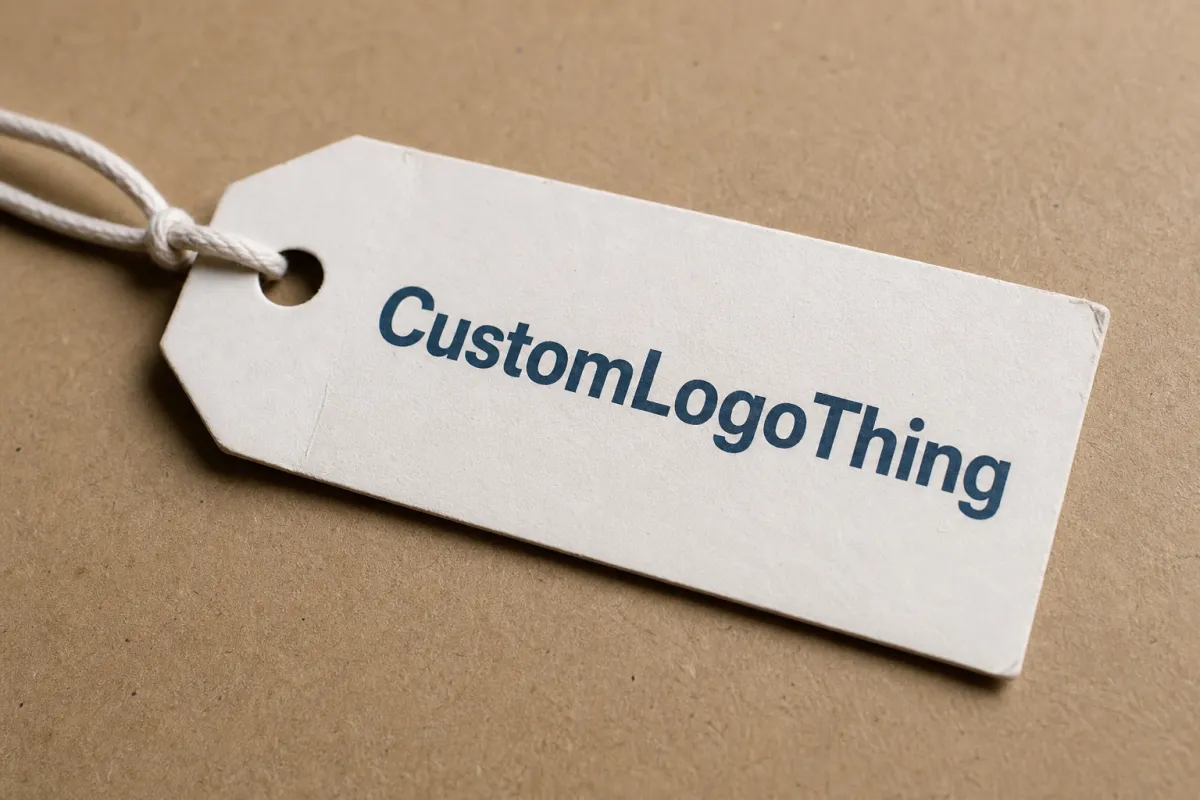
Custom Hang Tags for boxes can change how a package is read in a single glance. That sounds inflated until you watch someone decide whether a carton feels polished, giftable, or forgettable before they have even touched it. A plain box can do its job. The same box with the right tag can feel more deliberate, more collectible, and, in some categories, more expensive than the materials would suggest.
At the simplest level, custom hang tags for boxes are removable brand carriers. They attach to a carton, sleeve, mailer, rigid box, or gift package and hold information that does not need to live permanently on the box itself. A logo, seasonal message, QR code, care instructions, SKU, barcode, promotion, short product story, or compliance language can all sit there without crowding the carton face.
That flexibility matters because packaging changes faster than most brands plan for. A holiday campaign may last six weeks. A limited edition may sell out through one channel and linger in another. Corporate gifting often needs personalized copy by account or region. Influencer kits shift with launch timing, sample inventory, and media schedules. In those cases, custom hang tags for boxes are a sharper tool than reworking Custom Packaging Products every time the message changes.
There is also a perception problem that buyers often underestimate. A tag adds a visible layer of intent. It can make a simple tuck-end carton feel like curated retail packaging. It can make a mailer box feel less like transit material and more like branded presentation. It can even create a sense of order, because the tag signals that someone thought through the unboxing sequence instead of dropping in a logo and stopping there.
That signal is one reason custom hang tags for boxes show up so often in premium cosmetics, apparel, artisan foods, subscription kits, and corporate presentation packs. The box structure may be standard. The tag carries the character. That is a useful tradeoff because structure is expensive to change, while a tag is nimble enough to adapt from one launch to the next.
The strongest versions do not try to do every job at once. They balance design, material, attachment method, and production practicality. If one of those pieces misses, the tag looks like an afterthought instead of a branding asset. If all four work together, custom hang tags for boxes can deliver much of the visual lift of a more expensive packaging upgrade without changing the carton construction at all.
A good tag should feel like a decision signal, not decoration. If the buyer notices it and immediately understands the brand, the message, and the level of quality, the tag is doing real work.
That is why the most useful way to evaluate custom hang tags for boxes is not “Do they look nice?” but “Do they help the package sell, ship, and scale?” That framing keeps the conversation anchored in product packaging reality instead of drifting into pure styling.
How Custom Hang Tags for Boxes Work in the Packaging Workflow
Custom hang tags for boxes fit into the packaging workflow in a very practical way. Concept and copy come first. Then the tag dieline, artwork, and finishing are approved. After that, the tags move through print production, cutting, and any secondary finishing. Only then do they go into inventory or direct-to-pack fulfillment. The sequence sounds simple, but the attachment stage can happen in different places depending on the operation.
Some brands want tags pre-attached before cartons reach the fulfillment team. Others prefer separate tag shipment so the tags can be applied during packing. Both approaches work, though they create different labor profiles. Pre-attached tags remove one step from the warehouse. Separate tags keep the packaging line more flexible, especially if the same box serves multiple campaigns or SKUs. For custom hang tags for boxes, that choice can shape the rhythm of the whole run.
Attachment method is the next operational decision. String, ribbon, twine, plastic fasteners, eyelets, adhesive ties, and inserted loops solve the same basic problem in different ways. String feels artisanal. Ribbon leans gift-oriented. Twine reads natural and tactile. Plastic fasteners are fast and inexpensive. Eyelets strengthen the hole, which matters if the tag uses heavier stock. Adhesive ties can work on smooth surfaces, but they need testing because not every finish accepts adhesive equally well. The more premium the presentation, the more the hardware matters.
Custom hang tags for boxes differ from labels in a way that is easy to miss. A label usually wants to disappear into the surface. A hang tag is supposed to be seen, handled, and sometimes kept. It sits in the customer’s eye line, which means it can carry SKU-specific information, barcodes, QR codes, campaign copy, and assembly instructions without forcing the outer carton to carry all that text permanently.
Operationally, that flexibility reduces waste. If a brand updates a promotion, it does not necessarily need to scrap its box inventory. That matters for seasonal sell-in, private-label runs, and fast-moving retail packaging programs where timing is tighter than the print schedule. In packaging design terms, custom hang tags for boxes create a buffer between the stable carton and the changing message.
That buffer helps brands that use one base carton across several channels. A direct-to-consumer order may need a thank-you message. A wholesale order may need lot data. A gift set may need a product list. A corporate order may need a recipient name. Instead of building a different carton for each use, the brand can keep one box system and vary the tag. That is one reason Custom Labels & Tags are such a flexible tool inside modern package branding.
There is one operational caution. Custom hang tags for boxes should never slow fulfillment more than the brand can tolerate. If the tag has to be manually knotted, threaded, checked, and aligned, the design may need simplifying. In one packaging audit I helped with, a tag that looked elegant on press added nearly two minutes of hand work per dozen orders once it reached the packing table. That kind of delay is invisible in a mockup and obvious on the floor. The best packaging decisions are not the fanciest ones. They are the ones that survive real order volume.
Key Factors for Custom Hang Tags for Boxes: Materials, Shape, and Finish
Material choice is where many custom hang tags for boxes either earn credibility or lose it. Stock changes the hand feel, stiffness, print result, and the way the tag survives handling. A matte cover stock can feel clean and modern. Coated stock can sharpen images and graphics. Textured paper adds warmth. Recycled board can signal restraint and environmental intent. Specialty papers can create a boutique feel, but they also raise cost and usually demand more careful proofing.
Most brands land somewhere between 14pt and 18pt cover stock for custom hang tags for boxes. That range is thick enough to feel substantial without becoming awkward to punch, thread, or stack. Larger tags or tags that need to survive rough handling may call for heavier board. Small tags or bulk-packed tags may work better on lighter stock. The right answer depends on tag size, attachment method, and whether the package moves through retail shelves, mailers, or both.
Shape matters more than many teams expect. A standard rectangle is efficient and usually the safest choice for readability. Rounded corners soften the look and reduce edge wear. Die-cut silhouettes can echo a logo, a bottle shape, a house shape, or another brand symbol. That can be memorable, but it is easy to push too far. A clever shape that is hard to read is a weak bargain. For custom hang tags for boxes, the silhouette should support the message, not compete with it.
Finishing is where the tag moves from acceptable to refined. Foil can create contrast and a small flash of luxury. Embossing and debossing add touch and shadow. Soft-touch coating can make the tag feel velvety, though it may show scuffs more easily in some handling environments. Spot UV works well when a brand wants a contrast between matte background and glossy detail. Rounded corners reduce fraying and make a tag feel less like a paper slip. Edge painting can help on thick stock, though it is mostly a premium detail.
Custom hang tags for boxes should not be overloaded with finish just because the budget allows it. Too many special effects can flatten the hierarchy. The logo should be readable. The price, if one is present, should not fight the illustration. The message should be legible at a normal viewing distance. A tag that looks lavish in a mockup but turns muddy on press is not helping anyone.
Legibility is its own discipline. Type size needs to match the physical tag, not the design file on a monitor. Contrast matters. Dark ink on dark stock may look elegant in theory and unreadable in daylight. If the tag carries more than one function, such as branding plus compliance, the information should be separated by hierarchy or panel structure. With custom hang tags for boxes, clutter works against premium perception.
Sustainability deserves a real conversation, not a slogan. Recycled content, FSC-certified paper, and lower-ink designs can all support better material choices. If the package must survive shipping, the tag should also be tested for fiber strength and hole tear resistance. For transportation-related durability, brands can look to protocols and guidance from organizations such as ISTA. For recycled and certified fiber sourcing, FSC is a useful reference point.
That balance between appearance and performance is the real brief. The best custom hang tags for boxes feel good in the hand, stay legible under real lighting, and make sense for the packout process. Anything less becomes a pretty object with weak packaging value.
Custom Hang Tags for Boxes Cost, Pricing, and MOQ Basics
Cost for custom hang tags for boxes usually comes down to five variables: quantity, stock, print colors, finishing, and attachment hardware. Once those are set, the die-cut shape and any assembly work can move the price up or down again. A simple tag on standard cover stock with basic four-color printing sits in one cost profile. A thick, foil-stamped, custom-cut tag with eyelets and string belongs in another.
MOQ matters because setup costs do not disappear just because the run is small. Plates, cutting dies, press calibration, and finishing setup all need to be paid for. If those costs are spread across 50,000 pieces, the unit price drops. If they are spread across 500 pieces, the unit price rises fast. That is why small orders of custom hang tags for boxes often feel expensive relative to the size of the piece.
There is a useful comparison here: a tag is often cheaper to update than a whole carton. If the brand needs a limited message, seasonal copy, or channel-specific variant, custom hang tags for boxes may save money versus reprinting custom printed boxes. That is especially true when the box structure is already settled and only the messaging needs to move.
Here is a realistic pricing framework for planning purposes. These are broad market ranges, not promises, because stock availability, local labor, and finishing complexity change the math quickly.
| Tag Build | Typical Quantity | Approx. Unit Cost | Common Use | Notes |
|---|---|---|---|---|
| Budget | 2,500-5,000 | $0.12-$0.22 | Simple branding, basic promotions | Standard stock, 1-2 colors or basic CMYK, minimal finishing |
| Mid-range | 5,000-10,000 | $0.18-$0.35 | Retail packaging, seasonal launches, corporate kits | Better stock, full-color print, matte or soft-touch finish, optional eyelet |
| Premium | 5,000+ | $0.40-$0.85 | Luxury goods, gift packaging, launch kits | Foil, embossing, custom die-cuts, specialty stock, ribbon or custom hardware |
Those bands are useful because they show how quickly special effects change the total. A foil treatment may add more perceived value than cost in some categories. If the tag is mostly functional, a clean, well-printed version is usually the better spend. Custom hang tags for boxes are not automatically premium because they are embellished. They become premium when the design choices match product position and buyer expectation.
Ask vendors for line-item quotes. Printing should be separated from finishing. Finishing should be separated from assembly. Hardware should be separated from fulfillment. If a supplier only gives one all-in number, it becomes hard to compare apples to apples. I would also ask for a shipping estimate, because heavy stock and bulk-packed tags can move freight charges in ways that surprise first-time buyers.
There is one more subtle cost issue. If a tag needs manual attachment at the plant, that labor is part of the real cost even when it does not appear on the print quote. A design that saves $0.03 per piece in print but adds 8 seconds of hand labor can cost more overall. That is why custom hang tags for boxes should be reviewed alongside the actual packout process, not in isolation.
Production Steps, Timeline, and Lead Time for Custom Hang Tags for Boxes
The production path for custom hang tags for boxes starts before ink ever hits paper. Concept and copy come first. Then the dieline defines the tag size, hole placement, fold if any, and bleed area. Artwork preparation follows. After that, the vendor produces a proof, the client approves it, and the job moves into print, finishing, cutting, and assembly. Only then does the order ship or transfer to fulfillment.
The most common delay is proof approval. Teams often spend more time than expected on logo placement, color matching, legal text, and barcode readability. Specialty finishing can also create a bottleneck. If the order includes foil, embossing, or a custom die shape, the plant may need extra scheduling time. Unusual hardware, like a specific ribbon color or a branded fastener, can add another layer of procurement risk. Custom hang tags for boxes look simple in concept, yet the production chain still has moving parts.
Lead time depends on complexity. A straightforward tag on standard stock may move in roughly 7-10 business days after proof approval at a busy but organized shop, though that is not universal. More complex builds often run 12-15 business days or longer, especially when special finishing, custom cutting, or kitting is involved. If the project uses imported specialty stock or a new attachment method, I would add more buffer to the schedule. For custom hang tags for boxes, the shortest path is usually the one with the fewest unusual variables.
Fulfillment timing changes the equation again. If tags arrive separately, the warehouse can attach them during order packing, which keeps the box inventory flexible. If the tags are pre-attached, the packaging line needs to coordinate carton folding, filling, and tag placement in one flow. That may reduce labor later, but it increases the importance of line speed and quality control. Brands that manage multiple SKUs or frequent launches often prefer the separate approach because it keeps custom hang tags for boxes adaptable.
Sampling is not optional if the tag will matter to brand perception. A digital proof can show layout, but it will not show fiber feel, eyelet placement, or how the tag hangs against the finished carton. A physical sample can expose small issues quickly: the hole may sit too close to the edge, the string may be too long, the contrast may be too weak, or the tag may swing awkwardly when the box is lifted. That is why I always recommend a real sample for custom hang tags for boxes before full production.
Color matching deserves extra attention because packaging lives under varied light. A neutral beige can look warm in a studio and gray in a warehouse. A black tag can read elegant under soft light and flat under fluorescent light. If brand standards matter, ask the supplier about press profiles, paper white points, and acceptable delta-E tolerances. That is the kind of detail that separates polished branded packaging from a near miss.
One practical habit helps a lot: build contingency into the calendar. Proof revisions, vendor scheduling, freight time, and receiving all take longer than optimistic spreadsheets suggest. If the launch date is immovable, the tag should not be the item with zero margin. Custom hang tags for boxes work best when the timeline respects the fact that packaging is a chain, not a single purchase.
Common Mistakes That Make Custom Hang Tags for Boxes Look Generic
The first mistake is size imbalance. Some tags are so large they overpower the carton and make the package look clumsy. Others are so small that the message disappears the moment the box is lifted. Custom hang tags for boxes should be scaled to the visual weight of the pack, not only to available space. A slim mailer and a rigid gift box do not call for the same tag footprint.
The second mistake is weak hierarchy. A tag may try to do too much at once: logo, slogan, promo line, care copy, barcode, QR code, ingredients, legal text, and social handles all squeezed into one face. That turns a useful accessory into a cluttered notice card. The eye should know what to read first. If it does not, the design has lost control. Good custom hang tags for boxes guide the eye in a clear sequence.
The third mistake is finish mismatch. A luxury product paired with flimsy paper and muddy ink can feel discounted. A minimalist package paired with a glittery tag can feel disconnected. Low-contrast colors are another trap. Beige on off-white. Charcoal on dark brown. Gloss on gloss. The result can be technically finished yet visually weak. With custom hang tags for boxes, the finish should reinforce the product promise.
Attachment problems are common too. Tangled string, inconsistent knotting, visible glue, crooked placement, and hardware that scratches the box all chip away at the experience. In a fulfillment environment, small inconsistencies multiply quickly. One sloppy knot on a sample may be forgivable. A hundred sloppy knots on a shipment are a brand problem. That is why the physical handling of custom hang tags for boxes matters as much as the print file.
There is also a copy problem. A tag is not a brochure. If the message is too long, the tag becomes a wall of text nobody reads. If the call to action is too vague, it becomes decorative noise. A tag should usually communicate one of three things well: identity, information, or action. More than that, and the piece starts to lose focus. That is especially true for custom hang tags for boxes in retail settings where the shopper has only a few seconds.
One more thing gets overlooked: the environment in which the tag is seen. A tag designed for e-commerce unboxing has different demands than one hanging in a store rack. Shipping vibration, warehouse handling, shelf hooks, and light levels all influence how the tag reads. I have seen many custom hang tags for boxes look elegant in a PDF and ordinary once attached. The fix is usually not more decoration. It is better restraint, cleaner type, and more realistic testing.
If the project is drifting toward generic, step back and ask three questions: Does the tag improve package branding, does it fit the box physically, and does it survive the actual workflow? Those questions are blunt, but they are useful. They keep the project honest.
Expert Tips and Next Steps for Custom Hang Tags for Boxes
Start with a pilot run. One product. One stock. One attachment method. That approach gives you a clean read on what works before you commit the entire range. For custom hang tags for boxes, a pilot is often the least expensive way to avoid a costly mistake at scale.
Build your quote request with enough detail to be useful. Quantity, size, shape, paper stock, finish, attachment method, artwork files, delivery deadline, and whether the tags ship flat or pre-attached all matter. When those items are missing, the quote is usually fuzzy too. A proper brief helps a supplier tell you whether the job needs a simple print run or a more involved build. If you are also sourcing cartons, inserts, or secondary packaging, it may help to compare the tag quote alongside Custom Packaging Products so the whole package program is visible together.
Use a sample in actual light. Not studio light. Not monitor light. Put the tag on the finished box and look at it near a window, under warehouse lighting, and in the kind of environment your customer will actually see. That one step catches color issues, scale issues, and attachment issues faster than a round of emails ever will. With custom hang tags for boxes, the physical mockup usually tells the truth.
Compare vendors on total value, not just unit price. One printer may look cheapest until you add slower turnaround, weaker QC, or more labor at fulfillment. Another may charge a little more but save time on assembly or reduce rework. Packaging buyers know this pattern well. The lowest quote is not always the lowest total cost, especially with custom hang tags for boxes that carry a brand impression and a production task at the same time.
There is also a standards mindset worth keeping. If the tags are part of a shipping-heavy program, testing against transit expectations matters. If the paper source is part of the brand story, certification matters. If the package must support environmental claims, those claims should be accurate and documented. Industry references from groups such as EPA recycling guidance and FSC can help keep that conversation grounded in facts rather than wishful thinking.
Finally, document what worked. Hole size. String length. Stock choice. Finish. Readability. Assembly time. Damage rate. Reorder notes. That record becomes the shortcut for the next launch, the next SKU, and the next seasonal change. Good packaging programs improve because someone wrote down the details. That is especially true for custom hang tags for boxes, where small decisions have outsized effects on both brand perception and workflow.
If the pilot succeeds, roll the winning version across the remaining SKUs, then revisit it only when the product, channel, or packaging system changes. That keeps the process disciplined and prevents needless redesign. The practical takeaway is simple: choose the tag size, stock, and attachment method before you chase embellishment, because those three decisions determine whether custom hang tags for boxes feel premium in the hand or merely look busy on screen.
What are custom hang tags for boxes used for besides branding?
They can share product details, care instructions, promotions, QR codes, compliance notes, or personalization that would clutter the box. They are also useful for seasonal campaigns and limited editions because the messaging can change without reprinting the carton, which is one reason custom hang tags for boxes stay popular across many categories.
What size works best for custom hang tags for boxes?
The best size depends on how much text and imagery the tag needs to carry, but most brands aim for enough space to read clearly without crowding the box. A good rule is to test the tag at real viewing distance on the finished package, not only on a screen mockup, because custom hang tags for boxes can look very different in hand.
How much do custom hang tags for boxes usually cost?
Cost depends on quantity, stock, print colors, finishing, shape complexity, and attachment hardware. Simple runs cost less per piece, while small quantities and premium finishes raise the unit price quickly. For planning, many buyers see custom hang tags for boxes land somewhere between basic budget builds and higher-end presentation tags, depending on the spec.
What is the usual lead time for custom hang tags for boxes?
Lead time varies with proofing speed, print complexity, and finishing choices, but simple tags move much faster than specialty builds. If you need foil, custom die-cuts, or assembly, add extra buffer for sampling and production scheduling. That is especially true for custom hang tags for boxes tied to a launch date.
Can custom hang tags for boxes be attached without damaging the packaging?
Yes, if you Choose the Right attachment method, such as string, ribbon, looped fasteners, or other non-destructive options. The key is to match the attachment to the box surface, weight, and shipping conditions so the tag stays secure without scuffing the package. Done well, custom hang tags for boxes add value without harming the carton.

