Buyer Fit Snapshot
| Best fit | Custom Kraft Boxes with Embossing projects where brand print, material claims, artwork control, MOQ, and repeat-order consistency need to be specified before quoting. |
|---|---|
| Quote inputs | Share finished size, material target, print colors, finish, packing count, annual reorder estimate, ship-to region, and any compliance wording. |
| Proofing check | Approve dieline scale, logo placement, barcode or warning zones, color tolerance, closure strength, and carton packing before bulk production. |
| Main risk | Vague material claims, crowded artwork, missing packing details, or unclear freight terms can make a low unit price expensive after revisions. |
Fast answer: Custom Kraft Boxes with Embossing: Board, Finish, Dieline, and Unit Cost should be specified like a repeatable production item. The safest quote records material, print method, finish, artwork proof, packing count, and reorder notes in one written spec.
Production checks before approval
Compare the actual filled-product size with the drawing, then confirm tolerance on folds, seals, hang holes, label areas, and retail display edges. Reserve space for logos, QR codes, warning copy, and material claims before decorative graphics fill the panel.
Quote comparison points
Review material grade, print process, finish, sampling route, tooling charges, carton quantity, and freight assumptions side by side. A quote is only useful when the supplier can repeat the same color, closure quality, and packing count on the next order.
Custom Logo Things
Custom Kraft Boxes With Embossing: A Sustainable Guide
Learn how Custom Kraft Boxes with embossing raise shelf appeal, protect products, and shape pricing, timeline, and sustainability choices for brands.
Custom kraft Boxes with Embossing have a quiet way of changing how a brand is perceived. A kraft carton can look plain in a mockup, then feel thoughtful the moment the logo rises from the surface and catches light across the grain. That physical shift matters, because packaging is often the first real contact a customer has with a product before anything inside is opened.
Retail packaging, subscription packaging, and direct-to-consumer product launches often use Custom Kraft Boxes with embossing because the finish feels natural while still carrying real presence. The board keeps its paper-forward character, the raised artwork adds touch, and the overall result can feel premium without leaning on heavy ink coverage or reflective finishes that fight against kraft’s honest look.
Buyers comparing custom printed boxes usually focus on the visual effect first, yet the stronger question sits underneath: do the artwork, structure, and stock all support one another? Custom kraft boxes with embossing reward careful packaging design, and they expose rushed decisions quickly, especially once a sample reaches production. I have seen jobs go from promising to frustrating because one tiny choice, like a line that was too thin or a fold that sat too close to the emboss, was left to chance.
What Are Custom Kraft Boxes With Embossing?
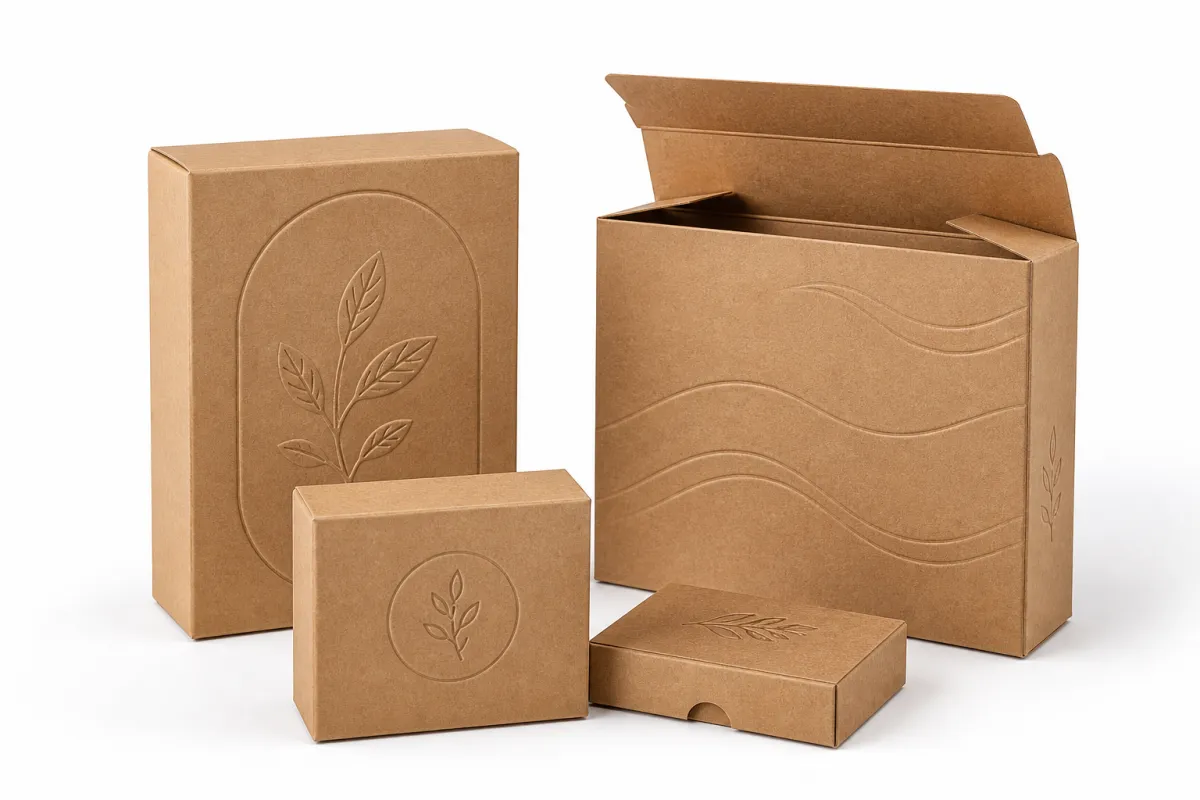
At the simplest level, custom kraft boxes with embossing are paperboard boxes made from kraft stock and pressed with a die so selected areas lift above the surface. The raised element can be a logo, a border, a monogram, a pattern, or even a single line that gives the carton a more deliberate feel. For a packaging buyer, custom kraft boxes with embossing are attractive because they create tactile interest without forcing the artwork to carry the entire job.
Embossing is not print. It is a physical change in the board fibers. A matched tool, usually a male die paired with a counter surface, compresses and lifts the paperboard so the shape can be seen and felt. That is why custom kraft boxes with embossing can appear understated from across the shelf yet feel expensive in the hand. The finish does not need volume to be effective, and that restraint is part of the charm.
Several versions are worth knowing before asking for pricing on custom kraft boxes with embossing. Blind embossing leaves the raised area unprinted, keeping the natural paper look up front. Printed embossing adds ink before or around the relief, giving the logo both color and texture. Debossing presses the artwork inward instead of raising it, which creates a recessed effect that suits minimal branding and quieter package design.
Kraft stock pairs naturally with this finish because it already signals fiber, utility, and less coating. A glossy white carton can make embossing look crisp, yet custom kraft boxes with embossing bring a different value: the material itself carries part of the message. Brands aiming for natural, recycled, or earthy positioning often find that the texture of kraft does more work than any printed pattern could.
A clean emboss does more for perceived value than a crowded surface effect. If the mark reads clearly in hand and the board still feels honest, the carton is doing exactly what it should.
There is a practical side to the choice as well. Custom kraft boxes with embossing can reduce dependence on heavy ink coverage, limit the need for specialty foil, and still create packaging That Feels Premium at retail. That balance suits brands looking for a quieter visual language and a more material-driven identity, especially when the product itself already has enough personality to carry the story.
How Custom Kraft Boxes With Embossing Are Made
Custom kraft boxes with embossing usually start with a dieline, the flat map of the carton before die cutting and folding. The printer or packaging supplier confirms the box dimensions, wall construction, glue flaps, lock features, and emboss position before tooling begins. If the structure is wrong here, the emboss will not fix it later.
Once the dieline is approved, the emboss tooling is built to match the artwork. The die presses the board fibers into shape, and the result depends heavily on board caliper, surface texture, and grain direction. On a 16pt to 24pt kraft board, for example, a bold logo can come through cleanly, while tiny type may lose its edge because the fibers compress rather than behave like a hard surface. That is one reason custom kraft boxes with embossing should be sampled before full production. A screen proof can never tell the whole story.
The board itself matters more than many people expect. An uncoated kraft sheet gives a raw, fibrous look and usually shows the emboss with softer edges. A clay-coated kraft surface can hold sharper detail, although it changes the visual tone somewhat. If the goal is premium without gloss, a light coating or a carefully chosen natural kraft sheet often creates the best compromise for custom kraft boxes with embossing.
Two production paths appear often. Some jobs print first and then emboss in a second pass so color and relief stay tightly controlled. Others use a combined run with registration marks aligned to the press, which can save time but asks more of the setup. For custom kraft boxes with embossing, separate operations can be the safer route when the logo combines fine color detail with a raised element that must land in the exact same spot.
Pressure, temperature, and dwell time all shape the final look. A shallow emboss may feel clean and elegant, while a deeper impression can make the fibers look stressed if the design includes too much small detail. Custom kraft boxes with embossing often improve after one or two sample rounds, because the first sample shows whether the board needs more pressure, less pressure, or a simpler design. That back-and-forth is normal, not a sign that the project is off track.
Artwork that survives compression usually uses line weights that are bold enough to hold up. Thin serif type, hairline borders, and crowded monograms can work on some papers, but kraft is less forgiving because the surface already has natural variation. Custom kraft boxes with embossing usually perform best when the logo has breathing room and the embossed area is not asked to carry too much information.
Die cutting matters just as much as embossing. If the cut lines are off, folds can crack near raised areas, especially on corners or scored flaps. Strong packaging design keeps the emboss away from high-stress creases unless the structure has been tested there. A carton that looks excellent flat can still fail if the grain direction runs against the fold line and the relief is too aggressive.
Cost and Pricing Factors for Custom Kraft Boxes With Embossing
Pricing for custom kraft boxes with embossing comes down to a handful of predictable variables: board grade, box size, tooling, press time, order quantity, and any extra finish such as print, lamination, or inserts. If a quote looks unusually high or unusually low, the first thing to check is whether every supplier is quoting the same specification. Small changes in board thickness or emboss complexity can move the number quickly.
The biggest upfront cost is usually the emboss die itself. A simple blind emboss tool can be modest, while a more detailed logo with a counter die or multi-level relief needs more setup and testing. For custom kraft boxes with embossing, a deeper design often means more press control and more sample approval time, and those labor steps show up in the quote whether the buyer sees them or not.
Order quantity matters in a very practical way. A run of 1,000 boxes spreads setup and tooling across far fewer units than a run of 10,000, so the per-unit price rises quickly. That is why custom kraft boxes with embossing usually become more efficient once the run reaches a comfortable production volume. The factory is not being difficult; fixed costs simply sit on fewer pieces.
Below is a realistic comparison buyers can use as a starting point. These ranges are not universal, but they track closely with what many packaging teams see when comparing custom kraft boxes with embossing at different levels of complexity.
| Option | Typical Tooling Cost | Typical Unit Impact at 5,000 Units | Best Fit |
|---|---|---|---|
| Blind emboss only | $180-$450 | $0.04-$0.12 | Simple logos, understated retail packaging |
| Printed logo + emboss | $250-$700 | $0.10-$0.25 | Branded packaging with visible color and texture |
| Deep multi-level emboss + lamination | $400-$900 | $0.18-$0.40 | High-touch presentation boxes and premium product packaging |
| Embossed sleeve over plain carton | $220-$600 | $0.08-$0.20 | Cost-aware package branding with a strong shelf signal |
Some budget items are easy to miss. Shipping weight can increase if the board gets thicker, and embossed cartons may need different packing counts to avoid surface rub. Proofing rounds matter too. If the buyer changes copy after a tooling proof has been approved, the supplier may need to remake the die or adjust the plate, which adds both time and cost. That is one of the quickest ways for custom kraft boxes with embossing to drift beyond the original budget.
Another detail that gets overlooked is whether the quote includes a counter die or only the embossing side of the tool. For flatter artwork, the cost stays lower. For more sculpted custom kraft boxes with embossing, the matched tool can be essential to keep the relief crisp. Buyers who compare apples to apples usually request a spec sheet listing board type, finish, box style, emboss location, quantity, and shipping terms before they ask for a final price.
The honest version is simple: a brand can save money by simplifying the artwork, reducing coverage, or choosing a less elaborate structure, but it should not save money by guessing on the spec. The cheapest quote on custom kraft boxes with embossing only matters if the box still looks right, folds cleanly, and survives the trip from pack-out to shelf. Anything less is just a cheap mistake with a nice surface.
Lead Time, Timeline, and Production Steps
Lead time for custom kraft boxes with embossing often falls in the 12-18 business day range after proof approval, though busy seasons and freight constraints can push that longer. The biggest delays usually come from artwork revisions, tool making, or waiting on internal approvals. If a launch date is fixed, the safest move is to lock the carton spec early and leave the logo, copy, and emboss position alone once the sample process starts.
The process usually begins with a brief intake. The buyer provides the dimensions, intended use, quantity, and budget range, and the supplier turns that into a workable structure. From there, the dieline is confirmed, the artwork is adjusted to fit the emboss area, and the tooling request is sent to production. For custom kraft boxes with embossing, this early phase matters because a small measurement error can ripple through the entire job.
After that comes proofing. A flat proof may be enough for simple custom printed boxes, but custom kraft boxes with embossing should usually be checked with a physical sample or at least a production-style proof if the schedule is tight. The proof shows how the board behaves, how the logo reads, and whether the emboss depth stays visible without crushing the fibers. That sample step is not a formality; it is where bad surprises get removed before the full run starts.
The production schedule usually has a few moving pieces: die cutting, embossing, printing if needed, glue-line assembly, finishing, and final packing. If the box uses windows, inserts, or special closures, those parts add more time. A straightforward run of custom kraft boxes with embossing can move faster than a box with full-color wrap and multiple inserts, but only if the artwork is finalized before press time.
Seasonal demand can change the schedule more than many buyers expect. Holiday launches, product drops, and trade show timing all create pressure on press slots and freight booking. I always tell buyers to build in a cushion, because custom kraft boxes with embossing can be ready on paper and still miss a launch if the shipment sits behind a truck booking or a final approval round. That kind of delay is boring, but it is very real.
For companies with strict transit requirements, shipping validation matters too. ISTA publishes widely used transit-test protocols that help teams check whether packaging can handle vibration, compression, and rough handling; see ISTA. That matters for custom kraft boxes with embossing that will travel through distribution, because a beautiful finish still has to survive real shipping conditions.
Good planning keeps the job calmer. Lock the dimensions, choose the board, confirm the emboss area, approve the sample, then release the run. That sequence is simple, but it is also the reason custom kraft boxes with embossing tend to go smoothly for teams that treat packaging as a production process rather than a last-minute design task.
How to Choose the Right Structure, Finish, and Emboss Depth
Structure drives nearly everything in custom kraft boxes with embossing. A lightweight tuck-end carton has different needs than a mailer, a sleeve, or a rigid presentation box. Heavy or fragile products ask for more stiffness, more careful score lines, and emboss placement that avoids the areas flexing the most. Packaging design works best when the visual idea matches the physical job, not when it fights it.
Uncoated kraft gives the most natural feel, yet it can soften fine detail. Clay-coated kraft sharpens the relief, while laminated stock adds protection and a more polished finish, though it can mute the earthy look many brands want. For custom kraft boxes with embossing, the right choice depends on whether texture, print fidelity, scuff resistance, or all three matter most. There is no single best answer, and that honesty saves people from buying the wrong board.
Emboss depth should match the artwork, not the ego behind it. A deep press can look dramatic, but it can also crush fibers, distort corners, or make small letters hard to read. A shallow emboss may be the smarter choice for fine logos or delicate line art. On custom kraft boxes with embossing, bold shapes usually look cleaner than intricate texture patterns, especially if the carton will be handled a lot in retail packaging or e-commerce pack-out.
Placement matters just as much. Exterior embossing grabs shelf light and works well for front-panel logos, while interior embossing can create a more private moment when the box opens. That approach works well for lid flaps, inner sleeves, and presentation reveals because the buyer sees the mark only after opening, which makes the package feel considered without making the outside too busy. Custom kraft boxes with embossing can do both jobs if the layout is planned early enough.
From a sustainability point of view, simpler structures often win. Fewer coatings, fewer mixed materials, and better sizing efficiency all reduce waste without taking away the premium feel. If a brand wants strong package branding without overbuilding the carton, custom kraft boxes with embossing can deliver a clear message with less visual clutter than a full wrap of foil and heavy print. That restraint is part of the appeal, and it usually ages better too.
It also helps to think about how the box will be used after the first open. If it is a subscription container, a gift package, or a storage-style carton, the emboss should stay attractive through repeated handling. For that reason, custom kraft boxes with embossing often work best when the relief is sturdy, the score lines are well tested, and the surface finish is chosen with abrasion in mind rather than appearance alone.
Common Mistakes With Custom Kraft Boxes With Embossing
The most common mistake is trying to emboss too much detail into a surface that already has grain and fiber variation. Thin serif text, tiny icons, and crowded symbols often lose clarity once the press raises and compresses the board. Custom kraft boxes with embossing look strongest when the logo is bold, clean, and willing to let the material do part of the storytelling.
A second mistake is approving artwork on screen only. A monitor cannot show how the board will feel after pressure, how sharp the edges will be, or whether the relief will appear too shallow under retail lighting. For custom kraft boxes with embossing, a physical sample is the only reliable way to judge depth, stiffness, and contrast. That sample is not a luxury; it separates guessing from knowing.
Ignoring grain direction is another quiet problem that can turn into visible damage. If the board folds against the grain and the emboss is close to the crease, the carton may crack, whiten, or warp at the fold. That risk shows up especially with custom kraft boxes with embossing that use a tighter structure or a heavier board. A good supplier will flag this before production, but the buyer should still ask about grain orientation during approval.
Too many special effects can work against the natural appeal of kraft. If a carton already has embossing, spot color, foil, coating, and a complex insert, the whole package can feel overworked. The charm of custom kraft boxes with embossing often comes from restraint. The box should feel intentional, not overloaded with effects that compete for attention.
Another issue is real-world testing. A render may look beautiful, yet product packaging lives in the back of trucks, on shelves, and in people’s hands. If the carton will move through distribution, it should be tested under actual shipping assumptions, not only admired in a render. That is where standards matter, and it is also where practical packaging experience saves money later.
For brands that want a more formal benchmark, the FSC system is worth reviewing if certified fiber sourcing matters to the project. A board can be recycled-content kraft and still be verified through a chain-of-custody program, but the paperwork should be confirmed before the run. Custom kraft boxes with embossing can support that story well, as long as the finish choices do not conflict with the recycling or sourcing requirements the brand has set.
Expert Tips and Next Steps for Custom Kraft Boxes With Embossing
If I were building a quote packet for custom kraft boxes with embossing, I would start with a one-page spec sheet. It should list the box dimensions, the board preference, the emboss location, the target quantity, the artwork files, and the budget range. That single page helps suppliers respond faster and cuts down the back-and-forth that slows packaging projects.
Ask for at least one physical sample if the project matters to shelf presentation. A sample lets decision-makers feel the relief, check the fold quality, and compare the box against the product in real light. For custom kraft boxes with embossing, that tactile review is often where the team decides whether to keep the design minimal or add a small print element to strengthen the mark.
It also helps to compare two or three design directions instead of approving only one. A blind emboss might look perfect on its own, while an emboss plus a single ink color might improve recognition without pushing the budget too far. Custom kraft boxes with embossing can be surprisingly flexible that way, especially for brands that want a premium feel without moving into finishes that do not add much functional value.
Storage and packing should be discussed before the cartons are produced. Raised surfaces can rub if boxes are packed too tightly or handled roughly, and some coatings mark more easily than others. If the cartons will sit in a humid back room or a high-traffic warehouse, the board choice should account for that. Custom kraft boxes with embossing still need to survive the boring parts of the supply chain, not only the unboxing moment.
From a buying perspective, the best results usually come from simple decisions made early. Choose the structure that matches the product weight, keep the artwork bold, approve the sample, and build the production calendar around the real delivery date rather than the ideal one. That is how custom kraft boxes with embossing stay attractive and manageable.
If you are shaping a broader packaging program, it helps to review your full line of Custom Packaging Products so the carton, insert, sleeve, and shipping components feel consistent. The strongest package branding usually comes from a system, not a single box design. A kraft carton with embossing can be the anchor, while the rest of the package supports it.
So the practical takeaway is simple: keep the structure honest, make the emboss readable, and give the proof enough time to show you what the board is really gonna do. Custom kraft boxes with embossing work best when the design is clean, the spec is clear, and the timeline leaves room for real proofing. Do those three things well, and the final package usually feels more refined than the budget line suggests.
FAQ
Are custom kraft boxes with embossing recyclable?
Usually yes, if the box is made mostly from paperboard and does not rely on heavy plastic lamination, foil, or mixed-material components. Embossing itself does not usually block recyclability because it changes the fibers instead of adding a separate layer. Always confirm the full construction, including coatings, adhesives, and inserts, because those extras can change end-of-life handling for custom kraft boxes with embossing.
What affects the cost of custom kraft boxes with embossing the most?
The biggest drivers are box size, board thickness, emboss die creation, order quantity, and whether the design also includes printing or special finishes. Smaller runs usually carry a higher unit cost because tooling and setup are spread across fewer boxes. Simple, bold artwork is usually more efficient than intricate detail, which can require more testing and tighter press control on custom kraft boxes with embossing.
How long do custom kraft boxes with embossing usually take to produce?
A typical timeline includes quote approval, dieline and artwork setup, emboss tooling, proofing, production, and final shipping. Lead time can extend when the design needs a new die, when proofs require revisions, or when freight scheduling is tight. Planning early and approving one clean spec sheet helps keep custom kraft boxes with embossing predictable.
What artwork works best for embossing on kraft boxes?
Bold logos, larger letterforms, and simple line art usually read best because the raised detail stays crisp on the textured kraft surface. Very small text, thin strokes, and tight pattern repeats can lose clarity or fill in when the board is pressed. A sample proof is the safest way to confirm whether the artwork needs simplification before production.
Can custom kraft boxes with embossing be used for retail and shipping?
Yes, but the structure should be chosen for the job: a display carton may focus on shelf impact, while a mailer or shipper needs more strength. If the box will travel through distribution, ask about board grade, protective inserts, and how the embossed surface will hold up in transit. The right design balances presentation, protection, and cost rather than treating those goals separately in custom kraft boxes with embossing.
For brands that want a natural look with real shelf presence, custom kraft boxes with embossing can be a very smart middle ground: tactile, efficient, and easier to justify than a box covered in effects that do not pull their weight.

