Buyer Fit Snapshot
| Best fit | custom kraft cartons with logo branding for packaging buyers comparing material specs, print proof, MOQ, unit cost, freight, and repeat-order risk where brand print, material, artwork control, and repeat-order consistency matter. |
|---|---|
| Quote inputs | Share finished size, material target, print colors, finish, packing count, annual reorder estimate, and delivery region. |
| Proofing check | Approve dieline scale, logo placement, barcode or warning zones, color tolerance, and any recyclable or compostable wording before bulk production. |
| Main risk | Vague material claims, crowded artwork, or missing packing details can create delays even when the unit price looks attractive. |
Fast answer: Custom Kraft Cartons with Logo Branding: Dieline, Finish, Proof, and Buyer Review should be specified like a repeatable production item. The safest quote includes material, print method, finish, artwork proof, carton packing, and reorder notes in one written spec.
What to confirm before approving the packaging proof
Check the product dimensions against the actual filled item, not only the sales mockup. Ask for tolerance on folds, seals, hang holes, label areas, and retail display edges. If the package carries a logo, QR code, warning copy, or legal claim, reserve that space before decorative graphics fill the panel.
How to compare quotes without losing quality
Compare board or film grade, print process, finish, sampling route, tooling charges, carton quantity, and freight assumptions side by side. A lower quote is only useful if the supplier can repeat the same color, closure quality, and packing count on the next order.
Custom Kraft Cartons With Logo: Branding That Works
A plain shipping carton protects a product. Custom Kraft Cartons with logo do that and still carry brand weight the second they leave the packing table or hit a shelf. Small difference. Big impact. The package is often the first physical proof that a brand paid attention instead of just hoping the tape would hold.
From a packaging buyer's point of view, Custom Kraft Cartons with logo sit in a useful middle ground: natural look, lower cost than rigid presentation boxes, and enough structure to survive real shipping abuse without turning into a generic brown cube. Get the board grade right, keep the print clean, and match the structure to the product. The result supports branded packaging, sharper package branding, and a better product packaging experience without making the design shout.
That is why so many teams use Custom Kraft Cartons with logo for apparel, candles, subscription products, specialty food, beauty kits, and retail-ready e-commerce orders. The good version is not just attractive. It is sized correctly, prints clearly, and survives handling without crushing, scuffing, or creating a clumsy unboxing moment.
What Custom Kraft Cartons with Logo Actually Do
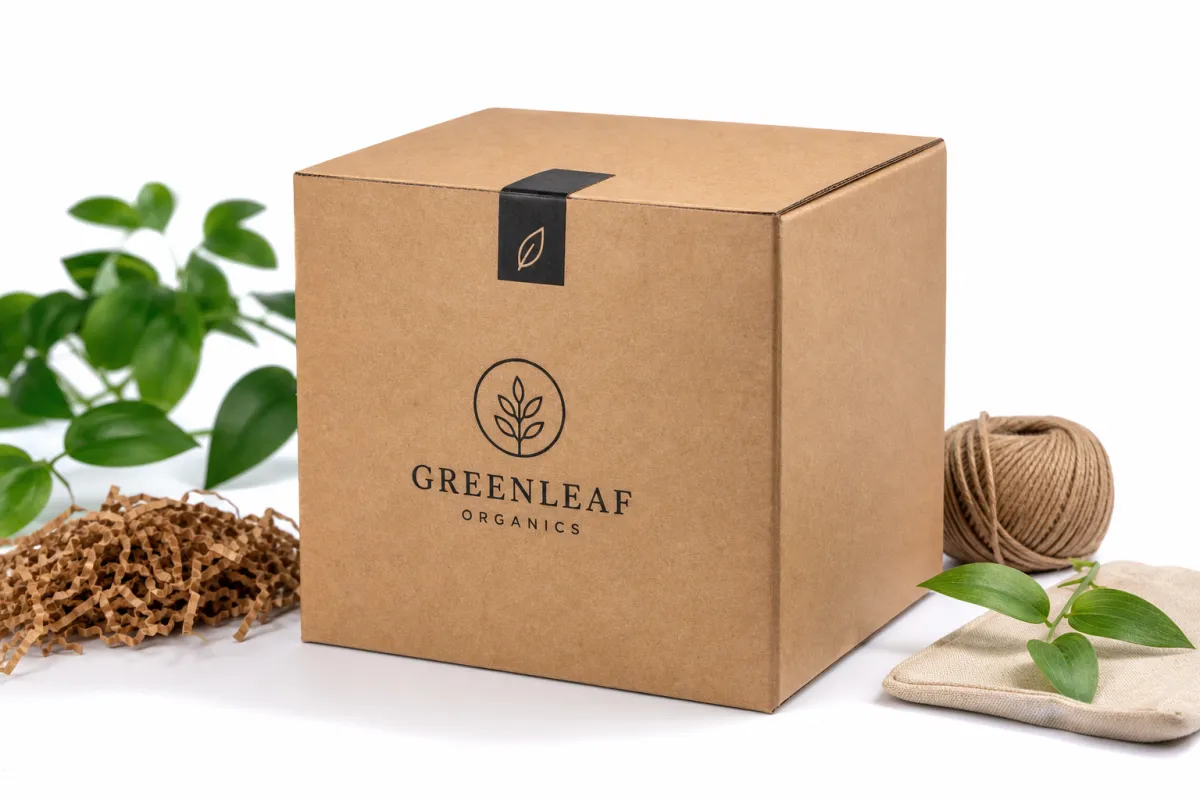
Custom kraft cartons with logo are brown or natural kraft paperboard cartons that carry a brand mark, wordmark, or graphic element through print, ink, foil, embossing, or a stamp-style finish. The term covers a broad range of formats, from lightweight folding cartons to mailer-style boxes and sturdier retail packages. The logic stays the same: protect the product, present the brand, and keep costs under control without inventing unnecessary drama.
In real use, the carton has two jobs. First, it needs to hold the product safely through packing, shipping, stocking, and opening. Second, it needs to signal identity before the customer reads a single line of copy. That is where custom kraft cartons with logo beat a plain corrugated shipper. The print says the package was designed on purpose, not selected because someone needed a box and a deadline.
Kraft behaves differently from coated white board, and that is a big reason buyers keep choosing it. The natural fiber surface signals honesty, utility, and a lighter visual footprint. The logo adds recognition and makes the package feel finished. A clean one-color mark on kraft can look more refined than an overworked full-color design on bright white board, especially when the brand wants a handmade or earthy tone. I have seen simple black ink on decent kraft pull more compliments than a complicated 4-color layout. Annoying, but true.
Common uses are broad:
- Subscription kits that need a simple but memorable reveal
- Apparel and accessory cartons that need to stay neat on a shelf
- Candles and home fragrance packs that benefit from a natural finish
- Specialty food and dry goods that need retail presence without heavy decoration
- E-commerce product packaging that must ship well and still feel branded on arrival
What most buyers eventually learn is that custom kraft cartons with logo are not decoration alone. Fit matters. Board strength matters. Print clarity matters. So does the way all of it behaves under actual handling. If the carton is too loose, the product rattles. If the board is too soft, the corners crush. If the mark is too faint, the whole package loses its edge. Good packaging design fixes all three at once.
For teams comparing styles, it helps to review a supplier's range of Custom Packaging Products before locking in a structure. A carton that looks perfect in a mockup can behave very differently once product weight, stack pressure, and shipping method show up and ruin the fantasy.
How Custom Kraft Cartons with Logo Are Built
The build starts with the product, not the artwork. Before anyone debates print colors or finishing, the carton needs a real dimensional target: length, width, height, product weight, fragile features, and any inserts, trays, or retention pieces that keep the item from moving around. A good dieline leaves enough room for insertion and removal, but not so much room that the product slides around like it owns the place.
For custom kraft cartons with logo, the box style matters just as much as the board. Folding cartons are common for lighter retail items and often use paperboard in the 18pt to 24pt range, depending on the product. Mailer-style boxes, especially those made from corrugated E-flute or similar structures, work better when shipping durability matters more than a delicate presentation. Rigid-style presentation cartons cost more, so they are less common for basic operations, but they do create a stronger premium feel when the budget can justify it.
Logo application can go a few different ways. Flexographic printing is often used for straightforward, high-volume jobs with simple art. Offset printing can deliver sharper detail for more complex graphics. Digital printing helps with shorter runs, pilot quantities, and artwork that changes often. Hot stamping, embossing, debossing, and blind impressions can all add texture or shine, though they also add setup and finishing cost. On custom kraft cartons with logo, a simple one-color impression is often enough when the brand wants a restrained look.
Finishes deserve attention too. Kraft does not need heavy coating to look good, and too much coating can fight the natural feel buyers wanted in the first place. A matte aqueous coating, a light varnish, or no coating at all can preserve the paper character while adding some protection against scuffing. If the carton will move through a warehouse, a mail stream, or a shelf where it gets handled repeatedly, surface protection should be discussed early instead of patched in later.
Prepress is where a lot of quality gets won or lost. Artwork placement needs to respect fold lines, glue tabs, barcode zones, and safe areas for critical copy. Bleed has to be set correctly. The dieline has to match the exact version the production team will use. That matters even more for custom kraft cartons with logo, because brown substrates are less forgiving when fine lines, small type, or low-contrast graphics drift off registration.
If your team wants to compare carton families before making a final call, the right Custom Packaging Products page can narrow the choices by structure, print method, and shipping need. Less guesswork. Cleaner spec sheet. Fewer awkward surprises when the quote lands.
Key Material and Pricing Factors to Compare
Material choice drives more of the final price than many first-time buyers expect. Board caliper, carton size, print coverage, and structural complexity all matter, but the starting point is usually the board itself. A recycled kraft liner with decent stiffness may be a better buy than a lighter board that needs gentle handling and extra apologies. For custom kraft cartons with logo, the more consistently the material behaves on press, the easier it is to keep the logo crisp and centered.
Kraft grades vary in recycled content, virgin fiber content, surface smoothness, and compressive strength. A cleaner face sheet usually accepts ink more evenly, which helps with line work and small text. A rougher or darker surface can give the carton a more natural feel, but it can also mute colors. That is not a flaw. It is substrate behavior doing exactly what substrate behavior does. Buyers who understand that early tend to have fewer proofing headaches.
The most cost-sensitive decisions are usually plain and unglamorous. One-color branding near the top flap is usually less expensive than full-bleed graphics. A single panel logo costs less than print on every side. Standard mailer geometry is usually easier to produce than a custom multi-part display structure. With custom kraft cartons with logo, the smart move is to pick the one or two details that actually matter to the customer, then keep the rest efficient.
| Carton option | Best use case | Typical run price at 5,000 pcs | What it delivers |
|---|---|---|---|
| Simple folding carton, one-color print | Light retail items, cosmetics, small accessories | $0.18-$0.30 per unit | Lowest setup cost, clean branding, efficient storage |
| Kraft mailer box with one- or two-color print | E-commerce shipments, subscription kits, apparel | $0.32-$0.58 per unit | Better shipping strength, stronger unboxing impact |
| Enhanced presentation carton with finishing | Premium retail packaging, gift sets, limited editions | $0.70-$1.50 per unit | Higher perceived value, more texture, more shelf presence |
Those numbers move with quantity, board spec, and freight, so treat them as planning ranges, not promises carved into stone. Larger orders usually lower unit cost because tooling, plate setup, and prepress labor spread across more cartons. That is one reason custom kraft cartons with logo often look more affordable at 10,000 units than at 1,000, even when the carton design stays the same.
Ask suppliers to separate structural cost, print cost, finishing cost, and freight cost. That split makes comparison much easier. It also shows whether the quote is climbing because the carton itself is more complex or because the print package is being padded with extras nobody asked for. When buyers compare custom kraft cartons with logo that way, they usually make better calls and stop paying for features that do nothing for the brand.
For sustainability questions, many teams also want to confirm whether the board carries FSC chain-of-custody documentation. The FSC site is a solid place to understand what certified fiber sourcing actually means, and why a carton can still need a careful material review even when it uses recycled content.
Pricing and Timeline for Custom Kraft Cartons with Logo
A realistic production timeline starts with the brief, because the brief decides how much revision work is likely to happen. For custom kraft cartons with logo, a straightforward schedule often looks like this: measurements and scope gathering, artwork and dieline prep, digital proofing, sample review if needed, production, then shipping. On a simple project, that can move quickly. On a structurally custom pack, it usually takes longer than the buyer first thinks. Packaging loves optimism until the proof stage.
In many cases, a standard project runs about 12-15 business days from proof approval to completed production, then freight time gets added on top. If the project needs physical samples, structural refinements, foil, embossing, or multiple artwork revisions, the schedule can stretch by another week or more. That is normal. Custom kraft cartons with logo are not hard to produce, but they do require orderly sign-off if you want the final result to match the approved proof.
Delays usually come from a few predictable places. Late artwork changes are the biggest one. Missing dieline approval is another. Color corrections can add time if a brand wants a very specific brown, black, or spot color interaction on a kraft surface. Sample approval can also create a pause if the buyer wants to compare one logo size against another before giving the go-ahead. None of that is unusual, but all of it should be planned before the project starts.
The cheapest carton on paper is not always the cheapest carton in practice; if the fit is off, the branding is weak, or the warehouse team has to fight the structure, the hidden cost shows up fast.
Prototype sampling and production sampling are not the same thing, and buyers should not treat them like interchangeable steps. A prototype is often about fit, hand feel, and geometry. A production sample is closer to the finished carton and can confirm color, registration, and build behavior. For custom kraft cartons with logo, both can matter when the product is fragile, the print is small, or the pack needs to sit neatly on a shelf with tight facing depth.
Shipping validation is another area worth discussing early. If the carton is going to be dropped, stacked, or mailed in volume, many teams map their testing to ISTA distribution test methods so they know whether the structure can handle real transit conditions. That does not mean every project needs a full lab program. It does mean the pack should be judged against the way it will actually travel, not just how it looks on a desk.
Pricing can shift during the process if the carton style changes, the print coverage expands, or the buyer asks for a rush schedule. A small logo on one panel is one price. The same carton with multi-panel art, a coated finish, and a faster lead time is another. That is why quoting custom kraft cartons with logo works best when the product specs, artwork expectations, and delivery date are already clear.
Step-by-Step: Planning a Better Carton
Start with the product itself. Measure length, width, height, weight, and any delicate features that need extra clearance or internal support. If the item has a pump, corner, zipper, cap, or fragile finish, note that before the carton is drawn. The fit of custom kraft cartons with logo should protect the product without making the carton so tight that packing slows down or the surface gets marked during insertion.
Next, define the branding goal. Some brands want earthy and minimal. Others want retail-premium. Some need gift-ready presentation, while others need a fulfillment-friendly carton that stacks well and opens fast. Once that goal is clear, the packaging decisions get a lot easier. A clean logo on kraft can be enough for one brand, while another needs line art, subtle copy, or a small accent color to support the story.
Then choose the structure based on handling needs, not on the lowest quote alone. Folding cartons are efficient for shelf display. Mailer boxes are better for direct shipping and repeated handling. Rigid-style cartons can feel more luxurious, but they should be justified by the product category and the margin. With custom kraft cartons with logo, the structure often matters more to customer experience than a second print color does.
- Document the product. Record dimensions, weight, fragility points, and whether the item will ship with inserts or void fill.
- Set the branding rules. Decide whether the carton should feel raw, polished, premium, or retail-forward before artwork begins.
- Choose the carton family. Compare folding cartons, mailer boxes, and presentation styles against cost and handling needs.
- Prepare the artwork correctly. Use vector logo files, confirm Pantone or CMYK expectations, and keep important text away from folds.
- Request a sample if the fit is sensitive. A small dimensional change can make custom kraft cartons with logo look and perform much better.
- Approve the proof carefully. Check logo placement, copy, barcode zones, legal marks, and any regulatory information that must appear.
Artwork discipline matters more than many people expect. Vector logo files in AI, EPS, or editable PDF form usually stay sharp and scale cleanly. Raster images can work in a pinch, but small type, line work, and thin rules are much safer in vector. On kraft, contrast also matters. Darker marks usually read better than pale or washed-out tones, and that changes how custom kraft cartons with logo perform at first glance.
For teams that want a broader view of structure and finish choices, a quick pass through Custom Packaging Products can help narrow the field before a quote request goes out. The more specific the brief, the easier it is for the supplier to recommend a carton that fits the product and the channel.
Final proofing should always include dimensions, fold placement, logo size, copy accuracy, barcodes, and any required marks. Miss one of those items and the entire run suffers. Get Them Right, and custom kraft cartons with logo become a dependable part of the packaging system instead of a recurring source of corrections.
Common Mistakes with Custom Kraft Cartons with Logo
The first mistake is treating kraft like white board. Natural brown surfaces absorb and shift color differently, so a bright logo that looks strong on a screen may print more muted on the carton. That is not a press failure. It is substrate behavior. Good custom kraft cartons with logo designs account for that from the start by choosing contrast wisely and avoiding tiny details that disappear into the fiber texture.
The second mistake is undersizing the carton. A tight box can crush product corners, rub coatings, or create assembly headaches on the line. An oversized one wastes board and often raises freight cost because the package occupies more cubic space than it should. With custom kraft cartons with logo, the right internal dimension is usually more valuable than another decorative effect.
The third mistake is poor logo contrast. Fine lines, pale colors, and small text can look elegant on a monitor but fade fast on kraft. If the brand mark is the hero, it should be large enough and dark enough to survive the real substrate. That is especially true when the carton sits under warehouse lighting, retail lighting, or mixed e-commerce photography. Strong package branding usually starts with a simple choice: make it readable.
The fourth mistake is skipping samples. I have seen buyers assume a carton will behave exactly as expected because the dieline looked right on paper. Then the product arrives, the closure does not sit flat, or the logo falls too close to a fold, and the whole run needs adjustment. That is painful, and it is avoidable. Custom kraft cartons with logo are much easier to fix before the press run starts than after thousands of pieces are already printed.
The fifth mistake is ignoring fulfillment realities. A carton may look beautiful but move badly through an auto-pack line, a busy warehouse, or a store replenishment process. If the carton slows packing, jams a machine, or takes too long to assemble, the savings from a cheaper unit price disappear fast. Good custom kraft cartons with logo should support production speed, not just shelf appeal.
One simple way to reduce mistakes is to ask a supplier what happens when the carton faces rough handling, long storage, or mixed-load stacking. A seasoned packager will usually tell you whether a design is too thin, too glossy, too cramped, or too ambitious for the budget. Honest feedback beats another round of cosmetic tweaks that solve nothing.
Expert Tips and Next Steps for Smarter Ordering
Keep a compact packaging spec sheet before you request quotes. Dimensions, product weight, logo files, print colors, target quantity, ship-to location, and target date should all live in one place. That small habit saves time, and it helps suppliers quote custom kraft cartons with logo against the same inputs instead of guessing at the missing pieces.
Ask for structural guidance and print guidance. A supplier that understands board behavior can often spot a problem before it becomes expensive. Maybe the flap needs a little more tolerance. Maybe the logo should move slightly away from a fold. Maybe the print darkens too much on a warmer kraft tone. Those details matter because custom kraft cartons with logo are judged at the line, on the shelf, and in the customer’s hands, not just in a proof file.
One strong logo placement usually works better than crowded artwork. Kraft already brings texture and character, so the package does not always need much more. A restrained layout can look more premium than a noisy one, especially for retail packaging and direct-to-consumer brands that want the box to feel intentional. That is one reason custom kraft cartons with logo stay popular across categories that want a cleaner visual language.
When a carton has to land precisely on retail shelves, subscription kits, or premium gift packaging, a pilot run or sample approval step is worth the time. The customer may never see the sample stage, but they will feel the result when the carton opens properly and the brand mark sits exactly where it should. For high-visibility launches, that extra check can keep the rollout calmer.
Before you place the order, compare four things together: fit, finish, lead time, and pricing. If one of those areas is out of balance, the carton usually shows it later. A slightly higher quote can be the smarter move if it gives you better board strength, a cleaner print result, or fewer fulfillment headaches. That is the real value of custom kraft cartons with logo: they should support the brand story and the working realities of packaging at the same time.
If you want to narrow the options, review Custom Packaging Products and match the structure to the product first. Then refine the artwork, finish, and quantity. That order keeps the project practical, which is usually how the best packaging decisions get made.
Custom kraft cartons with logo work best when the box is sized properly, the board grade matches the product, the artwork respects the substrate, and the timeline leaves enough room for proofing and sampling. Get those parts right, and the carton does much more than hold a product; it carries the brand forward in a way that feels grounded, useful, and ready for real handling.
If you're building a packaging spec from scratch, the clearest next step is simple: lock the product dimensions, choose the carton style that matches the shipping method, and decide whether the logo needs to read from a distance or just feel polished up close. Do that before you chase finishes. It saves money, cuts down on revisions, and keeps the final carton from turning into a fancy mistake.
How much do custom kraft cartons with logo usually cost?
Unit price depends mostly on carton size, board thickness, print method, finishing, and order quantity. Simple one-color branding on a standard structure is usually far more economical than multi-color art or specialty finishes. Ask for pricing split into structure, printing, finishing, and freight so you can see where the cost is coming from.
What file type is best for artwork?
Vector files such as AI, EPS, or editable PDF are usually best because they stay sharp at any size. Keep the logo on a transparent background and provide color references if you need an exact brand match. Make sure the printer has bleed, dieline, and safe-zone information before final proofing.
Can a kraft carton still look premium without heavy printing?
Yes, a well-placed logo, strong structure, and clean typography can feel premium even with minimal ink coverage. Natural kraft often looks more refined when the design is restrained and the box proportions are balanced. Embossing, debossing, or a single specialty accent can elevate the look without turning the package into a busy design.
How long does it take to produce these cartons?
Lead time usually includes artwork setup, proof approval, sample review if needed, production, and shipping. Straightforward jobs move faster; structural changes, color matching, or rush requests can extend the schedule. The best way to avoid delays is to approve measurements and artwork early and keep revisions to a minimum.
Are kraft cartons a good sustainable packaging choice?
They can be, especially when the board uses recycled content and the print system avoids heavy coatings or excess decoration. Kraft materials are often chosen for their natural look and compatibility with recyclable packaging programs. Always confirm the full material build, because coatings, laminations, and adhesives affect end-of-life recyclability.

