Buyer Fit Snapshot
| Best fit | Custom Mailer Boxes for Ecommerce projects where brand print, material claims, artwork control, MOQ, and repeat-order consistency need to be specified before quoting. |
|---|---|
| Quote inputs | Share finished size, material target, print colors, finish, packing count, annual reorder estimate, ship-to region, and any compliance wording. |
| Proofing check | Approve dieline scale, logo placement, barcode or warning zones, color tolerance, closure strength, and carton packing before bulk production. |
| Main risk | Vague material claims, crowded artwork, missing packing details, or unclear freight terms can make a low unit price expensive after revisions. |
Fast answer: Custom Mailer Boxes for Ecommerce: Material, Print, Proofing, and Reorder Risk should be specified like a repeatable production item. The safest quote records material, print method, finish, artwork proof, packing count, and reorder notes in one written spec.
Production checks before approval
Compare the actual filled-product size with the drawing, then confirm tolerance on folds, seals, hang holes, label areas, and retail display edges. Reserve space for logos, QR codes, warning copy, and material claims before decorative graphics fill the panel.
Quote comparison points
Review material grade, print process, finish, sampling route, tooling charges, carton quantity, and freight assumptions side by side. A quote is only useful when the supplier can repeat the same color, closure quality, and packing count on the next order.
Custom Mailer Boxes for ecommerce have one job on paper and three jobs in real life. They protect the product, keep packing efficient, and make the customer feel like the order was handled by someone who actually cares. That matters. A crushed carton with too much filler and a sad little product rolling around inside does not inspire confidence. Good custom mailer boxes for ecommerce fix that problem with a better fit, cleaner presentation, and less waste.
For direct-to-consumer brands, that adds up fast. A box that fits properly cuts down on damage, trims void fill, and makes even a small item feel more deliberate. That is why Custom Mailer Boxes for ecommerce show up everywhere: subscriptions, cosmetics, apparel, jewelry, gifts, and accessories. They sit right at the intersection of product packaging, retail packaging, and package branding. One box. A lot of pressure.
Start with the structure before you start chasing graphics. Custom printed boxes can look polished and still fail if the board is flimsy or the dimensions are off. The best Custom Mailer Boxes for ecommerce are the ones customers barely notice for the wrong reasons. The product arrives intact. The box looks intentional. Nobody has to wrestle with it. Miracles do happen, just not usually in corrugated packaging.
Custom Mailer Boxes for Ecommerce: What They Are and Why They Work
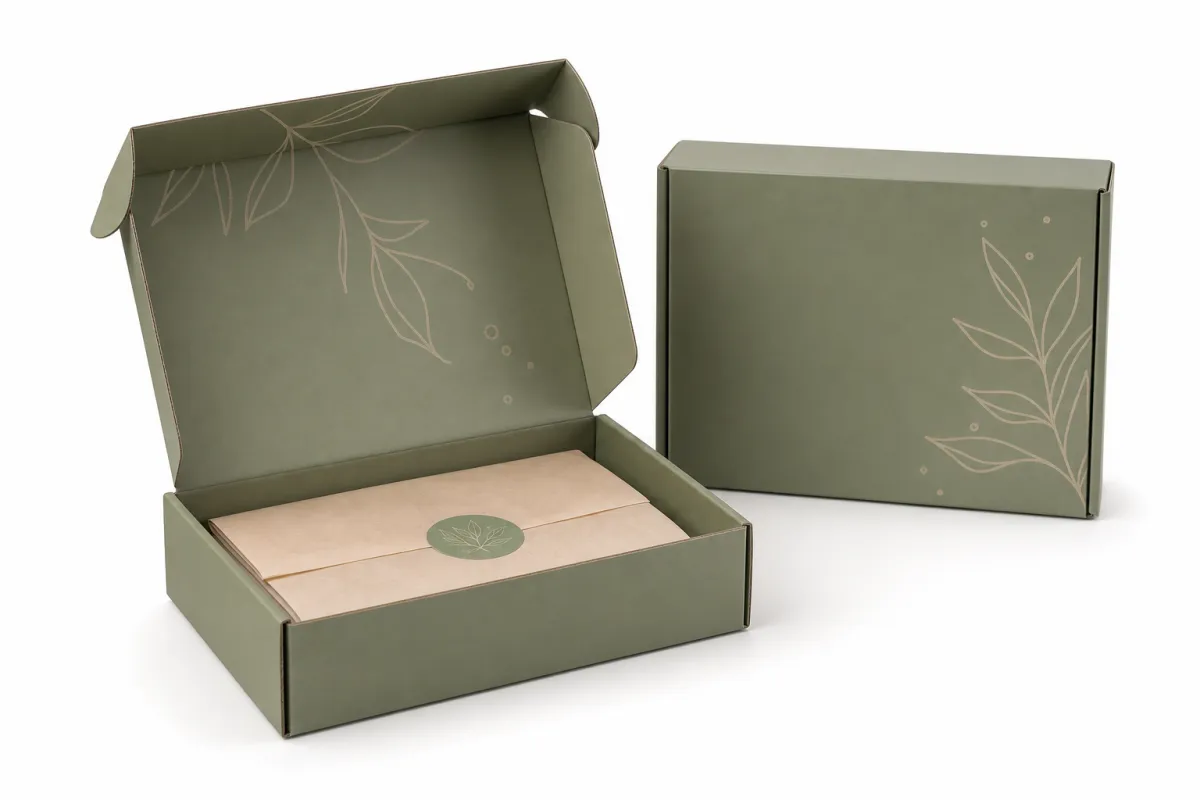
Custom Mailer Boxes for ecommerce are self-locking cartons designed to ship products with a cleaner profile than a generic overboxed shipper. Most use tuck-front closures and locking tabs, so they hold their shape without a mess of tape. That gives you a tidy opening experience while still standing up to warehouse handling, carrier sorting, and the occasional drop that should have been a warning to everyone involved. It is not magic. It is just better box design.
In day-to-day use, custom mailer boxes for ecommerce give brands more control over fit, branding, and packing speed. A properly sized box uses less filler, reduces movement, and lowers the odds of scuffed goods or broken components. A candle, a skincare set, a folded shirt, or a small electronics kit all benefit from that tighter control. The customer gets the item in the condition you meant to send it, not in a box that looks like it lost a fight with a forklift.
Mailer boxes, shipping boxes, and product boxes are not the same thing, even if people keep using the terms like they are. Shipping boxes are usually plain corrugated cartons built mainly for transport. Product boxes tend to be lighter and more display-focused, which is great until they meet parcel abuse. Custom mailer boxes for ecommerce live in the middle. Strong enough to ship. Clean enough to open. Efficient enough for teams that do not have time for packaging drama.
Brands choose custom mailer boxes for ecommerce for two reasons that actually matter: fewer damaged returns and a better first impression. If the box feels sturdy, the product feels more premium. If the inside looks organized, the customer trusts the brand more. If the sizing is tight and the exterior looks clean, the warehouse packs faster. Those are operational wins, not fluffy branding talk. They show up in customer reviews, freight costs, and the number of times someone has to email support about a bent box.
Common uses include subscription kits, cosmetics, supplements, apparel, jewelry, small electronics, and gift sets. If the product is light to medium weight and does not need a heavy outer shipper, custom mailer boxes for ecommerce are usually the right starting point. Heavy items, sharp edges, and products with high crush risk may need a different structure. The packaging spec should be based on the product, not on whatever looked pretty in a mockup.
I have seen brands spend hours arguing about foil color and then discover the carton is half an inch too deep. That is the kind of mistake that sounds small until you are paying for filler, slower packing, and avoidable returns. The box is not the decoration. It is the delivery system.
How Custom Mailer Boxes for Ecommerce Actually Work
The structure of custom mailer boxes for ecommerce looks simple because it is supposed to. You get the main panels, side walls, top and bottom flaps, and a closure that locks the box shut. Good designs use the right board strength and flute profile to resist crushing without turning the package into a brick. Better fold geometry means cleaner assembly and better stacking in transit. Weak tabs and sloppy scores usually fail at the exact moment the box needs to hold together. Very considerate of them.
Fit is where a lot of brands get sloppy. The box should be built around the product, any insert, and the level of protection needed during transit. If the item rattles, the box is too large or the insert is too loose. If the product presses into the sides, the dimensions are too tight. With custom mailer boxes for ecommerce, the sweet spot is snug without being hostile. The product should sit in place, not play pinball every time the carton moves.
Printing and finishing come after the structure is set. Depending on quantity and artwork, custom mailer boxes for ecommerce can be printed digitally for smaller runs, offset for sharper full-color consistency at scale, or flexo for simpler graphics on corrugated board. Finishes may include matte, gloss, soft-touch lamination, foil accents, or spot UV. Each one changes cost, and not all of them are worth it. A matte box with a clean one-color logo can look thoughtful and premium without dragging in every shiny option on the list.
Once the setup is right, fulfillment is straightforward. Boxes are stored flat, moved to the packing station, folded, filled, labeled, and sent out. Strong specs make that process faster because packers spend less time wrestling the box into shape or stuffing extra filler around a bad fit. Weak specs do the opposite. The box turns into a bottleneck, and nobody at the packing line wants to become friends with a bad dieline.
The order flow is simple in practice: grab the flat box, fold it along the scores, add the product and insert, close the locking tabs, apply the shipping label, and send it off. If the box has printed interior panels or a branded insert, the reveal lands the moment the customer opens it. That is the part generic cartons never really manage. Custom mailer boxes for ecommerce can stage the opening instead of just containing the item.
On a good line, a packer should be able to build, fill, and close the box without thinking too hard about it. That sounds mundane. It is. But mundane is exactly what you want when the warehouse is shipping hundreds of orders before lunch.
Key Factors That Affect Custom Mailer Boxes for Ecommerce
Material choice drives a lot of the result. E-flute corrugated board is common for lighter products because it gives a smoother print surface and decent crush resistance without adding unnecessary bulk. B-flute is thicker and better for slightly heavier or more fragile items. SBS paperboard works for lighter presentation packaging, but it does not replace corrugated strength in shipping. Recycled kraft board gives a more natural look and suits brands that want custom mailer boxes for ecommerce with a less polished, more grounded feel.
Strength and presentation are always tugging in different directions. Thicker board and stronger corrugation improve protection, but they also add cost and can increase shipping weight. Plenty of buyers overbuild the box because they are afraid of damage, then spend more on freight and material than the product margin can comfortably absorb. Better to spec custom mailer boxes for ecommerce around actual product weight, drop risk, and transit distance than to guess based on nerves. Gut instinct is not a packaging spec.
Artwork choices matter more than people expect. Full-coverage print makes a box feel bold, but it also raises ink usage and setup complexity. Inside printing adds a premium reveal, but it expands the print area and the cost. A simple one-color logo on kraft can look restrained and expensive when the typography and layout are right. Packaging should follow the product, not fight with it like a design intern trying to prove a point.
Sustainability claims need to stay honest. Recycled content, FSC-certified board, and recyclable paper-based finishes are useful signals, but coatings and laminates do not all behave the same in recycling systems. A matte water-based finish is usually easier to work with than a heavy plastic film, though local rules still vary. If sustainability matters to the brand, verify the materials and document the claim. The FSC system is a useful reference for fiber sourcing, and accuracy beats loud marketing every time.
Transit testing deserves attention too. The ISTA test families are a practical benchmark if you want to see whether a pack survives drops, vibration, and compression in a repeatable way. Not every brand needs full lab validation, but testing a sample run before launch can expose weak corners, poor flap retention, and print rub that would otherwise show up in angry customer photos. Custom mailer boxes for ecommerce are supposed to remove friction, not create a surprise box of problems.
Sizing is non-negotiable. Measure the product at its widest point, include any insert height, and account for bundled items or promo cards if they ship together. If the box needs to hold different SKUs, design for the largest common configuration and use modular inserts to control movement. Custom mailer boxes for ecommerce should not be built around the smallest item and then padded into oblivion when a larger product shows up. That is just paying for cardboard twice.
One practical trick: ask the fulfillment team where the current packaging slows them down. They usually know before anyone in branding does. If the answer is “closing the tabs” or “finding the right filler,” that is not a small issue. That is a design problem wearing a warehouse badge.
Custom Mailer Boxes for Ecommerce Pricing: What Drives Cost
Pricing for custom mailer boxes for ecommerce is not just a box-count math problem. Size, material, print coverage, finish, insert complexity, and shipping all push the number around. A small kraft box with one-color print can stay fairly lean. A larger full-color box with inside print, foil, and a fitted insert can climb fast. That is not a supplier trick. That is materials, setup, and labor doing exactly what they do.
Short-run orders cost more per unit because the setup work gets spread across fewer boxes. Bulk runs usually bring the unit cost down, especially once the structure and artwork are locked. For custom mailer boxes for ecommerce, the first order often looks expensive because you are paying for sampling, dieline setup, proofing, and the correction that always seems to appear after someone checks the file one more time. Repeat orders are easier on the budget because the expensive guesswork is already out of the way.
Here is a practical pricing comparison to keep expectations grounded:
| Option | Typical Material | Approx. Unit Cost at 1,000 | Approx. Unit Cost at 5,000 | Best Use |
|---|---|---|---|---|
| Plain kraft mailer | E-flute kraft corrugated | $0.75-$1.35 | $0.42-$0.78 | Simple shipping, low print needs |
| Branded single-color | Kraft or white corrugated | $1.05-$1.95 | $0.58-$1.10 | Core brand shipping with clean presentation |
| Full-color premium | Printed corrugated with coating | $1.80-$3.80 | $0.95-$2.10 | Retail-style unboxing, strong visual branding |
| Mailer with insert | Printed corrugated plus die-cut insert | $2.20-$5.50 | $1.25-$3.20 | Kits, fragile products, premium sets |
Those ranges are a working frame, not a promise. A tiny order with heavy print coverage can cost more than a larger run with a simple layout. If you need Custom Packaging Products across multiple formats, standardizing a few box footprints usually costs less than creating a separate structure for every SKU. Brands that keep changing dimensions end up paying setup charges again and again. That is a cheerful way to burn margin.
Hidden costs show up more often than buyers expect. Dielines may be included, or they may not. Samples can be free, billed, or credited later. Freight can sit on its own line item. Storage matters too if you are ordering enough custom mailer boxes for ecommerce to last several months. Even packaging that looks cheap on paper can turn awkward once it has to be hauled, stacked, and managed in a warehouse.
If the box is so expensive that the margin only works by pretending shipping is free, the spec is wrong.
The cleanest way to control cost is not glamorous, which is part of why it works. Standardize sizes, keep print coverage intentional, skip unnecessary coatings, and use inserts only where they improve packing speed or product protection. Most brands do not need every premium feature at once. They need custom mailer boxes for ecommerce that look good, ship well, and do not behave like a luxury hobby project.
There is also a hidden benefit to simpler specs: fewer mistakes on reorder. Once a box becomes part of a stable system, it stops acting like a monthly experiment. That alone saves money, time, and a few headaches nobody asked for.
Step-by-Step Timeline for Custom Mailer Boxes for Ecommerce
A realistic timeline starts with measurements, not artwork. Before you Order Custom Mailer Boxes for ecommerce, gather the product dimensions, final weight, insert needs, shipping method, and quantity target. Skip that, and the rest of the process becomes guesswork dressed up as planning. That usually ends with revisions nobody wanted.
The first step is structure selection. The supplier or packaging team builds a dieline around the product size and the way the box will be packed. Artwork then gets placed on the template, and print files are checked for bleed, safe area, and color consistency. Proofing comes next. That is where small mistakes get caught before they become expensive boxes sitting in a warehouse. With custom mailer boxes for ecommerce, a bad proof can haunt the whole run.
Sampling can add a few days or more depending on complexity. If you need a physical sample, allow time for material prep, printing, folding, and shipping. First orders usually take longer because the brand is still deciding on fit, finish, and assembly. Repeat custom mailer boxes for ecommerce move faster because the spec is already approved and the production team knows exactly what they are making.
Production time depends on quantity and process. A short digital run may move faster than a larger offset or flexo order. Once printed, the boxes are cut, creased, glued if needed, packed flat, and shipped. In many cases, the longest delay is not the press. It is waiting for artwork approval, product sign-off, or a last-minute logo tweak someone noticed after lunch. That kind of delay never feels small while it is happening.
As a rough planning range, a first order of custom mailer boxes for ecommerce often lands in the 12 to 20 business day window after final approval, while repeat orders can move faster if the structure and print setup are already in place. Complex finishes, inserts, or special die cuts can stretch that window. If the order is tied to a launch date, leave room. Launch calendars are not kind to packaging delays.
Here is a practical prep checklist for moving faster:
- Final product dimensions and weight
- Logo files in vector format
- PMS or CMYK color targets
- Quantity target and reorder expectation
- Shipment method and warehouse requirements
- Insert or accessory list if the box carries more than one item
That kind of prep does not make custom mailer boxes for ecommerce exciting, but it does make them predictable. Predictable is good. Predictable means fewer surprises, fewer delays, and fewer panicked emails asking why the box that looked perfect on screen folds like it has given up on life.
And yes, the schedule still gets nudged by real-world stuff. Samples arrive late. Someone changes the UPC location. A color proof comes back a shade off. That is packaging work. It is not glamorous, but it is normal.
Common Mistakes When Ordering Custom Mailer Boxes for Ecommerce
The most common mistake is sizing the box by eye. Someone holds the product, takes a guess, and places the order. Then the products shift around, the inserts do not fit, and the warehouse fills the box with filler to make up for it. That is a bad deal. Custom mailer boxes for ecommerce only save money and reduce damage if the internal dimensions are based on real measurements, not optimism and a ruler held at arm’s length.
Weak artwork setup causes plenty of problems too. Low-resolution files, missing bleed, tiny text, and inconsistent color all show up constantly. Once printed, those mistakes are not subtle. They make the box feel cheaper than it should, even if the board itself is solid. For custom mailer boxes for ecommerce, the print file is part of the product. Treat it like one.
Overusing finishes is another easy way to waste money. A box with foil, soft-touch lamination, and inside printing may look great in a sample photo, but the customer may not notice half of it. If the product is low margin or the order volume is modest, those extras can wreck the economics without adding enough perceived value to justify the spend. Branded packaging should support the business, not drain the print budget for fun.
Skipping samples is risky. A sample catches fit issues, print tone shifts, and folding problems before production. That matters even more for custom mailer boxes for ecommerce with inserts, because insert geometry can look perfect on a screen and awkward in real life. The sample stage is cheap compared with reworking a full order after the fact.
Fulfillment gets ignored until it becomes a mess. If the box takes too long to assemble, has a closure that fights back, or stores badly on the line, the warehouse will hate it. That matters because an annoying box gets packed badly. A box that is too bulky for storage slows the operation long after the design phase ends. Simple is not boring. Simple is efficient.
A few mistakes deserve a direct warning:
- Buying a box that is too deep and then stuffing in extra filler to fake the fit
- Choosing a finish that looks fancy but adds more cost than value
- Ordering a design that cannot be folded and packed at speed
- Ignoring how the box behaves after a few drops or scuffs in transit
None of those are rare. All of them are avoidable. Custom mailer boxes for ecommerce work best when the design respects the warehouse as much as the customer-facing reveal.
One more thing: if your team keeps saying, “We can fix that later,” packaging is probably already slipping. Later is where expensive mistakes go to hide.
Expert Tips for Better Custom Mailer Boxes for Ecommerce
Design the opening sequence before you design the artwork. The customer sees the outside first, then the inside, then the product, then any thank-you card or insert message. Custom mailer boxes for ecommerce feel stronger when that sequence is intentional. A clean outer logo, a calm interior reveal, and a product nest that makes sense usually beat a louder layout packed with too many competing ideas.
I usually recommend one core box size with modular inserts instead of a brand-new structure for every SKU. That keeps ordering simpler, reduces setup costs, and makes reorders less painful. It also helps if your product line changes often. Custom mailer boxes for ecommerce are easier to manage when the packaging system is built around a few stable footprints instead of a different carton for every variation.
Testing before scaling is cheap insurance. Run the box through a few real shipping cycles, not just a tabletop fold test. Check for corner crush, flap spring-back, print rub, and whether the box opens too easily or too hard after transit. If you want a more formal screen, use an ISTA-aligned transit path with a sample batch. That tells you more than a mood board ever will.
Smart upgrades can add value without wrecking the budget. One-color inside print can create a memorable reveal. Branded tape can reinforce package branding at a lower cost than full exterior coverage. A simple thank-you insert can do more for perception than another layer of coating. Custom mailer boxes for ecommerce do not need every premium extra to feel considered. They need the right extras in the right places.
For brands comparing packaging formats, it helps to look at the system as a whole. Some products ship better in a mailer, while others work better with complementary formats like Custom Poly Mailers for lighter soft goods. The best packaging programs mix formats instead of forcing everything into one box. That is where product packaging stops being a procurement headache and starts acting like a real brand asset.
One more practical rule: the best box usually balances protection, assembly speed, and brand feel. Not the heaviest. Not the most decorated. Not the one with the longest feature list. Custom mailer boxes for ecommerce should earn their place by reducing friction from packing station to doorstep to repeat order.
If you want a quick way to pressure-test a design, do this: fold a sample, pack the product, shake it gently, and inspect the corners. Then send three test shipments and wait for the results. Boring? Sure. Useful? Absolutely.
Choosing Custom Mailer Boxes for Ecommerce That Fit the Job
Buying custom mailer boxes for ecommerce is not really about buying a box. It is about choosing the right mix of structure, print, finish, and cost for the way your operation actually runs. If the box protects the product, packs quickly, and feels aligned with the brand, it is doing its job. If it only looks good in a render, keep looking.
For smaller brands, a simple kraft box with one-color branding can be enough to build trust and keep costs under control. For premium kits or giftable products, custom printed boxes with a stronger reveal may be worth the added spend. For higher-volume operations, standardizing a few footprints often delivers more value than chasing a different carton for every launch. Efficient custom mailer boxes for ecommerce often make the brand look better because the whole experience feels tighter.
Here is the practical buying advice, stripped down: measure the product properly, choose the board for the shipping risk, decide where print actually matters, and test the first run before you scale. If you do those four things, custom mailer boxes for ecommerce can cut waste, support branded packaging, and make the customer feel like the order was handled with care instead of tossed into a cardboard compromise.
For most ecommerce brands, that balance is the whole point. Custom mailer boxes for ecommerce should protect the product, fit the workflow, and reinforce the brand without forcing you to pay for packaging drama you do not need. Get the structure right first. The rest gets easier from there.
The best next move is simple: start with one accurate product measurement, one shipping test, and one sample before you approve artwork. That sequence catches most of the expensive mistakes early, and it keeps the box useful instead of pretty in a vacuum.
What are custom mailer boxes for ecommerce used for?
They are used to ship products securely while giving the customer a branded unboxing experience. Custom mailer boxes for ecommerce work well for apparel, cosmetics, accessories, subscription products, and gift-style orders. They also reduce the need for extra packaging because the box is built around the product size.
How much do custom mailer boxes for ecommerce usually cost?
Cost depends on size, material, print coverage, finish, inserts, and order quantity. Small runs with premium finishes usually cost more per box than larger bulk orders with simple print. The cleanest way to control price is to standardize box sizes and keep finishes modest.
How long does it take to produce custom mailer boxes for ecommerce?
The timeline usually includes design, proofing, sampling, production, and shipping. First-time orders take longer because artwork, structure, and samples need approval. Repeat orders move faster if the dieline, print setup, and specs are already approved.
What materials are best for custom mailer boxes for ecommerce?
Corrugated options like E-flute are common when protection matters most. Kraft and recycled boards are popular when brands want a natural look and lower material waste. The best material depends on product weight, shipping risk, and the brand presentation you want.
How do I make custom mailer boxes for ecommerce look premium without overspending?
Use strong structure, clean typography, and one or two thoughtful print treatments instead of piling on expensive extras. Focus on fit and opening experience first, then add selective branding where customers will notice it. A well-sized box with good print usually beats an overdecorated box that feels awkward or flimsy.

