Buyer Fit Snapshot
| Best fit | Custom Mailer Boxes with Logo projects where brand print, material claims, artwork control, MOQ, and repeat-order consistency need to be specified before quoting. |
|---|---|
| Quote inputs | Share finished size, material target, print colors, finish, packing count, annual reorder estimate, ship-to region, and any compliance wording. |
| Proofing check | Approve dieline scale, logo placement, barcode or warning zones, color tolerance, closure strength, and carton packing before bulk production. |
| Main risk | Vague material claims, crowded artwork, missing packing details, or unclear freight terms can make a low unit price expensive after revisions. |
Fast answer: Custom Mailer Boxes with Logo: Material Claims, Seal Quality, and Freight Cost should be specified like a repeatable production item. The safest quote records material, print method, finish, artwork proof, packing count, and reorder notes in one written spec.
Production checks before approval
Compare the actual filled-product size with the drawing, then confirm tolerance on folds, seals, hang holes, label areas, and retail display edges. Reserve space for logos, QR codes, warning copy, and material claims before decorative graphics fill the panel.
Quote comparison points
Review material grade, print process, finish, sampling route, tooling charges, carton quantity, and freight assumptions side by side. A quote is only useful when the supplier can repeat the same color, closure quality, and packing count on the next order.
Custom Mailer Boxes with Logo: Design, Cost, and Tips
The first thing a customer holds often says more than the product description ever could. That is the quiet advantage of Custom Mailer Boxes with logo: they shape perception before the item is even unwrapped. A box that fits well, prints cleanly, and feels intentional tells the buyer the brand paid attention long before the product gets a chance to prove itself.
A plain carton can get a package from one address to another, but Custom Mailer Boxes with logo do a larger job than that. They carry the brand, frame the unboxing moment, and make a modest product feel like it was packaged with care rather than shoved into the nearest container. For subscription shipments, influencer mailers, launch kits, and premium accessories, that early impression can move the whole experience from forgettable to memorable.
There is a practical side too. The right Custom Mailer Boxes with logo can reduce wasted space, keep fill material under control, and stop products from knocking around inside the shipper. The wrong size does the opposite. It burns freight volume, invites damage, and turns packing into a game of improvisation with tape, tissue, and whatever filler happens to be nearby. I have seen good products lose money that way, and it is always a little painful.
Mailer boxes differ from ordinary shipping cartons because they are usually self-locking, fast to assemble, and built to open in a more polished way. A standard corrugated shipper often needs extra tape and more cushioning material. A mailer is made for presentation as well as protection, which is why custom mailer boxes with logo show up so often in ecommerce, retail packaging, and direct-to-consumer kits. The structure becomes part of the brand story.
A mailer box is not just a shipper. It is the first physical proof that your brand meant to be there.
That said, not every product needs custom mailer boxes with logo. Low-margin items, bulky goods, or products already protected by another outer carton may not justify the extra spend. For goods with healthy margin, repeat purchase potential, or a strong visual identity, the box is often one of the most efficient brand assets available. Packaging design matters because it is seen before the product is touched, and that first look carries real weight.
Think about a candle, skincare set, specialty tea sampler, or compact electronics accessory. The product may occupy only a portion of the outer carton, leaving room for a tailored fit that looks sharp without becoming fussy. A mailer with crisp logo placement, proper board strength, and a sensible finish can elevate the whole shipment while staying practical. That is where custom mailer boxes with logo earn their keep.
Consistency matters too. Once a brand settles on the same custom mailer boxes with logo for repeated SKUs, packing gets faster, training gets simpler, and the chance of shipping errors drops. Standardized packaging does not sound exciting, but it is often what keeps operations tidy and margins intact.
The sections that follow cover structure, production, pricing, material choices, and ordering steps so the box you choose actually fits the job instead of becoming a polished mistake. If you want to compare related formats, browse Custom Packaging Products or look at Custom Poly Mailers if a lighter shipping option makes more sense for your product.
How Custom Mailer Boxes with Logo Are Made: Process and Timeline
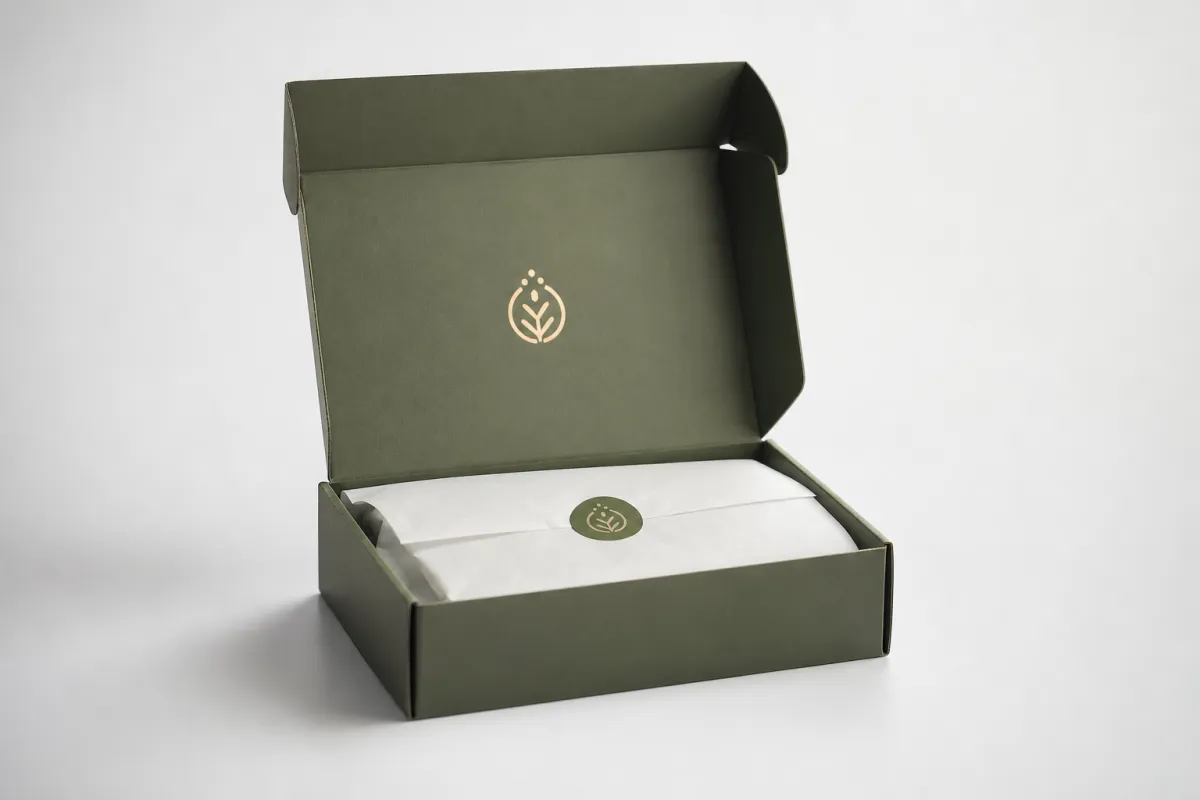
The production path for custom mailer boxes with logo starts with measurements, not artwork. A supplier needs the product size, the packed weight, how the item sits inside the box, and whether inserts or cushioning are part of the design. From there, a dieline is created. That flat template shows folds, flaps, glue zones, tuck areas, and safe print margins. If the dieline is off, the rest of the job gets complicated very quickly.
Once the structure is set, artwork setup begins. Logo placement, bleed, fold clearance, and color expectations all need to be checked before production starts. The quickest way to slow down custom mailer boxes with logo is to make design changes after proofing. Even a small shift in logo position can trigger a revised layout, a new proof, and sometimes a new sample. A project that looked straightforward can turn into a long detour if the art keeps moving.
Printing method depends on quantity and design complexity. Digital printing often works best for short runs because setup is lighter and revisions are easier to manage. Offset printing is usually better for larger quantities and can offer tighter color control on full-coverage artwork. Flexo is often useful on higher-volume corrugated work with simpler graphics. Each method has tradeoffs, and custom mailer boxes with logo should be matched to the run size rather than the buyer's wish for the cheapest or flashiest route.
After printing, the board is cut, creased, and converted into the final mailer shape. If the box includes an insert, that piece is die-cut or nested separately. Then the run is folded, packed, and checked. Most delays happen long before the box reaches that stage. Sampling, proof approval, finish selection, and structural changes tend to consume more time than the machine run itself.
What gets locked first
Structure, exact dimensions, and print method should be locked before production begins. Those three decisions usually determine whether custom mailer boxes with logo stay on schedule or drift into revisions. If inserts are involved, product orientation should be settled at the same time. A box that technically fits but does not hold the product correctly is still the wrong box, no matter how good it looks on paper.
For fragile or higher-value products, ask whether the packaging should be evaluated against transit testing. The ISTA testing standards are a useful reference if the item may face drops, vibration, compression, or parcel sorting. Brands that want verified fiber sourcing should also look at the FSC framework when specifying board stock for custom mailer boxes with logo.
Where delays usually happen
Approval is usually the slow point, not the press. A missing vector logo, a low-resolution image, an unclear Pantone target, or a late copy edit can stop production before it begins. Another common slowdown shows up when a buyer asks for one more tweak after the sample is already made. Those changes are rarely free. They can mean a revised proof, tooling adjustments, and a new timeline.
A realistic timeline often looks like this:
- 1-3 business days for dieline confirmation on simple structures.
- 2-5 business days for artwork proofing, depending on revisions.
- 5-10 business days for digital short runs after approval.
- 10-18 business days for more typical production on custom mailer boxes with logo.
- Longer if special coatings, inserts, foil, embossing, or custom structure changes are part of the order.
That range reflects real production, not the idealized version people sometimes expect from a quote sheet. Rush orders can happen, but they usually cost more because they compress quality checks and create freight pressure. If a launch date is fixed, build time into proofing and transit. Most delays do not come from a slow factory; they come from late approvals, changed art, or missing files.
From a workflow standpoint, custom mailer boxes with logo move most efficiently when decisions happen in a clean order: size first, structure second, artwork third, finish last. Reversing that sequence forces everyone to guess, and guesswork is expensive in packaging.
Cost and Quote Factors for Custom Mailer Boxes with Logo
Price is where surprises show up. The cost of custom mailer boxes with logo depends on a handful of variables: size, board grade, print coverage, finish, insert complexity, and total quantity. Once those pieces are clear, quotes stop looking mysterious and start looking like a set of tradeoffs.
Size affects cost in two ways. Larger boxes use more board, and they occupy more freight space. A box that seems only a little bigger on a drawing can cost noticeably more once material, setup, storage, and shipping are all counted. Buyers often ask for a box that is "a little bigger" without realizing how quickly those inches become wasted cubic volume. Freight and storage tend to punish oversizing.
Quantity is the other major lever. Small runs always carry more setup cost per unit, so the price of custom mailer boxes with logo falls as volume rises. A simple one-color mailer at 250 units may sit around $1.40-$2.60 each depending on size and finish. The same piece at 1,000 units can move closer to $0.65-$1.05, and at 5,000 units the cost can fall further if the artwork is simple and the board is standard. Those numbers are ranges, not promises, but they are useful for planning.
Print coverage changes the quote more than many buyers expect. A small logo on the exterior is relatively inexpensive compared with full-bleed artwork or printing on the inside of the box. Interior print is easy to underestimate because it sounds like a minor upgrade. It is not. It adds ink, setup, and more quality control. Even so, it can be worth the spend when the unboxing moment matters for brand recall.
Common price drivers for custom mailer boxes with logo usually break down like this:
| Option | Best For | Typical Cost Impact | Tradeoff |
|---|---|---|---|
| One-color logo on exterior | Simple ecommerce orders, low-artwork brands | Lowest setup and ink cost | Clean, but less visual impact |
| Full exterior print | Premium branding, subscription boxes, launch kits | Moderate increase | More design space, higher ink and proofing attention |
| Interior print | Unboxing-focused brands | Noticeable increase | Better reveal, more production steps |
| Foil, emboss, or spot UV | Luxury feel, limited editions | Highest add-on cost | More striking, less forgiving on small runs |
Board grade matters as well. A stronger liner and heavier corrugated structure usually cost more, but they can save money if they reduce damage or eliminate the need for excess filler. That tradeoff gets missed often. A box that looks cheaper but arrives damaged is not cheap. It is just a future refund waiting to happen.
Finishes also shape the final price. Matte aqueous coating usually sits in the middle and gives a calm, clean finish. Gloss can make color pop, though it may show scuffs differently. Soft-touch lamination feels premium, but it can be more prone to fingerprints and can add friction in some packing lines. Foil and embossing are visually strong, though they are not small add-ons. They belong on packaging where the signal actually matters.
Insert complexity hides in the quote until somebody asks the obvious question. A simple cardboard divider costs much less than a custom die-cut insert wrapped in printed paper. Foam, molded pulp, and premium paperboard inserts each solve different problems. Choose the insert for product protection and presentation, not because it sounds more impressive on a spec sheet.
Freight can quietly distort the final cost. Custom mailer boxes with logo ship flat, which helps, but larger sizes still take more pallet space and raise the shipping bill. If you are comparing quotes, ask whether freight is included, whether the price is landed or ex-works, and whether the rate assumes full pallets or mixed cartons. A lower unit price with a heavy freight charge is not a bargain.
If you want to keep spending under control, focus on the parts that move the number most:
- Use a standard size close to your product dimensions.
- Keep the print area simple unless the branding payoff justifies more coverage.
- Leave out inside printing if the exterior already carries the brand well.
- Choose one strong finish instead of stacking multiple premium effects.
- Order enough volume to spread setup cost across the run.
That is the part many buyers resist. Better cost usually comes from fewer moving pieces, not from some hidden supplier discount. If a quote for custom mailer boxes with logo looks unusually low, ask what was removed: board strength, coating, proofing, freight, or quality control. Something almost always got trimmed.
Materials, Sizes, and Print Choices That Shape Custom Mailer Boxes with Logo
The material choice affects how the box feels, how it holds up in transit, and how the printed surface behaves. For custom mailer boxes with logo, the most common structure is corrugated board with a kraft or white liner. Flute profile matters too. E-flute is thinner and prints cleanly, which is why it is common for presentation mailers. B-flute is thicker and gives more cushioning. Microflute options can work when you want a smoother print face without losing too much strength.
There is no single best material, and packaging rarely rewards the search for one. If the product is light, cosmetic, and visually driven, E-flute is often a sensible choice. If the product is heavier, fragile, or likely to stack under pressure, thicker board may be better. A mailer that looks elegant but crushes in parcel transit is not premium packaging. It is a failure with a nice surface.
Paper surface matters too. Kraft gives a natural, earthy tone that suits brands leaning into minimalism or sustainability. White liners create a brighter print face and often make color graphics sharper. If your logo uses fine type or tight line work, white stock can help keep it legible. That detail matters more than many people expect, especially when the logo is small and the box has to do the speaking fast.
Picking the right size
Size should start with the product, not with a catalog box that "looks close enough." Measure the item with all packaging components in place, then add room for inserts, tissue, wrap, or other protective material. The goal is just enough clearance for easy packing without letting the product shift around. Too tight slows fulfillment. Too loose makes the shipment feel sloppy and can lead to damage.
For custom mailer boxes with logo, buyers should think in internal dimensions rather than vanity numbers on the outside. A box that looks good in a mockup can still be awkward once the real item is inside. If you are shipping several SKUs in one format, standardizing around the largest item and using inserts for the rest is usually smarter than ordering a different box for every small variation.
Choosing print and finish
Digital print works well for smaller quantities and faster setup. Offset is often more efficient at scale and is usually preferred for richer branding across larger runs. Flexo has its place on simpler corrugated work where the artwork is straightforward. Each method can produce attractive custom mailer boxes with logo; the right one depends on quantity, image complexity, and how much color precision matters to the brand.
Finish adds the final layer of personality. Matte gives a calm, modern feel. Gloss creates more brightness and a retail-forward look. Soft-touch adds a velvety finish that can make custom mailer boxes with logo feel more expensive, though it also changes how the surface handles rubbing and fingerprints. Spot UV can lift a logo or pattern. Foil adds shine and contrast. Embossing and debossing work best when the graphic is bold enough to benefit from texture. Fine details can disappear once they are pressed into board.
If the box needs to survive rough shipping, ask about compression and burst resistance, not just print quality. ASTM test methods and supplier compression data help compare options without relying on a sales pitch. A beautiful box that fails under stacking pressure is a design mistake in formalwear.
Another practical point: the more effects you add, the more important a physical sample becomes. Custom mailer boxes with logo can look different on screen than they do on board, especially with dark colors, metallic foil, or soft-touch coatings. Inspect an actual sample if the packaging will face customers directly. Paper and corrugate have a habit of telling the truth very plainly.
Step-by-Step Ordering for Custom Mailer Boxes with Logo
Ordering custom mailer boxes with logo works better when the process is treated like a checklist rather than a loose email chain. Most of the stress comes from missing information, not from production itself. A clear brief usually leads to a cleaner quote and a faster delivery.
- Define the product - Measure the item in its final packed form, not just the naked product. Include inserts, tissue, trays, or any accessory that ships inside the box.
- Choose the box style - Decide whether you need a classic tuck-top mailer, a crash-lock base, a sleeve, or a specialty insert system. The style affects speed, protection, and cost.
- Request a dieline - Build the artwork on the proper template. A correct dieline protects against fold-line mistakes, logo clipping, and misaligned text.
- Prepare artwork files - Use vector logos where possible. PDF, AI, or press-ready EPS files are best for print. Convert fonts to outlines if the supplier asks for it. Keep images high resolution.
- Set color expectations - If brand color matters, provide Pantone references or approved color values. Do not assume a screen preview is enough. Screens lie for a living.
- Approve the proof - Check the logo position, panel orientation, barcode placement, and any legal copy. This is the stage where small mistakes are cheapest to fix.
- Review a sample - If the order has a premium finish or unusual size, ask for a sample before mass production. That is especially helpful for custom mailer boxes with logo used in customer-facing unboxing.
- Confirm quantity and schedule - Lock the production run only after you are comfortable with unit cost, lead time, and freight method.
- Inspect the shipment - Check a few cases on arrival. Look for print consistency, crushing, scuffing, and glue issues before the boxes go into the warehouse.
Three details matter more than buyers usually expect. File format comes first. Fold orientation comes second. Quantity break comes third. If the supplier needs to change how the artwork sits on the panel, the layout can shift across the whole box. That is why custom mailer boxes with logo benefit from one clean master file that can be reused in later runs.
Ask these questions before you pay a deposit:
- What are the exact internal dimensions?
- What board grade and flute type are being used?
- Is the quote based on full-color print, spot color, or one-color logo only?
- Are freight, samples, and tooling included?
- What happens if the proof needs one revision versus several?
That last question matters more than it first appears. Revision policy can change the economics of an order fast. A supplier that includes one or two design rounds is often easier to work with than a slightly cheaper quote that charges for every correction. For custom mailer boxes with logo, clarity upfront usually saves money later.
If the box is tied to a launch date, build in a buffer. Do not schedule marketing to start the same day the freight arrives. A few days of slack can keep a packaging delay from turning into a customer-facing issue. Packaging should support the launch, not become the emergency that slows it down.
Common Mistakes When Buying Custom Mailer Boxes with Logo
The most expensive mistakes tend to look boring. Rushed sizing, vague artwork, and choosing features because they sound premium rather than because they solve a real problem cause a lot of packaging trouble. Custom mailer boxes with logo are easy to get mostly right and surprisingly easy to get slightly wrong. That slight miss is where the cost lives.
One common mistake is measuring the product once and ordering around that number. If the product includes a label, sleeve, insert, or accessory, the packed dimensions change. A box that fits the bare item may not fit the finished shipment. Measure the fully packed unit every time, or the first production run becomes an expensive correction.
Another mistake is choosing the smallest possible box in an effort to save on materials. That sounds efficient until packing slows down and the product starts getting scuffed. A box should fit the item comfortably, not force the team to wrestle it shut. Small savings on board can disappear into labor, damage, and rework.
Print area also changes the final look more than people expect. A logo that reads sharply on white stock can disappear on kraft or look muddy under heavy coverage. If the brand depends on small type or thin lines, test the artwork before committing to production. Custom mailer boxes with logo should make the brand easier to read, not harder.
These are the mistakes that show up most often:
- Ignoring freight volume - Bigger boxes cost more to move, store, and ship.
- Overbuying fancy finishes - Foil and soft-touch are useful in the right place, not everywhere.
- Skipping a sample - A screen proof is not the same as a box in hand.
- Using the wrong board strength - Pretty does not matter if the corners crush in transit.
- Forgetting packing speed - A nice box that slows fulfillment can cost more than it saves.
- Not planning for returns - Some products need room for repacking or reverse logistics.
Another trap is assuming every supplier quotes the same way. One quote may include tooling, another may not. One may include freight, another may not. One may list digital printing, another may be based on flexo or offset. When comparing custom mailer boxes with logo, compare the full spec, not just the unit price. A low number with a missing detail is not a bargain. It is a trap with polished typography.
Packaging buyers also make the mistake of designing for the supplier instead of the customer. The box should open easily, close reliably, and present the product with minimal fuss. If the structure needs too much explanation or too many steps, it will eventually annoy both the fulfillment team and the customer. Neither group usually sends a thank-you note.
Expert Tips and Next Steps for Better Custom Mailer Boxes with Logo Orders
If you want better results from custom mailer boxes with logo, start by simplifying the decision tree. Strong packaging usually comes from tight specs, honest volume planning, and a clear sense of how the box will actually be used. Fancy is optional. Reliable is not.
Build around one or two standard sizes whenever possible. If a brand has five box sizes for six products, the system is probably carrying too much variation. A well-planned mailer setup lets you use the same custom mailer boxes with logo across multiple SKUs with inserts or small internal adjustments. That reduces inventory clutter and makes reordering easier.
Test the box in the real workflow. Put sample units on the packing table. Time the pack-out. Check whether tape is needed. See whether the box closes cleanly with the actual product, not the mockup version. A box that looks elegant in a deck but slows down workers is a packaging problem disguised as a branding win.
Judge value by total landed cost, not by unit price alone. The box, freight, storage, damage rate, and labor belong in the same conversation. Sometimes a slightly more expensive custom mailer boxes with logo quote saves money because the design packs faster, stacks better, or ships more efficiently.
Keep the artwork disciplined. Strong logo placement, enough whitespace, and one clear visual idea usually beat crowded graphics. Packaging does not need to shout to work. A little restraint often helps the brand look more confident.
Ask for a reorder-friendly spec sheet and save the internal dimensions, board type, coating, print method, and approved artwork version in one place. Future orders move faster when nobody has to dig through old email threads for the file that matters. That is where custom mailer boxes with logo start paying back the planning effort.
If the brand is still deciding between packaging options, this rough guide helps:
- Use a mailer box if presentation matters and the product needs a branded outer shell.
- Use a plain shipping carton if cost and protection matter more than unboxing.
- Use poly mailers if the product is lightweight, soft, and not fragile.
- Use inserts when the item would otherwise shift around or feel underwhelming in the box.
Packaging cost and packaging value are not the same thing. A box that reduces damage claims, supports repeat orders, and makes the product feel more premium can be worth far more than the production price. That is the real case for custom mailer boxes with logo. Not decoration. Not vanity. Commercial usefulness.
If a new launch is on the calendar, the smartest move is often to start with a prototype, confirm the fit, and scale after the dimensions and print are proven. That gives the team a chance to catch expensive mistakes before they become warehouse inventory. It is not glamorous advice, but it saves a lot of trouble.
For brands that treat packaging as part of the product experience, custom mailer boxes with logo are one of the easiest upgrades to justify. They protect the item, communicate brand value, and make the shipment feel considered from the first touch. That combination is rare, and it is worth using well.
One practical rule holds up again and again: lock the size, verify the sample, and save the approved spec before you place a larger reorder. Do that, and custom mailer boxes with logo stop being a guessing game and start acting like a dependable part of the operation.
FAQ
What size should custom mailer boxes with logo be?
The best size is the one that fits the fully packed product with just enough room for inserts or protective material. Measure the item after it is fully packaged, then add clearance for easy packing. Oversizing wastes freight space, while undersizing creates damage and slows fulfillment.
Are custom mailer boxes with logo expensive?
They can be affordable or costly depending on size, quantity, print coverage, and finish. Small runs with full coverage and premium effects cost more per unit. Larger runs with simple artwork usually drop into a better range. The lowest quote is not always the smartest one.
Can I order a small batch?
Yes. Short runs are common, especially with digital printing. The unit price is usually higher because setup gets spread across fewer pieces, but small batches are useful for launches, seasonal drops, and limited editions. If you are testing demand, that is often the safer route.
What file format do I need for the logo?
Vector files are best. AI, EPS, or press-ready PDF files usually produce the cleanest result for custom mailer boxes with logo. If you only have a PNG or JPG, the supplier may still be able to use it, but sharp edges and small text often suffer.
Which finish should I choose?
Matte is a safe default. Gloss adds shine. Soft-touch feels premium. Spot UV, foil, embossing, and debossing create stronger visual statements, but they add cost and can be less forgiving on smaller runs. Choose the finish that supports the brand instead of stacking effects for their own sake.
Do custom mailer boxes with logo need inserts?
Not always. Inserts make sense if the product can shift, if there are multiple pieces in one box, or if the presentation would look sloppy without them. A good insert can improve protection and the unboxing sequence, but it should be judged against extra cost and pack-out time.
How do I keep the quote under control?
Use a standard size, keep the artwork simple, avoid unnecessary special finishes, and confirm freight before approving the order. If possible, reuse the same master structure across multiple products. That is usually the cleanest way to keep custom mailer boxes with logo profitable instead of decorative.
What should I ask before placing an order?
Ask about internal dimensions, board grade, print method, coating, freight, sample policy, and revision limits. Those details matter more than a flashy mockup. A clear spec sheet saves time, money, and a lot of unnecessary email chains.

