Custom Padded Mailers for Cosmetics Brands: Wholesale Pricing Factors
Compare material choices, cushioning, print specs, and freight so you can estimate Custom Padded Mailers for cosmetics brands wholesale pricing factors before ordering.
Custom Padded Mailers are not exciting until a shipment arrives crushed, scratched, or leaking. Then the math gets very clear. One damaged serum can cost more than the mailer that was supposed to protect it, once the replacement product, postage, customer service time, and lost trust are all counted together.
For cosmetics brands, the real test is not whether the mailer looks good in a mockup. It is whether the structure holds up through conveyors, trailer vibration, seasonal humidity, and the small abuses that happen between the warehouse and the doorstep. If the outer pack protects the product and still feels premium, the packaging is doing its job. If it does not, the unit price was never the real cost.
That is why padded mailers often outperform rigid cartons for flat skincare refills, lip gloss bundles, sample kits, and launch sets that already sit inside retail-ready primary packaging. A box can be the right answer for glass-heavy or highly nested sets, but it adds weight, material, and freight expense fast. For many beauty orders, a well-built mailer gives enough protection without paying for structure the product does not need. The Custom Packaging Products catalog and the Custom Poly Mailers page are useful comparison points if you are weighing formats.
Why padded mailers cut damage costs for beauty orders
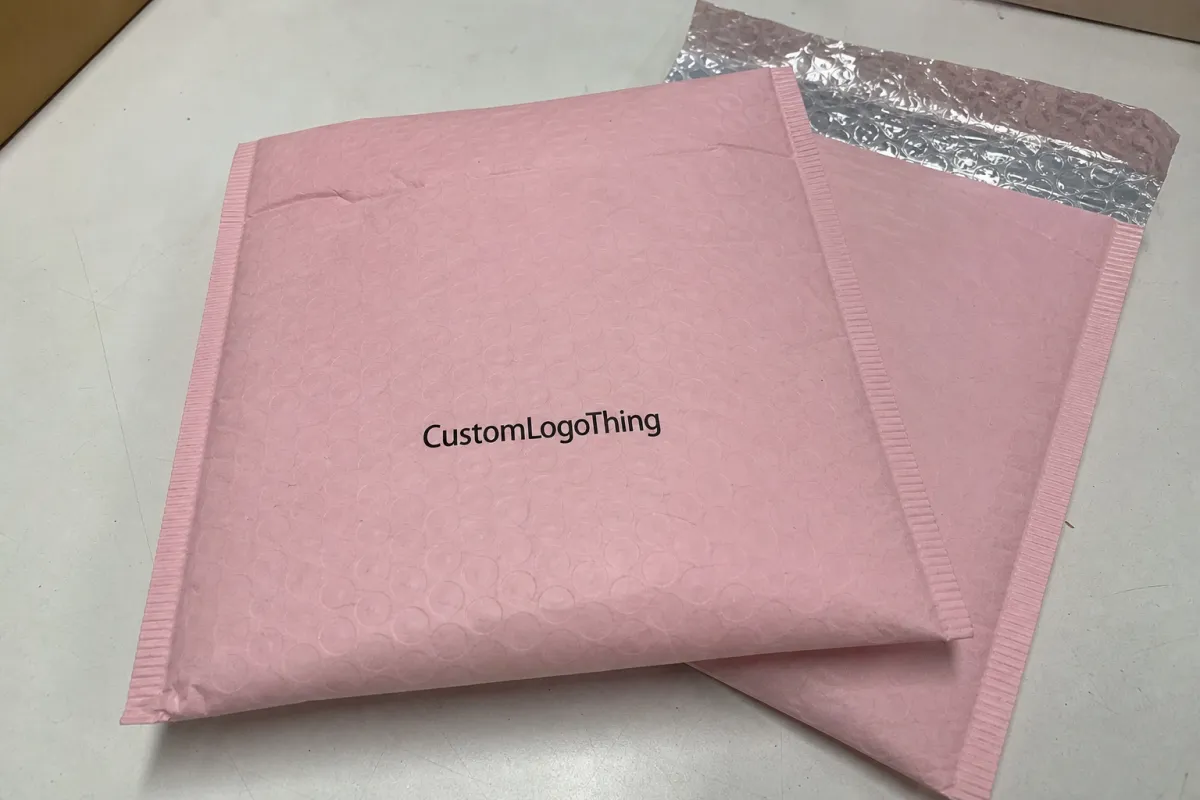
Beauty fulfillment lives in a narrow margin band. A lipstick, cleanser, or sample trio does not leave much room for packaging waste, so the smarter spend is usually on the right amount of protection rather than on unnecessary box walls. Padded mailers absorb abrasion from mixed-load freight, mail bins, and sortation belts while staying light enough to avoid dimensional-weight penalties on many parcel networks.
The damage risk is not always obvious from the product shape. Glass droppers, compact mirrors, pump bottles, and refill vials can look stable and still fail after vibration, stacking pressure, or a long route through hot and cold zones. A 2 percent damage rate on 5,000 orders means 100 replacements. That is enough to erase the savings from a cheap package very quickly.
There is a customer experience angle too. For repeat beauty buyers, the outer mailer is often the first visible touchpoint after checkout. If the print is clean, the seal is intact, and the package arrives without scuffs or soggy corners, the brand looks organized before the product is even opened. That matters for influencer kits, launch campaigns, and subscription drops where presentation and transit performance have to work together.
"A low unit price is not a win if it turns into reships, complaints, and discounted reviews."
Freight deserves its own line in the decision. Lightweight mailers can keep postage lower than rigid mailers or cartons, especially for smaller orders that ship individually. The difference is often small on one parcel and meaningful across a month of replenishment orders. For beauty brands shipping in volume, a few ounces saved per package can move the monthly shipping budget more than a slight change in material price.
Material choices that keep cosmetics shipments looking premium
The outer face sets the tone before the package is opened. Kraft paper gives a natural, matte look that fits clean beauty and recycled positioning. White paper stock reads more polished and usually takes logos, linework, and dark ink with better contrast. Film-based exteriors hold up better in damp conditions, but they do not suit every brand voice. The best choice depends on the shipping lane, the shelf look, and how much handling the mailer will see before it reaches the customer.
The inside layer does the actual cushioning. Bubble padding is the most familiar option: low cost, light weight, and adequate for many lip products, sample sets, and small skincare items. Paper-padded structures appeal to brands trying to reduce plastic content while keeping a crisp unboxing feel. Foam-lined mailers give a softer cushion and can be useful for glass bottles or dense sets, but they usually cost more and are not automatically the right answer.
| Construction | Typical wholesale cost impact | Best use | Watch-out |
|---|---|---|---|
| Bubble padded | Lowest | Samples, lip gloss, light skincare | Looks basic if artwork and stock choice are weak |
| Paper-padded | Mid-range | Clean beauty, recycled positioning, launch kits | Needs careful sizing for heavier glass items |
| Foam-lined | Highest | Glass bottles, compact sets, denser bundles | Can raise cost and complicate sustainability claims |
Stock thickness and seal quality matter just as much as cushioning. An attractive outer layer cannot compensate for a weak flap, poor adhesive, or seams that split under compression. Buyers should ask what test method was used for the quoted structure. A supplier who can explain drop, crush, and vibration checks is usually more reliable than one who only shows a polished render. For recycled fiber claims, ask whether the certificate applies to the paper itself, the liner, or the entire finished mailer. The FSC system is still the most recognizable reference point for paper sourcing.
Finish changes the look and the production risk. Matte coatings hide scuffs better than gloss. Soft-touch coatings feel upscale, but they can raise the unit price and slow production if they need extra curing or more careful handling. Metallic ink, spot varnish, and heavy ink coverage all look good in concept work, yet they increase the chance of registration issues and inspection rejects. For beauty brands, the best finish is often the one that survives shipping and still photographs cleanly on a phone.
Size, seal, and print specifications buyers should lock in
Quoting gets much faster when the dimensions are real instead of estimated. The supplier needs the finished product size, the packed size, the insert thickness, and the closure overlap at the flap. If there is a tray, a vial card, or a sample packet inside, that extra thickness has to be measured too. Guessing from the product name usually leads to redraws and samples that do not close properly.
Seal type is another decision that changes the quote. Self-seal is convenient for fulfillment teams. Tamper-evident strips help on higher-value orders. Some workflows use heat sealing, but that is less common for standard cosmetic mailers. If the order will move through auto-insertion or a high-volume pack line, the seal should be tested under realistic pressure rather than assumed to work because the spec sheet says it should.
- Collect dimensions: product size, packed size, and insert thickness.
- Confirm closure: self-seal, tamper-evident, or custom flap design.
- Set print rules: one-color logo, full coverage, or repeat pattern.
- Check operations: barcode placement, postage weight, and quiet zones.
Print specs influence both appearance and cost. A one-color logo on kraft is usually the most economical route. Full coverage art, multiple PMS colors, and high-detail registration on textured stock all push the unit price up. That does not make them wrong. It just means the brand has to connect the design choice to the budget instead of treating print like an afterthought. The most efficient packaging design is the one that supports the product, the warehouse, and the shipping method at the same time.
If the brand is choosing between mailers and cartons, the comparison should be practical. Mailers work well for flat refills, accessory sets, and low-profile bundles. Boxes still make more sense for fragile gift sets, layered inserts, or premium retail presentations that need rigid structure. The decision should follow the product, not the packaging trend.
Custom padded mailers for cosmetics brands: wholesale pricing factors
The main pricing factors are material grade, size, cushioning thickness, print complexity, and production volume. Buyers who understand those five levers can usually predict the quote range before the first round of emails is finished. That makes buying conversations much sharper. It also reduces the number of revisions caused by vague requests for something "premium" without a measurable spec behind it.
MOQ is the first gate. Smaller runs carry more setup cost per unit, so a 1,000-piece order will almost always cost more per mailer than a 10,000-piece order with the same spec. For planning, a simple bubble mailer with basic one-color printing might fall around $0.18-$0.30 per unit at higher quantities. Paper-padded or foam-lined versions with more coverage or more demanding print work can move into the $0.35-$0.70 per unit range. Those are budgeting ranges, not promises. Paper markets, resin prices, and freight moves can shift them.
| Pricing driver | How it changes the quote | Buyer action |
|---|---|---|
| Material grade | Heavier paper or thicker liners raise unit cost | Match the spec to product fragility, not only appearance |
| Print coverage | More colors and larger coverage increase setup and production time | Use a simpler print path if the logo already carries the brand |
| MOQ tier | Unit cost usually drops as quantity rises | Ask for 3 or 4 quantity tiers before choosing a run size |
| Freight mode | Air freight can erase savings on short lead times | Compare landed cost, not factory cost alone |
Setup charges are easy to miss. Some suppliers separate plate costs, proofing, and print preparation. Others fold those items into the unit price. Both methods can look fine on paper and still produce very different total costs. The useful comparison is the landed number: unit price, setup, freight, warehouse fees, and any split-shipment cost. A lower factory price can lose once the order is packed, consolidated, and delivered.
There is also a hidden cost in poor spec alignment. If the mailer is too large, postage climbs. If it is too tight, production slows and damage risk rises. If the print is too detailed for the chosen stock, rejects go up. The cheapest quote is not always the cheapest order.
For cosmetic shipments, one more factor matters: how the mailer protects the brand image at scale. A slightly higher unit cost can still be the better choice if it lowers damage claims, shortens pack time, or makes every replenishment order look deliberate. Wholesale buying should improve the economics of repeat orders, not just reduce the line item on the invoice.
Process, timeline, and approval steps before production
The best projects move in a predictable sequence: quote, proof, sample, approval, production, inspection, shipment. That sounds simple, but delays usually appear in the gaps. A complete spec sheet reduces most of them before they start. So does a shared calendar between marketing, fulfillment, and purchasing.
Typical timing is more useful than a hard promise. Quotes often come back within 24-48 hours if dimensions, quantity, artwork, and destination are complete. Proofs usually take 1-3 business days. Sampling can take 5-10 business days depending on the material and print method. Production often runs around 12-18 business days after proof approval, with special finishes or larger orders taking longer. Freight is the variable that changes everything, especially for overseas orders.
Late approvals cause more damage than most teams expect. Missing PMS references, vague dimensions, and non-editable files all slow the process. If a launch has a fixed date, the team should lock the packaging schedule before the product schedule becomes the only thing anyone is watching. That is especially true for seasonal beauty lines, replenishment runs, and launches tied to paid media timing.
For broader format comparisons, the Case Studies library is more useful than a generic sales page because it shows how specifications, approvals, and lead times interact. Packaging decisions are rarely isolated. A mailer choice usually affects print timing, freight planning, and the rest of the SKU family.
What a dependable wholesale packaging partner should prove
Trust should be built from evidence. A reliable supplier can show a clear spec sheet, a repeatable QC process, and realistic lead times for the exact material being quoted. If the response to basic questions is vague, the quote probably is too.
For beauty brands, the right questions are practical. Ask how incoming materials are checked, how seal strength is tested, how print registration is measured, and what the reject threshold is for dents, miscuts, and color drift. If the product is glass-heavy or the shipping route is rough, ask whether the supplier can support transit testing aligned to ISTA-style methods or at least explain their drop criteria. A clean mockup means very little if the structure fails once it is under load.
Color consistency matters more than many teams expect. A one-off sample can look great and still fail as a reorder if the next batch shifts in tone or registration. Brands that reorder monthly or quarterly need a supplier that can repeat the same size, same closure, and same print outcome without rebuilding the project each time. That is where a real Wholesale Programs structure helps, because it supports repeat purchasing instead of forcing every order to start from zero.
Communication is part of quality control too. A written update when raw material pricing changes, a named contact for proofs, and a clear approval log all reduce mistakes. If the buyer has to chase answers, the production calendar will probably drift. Good suppliers make the hidden parts visible before they become expensive.
There is one last check worth making: the partner should understand how the outer shipper supports brand presentation, how the insert affects product packaging, and how the mailer fits the rest of the line. A shipping format is never only a shipping format. For cosmetics, it is part protection, part presentation, and part operating system.
What to send for a fast quote and first production run
The fastest quotes come from complete inputs. The supplier needs dimensions, product weight, artwork files, quantity range, and delivery destination. If a target budget already exists, include that too. It saves time and usually produces a better starting point than a spec sheet with half the fields missing.
- Gather specs: finished size, packed size, and closure preference.
- Share artwork: vector files, PMS references, and logo placement notes.
- Set volume: expected MOQ, test run size, and reorder potential.
- Confirm logistics: destination, freight preference, and delivery window.
- Approve a sample: especially for fragile, premium, or unusual shapes.
Sample approval is not a formality. It is the best chance to catch closure issues, print problems, and fit mistakes before a full run is committed. A small test can also show whether the outer stock scuffs too easily, whether the seal stays closed under pressure, and whether the package still feels aligned with the brand once it is held in hand instead of seen on a screen.
Ask for the quote in a format that separates MOQ, unit cost, setup, lead time, and freight. That makes comparison much easier and stops the buying team from mixing factory cost with landed cost. If the numbers are visible, the tradeoffs are visible too.
The strongest buying decisions for Custom Padded Mailers for cosmetics brands wholesale pricing factors usually come down to one question: does the mailer protect the product, stay inside budget, and fit the brand without creating avoidable friction in production or shipping? If the answer is yes, the packaging choice is doing real work rather than just adding another line item.
What MOQ should I expect for custom padded mailers for cosmetics brands?
MOQ depends on size, print method, and material, but smaller runs usually carry a higher unit cost. Ask for tiered pricing so you can compare a test run against a replenishment quantity before deciding on volume.
Which print options usually change wholesale pricing the most?
Full-coverage artwork, extra colors, and special finishes tend to raise setup and production costs. One-color logos or simple repeat patterns are usually the most cost-efficient choices for first wholesale orders.
Can padded mailers protect glass skincare bottles and compacts?
Yes, if the cushioning, closure strength, and overall size are matched to the product weight and fragility. For heavier glass items, ask for transit testing or a sample drop test before approving the run.
What files should I prepare before requesting a quote?
Send editable vector artwork when possible, plus dimensions, quantity, destination, and preferred print colors. If you do not have a dieline, ask the supplier to provide one before finalizing the design.
How long do sampling and production usually take?
Quotes are often quick if the spec is complete, but sampling and approval can add days. Production and freight timing depend on order size, finish complexity, and whether the shipment is domestic or overseas.

