Buyer Fit Snapshot
| Best fit | Custom Padded Mailers for Sample Kits and Prototype Approval projects where brand print, material claims, artwork control, MOQ, and repeat-order consistency need to be specified before quoting. |
|---|---|
| Quote inputs | Share finished size, material target, print colors, finish, packing count, annual reorder estimate, ship-to region, and any compliance wording. |
| Proofing check | Approve dieline scale, logo placement, barcode or warning zones, color tolerance, closure strength, and carton packing before bulk production. |
| Main risk | Vague material claims, crowded artwork, missing packing details, or unclear freight terms can make a low unit price expensive after revisions. |
Fast answer: Custom Padded Mailers for Sample Kits and Prototype Approval should be specified like a repeatable production item. The safest quote records material, print method, finish, artwork proof, packing count, and reorder notes in one written spec.
Production checks before approval
Compare the actual filled-product size with the drawing, then confirm tolerance on folds, seals, hang holes, label areas, and retail display edges. Reserve space for logos, QR codes, warning copy, and material claims before decorative graphics fill the panel.
Quote comparison points
Review material grade, print process, finish, sampling route, tooling charges, carton quantity, and freight assumptions side by side. A quote is only useful when the supplier can repeat the same color, closure quality, and packing count on the next order.
Custom Padded Mailers for Sample Kits and Prototype Approval
A sample kit gets judged fast. The outer mailer often sets the tone before anyone opens the insert card, checks the prototype, or reads the spec sheet. That sounds harsh because it is harsh. Packaging does not get much grace, and the first thing a buyer, designer, or approver touches usually shapes the rest of the conversation.
That is why custom padded mailers for sample kits Prototype Sample Approval are not just shipping supplies. In the right setup, they are part of the approval process, part of the brand presentation, and part of the logistics plan. They protect flat or lightly dimensional items, keep shipping costs under control, and make a sample feel considered instead of tossed into the nearest envelope with tape and hope.
For teams moving quickly, the real benefit is not only protection. It is clarity. A mailer that is easy to pack, easy to receive, and easy to understand removes friction from the review cycle. That matters when a delay can push back a launch, a sales presentation, or a design sign-off.
There is also a practical upside that gets overlooked. The right mailer can hold a standard approval kit at a predictable cost. For example, a 9 x 12 inch padded mailer with a single-color logo, a 350gsm C1S artboard face, and a 3/16 inch bubble liner often gives enough stiffness for printed swatch sets, folded sell sheets, and thin prototype parts without turning the package into a miniature brick.
Why custom padded mailers win approvals
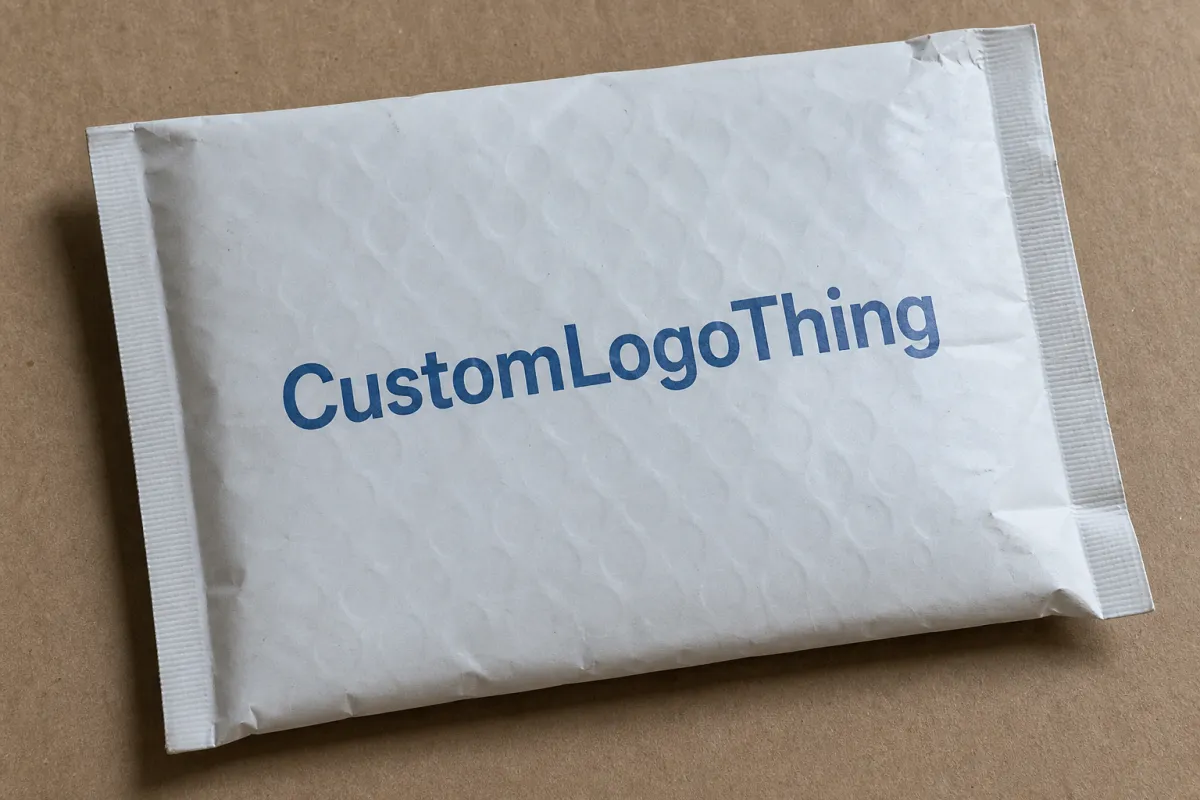
Most sample kits are not judged in a warehouse. They are judged on a desk, in a conference room, or during a quick handoff between teams. That matters. A clean, branded mailer tells the recipient the package was planned. A scuffed, overstuffed, or floppy one tells them the opposite. If the outer package looks careless, people start looking for problems before they even see the product.
Custom padded mailers are simple by design. You have an outer face stock or film, an internal cushioning layer, and a closure that keeps everything sealed through transit. That combination makes them a strong fit for sample swatches, prototype parts, printed inserts, apparel samples, cosmetic kits, and other low-volume approval shipments. They are lighter than cartons, easier to pack, and usually less expensive to ship than a small rigid box.
Buyers usually run the same mental math: protection, presentation, cost. Push too hard on protection and the package starts looking overbuilt. Push too hard on price and the mailer looks cheap. The sweet spot is a mailer that survives normal transit abuse, opens cleanly, and supports the brand without shouting. That balance is why branded packaging matters even on a small run.
For product teams still sorting out the final look of the kit, a padded mailer can separate packaging design from product design. The prototype may still change. The mailer should be flexible enough to adapt without forcing a complete redo every time someone tweaks a fold, insert, or sample card. That helps in early product packaging work, where the target often shifts until the right version lands.
Another practical benefit: approval packets often travel through more hands than people expect. Sales may review them first, then design, then procurement, then a manager, then a distributor or retailer. A polished outer mailer creates a consistent first impression across that chain. It is not glamorous. It just keeps the package from being labeled rough before the sample has a chance to speak.
A sample kit is often approved in the hand, not in the spreadsheet. If the outer mailer feels tidy and intentional, the conversation starts in a better place.
If your kit is extremely flat and light, compare this format with Custom Poly Mailers. If the project is broader than one shipment type, review Custom Packaging Products to see where mailers fit inside a larger packaging program.
There is also a plain operational reason these mailers win approvals: they reduce friction. No one wants to argue about a prototype shipping box when the real question is whether the sample itself is right. A padded mailer keeps the packaging conversation small enough to move. That is the value. Not drama. Not theater. Just fewer obstacles between the sample and a clean sign-off.
In most review cycles, teams care about three things: whether the surface arrives clean, whether the contents shift, and whether the package looks intentional when it lands. If a padded mailer can answer those three questions well, it tends to earn repeat use for the next round too.
How custom padded mailers work from packing to delivery
The basic structure is straightforward, but the details matter. A typical custom padded mailer includes an outer layer made from kraft paper or poly film, an interior cushion such as bubble, paper padding, or quilted fiber, and a closure strip or self-seal flap. Some versions include a tear strip for easier opening. Others use recycled liners or FSC-certified paper facings for brands that care about sourcing and recycled content claims.
A mailer has to do more than survive. It has to hold shape, keep corners from denting, and stop scuffs on surfaces that show every mark. That is especially true for prototype pieces with painted finishes, soft-touch coatings, foil print, embossed labels, or glossy inserts. A few inches of sloppy movement in transit can turn a clean approval into a complaint about scratches.
The unboxing moment starts before the package is opened. The recipient feels the thickness, sees the print coverage, checks the flap, and decides whether the send looks considered. If the seal is weak or the mailer bows in the middle, the package already feels lower value. That affects package branding even when the product inside is excellent.
A good padded mailer also saves time at pack-out. Flat items slide in quickly. Labels sit cleanly. The finished parcel stacks better. If your team is packing dozens or hundreds of sample kits, those small efficiencies matter. No one likes spending an extra minute per unit wrestling with a box insert when a mailer would have finished the job in half the time.
Here is the part people miss: the right mailer is part protection, part presentation, part process control. That is why teams keep returning to custom Padded Mailers for Sample Kits prototype sample approval. They do enough jobs at once that the whole approval flow gets easier.
When a mailer makes more sense than a box:
- The sample is flat, flexible, or only slightly dimensional.
- The kit needs light-to-moderate protection rather than crush resistance.
- The shipper wants lower postage weight and less void fill.
- The brand wants a cleaner, simpler presentation than a carton.
- The approval round is limited and the contents may still change.
When a box is still the better move:
- The item is brittle, heavy, or easily crushed.
- The sample has sharp corners, fragile hardware, or multiple hard components.
- You need a premium reveal with rigid structure.
- The project looks more like retail packaging or shelf-ready presentation than mailing efficiency.
That tradeoff is why many teams end up comparing mailers with small cartons and custom printed boxes. If the project is a sales sample or prototype approval pack, the mailer often wins on speed and cost. If the sample itself is fragile enough to need crush protection, the box wins. No drama. Just choose the structure that solves the actual problem.
For durability checks, think in terms of transit behavior rather than marketing claims. If the item is going through carrier hubs, conveyor movement, and repeated handling, ask whether the package would pass a basic drop and vibration screen modeled on ISTA methods. For formal test language, the International Safe Transit Association is a solid reference. For training and terminology, the broader packaging industry resources at packaging industry references can help teams speak the same language.
Outer material choices
Kraft paper gives a natural look, prints well, and usually feels more brand-friendly for eco-minded programs. Poly film brings moisture resistance and a smoother surface for bright graphics. Recycled paper facings can support sustainability claims, but the surface may be more textured, which affects print sharpness and scuff resistance. If the sample has a finish that scratches easily, the liner choice matters more than the logo on the outside.
For paper-faced mailers, a common production spec is 350gsm C1S artboard on the outside with a 60gsm to 80gsm kraft or bubble-backed liner inside. That gives the mailer enough body to sit flat in transit without feeling like a flimsy catalog envelope. For heavier sample sets, some buyers move up to 400gsm board or ask for reinforced seams at the fold lines.
Padding choices
Bubble padding is common because it is cheap, light, and forgiving. Paper padding is better if the brand wants a cleaner paper-based structure or a curbside-recycling story that does not require a long disclaimer. Quilted fiber and molded-fiber style liners can feel more premium, but they usually increase cost and can affect thickness. In a prototype approval kit, I usually recommend choosing the padding based on what the product surface can tolerate, not what looks best in a supplier sample book.
If the sample includes coated cards, anodized parts, screen-printed swatches, or soft-touch packaging comps, ask for a liner sample before you commit. A smooth inner face can reduce rub marks. A rough one can leave a nice little trail of regret on dark finishes.
Closure and opening
A self-seal flap is standard for speed. A peel-and-stick adhesive strip usually gives the best balance of convenience and closure strength. If the mailer will be reused internally or opened by several reviewers, add a tear strip so the first opening does not look mangled. That small detail can keep the pack looking deliberate, which is useful when the mailer itself is part of the approval conversation.
For sample kits that bounce between product, sales, and procurement, a double-seal flap is often worth the extra few cents. It lets the first reviewer open the kit cleanly and the next person reseal it without fighting the adhesive. That matters more than it sounds.
Transit behavior
Think about how the package will actually move. It may get stacked, dropped from belt height, squeezed into a tote, or left in a hot delivery truck. A padded mailer is not trying to survive forklift abuse. It is trying to make ordinary shipping look uneventful. That is the job. If the item has glossy print, soft-touch coating, or exposed corners, "uneventful" is a very good outcome.
Pricing, MOQ, and unit cost
Pricing is where optimism gets corrected. A custom padded mailer can be inexpensive in volume, but small prototype runs often cost more than buyers expect. The main drivers are size, material thickness, print coverage, cushion type, closure style, and order quantity. Add setup, freight, and sample charges, and the line item starts to look less casual.
For small approval runs, MOQ matters a lot. A printed mailer program may start around 1,000 to 3,000 units, depending on structure and printer. At 250 or 500 pieces, the per-unit price can climb fast because setup costs are spread across fewer mailers. That is not a ripoff. It is math. Annoying math, but math.
| Mailer option | Typical MOQ | Approx. unit cost at 5,000 pcs | Best use | Watch-outs |
|---|---|---|---|---|
| Unprinted kraft padded mailer | 500-1,000 | $0.12-$0.20 | Fast internal samples, neutral presentation | No branding, limited control over first impression |
| Single-color custom kraft padded mailer | 1,000-3,000 | $0.15-$0.24 | Prototype approvals, light branding, lower postage weight | Needs clean art and accurate dieline setup |
| Full-color custom poly padded mailer | 3,000-5,000 | $0.18-$0.32 | High-impact branding, moisture resistance, retail-style mail drops | Can feel less premium than paper if the design is busy |
| Recycled paper padded mailer with upgraded print | 2,500-5,000 | $0.22-$0.40 | Sustainability-led brands, cleaner presentation, sample kits | Material price can rise with recycled content and specialty liners |
| Small custom printed box instead of mailer | 1,000-3,000 | $0.45-$0.90 | Fragile prototypes, higher perceived value, structured reveal | Heavier shipping, more pack-out time, often more void fill |
Those numbers are not universal, because they depend on dimensions, print method, and current material pricing. Still, they are a workable planning range. A prototype approval mailer with modest branding and standard construction often lands around $0.15-$0.24 per unit for 5,000 pieces, depending on size and print coverage. Small-run specialty work can climb faster, especially if you ask for extra finishing or a thicker board.
Watch the add-on costs, too. Artwork setup can run from about $75 to $250. Physical samples may add $30 to $150 depending on structure and shipping. Rush production usually adds 10% to 20%, sometimes more if the schedule is tight or material has to be sourced quickly. Freight is its own thing entirely; a low unit price does not help if the shipping bill wipes out the savings.
Here is the practical savings advice: limit print coverage, use standard sizes when possible, and keep the closure and liner spec sane. A one-color logo on a stock-sized mailer usually costs less than a full-bleed design with specialty coating. That said, do not save yourself into a weak package. A mailer that tears, buckles, or looks underfinished costs more in lost trust than it saves in cents.
For example, a 10 x 13 inch padded mailer for a cosmetics sample set or a thin tech accessory kit will usually price better than a custom odd size because the supplier can run it from a common die and standard sheet size. A weird 8.25 x 11.75 inch spec might look harmless on paper and still trigger a new cost bracket. Packaging loves tiny traps like that.
For brands building out a broader retail packaging or sampling program, the best move is often to treat the mailer as one component in a larger system. Then the sampling envelope, insert card, and outer shipper all match the same visual logic. That is cleaner than forcing every format to do the same job.
If your kit contents are still changing, quote cautiously. Every dimension change can push the price into a different size band or force a different die line. A little uncertainty is fine. Too much and the pricing becomes guesswork dressed up as procurement.
One more buying tip: ask whether the quote includes the actual finished dimensions or only the nominal size. That sounds minor until a sample fits in theory but not in production. Production people love the phrase "close enough." Buyers should not.
Process, timeline, and lead time for prototype sample approval
Most delays do not happen in production. They happen before production, when the team is still arguing about dimensions, artwork, or sample contents. The cleanest projects move through a simple sequence: confirm the packed size, review the dieline, approve artwork, receive a production sample, then release the run. Skip one step and the calendar usually punishes you for it.
For a straightforward custom padded mailer, a realistic timeline often looks like this:
- Brief and sizing confirmation: 1-2 business days
- Dieline and artwork proofing: 2-4 business days
- Physical sample or virtual proof review: 3-7 business days
- Production after approval: often 12-15 business days from proof approval
- Transit time: 2-5 business days for domestic freight, longer for cross-border shipments
If the project uses specialty print, recycled liners, custom closures, or imported material, add a buffer. Three to five extra business days is a reasonable planning cushion. If someone asks for a rush on top of a rush, the timeline gets ugly fast. That is not a manufacturing flaw. That is what happens when the approval meeting starts after the schedule has already moved.
Step one: lock the packed dimensions
Measure the actual packed kit, not the loose product. Then add room for insert cards, tissue, instruction sheets, or any wrap that will be inside the mailer. A common mistake is quoting a mailer against the product alone and forgetting the way the kit expands once everything is assembled. Build in extra space for the thickest unit, not the prettiest one.
For a flat approval packet, that may mean a finished inside width of 9.75 inches for a 9 inch printed insert stack. For a thicker prototype set, you may need another quarter inch or half inch so the flap can close without forcing the sides to bulge. It is boring work. It also prevents returns.
Step two: approve the structure before the print
Ask for a dieline with finished size, seal area, flap width, and internal cushioning thickness clearly marked. If your supplier only sends a front-view mockup, push back. That is not enough information to approve a pack that needs to close properly. Good structure proofing saves more time than any design revision, because the dimensions are what actually determine fit.
If the mailer uses a paper face, ask for the board spec, liner spec, and closure method in writing. A note like "350gsm C1S artboard, 60gsm kraft liner, peel-and-seal flap" gives everyone the same target. Without that, people spend half a week arguing about what they thought the sample meant.
Step three: review artwork with the fold in mind
Keep critical copy away from the seal zone and away from any areas that may distort when the mailer is filled. Logos can sit close to edges, but tiny legal text should not. For full-bleed art, confirm how much shift the production method allows. A design that looks perfect on screen can land badly if the print drifts and the flap eats the edge of the layout.
For prototype approval kits, I would keep key text at least 0.25 inch inside the trim and any fold line. If the mailer has spot color printing, confirm the Pantone match against the chosen stock. A bright white gloss film will not read the same as a natural kraft face. That difference is obvious the minute the package hits the desk.
Step four: request a pre-production sample when the kit is sensitive
If the sample has a finish that scratches, a surface that stains, or a geometry that is hard to pack, ask for one actual pre-production sample before release. That extra step costs time, but it often pays for itself by preventing a bad production run. For approval kits, one physical check is worth more than three meetings.
People try to compress this process by skipping the sample and going straight to production. That can work for very simple mailers. It is less smart for anything with tight fit, premium finishes, or multiple insert components. If the kit has a sales deadline, build the review window backward from the delivery date, not forward from the purchase order.
For companies working with vendors in different time zones, response time is another hidden delay. A proof sent on Friday afternoon may sit until Monday, and then the revision cycle starts over. If the project is urgent, ask for same-day markup windows and a single point of contact. That sounds basic because it is. Still, basic process control is often the thing that saves the week.
Step-by-step guide to choosing the right mailer for your kit
The right mailer depends on what the kit does, how far it travels, and what kind of reaction you want when it lands. If the goal is clean approval, the best structure is usually the simplest one that still protects the product. More layers do not always mean better packaging. Sometimes they just mean more cost and more pack-out time.
1. Start with the product, not the print
Ask what can be damaged. Surface scuff? Corner dent? Bending? Moisture? If the risk is abrasion, choose a liner that will not rub the finish. If the risk is bending, look at the stiffness of the mailer wall and the insert format. If the risk is moisture, consider poly or moisture-resistant facings. Branding matters, but product survival comes first.
A sample kit for apparel swatches has different needs than one for cosmetic tubes or a thin electronics prototype. Fabric can tolerate a softer inner wall. Coated cards and metallic finishes usually cannot. That is why the product spec should drive the packaging spec, not the other way around.
2. Measure the assembled kit
Include every insert, card, sample, and protective sleeve. Then add a small buffer. For a flat kit, 1/8 to 1/4 inch of extra room can be enough. For anything with multiple layers, a little more clearance makes packing easier and reduces bowing. The point is not to leave space for its own sake. The point is to avoid compressing the contents so much that the package feels overstuffed or awkward.
If the sample stack is built around a 5 x 7 inch card set, the final mailer should still account for the folded instruction sheet, tissue, and any foam or corrugated spacer you might add later. A lot of teams approve the wrong size because they forget the random little things that show up at pack-out.
3. Match the material to the finish
If the product has a matte finish or sturdy paper inserts, kraft padded mailers are usually fine. If the sample includes glossy components, coated cards, or dark surfaces that show dust and abrasion, test a smoother liner. For outdoor or long-transit shipments, moisture resistance can be worth the extra cost. For internal approvals or short-distance shipping, a paper-based option may be the better balance.
A common practical spec for paper-faced work is a 350gsm C1S artboard outside with a white or natural kraft inner liner. That gives enough rigidity for presentation without making the mailer too stiff to pack by hand. If you need more protection, step up the liner thickness before you start adding random void filler. That is cleaner and cheaper.
4. Decide how premium the unboxing should feel
A sample kit for a design review does not need the same reveal as a retail launch box. That said, the outer package should still feel deliberate. A crisp logo, a clean flap, and an opening experience that does not tear the whole mailer apart can be enough. If the package is acting as a sales tool, spend a little more on print and finish. If it is acting as a working approval envelope, keep the spec practical.
For prototype sample approval, that usually means one strong brand cue, one clean structural choice, and no clutter. A simple spot color logo on kraft with a neat return address often feels more credible than a noisy full-bleed design on an undersized mailer. People can smell overdesign from across the room.
5. Check the carrier reality
Carrier handling is not gentle, and no one should pretend otherwise. Mailers move through sortation systems, trucks, bins, and hand-offs. If the contents are sensitive, run a small pre-ship test. Even a simple internal drop test from desk height can reveal problems before the real shipment. For formal validation, use ISTA or ASTM-based methods appropriate to the product category.
Here is a simple rule of thumb. If the kit is flat, light, and visually driven, padded mailers are usually the smarter move. If the kit is rigid, heavy, or fragile, go to a box. If you are not sure, build one prototype in each format and compare the packing time, shipping cost, and review response. Buyers learn a lot from those side-by-side tests.
Do not ignore the receiving experience on the other end. A mailer that is easy to open, easy to repack, and easy to label for internal routing saves time for the approver. That sounds small. It is not. In a team review environment, small annoyances become big opinions very quickly.
Common mistakes that delay sample approval
Most delays are preventable. The same errors come up again and again, and they usually look tiny right before they become expensive.
- Approving the wrong size. Teams often size the mailer to the product only, then discover the inserts make it too tight.
- Choosing the wrong liner. A rough interior can scuff soft-touch or coated surfaces before the sample is even opened.
- Using artwork that ignores the seal zone. Important copy gets hidden, stretched, or cut off near the flap.
- Skipping a physical sample. A digital proof will not tell you whether the mailer bows, buckles, or closes badly when filled.
- Underestimating closure strength. Weak adhesive sounds like a minor issue until the mailers start opening in transit.
- Forgetting about freight. Cheap unit pricing can be erased by a bad shipping plan or oversized cartons.
Another common mistake is assuming all padded mailers are interchangeable. They are not. Paper-faced mailers, bubble mailers, poly mailers, and recycled-fiber versions behave differently under pressure, in moisture, and during opening. If the prototype has a sensitive finish, "close enough" is not good enough. The wrong surface can turn a presentable sample into a redo.
Teams also underestimate how much sample kit approval depends on consistency. If the first unit looks good but the next ten are difficult to pack, the process will not scale. Ask the supplier what the pack-out tolerance is and how much variation the structure can handle. A mailer should fit the actual production spread, not just one ideal sample.
One more issue: sending too few extras. If you need 50 approval kits, order more than 50. Some will be damaged in transit. Some will be kept by sales. Some will get used as internal references. Ten percent extra is a sensible minimum; fifteen percent is safer when the review chain is long.
The mistake that causes the most frustration, though, is ignoring the reviewer's experience. A mailer that tears too much, sheds fibers, or opens with a sticky flap makes the process feel cheap. Even if the product inside is strong, the package has already spent goodwill. That is avoidable, and it is usually cheaper to fix early than to explain later.
Expert tips and next steps for a faster approval
If you want the approval to move faster, tighten the brief before you ask for quotes. Give the supplier the packed dimensions, target quantity, print coverage, closure preference, and expected ship date. That one step cuts down on the back-and-forth that usually eats a day or two. Vague briefs are not mysterious. They are just slow.
Here is the short checklist I would use for a serious sample kit:
- Assemble one fully packed prototype before quoting.
- Measure width, height, thickness, and any bulging points.
- State whether the kit needs paper-based, poly-based, or mixed materials.
- Request a dieline with seal area, bleed, and safe zones marked.
- Confirm whether the print should be matte, gloss, or uncoated.
- Ask for a physical sample if the finish is sensitive or the fit is tight.
For sustainability claims, be precise. If you want FSC paper, ask for documentation. If you want recycled content, define the percentage. If you want curbside recyclability, check the liner and adhesive, because not every "paper" mailer actually passes that test. Good buyers do not just ask for eco-friendly. They ask for the actual material spec.
It also helps to think about how the mailer fits into the rest of the kit. The outer envelope, insert card, label, and internal wrap should feel like one system. That does not mean matching everything exactly. It means the package should look like it was planned by one team, not assembled from three different procurement moods.
When the schedule is tight, prioritize the elements that affect fit first, then the elements that affect appearance. A mailer with the right size and structure can still be acceptable with a simpler print plan. The reverse is not true. Beautiful graphics cannot fix a bad closure or a mailer that is too small to seal.
For teams working across product development and sales, I usually recommend a two-track approval: one track for structure and one track for graphics. Approve the physical mailer first, then lock the print. That keeps the revision cycle from bouncing around every time the product team tweaks an insert card.
If the end goal is a broader packaging program, use the sample kit as the pilot. A good padded mailer trial tells you a lot about sizing discipline, print expectations, and pack-out speed. That is useful data for future branded packaging decisions, not just one shipment.
Need the cleanest path forward? Start with a standard size, one-color print, and a material that your team can actually approve without three rounds of debate. Fancy is fine. Fast is better when the prototype is waiting.
FAQ
Are padded mailers good for fragile prototypes?
Only up to a point. They work well for flat, lightly dimensional, or moderately sensitive items. If the prototype has hard corners, brittle components, or a finish that can crack under pressure, a small box is usually the safer choice.
Can custom padded mailers be made from recyclable materials?
Yes, but check the full structure. A paper face alone does not guarantee curbside recyclability. The liner, adhesive, and any film layers matter too. Ask for the exact material breakdown before making any sustainability claim.
What print style is best for sample kits?
Single-color print is often the best value for approval runs. It keeps setup simple, looks clean, and usually costs less than full-coverage graphics. If the mailer is part of a sales presentation, a fuller print treatment can be worth the extra spend.
How many should I order for a prototype approval round?
Order the exact need plus extra units for damage, internal review, and later reference. A 10% to 15% buffer is a sensible starting point. If the kit will be shared with multiple teams, go higher.
What is the fastest way to reduce cost without making the mailer look cheap?
Use a standard size, keep the artwork simple, avoid specialty coatings, and choose a common liner. That gives you most of the savings without making the package feel thrown together.
How long does approval packaging usually take?
For a standard run, expect about 12-15 business days after proof approval, plus shipping. Specialty materials, custom closures, or rushed schedules can stretch that timeline. If the supplier is waiting on art or dimensions, the clock is not really running yet.
For most teams, the right choice is not the fanciest one. It is the one that protects the sample, looks intentional, and gets approved without wasting time. That is why Custom Padded Mailers for Sample kits prototype sample approval keep showing up in real packaging programs: they solve the job cleanly, and they do it without dragging the budget into nonsense.

