Buyer Fit Snapshot
| Best fit | Custom Padded Mailers for Sample Kits projects where brand print, material claims, artwork control, MOQ, and repeat-order consistency need to be specified before quoting. |
|---|---|
| Quote inputs | Share finished size, material target, print colors, finish, packing count, annual reorder estimate, ship-to region, and any compliance wording. |
| Proofing check | Approve dieline scale, logo placement, barcode or warning zones, color tolerance, closure strength, and carton packing before bulk production. |
| Main risk | Vague material claims, crowded artwork, missing packing details, or unclear freight terms can make a low unit price expensive after revisions. |
Fast answer: Custom Padded Mailers for Sample Kits: Durability Checklist should be specified like a repeatable production item. The safest quote records material, print method, finish, artwork proof, packing count, and reorder notes in one written spec.
Production checks before approval
Compare the actual filled-product size with the drawing, then confirm tolerance on folds, seals, hang holes, label areas, and retail display edges. Reserve space for logos, QR codes, warning copy, and material claims before decorative graphics fill the panel.
Quote comparison points
Review material grade, print process, finish, sampling route, tooling charges, carton quantity, and freight assumptions side by side. A quote is only useful when the supplier can repeat the same color, closure quality, and packing count on the next order.
Custom Padded Mailers for Sample Kits shipping durability checklist is a long phrase for a very ordinary problem: the outside of the package looks fine, and the inside arrives trashed. Bent cards. Cracked vials. Scuffed finishes. Loose caps. A clean outer shell does not matter if the contents have been rattling around for two days in a parcel network.
That is why padded mailers deserve more scrutiny than they usually get. They are not just branded envelopes with some cushion slapped inside. They are part of the shipping system. They need the right fit, the right closure, and enough structure to keep the sample kit stable from packing bench to delivery doorstep.
For a packaging buyer, sample kits are a slightly annoying category. They mix shapes, materials, and fragility levels in one unit, and they still need to stay light enough for fulfillment. The goal is not to add padding everywhere and call it good. The goal is to build a mailer that matches the actual packed kit, the actual route, and the actual handling abuse the carrier will throw at it.
If your kit includes swatches, cards, sachets, vials, bottles, or a mixed product packaging assortment, the risks stack fast. Movement causes most of the damage. So does a weak seal that peels under pressure. So does a mailer that looks polished on a sample table but folds badly once it hits a conveyor chute. This guide covers the checks that matter before you approve a run, plus the spec choices that separate low claim rates from a pile of replacements.
Why Sample Kits Fail Without the Right Padded Mailers
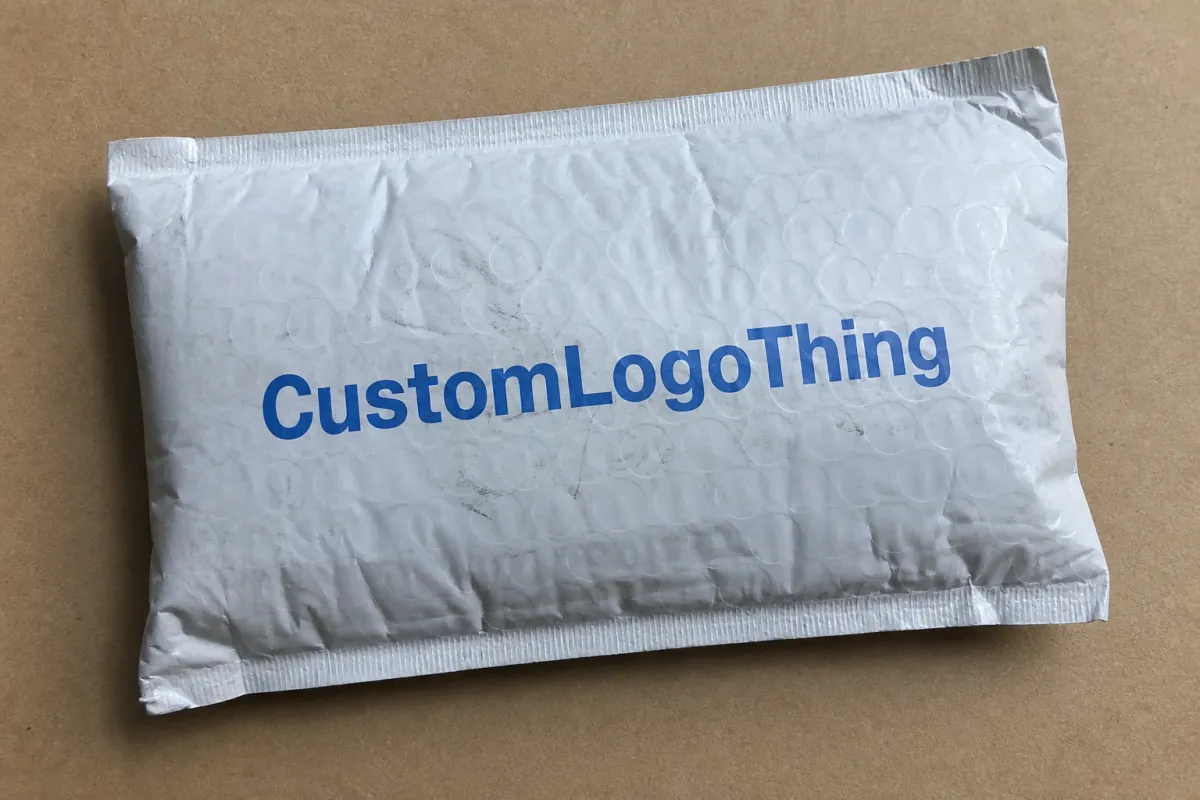
Sample kits usually fail for boring reasons. That is the frustrating part. The mailer rarely gets ripped apart in some dramatic event. More often, the package survives, the label stays readable, and the contents take the abuse. A vial cracks because it had room to bounce. A card set gets corner wear from rubbing against a seam. A bottle cap loosens because vibration kept working on it for three days across trucks and sort facilities.
That is why custom padded mailers matter. They are not just branded packaging. They are a fit-and-finish tool that can reduce movement, protect edges, and improve the handoff from warehouse to carrier to customer. For many brands, they sit between a plain bubble mailer and a full shipping box. That middle ground matters when the contents need more control than a basic envelope, but do not justify the cube, weight, and freight cost of a box.
There is a real difference between ordinary ecommerce shipping and sample-kit shipping. A standard parcel often contains one product in a retail-ready carton. Sample kits can hold five or ten small pieces, each with different fragility and shape. One loose component can damage the others. One oversized cavity can create enough movement to undo the rest of the build. “Looks padded” is not a durability spec. It is a vibe. Vibes do not pass drop tests.
In practice, the biggest failures come from three places:
- Movement inside the mailer that lets items hit each other or the shell.
- Poor fit that leaves dead space around the kit.
- Weak closure that starts peeling under heat, pressure, or repeated handling.
If the goal is branded packaging that protects the contents without adding unnecessary freight, the mailer spec has to be tied to the kit itself. Not the marketing mockup. Not the hero render. The actual packed unit. That is where a lot of teams save a few cents and spend a lot more later on reprints and replacements.
Practical rule: if the kit can move inside the mailer, the mailer is too big. If the mailer can open without a serious pull, the closure is too weak.
For brands that send samples regularly, the mailer also becomes part of the package branding story. It signals care before the package is even opened. A kit that arrives flat, clean, and undamaged does more than protect goods. It makes the product packaging feel deliberate. Customers notice that. They may not say it out loud, but they absolutely notice when the opposite happens.
How Custom Padded Mailers Protect Sample Kits in Transit
Good padded mailers work because each layer has a job. The outer shell resists tearing and abrasion. The inner padding absorbs impact and keeps the product from rubbing directly against the outside world. The closure keeps the package together when it gets pinched, stacked, or tossed into a bin by somebody who is already behind schedule. None of those layers needs to be fancy. They do need to work together.
The outer layer is usually kraft paper or poly film. Kraft gives a more natural retail packaging look and suits paper-based brands. Poly is better when moisture resistance matters or when the route includes weather exposure, wet loading docks, or long transfer chains. For many sample kits, poly mailers are also easier to keep lightweight. If the product mix is more delicate, a paper-padded format can offer better board-like support, though the exact performance depends on the construction.
Inside, padding does the unglamorous work. Common options include bubble padding, paper cushioning, molded inserts, or a hybrid construction. Bubble layers help with impact and vibration. Paper cushioning feels firmer and can resist flex better for flatter kits. A mixed build can make sense if the kit has one fragile item and several light items that need separation. A set of swatches or cards may only need enough internal structure to keep the stack from sliding. Small jars need a much tighter system.
Think about the handling events that happen before the customer ever sees the package:
- Conveyor impacts at sorting centers.
- Corner crush from stacked parcels.
- Vibration in transit, which loosens closures and shifts contents.
- Abrasion from label scuffing and package rubbing.
- Light moisture exposure from weather, loading docks, or carrier bags.
A properly spec'd padded mailer does not eliminate these events. It manages them. That is the difference between packaging design that looks nice in a presentation and packaging design that survives a parcel network.
Fit matters more than most people expect. A mailer that is a little oversized can let tiny items, such as sample vials or sachets, slide into the corners and slam against each other. A mailer that is too tight can force the closure to fight the contents, which raises the chance of failure along the seal line. The right answer is usually snug, not crushed.
For mixed kits, the internal layout matters as much as the shell. A rigid backer card can stop bending. A small insert can lock a glass item in place. Tissue, die-cut board, or a simple divider can keep a premium sample from rubbing against the rest. That is why many brands pair custom padded mailers with other custom packaging products instead of expecting the mailer alone to solve everything.
If you are comparing formats, start with the contents, not the finish. A branded mailer with the wrong build is still the wrong build. For flat or semi-fragile kits, Custom Poly Mailers can make sense. If the kit needs more board support or stack resistance, then a box from Custom Shipping Boxes may be the cleaner call. The right choice depends on the kit, the route, and how much abuse you expect in the middle.
Some teams try to solve fragility by making the mailer feel plush. That is not the same as transit durability. A soft-looking mailer can still fail if the inner cavity lets the contents drift. A firmer build with less visual fluff may actually protect better. Customer-facing presentation matters, but shipment survival pays the invoices.
Custom Padded Mailers for Sample Kits Shipping Durability Checklist
If you want a durable spec, run the mailer through a practical checklist before you approve production. Not a design review. Not a mood board. A shipping durability checklist. That is how you keep the budget aligned with actual risk.
Start with the materials. Look at film thickness, paper stock weight, and the structure of the padding. Thin film can be fine for soft, light kits, but it is a bad bet if the mailers will be stacked in bulk or exposed to rough handling. For paper-based mailers, a common structure is a 350gsm C1S artboard face paired with a 60-80gsm bubble layer or a paper cushion backing. Heavier kraft stocks and stronger poly films tend to resist tear propagation better. For sample kits with sharp corners, that matters more than the print finish.
Then inspect the seal. Seal strength is easy to ignore until the first batch of complaints lands in your inbox. Peel-and-seal strips, hot-melt closures, and tamper-evident strips all behave differently. A 20-25mm adhesive strip is common for light to medium kits, but strip width does not mean much if the contents shove against the opening. If the package will be opened and resealed in fulfillment before it ships, the closure needs enough holding power for repeated handling. If the kit is going through a line with high throughput, a weak seal can fail during packing, not just in transit.
Measure the packed kit, not the product alone. That sounds obvious, but people still get it wrong. Measure the smallest version, the heaviest version, and the thickest finished version. A sample kit with the same pieces can change dimensions depending on how the inserts sit. If you skip that step, you order a mailer that fits one version and fights the others.
Check the void space. Void space is where damage lives. Leave enough room for the closure, but not enough room for the contents to rattle. If the sample kit is mixed, pay attention to the tallest item and the one with the least forgiveness. A glass jar changes the spec more than a stack of cards does.
Test flex and crush. Press on the packed mailer. Twist it slightly. Compress the corners. If the contents shift too much, the design needs an insert or a tighter size. If the mailer folds in on itself with light pressure, the structure is too soft for the route.
Run a simple drop test. A bench test is not a lab certification, but it will tell you a lot. Drop the packed sample from about 30 to 36 inches on the faces, edges, and corners. Then inspect for breakage, movement, bent corners, scuffs, and seal failure. For more formal validation, many teams use ISTA test methods, and the packaging industry often references standards like those discussed by ISTA. If sustainability or paper sourcing is part of the spec, verify fiber claims through a chain-of-custody standard such as FSC.
Here is a practical checklist you can use internally:
- Product weight: confirm the packed weight and the heaviest kit variation.
- Edge protection: identify any sharp corners, glass, or hard edges.
- Internal movement: shake the sealed kit and listen for shifting.
- Closure method: verify the seal holds after packing and compression.
- Drop-test result: record what failed, if anything, and where it failed.
Sometimes the answer is not a stronger mailer. Sometimes it is an insert, a board, or a different layout. A rigid backer can stop flex better than a thicker shell. A simple tape reinforcement can help a closure survive distribution. If the kit is especially delicate, the better answer may be moving to a box. Good sample kit packaging work is a series of tradeoffs, not a shopping spree.
Production Process, Timeline, and Lead Time for Sample Kits
People often ask for the fastest option before they know what they are actually ordering. That usually backfires. Production time for custom padded mailers depends on structure, print method, order size, and how much artwork is still floating around in somebody's inbox.
The typical path looks like this:
- Spec sheet and dimensions: define the packed kit size, material preference, closure style, and print area.
- Dieline review: confirm the layout fits the mailer structure and does not place key artwork in a bad fold zone.
- Proof approval: sign off on artwork placement, color expectations, and any branding details.
- Pre-production sample or mockup: review fit and print before the full run.
- Printing and finishing: apply graphics, cut, convert, and apply the closure or padding system.
- Packing and shipment: carton the finished mailers and send them to your facility or fulfillment partner.
Where do delays happen? Usually in predictable places. Artwork revisions. Size changes after the proof. Material swaps because someone discovered a better-looking option two days before approval. Waiting for internal sign-off while the factory is sitting on a nearly finished run. None of that is exciting, but it is how schedules slip.
For straightforward custom runs, a realistic lead time often lands around 12-18 business days after proof approval. More complex projects, especially those with special finishes, custom inserts, or heavy print coverage, can run closer to three to five weeks. If the order is small and the spec is standard, things can move faster. If you are changing the structure, adding a window, or asking for highly specific package branding, plan for more time.
There is a direct tradeoff between speed and cost. Rush work usually costs more because it compresses production scheduling and shipping options. If your launch date is flexible, order early and save the margin for better materials or better print. If the launch date is fixed, pay the rush premium and avoid a dead inventory window. That is just math.
For teams managing product packaging across a launch calendar, it helps to work backward from the ship date. Build in time for a pilot batch, a few shipping samples, and at least one revision window. A one-week contingency can save a month of embarrassment.
If your sample kits are tied to sales outreach or retail packaging campaigns, bring the fulfillment partner into the conversation early. They can usually tell you if the current mailer size is going to slow down order fulfillment, jam a line, or create a cartonization problem. That feedback is cheap compared with a full re-run.
Custom Padded Mailers Cost, MOQ, and Quote Factors
Pricing for custom padded mailers is not one number. It is a stack of decisions dressed up as a quote. Material grade, padding type, size, print coverage, seal style, and order volume all pull the price in different directions. If someone gives you a cheap number without asking about dimensions or product weight, they are probably pricing a guess.
For many custom runs, especially at mid-range quantities, unit pricing can land around $0.15-$0.24 per unit for 5,000 pieces on a basic kraft or paper-padded construction, depending on size and print coverage. More premium or highly customized versions usually move upward from there. Small test runs often cost more per unit because setup is spread across fewer pieces. That does not mean the quote is wrong. It means the economics are honest.
MOQ is where buyers get surprised. Lower minimums are attractive for pilot programs, seasonal sample kits, or sales outreach tests. The tradeoff is usually higher unit cost and fewer customization options. A larger order can unlock better pricing, but only if you actually need that volume. Overstock is not savings. It is storage with a guilt complex.
When you Request a Quote, give the vendor enough information to price the real job:
- finished dimensions of the packed sample kit
- expected weight and any fragile components
- artwork coverage and number of print colors
- closure preference and any tamper-evident needs
- target quantity and acceptable lead time
That information matters because quotes are built on performance expectations as much as raw materials. A mailer for light swatches is not the same as a mailer for glass ampoules. One can prioritize presentation. The other has to protect against impact, vibration, and edge crush. Same category, very different build.
| Option | Typical Use | Estimated Unit Price | Durability Notes |
|---|---|---|---|
| Kraft padded mailer with basic print | Flat samples, cards, light product packaging | $0.15-$0.24 at 5,000 units | Good for light protection; less moisture resistance than poly |
| Poly padded mailer with custom branding | Mixed sample kits, ecommerce shipping, light fragile items | $0.22-$0.38 at 5,000 units | Better moisture resistance; stronger for high-volume order fulfillment |
| Heavier-duty padded mailer with reinforced seal | Premium samples, small bottles, delicate branded packaging | $0.30-$0.60 at 5,000 units | Better against crush and repeated handling; higher material cost |
| Mailer plus insert or board | Glass, multi-piece sample kits, higher-value contents | $0.40-$0.85 at 5,000 units | Usually the best protection if internal movement is the real risk |
The rule I use is simple: pay more when the kit is fragile, premium, or high-value; save money when the contents are light, stable, and not likely to be abused by the carrier network. If damage claims are expensive or the customer experience matters a lot, a stronger mailer often pays for itself by reducing rework and replacements.
That is also why some brands compare padded mailers with other custom packaging products instead of forcing everything into one format. A mailer can be ideal for slim, soft, or low-profile kits. A box may be better for structured samples or when presentation needs a more premium reveal. Good packaging design is not loyal to one format. It is loyal to the product and the shipping path.
For teams building broader branded packaging programs, the price conversation should include the downstream cost of damage. A slightly higher per-unit cost can be the cheaper option if it cuts customer service time, replacement shipments, and negative reviews. That is how product packaging decisions get paid back.
Common Mistakes That Ruin Sample Kit Shipping Durability
The worst mistake is usually the easiest one to make: choosing a mailer that is too big because the sample kit fits comfortably during packing. Comfortable for whom? The product or the package? If the contents can move, they will. Movement is what breaks things.
Another common mistake is choosing based on appearance alone. A soft, glossy, branded mailer can look premium and still fail if the seam is weak or the padding is too thin. That mistake shows up a lot when packaging is treated like a marketing accessory instead of a shipping component. Pretty is fine. Pretty and functional is better.
Ignoring the product mix inside the kit causes a lot of unnecessary damage. One glass item changes the entire spec. One hard edge changes the abrasion risk. One bottle cap that can loosen under vibration changes the closure needs. Sample kits are not homogeneous. They behave more like tiny assemblies. Packaging should treat them that way.
Here are the mistakes I see over and over:
- Oversized mailers that allow dangerous movement.
- Weak seals that start peeling during transit.
- No compression testing before approval.
- Assuming carrier handling is gentle because the shipment is small.
- Skipping a pilot run and ordering a full batch on hope alone.
Weather matters too. Moisture exposure can soften paper-based constructions, weaken adhesives, and discolor print. If the route includes regional humidity swings, rainy dock handling, or outdoor parcel drop zones, moisture resistance should be part of the decision. That is one reason poly constructions remain popular for ecommerce shipping and sample distribution programs.
Stacking pressure is another quiet problem. Mailers get compressed in bulk bins, postal cages, and trucks. A mailer that passes a casual hand test may still crush badly under weight. If the contents have any air space or loose edges, repeated stacking can create fatigue damage that only shows up after the package has already left your facility.
Skipping a drop test is expensive. A full reprint is one cost. A damaged launch is worse. So is the hidden cost of customer complaints that chew up support time and lower the value of your branded packaging. The fix is simple: pack a sample, test it, record the result, and adjust before production.
One more mistake deserves its own line: using a mailer spec from a different product line without checking fit. A kit for soft goods is not automatically suitable for glass. A mailer that worked for one campaign can fail on the next because the content mix changed. Reuse the process, not the assumption.
Expert Tips and Next Steps for a Better Mailer Spec
Start with a small pilot batch. That sounds cautious because it is. A pilot is cheaper than a reprint and far less annoying than explaining why a sample launch shipped in damaged condition. Order enough to test print quality, closure performance, and actual fit under real packing conditions. Then ship a few units through the same path your customers will use.
Use a simple pre-order test plan:
- Measure the packed kit in its thickest and heaviest form.
- Pack the sample kit and seal it the way fulfillment will do it.
- Shake it, compress it, and drop it from practical parcel heights.
- Check whether the contents move, crack, bend, or leak.
- Adjust the fit, insert, or closure before approving the final run.
Compare at least two build options. One should be your cost target. The other should be a stronger version. That comparison keeps the conversation grounded. If the cheaper spec passes the test, great. If it fails by a wide margin, the more durable option starts to look less expensive in the real world.
Ask for material samples before placing the full order. Feel the structure, inspect the seal, and fold the mailer the way a fulfillment associate will. You can spot weak adhesive, flimsy edges, or poor print alignment long before production starts. That is easier than arguing with a warehouse that already has 10,000 units in motion.
Document pass/fail results in a way your team can reuse. Keep the product dimensions, mailer size, material choice, seal type, and test outcome in one place. The next time marketing wants a new sample kit, you will not be starting from zero. That is especially useful if your line includes multiple product packaging formats or seasonal retail packaging variations.
If you need a broader packaging program, bring in the rest of the system too. Sometimes the right answer is a mailer for the outer shell and a custom insert or a small box for the inner set. Sometimes you can solve the whole thing with one well-spec'd mailer from Custom Packaging Products. The point is not to buy more packaging. The point is to buy the minimum packaging that still protects the kit and supports the brand.
Actionable takeaway: measure the packed kit, test one pilot batch, compare two constructions, and choose the lightest spec that still survives compression, shake, and drop testing. If the contents are fragile or the shipping lane is rough, add structure before you add print. The right mailer is the one that gets the sample there intact.
Do the prep once, then keep using it. That is how you get a mailer spec that supports order fulfillment without creating new problems every time the campaign changes. The Custom Padded Mailers for Sample kits shipping durability checklist is not busywork; it is the difference between a package that arrives ready to impress and one that arrives with a repair bill attached.
FAQ
Are custom padded mailers for sample kits better than bubble mailers?
Usually, yes, when the kit needs a cleaner fit or stronger presentation. Custom Padded Mailers for Sample kits often hold the contents more consistently than generic bubble mailers, which can flex a lot and leave room for shifting. Bubble mailers can still work for light, low-risk samples, but once the kit has mixed items, sharp edges, or a premium feel, a custom spec is usually the safer choice.
What size should custom padded mailers for sample kits be?
Size the mailer to the packed kit, not the product alone. Leave enough room for the closure and any insert, but not so much room that the contents rattle. If the kit comes in several versions, measure the thickest finished version and test that first. A mailer that fits one sample perfectly can fail on a slightly different build.
How do I test shipping durability before a full order?
Pack a sample kit, seal it, then shake, drop, and compress it to mimic carrier handling. Check whether the contents move, bend, crack, or leak after each test. If the kit fails, adjust the fit, padding, or closure before approving production. A short test cycle costs far less than replacing a batch of damaged shipments.
What affects the price of custom padded mailers for sample kits?
Material choice, print coverage, padding style, size, seal type, and quantity all affect pricing. Lower MOQs usually cost more per unit because setup gets spread across fewer pieces. Heavier-duty specs cost more, but they can reduce damage claims, replacement shipments, and customer service headaches. That tradeoff is often worth it for fragile kits.
How long is the lead time for custom padded mailers?
Lead time depends on artwork approval, material availability, print method, and order size. Simple runs often land at 12-18 business days from proof approval, while more complex builds can take longer. Build in time for a proof, a revision round, and a small shipping buffer so the sample kit launch is not held hostage by one late approval.
Final take: if the sample kit is worth shipping, it is worth testing. Run the custom Padded Mailers for Sample kits shipping durability checklist before you approve the full run, because a small amount of testing is a lot cheaper than replacing product, redoing print, and explaining why the mailer looked fine but still failed.

